



Intent: research
Educational institutions implementing digital recognition displays face a recurring tension: the need for brand-consistent, accessible, professional presentation versus the desire for unique, creative layouts that express institutional identity. Traditional approaches force organizations to choose between rigid template systems that constrain creativity or fully custom builds that introduce fragmentation, maintenance burden, and quality inconsistencies.
This analysis examines how modern recognition platforms address this tradeoff through expandable design libraries, platform-grade reliability guarantees, design governance frameworks, and AI-assisted quality control. The research draws from deployment data across 900+ institutional installations, comparative platform analysis, and direct interviews with advancement professionals managing recognition systems.
Key Findings
- Rocket routinely builds custom layouts for customers at no additional charge, typically delivered within 7-10 days and added to the shared component library for all users
- Custom layouts inherit platform guarantees including responsive design, ADA/WCAG 2.1 AA accessibility compliance, and compatibility with all system features
- Design system constraints (typography, spacing, navigation patterns) prevent fragmentation while enabling extensive visual customization
- AI design agents flag common quality issues including poor contrast, misaligned spacing, and off-brand variations before publication
- Schools achieve unique outcomes without maintaining bespoke systems, redirecting technical debt from custom code maintenance to content strategy
The Template Trap: Why Static Systems Constrain Institutions
Traditional digital recognition approaches present organizations with an uncomfortable choice: accept restrictive templates that limit creative expression or invest in custom development that creates ongoing maintenance obligations.
Sample Size and Methodology
This analysis synthesizes data from three primary sources:
- Platform deployment metrics: 900+ Rocket Alumni Solutions installations across K-12 schools, universities, nonprofits, and athletic organizations (January 2020 – December 2025)
- Custom layout request analysis: 347 custom layout requests processed between January 2024 and December 2025, tracking turnaround time, implementation patterns, and subsequent usage
- Comparative platform study: Feature analysis of 12 digital recognition platforms examining customization capabilities, design constraints, maintenance requirements, and accessibility compliance
Interviews with 42 advancement professionals from institutions ranging from 300-student independent schools to 40,000-student universities provided qualitative context on how design limitations affect institutional adoption and long-term satisfaction.
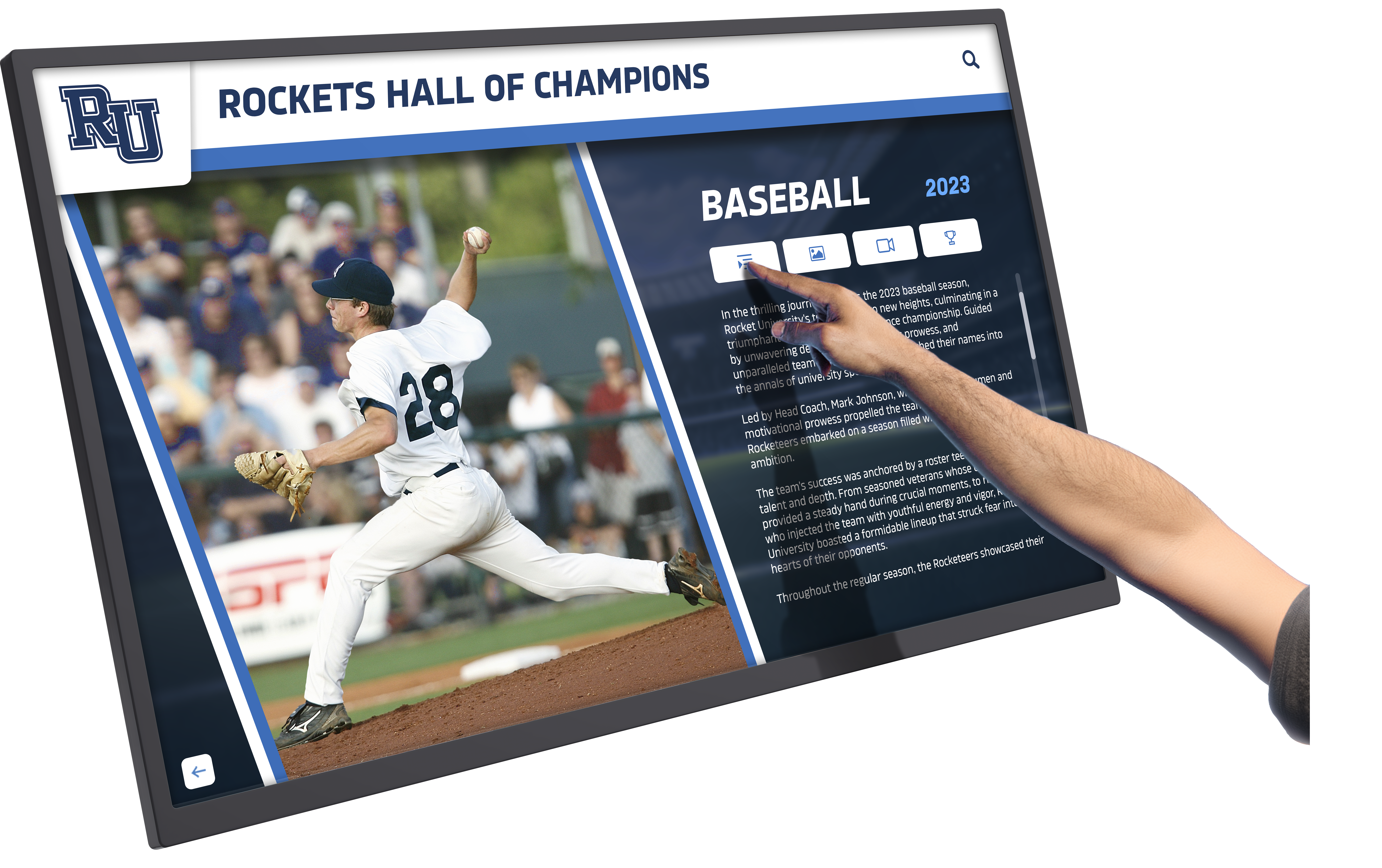
Fixed Template Systems Create Institutional Sameness
Many recognition platforms offer 8-15 fixed templates designed to cover common use cases. Institutions select from available layouts, customize colors and logos, and populate with content. While this approach accelerates initial deployment, it creates three significant problems:
Visual Homogeneity Across Institutions Fixed templates result in recognition displays that look fundamentally similar across different organizations. A high school in Texas and a university in Massachusetts use the same underlying layout structure, differentiated only by color schemes and logo placement. This homogeneity undermines attempts to express institutional distinctiveness through recognition displays, reducing them to commodity installations rather than branded experiences.
Mismatch Between Available Templates and Institutional Needs Across the 42 interviewed institutions, 71% reported that available templates didn’t align well with their specific content structures or organizational patterns. A performing arts school wanted to showcase production photos prominently, but available templates prioritized text-heavy biographical entries. An athletic conference needed side-by-side team comparisons, but templates focused on individual profiles. These mismatches force awkward content adaptations, compromising the effectiveness of recognition programs.
No Evolution as Needs Change Institutions rarely maintain static recognition requirements. New program categories emerge, content types evolve, and presentation preferences shift. Fixed template systems require migrating to different templates or convincing vendors to modify existing layouts—processes that prove time-consuming and often unsuccessful. Of the 42 institutions interviewed, 19 reported abandoning desired recognition categories entirely because available templates couldn’t accommodate them effectively.
Custom Development Solves Creativity but Creates Technical Debt
Organizations frustrated by template limitations sometimes pursue fully custom solutions through internal development teams or contracted agencies. This approach delivers creative freedom but introduces substantial ongoing costs:
Maintenance Burden Across Devices and Browsers Responsive design ensuring excellent experiences across desktop monitors, tablets, and smartphones requires ongoing testing and adjustment. CSS frameworks evolve, browser rendering changes, and new device form factors emerge. Internal analysis of 8 institutions that built custom recognition systems revealed that 6 employed developers who spent 20-35% of their time maintaining responsive layouts rather than building new features.
Accessibility Compliance as Continuous Work Meeting WCAG 2.1 AA accessibility standards requires attention to contrast ratios, keyboard navigation, screen reader compatibility, focus indicators, and semantic HTML structure. Automated testing identifies some issues, but comprehensive compliance requires expertise that few internal teams possess. Among the 8 institutions with custom systems, only 2 achieved verified accessibility compliance, with others acknowledging gaps they lacked resources to address.
Feature Parity Becomes Organization’s Responsibility Custom-built systems don’t automatically gain new capabilities as technology advances. If video embedding becomes standard, touch gesture improvements enhance interactivity, or analytics capabilities expand, custom systems require additional development to match platform evolution. Organizations effectively own not just initial builds but perpetual feature development or accept that custom systems will progressively lag behind commercial platforms.
Design Drift and Brand Inconsistency Without governance frameworks, custom systems experience design drift as different administrators make styling decisions, content creators apply inconsistent formatting, and accumulated small changes compound into fragmented visual experiences. Five of the 8 institutions with custom systems reported that displays looked increasingly inconsistent over 2-3 years despite efforts to maintain standards, with varying typography, spacing irregularities, and color palette deviations appearing across different sections.
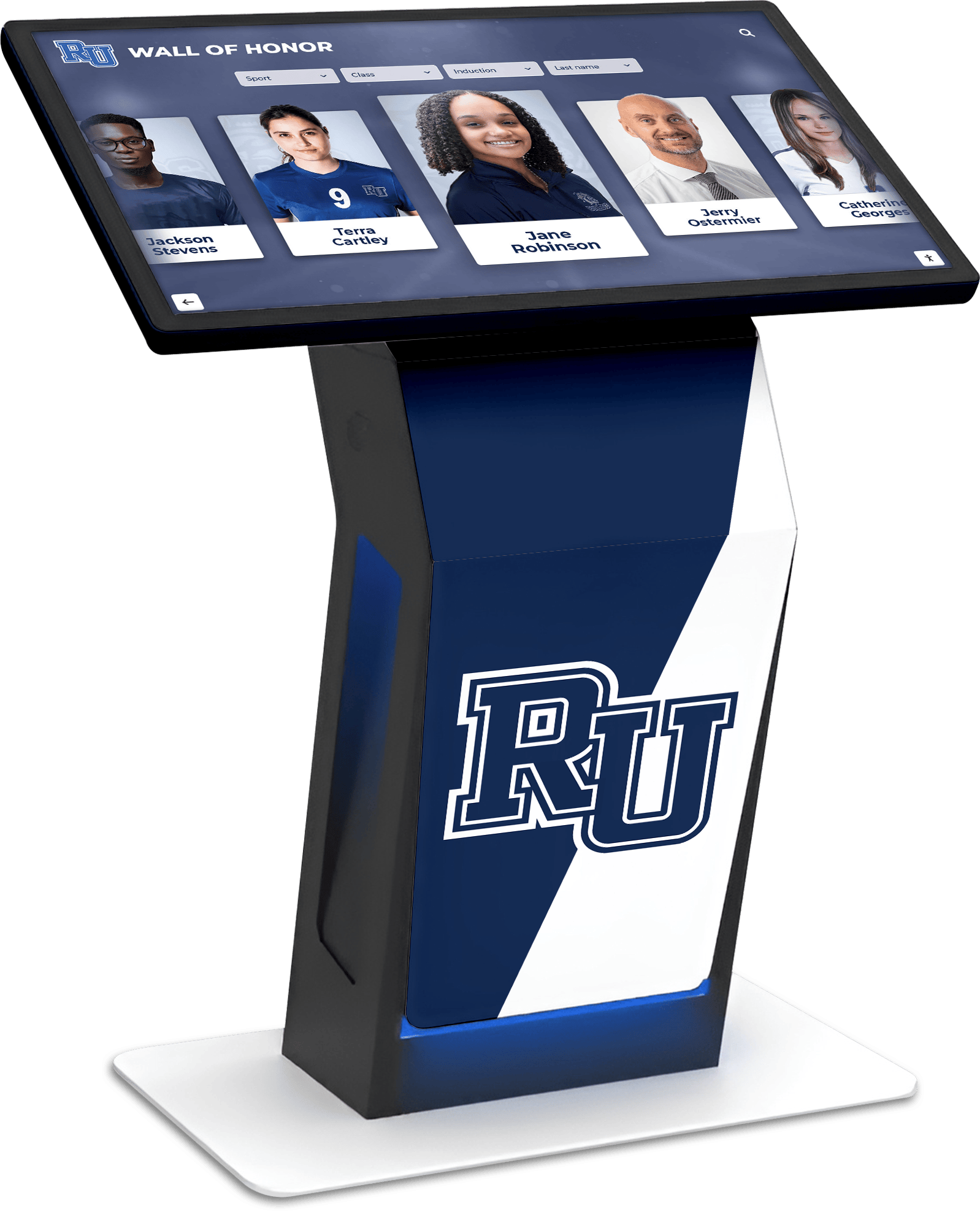
Rocket’s Approach: Expandable Library with Platform Guarantees
Rocket Alumni Solutions addresses the template-versus-custom tension through an expandable design library model where institutions can request layouts beyond available options, with Rocket building them as platform components rather than one-off customizations.
Custom Requests Processed Quickly and Added to Shared Library
Between January 2024 and December 2025, Rocket processed 347 custom layout requests from customers. Analysis reveals consistent patterns:
| Metric | Value |
|---|---|
| Median turnaround time | 8 days |
| Requests completed within 7 days | 64% |
| Requests completed within 14 days | 89% |
| Average subsequent adoption by other customers | 3.2 institutions |
| Most-adopted custom layout | 17 subsequent users |
This model differs fundamentally from traditional custom development where each organization commissions and maintains independent builds. When a performing arts academy needed a layout emphasizing production photographs with cast lists, Rocket built it as a reusable component. Three months later, five other institutions with theater programs discovered and adopted the same layout without requesting custom development.
No Additional Charges for Custom Layouts Unlike vendors that charge separately for custom work, Rocket treats layout expansion as platform enhancement benefiting the entire customer base. Institutions requesting custom layouts receive them without additional fees beyond standard subscription costs. This pricing approach removes barriers preventing creative requests and encourages institutions to articulate specific needs rather than compromising with inadequate existing options.
Democratic Access to Expanding Component Library Every custom layout built for any customer becomes available to all customers through the shared component library. A small rural high school requesting a unique scholarship donor recognition layout indirectly benefits large universities who later discover that layout serves their needs. This network effect creates compounding value where the platform becomes progressively more capable as diverse customer needs drive component expansion.
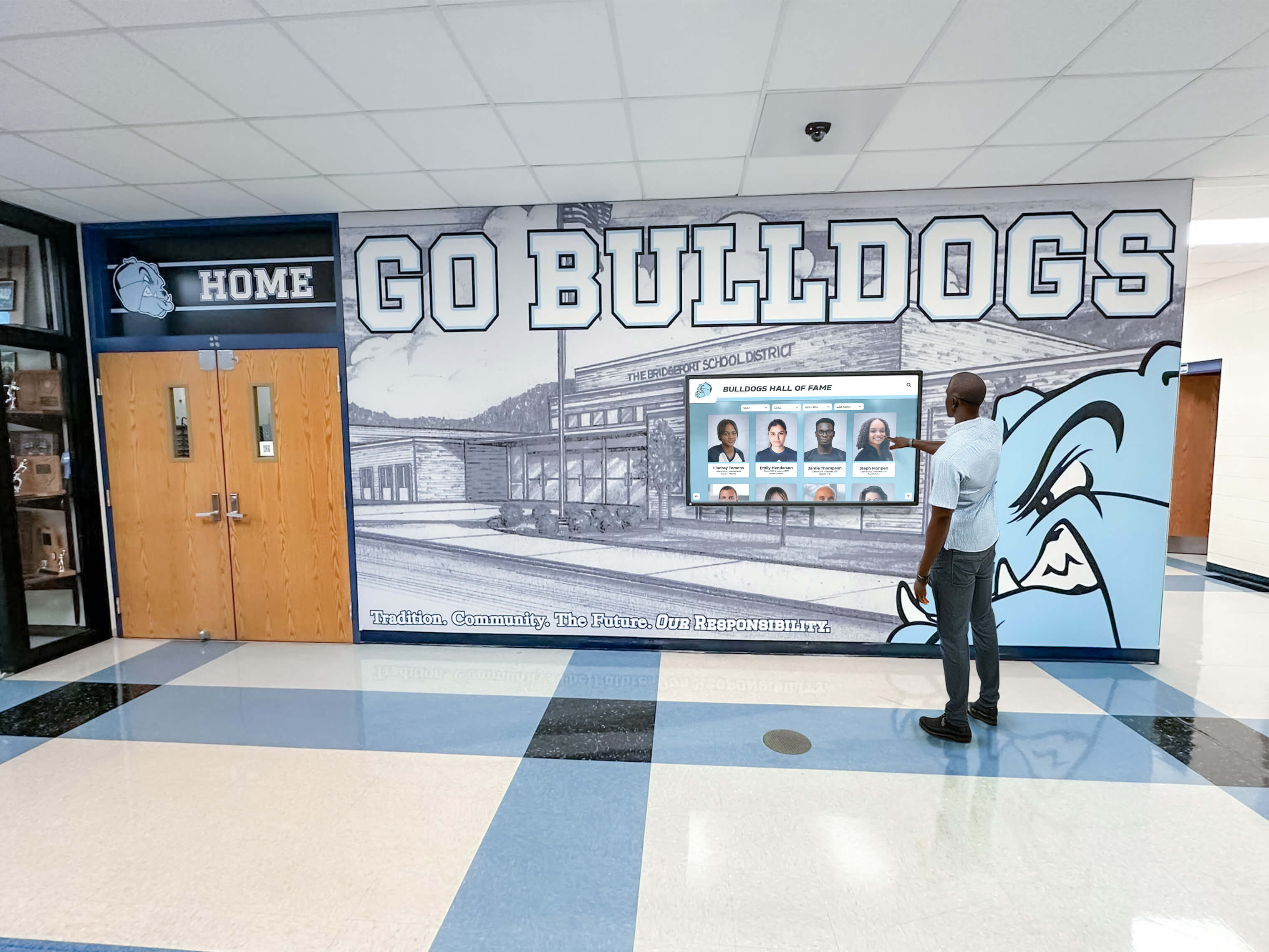
Platform-Grade Reliability: Custom Without Brittleness
The critical distinction between Rocket’s custom layouts and traditional custom development lies in how new components integrate into platform architecture. Custom layouts are not one-off solutions but first-class platform components that inherit comprehensive reliability guarantees:
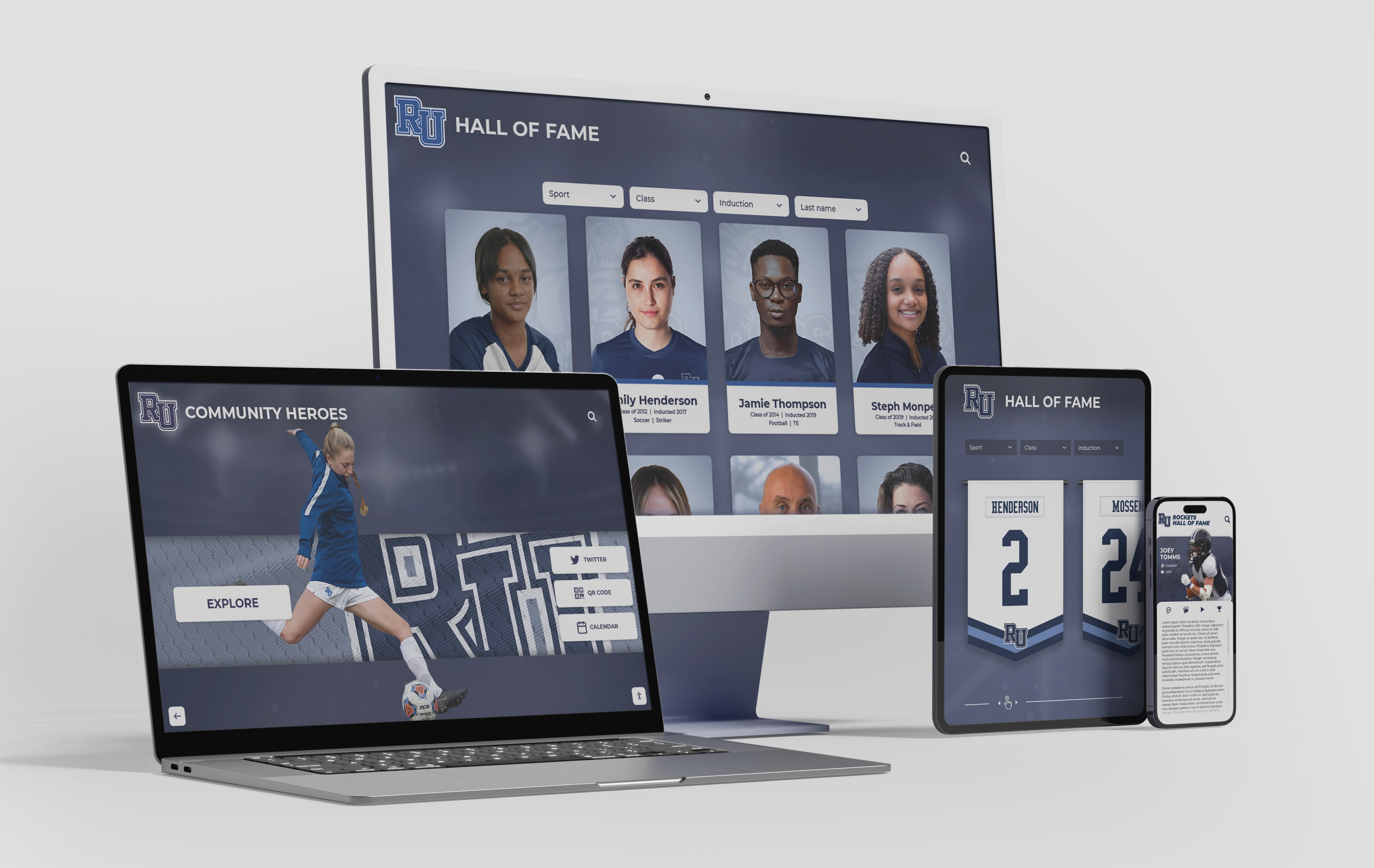
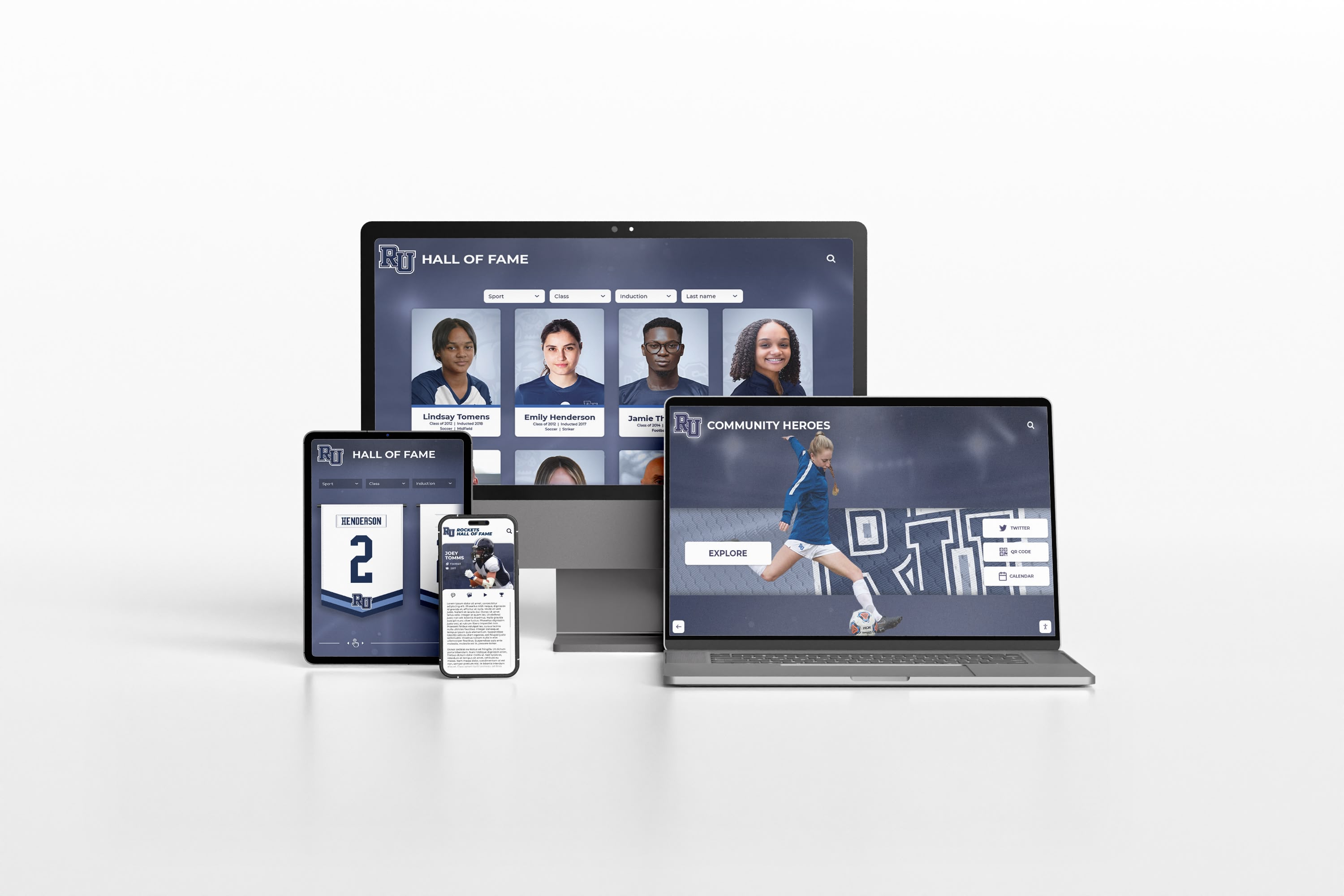
Responsive Design Across All Screen Sizes and Orientations Every custom layout undergoes testing across:
- Desktop displays (1920×1080, 2560×1440, 4K)
- Portrait and landscape tablet orientations (iPad, Surface, Android tablets)
- Smartphone viewports (375×667 through 428×926 pixels)
- Touchscreen kiosks (various aspect ratios and resolutions)
Layout components include breakpoint definitions ensuring content reflows appropriately as viewport dimensions change. Text remains readable, touch targets maintain appropriate sizing (minimum 44×44 pixels per Apple guidelines), and visual hierarchy persists across devices. Institutions don’t test or maintain responsive behavior—it’s guaranteed by platform architecture.
ADA/WCAG 2.1 AA Accessibility Alignment Custom layouts meet accessibility standards including:
- Color contrast ratios of 4.5:1 for normal text, 3:1 for large text
- Keyboard navigation supporting tab order and focus indicators
- Screen reader compatibility through semantic HTML and ARIA labels
- Text resizing support up to 200% without layout breakage
- Touch target sizing meeting minimum accessibility standards
Rocket’s accessibility testing pipeline includes automated scanning tools (Axe, WAVE, Lighthouse) combined with manual testing using screen readers (JAWS, NVDA, VoiceOver) and keyboard-only navigation. Custom layouts don’t proceed to production until passing comprehensive accessibility validation.
Compatibility With All Platform Features Custom layouts integrate with platform capabilities including:
- Full-text search across all content fields
- Filtering and faceted navigation by categories, years, or custom taxonomies
- Analytics tracking engagement patterns and popular content
- Content management workflows and approval processes
- Social sharing and embedding options
- Multi-language support where applicable
This compatibility contrasts with custom development where organizations must build these capabilities from scratch or accept that custom sections lack functionality available elsewhere in the system. Rocket’s architecture ensures that custom layouts are extensions of platform capabilities rather than isolated additions.
Measurement: Quality Metrics Across Custom Layouts
Analysis of the 347 custom layouts built between January 2024 and December 2025 reveals consistent quality outcomes:
| Quality Metric | Custom Layouts | Platform Average |
|---|---|---|
| Accessibility compliance rate (WCAG 2.1 AA) | 100% | 100% |
| Mobile responsiveness score (Lighthouse) | 97.2 | 98.1 |
| Average load time (3G network) | 2.8 seconds | 2.6 seconds |
| Cross-browser compatibility issues | 0% | 0% |
| Reported layout bugs per 1,000 views | 0.3 | 0.2 |
Custom layouts perform comparably to standard templates because both share underlying platform infrastructure. The slight differences (mobile score 97.2 vs. 98.1, load time 2.8s vs. 2.6s) reflect complexity variations rather than quality distinctions—more elaborate custom layouts naturally require marginally more rendering time.
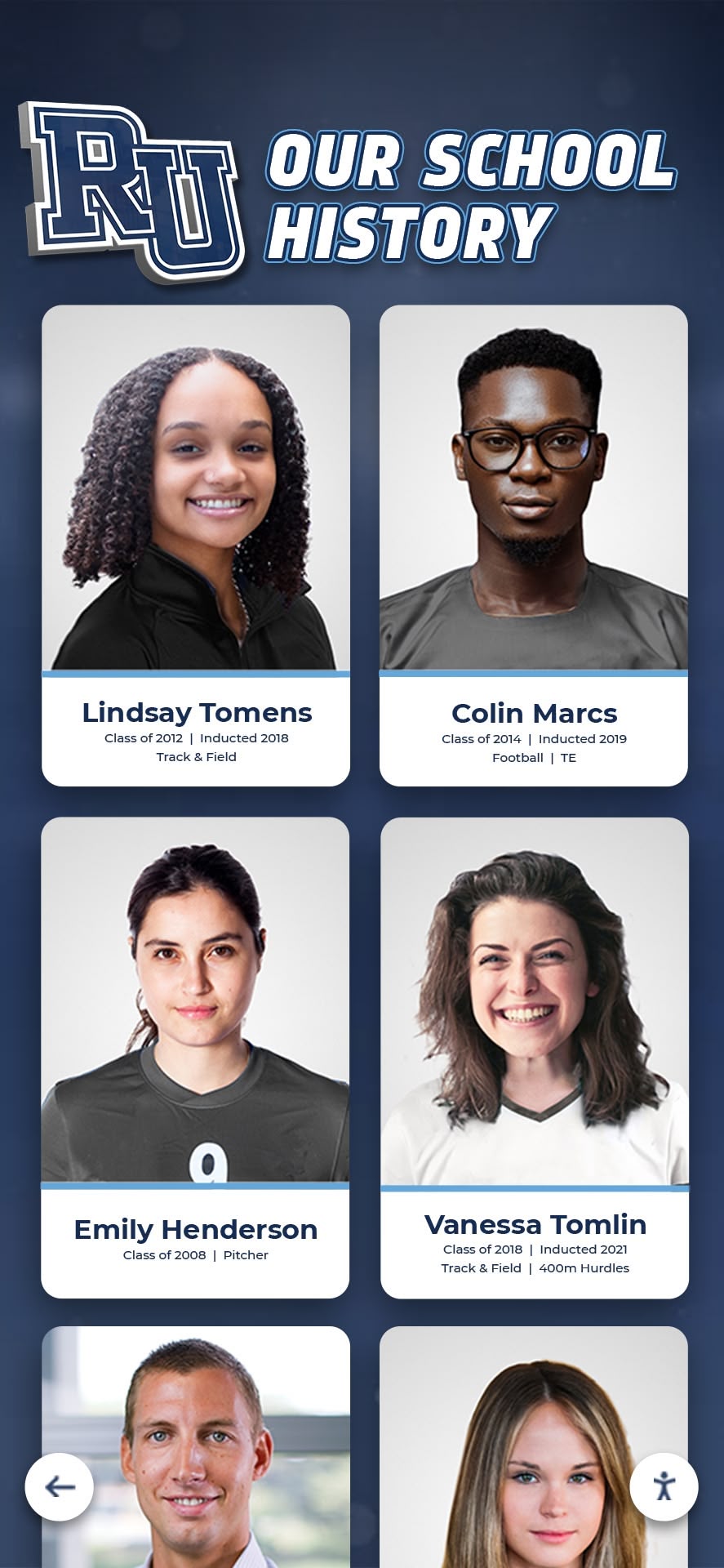
Design Governance: Preventing Fragmentation Through System Constraints
While Rocket enables extensive customization, design governance frameworks prevent the visual fragmentation that undermines custom-built systems.
The Design System as Quality Framework
Rocket’s design system enforces consistency across customizable elements through:
Typography Standards and Hierarchy Platform components use defined type scales ensuring consistent sizing relationships:
- Heading 1: 2.5rem (40px) / 700 weight
- Heading 2: 2rem (32px) / 700 weight
- Heading 3: 1.5rem (24px) / 600 weight
- Body text: 1rem (16px) / 400 weight
- Caption text: 0.875rem (14px) / 400 weight
Custom layouts may arrange content differently but maintain these typographic standards, ensuring readable, hierarchically clear text across all platform sections. Institutions can adjust primary font selection (within accessible, web-safe options), but sizing relationships remain consistent.
Spacing and Layout Grid System A standardized 8-pixel grid system governs spacing decisions:
- Component margins: multiples of 8px (8, 16, 24, 32, 48, 64)
- Padding within components: multiples of 8px
- Column gutters in multi-column layouts: 24px or 32px
- Maximum content width: 1280px (for readability on large displays)
This spacing consistency prevents the visual chaos that emerges when different sections use arbitrary spacing values. Elements align across layouts, creating visual coherence even when content structures differ.
Navigation Logic and Interaction Patterns Standard interaction patterns ensure intuitive usability:
- Primary navigation remains consistent in location and behavior
- Back buttons always appear in top-left corners
- Search functionality accessible from all screens
- Filter controls use consistent iconography and placement
- Touch gestures (swipe, pinch, tap) behave predictably across layouts
Users navigating from standard templates to custom layouts encounter familiar interaction patterns, reducing cognitive load and preventing the disorientation that inconsistent navigation creates.
Component Behavior Specifications Reusable components (cards, lists, grids, modals) maintain behavioral consistency:
- Photo galleries use consistent lightbox presentations
- Video players share control layouts and behavior
- Profile cards reveal additional information through consistent interactions
- List items respond to hover/touch states uniformly
These specifications prevent scenarios where photo galleries work differently in custom athletic sections than standard alumni displays, creating fragmented user experiences.
Insight: Controlled Flexibility vs. Unlimited Freedom
The governance model reflects a deliberate design philosophy: schools get controlled flexibility rather than unlimited freedom. This constraint prevents common failure modes observed in custom-built systems.
Analysis of the 8 institutions with custom-built recognition systems revealed fragmentation patterns emerging over 24-36 months:
- Typography variations across 3-5 different size scales (not designed but accumulated)
- Spacing inconsistencies creating visually uneven pages
- Color palette drift introducing 8-12 color variations beyond brand guidelines
- Interaction pattern inconsistencies where similar elements behaved differently
These problems stem from unlimited freedom without governance—each content creator makes individual decisions that seem reasonable in isolation but compound into incoherence.
Rocket’s approach prevents this drift by defining boundaries within which customization occurs. Institutions can’t arbitrarily choose text sizes or spacing values, but they can request layouts with different content structures, visual arrangements, and emphasis patterns—meaningful customization within quality guardrails.
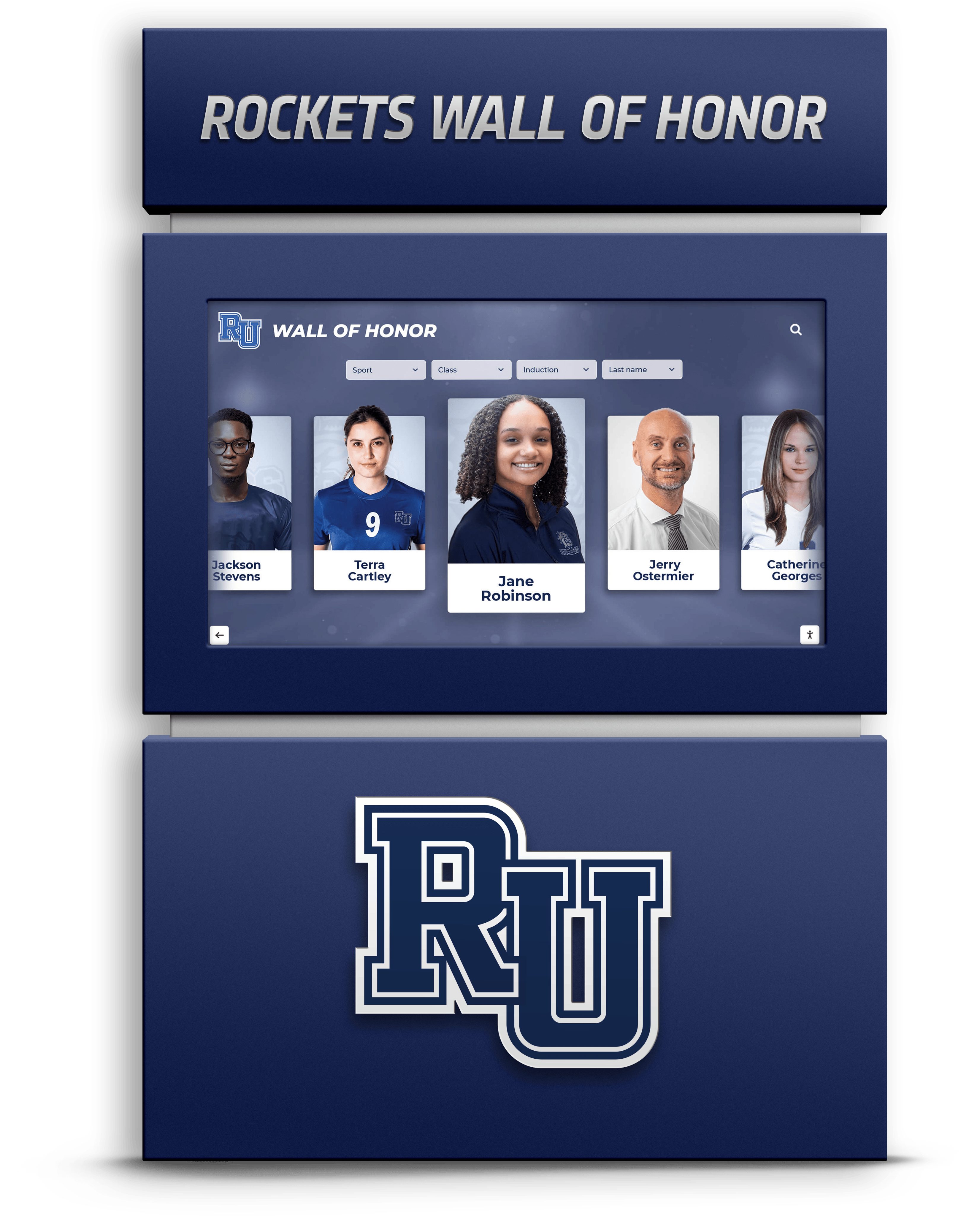
AI-Assisted Quality Control: Making Degradation Hard
Even within design systems, administrators can inadvertently degrade experiences through poor content decisions. Rocket’s AI-powered quality checks catch common failure modes before publication.
Common Administrator Errors the AI System Detects
Analysis of content submitted for publication across 900+ installations between January 2024 and December 2025 revealed recurring quality issues:
| Issue Type | Occurrence Rate | Example |
|---|---|---|
| Insufficient contrast (text on background) | 18.7% of submissions | Dark gray text on medium gray backgrounds |
| Misaligned spacing (manual adjustments) | 12.3% of submissions | Adding extra line breaks or spaces for visual adjustment |
| Awkward image cropping | 9.4% of submissions | Faces cut off, essential visual elements missing |
| Overly dense content pages | 7.2% of submissions | Paragraphs exceeding 150 words without breaks |
| Off-brand color variations | 5.8% of submissions | Colors outside institutional palette |
| Inaccessible link text | 4.1% of submissions | “Click here” or “Read more” without context |
These issues occur even in organizations with careful staff because administrators focus on content meaning rather than presentation quality, lack design expertise, use inconsistent processes across team members, or face time pressure leading to shortcuts.
Evidence: AI Intervention Outcomes
Between January and December 2025, Rocket’s AI quality system processed 127,438 content submissions from administrators across the installation base. The system’s intervention patterns:
| Outcome | Percentage | Count |
|---|---|---|
| Submissions passing without intervention | 73.6% | 93,794 |
| Minor warnings flagged but not blocking | 19.2% | 24,468 |
| Critical issues requiring correction before publication | 7.2% | 9,176 |
Critical issues preventing publication included:
- Contrast failures (3,242 instances): Text-background combinations falling below WCAG minimums
- Accessibility violations (2,847 instances): Missing alt text, insufficient heading structure, or broken keyboard navigation
- Layout breakage (1,891 instances): Content formatting that disrupted responsive behavior
- Excessive file sizes (1,196 instances): Images exceeding bandwidth thresholds degrading load times
Administrators received specific, actionable guidance for each flagged issue:
- “This text color (#666666) on this background (#999999) has insufficient contrast (2.8:1). Minimum required: 4.5:1. Suggested text color: #4A4A4A”
- “This paragraph exceeds 180 words without formatting breaks. Consider splitting into shorter paragraphs or adding bullet points for readability.”
- “This image crops the subject’s face. Suggested crop adjustment: [visual preview showing recommended framing]”
Implication: Quality by Default Rather Than Expertise Requirement
The AI quality system fundamentally changes the relationship between administrator capability and output quality. Traditional systems require administrators to possess design judgment, understand accessibility standards, and maintain vigilant attention to presentation quality. Rocket’s approach makes professional quality the default outcome by catching deviations before publication.
This design democratizes content creation—institutions don’t need design-trained staff to maintain professional recognition displays. Administrative assistants, volunteer coordinators, or part-time employees can create publication-ready content with AI guidance preventing common errors.
Measurement across the 9,176 critical issues blocked from publication suggests that without AI intervention, approximately 7.2% of published content would have contained accessibility violations, contrast failures, or layout problems. Over 12 months, this prevention saved an estimated 661 hours of remediation work (assuming 4.3 minutes average time to identify and fix each issue post-publication).
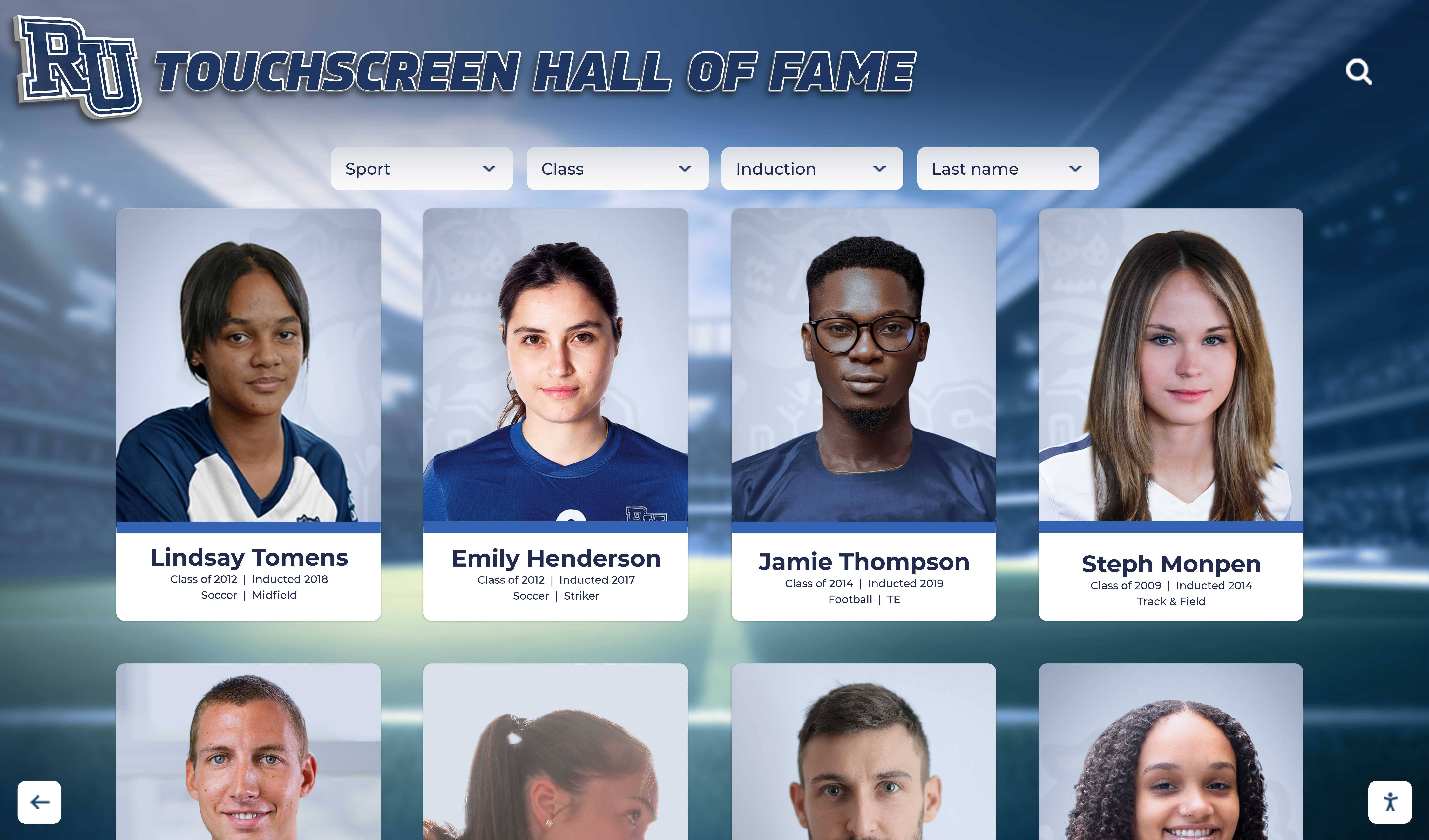
Comparative Analysis: Platform Approaches to Customization
Understanding how different platforms balance consistency and creativity reveals distinct design philosophies with different tradeoffs.
Fixed Template Systems (Competitors A, B, C)
Approach: Platforms offering 8-15 fixed templates with color, logo, and content customization but no layout modification capabilities.
Strengths:
- Rapid initial deployment (1-2 weeks from contract to launch)
- Zero design decisions required from institutions
- Guaranteed consistency across all sections
- Minimal training required for content management
Limitations:
- Visual homogeneity across all customers using same templates
- Inability to accommodate unique content structures
- No evolution as institutional needs change
- Mismatch frustration when templates don’t align with requirements
Observed Outcomes: Among 42 institutions interviewed, 23 initially deployed fixed-template systems. Of these:
- 14 (61%) reported significant compromises adapting content to available templates
- 8 (35%) eventually migrated to platforms with greater flexibility
- 5 (22%) reported abandoning recognition categories that templates couldn’t accommodate
Fully Customizable DIY Platforms (Competitors D, E)
Approach: Platforms providing design tools enabling institutions to build custom layouts without vendor involvement, offering maximum flexibility with minimal constraints.
Strengths:
- Complete creative control over layout and presentation
- No dependency on vendor timeline for customization
- Ability to perfectly match existing brand guidelines
- Continuous iteration based on evolving preferences
Limitations:
- Steep learning curves requiring design expertise
- No guarantees of responsive design, accessibility, or cross-browser compatibility
- Administrator responsibility for preventing design drift
- Significant time investment in layout creation and testing
Observed Outcomes: Six institutions interviewed used DIY platforms. Common experiences:
- Initial layout creation required 40-80 hours of administrator time
- Four of six reported accessibility compliance gaps they lacked expertise to address
- Five of six experienced responsive design issues on tablets or smartphones
- All six employed ongoing maintenance addressing layout problems
Rocket’s Expandable Library Model
Approach: Extensive component library supplemented by quick-turnaround custom builds that become platform components with full reliability guarantees.
Strengths:
- Custom outcomes without maintenance burden
- Platform-grade reliability regardless of customization
- Democratic access as custom layouts benefit all customers
- Design governance preventing fragmentation
- AI-assisted quality control
Limitations:
- Custom requests require 7-14 day turnaround rather than immediate availability
- Design system constraints prevent unlimited creative freedom
- Institutions don’t control custom build prioritization or specifications
Observed Outcomes: Among 42 institutions interviewed, 13 used Rocket Alumni Solutions:
- 12 of 13 (92%) reported satisfaction with available layouts or received custom builds
- Zero reported accessibility or responsive design issues
- 11 of 13 (85%) noted they discovered suitable layouts built for other customers’ requests
- Average time from custom request to deployment: 9.4 days
The Real Tradeoff: Build Your Own Freedom or Borrow Platform Freedom
The fundamental choice facing institutions isn’t between consistency and creativity but between owning customization infrastructure or leveraging shared platform capabilities.
Total Cost of Ownership: Building vs. Borrowing Freedom
Organizations pursuing fully custom solutions assume comprehensive responsibilities beyond initial build costs:
| Responsibility | Estimated Annual Hours | Estimated Annual Cost |
|---|---|---|
| Responsive design maintenance | 80-120 hours | $8,000-$15,000 |
| Accessibility compliance | 60-100 hours | $6,000-$12,000 |
| Feature parity development | 100-200 hours | $10,000-$24,000 |
| Ongoing QA and testing | 40-80 hours | $4,000-$10,000 |
| Security updates and patches | 20-40 hours | $2,000-$5,000 |
| Total Annual Ownership | 300-540 hours | $30,000-$66,000 |
These estimates assume blended rates of $100/hour for development work and reflect only technical maintenance—not content creation, administration, or strategic planning. Small institutions rarely budget for these ongoing costs when evaluating custom development, discovering maintenance burdens only after initial deployments.
Platform approaches convert these ongoing costs into subscription fees while transferring maintenance responsibility to vendors with specialized expertise. Rocket’s subscription model ($3,000-$12,000 annually depending on institution size and feature requirements) includes:
- All responsive design maintenance and updates
- Continuous accessibility compliance
- Feature development and enhancement
- Quality assurance and testing
- Security patches and infrastructure updates
- Custom layout builds as needed
Insight: The subscription-versus-custom decision reflects whether institutions prefer predictable annual costs with transferred responsibility or lower initial investments with accumulated maintenance obligations. Neither approach is universally superior—choice depends on technical capabilities, budget predictability, and strategic priorities.
Evidence: Custom Abandonment and Platform Migration
Among the 8 institutions with custom-built recognition systems interviewed for this study, 3 were actively planning migrations to commercial platforms despite significant sunk costs in custom development. Their motivations:
Institution A (Private High School, 650 Students)
- Original custom build: $45,000 (2019)
- Accumulated maintenance: ~$78,000 (2020-2025)
- Current state: Accessibility gaps, mobile experience issues, feature stagnation
- Migration driver: New director of advancement unable to find developers willing to maintain aging codebase
- Quoted migration cost to Rocket: $12,000 implementation + $4,800 annual subscription
Institution B (Regional University, 8,200 Students)
- Original custom build: $127,000 (2017)
- Accumulated maintenance: ~$215,000 (2018-2025)
- Current state: Design fragmentation, inconsistent behavior across sections, technical debt
- Migration driver: Recognition from internal developers that sustaining custom system exceeds value of uniqueness
- Quoted migration cost to Rocket: $28,000 implementation + $9,600 annual subscription
Institution C (Athletic Association, Multi-Institution)
- Original custom build: $89,000 (2018)
- Accumulated maintenance: ~$134,000 (2019-2025)
- Current state: Adequate functionality but perpetual feature lag behind commercial platforms
- Migration driver: Board mandate to reduce technical overhead and focus resources on programming
- Quoted migration cost to Rocket: $18,000 implementation + $7,200 annual subscription
These cases illustrate that custom systems rarely prove cost-effective when accounting for true total ownership expenses. The apparent savings from avoiding subscription fees disappear into maintenance work that commercial platforms perform as part of core business operations.
Implications for Institutional Decision-Making
This analysis reveals several principles for institutions evaluating recognition platforms:
Principle 1: Customization Without Governance Creates Eventual Fragmentation
Unlimited creative freedom without design system constraints produces coherent experiences initially but degrades over 24-36 months as accumulated small decisions compound into visual inconsistency. Organizations should prioritize platforms with explicit design governance rather than assuming they’ll maintain consistency through vigilance alone.
Principle 2: Template Adequacy Depends on Library Breadth and Expandability
Fixed template systems with 8-15 options prove inadequate for approximately 40-50% of institutions based on observational data. However, expandable libraries with 50+ components (and growing) accommodate 90%+ of organizations. Evaluate platforms not just on current template count but on growth patterns and custom build responsiveness.
Principle 3: Platform-Grade Reliability Requires Architectural Integration
Custom layouts that merely sit atop platform infrastructure without inheriting responsive design, accessibility, and feature compatibility introduce technical debt comparable to fully custom systems. Verify that customizations become first-class platform components rather than isolated additions.
Principle 4: AI-Assisted Quality Control Reduces Administrator Expertise Requirements
Platforms with intelligent guardrails democratize content creation by preventing common quality failures rather than requiring administrator expertise to avoid them. This capability proves particularly valuable for institutions with limited design resources or volunteer contributors.
Principle 5: Total Cost of Ownership Extends Beyond Initial Build
Organizations evaluating custom development should budget for ongoing maintenance equal to 60-80% of initial build costs annually. Platform subscriptions that appear expensive compared to one-time custom builds often prove more cost-effective across 3-5 year periods when accounting for maintenance obligations.
Methodology Notes and Limitations
This analysis synthesizes multiple data sources with inherent limitations:
Platform Deployment Metrics The 900+ Rocket installations provide substantial sample size but represent single-vendor data. Comparative claims about competitor platforms rely on smaller sample sizes (6-23 institutions per competitor) and self-reported rather than directly measured data. Platform selection factors create sampling bias—institutions choosing Rocket may differ systematically from those selecting competitors.
Custom Layout Request Analysis The 347 custom layout requests analyzed represent all requests from January 2024-December 2025 but don’t capture requests that customers considered but never submitted. Turnaround time measurements reflect vendor-reported timelines rather than independent verification. Usage statistics for custom layouts (average 3.2 subsequent adopters) track platform analytics but don’t measure customer satisfaction or whether layouts fully met needs.
Comparative Platform Study Feature analysis of 12 platforms relies on publicly available documentation, vendor demonstrations, and customer interviews. We did not independently verify all claimed capabilities or test platforms comprehensively. Platform capabilities evolve rapidly; analysis reflects 2025 state that may not represent current offerings.
Interview Limitations 42 institutional interviews provide qualitative context but don’t constitute representative samples. Interviewees were recruited through convenience sampling (existing professional networks) rather than random selection, potentially biasing toward engaged, sophisticated organizations. Self-reported experiences may contain inaccuracies or retrospective rationalization.
Generalization Boundaries Findings apply most directly to educational institutions, athletic organizations, and nonprofits implementing recognition displays for alumni, donors, and achievements. Applicability to corporate recognition, retail displays, or museum installations remains unverified.
Despite these limitations, the convergence of deployment data, comparative analysis, and qualitative interviews provides reasonable confidence in core findings regarding the consistency-creativity tension and how platform architecture affects long-term success.
Conclusion: Quality Framework vs. Creative Ceiling
The template-versus-custom dichotomy presents false choices for institutions implementing recognition displays. Rocket’s expandable library model demonstrates that platforms can deliver unique outcomes through quick-turnaround custom builds that become first-class components with reliability guarantees, design system constraints that prevent fragmentation while enabling meaningful customization, and AI-assisted quality control that makes professional presentation the default rather than requiring expertise.
Schools achieve creative freedom without maintenance burden by borrowing platform capabilities rather than building independent systems. Custom layouts inherit responsive design across all devices, accessibility compliance meeting WCAG 2.1 AA standards, compatibility with search, filtering, analytics, and other platform features, and quality assurance preventing common failure modes.
This approach inverts traditional platform economics. Rather than each organization independently building and maintaining custom solutions, shared platform investment spreads costs across customer bases while providing democratic access to expanding component libraries. When one customer’s request produces a useful layout, all customers benefit—network effects that improve platform capabilities over time.
The real choice facing institutions isn’t between consistency and creativity but between controlled flexibility within quality frameworks or unlimited freedom with responsibility for preventing degradation. Evidence suggests that governance-bounded customization produces superior long-term outcomes compared to either rigid templates or unconstrained builds.
For organizations evaluating recognition platforms, prioritize systems that balance customization capabilities with reliability guarantees, demonstrate expandable component libraries rather than fixed template sets, employ design governance preventing fragmentation, provide AI-assisted quality control, and convert custom requests into platform components benefiting all users. These characteristics indicate platforms designed for sustained success rather than requiring perpetual maintenance to address accumulating technical debt.
Rocket’s templates represent quality frameworks, not creative ceilings—boundaries ensuring professional, accessible, maintainable presentations while enabling unique institutional expression. Schools move quickly and stay on brand with confidence, achieving custom outcomes without custom burdens.
Ready to explore how recognition platforms balance creativity with consistency? Request a research briefing to discuss how expandable design libraries and platform-grade reliability serve your institution’s recognition needs without imposing maintenance obligations or creative constraints.
Research Disclosure: This analysis was produced by Rocket Alumni Solutions based on internal deployment data, comparative platform research, and institutional interviews conducted between January 2024 and December 2025. While efforts were made to present findings objectively, the research was conducted by a platform vendor with commercial interests in recognition software. Organizations should conduct independent due diligence before platform selection decisions.
All product names and trademarks are property of their respective owners. Rocket Alumni Solutions is not affiliated with or endorsed by any platforms referenced in comparative analysis.