Championship victories represent peak moments in athletic programs—seasons where preparation, talent, and determination converge to deliver titles that athletes and communities remember for lifetimes. These achievements deserve recognition that matches their significance, creating permanent tributes visible to current athletes who aspire to similar success and visitors who witness program tradition firsthand.
Custom championship banners have served this purpose for generations, hanging prominently in gymnasiums where they create inspiring backdrops for practices and competitions. Walking into facilities adorned with championship banners immediately communicates program excellence, competitive history, and winning culture that distinguishes successful organizations from those still building traditions.
Yet many athletic directors face growing challenges as championship collections expand. Gymnasium walls fill with banners from decades of success, forcing difficult decisions about which achievements deserve display space. Some programs resort to removing older banners to accommodate recent championships, inadvertently erasing historical achievements. Others crowd banners together so tightly that individual recognition loses visual impact. And some simply run out of suitable display space entirely, leaving recent championships without the prominent recognition they deserve.
This guide addresses these challenges by first explaining how to create high-quality custom championship banners that properly honor achievements, then exploring innovative solutions for when traditional display space becomes constrained—including modern digital alternatives that provide unlimited recognition capacity while maintaining the visual impact of traditional banners.
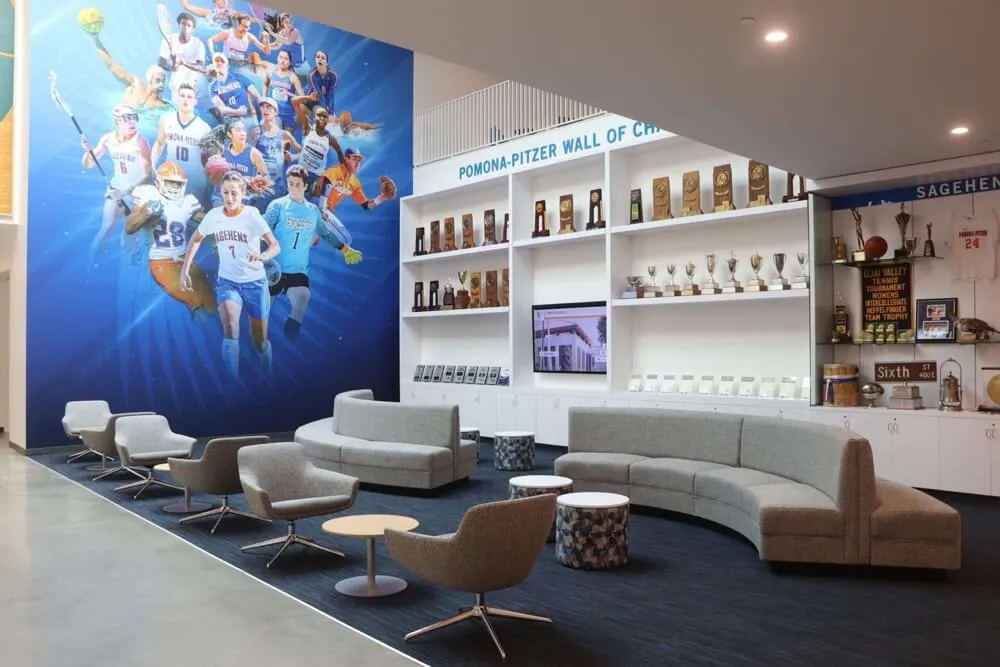
Designing Effective Custom Championship Banners
Creating championship banners that command attention while communicating achievements clearly requires thoughtful design balancing visual appeal with information completeness. The most effective banners establish immediate impact from a distance while providing detailed information upon closer inspection.
Essential Information to Include
Championship banners serve as historical records documenting specific achievements, requiring accuracy and completeness in the information they present. Core elements should include the specific championship title earned (State Champions, Conference Champions, Regional Champions, Tournament Champions), the sport or activity being recognized, the year or season of achievement (2025-26 Basketball, Spring 2026 Baseball), and your school or team name and mascot.
Additional elements many programs include are the championship game or tournament location, final record or championship game score, head coach name and key assistant coaches, team captains or notable individual achievers, and conference or division designation when applicable. The challenge lies in incorporating this information without creating cluttered designs that sacrifice visual impact for excessive detail.
Most designers recommend establishing clear visual hierarchy—championship title and year as dominant elements immediately visible from gymnasium floor level, with supporting information like coach names, captains, and records in secondary text sizes readable from closer viewing distances.
Selecting Colors, Fonts, and Visual Elements
Visual design choices determine whether banners create cohesive, professional appearances or distracting, inconsistent collections as multiple championships accumulate over years.
Color Scheme Considerations: Most programs build banner designs around school colors, creating instant brand recognition and visual consistency across all championships. Bold, high-contrast color combinations ensure readability from distance—dark text on light backgrounds or light text on dark backgrounds work most effectively. Avoid low-contrast combinations like yellow text on white backgrounds or navy text on black backgrounds that become illegible from even moderate distances.
Some programs implement consistent background colors across all banners regardless of sport—perhaps all championship banners feature school color backgrounds with white text. Others vary colors by sport while maintaining overall aesthetic consistency—blue backgrounds for boys’ sports, red backgrounds for girls’ sports, or sport-specific colors that still incorporate school palette elements.
Font Selection: Typography significantly impacts both readability and aesthetic quality. Bold, sans-serif fonts provide clearest readability for dominant championship titles and years. Many designers recommend font sizes of 10-14 inches for primary text on standard 3’x5’ or 3’x6’ banners to ensure visibility across typical gymnasium distances. Decorative or script fonts work effectively for school names or secondary elements but prove problematic for primary championship information that must communicate instantly.
Consistency in font choices across multiple banners creates unified, professional collections. When each championship uses different typefaces, the cumulative effect appears disorganized rather than building cohesive program identity.
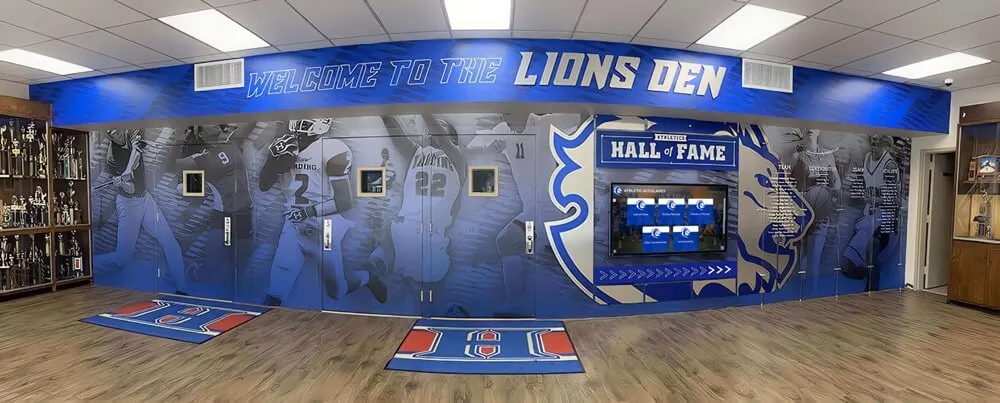
Visual Elements and Graphics: Incorporating school logos, mascot graphics, championship organization logos, or sport-specific imagery adds visual interest and reinforces program identity. However, designers must balance graphic elements with information clarity—excessive graphics can overwhelm essential championship details.
Effective approaches include placing school logos or mascot graphics at banner tops or bottoms, using sport silhouettes or equipment imagery as subtle background elements, incorporating championship organization logos (state athletic association marks, conference logos) to validate achievement legitimacy, and framing championship information with decorative borders or geometric elements that add polish without distracting.
Standard Banner Dimensions and Materials
Championship banner sizing and material selection significantly impact both visual effectiveness and longevity, requiring consideration of display environments and long-term durability.
Common Banner Dimensions: Standard championship banner sizes include 3 feet wide by 5 feet tall (36" x 60"), 3 feet wide by 6 feet tall (36" x 72"), 2.5 feet wide by 5 feet tall (30" x 60"), and 4 feet wide by 6 feet tall (48" x 72"). Vertical orientation (portrait layout) dominates championship banner design, creating visual consistency when multiple banners hang in rows while maximizing text size for distance readability.
When selecting dimensions, consider gymnasium architecture—ceiling height, wall space availability, and viewing distances from floor level. Larger banners create greater visual impact but consume more wall space and cost more to produce. Programs with limited space might implement consistent smaller dimensions, while facilities with abundant space can accommodate larger formats.
Material Options: Most championship banners use vinyl or fabric materials offering durability, fade resistance, and professional appearance:
Vinyl banners provide weather resistance making them suitable for both indoor and outdoor display, excellent print quality with vibrant colors and sharp text, durability withstanding years of display without significant deterioration, and relative affordability compared to fabric alternatives. Vinyl proves particularly appropriate for gymnasiums where banners may experience temperature fluctuations or occasional moisture exposure.
Fabric banners using materials like polyester or canvas offer premium appearance with rich colors and subtle texture, excellent print quality particularly for detailed graphics, good durability when displayed indoors, and professional aesthetics appropriate for high-visibility locations. Fabric banners typically cost more than vinyl but may justify the investment for schools prioritizing refined appearance.
Both materials should feature hemmed edges and reinforced grommets at top corners for hanging, preventing fraying or tearing during installation and long-term display. UV-resistant inks ensure colors remain vibrant despite years of exposure to gymnasium lighting.
Creating Consistent Banner Templates
As championship collections grow, visual consistency becomes increasingly important for creating cohesive, professional appearances. Establishing standardized banner templates that maintain design elements across all sports and years prevents chaotic, mismatched collections where each championship follows completely different aesthetic approaches.
Template standardization should maintain consistent dimensions across all sport banners, use identical color schemes or follow logical sport-specific color variations, employ the same font families and text hierarchies, position school logos and mascot graphics in consistent locations, and maintain similar information density and layout structures.
Within this consistency, customize sport-specific elements—basketball silhouettes for basketball championships, baseball graphics for baseball titles—while maintaining overall design unity. This balanced approach celebrates each sport’s unique identity while building cohesive program brand identity.
Many schools work with athletic banner design professionals who create master templates that athletic departments use consistently across years, ensuring new championships integrate seamlessly with existing collections.
Ordering Custom Championship Banners
Once designs are finalized, the ordering process requires selecting appropriate vendors, managing production timelines, and ensuring quality standards meet expectations for permanent displays representing program achievements.
Selecting Banner Vendors and Suppliers
Multiple vendor categories serve championship banner markets, each offering distinct advantages and tradeoffs regarding pricing, quality, service, and production capabilities.
Local Print and Sign Shops: Community printing businesses provide advantages including personal service with direct communication during design and production, quick turnaround times eliminating shipping delays, ability to inspect samples before committing to full production, and support for local businesses strengthening community relationships. Local vendors work well for schools prioritizing personalized service and immediate availability, though pricing may exceed online alternatives and design capabilities vary significantly across different local providers.
Online Banner Printing Services: National online printing companies offer competitive pricing through high-volume production economies, extensive design templates and online customization tools, professional quality standards backed by guarantees and reviews, and convenient ordering processes with direct shipping to schools. Research online vendors carefully—review portfolios of previous work, read customer testimonials specifically about athletic banners, verify production and shipping timelines, and confirm return or revision policies protecting against quality issues.
Athletic Facility Equipment Suppliers: Companies specializing in athletic facility equipment and gym furnishings often include championship banner production among their offerings. These vendors understand sports-specific needs, terminology, and aesthetic standards, providing expertise that general printing companies may lack. They can also coordinate banner purchases with other facility improvements—new scoreboards, padding, or flooring—creating opportunities for bundled purchasing and consistent facility branding.
Specialty Recognition Companies: Some companies focus specifically on athletic recognition products including championship banners, trophy cases, and commemorative items. These specialists typically provide highest expertise in sports recognition but may charge premium pricing reflecting their specialization.
Banner Pricing and Budget Considerations
Championship banner costs vary widely based on dimensions, materials, quantity, design complexity, and vendor selection, requiring athletic directors to balance quality standards with budget constraints.
Typical Pricing Ranges: Standard vinyl championship banners (3’x5’ or 3’x6’) from online vendors typically range from $75-$200 per banner depending on material quality, design complexity, and quantity discounts. Fabric banners in similar dimensions typically range from $150-$350 per banner reflecting premium material and printing costs. Local print shops may charge $200-$400 per banner depending on local market rates and service premiums. And specialty athletic recognition companies typically charge $250-$500 per banner reflecting expertise and comprehensive service.
Volume discounts significantly impact per-banner costs when ordering multiple championships simultaneously—perhaps when newly documenting historical achievements or recognizing multiple sports championships from the same year. Many vendors offer 10-25% discounts for orders exceeding five or ten banners, making coordinated purchasing financially advantageous.
Budget Planning Considerations: Athletic departments should establish annual championship recognition budgets accommodating varying quantities across years—some seasons produce multiple state championships requiring several banners, while other years may generate fewer titles. Building modest reserves during light championship years enables proper recognition during exceptional seasons without requiring emergency budget requests.
Consider multi-year purchasing agreements with preferred vendors, potentially securing favorable pricing through commitment to continued business while ensuring consistency in materials and design quality across years.
Production Timelines and Rush Options
Championship banner production involves multiple stages—design finalization, proof approval, printing, finishing, and shipping—requiring adequate lead time for quality results without rushed execution that increases costs or compromises quality.
Standard Production Timelines: Most vendors require 1-2 weeks for initial design development and proofing when creating custom designs, 3-5 business days for printing and finishing once designs are approved, and 3-7 days for shipping depending on vendor location and chosen shipping methods. Total timeline from initial order to receipt typically spans 2-3 weeks for standard production without rush services.
Rush Production Options: Most vendors offer expedited production for additional fees—typically 25-50% premiums above standard pricing. Rush services might compress total timelines to 5-7 business days from approval to delivery, accommodating schools wanting banners ready for specific recognition ceremonies, season-opening events, or facility dedications.
While rush options provide flexibility, standard timelines typically deliver better value and reduce pressure during busy athletic department schedules. Planning championship banner orders during off-seasons allows proper attention to design details without time pressures that sometimes result in errors or suboptimal decisions.
Reviewing Proofs and Ensuring Accuracy
Before final production, reputable vendors provide digital proofs showing exactly how finished banners will appear. This critical review stage prevents costly errors in permanent displays commemorating important achievements.
Proof Review Checklist: Verify championship title accuracy and proper formatting, confirm year or season information is correct, check all name spellings—school name, coach names, captains if included, review color accuracy matches school branding standards, ensure text alignment and spacing appears professional, confirm graphic elements appear sharp and properly positioned, and verify overall layout balance and visual hierarchy work effectively.
Multiple people should review proofs before approval—athletic directors, head coaches, and perhaps school administrators—since fresh eyes often catch errors that individuals closely involved in design development may overlook. Minor corrections during proof stage cost nothing, while fixing errors after production requires expensive reprinting and delays.
Displaying Championship Banners Effectively
Creating high-quality custom banners represents only half the challenge—proper display maximizes visual impact while ensuring secure installation that protects both banners and facilities.
Selecting Optimal Display Locations
Strategic banner placement determines how effectively championships create visual impact and inspire athletes who practice and compete in facilities they adorn.
Primary Display Locations: Gymnasiums represent traditional championship banner locations, providing high visibility during competitions, practices, and school events. Optimal gymnasium placement includes upper wall areas above retractable bleachers or permanent seating, end walls visible from main entrance perspectives, and side walls in clear sightlines from competition floor and spectator areas.
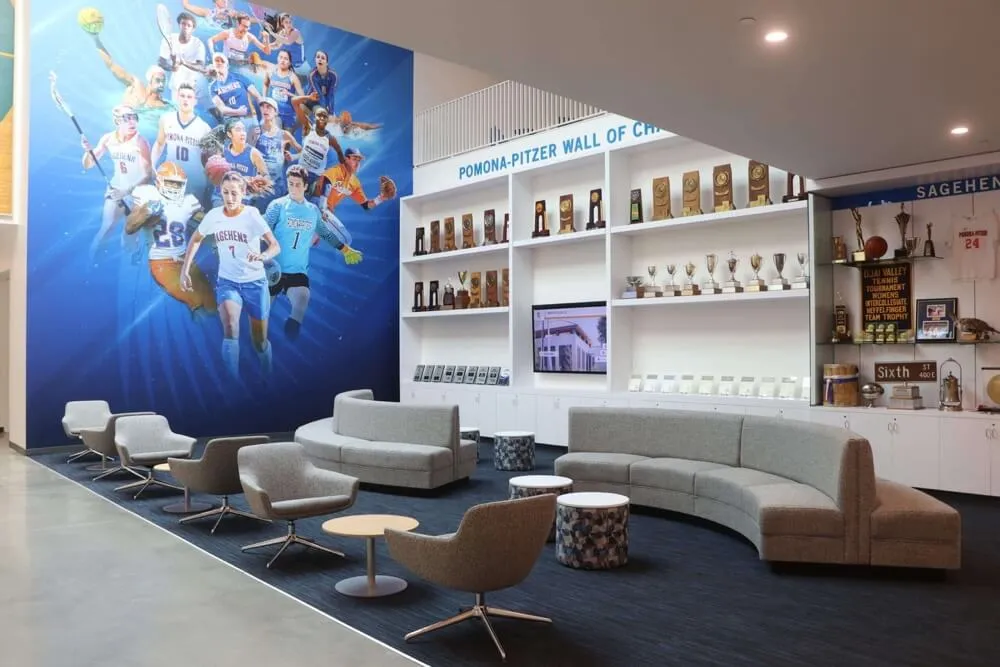
Many programs create dedicated “championship walls” grouping all titles together rather than scattering them throughout facilities. This concentrated approach creates greater collective impact, making program tradition immediately evident and facilitating visitor navigation directly to recognition displays.
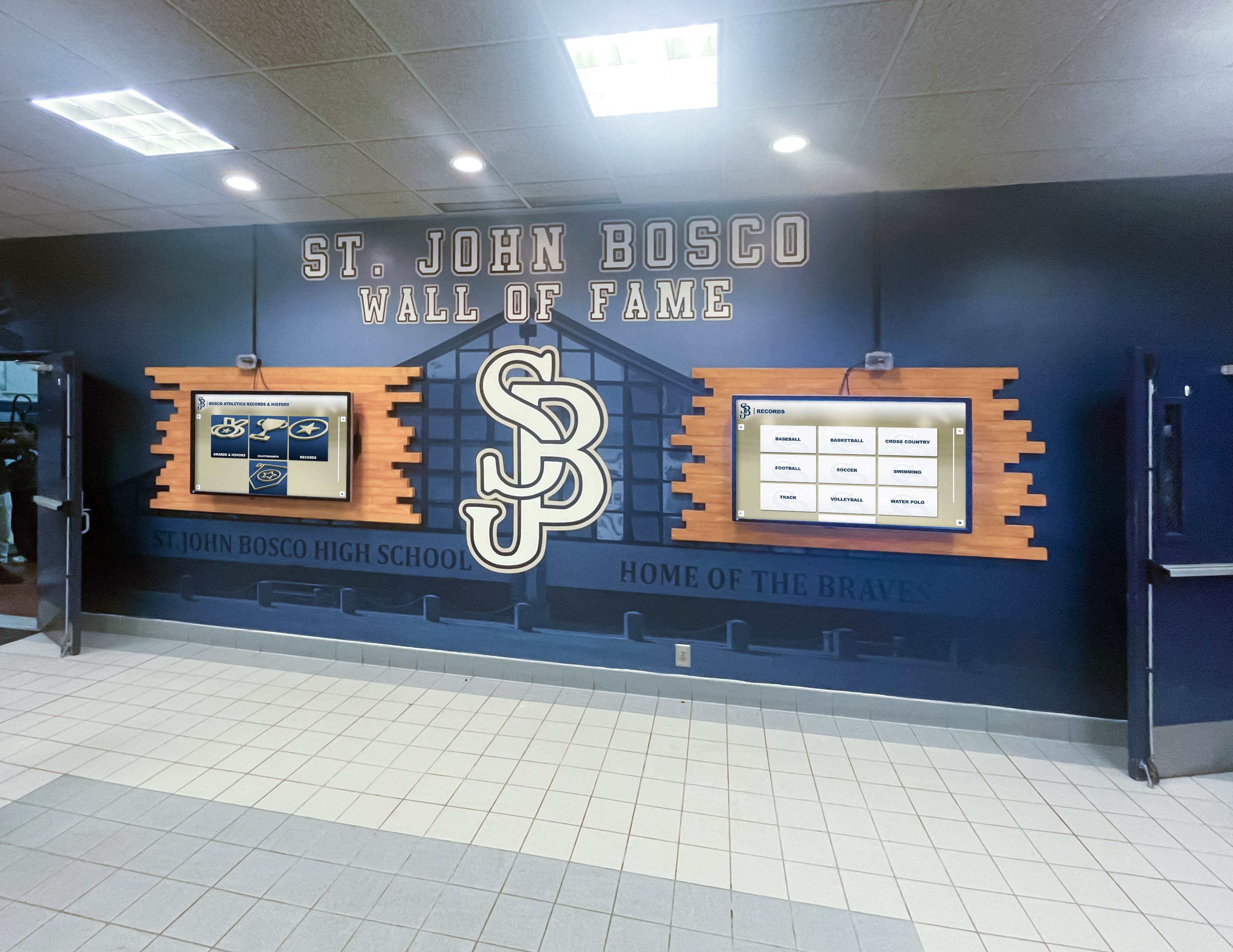
Alternative locations when gymnasium space becomes limited include main building entrances and lobbies where visitors encounter recognition immediately, athletic hallways connecting locker rooms and facilities, dedicated athletic trophy rooms or halls of fame, and auxiliary gymnasiums or practice facilities when available.
Consider visibility from multiple perspectives—displays should communicate effectively to athletes practicing on gymnasium floors, spectators in bleachers, and visitors touring facilities during recruitment visits or community events.
Installation Methods and Hardware
Proper installation ensures banners hang flat, remain secure, and avoid damage to facility walls or structures. Most championship banners feature grommets in top corners enabling various hanging methods appropriate to different facility types.
Common Installation Approaches: Wall-mounted hardware including decorative hooks, banner brackets, or mounting systems provides permanent installation solutions. These approaches work well for long-term displays in dedicated championship areas but require wall penetration that may concern facilities managers.
Suspended cable or rod systems allow hanging multiple banners from ceiling-mounted hardware without wall penetration. Banners attach to cables or rods using grommets, S-hooks, or clip systems, creating clean installations appropriate for facilities where wall mounting proves impractical. Cable systems work particularly well for creating championship banner rows along gymnasium perimeters.
Retractable banner stands offer portable display options, though these typically suit temporary recognition during specific events rather than permanent championship commemoration. Banner rotation systems allow displaying multiple championships in limited space by rotating which banners are currently visible—though this compromises the goal of maintaining all achievements constantly visible.
Regardless of installation method, ensure hardware meets gymnasium safety standards. Banners and mounting systems should not create hazards during athletic activities, obstruct emergency exits or safety equipment, or pose risks if hardware failures cause banners to fall.
Maintaining and Updating Banner Collections
Championship banners require minimal ongoing maintenance but benefit from periodic attention ensuring they remain in good condition and accurately represent program achievements.
Regular inspection identifies potential issues including fading colors requiring banner replacement or UV protection improvement, torn or frayed edges needing repair, loose or failing mounting hardware requiring attention, and dirt or dust accumulation diminishing appearance. Most vinyl and fabric banners can be gently cleaned using soft cloths and mild soap solutions, removing accumulated dust without damaging printed surfaces.
As new championships occur, integrate them systematically into existing collections using the consistent design templates discussed earlier. Consider whether new achievements warrant shifting existing banners to maintain chronological or sport-specific organization, whether older banners should be relocated to secondary locations if space becomes scarce, or whether alternative recognition approaches including digital systems might better serve growing collections.
Some programs implement banner rotation schedules—perhaps displaying recent championships prominently while moving older titles to archival storage or less prominent locations. However, this approach risks diminishing historical achievements and may disappoint alumni whose championships no longer receive visible recognition.
The Growing Challenge: When Wall Space Runs Out
Despite best intentions, many successful athletic programs eventually face uncomfortable reality—gymnasium walls fill with championship banners to capacity, leaving no space for new achievements without removing existing recognition or accepting increasingly crowded, visually cluttered displays that diminish individual championship impact.
Common Space Limitation Scenarios
Athletic directors encounter space challenges through various circumstances, each requiring thoughtful solutions balancing multiple stakeholder interests.
Successful Programs with Extensive Championship Histories: Schools with consistent athletic excellence across decades accumulate dozens or even hundreds of championships across multiple sports. When programs win conference titles, regional championships, and state titles regularly, display space fills quickly. These are positive problems reflecting sustained excellence, but they’re problems nonetheless requiring solutions that honor all achievements appropriately.
Multi-Sport Athletic Programs: Comprehensive athletic departments fielding 15-20 sports teams across boys’ and girls’ programs generate numerous championships annually. Even when individual sports win occasional rather than consistent titles, the cumulative collection across all activities quickly exceeds available display space.
Facility Limitations: Some gymnasiums simply lack adequate wall space for championship banner display regardless of achievement volume. Architectural features, windows, doors, HVAC vents, electronic scoreboards, and safety equipment occupy walls, leaving limited continuous space suitable for banner installation.
Historical Recognition Projects: When schools undertake initiatives documenting and recognizing previously unrecognized historical championships, they may suddenly require display space for decades of achievements that were never properly commemorated. While this preservation proves valuable, it exacerbates space constraints significantly.
Problematic Traditional Solutions
Faced with space constraints, many programs implement approaches that solve immediate problems while creating new issues or failing to properly honor achievements.
Removing Older Banners: Some schools take down older championship banners to make room for recent achievements. While this keeps displays current, it erases historical recognition, potentially disappointing alumni whose accomplishments no longer receive visible acknowledgment. This approach suggests championships have expiration dates after which they no longer matter—a message contradicting the concept of permanent achievement recognition.
Overcrowding Banner Displays: Cramming increasing numbers of banners into limited space creates cluttered appearances where individual championships lose visual distinctiveness. When banners hang so closely together that details become illegible or visual impact disappears, the recognition loses effectiveness and facilities appear disorganized rather than celebratory.
Creating Banner Archives: Some programs store older banners rather than displaying them, treating gymnasiums as rotating exhibitions rather than comprehensive permanent recognition. While archived banners remain physically preserved, hidden championships fail to inspire current athletes or communicate program tradition to visitors—defeating core purposes of championship recognition.
Smaller Banner Dimensions: Reducing banner sizes to fit more championships into available space compromises readability and visual impact. Diminished banners fail to command attention or provide information accessibility that makes recognition meaningful.
None of these approaches ideally serves championship recognition goals of celebrating all achievements prominently, maintaining visual quality and facility aesthetics, inspiring current athletes through visible program tradition, and communicating competitive excellence to recruits, families, and communities.
Modern Solution: Digital Championship Recognition
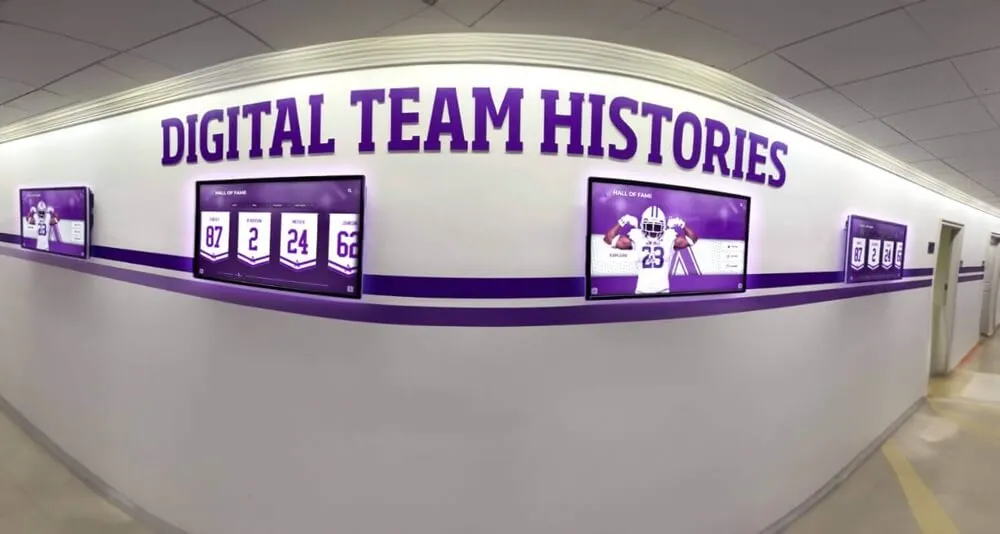
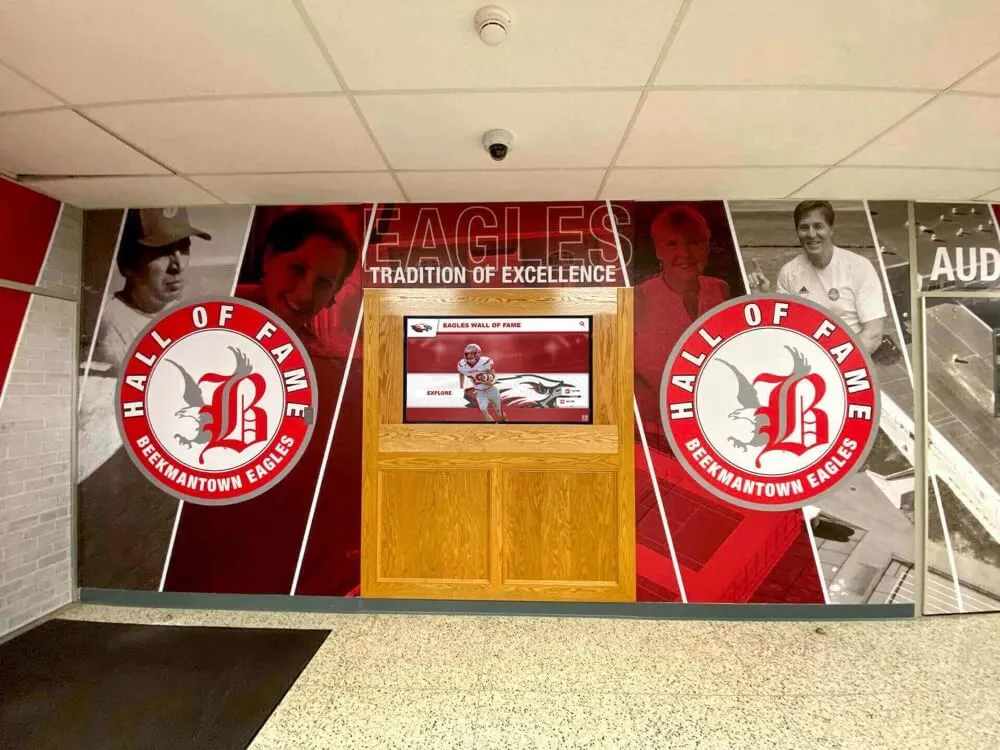
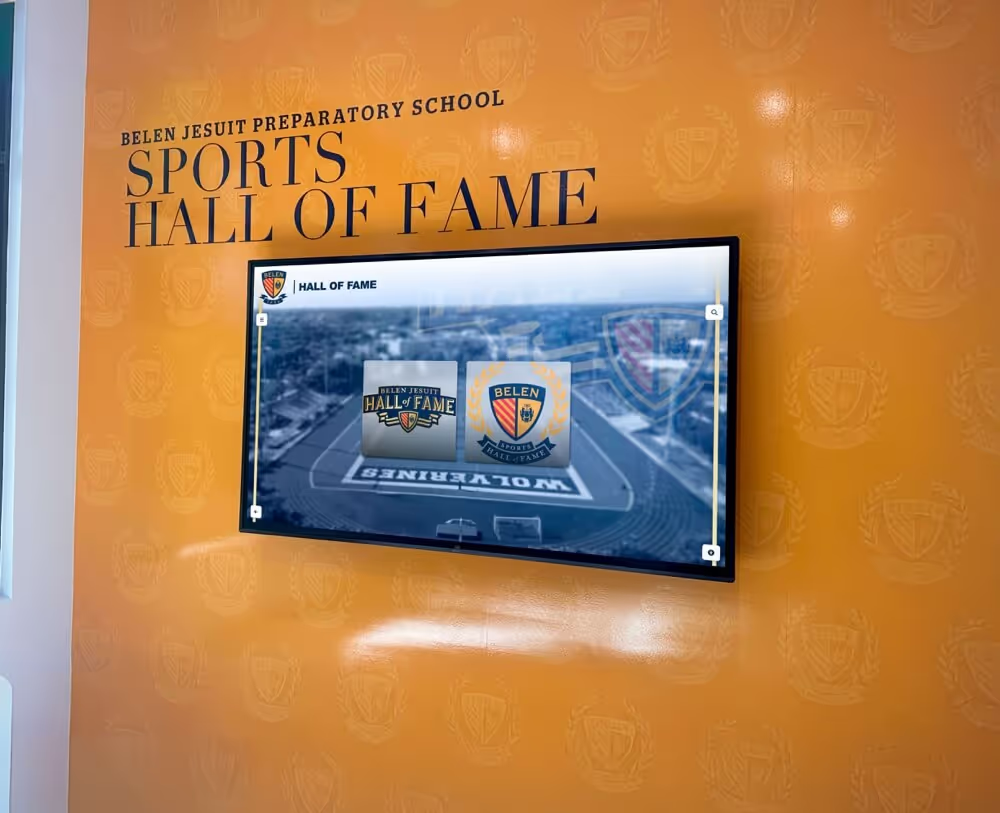
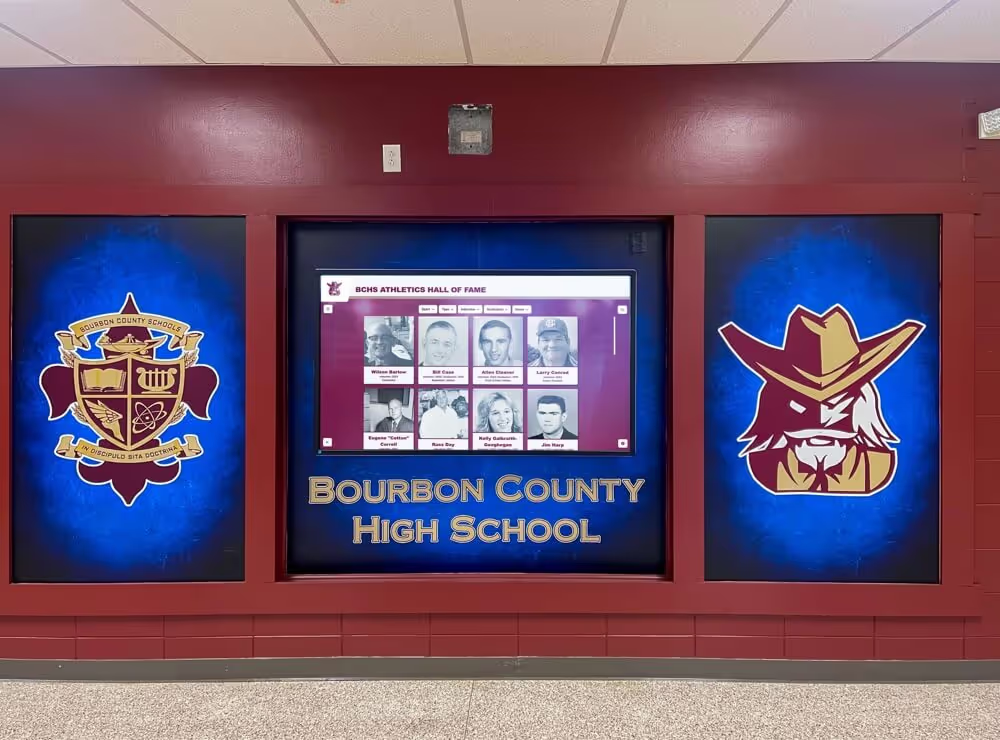
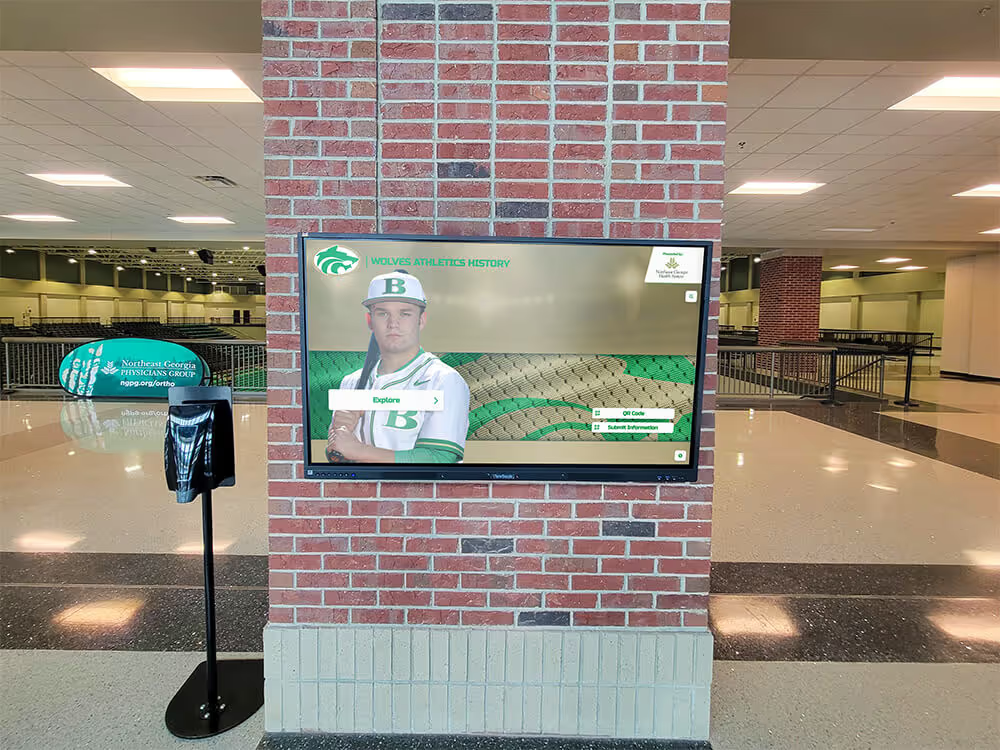
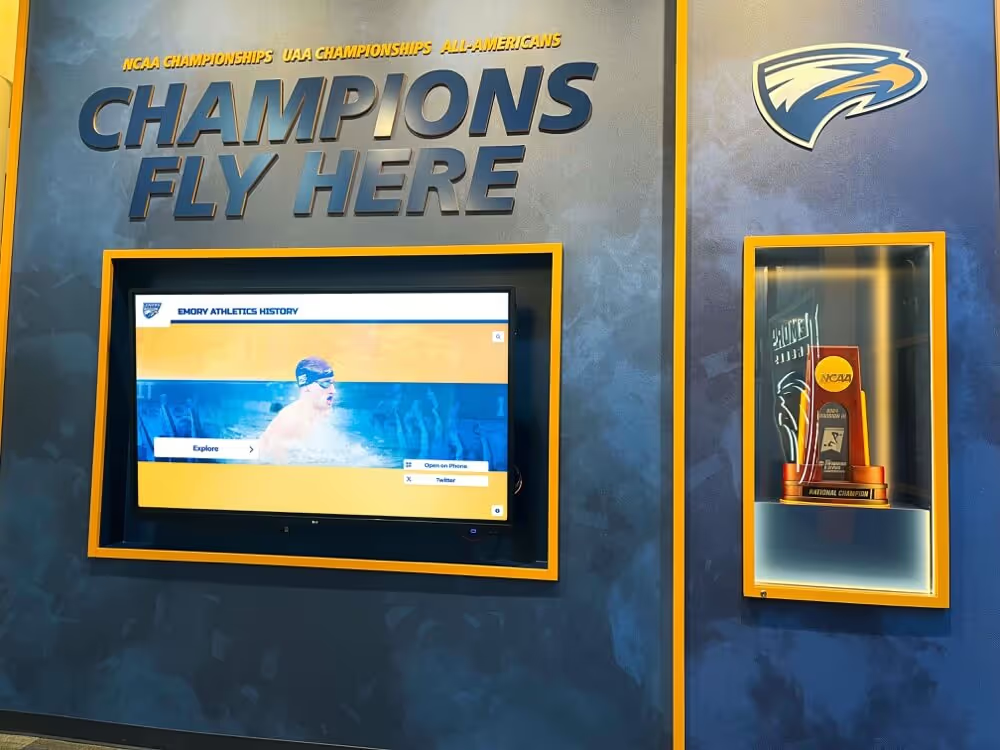
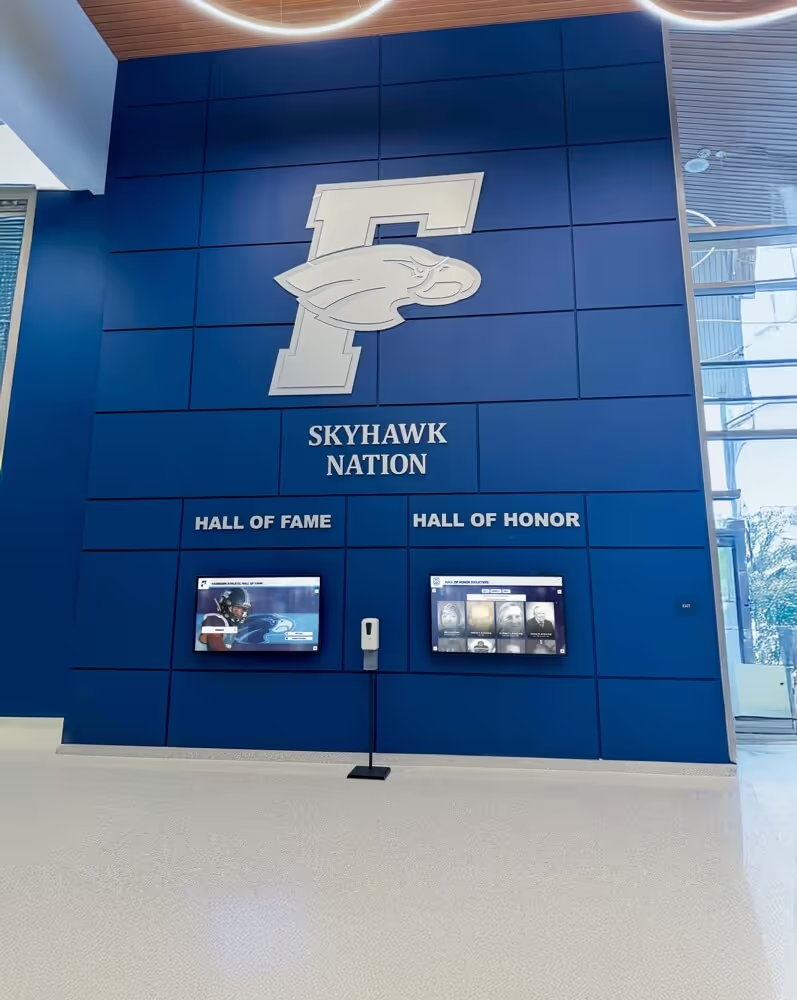
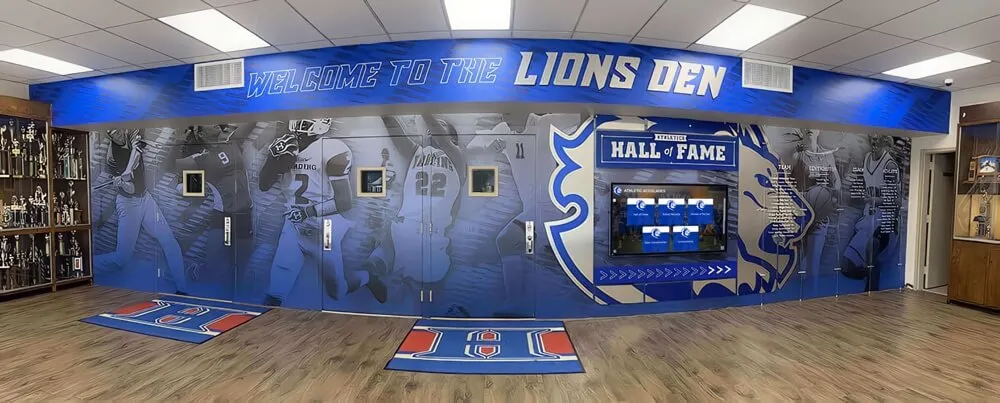
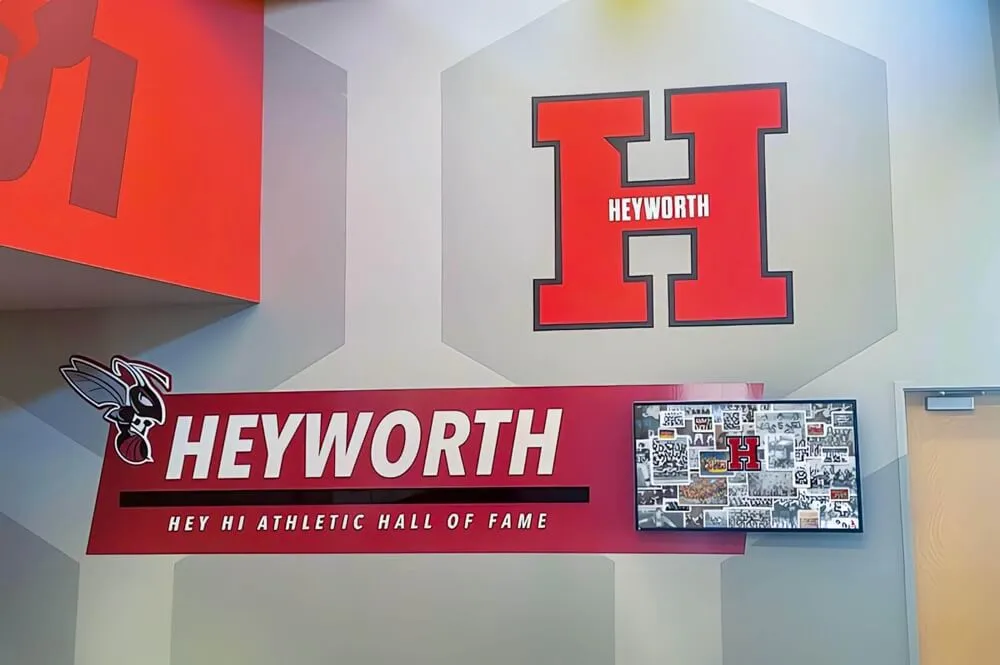
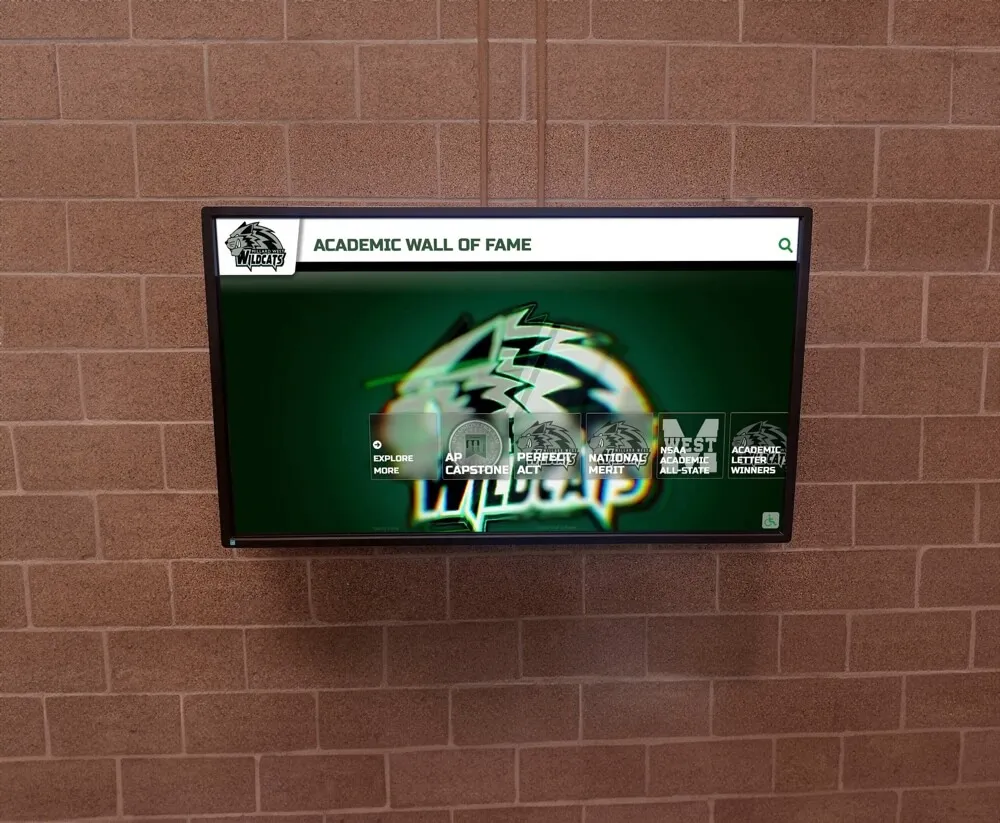
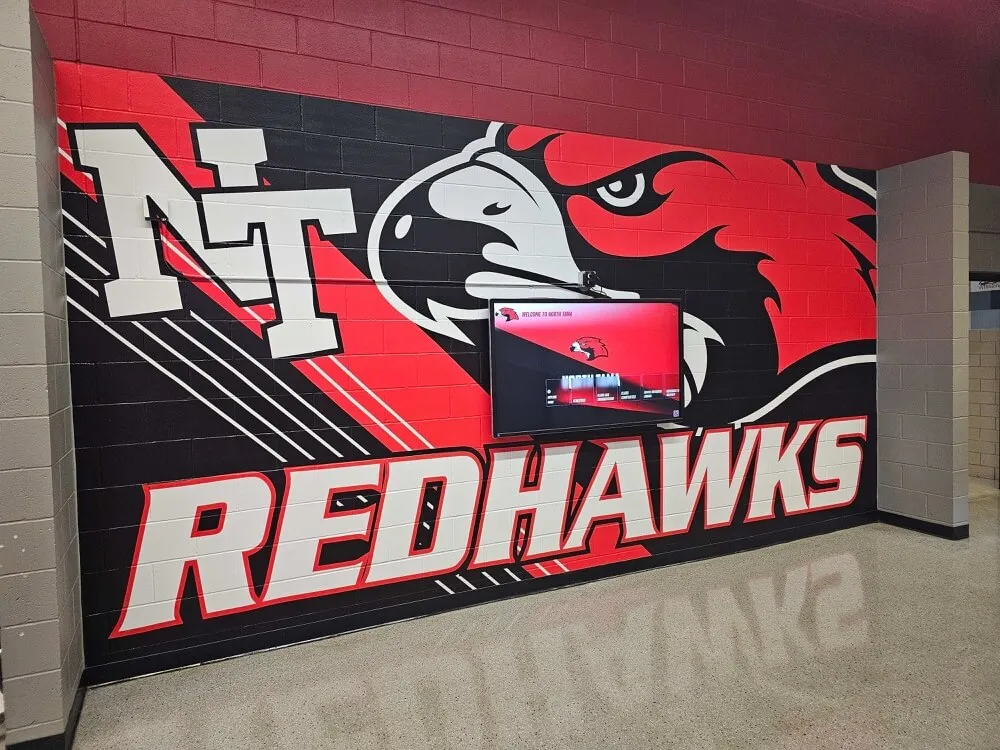
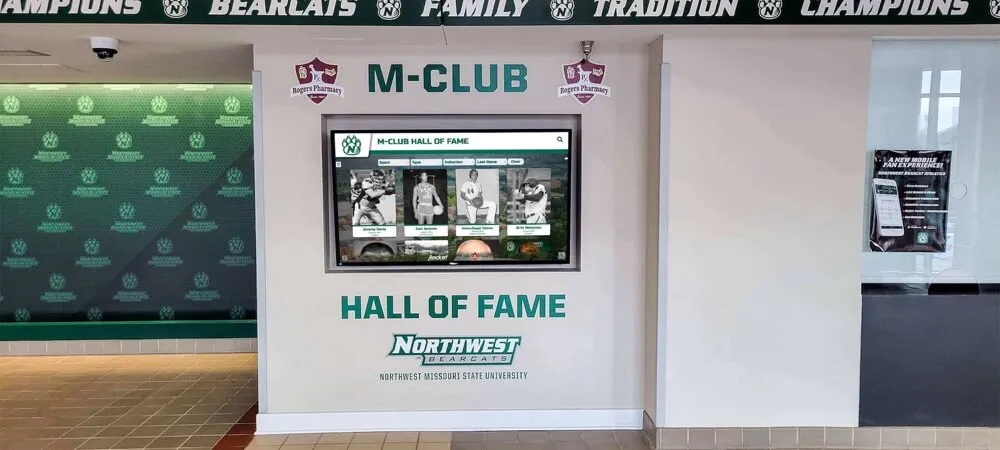
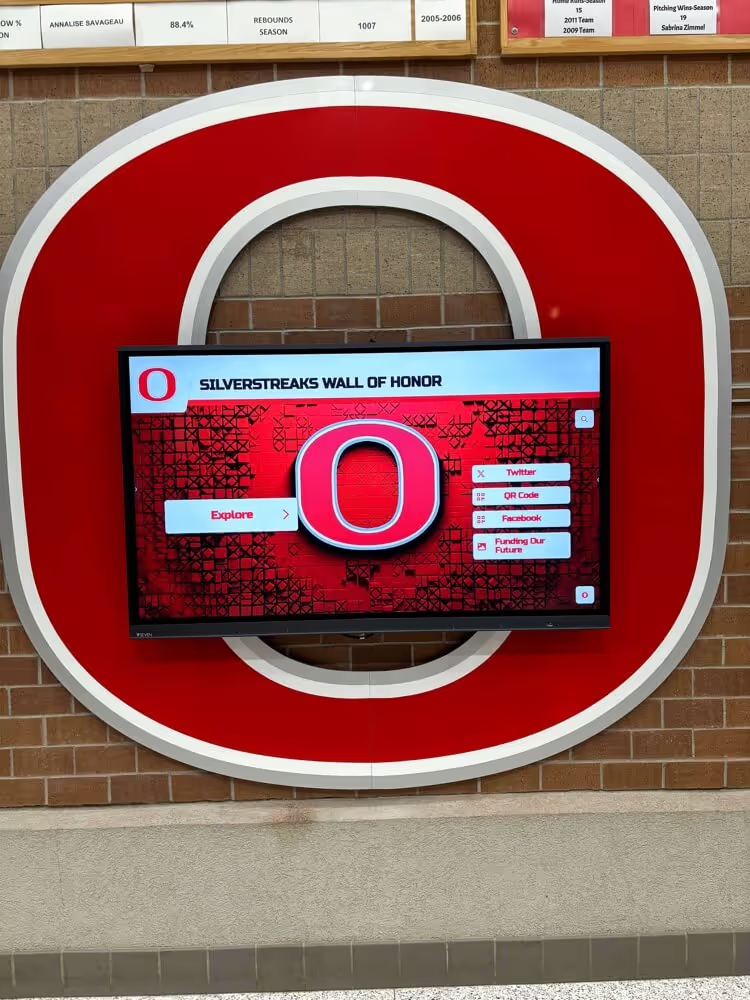
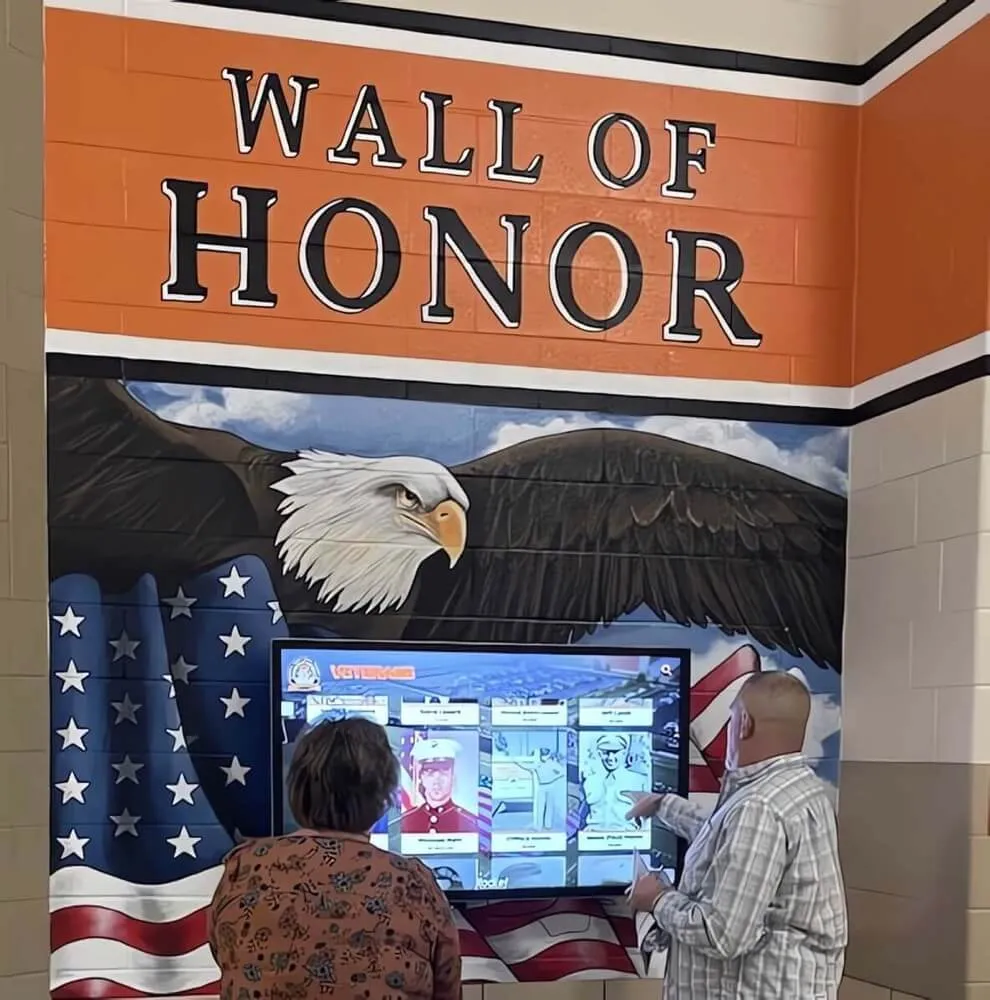
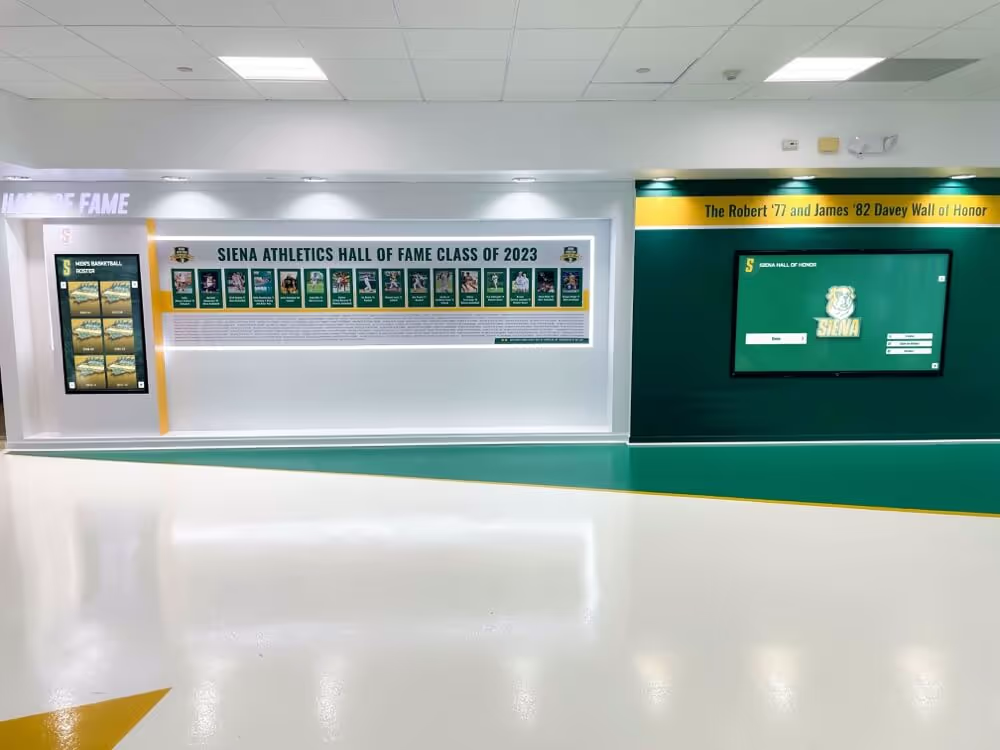
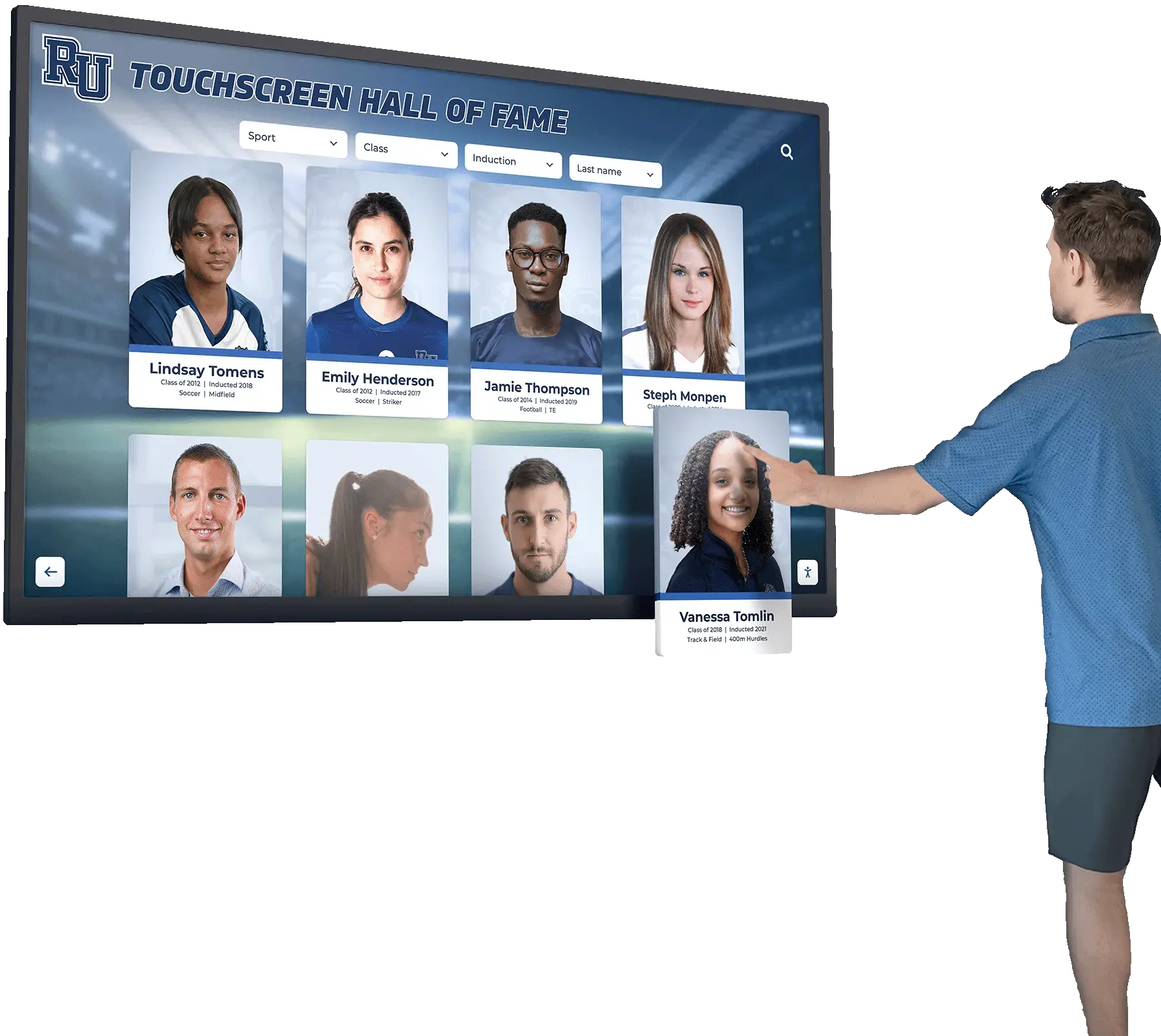
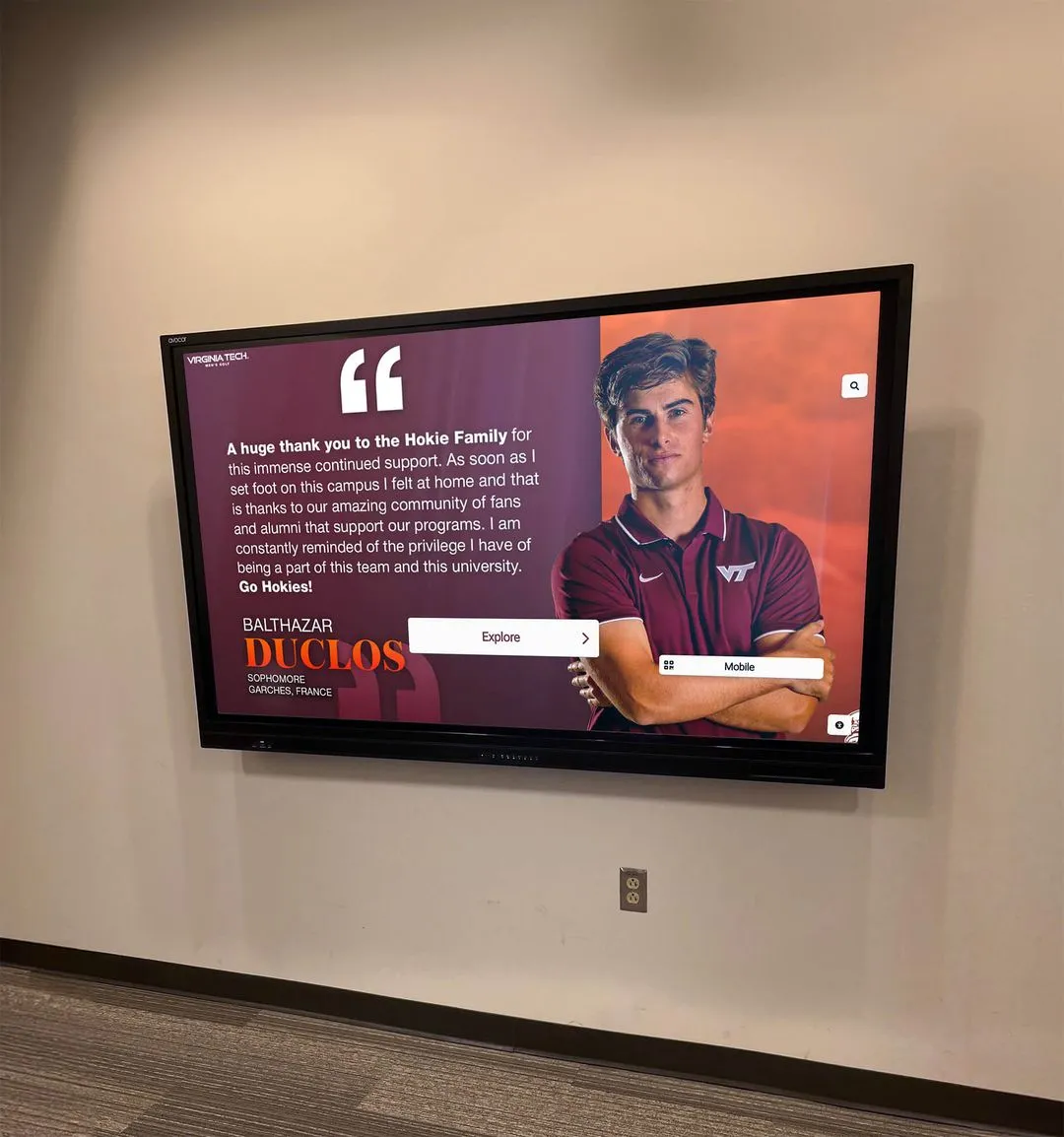
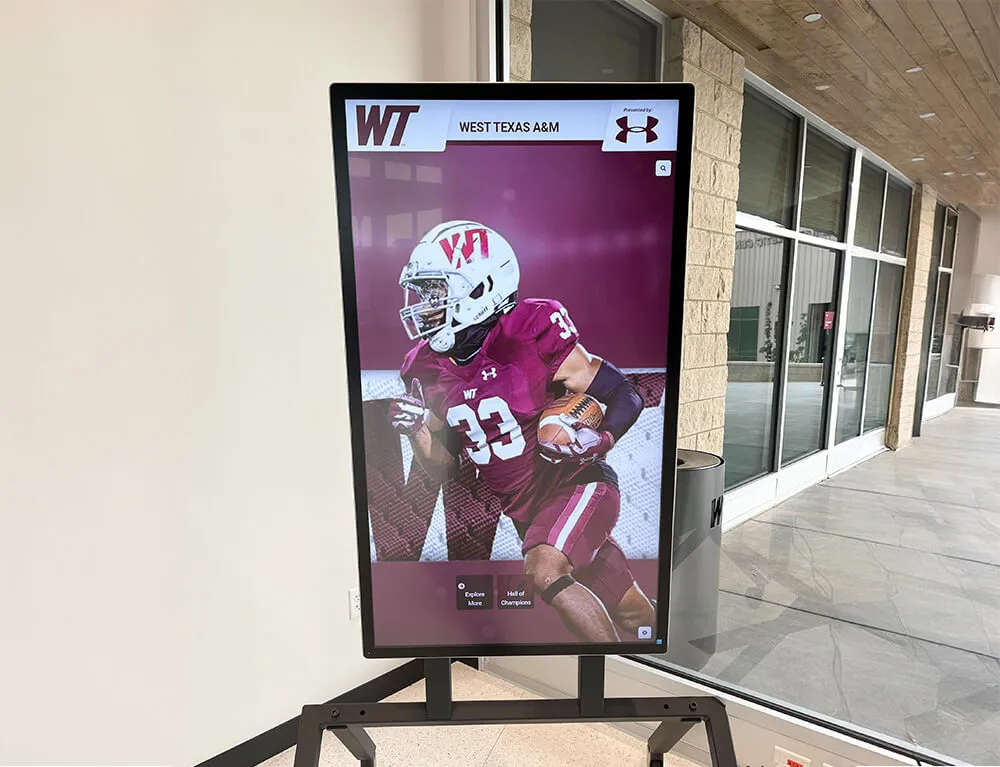
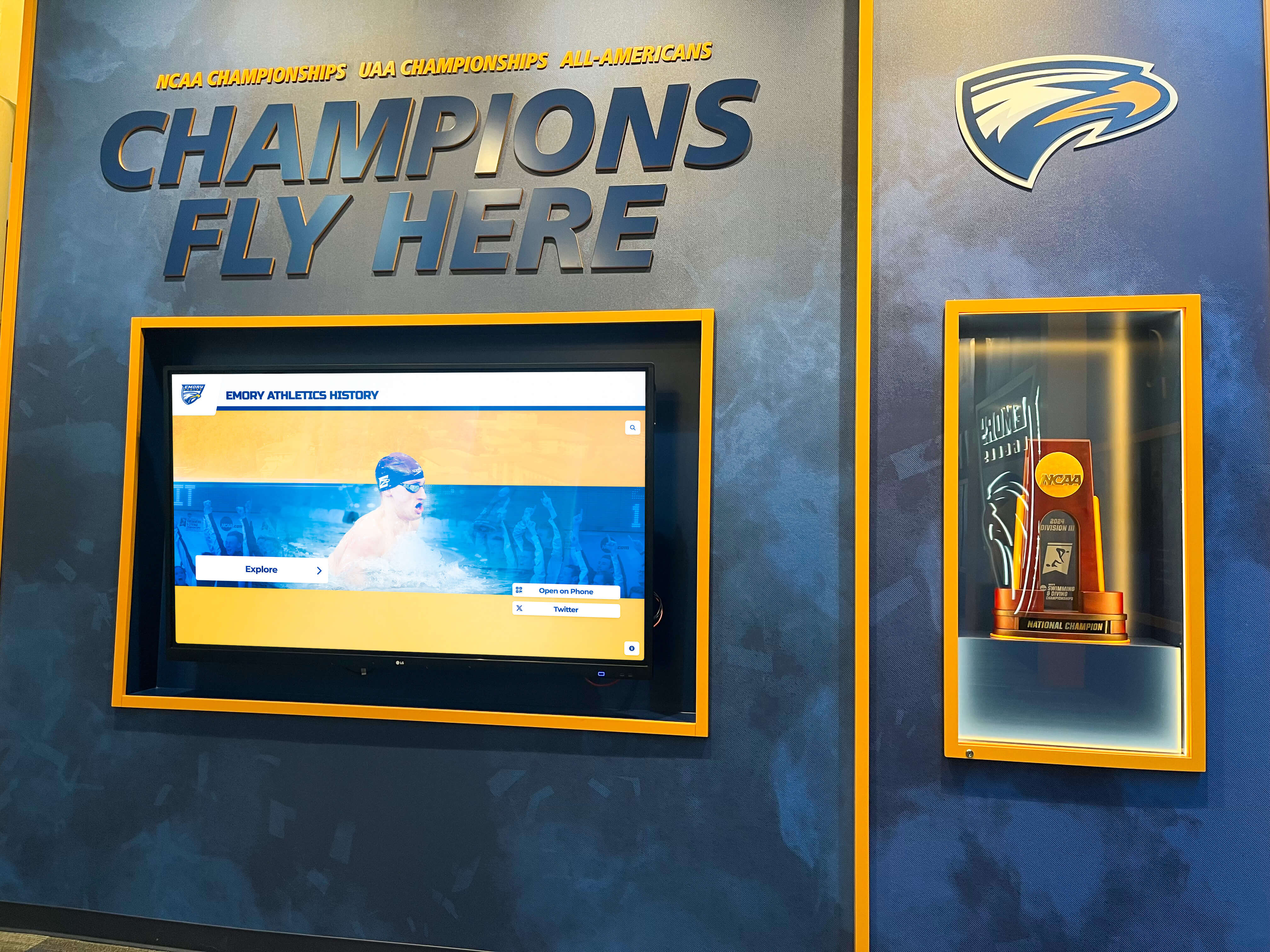
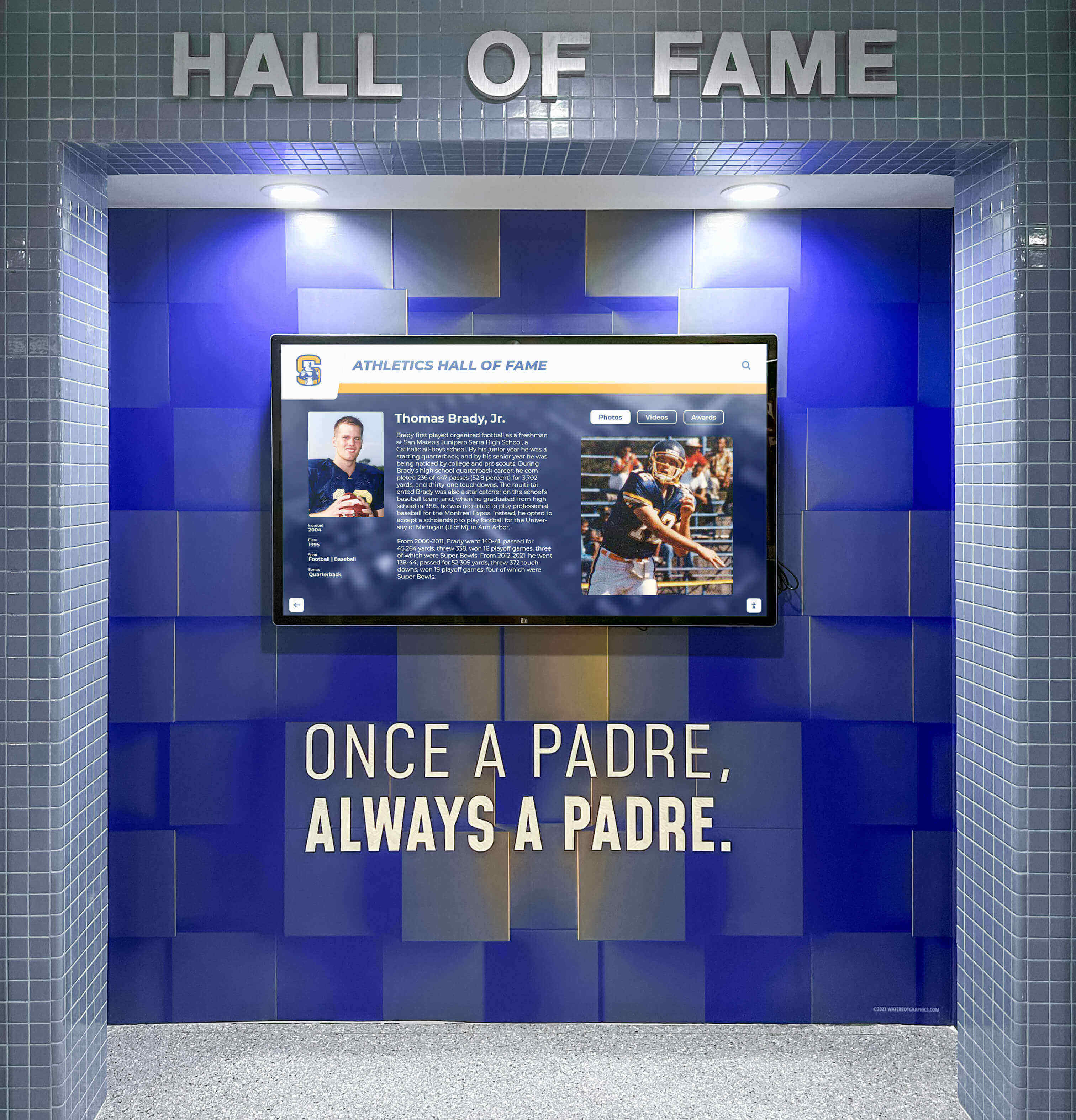
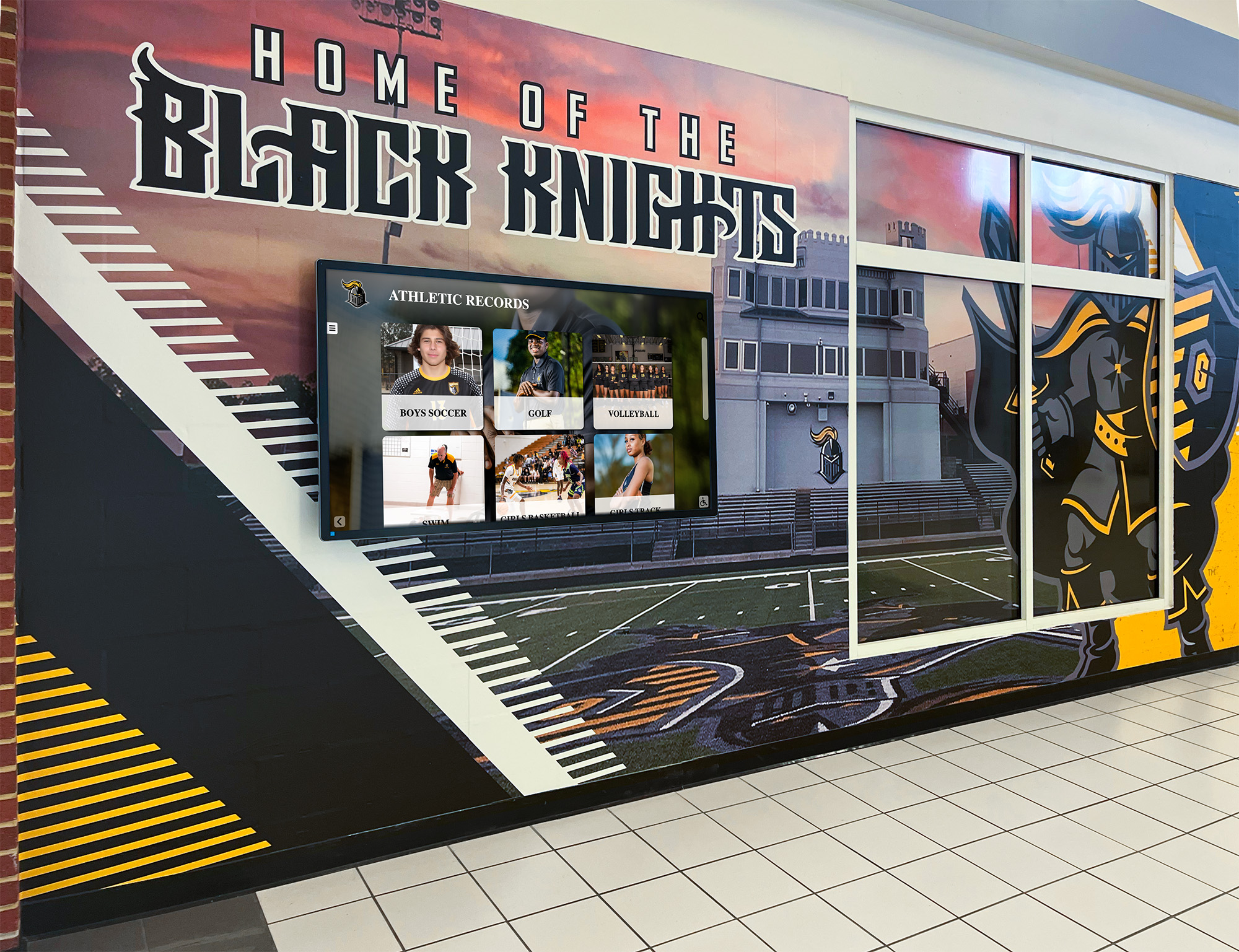
Innovative athletic programs increasingly implement digital recognition systems that solve space constraints while actually enhancing championship celebration compared to traditional banners. These interactive touchscreen displays provide unlimited recognition capacity, engaging multimedia content, and prominent visual presence that complements or replaces traditional physical banners.
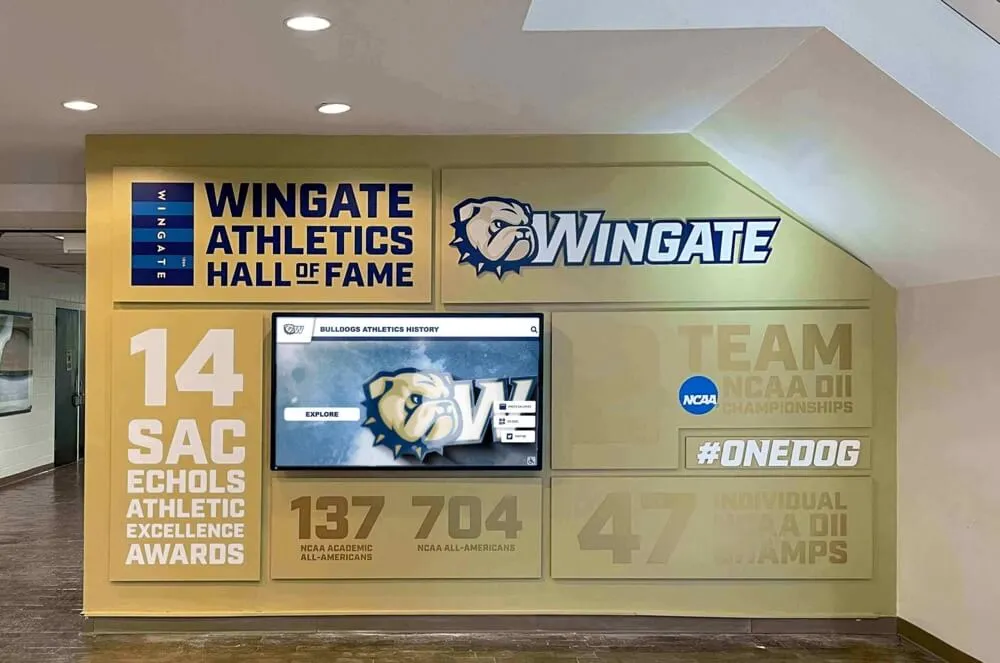
Digital championship banner displays mounted in gymnasiums or athletic hallways enable schools to showcase every championship across all sports and years without space limitations. Rather than choosing which achievements fit available wall space, comprehensive digital systems recognize complete program histories including conference titles, regional championships, state titles, individual achievements, and coaching milestones.
Key Advantages of Digital Championship Recognition:
Unlimited Capacity: Digital platforms accommodate thousands of championships without physical space constraints. Every achievement receives proper recognition regardless of how many titles programs accumulate. Schools can document complete championship histories from founding through present day without display limitations.
Enhanced Content: While physical banners present static information, digital displays showcase championship banners plus supplementary content including team photos from championship seasons, game highlights and memorable moments captured on video, complete rosters showing all athletes who contributed, detailed statistics and season records, coach profiles and championship game summaries, and historical context comparing achievements across different eras.
This multimedia storytelling creates deeper engagement than static banners permit. Athletes, alumni, and visitors spend minutes exploring championship details rather than seconds glancing at banners, creating meaningful connections with program heritage.
Instant Updates: When teams win new championships, digital recognition updates within minutes through cloud-based platforms rather than waiting weeks for banner production and installation. This immediacy allows celebrating achievements immediately while they’re most relevant to communities.
Interactive Exploration: Touchscreen interfaces enable visitors to search specific sports, years, or championship types rather than scanning through dozens of banners seeking particular achievements. This functionality proves particularly valuable for comprehensive collections where finding specific championships among extensive displays becomes challenging.
Cost Effectiveness: While initial digital display installation represents significant investment, the elimination of ongoing banner production costs—$200-400 per championship—means digital systems achieve cost parity within several years for programs regularly winning multiple championships. Digital recognition displays serve as comprehensive solutions for programs facing space constraints.
Preserved Aesthetics: Rather than increasingly cluttered walls as banner collections grow, digital displays maintain clean facility aesthetics regardless of how many championships they showcase. This proves particularly valuable in gymnasiums hosting community events, tournament competitions, and facility tours where first impressions matter significantly.
Hybrid Approaches: Combining Traditional and Digital Recognition
Many programs implement balanced approaches using traditional championship banners for most prestigious achievements—state championships, national titles, or significant milestone seasons—while documenting other accomplishments including conference titles, regional championships, and tournament victories through complementary digital displays.
This hybrid strategy preserves traditional banner aesthetics and honors top achievements with physical presence while solving space constraints through digital capacity. It also acknowledges that different achievement types may warrant different recognition approaches—state championships creating visual impact through hanging banners, while conference titles receive thorough digital documentation.
Programs might also use traditional banners for recent championships creating immediate visual celebration, then transition older achievements to comprehensive digital archives that maintain recognition while freeing physical space. This approach provides new championship visual impact during peak relevance while ensuring historical preservation.
Creating Championship Recognition Programs That Scale
Whether implementing traditional banners, digital displays, or hybrid approaches, thoughtful planning creates recognition programs that serve athletic departments effectively across years without requiring constant reassessment or major overhauls.
Establishing Recognition Standards and Policies
Clear guidelines determining which achievements warrant championship recognition prevent inconsistent decisions that create confusion or disappointment. Consider establishing written policies addressing what titles constitute championships deserving banner or digital recognition—state championships, conference titles, regional championships, invitational tournament victories, what regular season or playoff records merit recognition, and whether individual championships in sports like wrestling, swimming, or track require team or individual recognition.
Transparent, consistently applied standards ensure equitable recognition across different sports and prevent perceptions that certain programs or achievements receive preferential treatment. Written policies also provide continuity across athletic director transitions, maintaining recognition consistency as leadership changes.
Planning for Long-Term Growth
Recognition systems should anticipate rather than react to capacity challenges. When implementing new banner programs or digital displays, consider projected championship volume across 10-20 year timeframes based on historical program performance, number of sports fielding teams, and competitive classification standards.
Digital systems particularly enable this forward-thinking approach since they provide essentially unlimited capacity from implementation, eliminating concerns about future space constraints regardless of program success levels. This “design once, scale forever” characteristic makes digital recognition attractive for programs prioritizing long-term solutions.
Balancing Tradition with Innovation
Many athletic directors and school administrators value championship banner traditions while recognizing practical limitations of exclusive reliance on physical displays. Thoughtful approaches honor tradition through selective traditional banner implementation while embracing innovative digital solutions for comprehensive recognition.
Consider maintaining traditional banners for state championships, retired jerseys, or hall of fame inductees while using digital displays for conference championships, seasonal honors, and individual achievements. This balance preserves visual traditions alumni and communities expect while solving capacity constraints through complementary modern approaches.
Championship recognition ultimately serves multiple purposes—inspiring current athletes, engaging alumni, communicating program excellence, and preserving institutional history. The specific implementation approach matters less than ensuring all achievements receive meaningful recognition that serves these purposes effectively.
Best Practices for Championship Recognition Excellence
Successful championship recognition—whether through traditional banners, digital displays, or hybrid approaches—shares common characteristics that maximize effectiveness while serving program communities authentically.
Document Championships Promptly and Accurately
Immediately following championship victories, document essential information while memories remain fresh and information proves readily available. Record complete team rosters, coaching staff names, championship game or tournament results, season records and notable statistics, and photographic and video documentation of championship moments.
Prompt documentation prevents difficulties that arise when programs attempt recognizing championships years or decades later when information has scattered, participants have moved away, and memories have faded. Creating systematic documentation processes immediately following seasons ensures recognition accuracy regardless of whether implementation occurs immediately or later.
Celebrate Recognition Additions
When installing new championship banners or adding digital recognition, create ceremonial moments rather than treating them as routine facility updates. Consider unveiling new banners during pre-game ceremonies, homecoming events, or athletic recognition banquets, inviting championship team members to attend unveiling ceremonies, photographing championship teams with their banners for yearbooks and archives, and sharing recognition announcements through school communications and local media.
These celebrations extend championship recognition beyond single season victories, reinforcing that achievements create lasting program legacies. They also demonstrate to current athletes that championships they pursue receive permanent, prominent recognition rather than momentary acknowledgment.
Maintain Recognition Systems Professionally
Whether managing physical banners or digital displays, ongoing attention ensures recognition systems remain in excellent condition and continue serving programs effectively. Establish responsibility for monitoring banner condition and coordinating replacements, updating digital content regularly with new achievements and enhanced information, periodically reviewing overall recognition systems for consistency and completeness, and addressing facility changes that impact display locations or effectiveness.
Well-maintained recognition systems reflect positively on overall program professionalism and demonstrate institutional commitment to honoring achievement appropriately.
Connect Recognition with Broader Program Culture
Championship recognition works most effectively when integrated with comprehensive program cultures emphasizing excellence, tradition, and continuous improvement. Use recognition displays as teaching tools during team meetings, share historical championship stories connecting current athletes with program heritage, incorporate recognition into facility tours during recruitment visits, and leverage recognition in fundraising appeals demonstrating program excellence to donors and supporters.
Recognition displays shouldn’t exist as isolated facility decoration but rather as integral components of program identity and institutional storytelling that serve multiple strategic purposes beyond simply acknowledging past achievements.
Transform Your Championship Recognition
Custom championship banners provide time-honored approaches for celebrating team victories and building program tradition through visible, inspiring displays. From thoughtful design incorporating school branding and accurate achievement documentation through professional production and strategic installation, traditional banners create meaningful recognition when implemented effectively.
Yet as successful programs accumulate championships across multiple sports and decades, space constraints increasingly challenge exclusive reliance on physical banners. Modern digital recognition systems solve these limitations while enhancing championship celebration through unlimited capacity, interactive multimedia content, and instant updates that keep recognition perpetually current.
Whether implementing traditional championship banners, exploring innovative digital alternatives, or combining both approaches strategically, effective recognition serves essential purposes—inspiring current athletes, engaging alumni, communicating program excellence, and preserving institutional achievement history. The specific approach matters less than ensuring all championships receive meaningful, visible recognition that honors athletes’ accomplishments appropriately.
Ready to explore comprehensive solutions for your athletic program’s championship recognition? Rocket Alumni Solutions provides specialized digital recognition platforms that showcase championships, team histories, individual achievements, and program milestones through interactive displays that engage communities year-round. Discover how modern recognition technology can help your athletic program celebrate every championship prominently while building lasting traditions that inspire excellence for generations to come.