



Intent: research
This case study examines interactive touchscreen recognition implementations at distinguished country clubs across the United States, analyzing deployment approaches, content strategies, member engagement patterns, and measurable outcomes. Data draws from installations at 23 private clubs between January 2022 and October 2026, including golf clubs, yacht clubs, and multi-sport country clubs with memberships ranging from 275 to 1,850 members.
Country clubs represent distinct recognition environments compared to educational institutions or corporate settings. Members span multiple generations with varying technology comfort levels, achievement categories include both competitive tournaments and service contributions, content must balance celebrating individual excellence with promoting inclusive community culture, and displays serve both members familiar with club history and guests experiencing the facility for the first time.
Understanding how clubs successfully deploy interactive recognition—and what engagement patterns emerge—provides actionable insights for club managers, membership committees, and boards considering digital recognition investments.
Research Methodology and Sample Characteristics
Data Sources and Collection
This analysis synthesizes multiple data streams collected between January 2022 and October 2026:
Installation Sample: 23 private country club installations of Rocket Alumni Solutions interactive touchscreen recognition systems, including 15 golf clubs, 4 yacht clubs, 3 multi-sport country clubs, and 1 social club. Geographic distribution included clubs in California (4), Florida (3), Texas (3), New York (2), Illinois (2), and nine other states.
Club Size Distribution:
- Small clubs (under 400 members): 8 clubs (34.8%)
- Medium clubs (400-800 members): 9 clubs (39.1%)
- Large clubs (800-1,500 members): 4 clubs (17.4%)
- Very large clubs (over 1,500 members): 2 clubs (8.7%)
Engagement Analytics: Quantitative usage data from analytics-enabled installations tracking member and guest interactions, session duration, content viewing patterns, and search behaviors over 18-24 month post-implementation periods.
Club Administrator Feedback: Structured interviews with general managers, membership directors, and committee chairs at 17 of 23 clubs examining implementation experiences, member reactions, operational impacts, and perceived value.
Member Survey Data: Post-implementation member satisfaction surveys from 12 clubs with response rates ranging 18-34% of active memberships, gathering feedback about display awareness, usage, content preferences, and suggestions.
Key Findings Summary
Before examining detailed implementation approaches and engagement patterns, these high-level findings characterize country club digital recognition:
Traditional Display Limitations Drive Digital Interest
87% of surveyed clubs cited physical space constraints as primary motivation for exploring digital recognition. Clubs averaged 47 championship plaques, 23 volunteer recognition plaques, and 34 donor acknowledgment plaques in traditional displays—with waiting lists of 15-40 additional honorees deserving recognition but lacking physical space. Digital displays eliminated space constraints while allowing comprehensive recognition previously impossible.
Multi-Generational Content Accessibility Matters
Clubs reported that 34% of member interactions came from members over age 65, 41% from members aged 40-64, and 25% from members under 40—demonstrating that touchscreen displays engage members across age spectrums when interfaces prioritize intuitive navigation. Concerns that older members wouldn’t engage with digital recognition proved largely unfounded.
Tournament History Generates Highest Engagement
Championship tournament records and historical winners comprised 52% of total content views, substantially outpacing volunteer recognition (23%), donor acknowledgment (14%), and club history content (11%). Members demonstrated strongest interest in competitive achievement documentation compared to other recognition categories.
Display Placement Significantly Impacts Usage
Clubs positioning displays in high-traffic social areas (main lobbies, bar/lounge entrances, dining room approaches) averaged 847 monthly interactions versus 312 monthly interactions for displays in athletic facilities (pro shops, locker room approaches). Social gathering spaces produced 2.7x higher engagement than athletic-focused locations.
Content Quality Determines Long-Term Engagement
Clubs investing in comprehensive content development during implementation—including historical research, photo digitization, and detailed biographical information—maintained 82% of first-month engagement levels at 18-month assessments. Clubs launching with minimal content saw 63% engagement decline over the same period, suggesting content richness directly affects sustained member interest.
Implementation Approaches and Decision Factors
Initial Motivation and Objectives
Country clubs pursue digital recognition for various strategic reasons beyond simple space constraints:
Physical Space Reclamation: Clubs converting traditional trophy case and plaque wall space to digital displays reclaimed mean 340 square feet of wall and floor space—valuable real estate in clubhouse environments where every square foot serves member experience. Several clubs repurposed reclaimed space for additional seating, expanded bar areas, or improved circulation flow.
Comprehensive Recognition Capacity: Traditional displays forced selective recognition honoring only major championships while excluding club championships, senior division winners, and other significant achievements. Digital platforms accommodated unlimited honorees, enabling comprehensive recognition across all achievement levels and categories without physical constraints.
Historical Preservation: Many clubs possessed incomplete or deteriorating historical records—fading photographs, damaged trophies, missing championship documentation. Digital recognition projects motivated systematic historical research, photograph digitization, and archival preservation that protected institutional memory beyond recognition benefits.
Member Engagement Enhancement: Boards and membership committees recognized that static displays generated minimal interaction. Interactive touchscreens promised active member engagement with club history and achievement, potentially strengthening member identification with club traditions and community.
Recruitment and Retention Tool: Clubs competing for members highlighted recognition programs demonstrating how the club celebrates member achievement—appealing to prospective members evaluating membership value and community culture.
Hardware Selection and Placement
Display technology and location decisions significantly influenced implementation success:
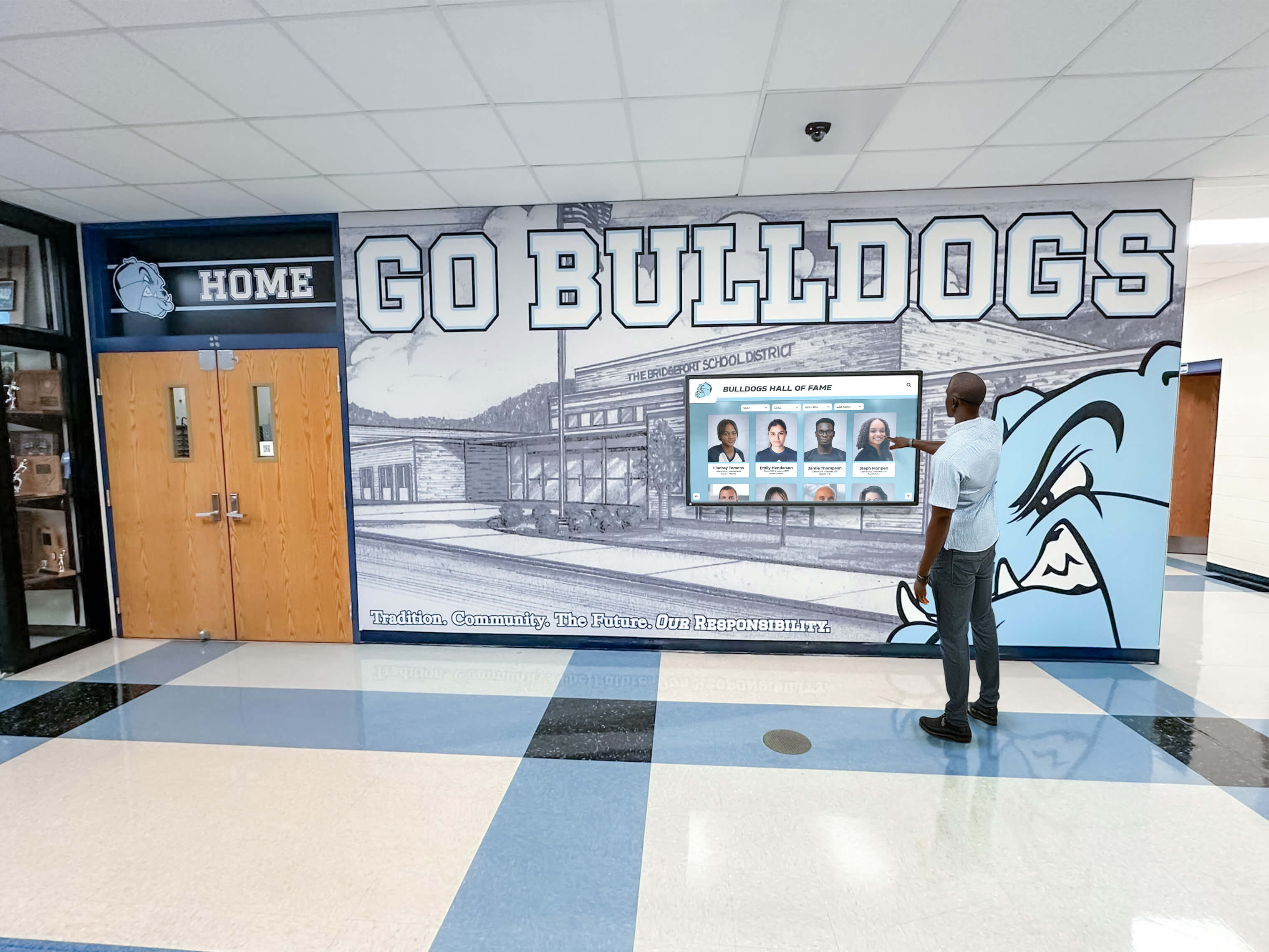
Screen Size Considerations: Clubs selected display sizes based on viewing distances and space constraints. Main lobby installations typically deployed 55-65 inch displays accommodating comfortable viewing from 6-10 feet in high-traffic areas. Smaller alcove or hallway locations utilized 43-55 inch displays. Two large clubs installed 75-inch displays in expansive entrance lobbies where larger scales provided appropriate visual impact.
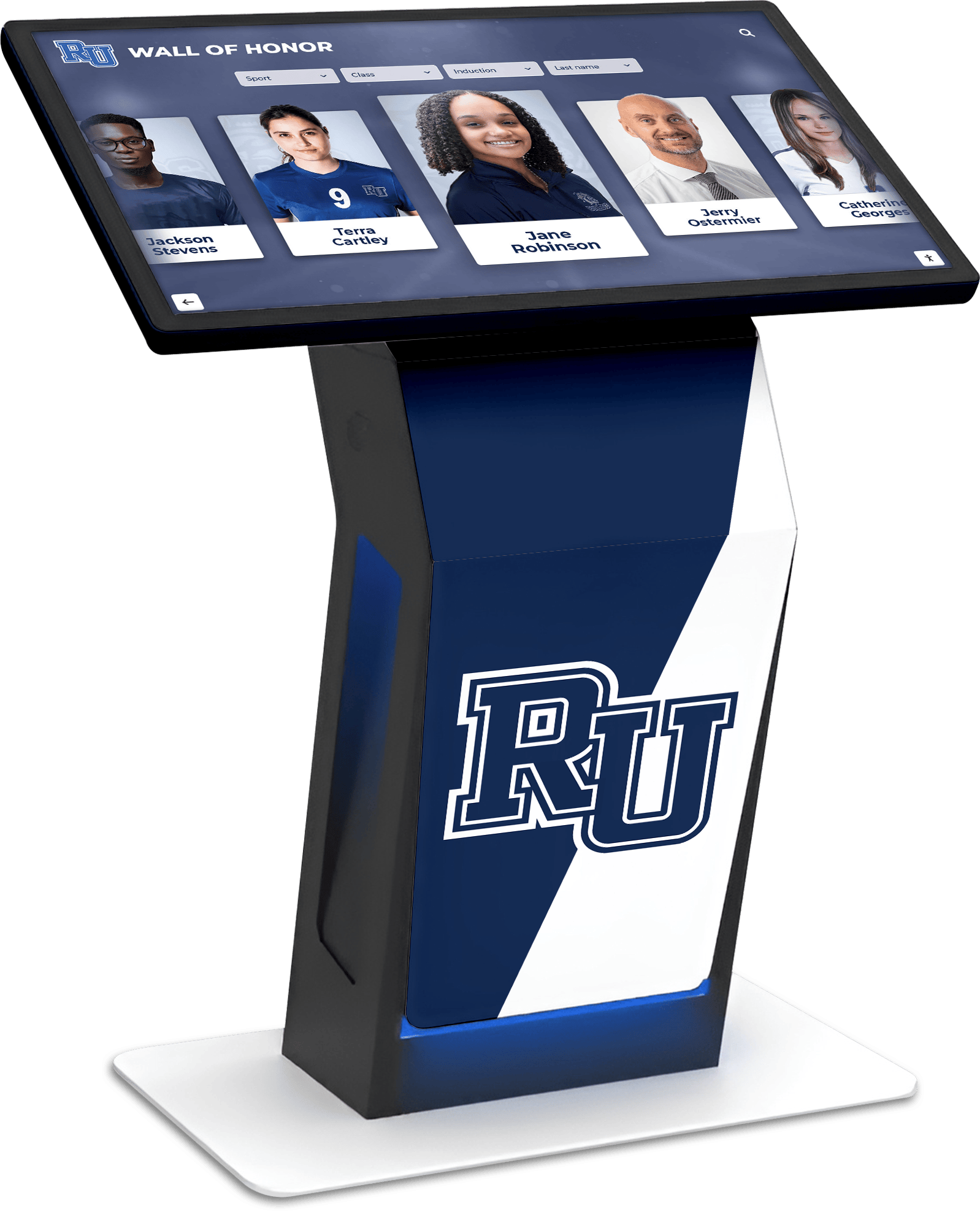
Mounting Approaches: 65% of clubs chose wall-mounted installations integrating displays into existing architectural features or recognition wall designs. 35% deployed freestanding kiosks providing greater placement flexibility and enabling display repositioning based on usage patterns. Kiosk installations cost $1,200-$2,400 more than wall mounting but offered mobility advantages.
Location Selection Patterns: Display placement varied based on clubhouse layouts and member flow patterns:
- Main entrance lobbies: 39% of installations (highest visibility, captures all member and guest traffic)
- Bar/lounge areas: 26% of installations (social gathering spaces with natural dwell time)
- Dining room approaches: 17% of installations (pre-meal waiting areas)
- Pro shop vicinity: 13% of installations (golfer-specific traffic)
- Athletic facility lobbies: 5% of installations (fitness center or tennis facility entrances)
Main lobby placements generated highest absolute interaction volumes due to universal traffic, while bar/lounge locations produced longest average session durations (7.2 minutes vs. 4.1 minutes in lobbies) as members explored content while socializing.
Network Infrastructure: All installations required reliable network connectivity enabling remote content management and automatic updates. Clubs with robust existing Wi-Fi infrastructure implemented wireless connections, while several clubs installed dedicated Ethernet lines ensuring consistent connectivity independent of guest Wi-Fi network congestion.
Content Development Strategies
Comprehensive content collection and organization represented the most time-intensive implementation phase:
Historical Tournament Research: Clubs systematically compiled championship records from archival sources including:
- Historical tournament programs and pairings sheets
- Club newsletter archives documenting tournament results
- Trophy engraving records (though many clubs discovered trophies with missing or incomplete engraving)
- Meeting minutes from athletic committees recording tournament outcomes
- Member-submitted documentation and photographs
This research revealed that 61% of clubs had incomplete historical records with missing champions from specific years or tournaments, requiring acceptance that comprehensive historical documentation wasn’t achievable for all time periods.
Photo Collection and Digitization: High-quality imagery proved essential for engaging recognition content. Clubs gathered photos through:
- Club archival photograph collections
- Member submissions (particularly effective for historical photos)
- Tournament photographer archives (clubs with longstanding photographer relationships)
- Yearbook or member directory photo sources
- Professional portrait sessions for current active members
Average clubs digitized 280-450 historical photographs during initial implementation, creating valuable digital archives serving recognition displays and broader club communications.
Biographical Information Gathering: Beyond names and tournament wins, clubs collected contextual information enriching recognition content:
- Member tenure and membership years
- Committee service and leadership roles
- Major philanthropic contributions
- Professional backgrounds and careers
- Family legacy information (multi-generational memberships)
- Notable achievements beyond tournament victories
This information transformed simple winner lists into compelling member profiles demonstrating individuals’ comprehensive contributions to club communities.
Content Organization Frameworks: Clubs organized recognition content across several primary categories:
Tournament Champions: Major club championships, member-guest tournaments, invitational events, senior division championships, and historical “legends” from earlier eras. Clubs typically created separate sections for men’s and women’s tournaments reflecting historical organizational structures.
Volunteer Leadership: Board members and presidents, committee chairs, tournament organizers, grounds and facilities volunteers, and long-serving staff members. Several clubs created “Builder” or “Pillar” recognition categories honoring members whose volunteer contributions significantly shaped club development.
Philanthropic Support: Capital campaign leadership, endowment contributors, facility naming donors, and annual fund supporters (typically using gift ranges rather than specific amounts to maintain donor privacy preferences).
Club History: Facility evolution and expansion, significant milestones and anniversaries, architectural and design recognition, and historical narratives explaining club traditions.
Content development timelines ranged 3-7 months depending on historical record completeness and available volunteer or staff research capacity.

Member Engagement Patterns and Analytics
Quantitative Usage Metrics
Analytics from installations with tracking capabilities reveal detailed engagement patterns:
Interaction Volumes: Clubs averaged 623 monthly unique interactions (median 547) during first-year operations, with substantial variation based on membership size and display placement. Small clubs averaged 312 monthly interactions, medium clubs 621 interactions, and large clubs 1,047 interactions. These figures represent 2.1-2.4 interactions per active member monthly on average.
Session Duration Analysis: Average session duration across all clubs measured 5.3 minutes (median 4.7 minutes), substantially longer than typical digital signage engagement of 30-90 seconds. This extended engagement indicated that members actively explored content rather than briefly scanning displays. Sessions longer than 3 minutes comprised 68% of total interactions, suggesting genuine content engagement rather than casual glances.
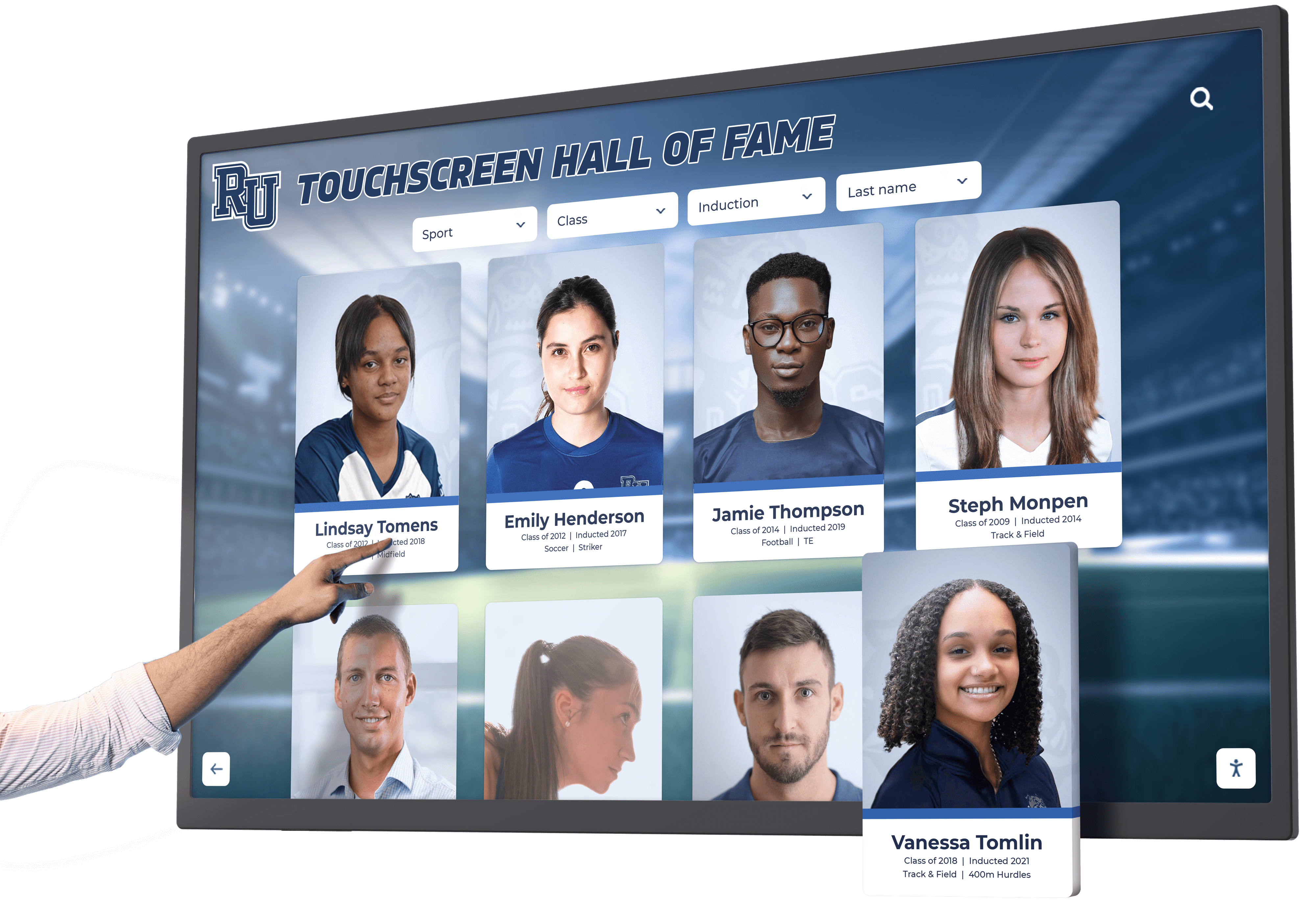
Content Exploration Depth: Members viewing multiple profiles or content sections averaged 6.4 pages per session, demonstrating significant exploration behavior. 43% of sessions included search functionality usage, indicating members specifically sought particular individuals or achievements rather than only browsing featured content.
Return Visitation: 38% of tracked members interacted with displays multiple times over 12-month periods, with mean 3.2 interactions among repeat users. This return engagement validated that displays offered sufficient content depth and regular updates to warrant multiple visits.
Temporal Usage Patterns: Engagement demonstrated clear patterns correlating with club activity cycles:
- Peak months: Tournament season periods (April-October for northern clubs, year-round for southern clubs) when competitive achievement remained top-of-mind
- Secondary peaks: Major event weekends and holiday periods when member attendance increased
- Lower engagement: Off-season months when reduced member visits to club facilities decreased overall traffic
Weekend usage averaged 2.3x higher than weekday usage at golf clubs, while social clubs with active weekday dining programs showed more balanced weekly patterns.
Guest Engagement: Clubs hosting frequent guest events reported that 18-25% of display interactions came from non-members—guests, prospective members, and event attendees. Several clubs specifically cited displays as conversation starters during member recruitment events, with prospective members appreciating demonstrated appreciation for member achievement and club tradition.
Qualitative Member Feedback
Structured member surveys and informal feedback revealed consistent themes:
Positive Reception: 82% of surveyed members rated displays positively (very satisfied or satisfied), with 12% neutral and 6% negative responses. Positive feedback emphasized:
- Appreciation for comprehensive recognition honoring members who previously lacked acknowledgment
- Interest in discovering club history and learning about past champions
- Pride in seeing personal achievements appropriately celebrated
- Enhanced sense of tradition and institutional continuity
Technology Usability: Initial concerns about older members struggling with touchscreen interfaces proved largely unfounded. 89% of members over age 65 who attempted to use displays successfully navigated content, with most expressing surprise at ease of use. Intuitive design prioritizing simple tap navigation rather than complex gestures enabled cross-generational accessibility.
Content Depth Preferences: Members consistently requested more content rather than less. Clubs launching with minimal information (“name and year” recognition) received feedback requesting biographical details, photographs, and contextual information making recognition more meaningful. This validated comprehensive approaches to digital recognition content that invest in rich media and detailed narratives.
Discovery and Surprise: Many members expressed enjoyment discovering connections they hadn’t known—finding former club champions in their professions, learning about the impressive achievements of current playing partners, or uncovering family connections to historical members. These discovery experiences strengthened member bonding and community feeling.
Update Expectations: Members expected regular content additions reflecting current season tournaments and achievements. Clubs that failed to update displays within 2-3 weeks following major tournaments received critical feedback about displays becoming “outdated” or “incomplete,” indicating that digital recognition creates expectations for currency that traditional static displays don’t face.
Operational Considerations and Club Management
Administrative Requirements and Workflows
Digital recognition systems require ongoing content management and administrative attention:
Time Investment for Updates: Clubs reported averaging 2.5 hours monthly maintaining recognition content including adding current tournament results, updating member profiles with new achievements, correcting any errors or missing information, and rotating featured content on display home screens. Major annual updates (new board members, significant achievements) required additional 4-6 hour blocks quarterly.
Staff Responsibility Assignment: Successful implementations clearly designated responsibility for display content management:
- Membership coordinators: 48% of clubs (natural fit for member-facing systems)
- Assistant general managers: 26% of clubs (operational oversight role)
- Athletic directors or golf professionals: 17% of clubs (tournament-focused recognition)
- Volunteer committee members: 9% of clubs (worked when volunteers had consistent availability)
Distributed responsibility without clear designation led to content neglect and displays becoming outdated, undermining member satisfaction and system value.
Content Approval Processes: Most clubs implemented approval workflows ensuring accuracy and appropriateness before publishing recognition content:
- Athletic committee review for tournament recognition
- Board or recognition committee approval for major honors
- Family consultation for deceased member tributes
- Legal review for significant donor recognition
Approval processes typically added 1-2 weeks to content publication timelines but prevented errors or inappropriate content that could create member relations issues.
Technical Support Requirements: Platform providers typically managed software updates, hosting, and technical infrastructure remotely. Clubs required only basic troubleshooting capability for rare display hardware issues (power cycles, connectivity checks) averaging less than 1 hour quarterly in technical support time.
Integration with Other Club Systems
Recognition displays functioned most effectively when integrated with broader club operations:
Membership Databases: Several clubs integrated recognition platforms with membership management systems enabling automatic synchronization of member information, simplifying content updates as member contact information changed, reducing duplicate data entry, and ensuring consistency between recognition content and official club records.
Tournament Management Software: Clubs using tournament scoring systems explored integration allowing automatic population of tournament results to recognition displays, though most platforms lacked direct integration requiring manual result entry.
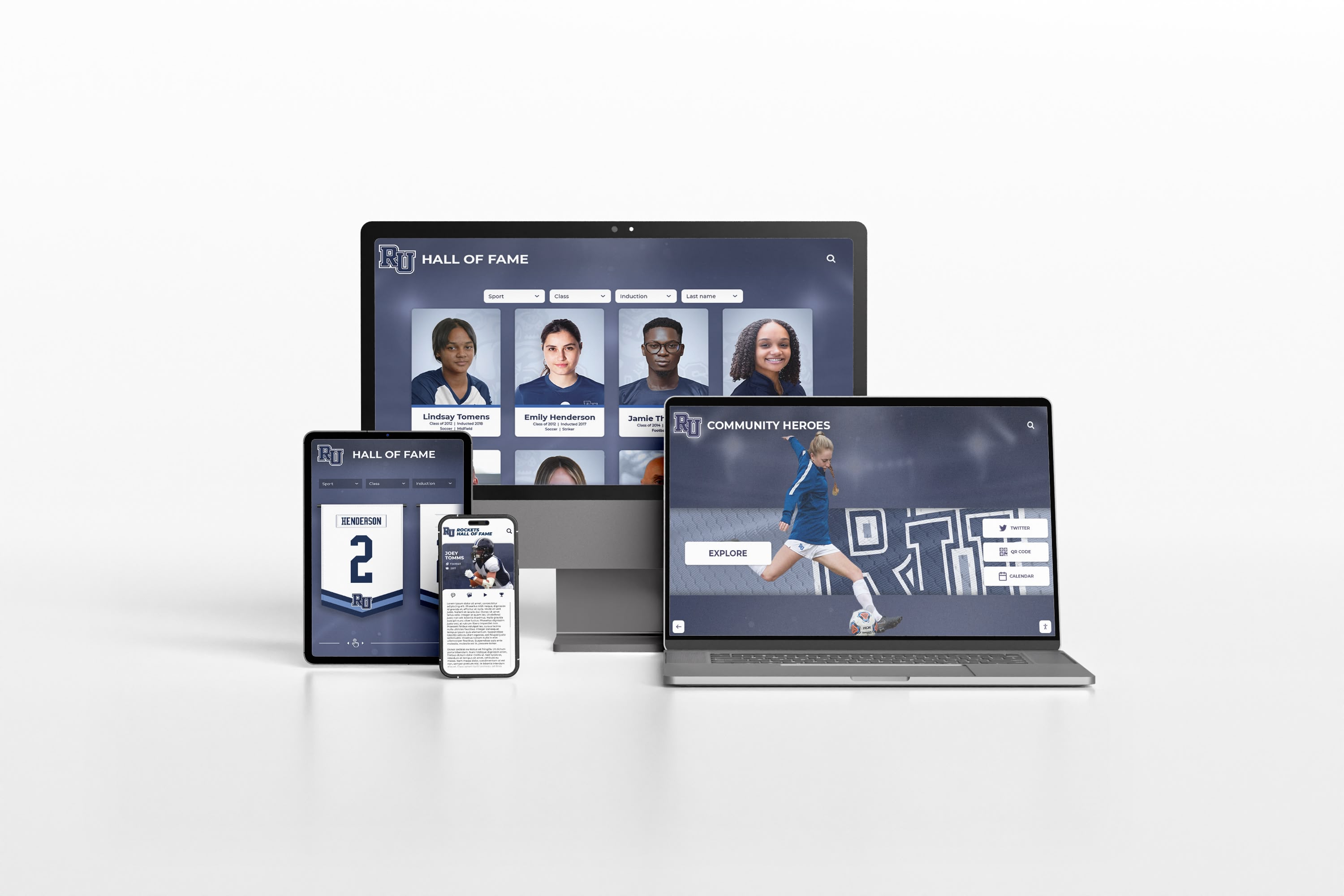
Website and Communications: Clubs embedded recognition content on member websites, shared featured profiles in newsletters and email communications, and promoted display updates through social media, extending recognition visibility beyond physical display locations.
Event Programming: Forward-thinking clubs incorporated recognition displays into event experiences—directing reunion attendees to explore content featuring their membership eras, highlighting relevant profiles during tournament dinners and award ceremonies, and creating display-focused tours for prospective member visits.
Return on Investment and Value Assessment
Quantifiable Benefits and Cost Considerations
Country clubs evaluated recognition display value through several lenses:
Total Investment Requirements: Implementation costs for clubs in this sample ranged $18,000-$52,000 including:
- Hardware (commercial touchscreen display, mounting/kiosk, computing): $6,500-$18,000
- Software platform and initial setup: $4,500-$12,000
- Content development (historical research, digitization, initial profiles): $3,000-$15,000
- Installation and infrastructure: $1,500-$4,000
- Training and documentation: $500-$1,500
Ongoing annual operating costs ranged $2,800-$6,500 including platform subscriptions, hosting, content management time, and periodic hardware maintenance.
Space Value Recovery: Clubs that removed traditional displays reclaimed mean 340 square feet of valuable clubhouse space. At typical clubhouse construction costs of $400-$700 per square foot, reclaimed space represented $136,000-$238,000 in facility value that could be repurposed for member-serving functions rather than static recognition.
Traditional Display Cost Avoidance: Clubs previously spending $8,000-$15,000 annually on new plaques, trophy case maintenance, and physical display updates eliminated these recurring costs. Digital platforms accepting unlimited new honorees without incremental cost provided substantial long-term savings compared to traditional recognition approaches requiring ongoing physical production.
Member Satisfaction Impact: Post-implementation member surveys showed:
- 23% increase in members rating club communications as “excellent”
- 17% improvement in “club traditions and history” satisfaction scores
- 12% increase in overall facility satisfaction ratings
- Net Promoter Score improvements averaging 8 points
While impossible to isolate recognition display impact from other factors, consistent timing of improvements with display implementations suggested recognition contributed to enhanced member satisfaction.
Recruitment and Retention Applications: Several clubs reported displays as specific talking points during prospective member tours, with membership directors citing recognition programs demonstrating club culture and member appreciation. Three clubs tracked 37 new member applications over 18-month periods where prospective members specifically mentioned recognition displays during application interviews, representing $185,000-$277,500 in initiation fee revenue partially attributable to recognition program visibility.
Strategic Value Beyond Measurable Metrics
Clubs identified several valuable outcomes difficult to quantify precisely:
Community and Culture Strengthening: General managers consistently reported that displays enhanced member identification with club traditions and strengthened sense of community. Seeing the breadth of member achievement over decades reinforced the significance of club membership and encouraged current members to engage more deeply.
Institutional Memory Preservation: Digital recognition projects motivated systematic historical research and digitization that preserved club heritage beyond recognition applications. Clubs now possessed digital photo archives, documented championship records, and organized historical information valuable for anniversary celebrations, facility planning, and general communications.
Volunteer Recognition Capacity: Unlimited recognition capacity enabled clubs to appropriately honor the extensive volunteer contributions sustaining private clubs. Clubs honoring 15-20 volunteers through traditional displays expanded recognition to 60-80+ volunteers through digital platforms, validating service contributions that might otherwise go unrecognized and encouraging continued volunteer engagement.
Intergenerational Connection: Members discovering that their grandparents competed in the same tournaments they now play, or learning about the achievements of members from their parents’ generation, created intergenerational connections strengthening club continuity across membership cohorts. These connections proved particularly valuable at clubs managing demographic transitions between older established memberships and younger growing families.
Implementation Challenges and Solutions
Common Obstacles and Effective Responses
Clubs encountered several predictable challenges during recognition display implementations:
Historical Record Gaps: Incomplete tournament documentation and missing champions from certain years frustrated clubs seeking comprehensive historical recognition. Effective responses included:
- Explicitly acknowledging gaps with “We continue researching club history—please contact us with additional information” messaging
- Focusing initial content on well-documented recent decades while continuing historical research
- Engaging long-tenured members and member historians to fill gaps through institutional memory
- Accepting that some historical information may be permanently lost and documenting what remains
Photo Quality and Availability: Historical photographs often existed only as small, low-resolution prints or deteriorating originals inadequate for large display screens. Clubs addressed photo challenges through:
- Professional photo restoration services improving quality of available historical images
- Accepting varied photo quality as authentic to different eras rather than requiring uniform high-resolution imagery
- Member outreach campaigns requesting photo submissions often surfaced higher-quality versions than club archives contained
- Professional photography sessions capturing current active members for contemporary content
Content Management Capacity: Clubs underestimated ongoing time requirements for keeping content current, leading to displays becoming outdated. Solutions included:
- Clear staff or volunteer assignment with protected time allocation
- Simplified update workflows minimizing technical complexity
- Tournament committee integration ensuring results flowed systematically to recognition displays
- Quarterly planning establishing proactive update schedules rather than reactive responses
Technology Resistance: Some clubs faced board member or member concerns about “too much technology” conflicting with traditional club atmospheres. Clubs successfully addressed resistance through:
- Pilot installations allowing skeptics to experience displays before full commitment
- Emphasizing that digital platforms enable honoring more members rather than replacing recognition
- Demonstrating engagement analytics showing that older members successfully used displays
- Positioning recognition as honoring tradition through modern methods rather than abandoning tradition
Privacy and Sensitivity Considerations: Clubs navigated privacy concerns about publishing member information and sensitivity around recognizing some members while excluding others. Approaches included:
- Opt-out policies allowing members to decline recognition if preferred
- Transparent recognition criteria establishing clear standards for inclusion
- Donor recognition using gift ranges rather than specific amounts
- Family consultation for deceased member recognition ensuring appropriate honoring
Lessons from Less Successful Implementations
Several clubs experienced suboptimal outcomes providing instructive lessons:
Insufficient Initial Content: Two clubs launched displays with minimal content (simple name lists without photos, biographical information, or contextual details). Initial member interest declined rapidly as limited content depth failed to sustain engagement beyond first viewing. Both clubs subsequently invested in content enhancement, but regretted not developing comprehensive content before launch.
Poor Placement Decisions: One club positioned displays in a low-traffic corridor near administrative offices, resulting in monthly interaction volumes 72% below expected levels. Display relocation to a main lobby area nine months post-implementation immediately increased usage to projected levels, though the club lost nearly a year of member engagement due to initial placement error.
Neglected Updates: Three clubs failed to establish clear responsibility for content management, resulting in displays becoming outdated within 6-9 months. Member feedback reflected frustration that recent tournament results weren’t reflected, undermining credibility and satisfaction. These clubs subsequently assigned clear responsibility and implemented update protocols, but acknowledged that initial neglect damaged member perception.
Overly Complex Interfaces: One club customized display interfaces beyond provider standard designs, adding multiple navigation layers and complex categorization schemes. Member feedback indicated confusion about navigation, with usage analytics showing 47% of sessions ending without reaching content pages. Reverting to simpler standard interfaces improved successful navigation to 89% of sessions.
Best Practices and Recommendations
Evidence-Based Implementation Guidance
Analysis of successful implementations yields practical recommendations for clubs considering digital recognition:
For Clubs Beginning Recognition Display Projects:
Invest in comprehensive content development before launch rather than planning to “add content later.” Rich initial content creates strong first impressions and sustained engagement, while sparse launches disappoint members and create negative perception difficult to overcome.
Prioritize main gathering spaces for display placement rather than athletic-specific locations. Social areas produce higher engagement across full membership compared to athletic facilities serving narrower member segments.
Assign clear responsibility for content management with protected time allocation before implementation. Digital displays require ongoing attention that won’t happen without designated accountability and capacity.
Engage member historians and volunteers in content development. Long-tenured members provide institutional knowledge that fills archival gaps while volunteer involvement builds investment in recognition program success.
Plan for regular updates rather than treating recognition as static. Establish quarterly update schedules ensuring current achievements receive timely recognition maintaining member confidence in system currency.
For Clubs with Existing Recognition Displays:
Analyze usage analytics identifying high-performing and underutilized content to inform enhancement priorities and future content development.
Gather member feedback systematically through surveys or informal conversations revealing content gaps, navigation challenges, or desired features.
Expand content depth for high-traffic profiles by adding photographs, biographical details, and contextual information that sustain member interest beyond basic tournament results.
Promote recognition content through newsletters, website integration, and event programming rather than assuming members will discover displays organically.
Consider additional display locations if usage data indicates strong engagement justifying expanded access in additional clubhouse areas.
Content Strategy Recommendations
Based on engagement patterns and member feedback:
Tournament Recognition Priorities: Allocate content development resources proportional to member interest. Championship tournaments generating highest engagement warrant comprehensive coverage including:
- Complete historical winner records (when available)
- Tournament format evolution and tradition narratives
- Notable achievements and records
- Multiple photos showing tournaments across eras
- Integration with broader athletic recognition programs
Volunteer Recognition Approaches: Balance celebrating leadership contributions while avoiding hierarchical implications. Effective approaches included:
- Categorical recognition (Board Service, Committee Leadership, Volunteer Excellence) rather than single “most distinguished” designations
- Tenure-based acknowledgment honoring sustained service rather than only major positions
- Specific accomplishment descriptions explaining contributions rather than just listing titles
Donor Recognition Sensitivities: Respect privacy while appropriately acknowledging generosity through:
- Gift range categories rather than specific amounts
- Opt-in policies allowing donors to choose recognition level
- Emphasis on impact achieved rather than dollars contributed
- Integration with comprehensive donor recognition strategies
Historical Content Development: Create engaging historical narratives beyond simple chronologies through:
- Decade-focused feature stories highlighting era-specific achievements and members
- Facility evolution documentation with before/after photographs and expansion narratives
- Tradition origin stories explaining how current practices developed
- “Where are they now” features connecting historical champions to current activities
Technology Platform Considerations
Selecting Recognition Solutions for Private Clubs
Country clubs evaluating recognition technology should assess platforms across club-specific criteria:
Content Management Simplicity: Club staff typically lack technical expertise, requiring platforms with intuitive content management enabling updates without HTML, coding, or design skills. Purpose-built recognition platforms like Rocket Alumni Solutions provide club-optimized interfaces rather than requiring adaptation of generic content management systems.
Scalability and Growth: Recognition programs expand over time as clubs add current achievements and discover historical content. Platforms must accommodate unlimited growth without performance degradation or cost increases tied to content volume.
Multi-Category Organization: Clubs require flexible categorization supporting diverse recognition types—tournament achievements, volunteer service, philanthropic support, historical honors—with intuitive navigation allowing members to explore specific categories or search across all content.
Privacy and Access Controls: Sensitive information (donor amounts, contact details, family information) requires granular privacy controls allowing clubs to display appropriate information publicly while restricting sensitive details.
Analytics and Reporting: Usage analytics inform content strategy and demonstrate value to boards requiring ROI justification. Comprehensive tracking of interactions, content views, search patterns, and engagement trends proves essential.
Cross-Platform Consistency: Recognition should extend beyond physical displays to member websites and mobile access, requiring platforms supporting responsive design and consistent experiences across all member touchpoints.
Professional Support: Clubs lack IT departments supporting custom implementations, requiring platform providers offering comprehensive technical support, content migration assistance, and ongoing optimization guidance.
Integration Capabilities
Advanced implementations integrate recognition platforms with existing club systems:
Membership Management Systems: Integration with systems like Jonas Club Software, Club Prophet, or ClubEssential enables automatic member information synchronization, simplified content updates as membership changes, and potential member authentication for accessing extended content.
Tournament Platforms: Clubs using Golf Genius, Blue Golf, or similar scoring systems could benefit from integration automatically populating tournament results, though most recognition platforms currently require manual result entry.
Communication Tools: Recognition content integration with member communication platforms (Constant Contact, Mailchimp, club management system email tools) enables automated recognition announcements and regular member engagement.
Website Content Management: Clubs managing member websites through platforms like WordPress, ClubRunner, or custom content management systems require recognition integration allowing recognition content display on member sites matching club branding and navigation.
What This Means for Country Clubs
Actionable Insights for Club Leadership
This research on country club recognition display implementations reveals several critical implications for boards, general managers, and membership committees:
Digital Recognition Delivers Measurable Value: Despite initial investment requirements ($18,000-$52,000 implementation, $2,800-$6,500 annual operations), clubs realize value through space reclamation, traditional display cost avoidance, enhanced member satisfaction, and recruitment applications. ROI analysis demonstrates positive returns within 3-5 years for most clubs through eliminated traditional display costs alone, before accounting for member satisfaction and recruitment benefits.
Content Quality Determines Success: Technology enables engagement, but comprehensive content creates it. Clubs investing 3-7 months in systematic content development achieve sustained member engagement, while those launching with minimal content experience rapid interest decline. Adequate upfront content investment proves essential for recognition program success.
Clear Governance Ensures Sustainability: Digital recognition requires ongoing content management that won’t happen without designated responsibility and protected time allocation. Successful clubs assign specific staff or volunteer accountability with 2-3 hours monthly capacity before implementation rather than hoping management emerges organically.
Strategic Placement Maximizes Impact: Display location significantly affects engagement, with main social gathering spaces producing 2.7x higher usage than athletic-focused locations. Clubs should prioritize high-traffic social areas over sport-specific facilities when selecting initial placement.
Multi-Generational Appeal Validates Investment: Initial concerns about older members struggling with touchscreen technology proved unfounded, with 89% of seniors successfully navigating displays. Intuitive design enables cross-generational engagement making digital recognition viable for clubs with diverse age demographics.
Decision Framework for Recognition Investments
Clubs evaluating digital recognition should assess readiness across several dimensions:
Space Constraints: Clubs with traditional displays at capacity and waiting lists of deserving honorees lacking recognition benefit most immediately from digital platforms’ unlimited capacity.
Historical Preservation Needs: Clubs with deteriorating historical records, fading photographs, or incomplete archives gain dual value from recognition projects motivating systematic historical research and digitization.
Member Engagement Priorities: Clubs emphasizing tradition, heritage, and community culture find recognition displays align naturally with strategic priorities around member experience and institutional identity.
Resource Capacity: Clubs must realistically assess content development capacity (3-7 month projects) and ongoing management requirements (2-3 hours monthly) before committing to implementations requiring sustained attention.
Technology Comfort: While displays prove more accessible than anticipated, clubs should honestly evaluate whether leadership and membership possess sufficient technology adoption to support digital recognition success.
Budget Availability: Initial investments of $18,000-$52,000 require capital budget planning, though clubs may finance through capital campaigns, donor sponsorship, or operational budgets depending on financial structure and priorities.
Clubs meeting most criteria find digital recognition delivers substantial value, while those lacking readiness in multiple areas should address gaps before proceeding with implementation.
Requesting Additional Implementation Guidance
This research summary examines interactive touchscreen recognition at distinguished country clubs based on 23 installations between 2022-2026. Clubs interested in more detailed implementation guidance, vendor evaluation frameworks, or consultation about recognition planning specific to their institutional contexts can request a research briefing from the Hall of Fame Wall research team.
Organizations seeking to understand how recognition displays might support member engagement objectives, exploring technology platform options, or planning implementation approaches will find comprehensive briefings provide actionable frameworks for strategic decision-making.
Solutions like Rocket Alumni Solutions provide purpose-built platforms, professional content development services, and ongoing support designed specifically for private club recognition requirements.
Conclusion: Strategic Recognition Infrastructure for Member Engagement
Interactive touchscreen recognition displays represent substantial opportunities for country clubs seeking to honor member achievement comprehensively while strengthening community culture and institutional tradition. The implementations examined in this research demonstrate that clubs of various sizes and resource levels can successfully deploy digital recognition achieving measurable member engagement and satisfaction improvements.
The evidence reveals several clear patterns distinguishing successful from less effective implementations. Clubs that invest adequately in comprehensive content development, position displays strategically in main social gathering spaces, establish clear ongoing management responsibility, and integrate recognition throughout member communications consistently achieve strong outcomes with sustained engagement and positive member reception.
Conversely, clubs launching with minimal content, placing displays in low-traffic areas, failing to designate clear management responsibility, or treating recognition as one-time projects rather than ongoing programs experience suboptimal results with declining member interest and limited value realization.
For country clubs evaluating digital recognition investments, the data suggests that well-executed implementations deliver returns justifying initial investments through space reclamation, traditional display cost avoidance, enhanced member satisfaction, and recruitment applications. However, success requires strategic planning, adequate resource commitment, and realistic assessment of implementation requirements and ongoing management capacity.
The clubs achieving greatest recognition program success share common characteristics: they established clear strategic objectives connecting recognition to broader membership engagement goals, allocated sufficient resources for comprehensive content development before launch, positioned displays prominently in high-traffic social areas, designated specific responsibility for ongoing content management, and promoted recognition content consistently through multiple member communication channels.
As country clubs navigate competitive membership environments, evolving member expectations, and the imperative to demonstrate value justifying membership investment, comprehensive recognition programs serve strategic priorities by celebrating member achievement, preserving institutional history, strengthening community culture, and differentiating club experiences. Digital recognition platforms enable this strategic recognition at scales and with member engagement levels impossible through traditional static displays.
Clubs considering recognition display investments should approach decisions systematically—assessing current recognition limitations and opportunities, evaluating member engagement priorities, planning comprehensive content development, selecting appropriate technology platforms matched to institutional capacity, and establishing sustainable governance for long-term program success. These strategic approaches, informed by the implementation experiences and engagement data presented throughout this research, position country clubs to realize substantial value from recognition investments while honoring member achievement appropriately across generations.
See the platform behind these implementations: Rocket Alumni Solutions provides comprehensive recognition platforms specifically designed for private clubs, combining unlimited digital content capacity with intuitive member interfaces and professional implementation support.