When most people hear the words "color guard" today, they picture high school students spinning flags and rifles in synchronized choreography at a Friday night football game or a winter guard competition. But that image — vivid as it is — only captures the last few decades of a tradition whose roots stretch back centuries to one of the most dangerous assignments in military history: guarding the colors.
The color guard military connection is more than a historical footnote. It explains why the term persists, why ROTC programs at high schools still perform formal color guard duties, and why the combination of discipline, precision, and symbolic weight has made color guard — in both its military and performing arts forms — such a durable part of American school life. This piece traces that full arc: from battlefields where losing the flag meant dishonor, through formal military ceremony, to the JROTC units presenting colors at Veterans Day assemblies and the winter guard ensembles competing for state championships today.
Understanding where color guard came from changes how you see what it does now. The flag-bearer who marched into cannon smoke at Antietam and the high school cadet presenting the national flag at graduation are separated by more than 150 years — but they share a common logic: the colors represent something worth protecting, displaying, and honoring publicly.

What “The Colors” Actually Meant
Before color guard can be understood, the object it guarded needs to be understood: the colors themselves.
In military terminology, “the colors” refers to the flags and standards carried by a military unit. These were not decorative. For centuries — from Roman legions marching beneath their eagle standards through the armies of the Napoleonic Wars — a unit’s flag served as the primary visual reference point for soldiers on a chaotic battlefield. Before radio, before signal flares reliable enough to coordinate large formations, the flag told soldiers where their unit was. When smoke, confusion, and the noise of battle made command and control nearly impossible, men looked for the colors to know where to go.
The American military formalized this system early. Continental Army regiments during the Revolutionary War carried two flags: the national standard and the regimental color. The national standard bore the stars and stripes; the regimental color typically displayed the unit’s designation and often its motto or battle honors. Both flags appeared on the parade ground for inspections and reviews, and both accompanied the unit into combat.
Losing the colors to the enemy carried consequences that went beyond the symbolic. It signaled that the unit had broken — that its cohesion had dissolved under enemy pressure to the point where even the flag could not be protected. Capturing enemy colors demonstrated the reverse: that a unit had pressed through to the most protected element of the opposing force. Captured enemy standards appeared in formal reports, parades, and eventually permanent displays as proof of battlefield achievement.
The Color Bearer’s Role
The soldiers assigned to carry colors were not chosen randomly. Color bearers held positions of trust and seniority within their companies. They were expected to keep the flag visible regardless of what happened around them — advancing when the unit advanced, standing firm when it held, never surrendering the flag except in conditions of total defeat.
The Civil War produced some of the most documented examples of color bearers in American military history. Regimental records frequently cite color bearers who were wounded, dropped the flag, and had it taken up by the next man in the color guard before he too fell. At some major engagements, multiple men carried the same flag in succession during a single engagement. The casualties among color companies — the small group of soldiers who comprised the actual color guard — were consistently among the highest in their regiments.
This was not accidental. An enemy that wanted to break a Union or Confederate regiment knew to concentrate fire on the colors. Knock the flag down and the rallying point disappeared. Capture it and the dishonor could demoralize an entire formation. The color guard existed to prevent exactly this — and that purpose required soldiers willing to absorb disproportionate risk to keep the symbol standing.
The Transformation from Combat to Ceremony
As warfare changed, the color guard’s practical role on the battlefield diminished. The development of modern communications technology — telegraph, telephone, radio — gave commanders tools for directing troops that no longer depended on visual rally points. By the time of the First World War, massed formations following visible flags into battle had largely given way to dispersed infantry tactics that made traditional color-bearing impractical and suicidal.
But the tradition did not disappear. It transformed.
The color guard became a ceremonial institution rather than a combat function. The same logic that had made protecting the colors so important in battle — that the flag represents something larger than any individual — made displaying the colors with precision and dignity the appropriate way to honor what those flags represented. Military parades, formal reviews, change-of-command ceremonies, funerals, and public events all gave the color guard a new context where its role was preservation and presentation rather than protection under fire.
Modern military color guards operate according to precise protocols governing how flags are carried, displayed, and retired. The order in which flags are presented — national flag first, followed by service flag, then unit colors or guidons — follows regulations that have remained largely stable for generations. The movements for posting and retiring the colors, for rendering honors when the national anthem plays, for marching in formal parades all derive from procedures developed over the course of American military history.

ROTC and JROTC Color Guards at High Schools
For most American students, the most direct encounter with military color guard tradition happens through their school’s ROTC program. Army JROTC, Air Force JROTC, and Navy JROTC programs operate at thousands of high schools across the country, and virtually all of them maintain active color guard units responsible for presenting colors at school events.
The assignment of cadets to color guard duty follows the logic of the original tradition: it is an honor that recognizes demonstrated capability and reliability. Color guard cadets are expected to know the proper protocols for flag handling, to execute precise drill movements that bring credit to the unit, and to understand the significance of what they are carrying. Being selected for color guard is a recognition of standing within the cadet corps.
ROTC color guards appear at events throughout the school calendar. Football games and pep rallies are among the most visible public occasions — cadets in sharp uniforms presenting the colors before the national anthem, carrying flags that represent the school, the state, and the nation. But the most meaningful color guard appearances often happen at events with deeper ceremonial weight: Veterans Day assemblies, memorial ceremonies, graduation ceremonies, and community events honoring service members.
At Veterans Day assemblies, an ROTC color guard presenting the colors creates a direct visual connection between the students in the auditorium and the tradition of military service that the holiday honors. Veterans in the audience recognize the protocol — the way the flags are carried, the commands called, the formal posting procedure — as genuine military ceremony rather than performance. That recognition matters. It tells veterans that the school takes their service seriously enough to teach students how to honor it correctly.
NJROTC ribbon and award display programs at high schools often feature color guard achievement alongside other cadet distinctions — reflecting how central color guard duty has become to JROTC recognition culture.
Drill Competition Color Guard Events
JROTC programs across all service branches compete in drill competitions where color guard is one of several scored events. Color guard teams are judged on precision, uniformity, execution of required movements, and the overall presentation of the element — how they carry the colors, how they move through required patterns, how they execute commands from the team commander.
These competitions create an interesting parallel to the performing arts tradition that evolved separately: both forms of color guard involve precise execution of movement sequences with flags, evaluated by judges, at a competitive level. The JROTC competition version maintains the military protocol and ceremonial seriousness of the original tradition; the performing arts version has transformed those elements into artistic expression. But the discipline demanded by both is recognizably similar — which is one reason why many high schools that have both JROTC and performing arts color guard programs find that cadets and marching ensemble members often understand each other’s training better than outsiders might expect.
How the Performing Arts Color Guard Emerged
The performing arts color guard that most Americans associate with the term “color guard” today has a distinct — though related — origin story.
Drum and bugle corps, which flourished in the post-World War II era as a competitive activity built around the musical and visual traditions of military bands, incorporated flag-bearers as part of their field presentations from the early decades of the activity. These were initially functional extensions of the military tradition: flags accompanying a marching ensemble the same way they accompanied a military unit. But as drum corps competition evolved through the 1960s and into the 1970s, the visual ensemble — the flag line — began developing its own artistic language.
Equipment became more specialized. Flags grew larger and more elaborate. Performers began incorporating spinning techniques and dramatic visual effects that went well beyond traditional flag-carrying. The flag line stopped being simply decorative and became a primary vehicle for storytelling and artistic interpretation within the competitive context.
Winter Guard International was founded in 1977 to provide competitive structure for what had become a distinct discipline: indoor color guard, performed in gymnasiums rather than on football fields, without the marching band or drum corps accompaniment. This separated color guard as a performing art from its marching band context and allowed it to develop as a fully independent competitive activity with its own repertoire, technique systems, and judging criteria.
High school marching bands adopted color guard as a standard part of their competitive field shows through the same period, so that by the 1990s, a marching band without a color guard was notable as an exception. The integration ran so deep that many students who join marching programs have no idea they are participating in an activity with military origins — the flags, rifles, and sabres they spin feel entirely like performing arts equipment, which of course they now are.
All-state musician recognition programs increasingly include color guard performers alongside instrumentalists, reflecting the activity’s recognized status within the broader marching arts and music education community.

The Shared Legacy: Discipline, Precision, and Representation
What connects the Civil War color bearer, the JROTC cadet at a Veterans Day assembly, and the high school color guard performer spinning a 6-foot silk flag in a gymnasium is something more fundamental than historical lineage: all three embody the idea that representing something larger than yourself demands precision, preparation, and public accountability.
The color guard military tradition established that carrying the colors was not an ordinary assignment. It required selection, training, and a willingness to be visible under pressure. The JROTC cadet who represents the unit at a graduation ceremony carries that logic forward directly — they have been chosen because they can be trusted to execute correctly when it matters. The performing arts color guard member who executes a difficult sequence in front of a crowd at a championship is operating in a different context but under the same fundamental pressure: the performance must be precisely right because it represents the entire ensemble.
This shared logic explains why color guard, in all its forms, generates the kind of deep commitment from participants that few activities can match. When students understand what the flags they carry represent — both in terms of program tradition and the longer historical chain they participate in — the activity takes on weight that competition results alone cannot provide.
Preserving school archives digitally allows schools to document this longer history — connecting current color guard members to the alumni who carried the same tradition in earlier decades, and to the military ceremonial roots that gave the activity its name and its weight.
Recognizing Color Guard Achievement in Schools
Recognition of color guard achievement presents particular challenges for school programs, because the activity straddles multiple institutional categories. JROTC color guard belongs to military education programs. Performing arts color guard belongs variously to music departments, physical education programs, or athletic departments depending on the school — and sometimes to no formal category at all, operating as a self-governing club or booster organization.
This institutional ambiguity has historically left color guard members underrepresented in school recognition systems designed around athletic letters, academic honors, or performing arts awards. A student who devoted four years to winter guard competition — traveling to regional and state championships, developing genuine athletic and artistic skill, achieving scores that a serious viewer can readily distinguish from those of less accomplished programs — often has no established pathway for formal recognition within their school’s existing honors structure.
Schools that have expanded their recognition frameworks to explicitly include color guard and JROTC programs have found that formalizing these pathways has measurable effects on participation and retention. When students know that sustained achievement in color guard will be visibly recognized — displayed alongside athletic letters, academic awards, and other forms of school distinction — the commitment required to develop at the highest level becomes more legible to families and communities.
State championship display and recognition guides provide frameworks for how schools can incorporate color guard competitive achievements alongside traditional athletic championships in permanent recognition displays.
Veterans Day and Memorial Recognition
Veterans Day creates a specific and powerful recognition opportunity for schools with ROTC color guard programs. The event is one of the few occasions in the school calendar where the connection between current students and military tradition is explicitly foregrounded — and an ROTC color guard performing formal ceremony at a Veterans Day assembly makes that connection visible in a way that no speech or video can fully replicate.
Schools that build Veterans Day programs around ROTC color guard participation are doing something structurally important: they are creating a recurring moment where the ceremony tradition is practiced, observed by the full school community, and associated with specific students who are honored for their participation. Over time, Veterans Day becomes an anchor event for ROTC recognition, and alumni who participated in color guard ceremonies as students find the tradition particularly meaningful when they encounter it years later.
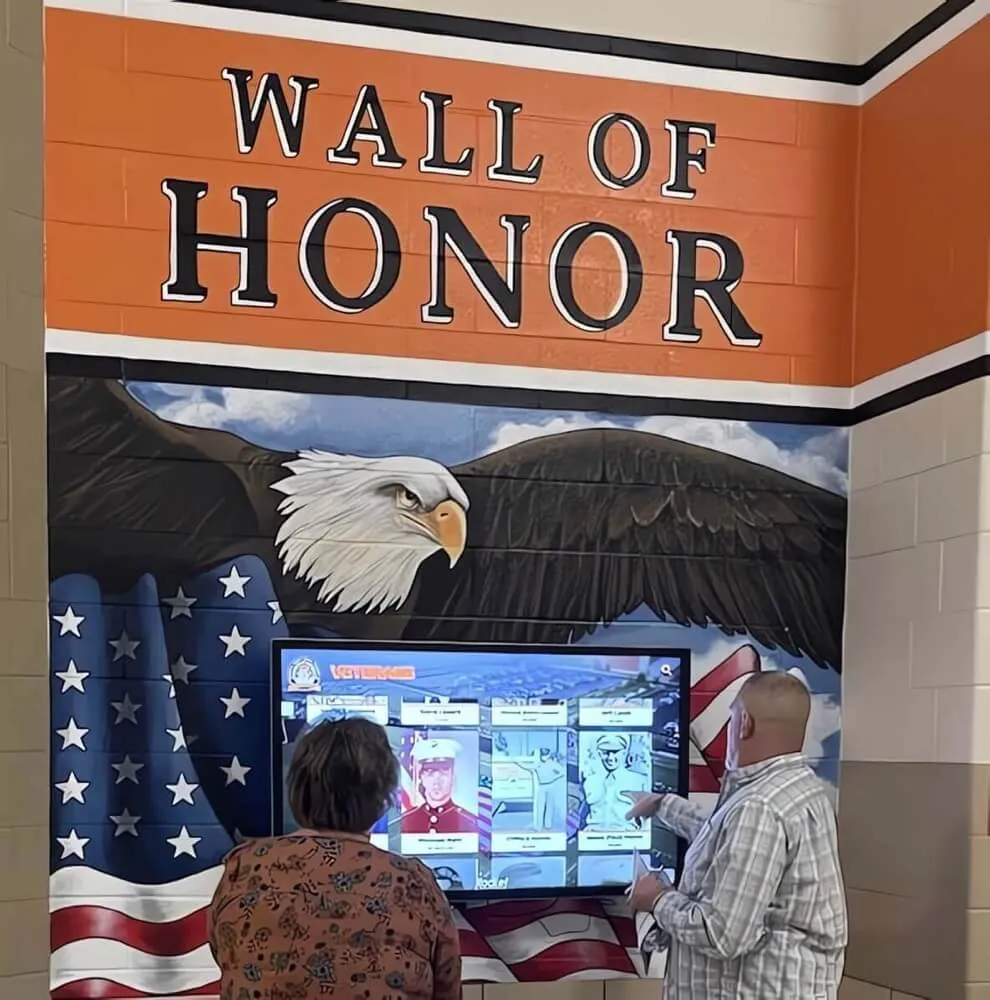
Honoring deceased faculty, staff, and alumni through memorial recognition often intersects with military recognition programs — many schools maintain lists of alumni who died in military service, and ROTC color guard programs are natural partners for ceremonies that honor these individuals.

Building a Color Guard Hall of Fame or Recognition Display
For schools looking to formalize color guard recognition, a dedicated display section within the school’s broader recognition infrastructure is the most durable solution. This can take several forms depending on available space and the school’s existing recognition systems.
A color guard honor roll recognizes participants by year and can be formatted to show both JROTC cadets who served on the ceremonial color guard and performing arts ensemble members who competed at regional and state levels. Combining both traditions within a unified display acknowledges the shared lineage while respecting the distinct contexts.
A championship display focused on color guard competitive achievements gives performing arts color guard programs the same kind of permanent, visible recognition that athletic championships receive. Displaying caption awards, overall placements, and championship trophies alongside team photos from each competitive season builds exactly the kind of institutional memory that allows current students to understand what they’re part of and what the program has achieved.
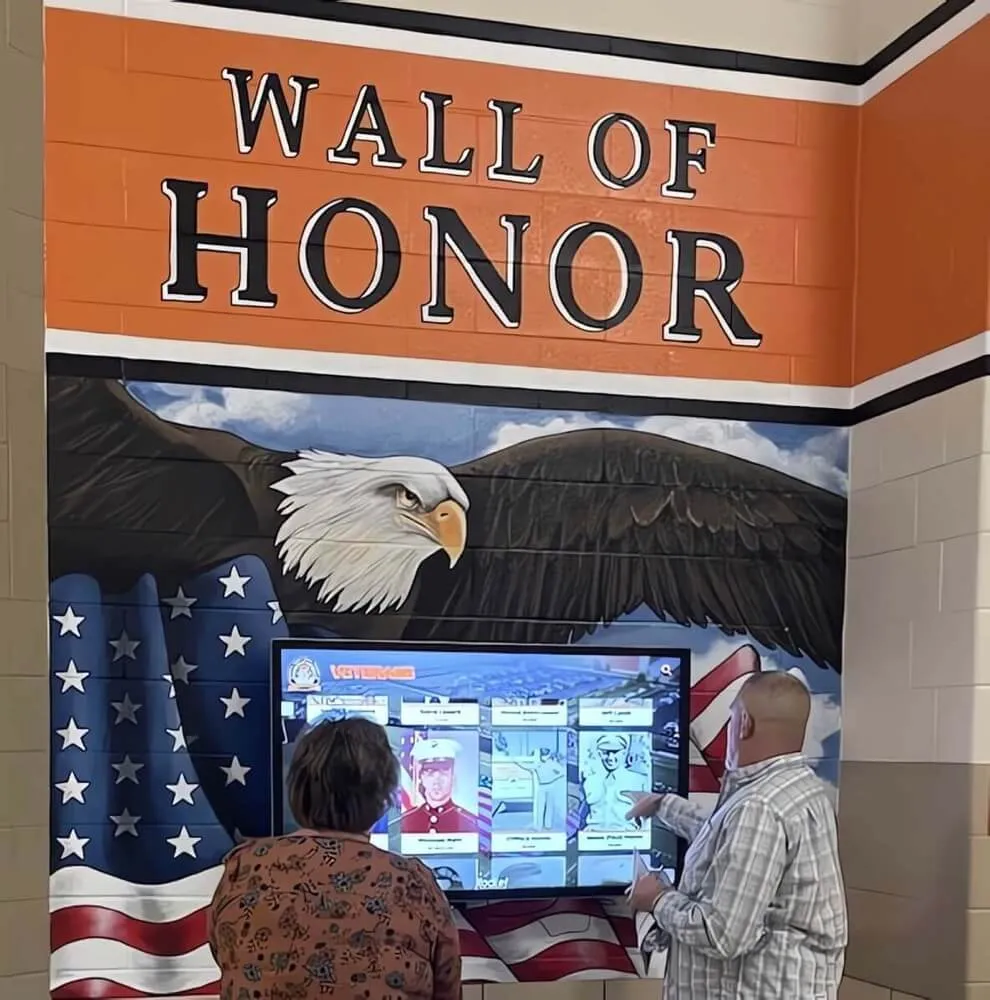
An ROTC color guard wall highlighting cadets who performed in major ceremonies — Veterans Day, graduation, community events — creates a different kind of recognition: one based on service and selection rather than competition outcomes. The cadets who represented the school at significant public ceremonies have earned something worth displaying.
Digital archives for schools, colleges, and universities provide the technological infrastructure for preserving photographs, program notes, and historical records from color guard programs across decades — making it possible for current students to encounter predecessors who built the program they’re inheriting.
Trophy display ideas for athletic and program achievements offer practical guidance for presenting physical awards alongside digital recognition in ways that give programs a cohesive visual identity.
Digital Recognition for Color Guard Programs
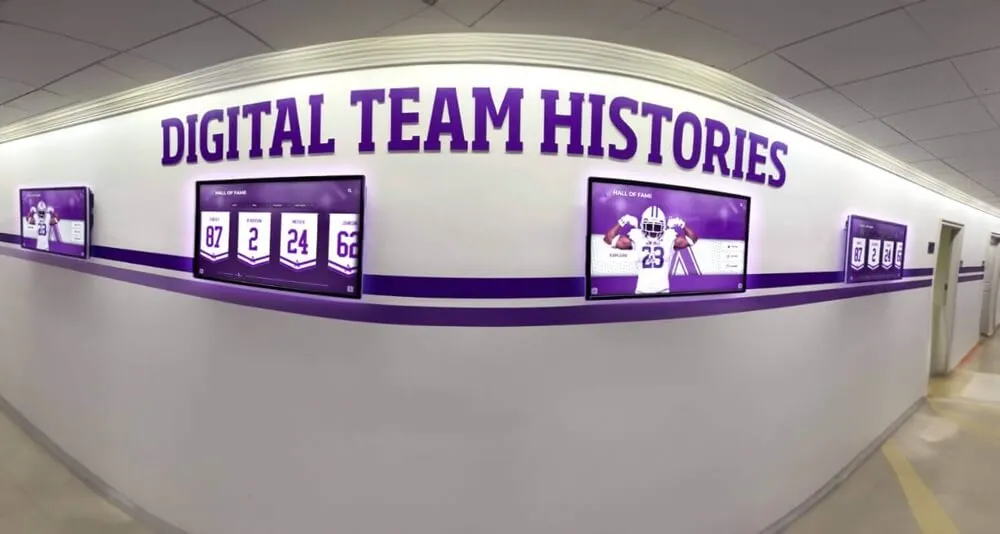
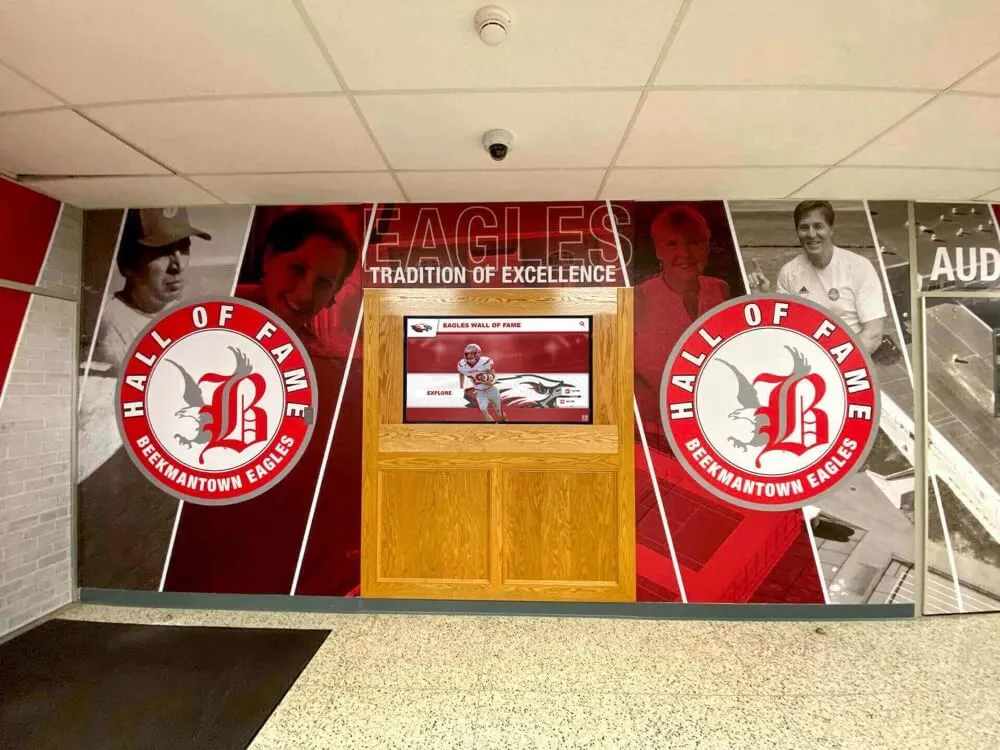
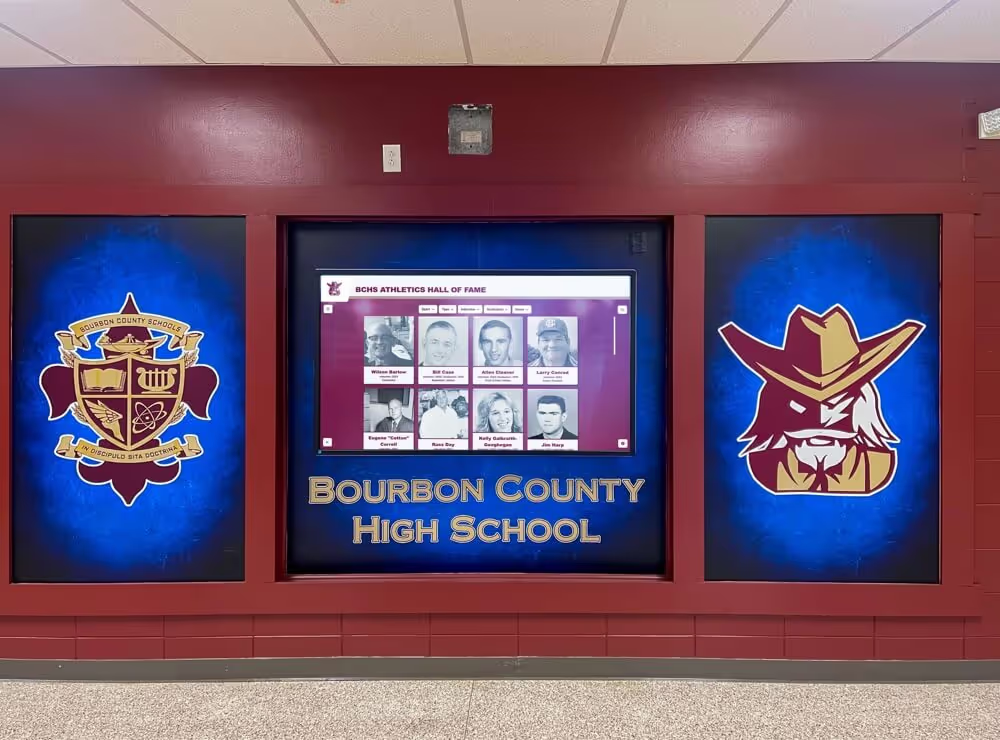
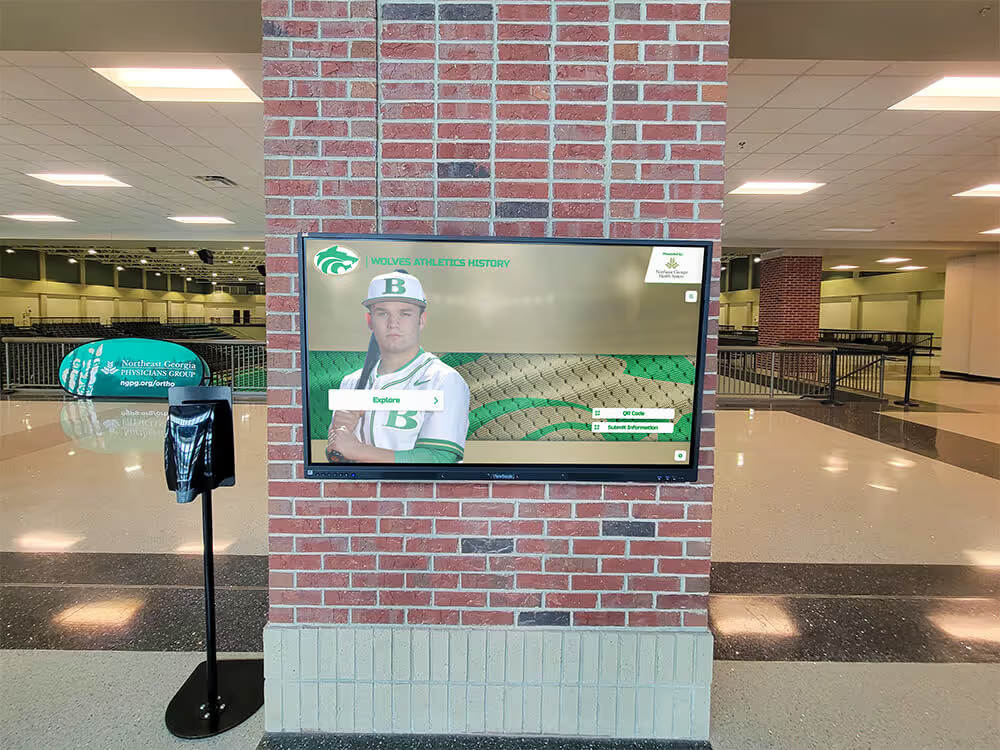
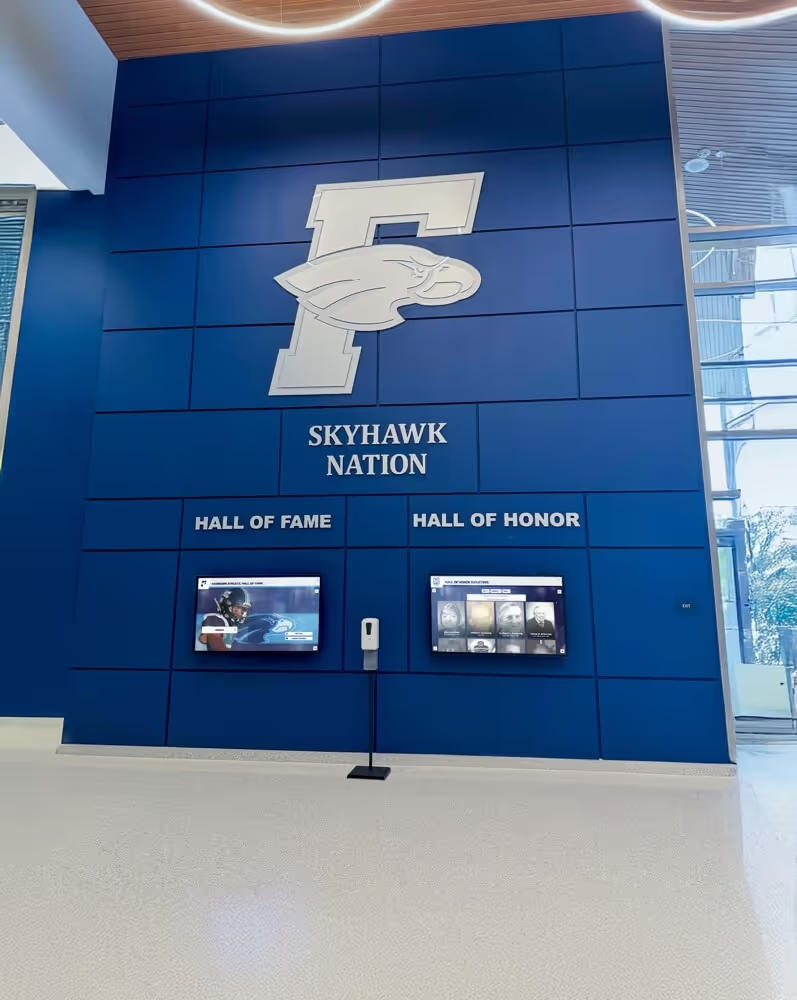
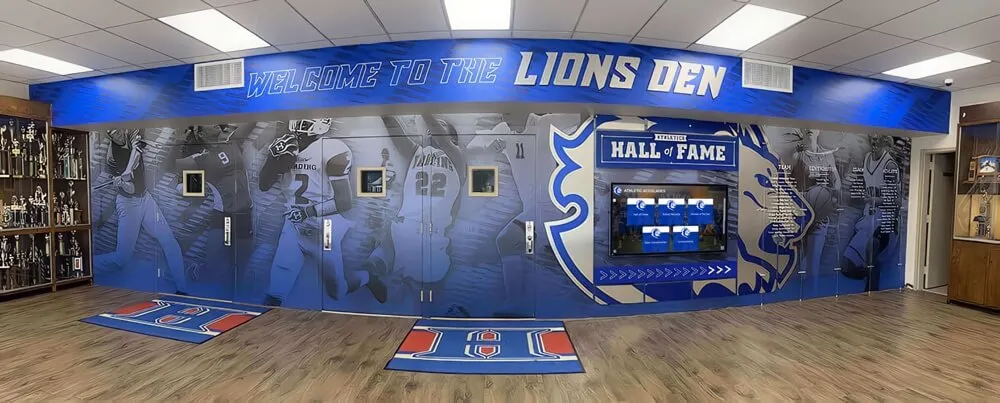
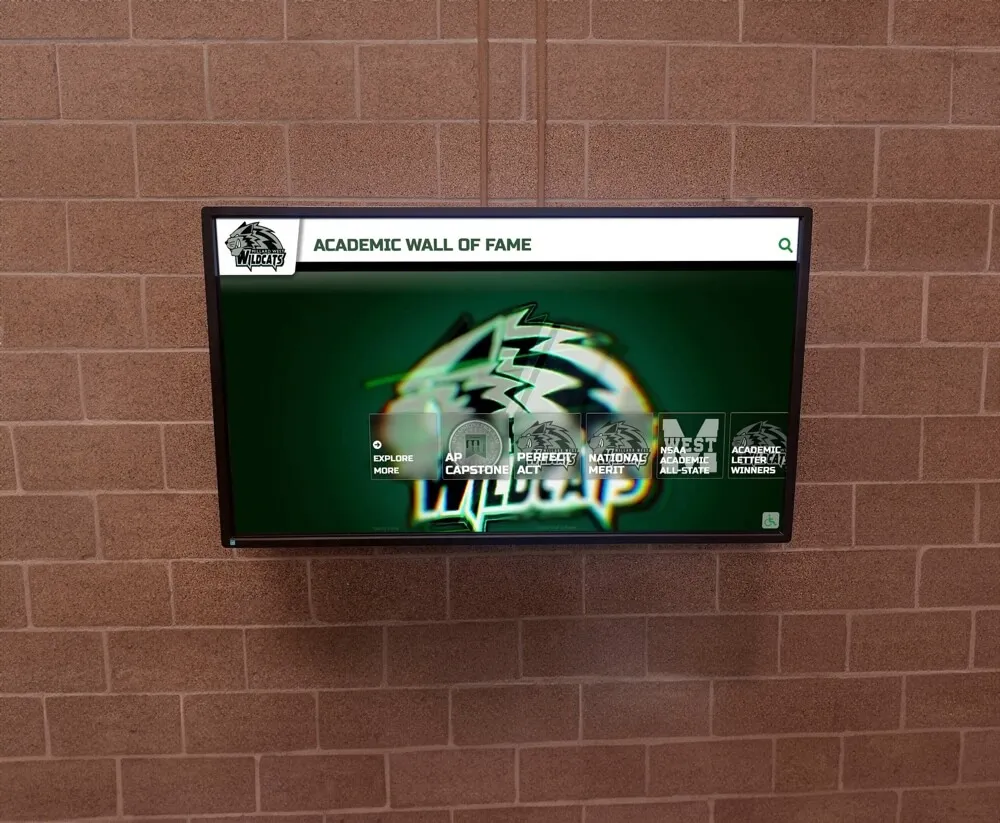
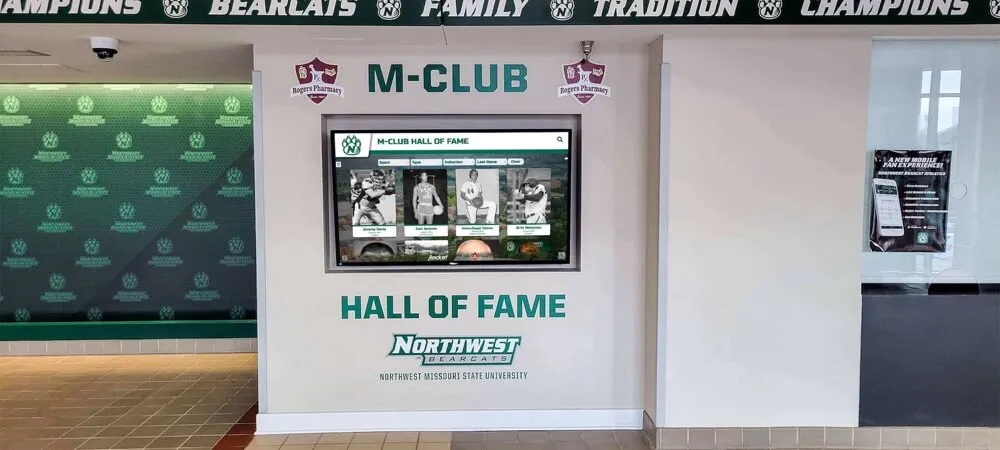
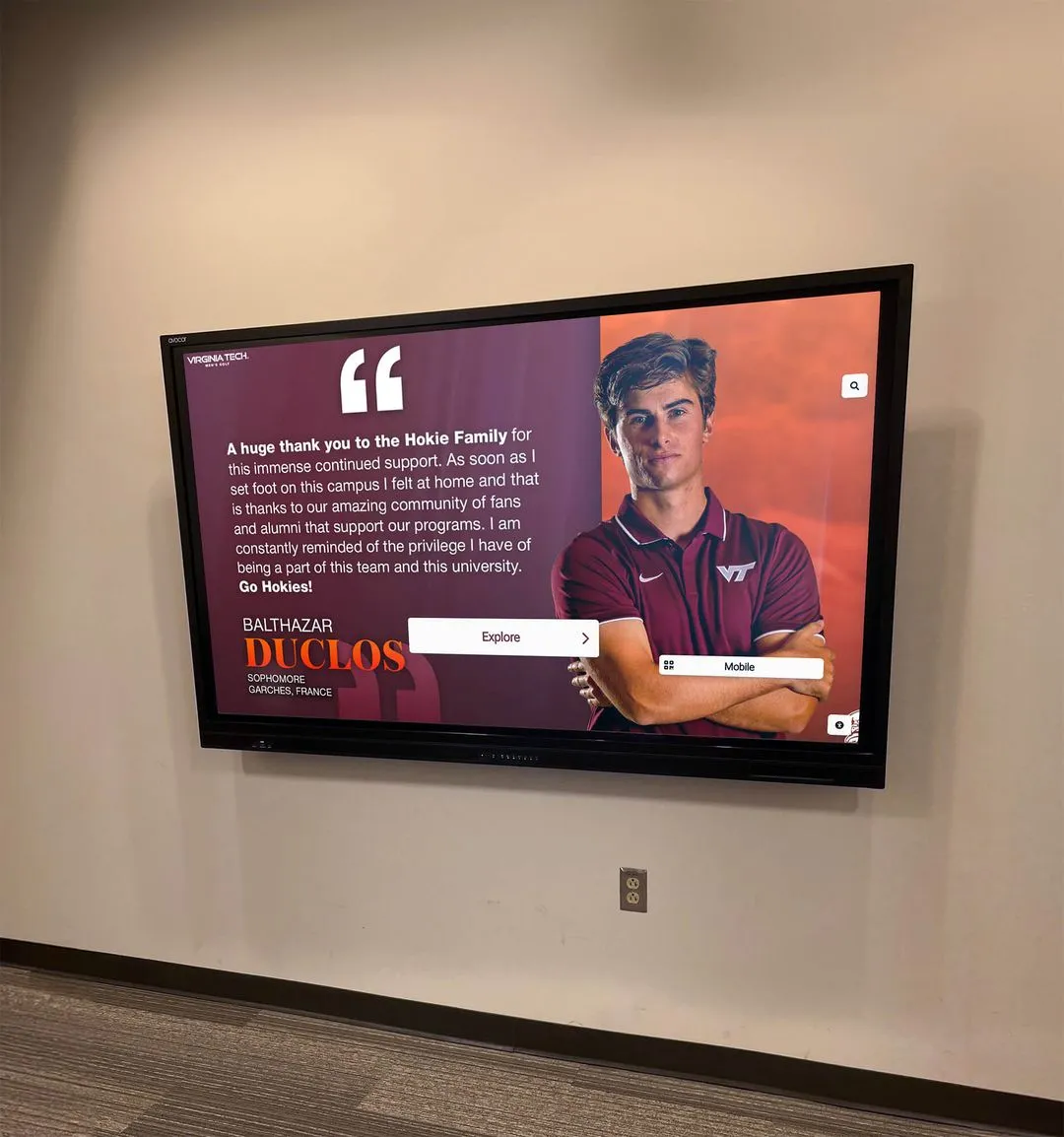
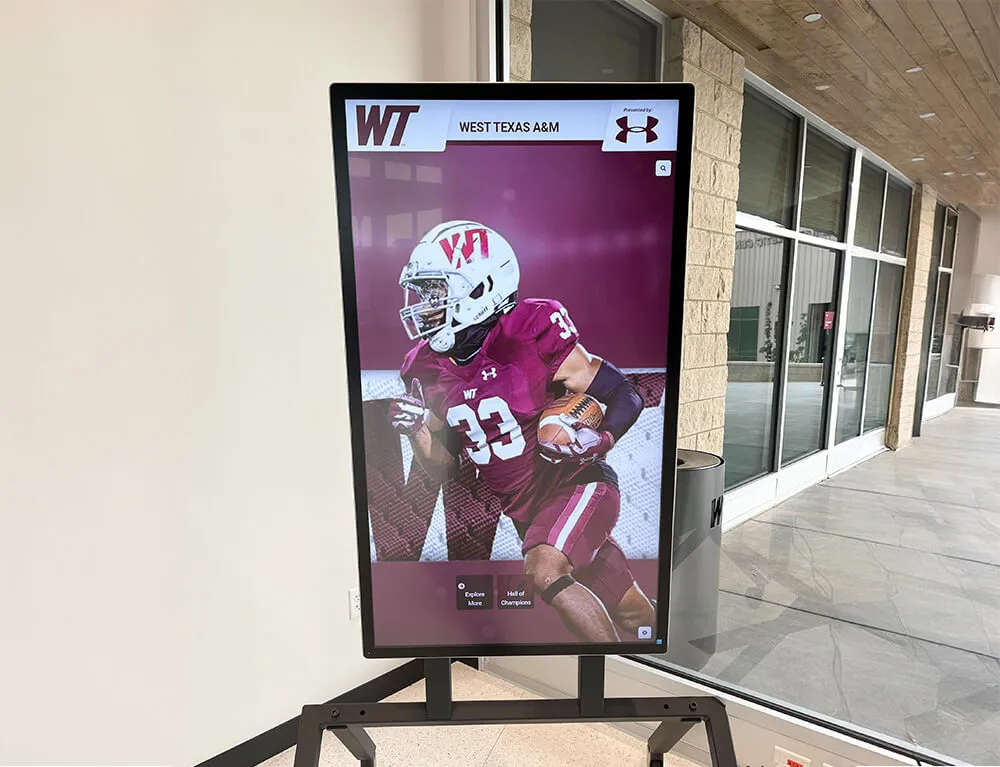
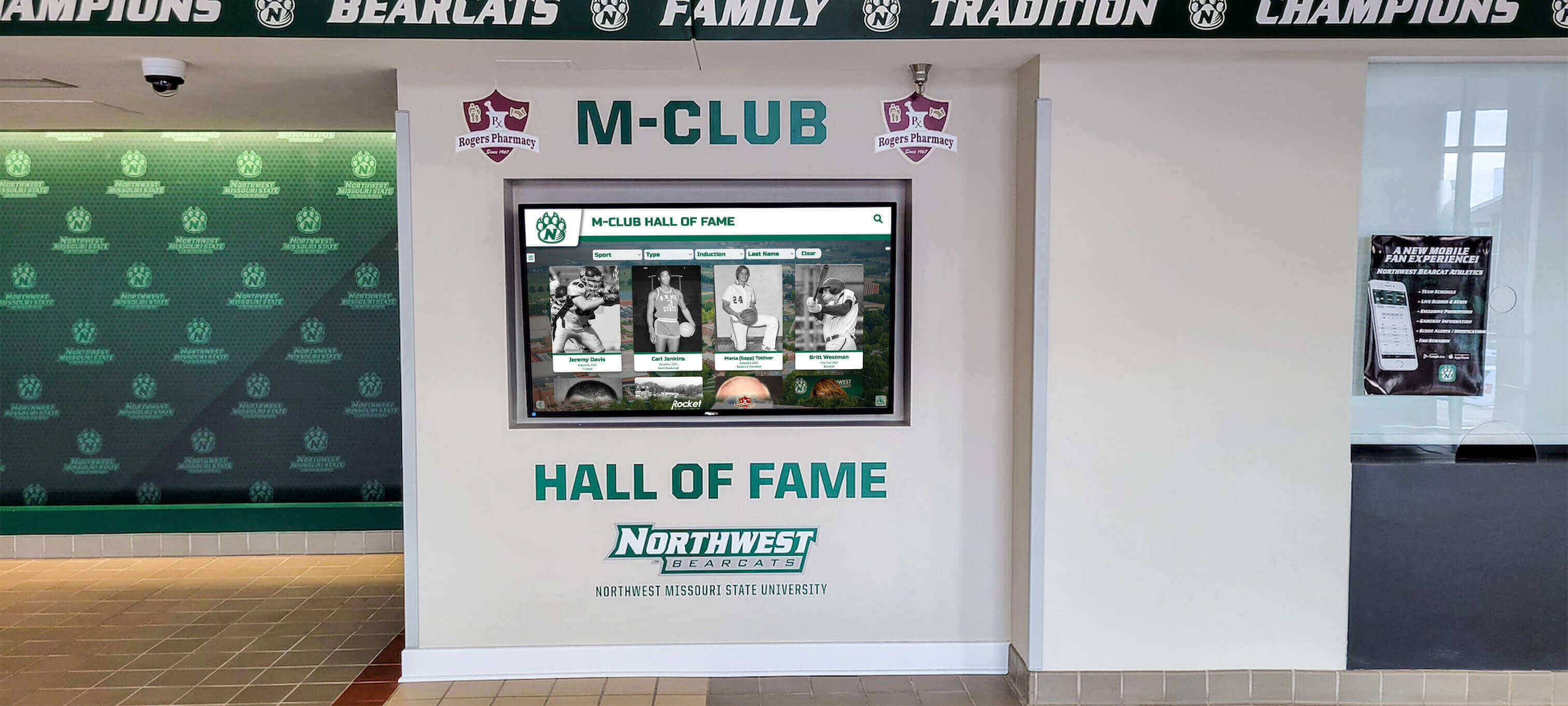
Interactive digital displays offer color guard programs something traditional trophy cases and bulletin boards cannot: the ability to tell the full story of the program’s history in a searchable, explorable format. A visitor approaching a touchscreen display in a school lobby can navigate through decades of color guard competition results, find photos from Veterans Day ceremonies in years past, read about alumni who went on to serve in the military after performing in JROTC color guard ceremonies, and understand how the current program connects to both the school’s tradition and the broader military history the activity descends from.
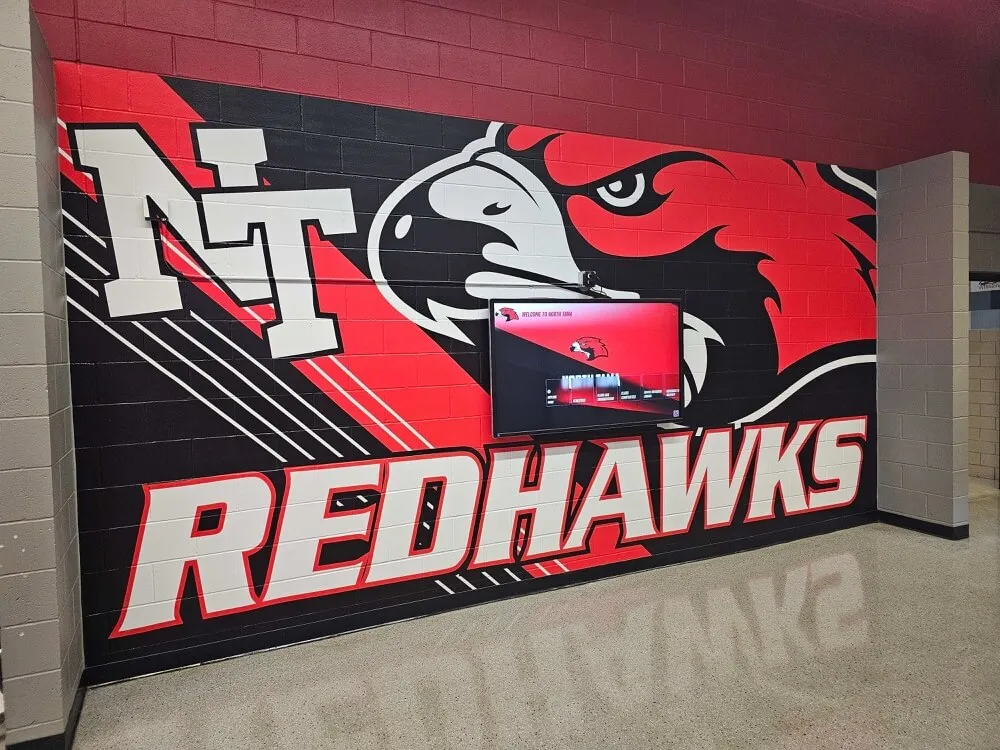
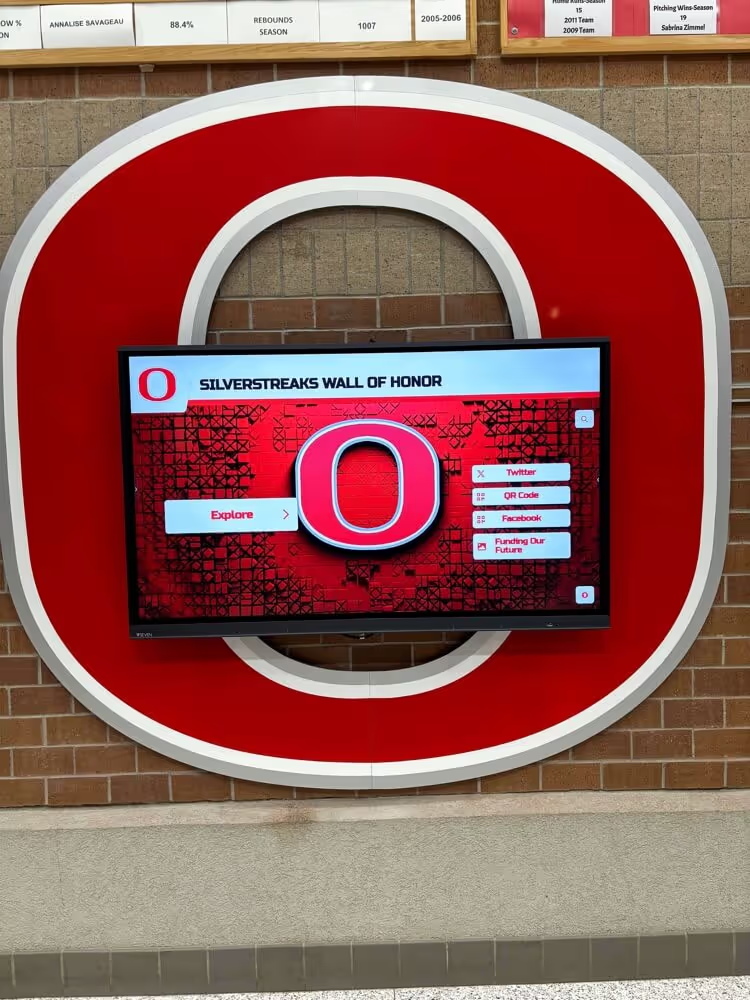
Touchscreen displays for school gyms, lobbies, and digital trophy cases describe how schools have deployed these systems to create recognition infrastructure that serves multiple programs simultaneously — including fine arts, JROTC, and athletic programs that might otherwise each require separate display space.
The interactive format is particularly appropriate for color guard recognition because the activity’s significance is not self-evident to uninformed visitors. A trophy on a shelf tells you a team won something; an interactive display can explain what they won, how the competition works, what the program’s history looks like across twenty or thirty years, and how this team’s achievement fits into the longer arc of school tradition. That context transforms passive recognition into genuine storytelling.
Alumni Engagement and the Color Guard Connection
Color guard alumni — both JROTC and performing arts — tend to maintain strong connections to their programs for decades after graduation. The intensity of the experience, the discipline it required, and the sense of representing something beyond oneself all contribute to the kind of lasting loyalty that translates into alumni engagement when schools create appropriate opportunities.
Military alumni whose ROTC color guard experience eventually led to actual military service often look back on their high school color guard duties as their first serious encounter with military ceremony and the weight of what the flag represents. These alumni are among the most motivated donors and supporters for JROTC programs — and schools that recognize and display the color guard tradition explicitly give these alumni a visible way to see their history honored.
Performing arts color guard alumni carry a similar loyalty. High school winter guard participants frequently cite their color guard experience as among the most formative of their lives — more demanding and more meaningful, in their recollection, than most of what happened in classrooms during the same years. Alumni who return to watch current students compete, or who participate in alumni events, are engaging with a specific program identity that recognition displays can actively reinforce.
Alumni engagement strategies that actually work consistently identify visible recognition of alumni achievement as one of the highest-leverage investments schools can make in long-term alumni engagement — and color guard programs, with their deep alumni loyalty, represent a particularly receptive audience for this approach.
Connecting the Tradition Forward
The color guard military tradition is not simply history. It is an active presence at American high schools wherever ROTC units post the colors at graduation ceremonies, wherever JROTC cadets present the national flag at Veterans Day assemblies, and wherever performing arts color guard ensembles compete under a name that connects them — even if most participants don’t fully realize it — to the men who carried the colors through cannon smoke at Gettysburg.
Schools that take the time to make this connection explicit — through recognition displays, educational content, and ceremonial events that honor both the military and performing arts dimensions of the tradition — are doing something genuinely valuable: they are helping students understand that what they are doing matters beyond this season’s competition results or this year’s ceremony. They are part of something old and significant, and the flags they carry or guard represent continuity as much as any individual performance or event.
That understanding changes how students approach their role. It changes what color guard means to alumni who watch current students carry on a tradition they helped build. And it changes what visitors see when they encounter color guard recognition in a school lobby — not just a trophy or a photo, but evidence of a tradition worth preserving.
Honor Your Color Guard and ROTC Programs with Recognition They Deserve
Rocket Alumni Solutions builds digital recognition systems for schools that want to honor every program — from JROTC color guard and ROTC ceremonies to performing arts ensembles and athletic championships — in a single, cohesive display that tells the full story of what your school stands for.
Explore Recognition Display Solutions