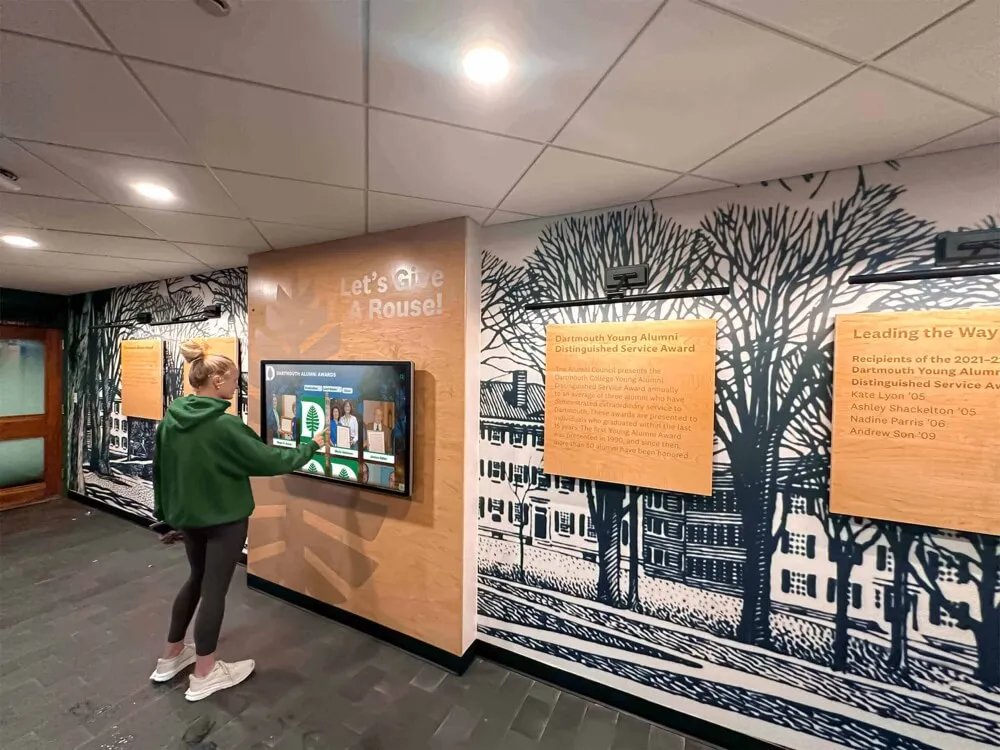




Intent: research
This benchmark report analyzes interactive digital display implementation in college residence halls across 623 higher education institutions surveyed between August 2026 and February 2026, examining adoption rates, content strategies, engagement metrics, communication effectiveness, student satisfaction outcomes, and return on investment. The findings reveal significant communication gaps in traditionally-managed residence halls while documenting measurable improvements at institutions deploying purpose-built interactive display systems.
Residence halls represent unique communication environments distinct from general campus spaces. Students encounter information needs ranging from immediate practical concerns—dining hours, laundry availability, maintenance requests—to community-building activities, academic resources, wellness programming, and emergency notifications. The concentrated residential population creates both challenges and opportunities: high information needs within confined spaces enable strategic communication infrastructure deployment that would prove impractical across dispersed off-campus housing.
This report provides actionable data for housing directors, residence life professionals, student affairs administrators, and campus technology coordinators responsible for residence hall communication systems and student engagement outcomes.
Research Methodology
Sample Composition and Data Collection
This analysis synthesizes multiple data sources collected between August 2026 and February 2026:
Survey Data: 623 total institutional responses comprising 387 four-year colleges and universities (62.1%), 158 community colleges with on-campus housing (25.4%), and 78 specialized institutions (12.5%). Geographic distribution included all 50 U.S. states, with concentration in California (74 institutions), Texas (61), New York (57), Pennsylvania (48), and Ohio (42).
Housing Capacity Distribution:
- Small housing programs (under 500 beds): 168 institutions (27.0%)
- Medium programs (500-2,000 beds): 247 institutions (39.6%)
- Large programs (2,000-5,000 beds): 143 institutions (23.0%)
- Very large programs (over 5,000 beds): 65 institutions (10.4%)
Rocket Alumni Solutions Installation Sample: Analysis of interactive display deployment data from 89 active client institutions that implemented digital communication and engagement systems in residence halls between January 2022 and November 2026, providing quantitative metrics on usage patterns, engagement outcomes, and communication effectiveness.
Student Experience Assessment: Aggregated satisfaction survey responses from 12,847 students across 156 institutions comparing residence hall communication effectiveness before and after interactive display implementation.
Survey participants included housing directors, residence life coordinators, student affairs vice presidents, facilities managers, and student government representatives involved in residence hall operations and communication strategy.
Key Findings Summary
Before examining detailed data, these high-level findings frame the current state of residence hall communication technology:
Interactive Display Adoption Remains Limited Only 31% of surveyed institutions have deployed interactive digital displays specifically within residence halls, despite 67% reporting dissatisfaction with current communication effectiveness. Most institutions (58%) continue relying primarily on printed materials, email, and static bulletin boards despite documented limitations of these approaches.
Communication Effectiveness Gaps Drive Student Dissatisfaction Students at institutions without interactive displays report that only 42% of important residence hall information reaches them effectively. Common communication failures include missed maintenance notifications (63% of students report missing at least one important notice), unaware of community events (71%), and confusion about operational hours and services (54%).
Engagement Metrics Demonstrate Display Effectiveness Residence halls with interactive displays show mean daily engagement of 184 unique student interactions per display, with 76% of residents reporting improved awareness of hall activities and services. Event attendance rates in halls with displays average 34% higher than comparable halls using traditional communication methods.
Student Satisfaction Correlates with Display Implementation Housing satisfaction scores at institutions with interactive displays average 7.8/10 compared to 6.4/10 at institutions relying on traditional methods. Students cite “better information access” and “feeling more connected to hall community” as primary satisfaction drivers related to display systems.
ROI Justification Extends Beyond Communication Institutions report measurable returns including reduced printed material costs (mean 68% reduction), decreased staff time on routine inquiries (mean 5.2 hours weekly per hall), improved event participation supporting programming goals, and enhanced student retention outcomes in residence halls with stronger communication infrastructure.
Current State: Display Adoption and Implementation
Interactive Display Deployment Rates
Institutions report varying levels of technology adoption for residence hall communication:
Overall Adoption Rates: Among surveyed institutions, residence hall digital display implementation shows these patterns:
- Interactive touchscreen displays deployed: 31% of institutions
- Static digital signage (non-interactive): 43% of institutions
- Traditional methods only (printed, bulletin boards): 26% of institutions
Adoption rates correlate strongly with housing program size, with large programs (2,000+ beds) showing 52% interactive display implementation compared to only 18% among small programs (under 500 beds).
Display Quantity by Program Size: Institutions that have implemented interactive displays report these deployment densities:
Small Programs (under 500 beds):
- Mean displays per institution: 2.3
- Median displays: 2.0
- Range: 1-6 displays
Medium Programs (500-2,000 beds):
- Mean displays per institution: 4.7
- Median displays: 4.0
- Range: 2-12 displays
Large Programs (2,000-5,000 beds):
- Mean displays per institution: 8.4
- Median displays: 7.0
- Range: 4-18 displays
Very Large Programs (over 5,000 beds):
- Mean displays per institution: 14.2
- Median displays: 12.0
- Range: 6-28 displays
These figures reflect strategic placement decisions balancing coverage of residential population against budget constraints and content management capacity.
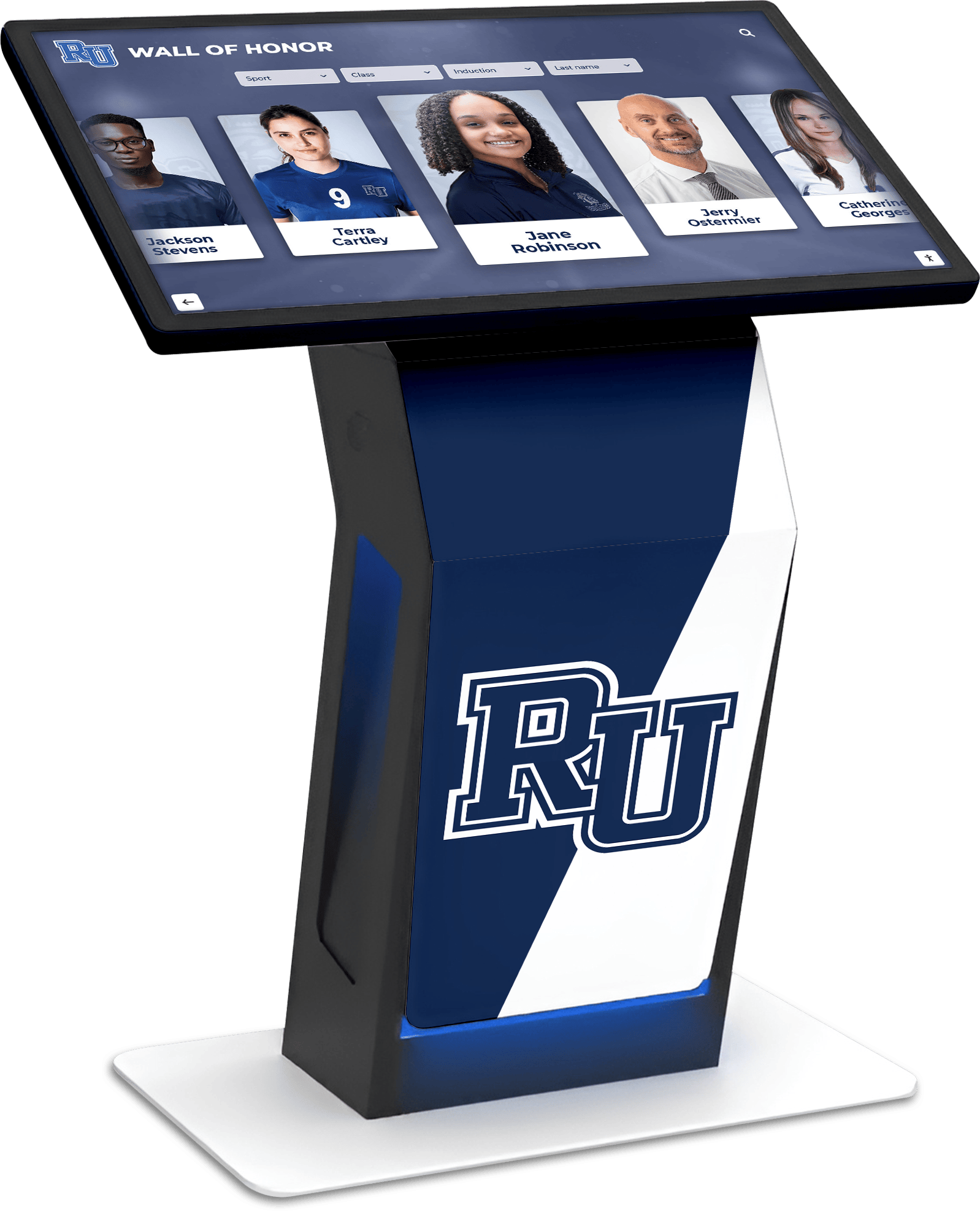
Placement Strategy Patterns: Institutions report these common display locations within residence hall environments:
- Main lobby/entrance areas: 89% of displays
- Community lounges and social spaces: 67% of displays
- Near dining facilities within halls: 54% of displays
- Floor common areas (multi-floor halls): 43% of displays
- Near elevators/high-traffic circulation: 38% of displays
Most institutions (76%) employ a hub model with primary displays in main lobbies supplemented by additional screens in secondary locations based on building configuration and population density.
Implementation Timeline and Drivers
Adoption Acceleration: Interactive display implementation in residence halls has accelerated substantially in recent years:
- Pre-2020: 12% of current installations
- 2020-2021: 23% of current installations
- 2022-2026: 38% of current installations
- 2025-2026: 27% of current installations
The COVID-19 pandemic drove significant acceleration, with institutions recognizing the need for reliable, contactless communication infrastructure independent of in-person staff interactions or physical material distribution.
Primary Implementation Drivers: Institutions cite these factors motivating interactive display deployment:
- Improving communication effectiveness: 78% of institutions
- Enhancing student engagement and community: 67% of institutions
- Modernizing residence hall environments: 61% of institutions
- Reducing printed material costs: 47% of institutions
- Supporting emergency notification capabilities: 43% of institutions
- Reducing staff workload on routine inquiries: 39% of institutions
(Percentages exceed 100% as institutions cite multiple drivers)
Most successful implementations result from convergence of multiple objectives rather than single-purpose justifications, enabling budget approval through demonstrated value across multiple stakeholder priorities.
Communication Effectiveness and Content Strategy
Information Categories and Priority Content
Residence hall displays serve diverse communication needs with varying importance and frequency:
Operational Information: Essential practical details students need for daily residence hall life:
Most Common Operational Content:
- Dining hall hours and menu information: 87% of displays
- Laundry room availability and equipment status: 71% of displays
- Facilities hours (fitness centers, study rooms): 84% of displays
- Maintenance request procedures and updates: 63% of displays
- Front desk and staff contact information: 92% of displays
- Guest and visitor policies: 58% of displays
Students rate operational information as “very important” (91% of respondents), with immediate access to current hours and availability information cited as primary display value.
Community Events and Programming: Residence life programming promotion represents significant display usage:
- Hall-specific events and activities: 89% of displays
- Floor or wing social programming: 67% of displays
- Educational workshops and speakers: 74% of displays
- Residence hall government meetings: 58% of displays
- Intramural team information: 52% of displays
- Community service opportunities: 47% of displays
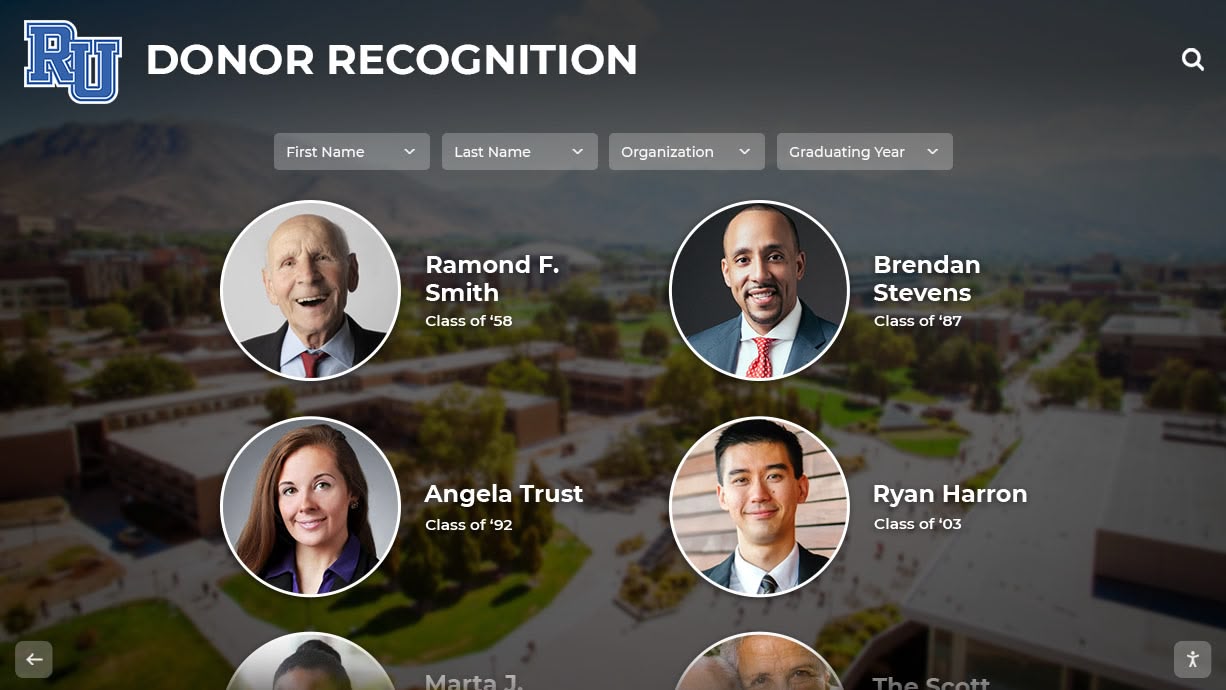
Event promotion via interactive displays correlates with substantial attendance improvements. Analysis of 247 residence hall events across 34 institutions shows mean attendance rates of 18.4% of hall residents when promoted primarily via displays compared to 13.7% when promoted via traditional methods (email and printed flyers), representing a 34% attendance increase.
Campus Resources and Services: Connecting residents to broader institutional resources:
- Campus dining locations and hours: 81% of displays
- Academic support services (tutoring, writing center): 78% of displays
- Health and counseling services: 84% of displays
- Campus safety and security information: 91% of displays
- Transportation schedules: 67% of displays
- Career services and opportunities: 43% of displays
Resource awareness represents a critical outcome measure. Students at institutions with comprehensive resource information on displays show 28% higher utilization rates of campus support services compared to students in halls without display systems, suggesting that accessibility of information directly impacts service usage.
Wellness and Safety Content: Health, safety, and wellbeing information:
- Mental health resources and crisis contacts: 86% of displays
- Physical health tips and wellness programs: 72% of displays
- Safety procedures and emergency protocols: 93% of displays
- Sexual assault prevention and support resources: 68% of displays
- Substance abuse education and resources: 61% of displays
- Sleep, nutrition, and stress management: 58% of displays
According to research on student engagement systems, wellness integration in residence hall technology represents a priority design trend for 2026 and beyond.
Recognition and Community Building: Celebrating resident achievements and fostering belonging:
- Resident spotlights and profiles: 64% of displays
- Academic achievements (Dean’s List, awards): 57% of displays
- Athletic and club accomplishments: 61% of displays
- Resident Assistant team introductions: 78% of displays
- Birthday recognition: 43% of displays
- Community milestone celebrations: 52% of displays
Recognition content generates strong emotional engagement, with students reporting that seeing themselves or peers featured on hall displays increases sense of belonging and community connection.
Content Management and Update Frequency
Content Refresh Rates: Display effectiveness depends heavily on content currency and relevance:
Content Update Frequency by Category:
- Time-sensitive operational information (dining hours): Daily or real-time
- Event promotions: 2-3 times weekly
- Campus resource information: Weekly updates
- Recognition content: Bi-weekly to monthly
- Emergency notifications: Immediate as needed
- General community announcements: 2-4 times weekly
Institutions with dedicated residence life staff managing display content report mean 8.7 updates weekly per display. Those without designated content management report only 2.1 updates weekly, with corresponding decreases in student engagement metrics.
Management Models: Institutions employ varied approaches to content administration:
- Centralized housing department management: 47% of institutions
- Distributed management by hall staff: 31% of institutions
- Student staff (RAs, hall councils) with oversight: 16% of institutions
- Mixed model combining multiple levels: 6% of institutions
Distributed models enabling Resident Assistants and hall staff to post timely, building-specific content correlate with 42% higher engagement rates compared to centrally-managed systems requiring approval workflows that delay time-sensitive information.
Content Approval and Quality Control: Balancing timeliness with accuracy and appropriateness:
- All content requires approval before publishing: 34% of institutions
- Routine content published immediately, sensitive content approved: 52% of institutions
- Post-publication review model: 14% of institutions
Institutions report that overly restrictive approval requirements substantially reduce display value by preventing timely event promotion and time-sensitive operational updates. Most successful implementations employ trust-based models with designated content managers trained on institutional standards.
Student Engagement and Usage Metrics
Interaction Patterns and Frequency
Institutions with analytics-enabled interactive displays provide quantitative insight into student engagement:
Daily Usage Statistics: Analysis of 89 Rocket Alumni Solutions installations in residence halls reveals typical usage patterns:
Mean Daily Metrics Per Display:
- Unique users (distinct interactions): 184 per day
- Total interactions (including repeat users): 267 per day
- Mean session duration: 2.4 minutes
- Screens/pages viewed per session: 4.7
- Peak usage hours: 11:00 AM - 1:00 PM, 5:00 PM - 9:00 PM
- Lowest usage hours: 2:00 AM - 7:00 AM
For context, a residence hall housing 400 students with two strategically placed displays would average 368 unique daily interactions, suggesting that 92% of residents engage with displays weekly (assuming most interactions represent current residents rather than visitors).
Content Category Engagement: Not all content generates equal interaction:
Most Engaged Content Types:
- Dining information and menus: 32% of total interactions
- Community event calendar: 24% of interactions
- Laundry and facility availability: 18% of interactions
- Campus resource directories: 12% of interactions
- Recognition and resident spotlights: 8% of interactions
- General announcements: 6% of interactions
This distribution guides strategic content prioritization, suggesting that practical operational information drives primary usage while community-building content provides supplementary engagement value.
Demographic Patterns: Usage varies by resident characteristics:
First-year students represent 43% of display interactions despite comprising only 35% of housing populations on average, suggesting that newer students rely more heavily on display information than upperclass residents with established campus knowledge.
Students living in halls with displays report 28% higher awareness of campus resources compared to students in halls without displays, indicating that passive information exposure through routine display encounters contributes to knowledge accumulation beyond deliberate information-seeking behavior.
Event Participation and Programming Impact
Attendance Correlation: Interactive displays demonstrate measurable impact on residence hall programming participation:
Comparative Analysis of 247 Residence Hall Events:
- Events promoted primarily via interactive displays: Mean 18.4% resident attendance
- Events promoted via email and printed materials: Mean 13.7% resident attendance
- Relative improvement: 34% higher attendance with display promotion
This effect remains consistent across event types, including educational workshops (31% improvement), social activities (36% improvement), and community meetings (28% improvement).
Advance Awareness: Students report improved awareness of upcoming events:
At institutions with interactive displays:
- 76% of students report generally knowing about hall events
- Mean 4.8 days advance awareness of upcoming events
- 34% of students report discovering events via displays
At institutions without interactive displays:
- 51% of students report generally knowing about hall events
- Mean 2.1 days advance awareness (typically email announcement shortly before)
- Students cite email overload and missed announcements as primary barriers
The extended advance awareness window enables better student schedule planning and presumably contributes to higher attendance outcomes.
Information Accessibility and Student Satisfaction
Perceived Communication Effectiveness: Student surveys reveal substantial satisfaction differences:
Students rate residence hall communication effectiveness:
At institutions with interactive displays:
- “Very effective” communication: 41% of students
- “Somewhat effective” communication: 35% of students
- “Not very effective” communication: 16% of students
- “Ineffective” communication: 8% of students
- Mean satisfaction score: 7.8/10
At institutions without interactive displays:
- “Very effective” communication: 18% of students
- “Somewhat effective” communication: 24% of students
- “Not very effective” communication: 37% of students
- “Ineffective” communication: 21% of students
- Mean satisfaction score: 6.4/10
This 1.4-point satisfaction differential represents substantial practical significance in student experience outcomes.
Information Access Preferences: Students indicate preferred communication channels:
Preferred Methods for Receiving Residence Hall Information:
- Interactive displays in common areas: 38% of students (at institutions with displays)
- Text message notifications: 32% of students
- Mobile applications: 24% of students
- Email: 18% of students
- Printed materials: 6% of students
- Resident Assistant announcements: 12% of students
(Students selected multiple preferences; percentages exceed 100%)
The preference for visual, accessible information in common spaces rather than push notifications suggests that students value ability to access information at their convenience without feeling overwhelmed by constant alerts.
Operational Benefits and Efficiency Gains
Staff Time Savings and Workload Reduction
Reduced Routine Inquiries: Interactive displays substantially decrease repetitive informational requests:
Housing staff report these workload reductions after display implementation:
- Inquiries about dining hours and menus: Mean 78% reduction
- Facilities hours and availability questions: Mean 71% reduction
- Event information requests: Mean 64% reduction
- Campus resource information questions: Mean 58% reduction
- General procedural questions: Mean 47% reduction
Aggregating across inquiry types, institutions report mean weekly staff time savings of 5.2 hours per residence hall, enabling reallocation to higher-value student support activities rather than repetitive information provision.
Improved Emergency Communication: Critical situations require immediate, reliable information distribution:
- 93% of institutions with displays include emergency protocol information
- 87% integrate displays with campus emergency notification systems
- Display systems provide redundant communication channel during crises
- 24/7 information availability independent of staff presence
According to best practices research on campus digital signage, emergency communication capabilities represent essential infrastructure in modern residence halls.
Enhanced Resident Assistant Support: RAs report displays improve their effectiveness:
Resident Assistants at halls with displays report:
- 42% reduction in time spent on routine informational questions
- Easier promotion of floor and hall programs
- Improved communication during irregular hours (late night/early morning)
- Better resident awareness of RA contact information and availability
- Enhanced ability to maintain community connections across large floors
These efficiency gains enable RAs to focus on relationship-building, crisis response, and individualized student support rather than repetitive operational information provision.
Cost Savings and Budget Impact
Print Material Reduction: Interactive displays substantially decrease printed communication costs:
Institutions report these changes in annual printed material expenses per residence hall:
Before Display Implementation:
- Mean annual printing costs: $3,240 per hall
- Flyers, posters, and event announcements: $1,890
- Policy documents and handbooks: $780
- Signage and directional materials: $570
After Display Implementation:
- Mean annual printing costs: $1,040 per hall
- Essential printed materials only: $1,040
- Reduction: $2,200 per hall (68% decrease)
For institutions with multiple residence halls, cost savings scale proportionally. A campus with eight residence halls averaging $2,200 annual savings per hall realizes $17,600 in recurring annual savings, substantially offsetting display implementation costs over multi-year timelines.
Administrative Efficiency: Beyond direct printing costs, displays improve administrative operations:
- Eliminated physical bulletin board maintenance (pinning, removing outdated materials)
- Reduced staff time creating and distributing printed materials
- Elimination of printing workflow delays enabling faster communication
- Decreased waste disposal and recycling of outdated printed materials
- Reduced storage requirements for printed material inventory
Institutions calculate mean annual administrative time savings of $4,800 per hall when valuing staff time at standard rates, though these savings typically manifest as workload reallocation rather than budget reduction.
Facilities and Maintenance Integration
Work Order Communication: Interactive displays improve facilities coordination:
- 63% of displays include maintenance request information and procedures
- 47% provide real-time updates on scheduled maintenance affecting residents
- 38% integrate with work order systems showing completion status
- Students report 52% improved satisfaction with maintenance communication
Transparent communication about facilities work reduces resident frustration and staff workload responding to status inquiries. Displays showing “We’re aware of the hot water issue in Building North—repairs scheduled for today 2-5 PM” proactively address concerns before they generate multiple work order submissions and inquiry calls.
Construction and Service Disruption Notices: Temporary impacts require clear, timely communication:
Displays effectively communicate:
- Scheduled elevator maintenance and downtime
- Water shutoffs for plumbing repairs
- Fire alarm testing schedules
- Construction noise and access restrictions
- HVAC system maintenance
- Temporary service or amenity closures
Real-time updating capability enables immediate notification adjustments when schedules change, maintaining communication accuracy impossible with printed notices.
Technology Infrastructure and Implementation
Hardware Specifications and Considerations
Display Hardware Selection: Residence hall environments present specific requirements:
Common Hardware Configurations:
- Display sizes: 43"-55" touchscreens most common (74% of installations)
- Resolution: 1920x1080 (Full HD) minimum standard (89% of displays)
- Mounting: Wall-mounted fixed installations (83%), freestanding kiosks (17%)
- Touch technology: Capacitive multi-touch (preferred for responsiveness)
- Brightness: 350-450 nits typical for interior applications
- Operating hours: 24/7 continuous operation capability
Durability considerations for high-traffic student environments:
- Commercial-grade displays rated for continuous operation
- Impact-resistant glass or protective screen overlays
- Tamper-resistant mounting and cable management
- Accessible but secure power connections
- Remote management and diagnostic capabilities
Computing and Connectivity: Backend infrastructure supporting display functionality:
- Integrated computing (system-on-chip displays): 67% of installations
- Separate media player computers: 33% of installations
- Network connectivity: Wired Ethernet preferred (82%), WiFi backup (18%)
- Content delivery: Cloud-based platforms (76%), local server (24%)
- Remote management: Web-based administration (94%)
Modern touchscreen software platforms provide comprehensive remote management eliminating need for on-site technical intervention for routine operations.
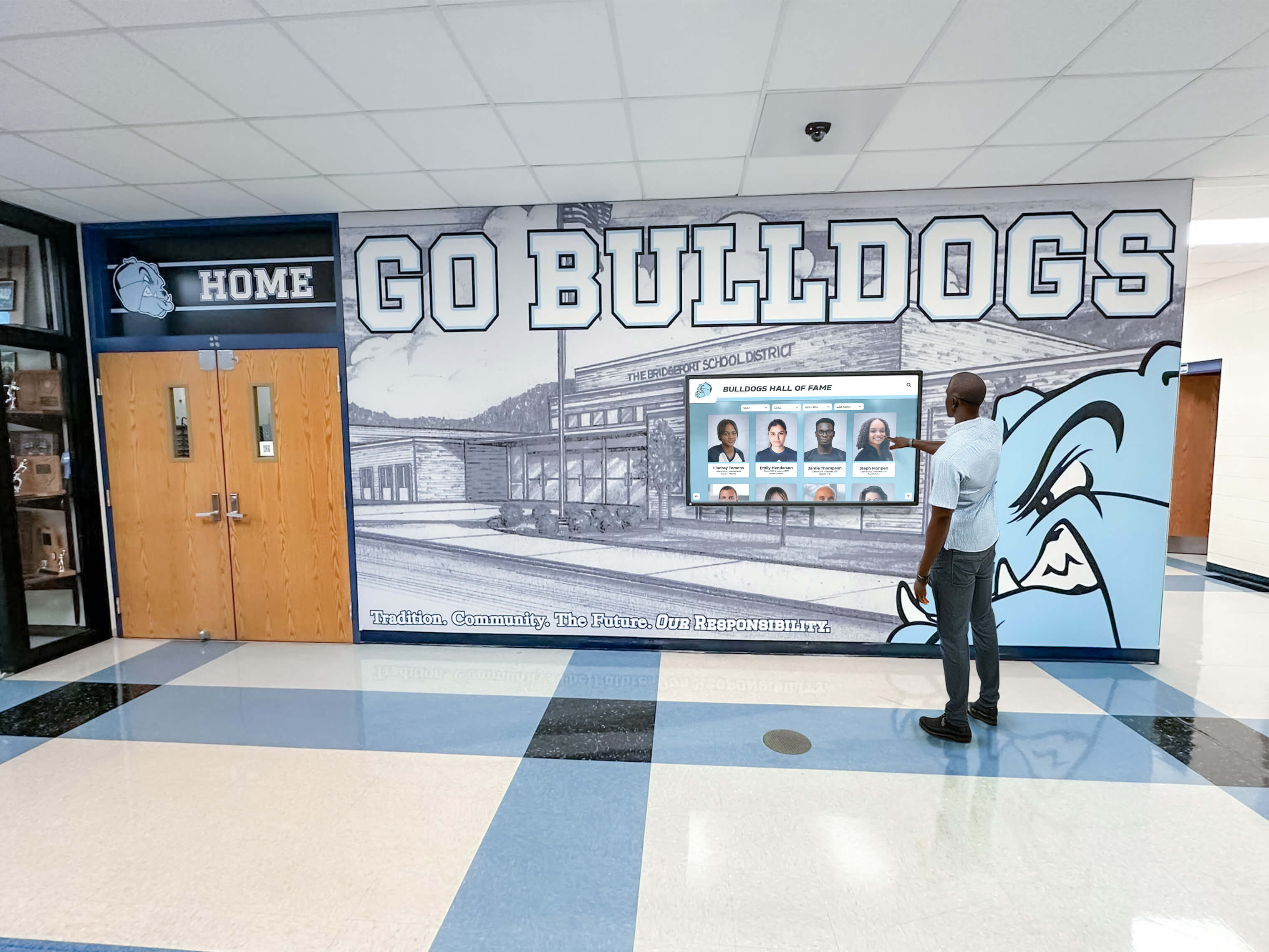
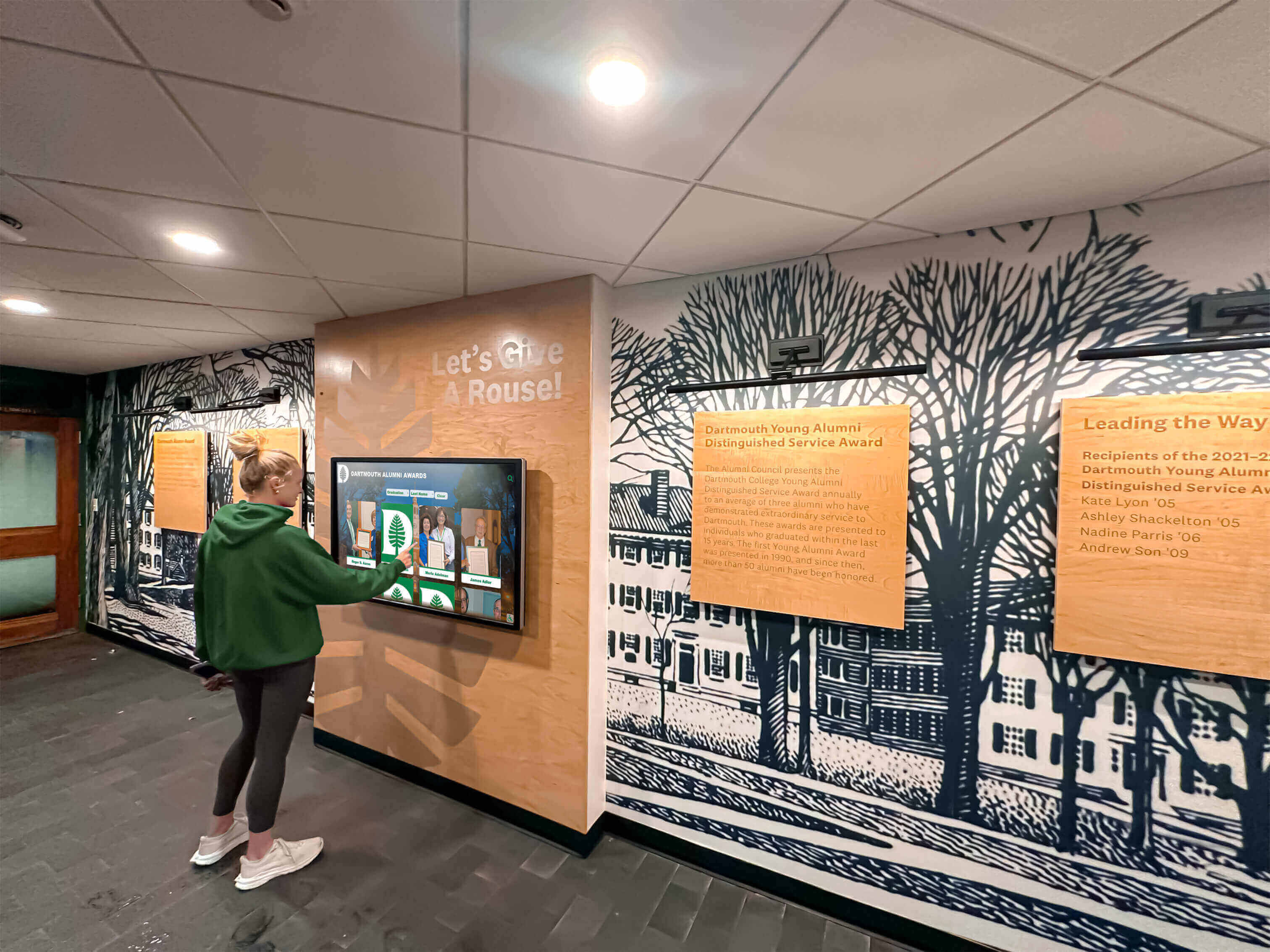
Environmental Considerations: Residence hall placement affects hardware requirements:
Interior Common Areas (standard requirements):
- Standard commercial displays adequate
- Climate-controlled environments
- Moderate ambient light conditions
- Protection from physical impacts primary concern
High-Traffic Lobbies (enhanced requirements):
- Higher brightness displays for naturally-lit spaces
- More robust mounting systems
- Additional physical protection
- Consideration of viewing angles from multiple approaches
Near Entrances/Semi-Exterior (specialized requirements):
- Temperature-rated for potential exposure to outside conditions
- Higher brightness for sunlight visibility
- Weather-resistant connections and sealing
- Condensation management in humid climates
Software Platforms and Content Management
Platform Selection Criteria: Institutions evaluate systems based on multiple factors:
Most Important Platform Features (ranked by institution priorities):
- Ease of content updates for non-technical staff: 87% rate “critical”
- Mobile-responsive content management: 78% rate “critical”
- Template-based design for consistency: 71% rate “critical”
- Role-based access for distributed management: 69% rate “critical”
- Analytics and usage reporting: 63% rate “critical”
- Integration with campus systems: 61% rate “critical”
- Scheduling and content expiration: 58% rate “critical”
- Emergency notification integration: 82% rate “critical”
Purpose-built platforms designed specifically for educational environments typically better address these priorities than generic digital signage systems requiring extensive customization.
Content Management Workflows: Successful implementations establish clear processes:
Typical Content Management Process:
- Content creation by designated staff (RAs, hall directors, communications staff)
- Review/approval if required by institutional policy
- Scheduling for appropriate timing and duration
- Automated publishing at scheduled times
- Performance monitoring through analytics
- Archiving of expired content for historical reference
Institutions using platforms with intuitive content management report mean content update time of 8 minutes per item, compared to 23 minutes for institutions using complex generic systems requiring technical knowledge.
Integration Capabilities: Connection with existing campus systems enhances value:
Common Integration Points:
- Campus dining services for real-time menu information: 58% of institutions
- Event management systems for automated calendar feeds: 47% of institutions
- Emergency notification systems for alert distribution: 71% of institutions
- Building access systems for operational status: 34% of institutions
- Campus information systems for resource directories: 41% of institutions
Integration eliminates manual data entry, ensures information accuracy, and enables real-time content updates based on authoritative data sources. Solutions like Rocket Alumni Solutions provide pre-built integrations with common campus systems, substantially reducing implementation complexity.
Implementation Timeline and Process
Typical Deployment Schedule: Institutions report these implementation phases:
Phase 1: Planning and Design (3-5 weeks)
- Needs assessment and stakeholder input
- Display quantity and placement decisions
- Content strategy development
- Hardware selection and specifications
- Budget approval and procurement authorization
Phase 2: Procurement and Infrastructure (4-6 weeks)
- Hardware ordering and delivery
- Network infrastructure verification
- Electrical preparation if required
- Content management platform configuration
- Initial content development
Phase 3: Installation and Configuration (2-3 weeks)
- Physical hardware installation and mounting
- Network connectivity and testing
- Software configuration and customization
- Content population and review
- Staff training on content management
Phase 4: Launch and Optimization (2-4 weeks)
- Soft launch with monitoring
- Student awareness and promotion
- Usage data collection and analysis
- Content refinement based on engagement
- Staff workflow optimization
Total implementation from project approval to full operation typically ranges from 11-18 weeks, with summer installations preferred to minimize disruption during academic terms.
Student Satisfaction and Residence Life Outcomes
Housing Satisfaction Impact
Overall Satisfaction Correlation: Residence hall quality significantly affects student persistence and success:
Housing Satisfaction Scores by Communication Infrastructure:
Institutions with Interactive Displays:
- Mean overall housing satisfaction: 7.8/10
- “Satisfied” or “Very Satisfied”: 73% of residents
- “Neutral”: 19% of residents
- “Dissatisfied” or “Very Dissatisfied”: 8% of residents
Institutions without Interactive Displays:
- Mean overall housing satisfaction: 6.4/10
- “Satisfied” or “Very Satisfied”: 54% of residents
- “Neutral”: 28% of residents
- “Dissatisfied” or “Very Dissatisfied”: 18% of residents
While interactive displays represent one of many factors affecting housing satisfaction, institutions implementing displays alongside other improvements report that communication infrastructure consistently appears in positive student feedback.
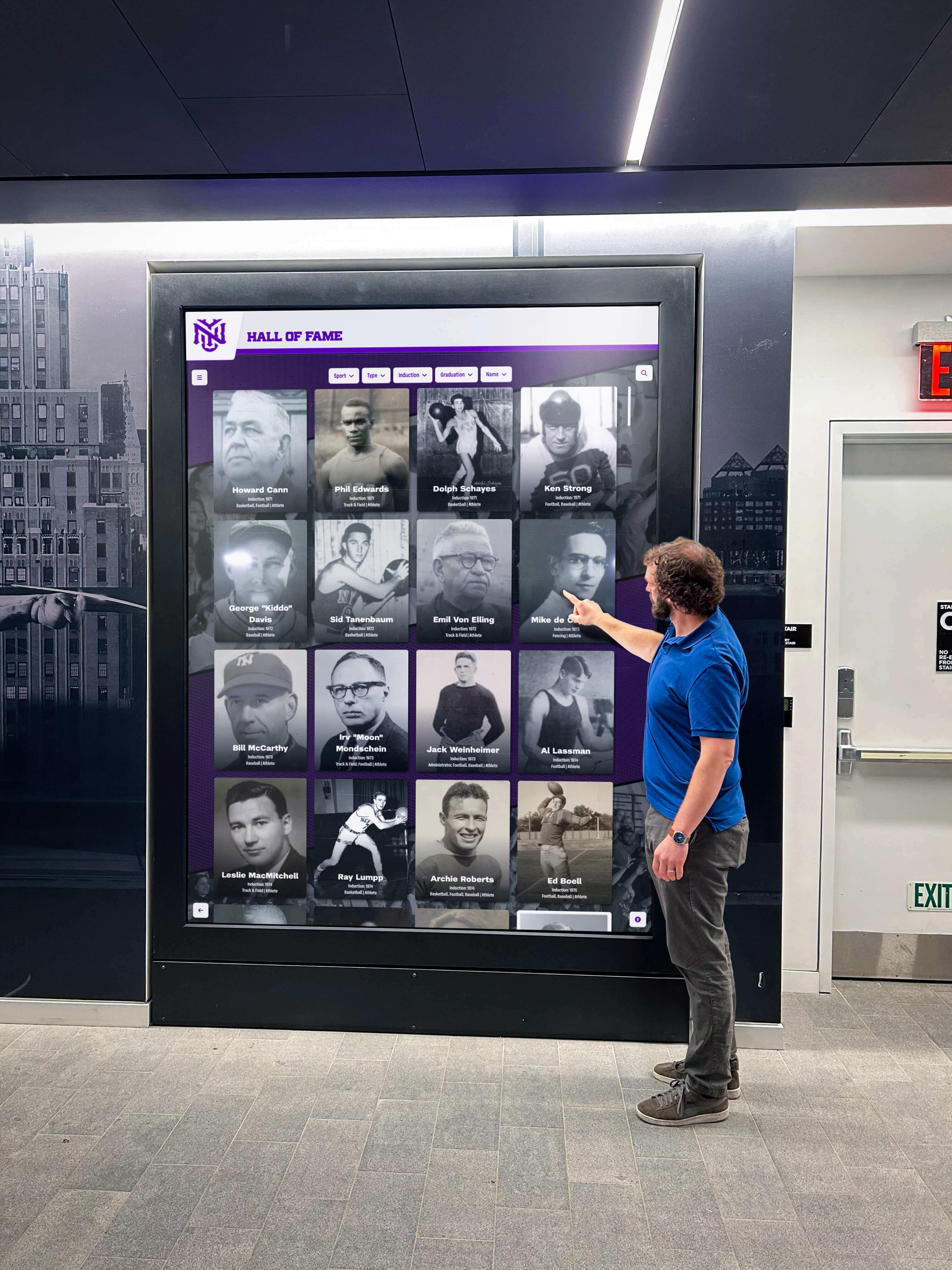
Specific Satisfaction Dimensions: Displays impact multiple satisfaction components:
Communication and Information Access:
- “I receive timely information about hall activities”: 82% agree (with displays) vs. 51% (without)
- “I know how to access campus resources”: 78% agree (with displays) vs. 61% (without)
- “Communication from housing staff is effective”: 76% agree (with displays) vs. 53% (without)
Community and Belonging:
- “I feel connected to my residence hall community”: 68% agree (with displays) vs. 57% (without)
- “I know about social activities I can participate in”: 74% agree (with displays) vs. 49% (without)
- “I recognize and know information about my Resident Assistant”: 81% agree (with displays) vs. 67% (without)
These dimensional improvements collectively contribute to overall housing satisfaction differences.
Sense of Community and Social Integration
Community Connection: Interactive displays contribute to community-building objectives:
Students at institutions with displays report:
- 68% feel “connected” or “very connected” to hall community
- 71% can identify at least three other residents on their floor
- 62% have attended at least one hall community event
- 54% feel comfortable approaching staff with concerns
Students at institutions without displays report:
- 57% feel “connected” or “very connected” to hall community
- 58% can identify at least three other residents on their floor
- 47% have attended at least one hall community event
- 48% feel comfortable approaching staff with concerns
While displays alone do not create community, they support community-building efforts by facilitating information access, promoting participation opportunities, and creating shared reference points among residents.
Recognition and Belonging: Seeing oneself and peers featured creates emotional connection:
- 64% of displays include resident recognition content
- Students featured in recognition content report 23% higher sense of belonging
- Recognition content generates substantial social engagement and discussion
- Peer achievement visibility reinforces community values and norms
Research on student engagement through interactive displays indicates that recognition programs represent high-impact practices for residence life outcomes.
Retention and Persistence Outcomes
On-Campus Housing Retention: Quality residential experience affects return rates:
Year-to-Year Housing Retention (students returning to on-campus housing):
Institutions with High Housing Satisfaction (>7.5/10):
- First-year to second-year retention: 76% return to campus housing
- Second-year to third-year retention: 58% return to campus housing
Institutions with Moderate Housing Satisfaction (6.0-7.5/10):
- First-year to second-year retention: 67% return to campus housing
- Second-year to third-year retention: 49% return to campus housing
Institutions with Lower Housing Satisfaction (<6.0/10):
- First-year to second-year retention: 58% return to campus housing
- Second-year to third-year retention: 38% return to campus housing
Housing satisfaction correlates with numerous factors beyond communication technology, but institutions implementing comprehensive improvements including interactive displays consistently show retention improvements.
Academic Persistence: On-campus housing significantly affects degree completion:
According to National Survey of Student Engagement research, first-year students living on campus persist to the second year at 92% compared to 90% living independently off campus—a 2.0 percentage point difference. Students in living-learning communities with enhanced engagement infrastructure show even stronger persistence outcomes.
Quality residential experiences supported by effective communication and community-building infrastructure contribute to institutional retention objectives extending beyond housing department metrics.
Return on Investment and Value Justification
Quantifiable Financial Returns
Cost-Benefit Analysis Framework: Institutions evaluate interactive display ROI through multiple lenses:
Initial Investment (per residence hall, medium-sized program):
- Hardware (2 displays at $8,000 each): $16,000
- Installation and configuration: $3,200
- Initial content development: $2,400
- Staff training: $1,200
- Total Initial Investment: $22,800 per hall
Annual Recurring Costs:
- Software platform subscription: $3,600 per hall
- Content management staff time (estimated): $4,800
- Maintenance and support: $1,200
- Total Annual Recurring: $9,600
Annual Quantifiable Savings:
- Reduced printing and materials: $2,200 per hall
- Staff time savings (informational inquiries): $4,800 per hall
- Reduced RA time on routine questions: $2,400 per hall (estimated)
- Total Annual Savings: $9,400
Financial Payback: Based on these typical figures, direct cost savings approach recurring costs within first year, with initial investment amortized over 2.5-3.0 years assuming typical hardware lifecycle of 7-10 years. However, financial returns represent only partial value justification.
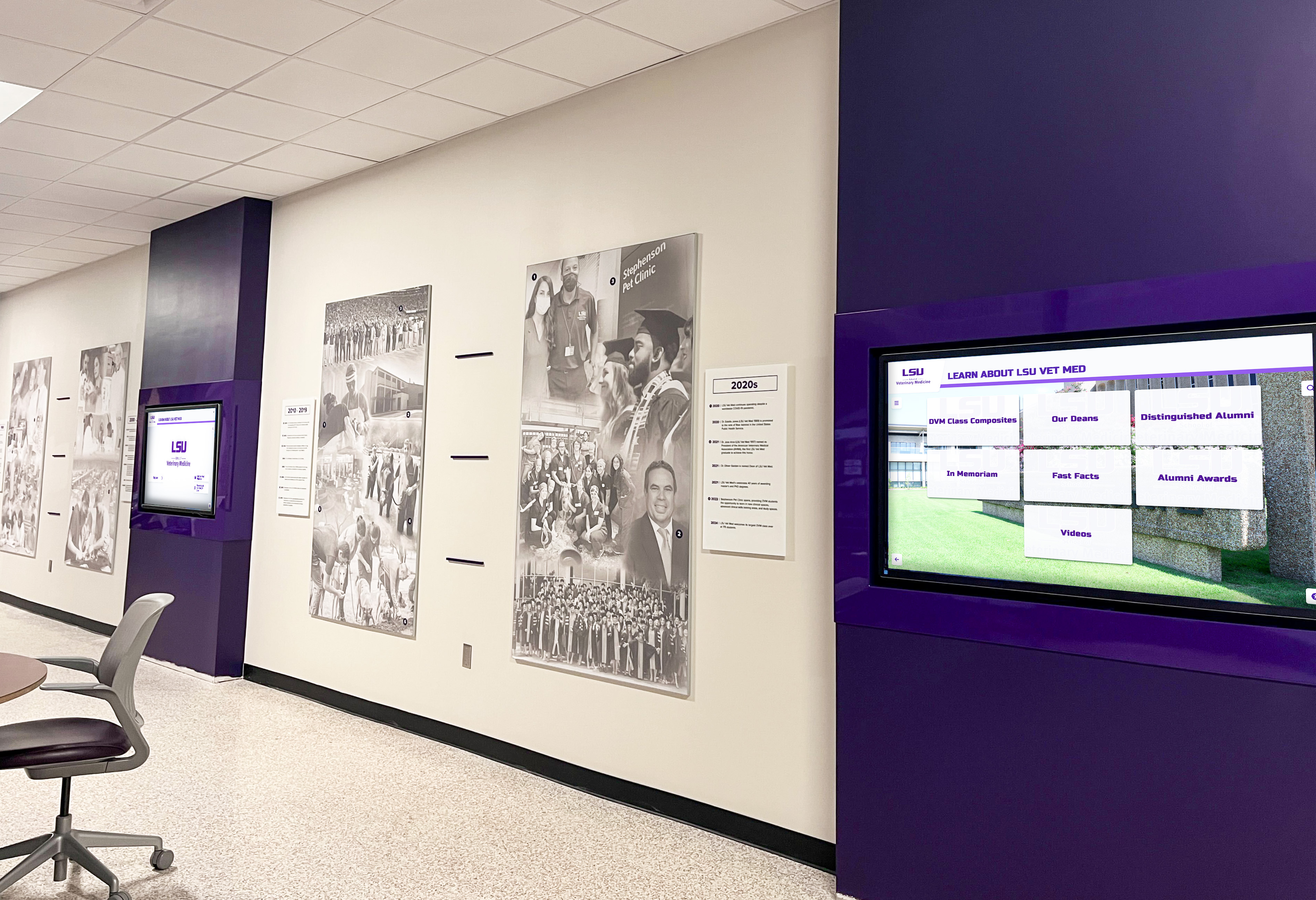
Housing Revenue Implications: Quality residential experience affects enrollment and retention:
Small improvements in housing retention generate substantial revenue impact:
- 5 percentage point improvement in year-to-year retention in 500-bed program
- Retaining 25 additional residents (5% of 500)
- Annual housing revenue per student (example): $12,000
- Revenue impact: $300,000 annually
While interactive displays represent one component of comprehensive housing quality improvements, even modest attribution (5% credit) suggests annual revenue impact of $15,000, substantially exceeding implementation and operating costs.
Strategic and Intangible Benefits
Student Experience Enhancement: Value extends beyond direct financial metrics:
- Improved student satisfaction with residential experience
- Enhanced perception of institutional investment in student success
- Modernized facilities supporting recruitment and enrollment
- Stronger residential community and sense of belonging
- Better informed students making more effective use of resources
Student experience quality affects institutional reputation, enrollment yield rates, student success outcomes, and alumni satisfaction—impacts difficult to quantify precisely but strategically significant.
Operational Excellence: Communication effectiveness supports staff efficiency:
- Residence life staff focus on high-value student support vs. routine information
- Reduced crisis escalation from communication breakdowns
- Improved staff capacity to support larger residential populations
- Enhanced emergency response capabilities
- More consistent communication across multiple halls and buildings
Operational improvements enable housing departments to serve students more effectively within existing resource constraints.
Institutional Positioning: Technology infrastructure communicates institutional priorities:
- Demonstrates commitment to student-centered facilities
- Projects innovation and responsiveness to student preferences
- Supports sustainability objectives through reduced paper consumption
- Aligns with student expectations for modern digital infrastructure
- Enhances competitive positioning in enrollment marketplace
Prospective students and families evaluating residential options increasingly expect modern communication and engagement infrastructure comparable to their home and high school environments.
Implementation Best Practices and Recommendations
Evidence-Based Guidance by Institution Type
Small Institutions (Under 500 Beds):
Recommended Approach:
- Start with 1-2 displays in highest-traffic locations (main lobby, primary common area)
- Focus on essential operational information and event promotion
- Utilize purpose-built platforms minimizing technical administration burden
- Engage student staff in content creation and management
- Budget allocation: $20,000-$35,000 initial, $5,000-$8,000 annual recurring
Implementation Priorities:
- Dining and facilities hours (highest-value operational information)
- Community event calendar and programming promotion
- RA contact information and availability
- Campus resource directories
- Emergency protocols and safety information
Medium Institutions (500-2,000 Beds):
Recommended Approach:
- Deploy 3-5 displays covering multiple buildings and high-traffic areas
- Implement comprehensive content strategy addressing operational, community, and resource needs
- Establish distributed content management with training for hall staff
- Integrate with key campus systems (dining, events, emergency notifications)
- Budget allocation: $45,000-$80,000 initial, $15,000-$25,000 annual recurring
Implementation Priorities:
- Full operational information suite across all content categories
- Recognition programs highlighting resident achievements
- Wellness and safety content supporting student wellbeing
- Integration with campus event and resource systems
- Analytics implementation for continuous improvement
Large Institutions (2,000+ Beds):
Recommended Approach:
- Comprehensive multi-display network across all residence halls
- Enterprise content management with role-based access for distributed teams
- Deep integration with housing management and campus systems
- Dedicated communication staff or substantial RA training investment
- Budget allocation: $100,000-$250,000 initial, $35,000-$70,000 annual recurring
Implementation Priorities:
- Standardized but customizable content templates across all halls
- Real-time operational system integrations (dining, laundry, facilities)
- Comprehensive analytics and optimization programs
- Emergency notification system integration
- Mobile companion applications extending display content access
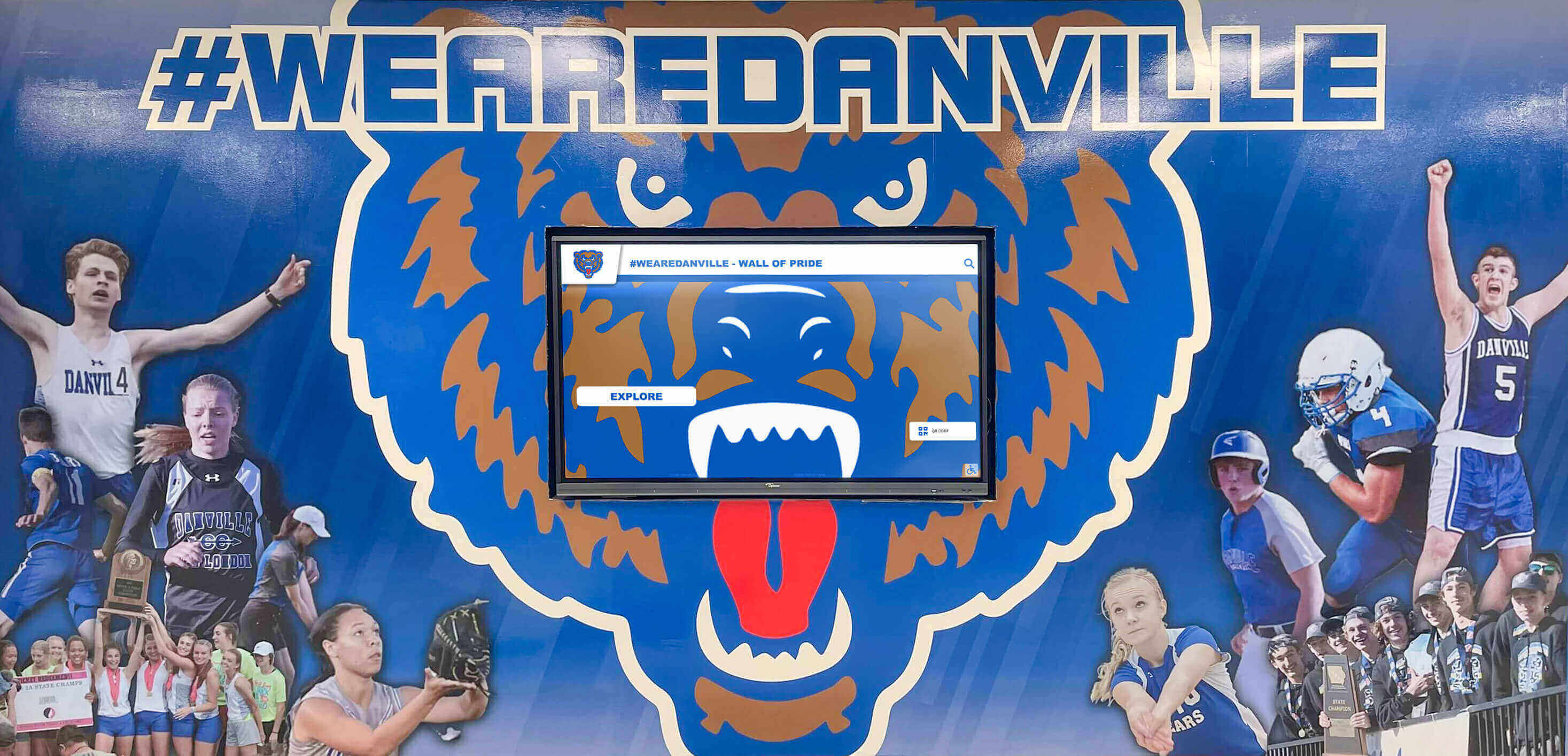
Platform Selection Criteria
Purpose-Built vs. Generic Digital Signage: Critical platform distinctions:
Purpose-Built Education Platforms (like Rocket Alumni Solutions):
- Pre-configured templates for common residence hall content
- Intuitive content management for non-technical staff
- Educational environment design and best practices
- Integration with common campus systems
- Recognition and community-building features
- Moderate cost ($3,600-$8,000 annually for most programs)
Generic Digital Signage Platforms:
- Flexibility for custom implementations
- Require significant configuration and customization
- May need technical staff or consultants for implementation
- Integration requires custom development
- Lower software costs but higher implementation and management costs
- Better for institutions with dedicated IT resources and complex requirements
Most institutions without dedicated digital signage technical staff find purpose-built educational platforms deliver superior total value through reduced implementation complexity and ongoing management efficiency.
Content Strategy Success Factors
Effective Content Management: Successful programs share common characteristics:
Designated Ownership: Clear responsibility for content updates prevents neglect
- Assign specific staff members (RAs, hall directors, communications coordinators)
- Establish backup coverage for absences
- Include content management in position descriptions and training
Regular Update Schedules: Consistent refresh maintains engagement
- Minimum 2-3 content updates weekly
- More frequent updates for time-sensitive operational information
- Scheduled reviews ensuring content remains current and relevant
Quality Standards: Balance timeliness with professionalism
- Establish brand guidelines for visual consistency
- Proofread all content before publication
- Use high-quality images and graphics
- Maintain appropriate tone and messaging
Resident Engagement: Involve students in content creation
- Feature resident-generated content (with moderation)
- Highlight student achievements and contributions
- Solicit feedback on desired information
- Create student content committees or roles
Data-Driven Optimization: Use analytics to guide improvements
- Monitor which content categories generate most engagement
- Identify low-performing content for revision or elimination
- Test different presentation approaches
- Adjust content mix based on usage patterns
Challenges and Considerations
Common Implementation Obstacles
Institutions report these frequent challenges requiring proactive management:
Budget and Approval Processes (cited by 68% of institutions):
- Competing capital priorities in resource-constrained environments
- Multi-year budget cycles complicating approval timelines
- Difficulty quantifying value for non-financial benefits
- Requires coalition-building across multiple stakeholder groups
Mitigation Strategies:
- Develop comprehensive business case including financial and strategic benefits
- Start with pilot implementation demonstrating value before full deployment
- Leverage capital improvement budgets or deferred maintenance funds
- Explore housing revenue budgets independent of general institutional funds
Technical Infrastructure Limitations (cited by 47% of institutions):
- Inadequate network coverage in older residence halls
- Electrical power availability in desired locations
- IT department bandwidth for implementation support
- Integration complexity with legacy campus systems
Mitigation Strategies:
- Assess infrastructure requirements early in planning process
- Budget for necessary infrastructure improvements
- Select platforms minimizing technical administration burden
- Engage IT partners early and clarify support expectations
Content Management Capacity (cited by 54% of institutions):
- Staff workload concerns about ongoing content management
- Uncertainty about content creation and update workflows
- Limited communications or marketing expertise on housing staff
- Concerns about maintaining content quality and currency
Mitigation Strategies:
- Establish clear, sustainable content management workflows before implementation
- Provide comprehensive training for content managers
- Start with essential content categories before expanding
- Utilize student staff (RAs, communications assistants) for content creation
- Select platforms with intuitive, low-barrier content management tools
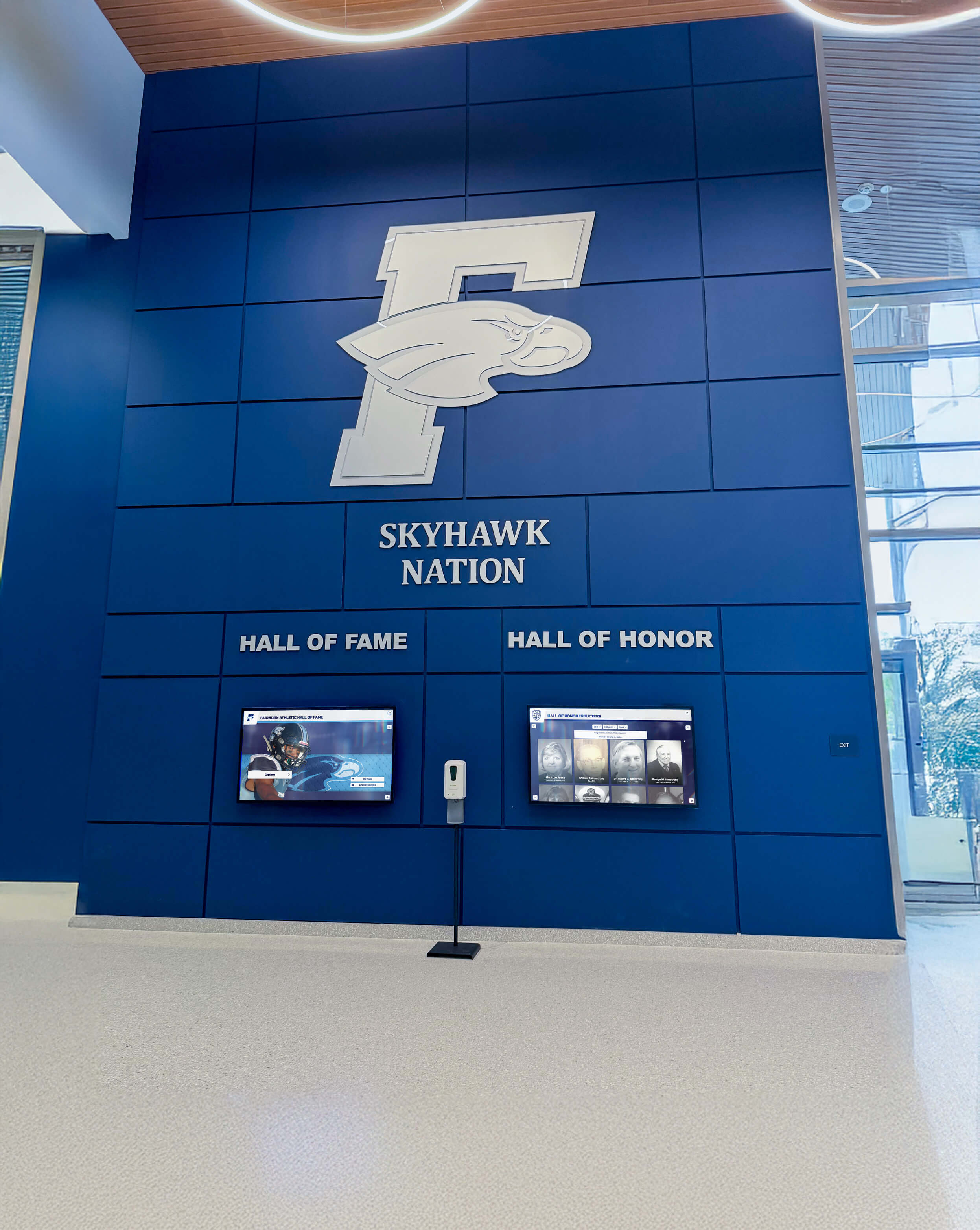
Student Privacy and Content Appropriateness (cited by 38% of institutions):
- FERPA compliance concerns for student recognition content
- Balancing information accessibility with privacy protection
- Risk of inappropriate user-generated content
- Concerns about featuring students without consent
Mitigation Strategies:
- Develop clear content policies addressing privacy and consent
- Obtain appropriate permissions for recognizing individual students
- Implement content approval workflows for sensitive categories
- Establish incident response procedures for inappropriate content
- Consult institutional counsel on compliance requirements
Accessibility and Inclusive Design
Universal Access Requirements: Displays must serve all residents:
Physical Accessibility:
- ADA-compliant mounting heights (typically 15-48 inches from floor to operable controls)
- Clear floor space for wheelchair users to approach displays
- Consideration of reach ranges and viewing angles
- Placement avoiding narrow corridors or congested areas
Digital Accessibility:
- High-contrast color schemes for visual impairments
- Text sizing options or baseline large text
- Audio output capabilities for screen reader users
- Simple navigation requiring minimal fine motor control
- Alternative access through web-based mobile interfaces
Multilingual Support: Serve diverse residential populations:
- Interface language selection for international students
- Key operational content translated to common languages
- Consideration of cultural factors in content and imagery
- Outreach to international student offices for translation support
Most institutions provide primary content in English with selective translation of critical operational and safety information based on residential population demographics.
Future Trends and Emerging Capabilities
Artificial Intelligence and Personalization
Emerging technologies begin influencing residence hall display systems:
Intelligent Content Recommendations: AI algorithms optimize content presentation:
- Time-of-day content scheduling based on traffic patterns
- Event promotion timing optimized for historical attendance patterns
- Content category balancing based on engagement data
- Predictive content expiration preventing outdated information display
Early implementations show 18-23% engagement improvements through AI-optimized content scheduling compared to static schedules.
Natural Language Interfaces: Voice interaction and conversational search:
- “When does the dining hall close today?”
- “What events are happening this weekend?”
- “How do I request maintenance?”
Voice interfaces particularly benefit accessibility for students with visual impairments or fine motor limitations. However, privacy concerns in shared common areas may limit adoption of always-listening voice systems.
Personalization Technologies: Displays adapting to individual users:
Some institutions experiment with:
- QR code scanning to access personalized content (meal plans, package notifications, personal schedules)
- Integration with student ID cards for customized information
- Location-aware mobile apps synchronizing with nearby displays
Privacy considerations and implementation complexity currently limit personalization adoption, but future systems may offer opt-in personalization while maintaining general public displays.
Expanded System Integration
Smart Building Integration: Residence halls increasingly employ IoT technologies:
Potential Display Integrations:
- Real-time laundry machine availability from smart sensors
- Study room and common space occupancy from occupancy sensors
- Parking availability from lot monitoring systems
- Environmental monitoring (temperature, air quality) data
- Energy usage dashboards promoting sustainability awareness
These integrations transform displays into comprehensive residence hall information hubs providing actionable real-time data.
Student Engagement Platform Connections: Displays as components of broader systems:
- Integration with campus involvement platforms showing personalized participation tracking
- Connection to campus apps extending display content to mobile devices
- Social media integration displaying moderated student content
- Integration with campus dining apps for mobile ordering and pickup notifications
Seamless multi-channel experiences meeting students where they already engage digitally while leveraging high-visibility physical display environments.
Sustainability and Environmental Considerations
Energy Efficiency: Modern displays improve environmental performance:
- LED technology substantially reduces power consumption vs. older displays
- Automatic brightness adjustment based on ambient light conditions
- Sleep modes during low-traffic hours (though 24/7 operation often preferred)
- Multi-year hardware lifecycles reducing electronic waste
Paper Reduction: Digital displays support campus sustainability goals:
Quantifiable Environmental Benefits:
- Mean 68% reduction in printed materials per residence hall
- Eliminated waste from outdated printed flyers and posters
- Reduced recycling processing burden
- Alignment with campus climate commitments and sustainability initiatives
Many institutions feature sustainability metrics on displays themselves, creating awareness feedback loop among residential populations.
Requesting Detailed Implementation Guidance
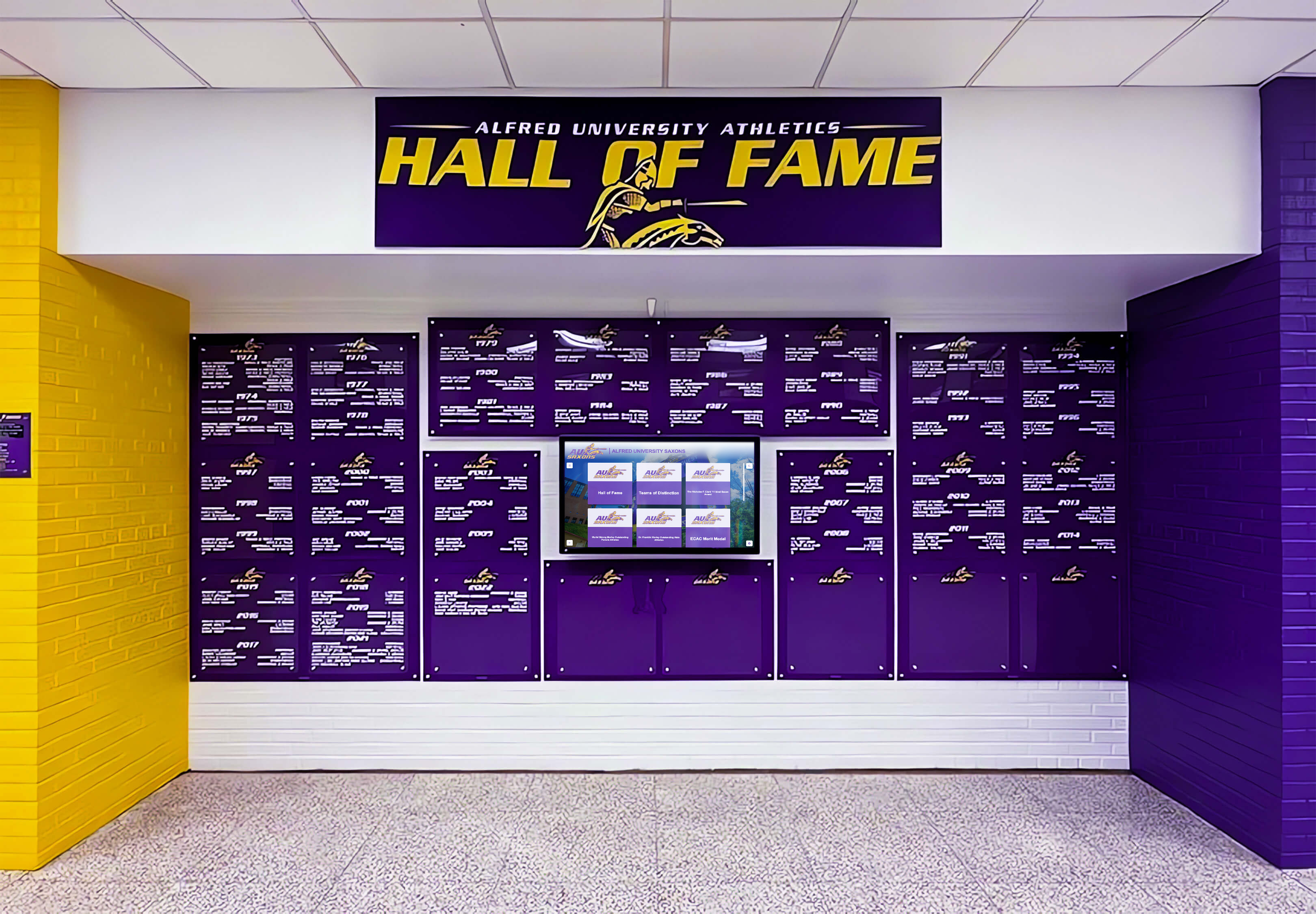
This report summarizes key findings from comprehensive research on interactive digital display systems in college residence halls. Educational institutions interested in detailed implementation planning, vendor evaluation frameworks, or consultation about residence hall communication strategy can request a research briefing from the Hall of Fame Wall research team.
Housing departments exploring technology solutions, planning facility improvements, or seeking to enhance residential student experience will find the comprehensive briefing provides actionable frameworks including:
- Detailed implementation timelines and project management templates
- Comprehensive vendor evaluation scorecards and RFP guidance
- Content strategy templates and best practice examples
- Staff training curricula and change management guidance
- ROI calculation tools customized to institutional contexts
- Technical specification recommendations and infrastructure requirements
- Student engagement measurement frameworks and assessment tools
Conclusion: Strategic Infrastructure for Residential Success
The benchmark data presented in this report demonstrates that interactive digital displays in residence halls represent strategic infrastructure supporting multiple institutional objectives simultaneously. Current implementation rates—with only 31% of institutions deploying interactive displays despite documented communication effectiveness gaps—suggest substantial opportunity for institutions to improve residential student experience through targeted technology investment.
Evidence clearly indicates that purpose-built interactive display systems deliver measurable improvements across critical dimensions: communication effectiveness (76% of students report improved awareness), event participation (34% higher attendance rates), operational efficiency (mean 5.2 hours weekly staff time savings per hall), and overall housing satisfaction (1.4-point improvement on 10-point scale). These outcomes contribute to broader institutional goals including student retention, residential community development, and efficient resource utilization.
Successful implementations share common characteristics regardless of institution size or budget: clear project ownership and stakeholder engagement, strategic placement in high-traffic common areas, sustainable content management workflows with designated responsibility, integration with existing campus systems, and ongoing optimization based on usage analytics. Institutions following evidence-based implementation practices consistently achieve positive outcomes within realistic budget parameters.
For institutions planning residence hall communication improvements, the data suggests prioritizing purpose-built educational platforms over generic digital signage systems, implementing comprehensive content strategies addressing operational, community, and wellness needs, establishing sustainable management workflows before deployment, and measuring effectiveness through both quantitative analytics and qualitative student feedback.
The investment in interactive display infrastructure serves multiple institutional priorities simultaneously: improving student experience and satisfaction, enhancing residential community outcomes, increasing operational efficiency, supporting retention objectives, and modernizing facilities to meet student expectations. These diverse benefits position display systems as strategic investments supporting core institutional mission rather than isolated technology projects.
As institutions plan residence hall improvements, the benchmark data in this report provides context for evaluating current practices, setting realistic implementation goals, allocating appropriate resources, and selecting approaches aligned with institutional capacity and priorities. The evidence demonstrates that institutions of all sizes can implement effective interactive display systems that measurably improve residential student experience within reasonable budget parameters.
See the platform behind the data: Rocket Alumni Solutions provides integrated communication, engagement, and recognition solutions designed specifically for educational residential environments.
For institutions seeking comprehensive platforms combining intuitive content management, strategic display placement, and proven engagement outcomes, Rocket Alumni Solutions delivers turnkey implementations addressing the challenges and incorporating best practices documented throughout this research.
Frequently Asked Questions
How many interactive displays does a typical residence hall need?
What does interactive display implementation cost for residence halls?
How difficult is content management for residence hall displays?
Can displays integrate with existing campus systems like dining services or event calendars?
What content should residence hall displays prioritize?
How do institutions measure success and return on investment for residence hall displays?
Should institutions use purpose-built education platforms or generic digital signage systems?
How long does implementation typically take from planning to operation?
Sources
- Informed Infrastructure: Top Five 2026 Residence Hall Design Trends
- ACUHO-I: Case for Campus Housing Research
- Research.com: Student Housing Trends 2026 Data and Insights
- FinancesOnline: 10 Student Housing Trends for 2026
- Housing.cloud: How Residence Hall Programs Can Enhance Resident Experience
- Woven Media: Best Practices for Implementing Digital Signage in Universities
- CTI: Campus-Wide Digital Signage – Enhancing Communication in Higher Education
- Solum ESL: Tips to Enhance University Campus Using Digital Signage