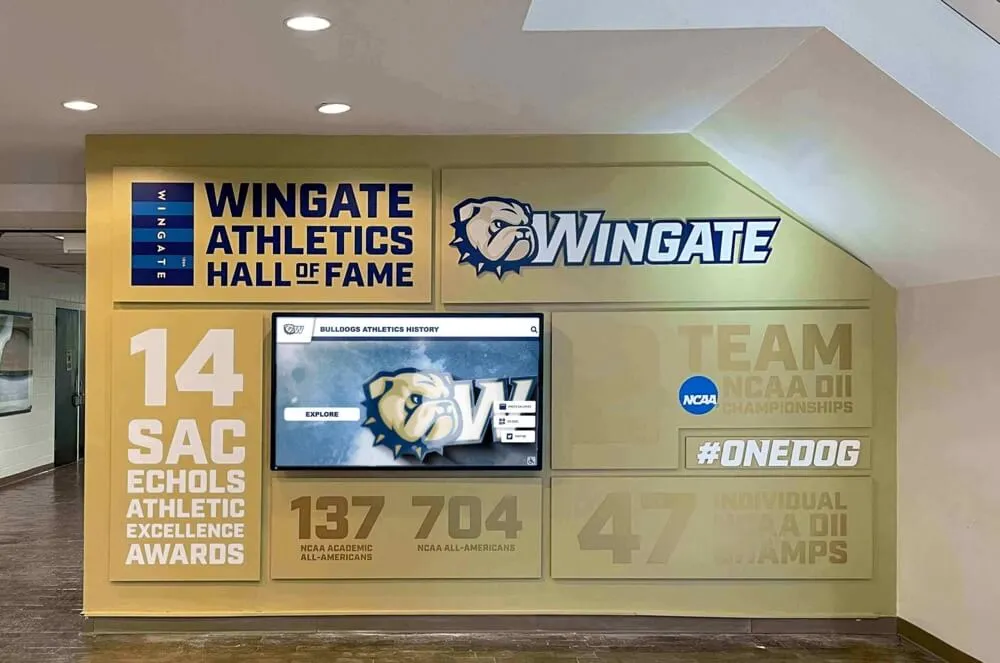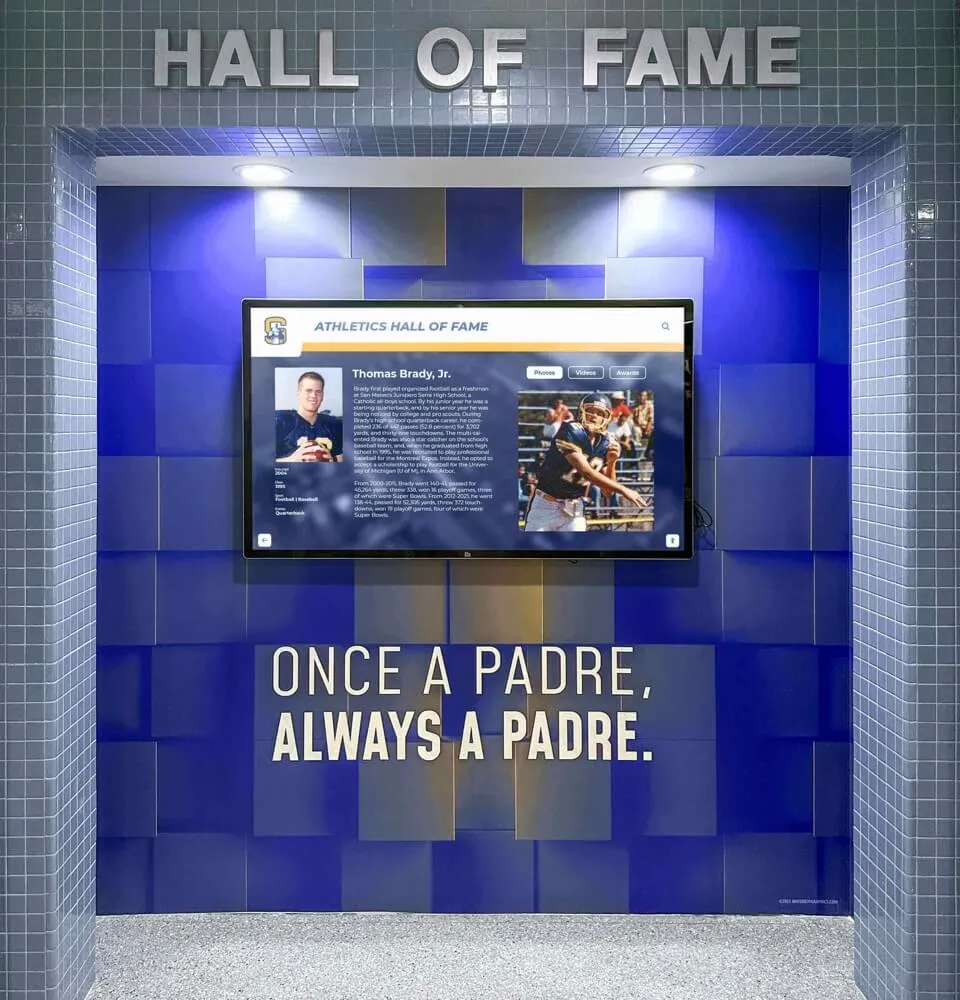
Walk into almost any high school athletic wing and you will find the same thing: a glass case stuffed with trophies, most of them dusty, many of them unlabeled, some of them barely visible behind a reflection. The standard trophy case has served high school athletics for decades, but it was never designed to tell a story. It was designed to hold objects. For programs that have spent years building genuine winning traditions, that distinction matters enormously.
Whether your school is renovating an athletic corridor, planning a new gymnasium lobby, or simply trying to breathe life into a recognition display that has stopped inspiring anyone, this guide walks through practical ideas at every budget level. The goal is a championship display that earns a second look—one that a recruit’s parent photographs on a visit, that an alumnus stops to read at a homecoming game, and that a freshman sprinter studies before their first conference race.
Why Standard Trophy Cases Fall Short
Before exploring better approaches, it helps to be specific about what traditional trophy cases fail to do—because most of their limitations are fixable with deliberate design choices.
The Anonymity Problem
A trophy on a shelf says “we won.” It rarely says who won, under what circumstances, against which opponents, with what record, or with which coaches and players at the helm. Without context, hardware becomes decoration. Visitors read the engraving—“2019 Regional Champions”—and move on because there is nothing else to read. The story behind that championship goes untold.
Effective championship trophy display ideas solve the anonymity problem by pairing every artifact with context. A regional trophy from 2019 becomes meaningful when visitors can also see the team photograph, the season record, the coach’s name, and the detail that the team overcame a mid-season injury to their starting quarterback to reach that moment. Context transforms trophies from furniture into narrative.
The Space Problem
Trophy cases fill up. Programs that have sustained success over twenty or thirty years face an uncomfortable math problem: physical cases hold a finite number of objects, but championships keep accumulating. Athletic directors eventually face an unpleasant choice—rotate older hardware into storage, display everything in a crowded jumble, or simply stop recognizing some achievements publicly because there is no room.
Neither option does justice to the programs involved. A state title from 1987 does not deserve to be in a box. And current athletes deserve to see the full scope of their program’s history, not just a curated selection limited by cabinet depth.
The Engagement Problem
Static displays invite passive observation. Visitors glance, read a few labels, and walk on. There is no reason to linger, no invitation to explore, no layer of information waiting for the curious viewer who wants to know more. For schools that have invested in building winning traditions over multiple generations, a static case is a fundamentally inadequate vehicle for communicating that tradition.
Championship Trophy Display Ideas: The Core Elements
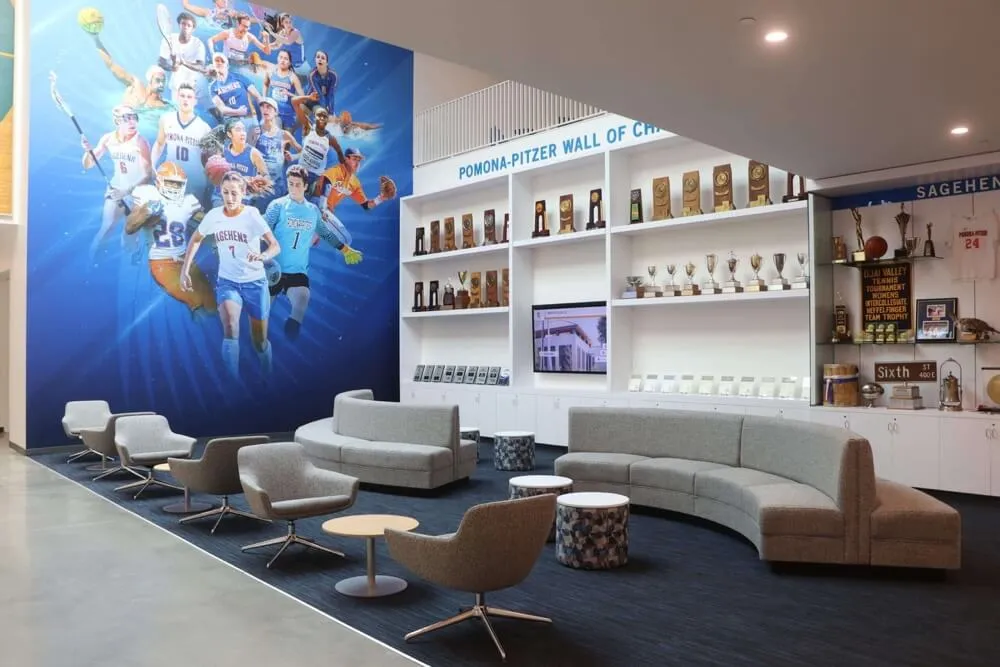
The most compelling athletic recognition spaces layer multiple physical formats—each one doing something the others cannot—into a cohesive display. Here are the elements that work together most effectively.
1. Championship Banners as Vertical Anchors
Banners suspended from gymnasium rafters or mounted on athletic hallway walls serve a function that no other display element replicates: they fill vertical space, they are readable from a distance, and they create the immediate visual impression that this is a program with a history. Even visitors who never read a plaque up close will register championship banners from across a gymnasium floor.
The most effective banner programs go beyond simple year-and-sport identification. Consider including:
- Season record alongside the championship designation
- Conference and classification context so visitors understand the competitive level
- Coach name recognizing the person who led the team
- A brief achievement detail when space permits, such as “Undefeated Regular Season” or “First State Title in Program History”
Color consistency matters. Banners in school colors with consistent typography create visual cohesion that signals institutional investment. A wall of mismatched banners from different vendors across different decades looks like a collection rather than a curated display. Standardizing design—even retroactively on replacement banners—signals that the program takes recognition seriously.
For programs exploring how champion team documentation can go deeper, creative ways to celebrate a title season through photography and display offer practical ideas for adding visual depth to banner programs.
2. Championship Rings in Display Cases
Championship rings occupy a unique place in athletic recognition. They are personal artifacts—items that belonged to specific athletes—but they communicate collective achievement at a glance. A display case dedicated to rings from different championship eras creates an immediate visual narrative of a program’s success across time.
Effective ring display approaches include:
Era groupings: Arrange rings chronologically or by decade so visitors can see how the program has sustained excellence across coaching changes and generations of athletes.
Individual context: Each ring display should identify who wore it—the athlete’s name, sport, year, and what they achieved—rather than simply presenting an anonymous piece of hardware.
Scale variation: If possible, use rings of varying sizes or display formats to distinguish state championships from conference titles or other achievement levels.
Schools that loan or donate rings for display should document the chain of custody carefully. Rings are irreplaceable personal items, and a formal agreement with donors establishes appropriate care responsibilities.
3. Retired Jerseys as Visual Centerpieces
A retired jersey on a wall does something trophy hardware alone cannot: it represents a specific person. When a jersey is retired in honor of an athlete who changed what was possible within a program, it becomes the most humanizing element in any athletic display.
Retired jersey programs work best when they are governed by clear, published criteria rather than ad hoc decisions. Common standards include:
- State championship performance in an individual event
- Multiple all-state designations
- School records that stood for a defined minimum number of years
- Induction into a school, regional, or national hall of fame
Framing and mounting matter considerably. A jersey behind glass with proper backing, proper lighting, and a name placard beneath it reads as honored. A jersey stapled to a corkboard reads as afterthought. The physical presentation communicates how seriously the institution values the achievement.
Memorabilia display case ideas for athletic trophies and school history provide additional guidance on mounting, framing, and presenting physical artifacts in ways that communicate lasting respect.
4. Championship Plaques and Recognition Walls
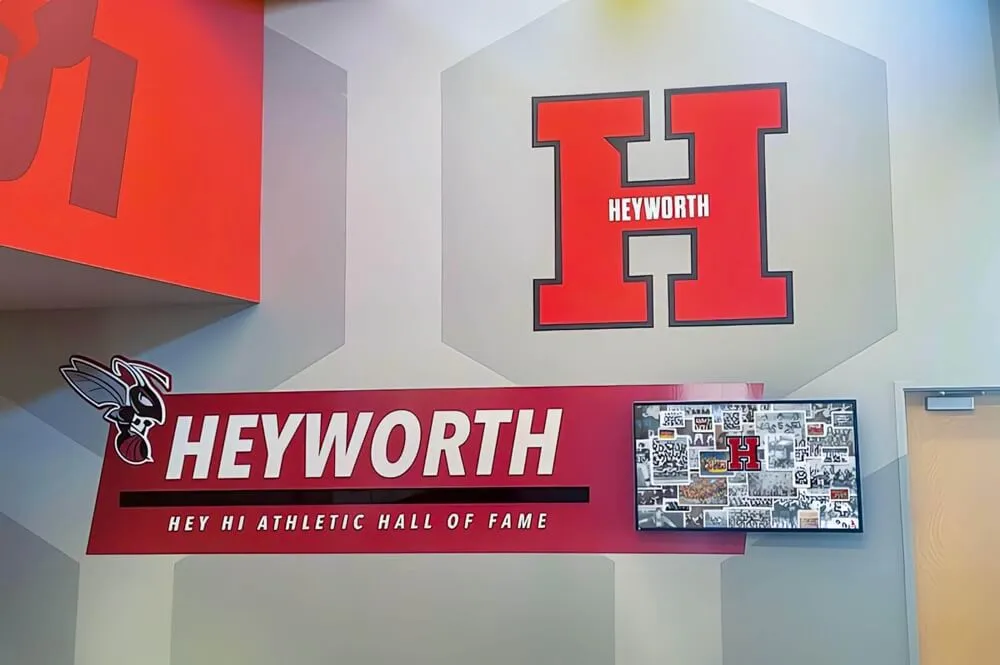
Plaques offer something banners do not: the ability to include substantial information in a polished, permanent format at eye level. A well-designed plaque for a state championship team can include the full roster, season record, conference record, playoff bracket results, coach biography, and a narrative paragraph describing what made that season significant.
Recognition walls that use consistent plaque formats across multiple years create an immediate sense of institutional memory. When visitors walk down a hallway and see ten or twenty plaques using the same design language, they understand that this school has treated recognition as a long-term commitment, not a periodic impulse.
Effective plaque programs plan for growth from the beginning. Wall space that accommodates the current display plus room for future additions avoids the common problem where a recognition wall installed in 2010 runs out of room by 2020, leaving athletic directors scrambling for a solution.
For programs considering the full spectrum of recognition tools, the best hall of fame tools available for athletics programs offers a comparative view of options from plaques to digital platforms.
5. Record Boards as Living History
Championship recognition does not end with team titles. Individual and team records represent ongoing athletic achievement that changes as new athletes push the boundaries of what is possible. A dedicated record board—listing current school records in every sport with the athlete’s name, the record, and the year it was set—turns recognition into a living display that updates as programs achieve new milestones.
Record boards create the aspirational dynamic that motivates athletes in a way that historical trophies alone cannot. A freshman swimmer who sees her name on a record board for the first time understands concretely that individual excellence is recognized and celebrated within this program. That understanding shapes behavior.
The Championship Story Panel: Where Physical and Digital Meet
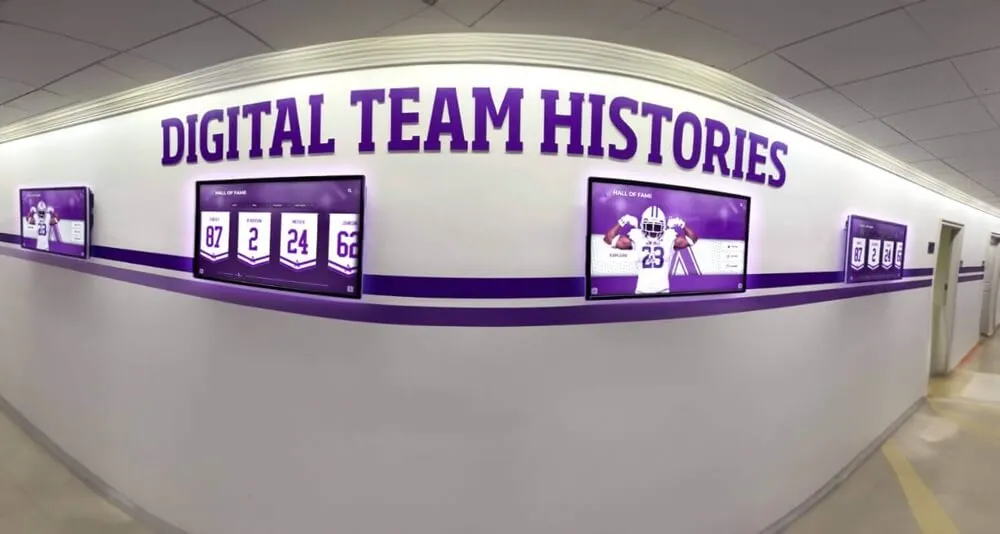
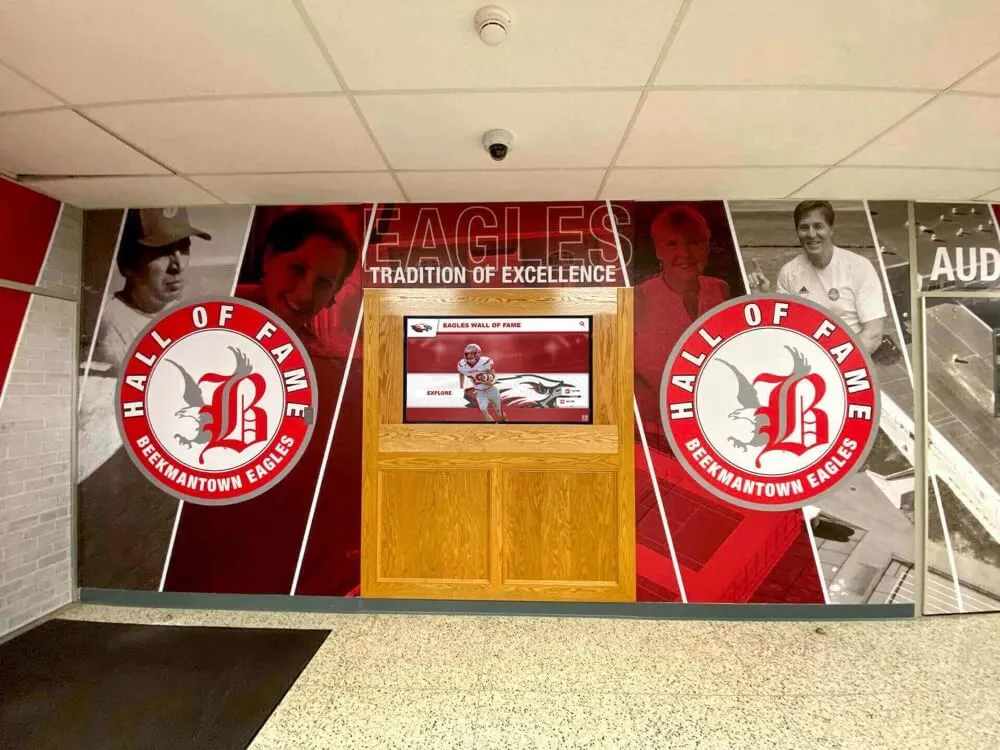
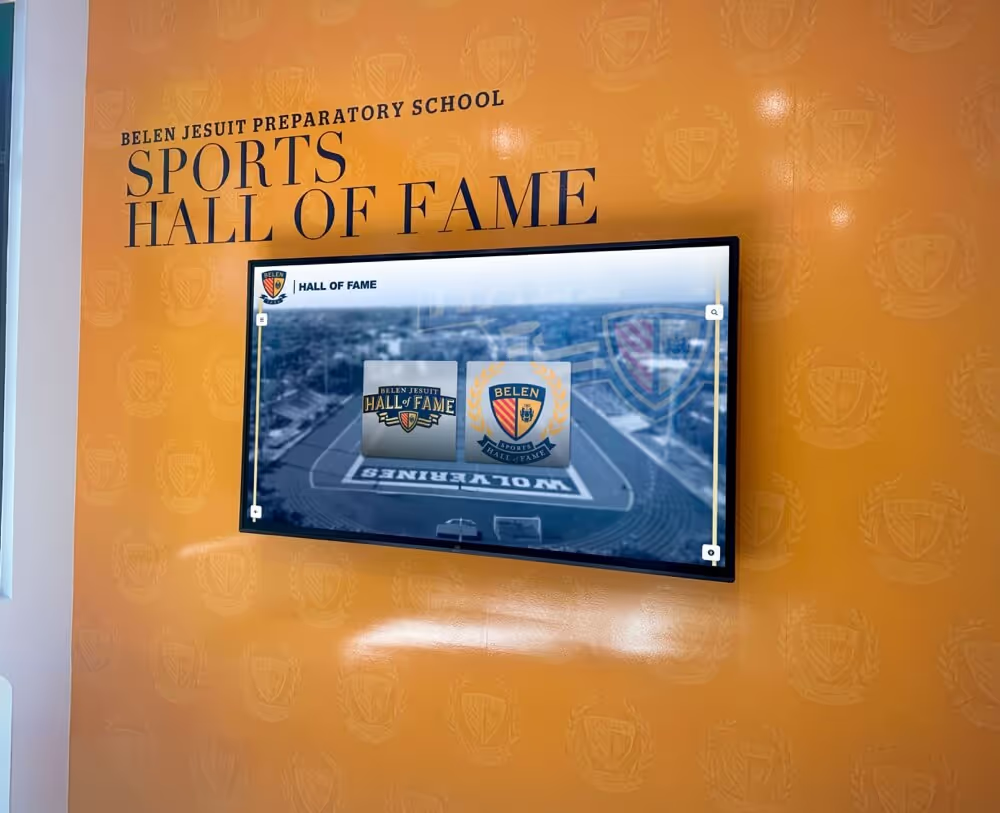
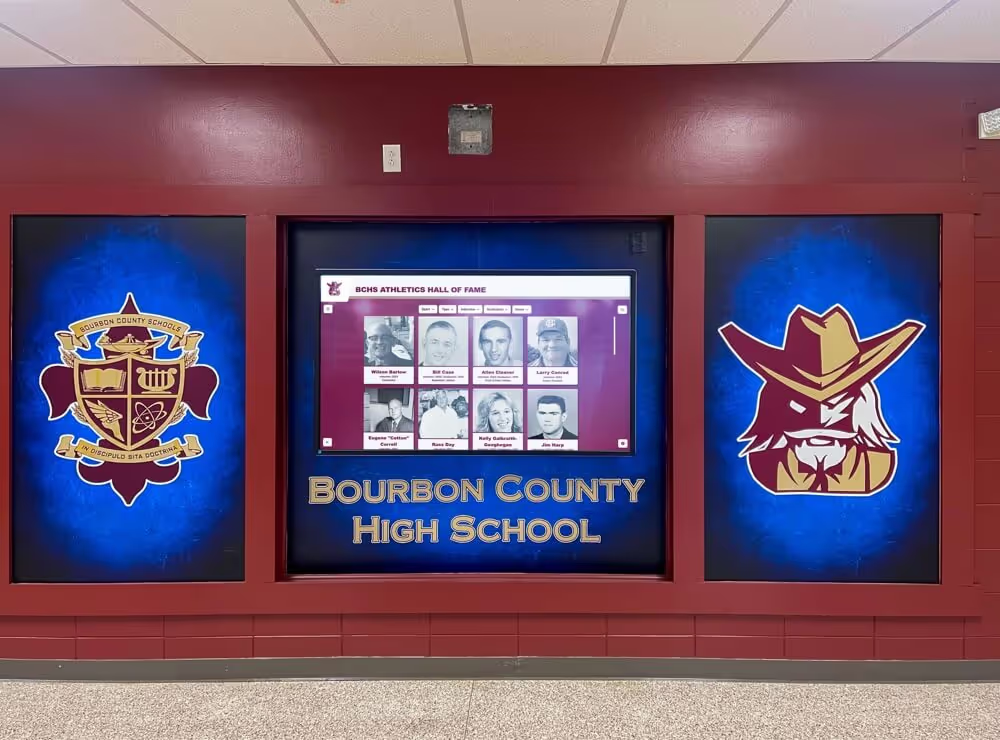
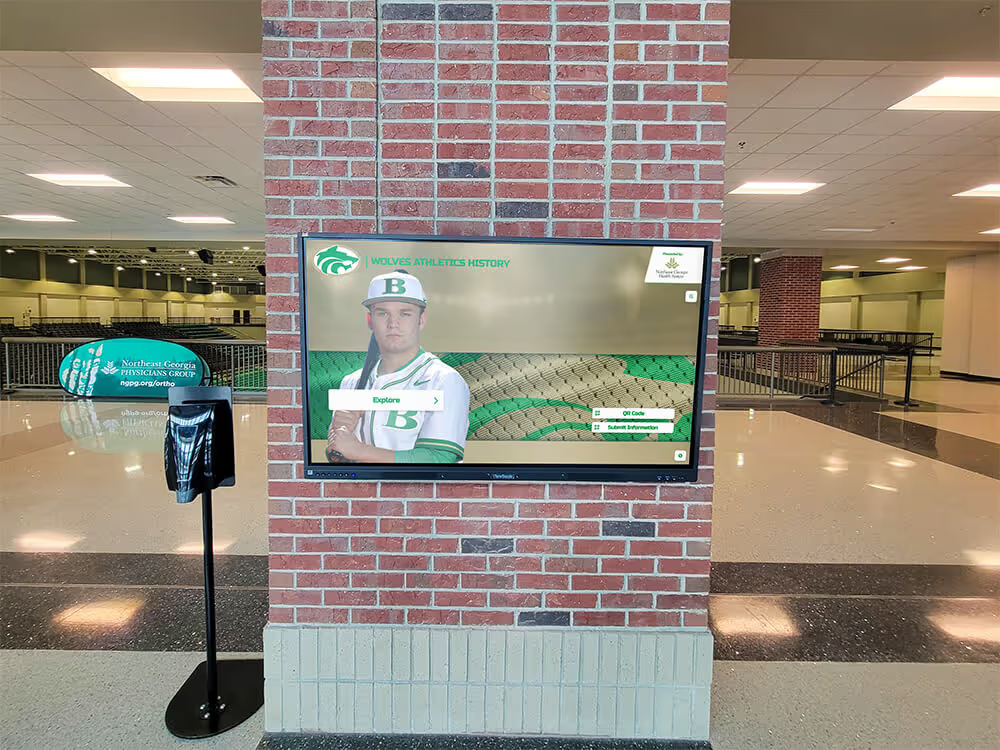
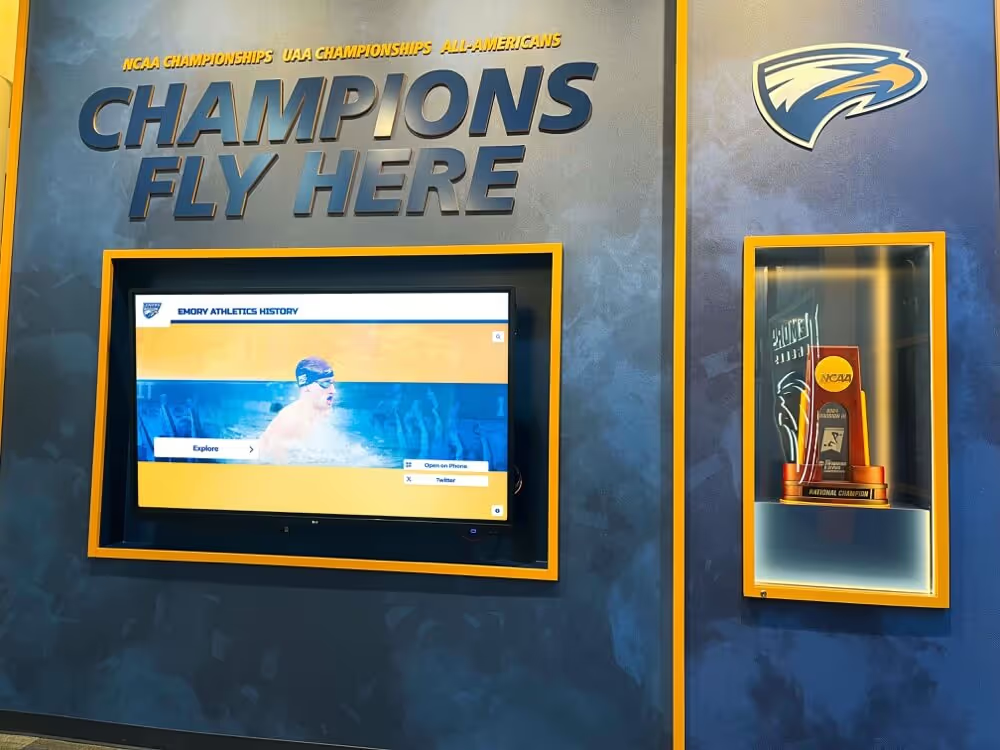
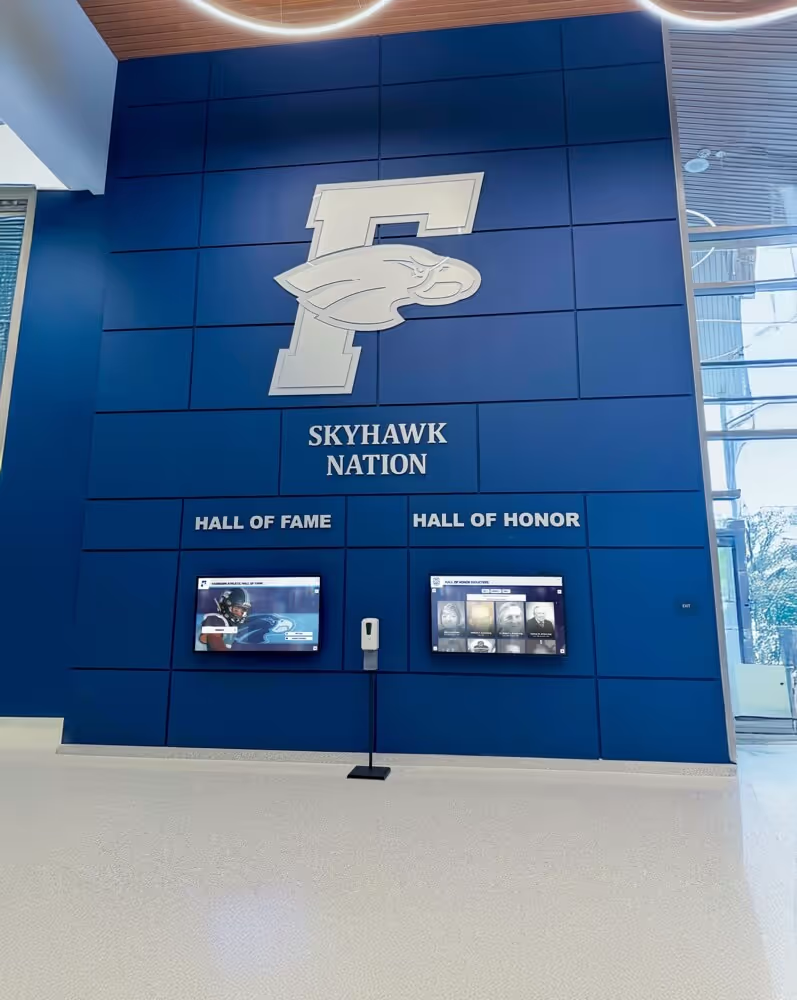
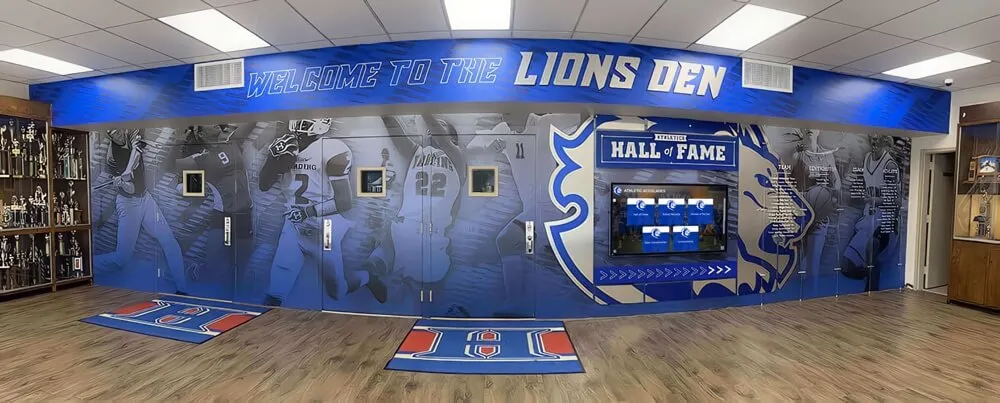
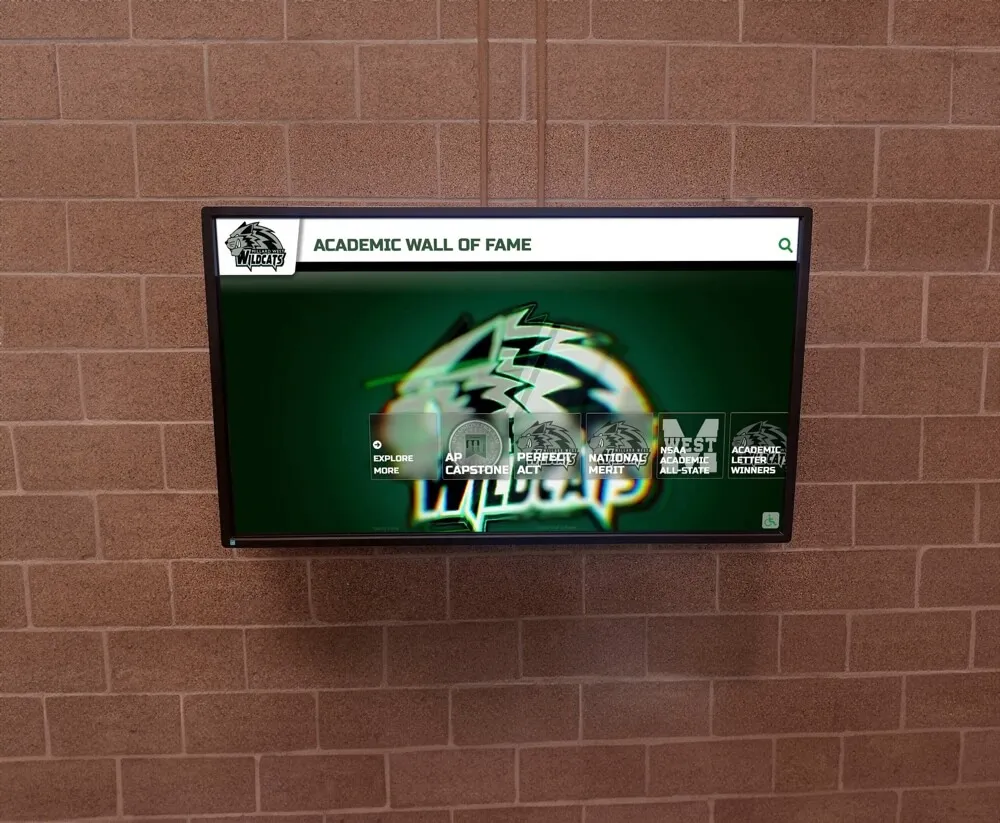
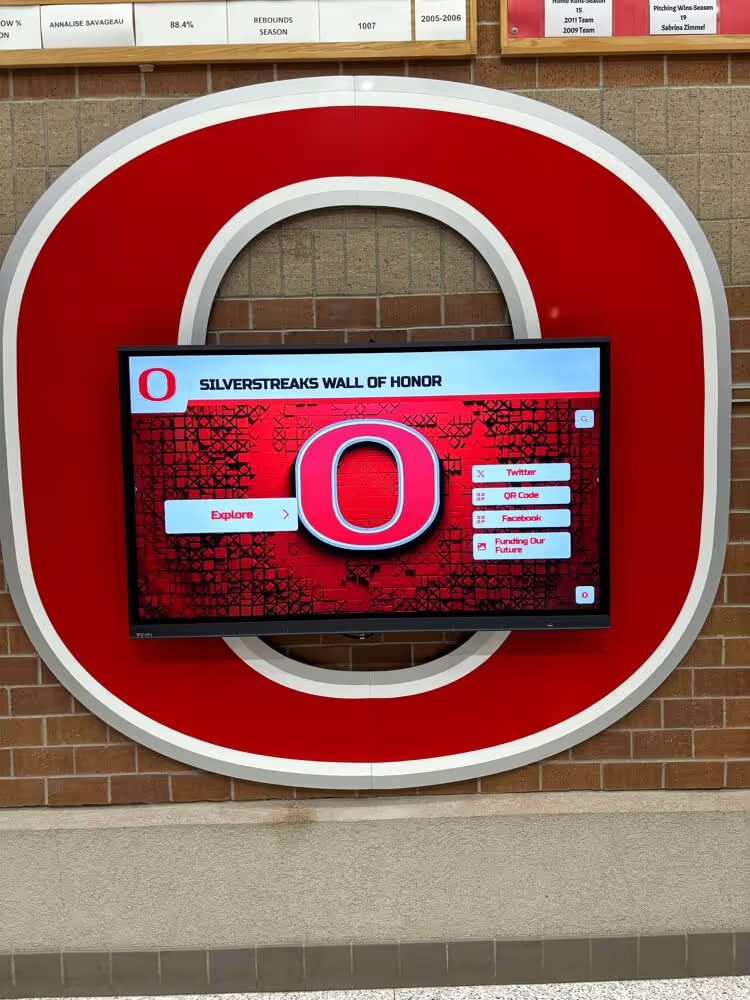
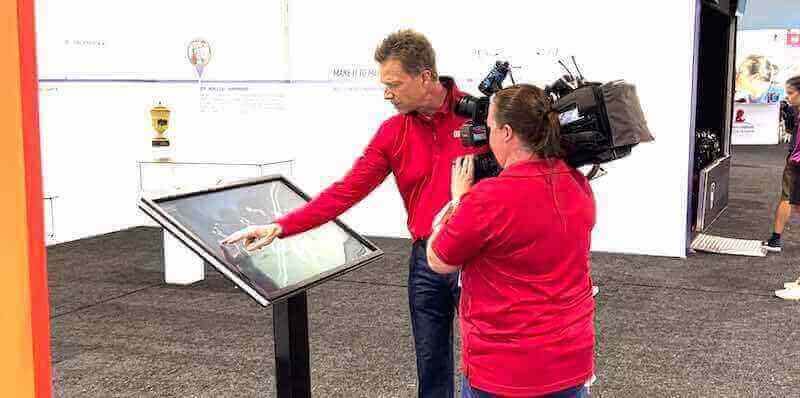
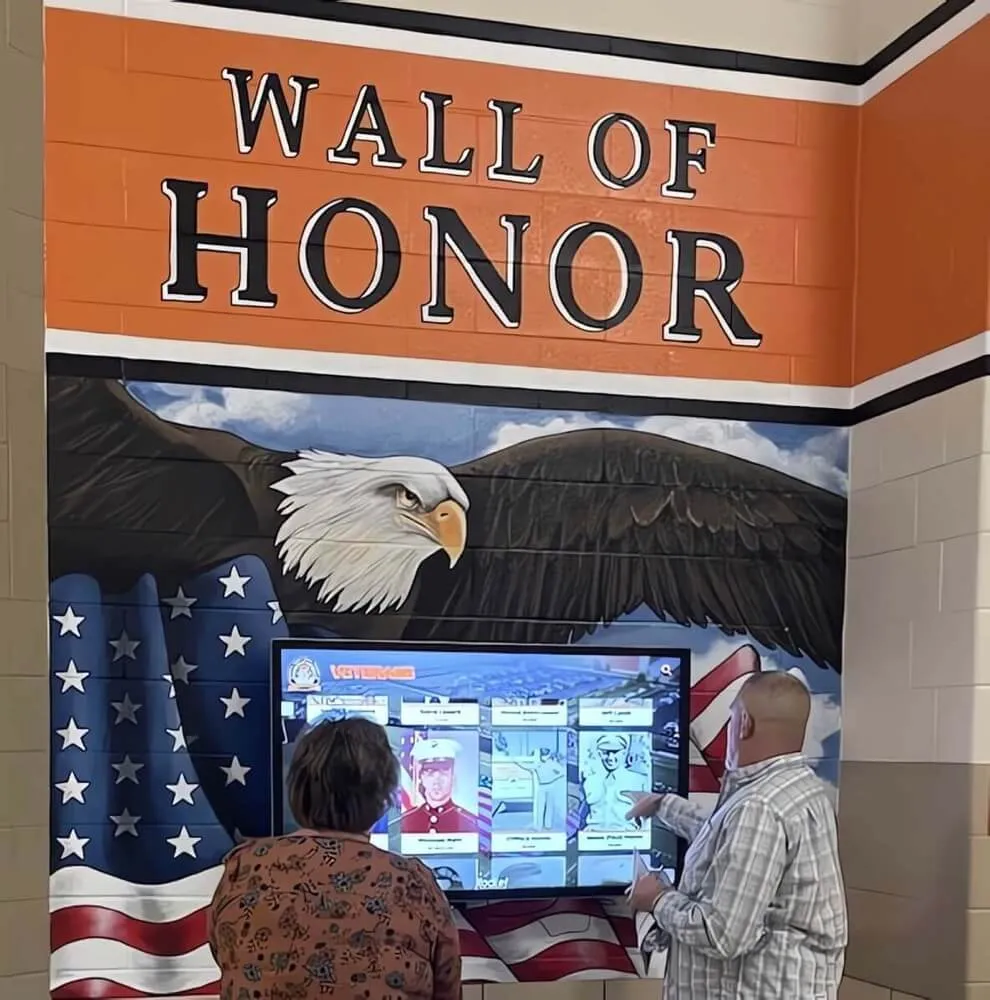
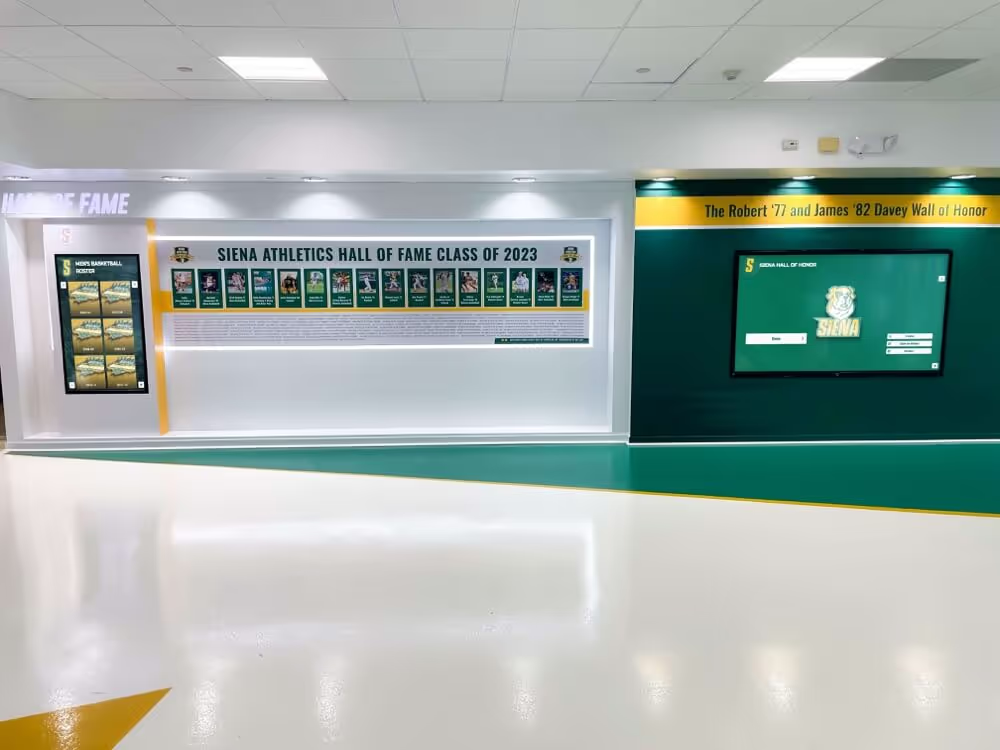
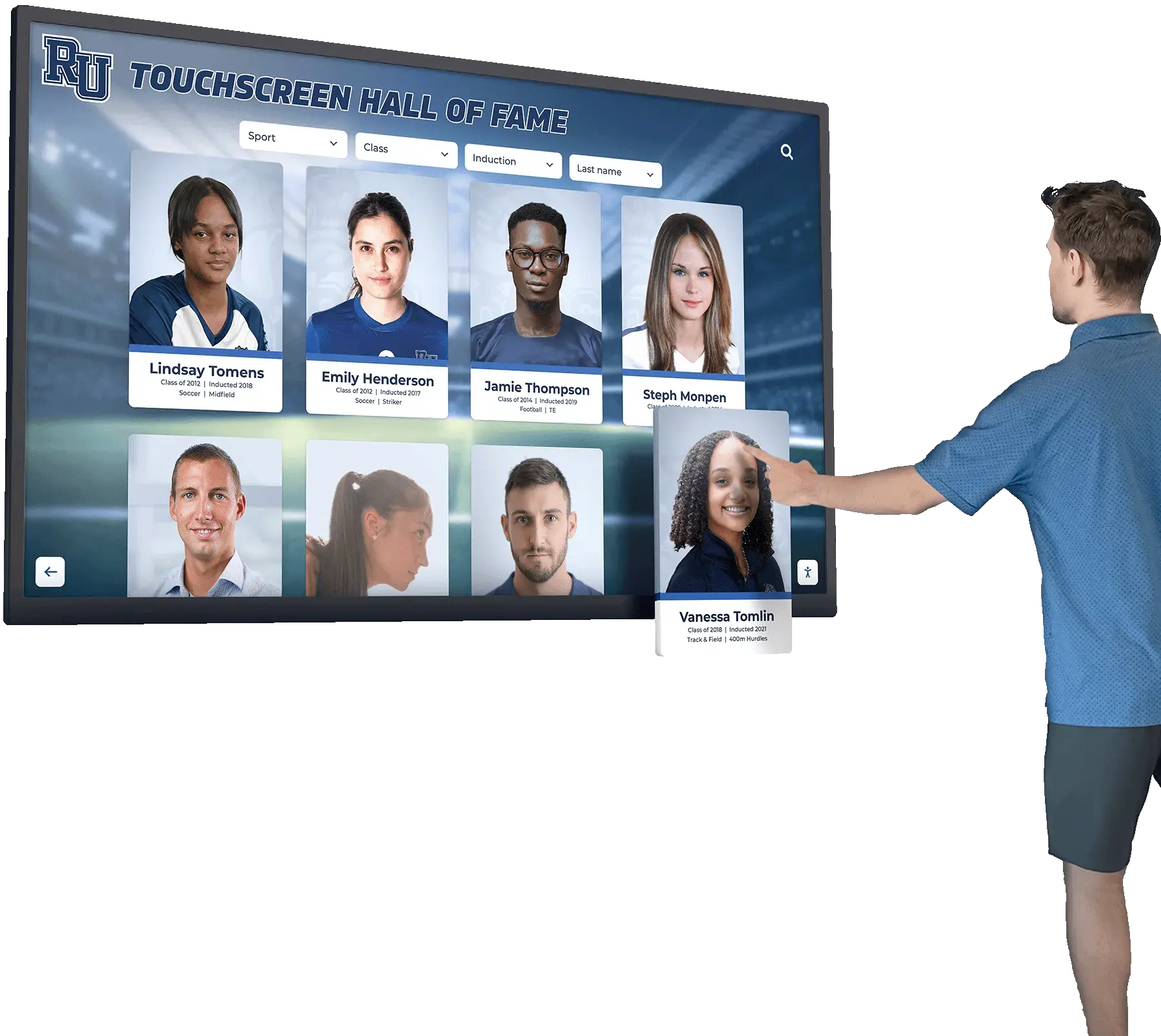
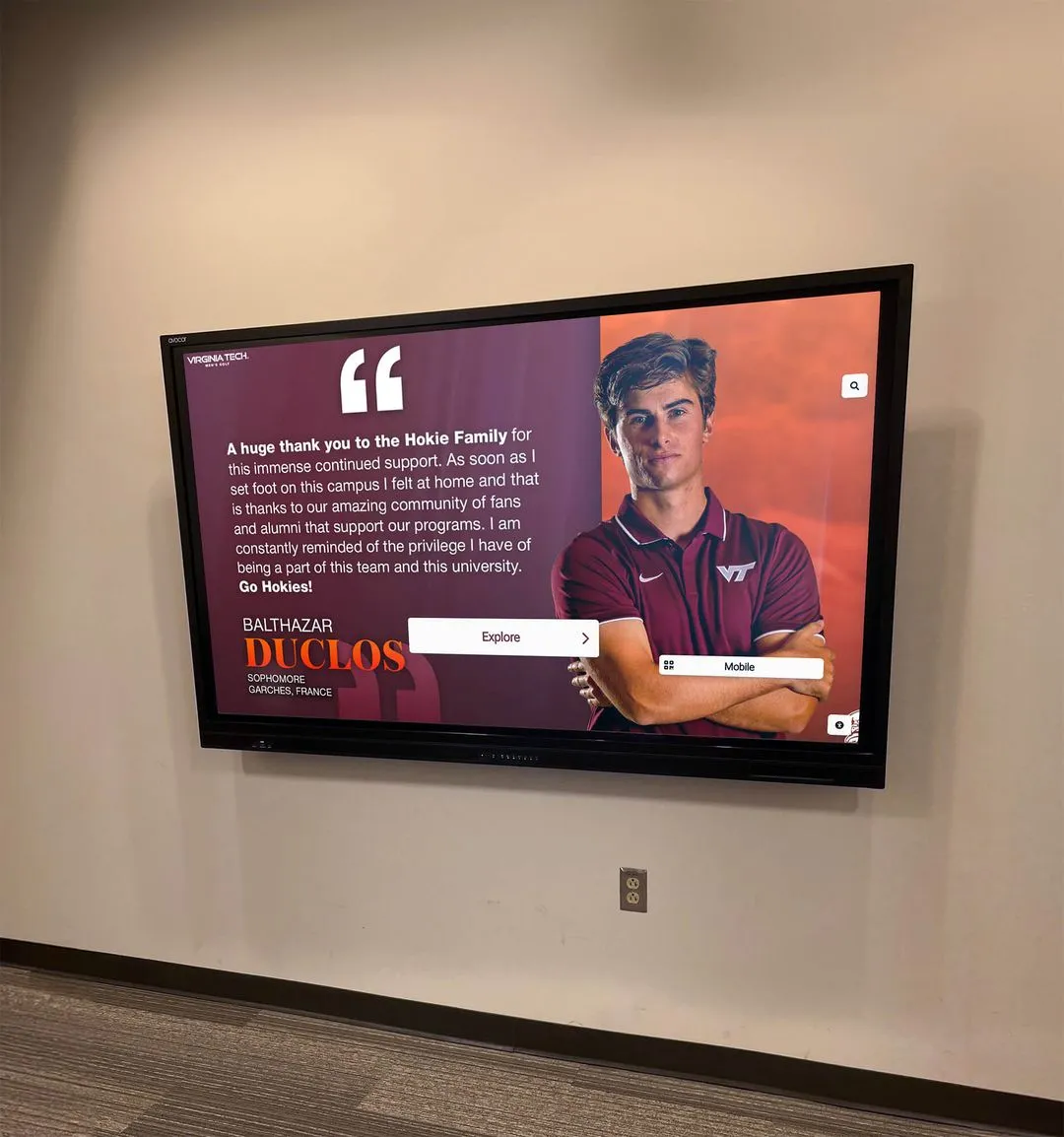
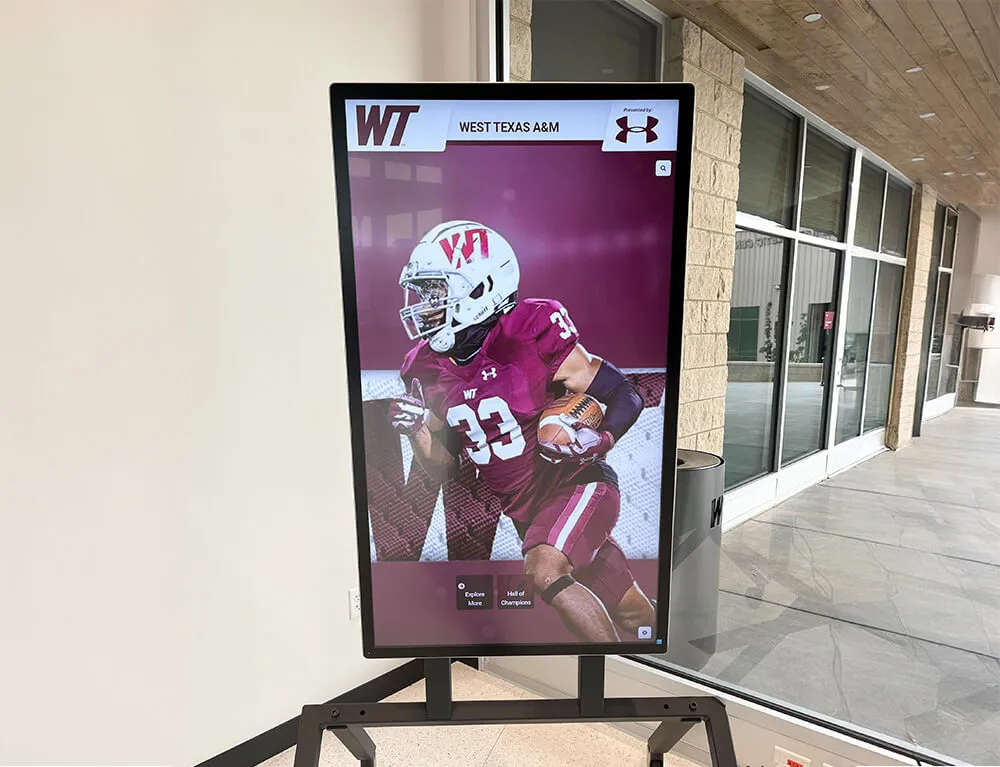
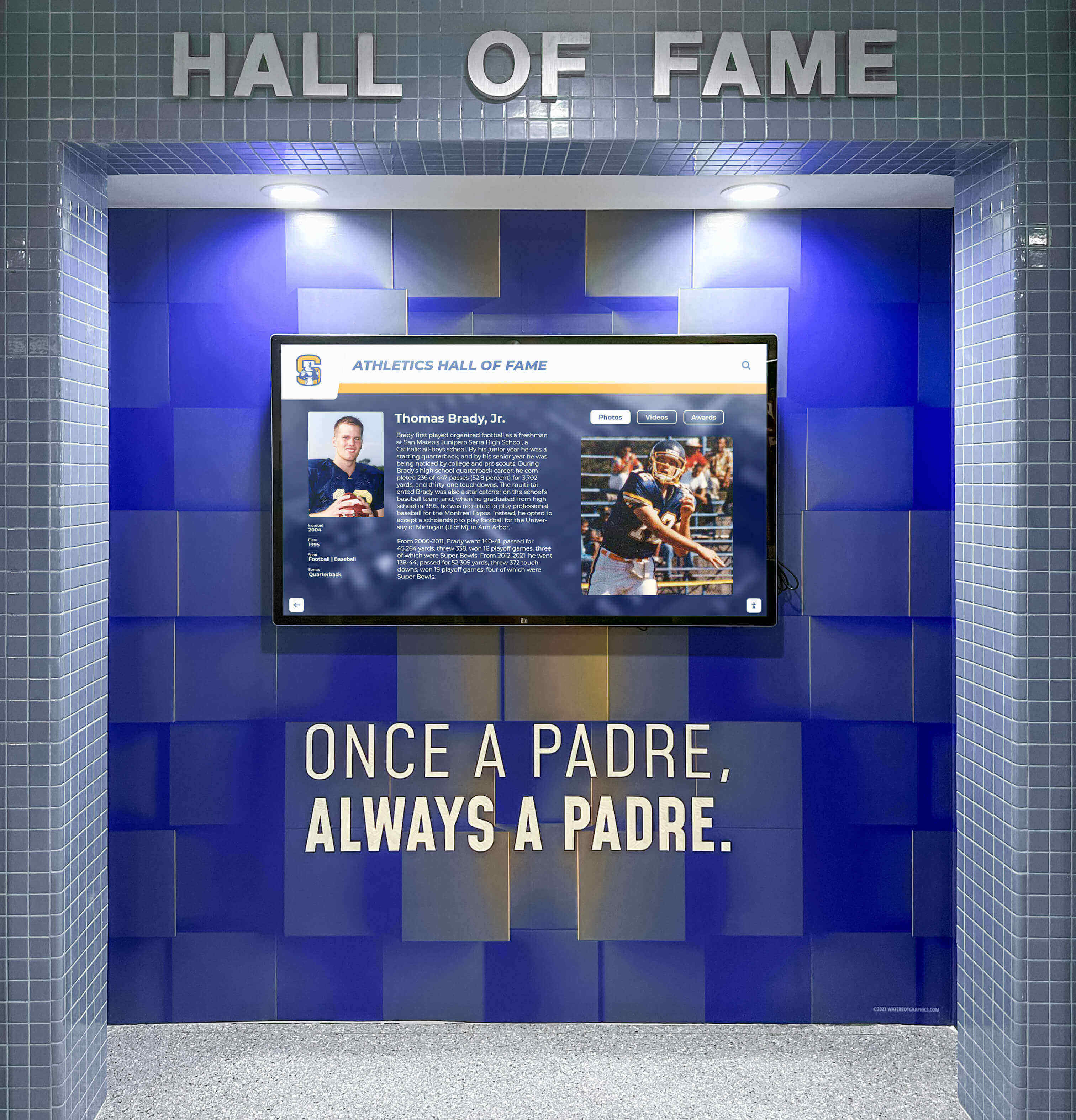
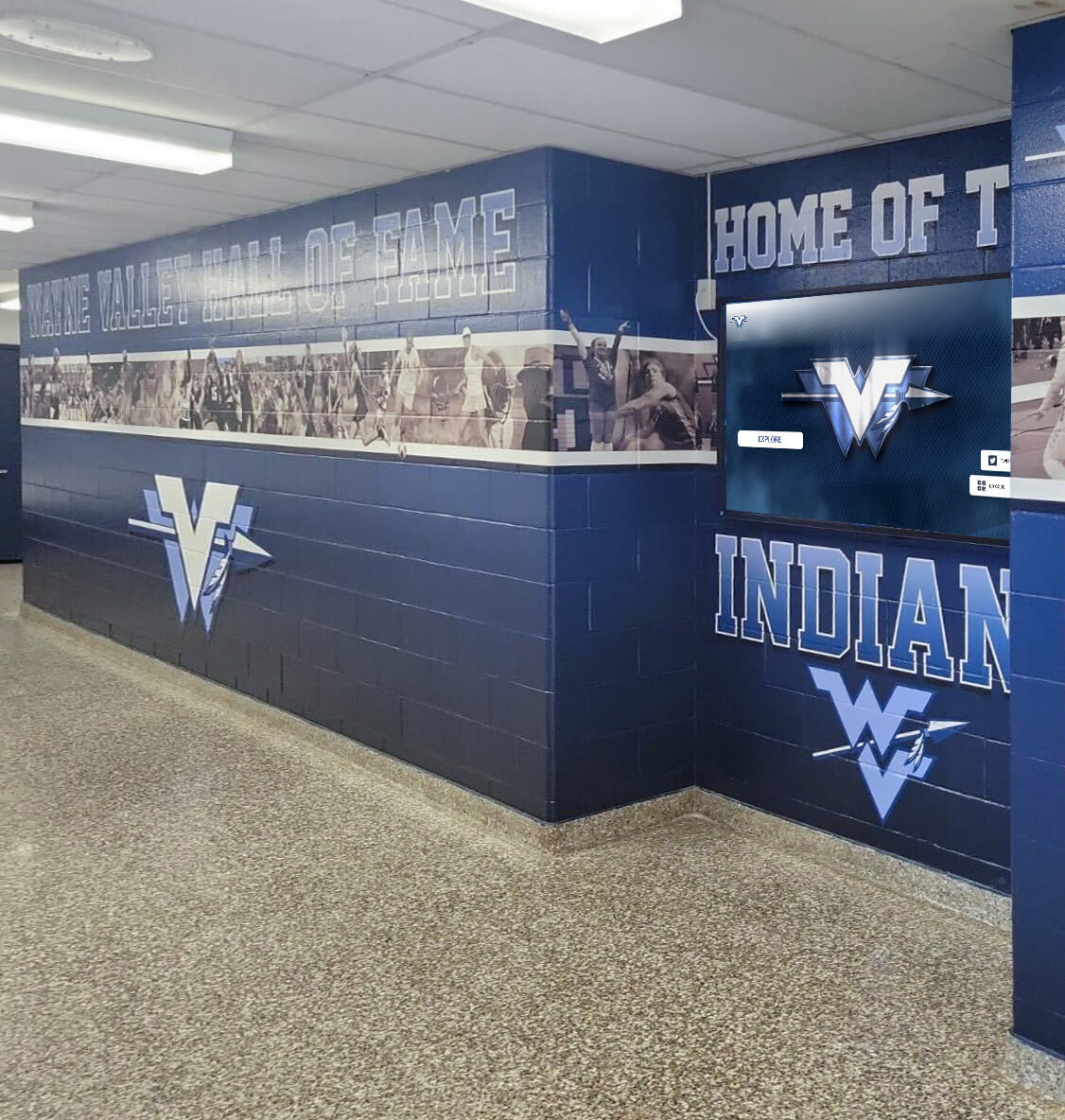
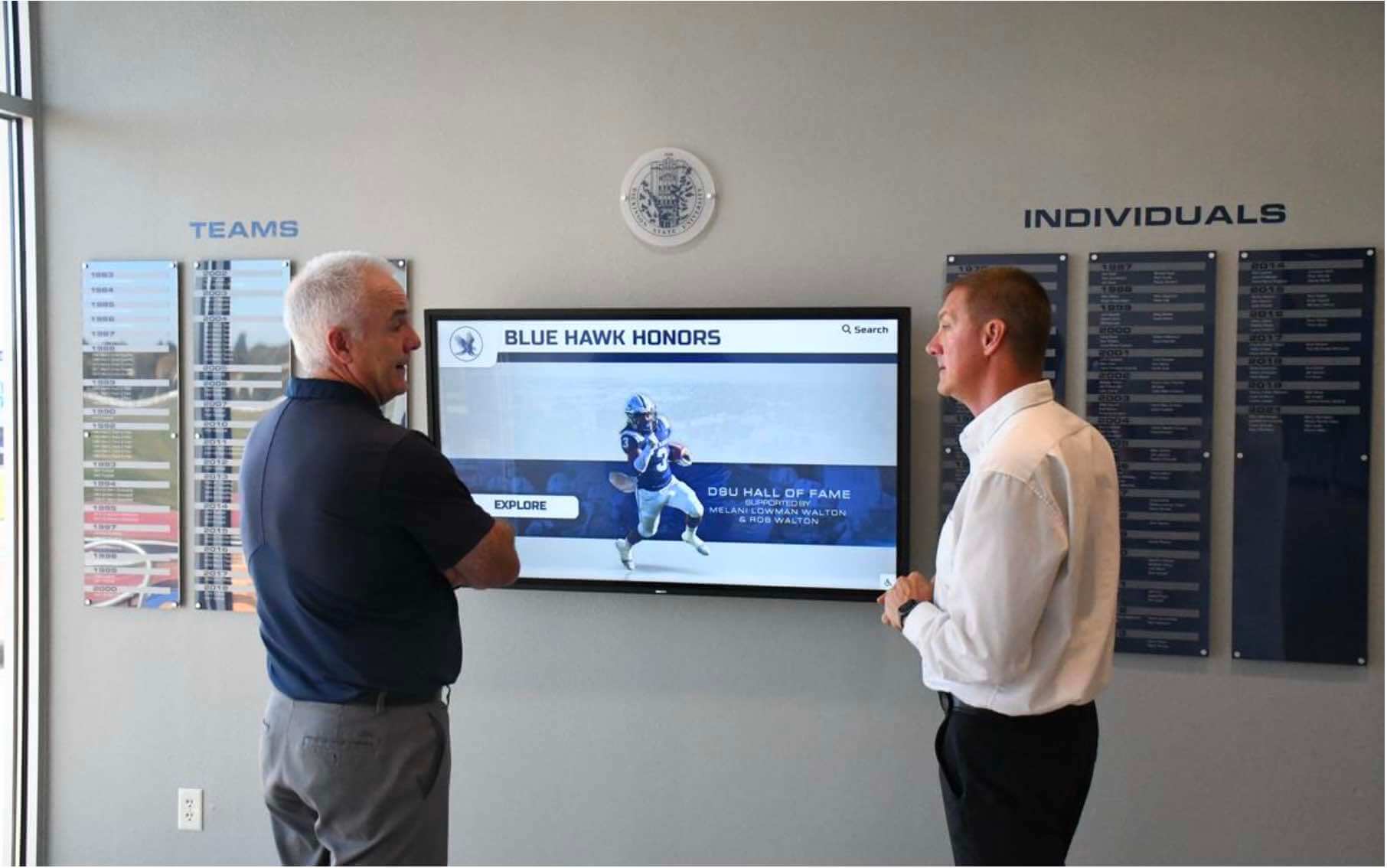
The most significant evolution in championship trophy display ideas over the past decade is the integration of touchscreen story panels into physical recognition spaces. A touchscreen mounted alongside a trophy case or incorporated into a recognition wall transforms a static display into an interactive one—giving visitors a reason to stop, touch, explore, and linger.
What a Touchscreen Story Panel Does
A touchscreen story panel connected to a digital hall of fame platform can hold everything that physical artifacts cannot:
- Complete team rosters for every championship season going back decades
- Game-by-game results from championship runs
- Video highlights from title games and memorable moments
- Coach profiles with career records and personal reflections
- Athlete profiles linking individual achievement to team success
- Historical photographs that capture the texture of different eras
- Oral history recordings where retired athletes and coaches share memories in their own voices
When a visitor taps the screen and finds complete information about a championship from forty years ago—team photograph, roster, schedule, coach bio, and a video of a memorable moment—they experience something qualitatively different from reading an engraved plaque. The story becomes alive.
The complete guide to digital hall of fame touchscreen systems walks through the technical and curatorial decisions involved in implementing these platforms effectively.
Placement Strategy for Touchscreen Panels
Where a touchscreen panel is placed within a championship display significantly affects how visitors engage with it. The most effective placements position the screen as an integral part of the recognition space rather than an addition bolted on afterward:
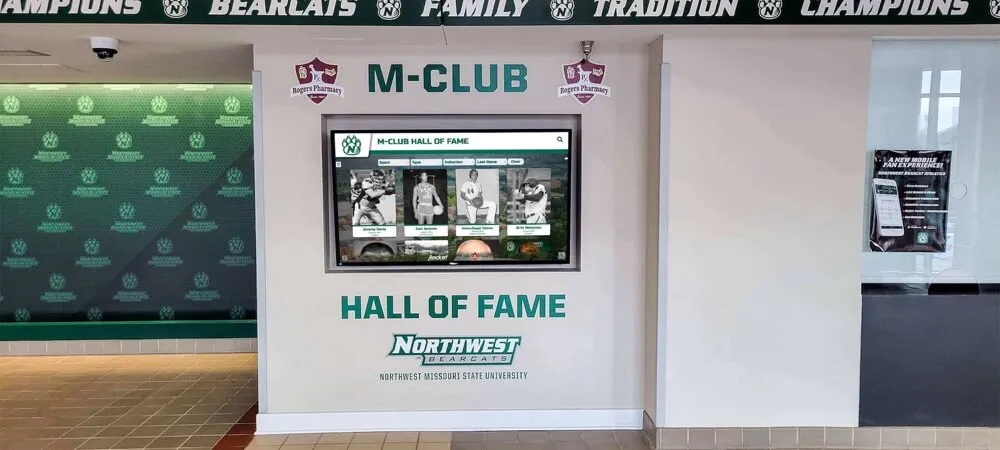
Adjacent to the trophy case: The touchscreen sits beside or above the physical trophies, inviting visitors who have just seen a championship trophy to learn more about it. Physical artifact leads to digital depth.
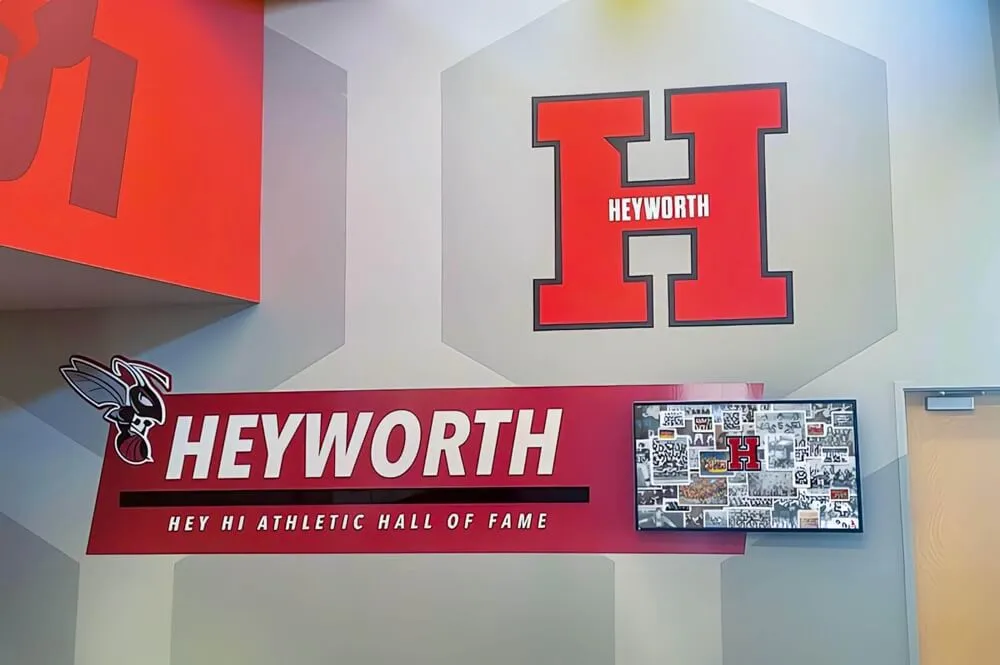
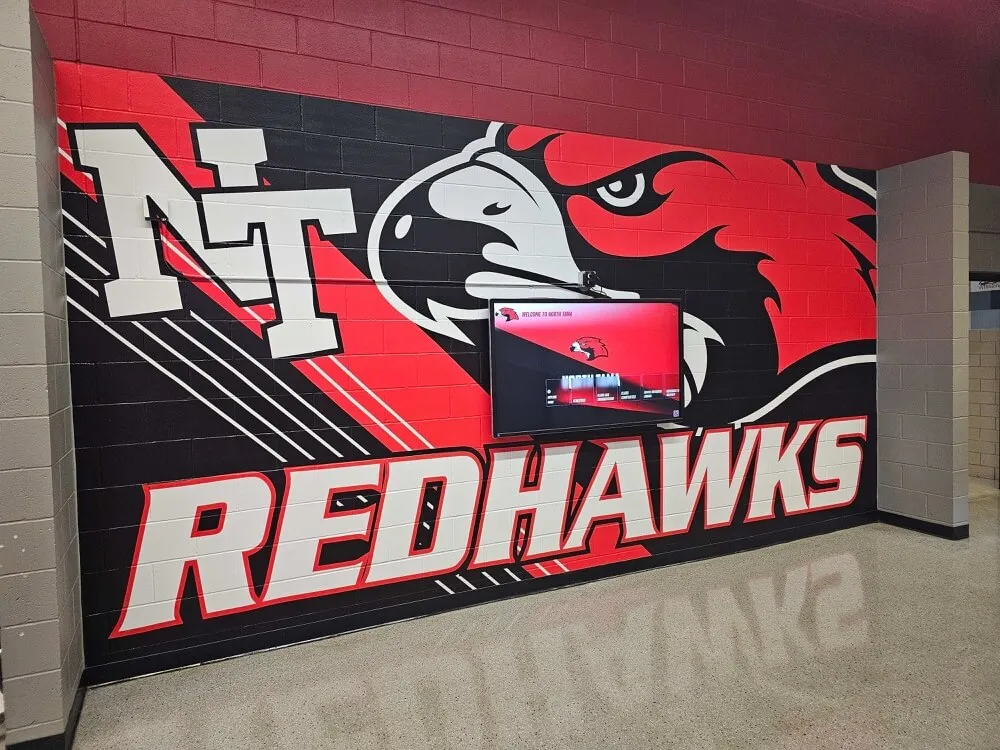
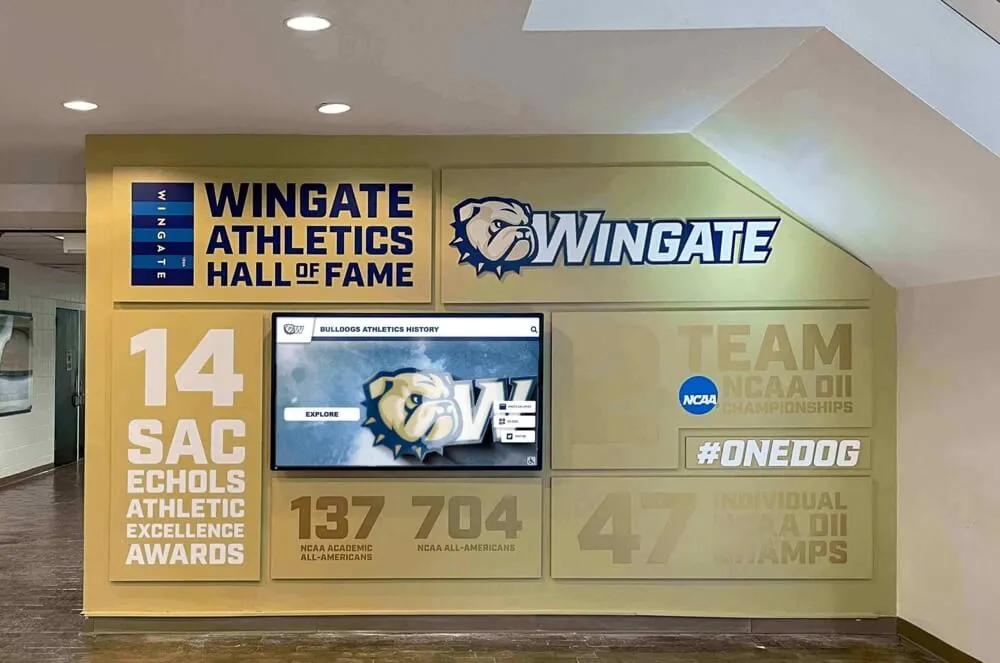
As the centerpiece of a recognition wall: The screen occupies the center position on a wall of plaques and banners, serving as the narrative hub that ties surrounding physical elements together.
At corridor entry points: A screen positioned at the entrance to an athletic hallway or gymnasium lobby greets visitors with interactive recognition content before they encounter static displays.
Inside dedicated recognition alcoves: Some schools create small alcoves off main corridors specifically for recognition, with the touchscreen as the primary display element and physical artifacts arranged around it.
Keeping Digital Content Current
A touchscreen story panel is only as valuable as its content. Programs that implement digital platforms and then neglect them—leaving athlete profiles incomplete, failing to add new championships as they occur, or letting technical issues go unresolved—undermine the investment. Building content stewardship into the workflow from the beginning is essential.
Effective content management approaches include:
- Assigning a designated content steward within the athletic department
- Establishing a process for documenting new championships immediately following title wins rather than months later
- Creating content templates that make adding new profiles efficient and consistent
- Scheduling annual reviews to ensure all information remains accurate and up to date
How to implement a digital wall of fame effectively covers content workflows, team responsibilities, and governance structures that keep recognition platforms active and relevant over time.
Designing for Multiple Audiences
The most sophisticated championship trophy display ideas are designed with multiple audiences in mind simultaneously. Each group that interacts with an athletic recognition space has different needs and different reasons for being there.
Current Athletes
Student-athletes who use an athletic facility daily need recognition displays that connect them to the history they are joining. For current athletes, the most powerful display elements are those that make the connection between past achievement and present opportunity legible. Retired jerseys of athletes who went on to college programs—or beyond—demonstrate what is possible. Record boards show where the program’s best ever stands. Championship timelines show that sustained success is achievable.
For schools that celebrate college athletic commitments, how schools celebrate athletic commitments on college signing day offers ideas for connecting recognition displays to ongoing athlete achievement milestones.
Prospective Athletes and Families
Recruits and their families who tour an athletic facility evaluate the program’s culture, investment, and tradition. A polished, comprehensive championship display communicates institutional commitment in a way that a conversation or a brochure cannot replicate. Families want to see evidence that the school values and honors its athletes—that the achievements their son or daughter works toward will be genuinely recognized.
Alumni
Former athletes who return for homecoming games, alumni events, or facility tours are looking for their own history. A championship display that includes their era—that has their team photograph, their coach’s name, perhaps their own name on a plaque or a record board—creates an emotional connection that sustains alumni engagement over time. Alumni who feel genuinely recognized are more likely to stay connected, attend events, and support the program financially.
A complete guide to end-of-year athletic awards and recognition offers additional perspective on how schools build recognition cultures that sustain alumni connections across decades.
Community Members and Visitors
Community members who attend games but may never have been students at the school experience athletic recognition spaces as expressions of community pride and identity. Championship displays that are legible to a community member unfamiliar with the program’s history—that provide enough context for a newcomer to understand the significance of what they are seeing—build broader community investment in athletic success.
Implementation: From Planning to Installation
Turning championship trophy display ideas into completed spaces requires systematic planning across several dimensions.
Inventory and Documentation
Before designing any display, conduct a complete inventory of what the program actually has. This typically surfaces:
- Trophies and hardware currently displayed, stored, or scattered across offices
- Championship records that exist only in documentation without corresponding hardware
- Photographs that have never been printed or displayed
- Retired jerseys in storage that no one has mounted
- Retired players and coaches whose contributions have never been formally recognized
Many programs discover that their most valuable recognition assets are not the physical objects in current display cases but the undocumented history in archives, attics, and alumni photo collections. Recognition guides for elite athletic achievement offer frameworks for identifying and documenting the full scope of a program’s accomplishments.
Budget Planning by Phase
Championship display projects can be scoped to fit almost any budget through phased implementation. A sensible phasing approach might look like:
Phase 1 — Immediate improvements (low cost): Reorganize existing trophy case, add labels and context cards to unlabeled hardware, mount any retired jerseys currently in storage, print and frame championship team photographs.
Phase 2 — Enhanced physical displays (moderate investment): Commission consistent plaque series for championship years, install proper banner mounting systems, create a dedicated record board, improve lighting on key display elements.
Phase 3 — Digital integration (larger investment): Install a touchscreen story panel connected to a digital recognition platform, digitize historical photographs and records for the platform, create athlete and team profiles for past championship seasons.
This phased approach allows programs to begin improving their recognition spaces immediately while building toward a comprehensive long-term solution.
Working with Stakeholders
Championship display projects benefit from intentional stakeholder involvement. Athletic directors bring knowledge of current program priorities. Coaches contribute historical context about championship seasons. Booster clubs and alumni associations often provide funding and connect programs to alumni who hold historical artifacts. Facilities staff understand the physical constraints and possibilities of available spaces.
Schools that have run successful athletic hall of fame processes—including alumni outreach for historical research—have found that the process of building a recognition display often surfaces historical knowledge and artifacts that the institution did not know existed. The display-building project becomes an archiving project simultaneously.
How Digital Recognition Platforms Expand What Is Possible
No physical display can fully capture the depth of a championship program’s history. Physical space is limited. Materials deteriorate. Static displays cannot be searched, browsed, or updated in real time. Digital recognition platforms address all of these limitations while integrating seamlessly with physical championship displays.
Comparing interactive touchscreen display systems for schools helps athletic directors evaluate the options available and understand which platforms best fit their recognition goals and technical capabilities.
Rocket Alumni Solutions builds digital athletic hall of fame platforms specifically for schools—systems that connect championship trophy displays to searchable digital archives accessible on touchscreen kiosks, web-based portals, and mobile devices simultaneously. A school using Rocket’s platform can display a championship trophy in a physical case, mount the corresponding plaque on the wall, and then install a touchscreen beside both that holds the complete season story: roster, statistics, photographs, video, and athlete profiles that link to college careers and beyond.
Key capabilities that digital platforms add to physical championship displays include:
Unlimited capacity: Physical cases and walls eventually run out of room. A digital platform can hold every championship in a program’s history regardless of how many there are.
Searchable archives: Visitors can search by athlete name, year, sport, or achievement level and surface exactly the information they want without scrolling past unrelated content.
Multimedia storytelling: Video highlights, audio recordings, and high-resolution photographs that would never fit in a physical display become accessible through a touchscreen portal.
Remote access: Alumni and community members who cannot visit in person can explore the recognition archive from anywhere via a web portal, extending the reach of a physical display indefinitely.
Easy updates: Adding a new championship to a digital platform takes minutes and does not require physical alterations to a display. A new title can be recognized on the touchscreen the same week it is won.
Digital signage content ideas for screens and kiosks covers the creative content strategies that make digital recognition displays engaging over time rather than novelties that visitors stop noticing after the first encounter.
Conclusion: Championship Displays That Do Justice to the History
The standard trophy case was never designed to honor athletic achievement comprehensively. It was designed to hold hardware. For programs that have spent years building winning traditions—through coaching, development, sacrifice, and community support—the standard case is a fundamentally inadequate response to everything those programs represent.
The championship trophy display ideas explored in this guide—championship banners as vertical anchors, rings and jerseys as human centerpieces, plaques as narrative containers, record boards as living history, and touchscreen story panels as the hub that connects physical and digital—combine into recognition spaces that actually communicate what a program has accomplished and what it stands for. When built with intention and maintained with care, these spaces motivate current athletes, honor alumni, impress recruits, and build the community pride that sustains athletic programs across generations.
The investment in getting this right is modest relative to the return. Recognition that works—that makes athletes feel genuinely honored, that draws alumni back, that impresses the families of prospective student-athletes—pays dividends in culture, engagement, and support that outweigh any display budget by an order of magnitude.
Ready to Transform Your Championship Display?
Rocket Alumni Solutions helps high schools build digital athletic hall of fame systems that pair seamlessly with physical championship displays—giving programs the unlimited capacity, multimedia storytelling, and searchable archives that trophy cases alone can never provide.
See How It Works