Walking into a high school gymnasium and seeing championship banners suspended from the rafters creates an immediate impression of excellence. These banners tell stories of dedication, teamwork, and moments when preparation met opportunity on fields, courts, and tracks. For generations, championship banners have served as the gold standard for celebrating team achievements—visual reminders that inspire current athletes while honoring those who built winning traditions.
This comprehensive guide explores championship banner design ideas that effectively celebrate athletic achievements while addressing the practical challenges schools face. Whether you’re planning your program’s first championship banner or modernizing recognition systems that no longer meet your needs, these strategies help create displays worthy of the teams they honor.
Understanding the Role of Championship Banners in Athletic Culture
Before diving into specific design approaches, understanding why championship banners matter helps schools create recognition systems serving genuine purposes rather than simply following traditions without deeper consideration.
Championship Banners as Cultural Anchors
Championship banners function as more than decorative elements in gymnasiums and athletic halls. They serve as tangible proof of what’s possible within a program, creating aspirational targets for current athletes while validating the sacrifices required to achieve excellence. When student-athletes walk into facilities for practices or games, seeing those banners reinforces the standards they’re expected to pursue and the legacy they have opportunities to join.
For communities, championship banners represent collective achievement extending beyond just the players on championship teams. Each banner acknowledges coaches who developed game plans, athletic trainers who kept players healthy, families who supported demanding schedules, and communities that packed stands to create home-court advantages. This shared ownership makes championship recognition meaningful to broader constituencies than just athletic departments.
Different Types of Championship Recognition
Schools typically recognize various achievement levels through banner displays, and understanding these distinctions helps create coherent recognition systems.
Conference Championships
League or conference championships represent the most common form of championship recognition at the high school level. Conference title banners acknowledge sustained excellence within regional competition, often representing the most challenging achievement for programs competing in strong athletic conferences.
State Championships
State championship banners occupy the highest tier of recognition for most high school programs. These achievements require excellence over entire seasons—navigating regular seasons, conference tournaments, and playoff brackets to emerge as state titlists. State championship banners typically receive the most prominent placement and largest size in recognition hierarchies.
District, Regional, and Sectional Titles
Playoff advancement achievements short of state championships still merit recognition, particularly for programs building competitive traditions or competing in highly competitive classifications where advancing deep into tournaments represents significant accomplishment.
Tournament Championships and Special Achievements
Some schools recognize prestigious tournament championships, undefeated seasons, or milestone achievements through banner displays, creating comprehensive recognition systems celebrating various forms of excellence beyond just championship game outcomes.
Establishing Clear Banner Criteria
The foundation of effective championship banner programs lies in clear, consistent criteria determining which achievements receive recognition and how different accomplishments are distinguished visually.
Schools should document specific standards including which championship levels warrant banner recognition (conference, district, regional, state), whether tournament championships or special achievements qualify, how different achievement levels are distinguished through banner size or placement, and what information each banner type includes about teams, players, and accomplishments.
Clear criteria prevent credibility-undermining inconsistencies where some teams receive recognition while others with comparable achievements do not, creating perceptions of favoritism or arbitrary decision-making that damage recognition program integrity.
Traditional Championship Banner Design Approaches
For decades, fabric banners hanging from gymnasium rafters have served as the standard approach for championship recognition. Understanding traditional design elements helps schools create effective banners whether they’re continuing established traditions or starting new recognition programs.
Banner Size and Proportions
Championship banner dimensions significantly impact visual presence and readability from gymnasium floor levels and bleacher seating areas.
Standard Size Options
Most championship banners measure between 2-4 feet wide by 4-8 feet tall, with specific dimensions varying based on gymnasium ceiling height, rafter configuration, and the number of banners schools anticipate displaying. Larger banners create more dramatic visual impact but require more storage when removed for ceiling maintenance and cost more to produce. Smaller banners allow more recognition in limited rafter space but may be difficult to read from distances.
Proportion Considerations
Vertical banners (taller than wide) represent the most common orientation for championship recognition, creating the classic pennant-style appearance associated with championship displays. Horizontal banners offer more space for comprehensive information but may appear less traditional in gymnasium settings. Schools should maintain consistent proportions across all championship banners to create visual cohesion rather than mixing sizes and orientations that appear haphazard.
Color Schemes and Branding
Effective banner design incorporates school colors and branding elements while maintaining readability and visual impact.
School Color Integration
Championship banners should prominently feature school colors creating immediate visual associations with the institution. However, designers must balance tradition with practicality—some color combinations that work well on uniforms or logos prove difficult to read on banners viewed from distances under gymnasium lighting. Schools with dark color schemes (navy, black, maroon) often use lighter backgrounds or borders ensuring text remains readable.
Hierarchy Through Color
Some schools use color variations to distinguish championship levels—gold backgrounds for state championships, silver for conference titles, for example—creating visual hierarchy communicating achievement significance at a glance. This approach works well when schools consistently apply color standards across all sports and years, creating coherent systems rather than confusing variations.
Logo and Mascot Placement
School logos, mascots, or athletic department marks typically appear prominently on championship banners, creating brand consistency and institutional pride. Logo placement should enhance rather than overwhelm essential championship information—school identity is important, but the primary purpose remains celebrating specific championship achievements.
Typography and Information Display
What information appears on championship banners and how it’s presented determines whether displays effectively tell championship stories or serve merely as decorative elements.
Essential Information Elements
Effective championship banners typically include sport identification (Basketball, Soccer, Volleyball), championship level (State Champions, Conference Champions), year or season achieved, and school name or initials. Some schools add additional details including won-loss records, coach names, team captains, or significant achievement context (Undefeated, Three-Peat, First State Title).
Readability from Distance
Typography choices dramatically impact banner effectiveness. Text must be large enough to read clearly from gymnasium floor levels and bleacher seating—typically requiring letters at least 6-8 inches tall for primary information and 4-6 inches for secondary details. Bold, sans-serif fonts generally provide better readability than decorative script fonts that may look attractive up close but become illegible from distances.
Schools should test banner mockups at actual hanging distances before final production, ensuring essential information remains readable under typical gymnasium lighting conditions from all viewing angles.
Material Selection and Durability
Banner materials significantly impact both initial appearance and long-term durability under gymnasium environment conditions.
Vinyl Banners
Heavy-duty vinyl represents the most common championship banner material, offering excellent durability, fade resistance, and reasonable cost. Quality vinyl banners with UV-resistant inks maintain appearance for 5-10+ years in indoor environments, though colors gradually fade under intense lighting and temperature fluctuations common in gymnasiums.
Fabric Banners
Felt, cotton, or polyester fabric banners create more traditional, upscale appearances but typically cost more than vinyl alternatives and may fade or deteriorate faster depending on environmental conditions. Fabric banners work particularly well when schools want classic aesthetic appeal and can commit to eventual replacement or restoration as materials age.
Nylon and Weather-Resistant Materials
Some schools use weather-resistant materials when banners will hang in outdoor stadiums or semi-outdoor facilities subject to temperature extremes, humidity, and precipitation. These specialized materials cost more but prevent rapid deterioration in challenging environments.
Modern Championship Banner Design Innovations
While traditional fabric banners hanging from rafters continue serving many programs effectively, modern approaches address limitations of conventional displays while offering new capabilities for championship recognition.
Backlit and LED-Enhanced Banners
Incorporating lighting elements into championship banner designs dramatically increases visibility while creating striking visual impact.
Backlit Panel Systems
Instead of traditional fabric banners, some schools install backlit panel systems where championship information displays on translucent materials illuminated from behind. This approach ensures consistent visibility regardless of gymnasium lighting conditions while creating professional, attention-grabbing displays that stand out in environments competing for visual attention.
LED Border and Accent Lighting
Adding LED strip lighting around banner perimeters or as accent elements creates distinctive appearances while improving visibility. Programmable RGB LED systems can display school colors, create animated effects during games, or highlight specific championships during relevant sports seasons.
Permanent Wall-Mounted Championship Displays
Rather than hanging banners from rafters, some schools create permanent wall-mounted championship display systems offering advantages over suspended fabric approaches.
Advantages of Wall Mounting
Wall-mounted systems provide consistent viewing angles and readability, easier maintenance and updating compared to rafters installation, integration with architectural elements and building design, and protection from environmental conditions affecting suspended banners.
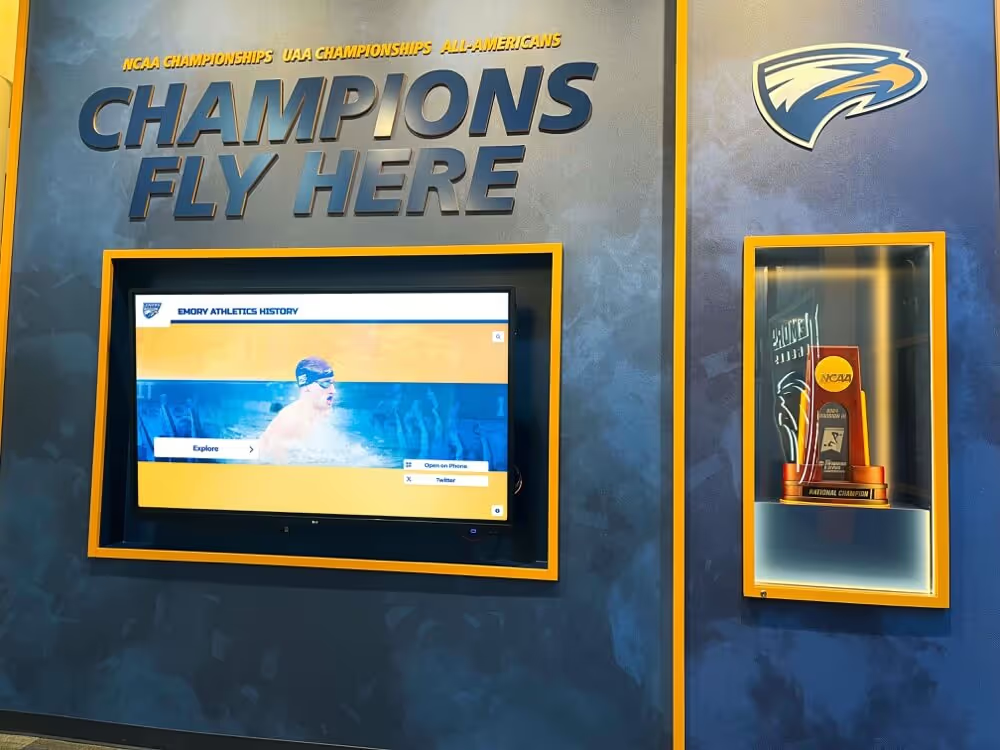
Glass display systems can incorporate three-dimensional championship elements including trophies, balls, or memorabilia alongside banner-style graphics, creating richer recognition than fabric banners alone.
Design Considerations
Wall-mounted championship displays require significant wall space in high-visibility locations, permanent installation limiting future flexibility, and careful integration with gymnasium or athletic hall architecture preventing displays from appearing afterthought additions rather than intentional design elements.
Modular and Expandable Banner Systems
Forward-thinking schools design championship recognition systems accommodating future growth rather than creating static displays that limit recognition capacity.
Grid-Based Display Systems
Installing standardized mounting systems with uniform spacing creates visual coherence while ensuring consistent placement for future championship additions. Grid approaches prevent the common challenge where early championship banners occupy prime locations while later achievements get relegated to less visible areas simply due to installation timing rather than achievement significance.
Scalable Design Frameworks
Schools should plan championship banner systems considering decades of potential achievements. Programs anticipating continued success need recognition frameworks accommodating 20, 30, or 50+ championship banners without overwhelming spaces or requiring complete redesign when initial plans reach capacity.
Digital Championship Recognition Displays
Modern digital display technology offers compelling alternatives or supplements to traditional championship banners, addressing fundamental limitations while providing capabilities impossible through fabric approaches.
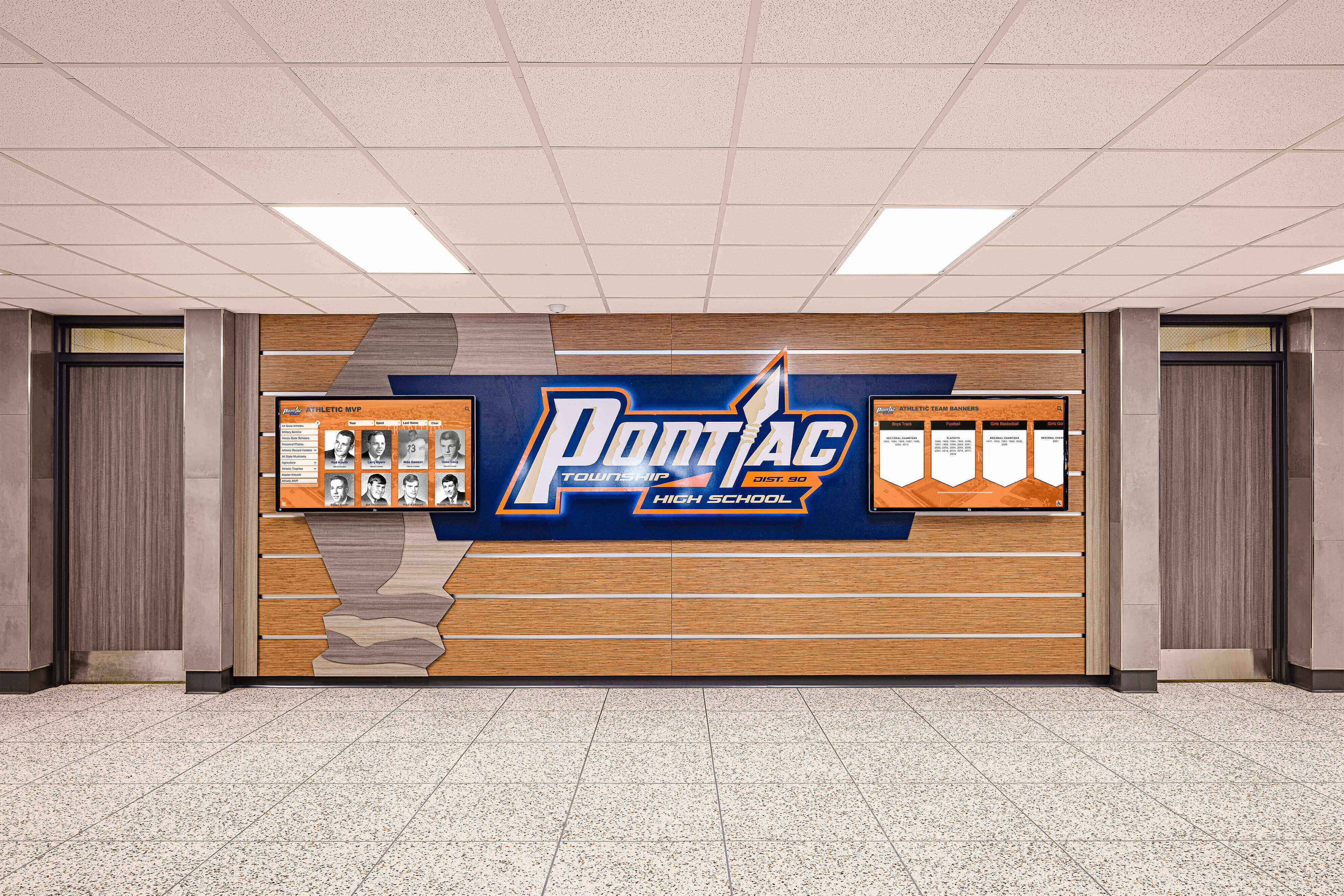
Interactive Touchscreen Championship Walls
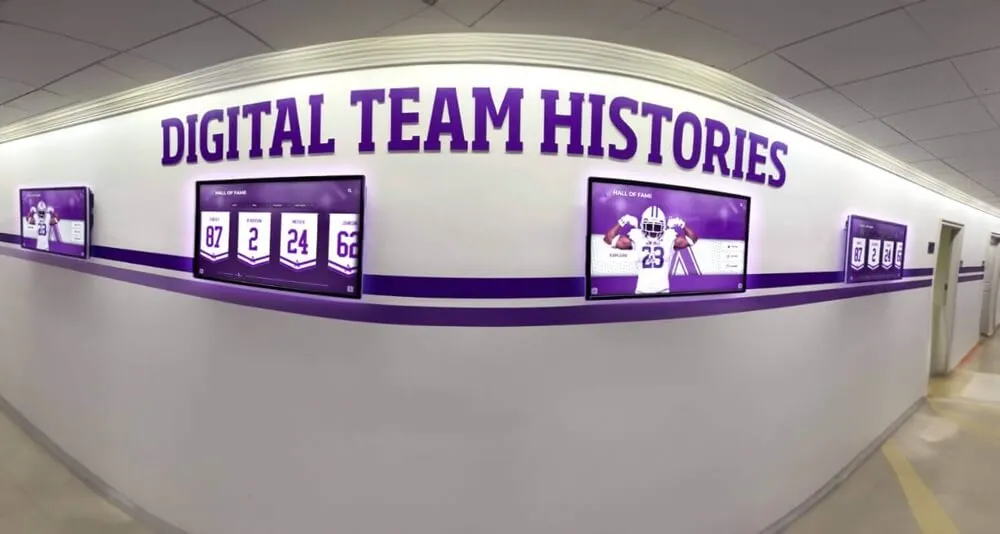
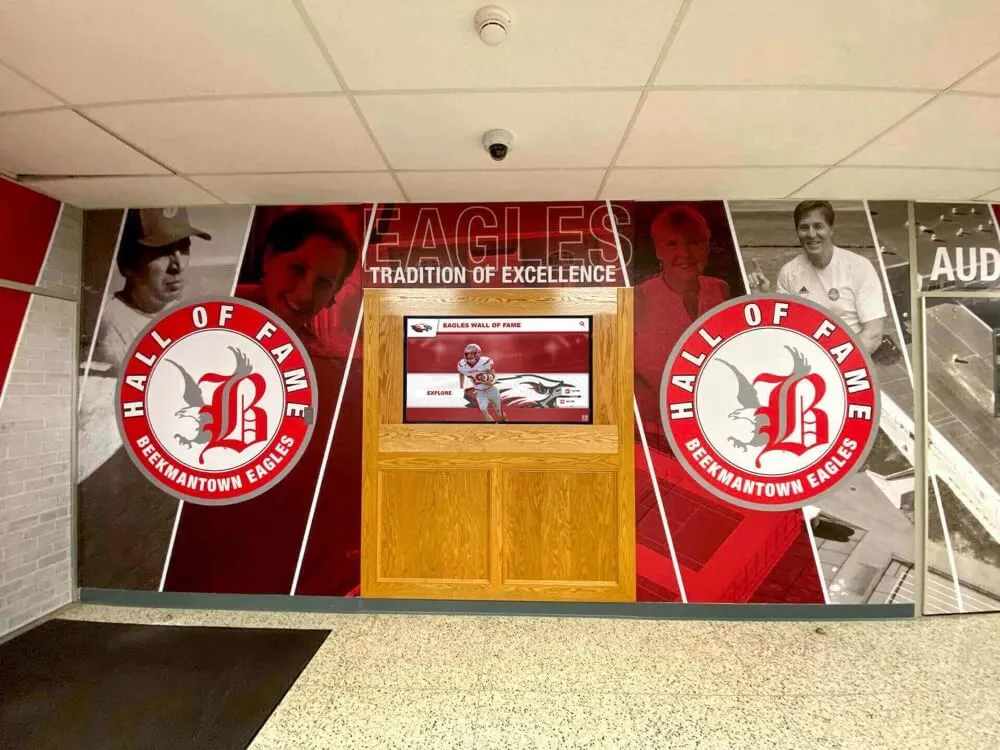
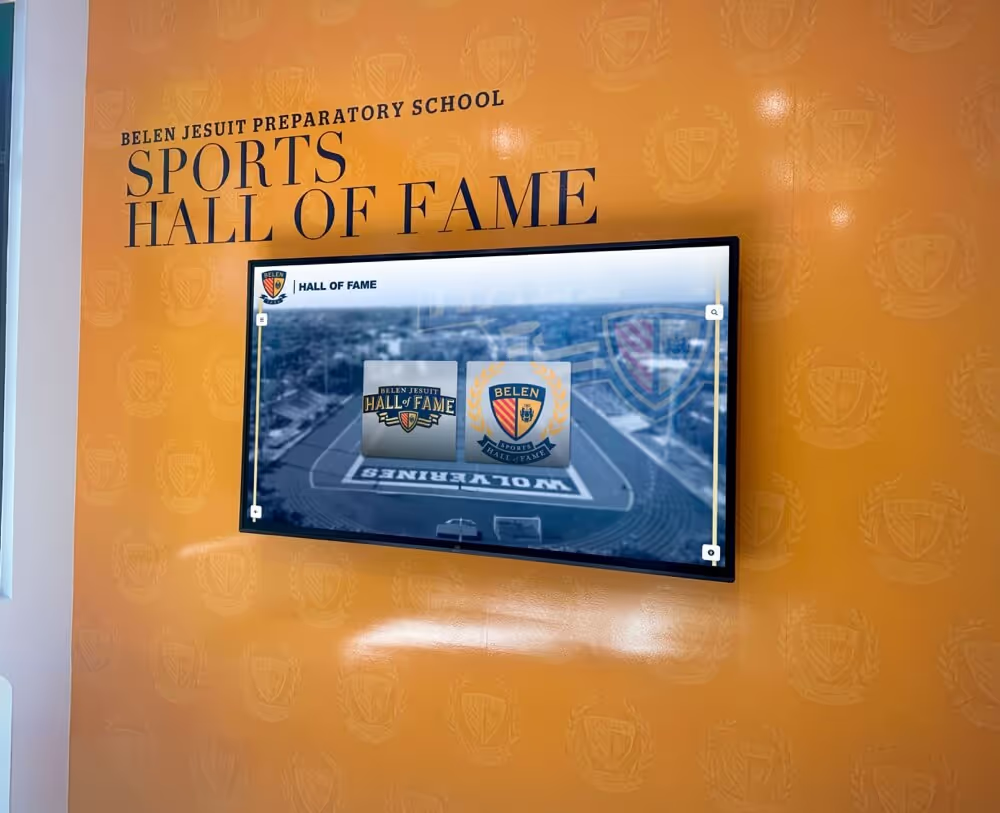
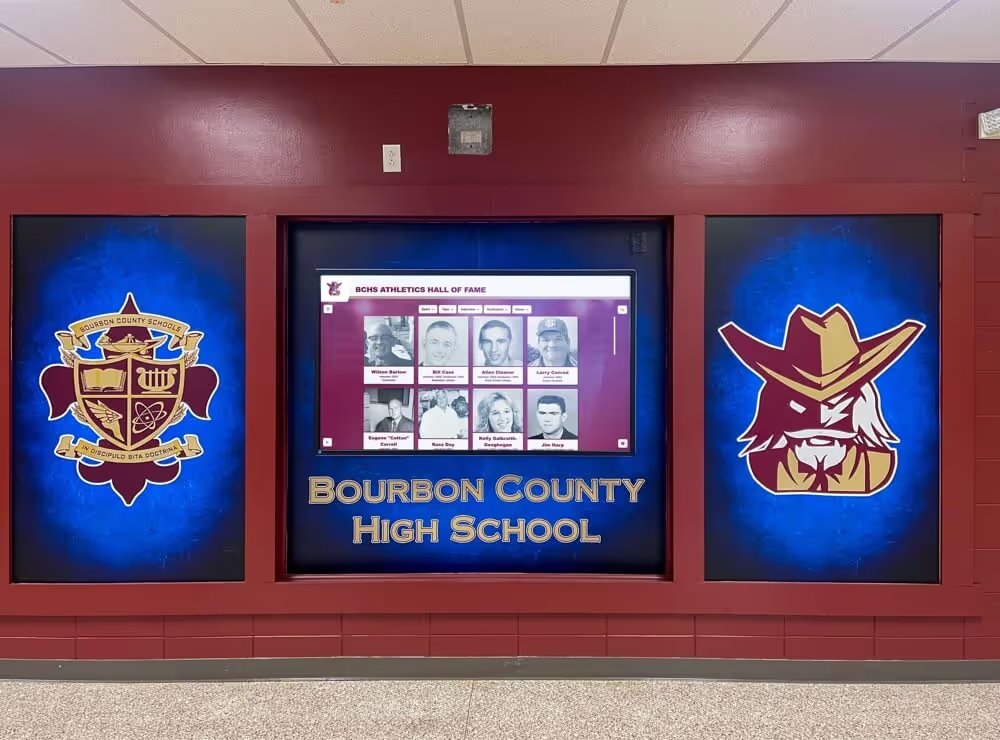
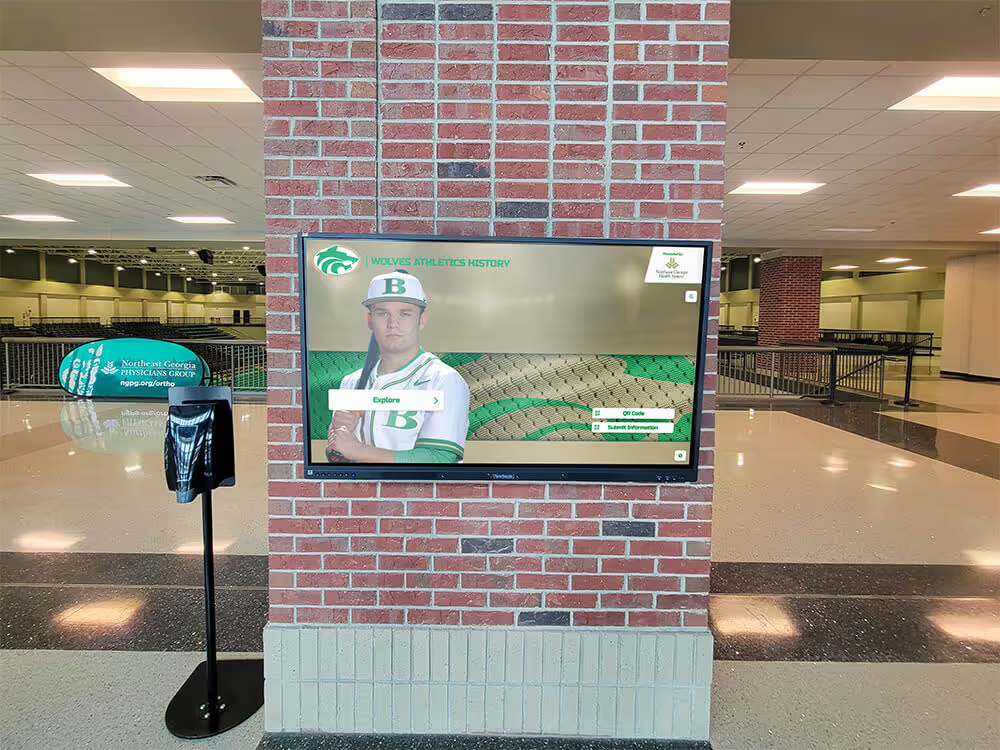
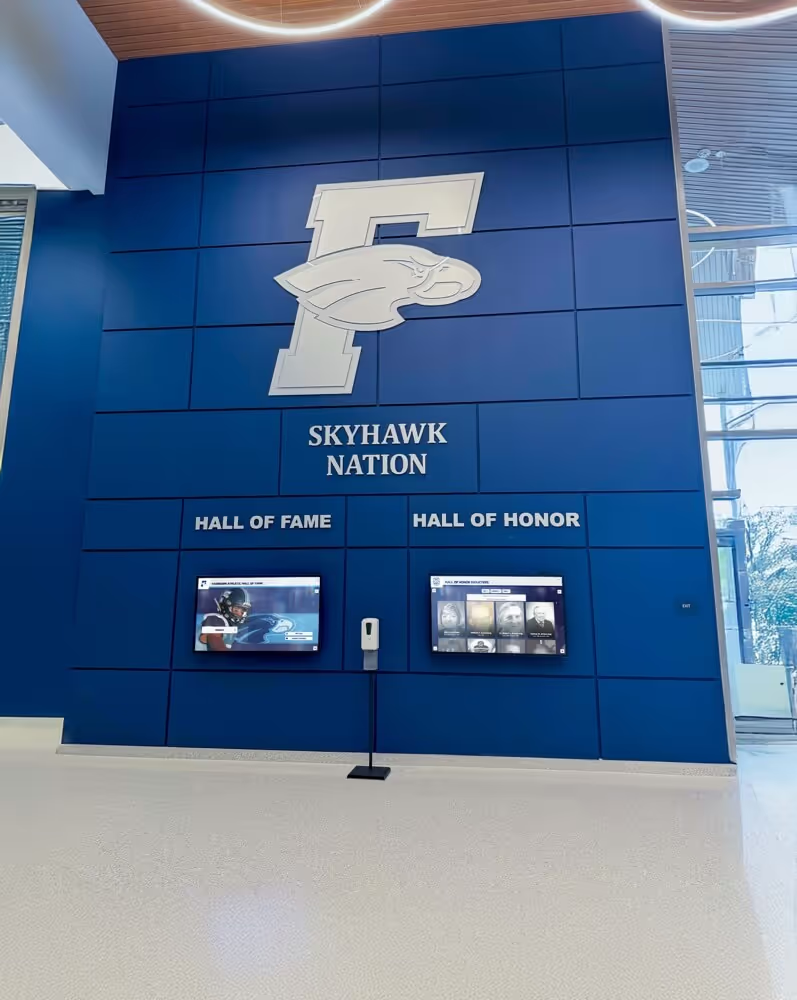
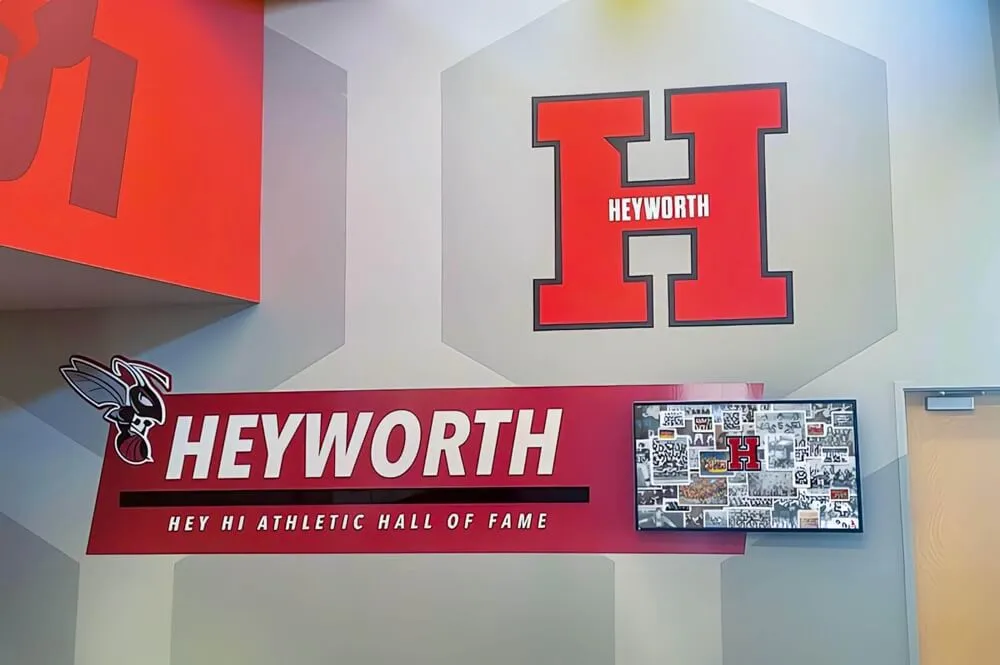
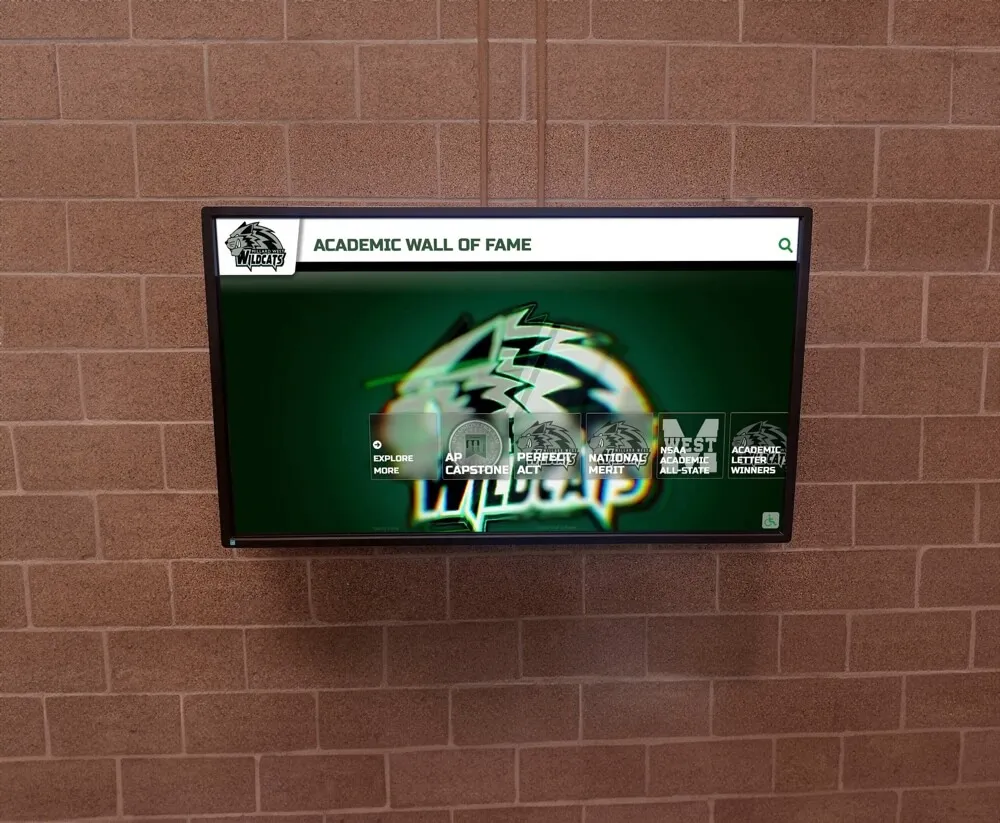
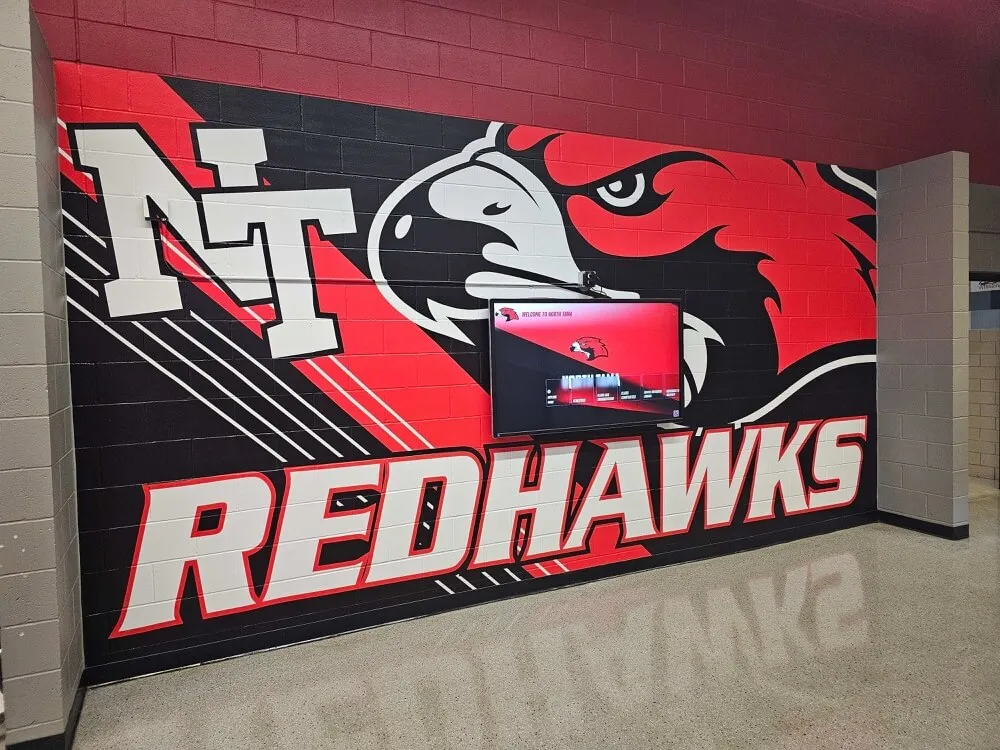
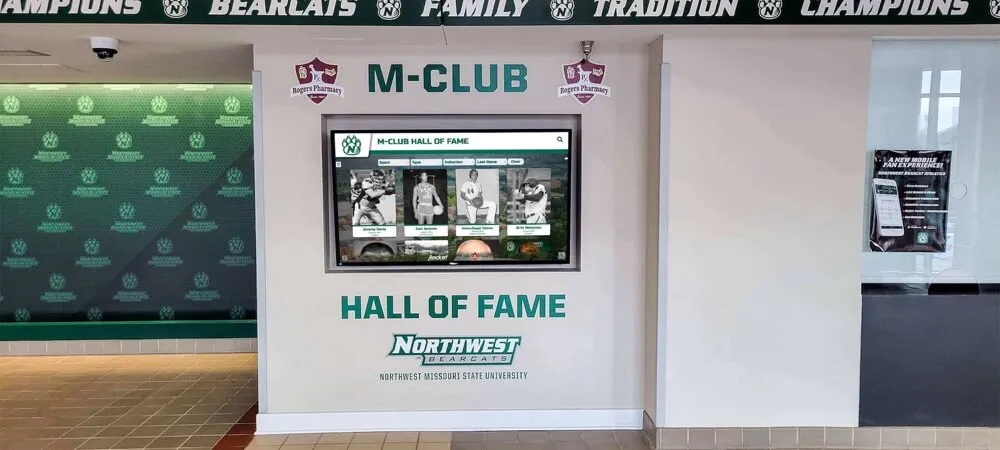
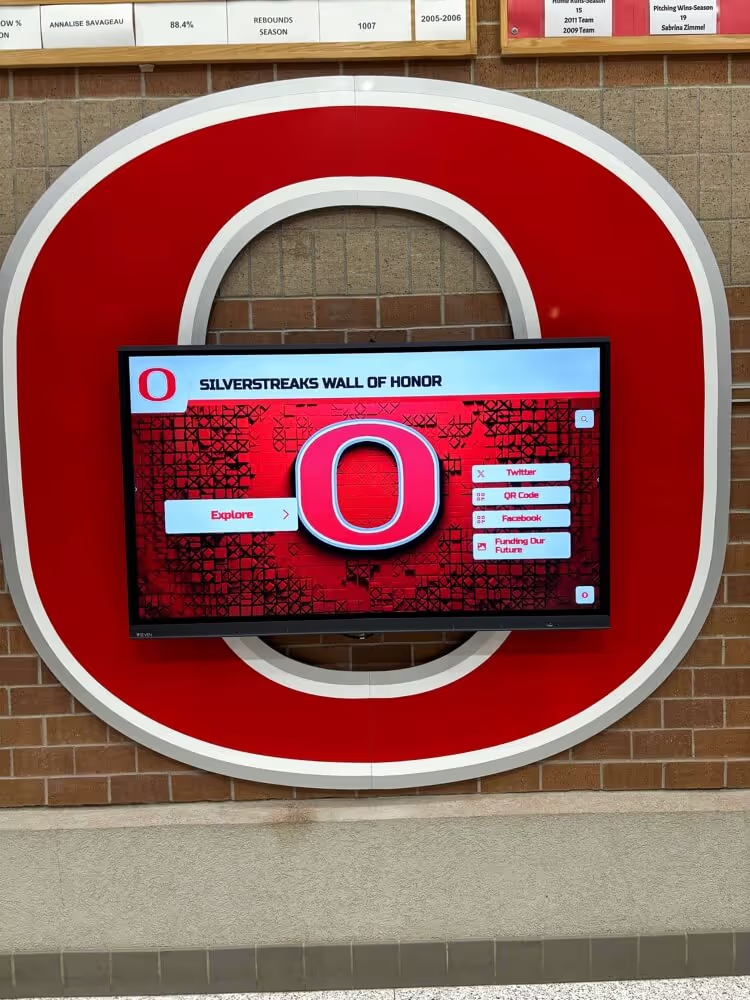
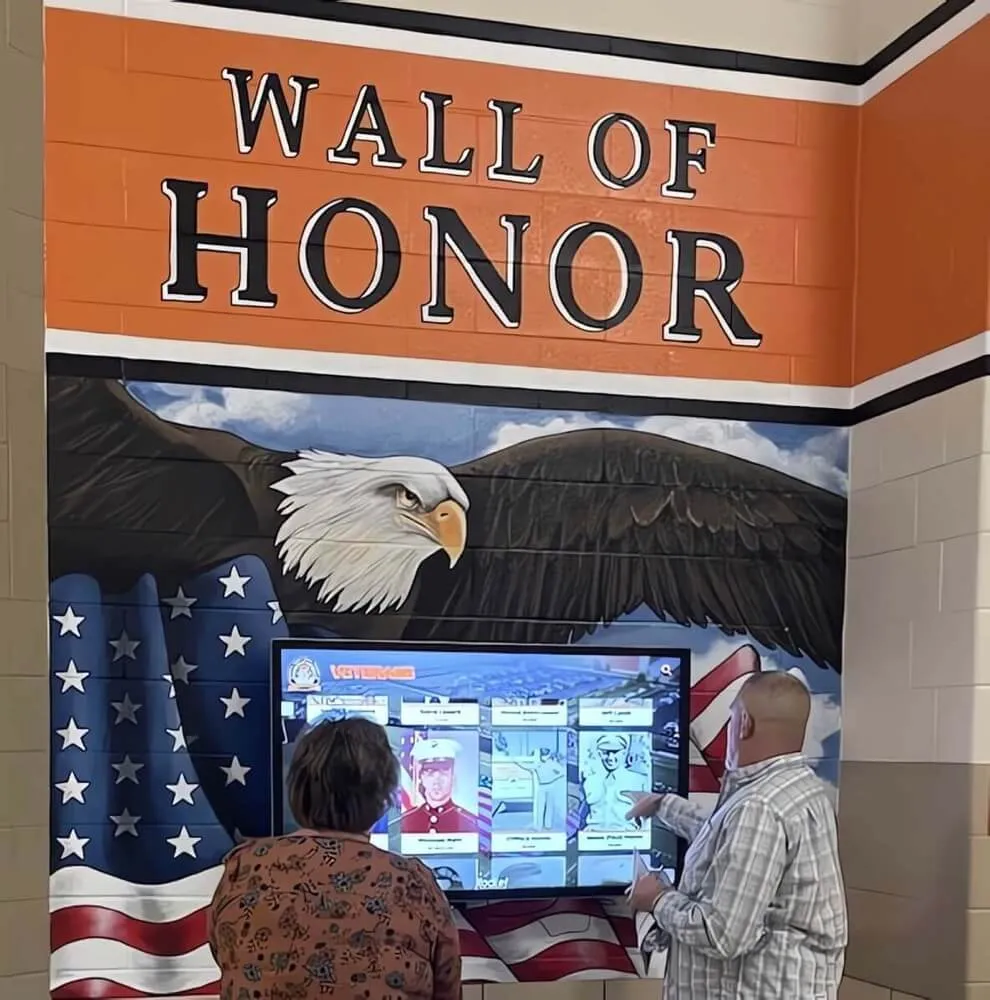
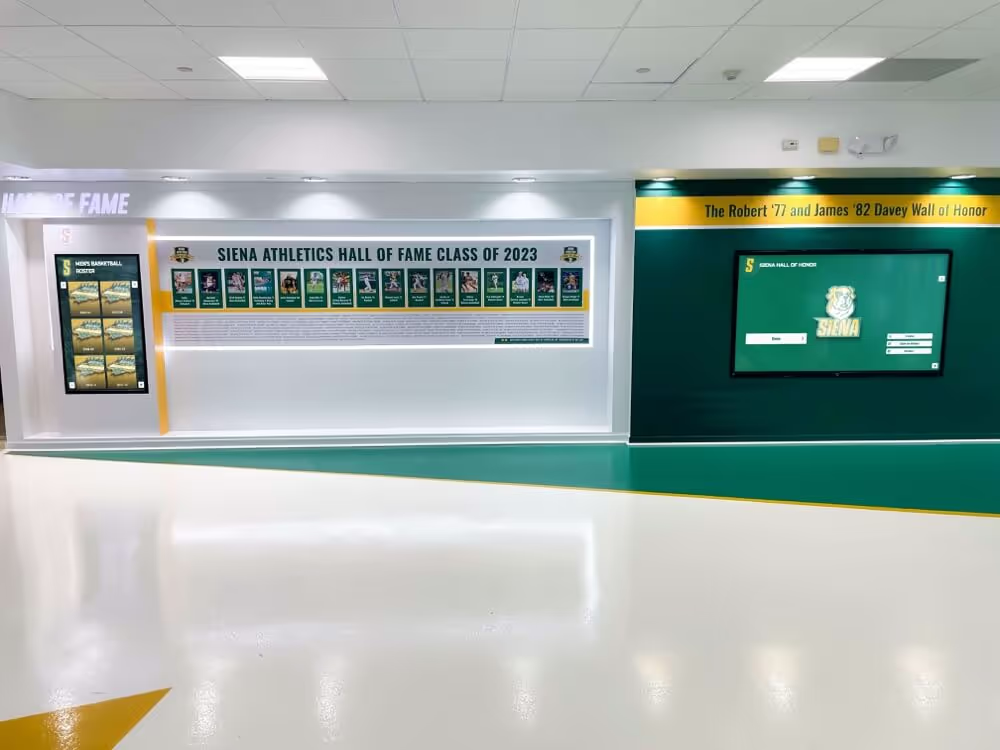
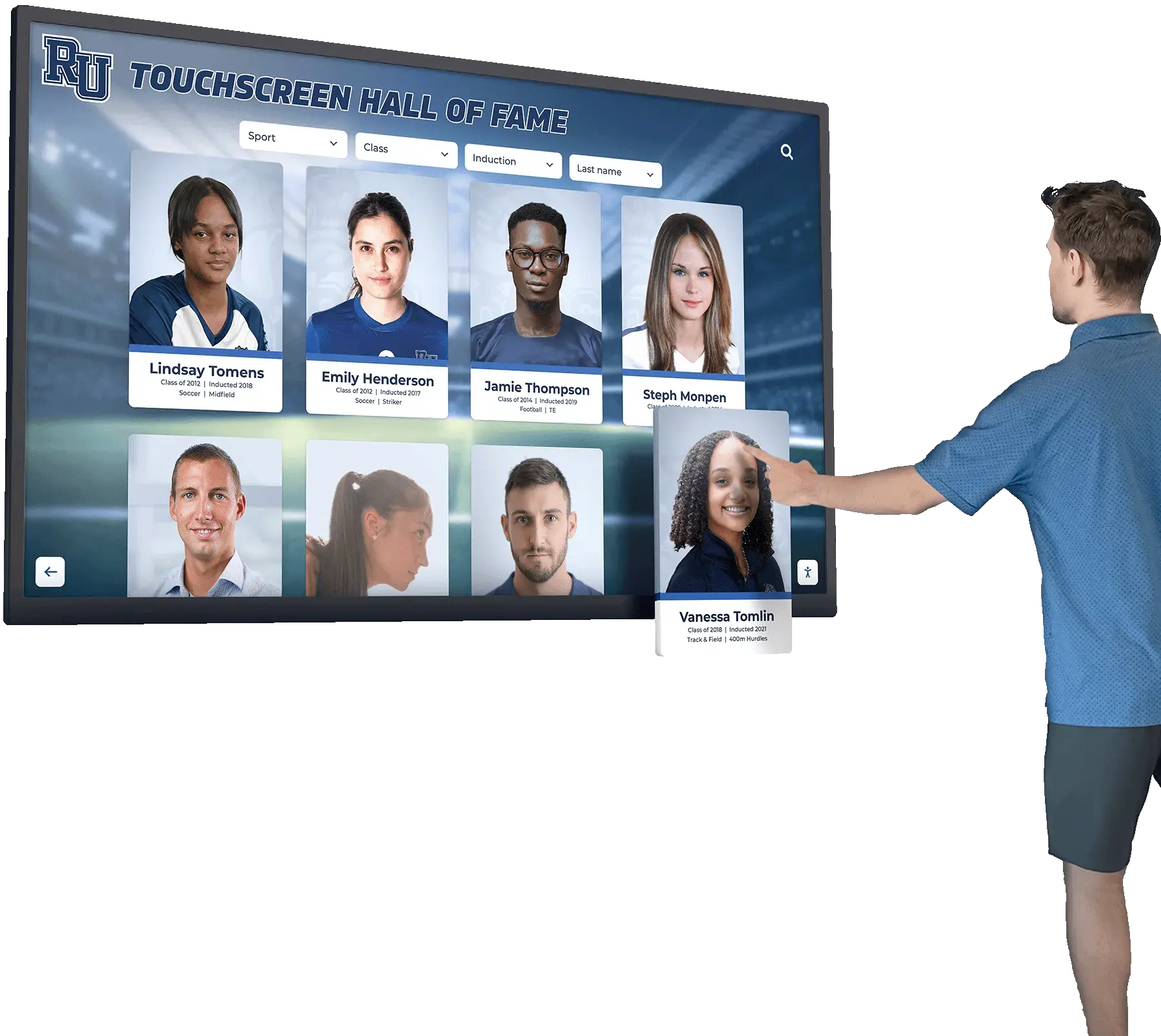
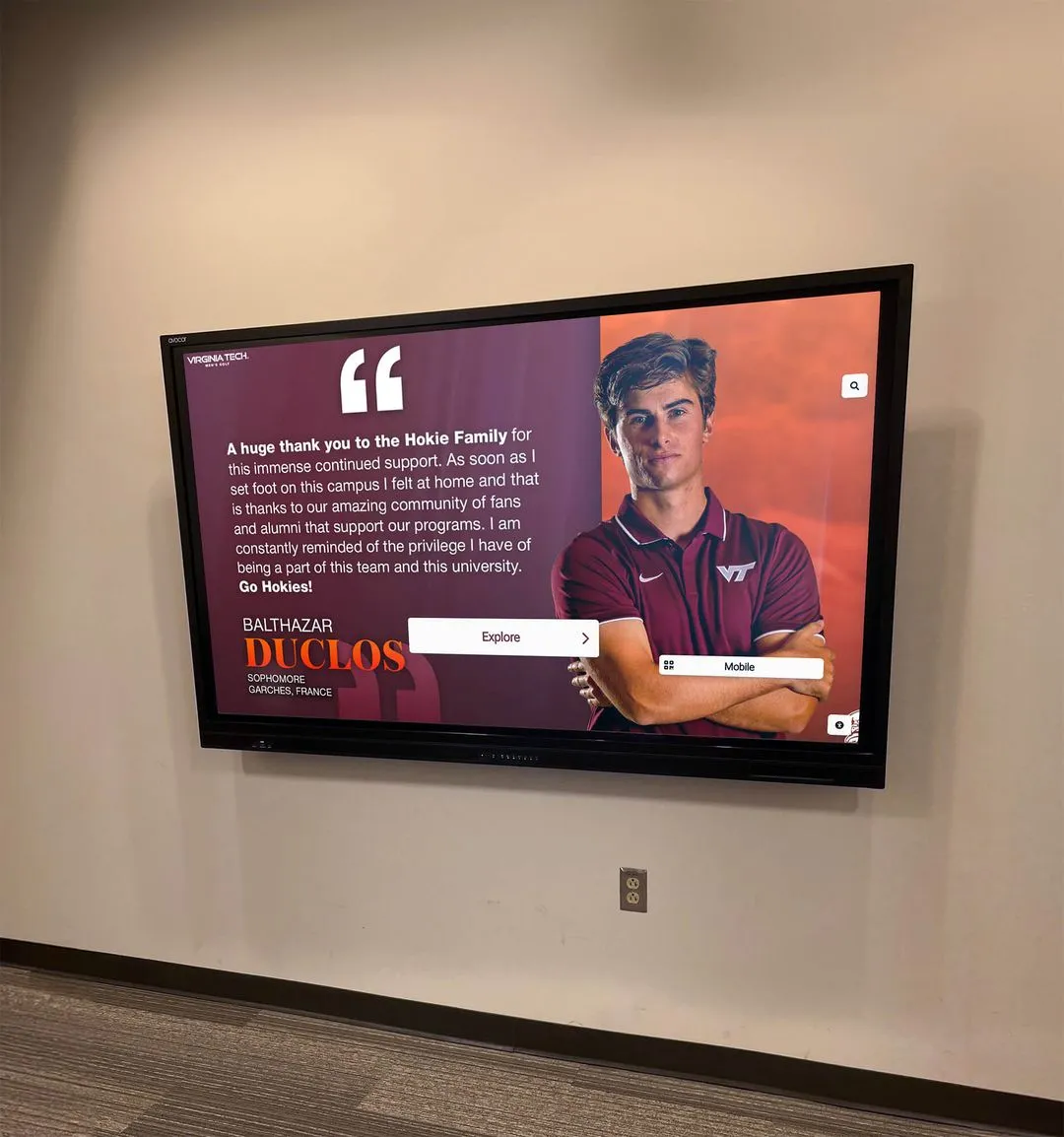
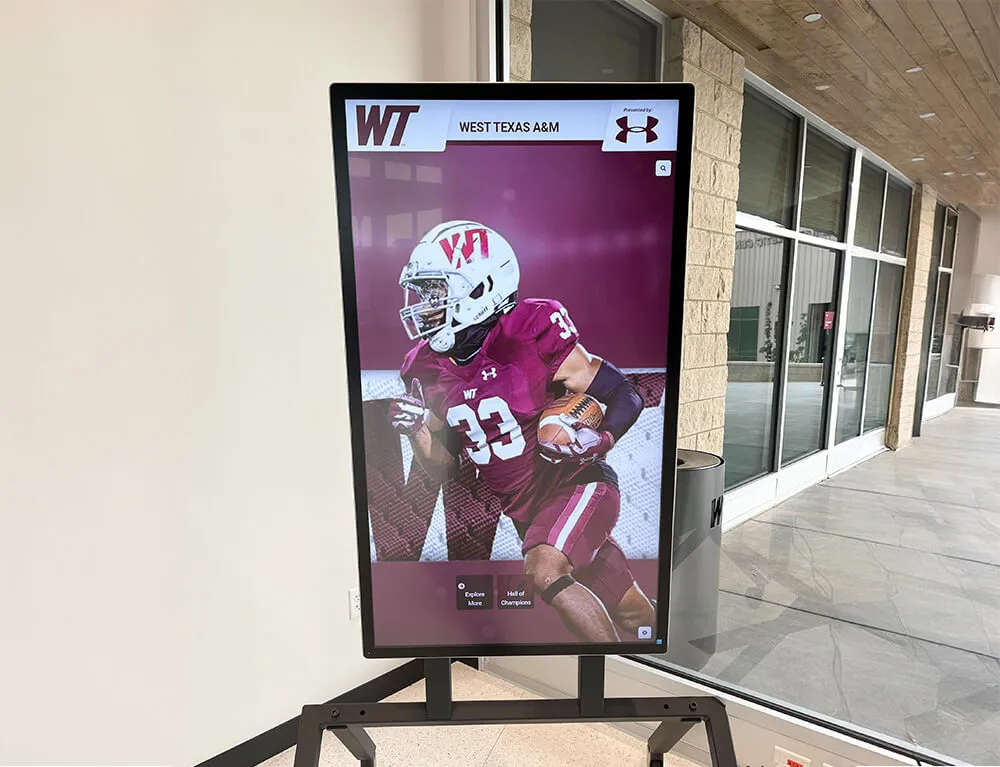
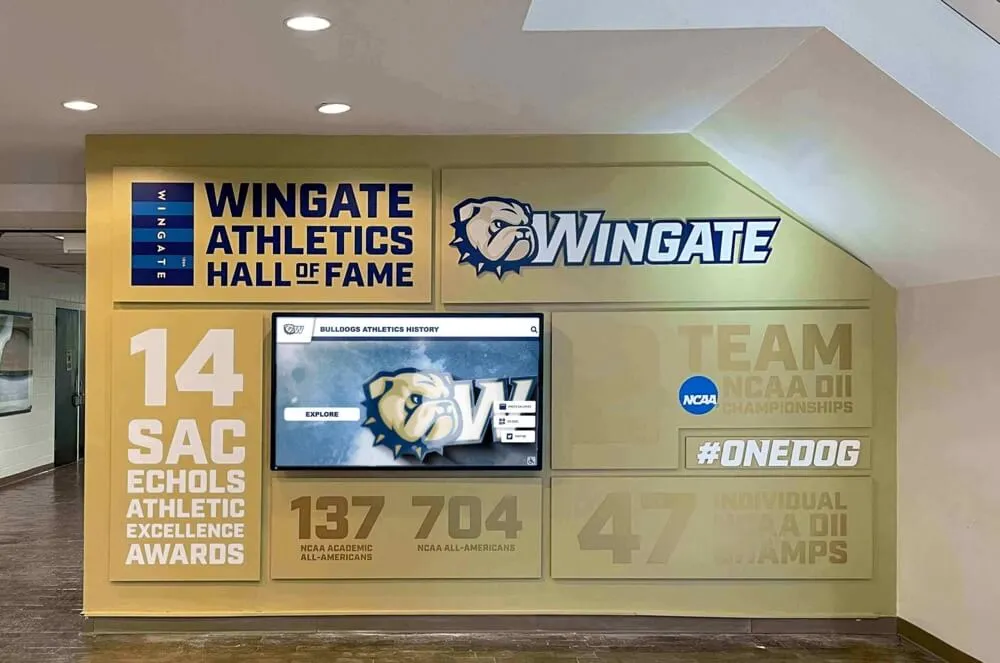
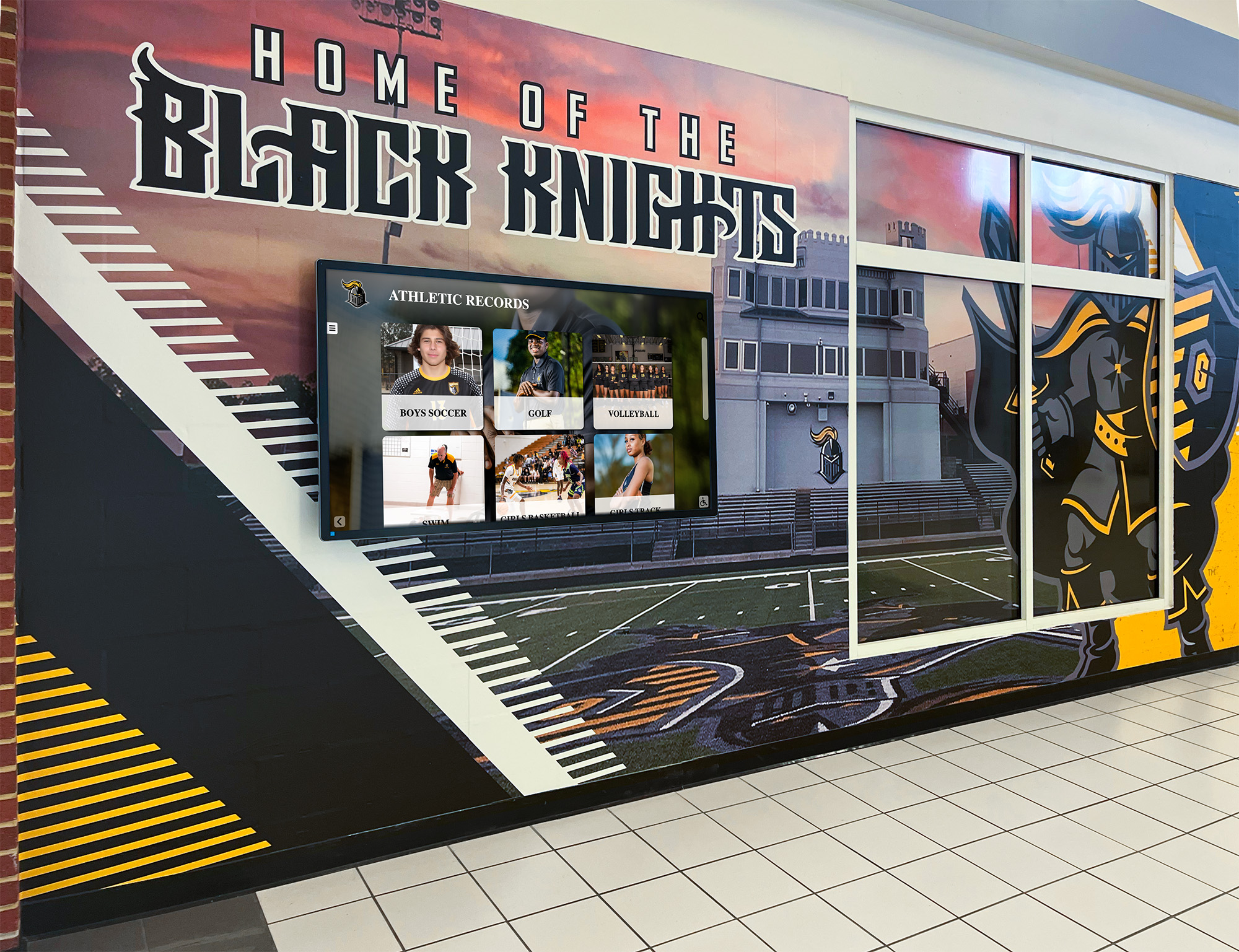
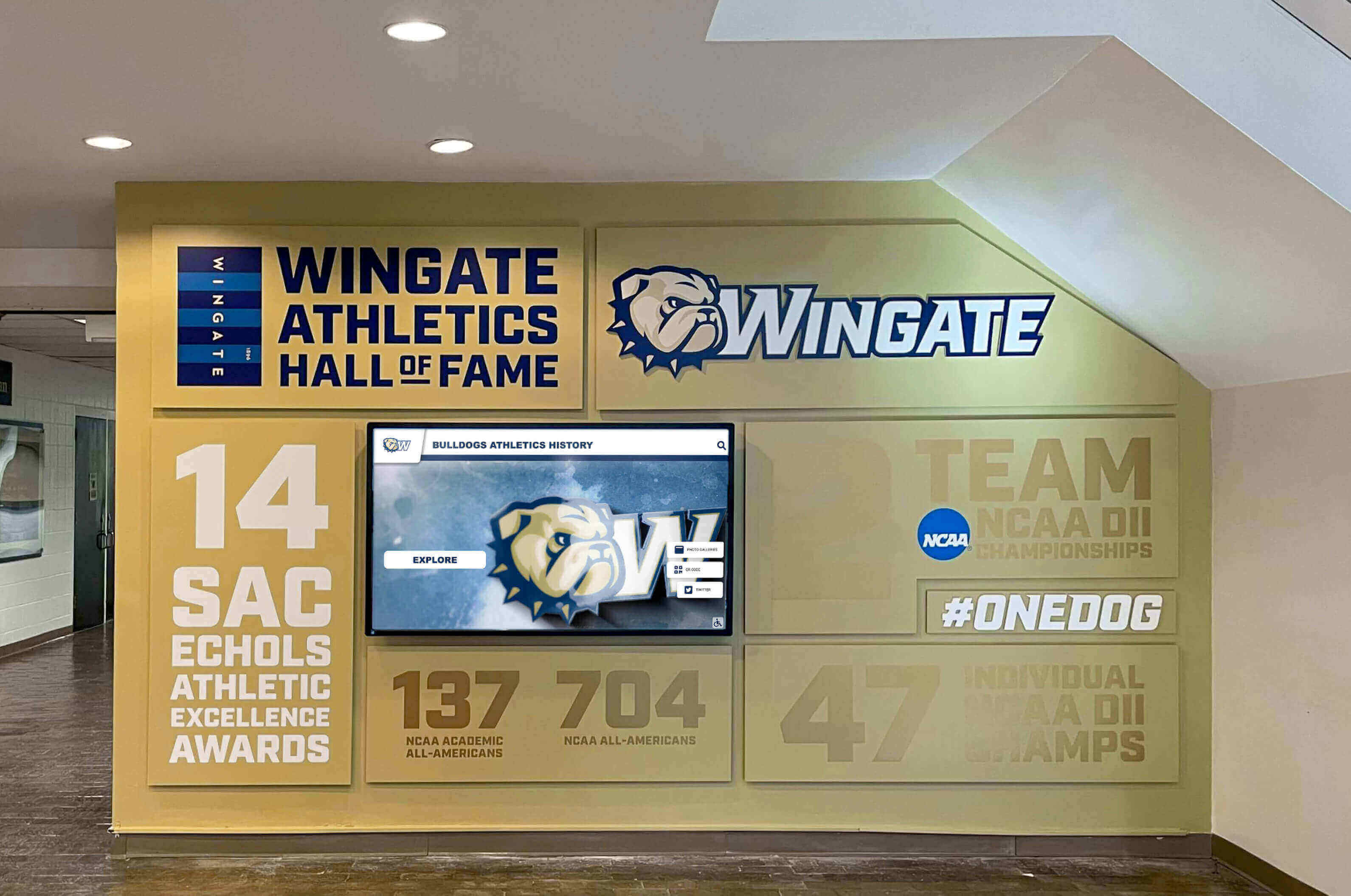
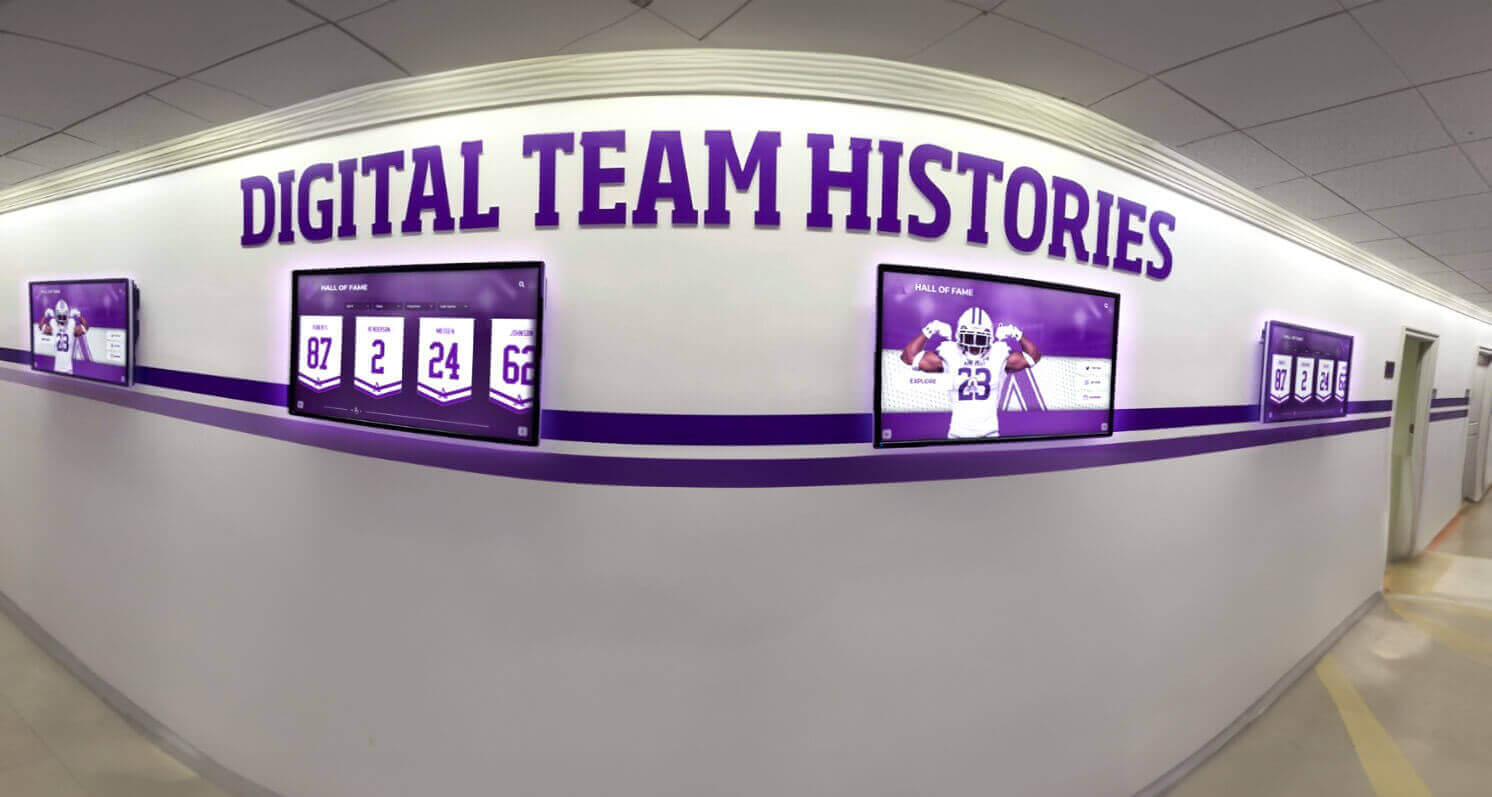
Digital championship displays enable schools to showcase unlimited achievements without physical space constraints. Interactive touchscreen systems allow visitors to explore championship team rosters, view season statistics, watch highlight videos, and learn comprehensive stories about what made championship seasons special—storytelling depth impossible through limited text on traditional banners.
Unlimited Recognition Capacity
The fundamental limitation of traditional championship banners—finite rafter or wall space—disappears with digital systems. Schools can recognize every championship across all sports and levels without making impossible choices about which achievements receive visible display and which get relegated to storage or forgotten entirely.
Rich Multimedia Storytelling
Digital platforms integrate photographs from championship seasons, video highlights of defining moments, complete team rosters with player biographies, season statistics and achievement details, coach and player reflections on championship experiences, and historical context showing how championships fit within program development.
This multimedia richness transforms championship recognition from simple acknowledgment into comprehensive documentation preserving not just what teams achieved, but how they achieved it, what challenges they overcame, and how those experiences shaped participants’ lives.
Remote Content Management
Perhaps most practically, digital championship displays enable instant updates through content management systems requiring no physical banner production, installation, or rafter access. When teams win new championships, recognition happens immediately through simple uploads rather than waiting for banner design, production, and professional installation—processes that can take months while championship excitement fades.
Championship Banner Placement and Display Strategies
Even the most beautifully designed championship banners fail to serve their purposes if positioned poorly. Strategic placement maximizes visual impact while creating desired cultural influence.
Gymnasium Rafter Placement
For schools continuing traditional rafters display approaches, thoughtful placement decisions ensure effective recognition.
Visibility Considerations
Championship banners should hang in locations visible from gymnasium floors where athletes practice and compete, bleacher seating areas where spectators watch games, and main entrances where visitors form first impressions. Banners hidden in corners or behind structural elements waste recognition opportunities and fail to inspire current athletes or impress visitors.
Organizational Systems
Schools typically organize championship banners using one of several approaches including chronological order showing championship progression across program history, sport-by-sport grouping clustering each sport’s championships together, achievement level organization separating state championships from conference titles, or hybrid approaches combining multiple organizational principles.
The key is maintaining consistent systems creating visual coherence and making specific championships easy to locate rather than appearing randomly scattered without organizational logic.
Spacing and Density
Crowded banner displays where championships hang too closely together diminish individual impact and create cluttered appearances. Adequate spacing between banners—typically 2-4 feet minimum—ensures each championship receives appropriate individual recognition while maintaining visual appeal. Schools must balance showing all achievements with avoiding overwhelming spaces with excessive recognition density.
Athletic Hall and Corridor Displays
Many schools supplement or replace gymnasium rafter banners with championship displays in athletic halls, corridors, or dedicated recognition areas.
Advantages of Alternative Locations
Corridor displays provide consistent visibility during school days rather than just during athletic events, better environmental protection from temperature and humidity extremes common in gymnasiums, easier viewing access allowing closer examination of details, and integration with other recognition elements including all-conference honors, statistical leaders, and individual achievements.
Creating Recognition Destinations
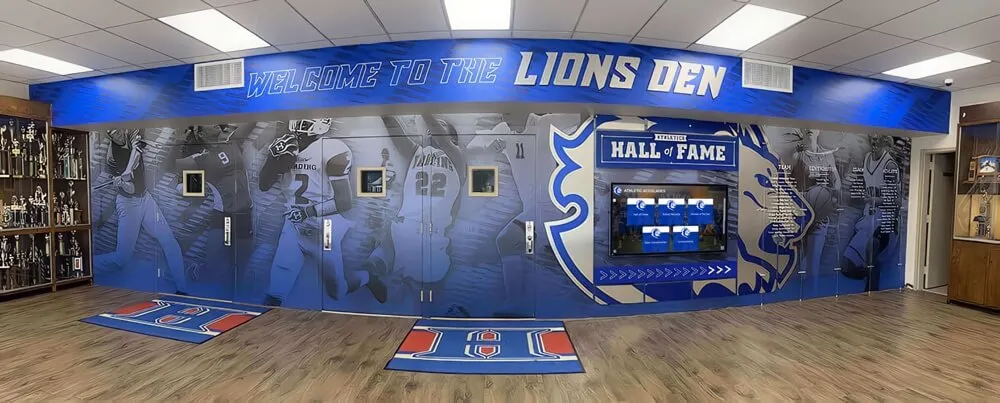
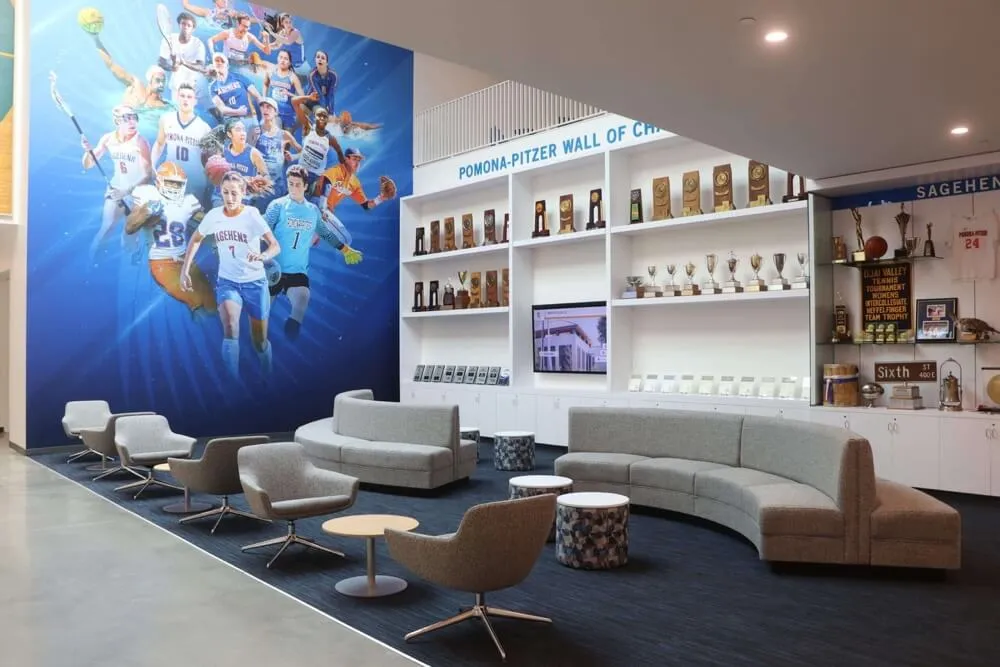
Well-designed athletic halls become destination spaces where students, families, and visitors deliberately gather to explore achievement histories rather than merely passing through. Athletic facility design should intentionally position championship recognition where it influences culture and creates community pride rather than hiding achievements in seldom-visited locations.
Incorporating Championship Recognition Into Broader Athletic Display Systems
Championship banners work most effectively when integrated into comprehensive recognition systems celebrating diverse athletic achievements rather than existing in isolation.
Combining Championships with Individual Honors
Programs should connect team championship recognition with individual athlete achievements including statistical leaders from championship teams, individual award winners whose excellence contributed to team success, and All-American athletes who elevated program profiles.
This integrated approach tells complete stories about championship eras—not just that teams won titles, but who contributed, what made them special, and how individual excellence combined into collective achievement.
Historical Context and Program Development
Effective championship displays provide context showing how individual titles fit within broader program development including championship frequency patterns, breakthrough championships that elevated program trajectories, dynasty periods demonstrating sustained excellence, and connections to facility improvements or program investments that enabled championship success.
Sport-Specific Championship Banner Design Considerations
Different sports present unique considerations for championship banner design reflecting sport-specific traditions, aesthetics, and recognition cultures.
Basketball and Volleyball Championships
Indoor court sports lend themselves naturally to traditional rafter banner displays given controlled environments and existing traditions of suspended recognition.
Design Traditions
Basketball championship banners typically follow classic vertical pennant formats prominently displaying years and championship levels. Many basketball programs use distinctive design elements including basketball graphics, court diagrams, or silhouettes reinforcing sport identity.
Football Championships
Football presents unique challenges and opportunities for championship recognition given outdoor stadium environments and sport-specific traditions.
Stadium Display Options
Schools with outdoor stadiums may hang fabric banners from press box structures, light poles, or stadium facades, though exposure to weather requires durable materials and maintenance. Many football programs supplement or replace outdoor banners with permanent recognition displays in field house facilities providing environmental protection.
Some schools create championship recognition painted on stadium walls, end zone areas, or concourse surfaces, integrating recognition directly into facility architecture rather than through removable banners.
Multi-Sport and Co-Ed Championship Recognition
Schools should establish consistent design frameworks ensuring all sports receive equitable recognition regardless of program size, gender, or competitive visibility.
Avoiding Hierarchy Through Design
Using identical banner sizes and placement prominence for all sports—regardless of whether they’re high-profile football and basketball programs or smaller sports with fewer participants—communicates that excellence matters equally across all athletic endeavors. Design consistency prevents implicit hierarchies where some championships appear more valued than others.
Title IX Considerations
Federal Title IX requirements mandate equitable treatment of male and female athletic programs. Championship recognition systems should provide identical recognition for boys’ and girls’ sports achievements, ensuring comparable prominence, design quality, and resource allocation regardless of gender.
Budget-Conscious Championship Banner Solutions
Quality championship recognition doesn’t require unlimited budgets. Strategic approaches enable effective displays even with significant financial constraints.
Cost-Effective Material Alternatives
While premium materials create ideal aesthetics and durability, budget-friendly alternatives can provide effective recognition when resources are limited.
Digital Printing vs. Traditional Methods
Modern digital printing technology has dramatically reduced banner production costs while improving quality. Schools can produce professional-quality vinyl banners for $100-300 depending on size, compared to $500-1,000+ for traditional sewn fabric approaches.
Standardized Design Templates
Creating standardized championship banner templates used across all sports reduces design costs while ensuring visual consistency. Schools can maintain template frameworks requiring only variable information (sport, year, achievement level) rather than custom designing each banner from scratch.

Phased Implementation Approaches
Schools don’t need to create comprehensive championship recognition systems immediately. Phased approaches spread costs across multiple budget cycles while ensuring recognition happens systematically.
Prioritizing Recent Championships
Schools might initially recognize championships from recent years (last 10-20 years) while planning eventual historical recognition as additional resources become available. This approach ensures current and recent athletes see their achievements honored while building toward comprehensive historical documentation.
Sport-by-Sport Rollout
Implementing championship recognition one sport at a time—perhaps tied to sport seasons or fundraising campaigns—makes costs manageable while creating anticipation and engagement around each sport’s recognition launch.
Fundraising and Booster Support
Championship banner costs represent natural fundraising opportunities for booster clubs, alumni associations, and community supporters wanting tangible ways to support athletic programs.
Sponsorship Models
Some schools invite individual sponsors to fund specific championship banners in exchange for modest recognition on displays. Booster club recognition programs can provide both needed funding and community engagement opportunities.
Alumni Championship Banner Programs
Creating opportunities for championship team members to collectively fund banners recognizing their achievements generates both financial support and meaningful alumni engagement. Reunion events become natural opportunities to unveil banners commemorating championships, creating emotional touchpoints that strengthen alumni connections.
Maintaining and Updating Championship Banner Displays
Initial installation represents only the beginning of effective championship recognition. Ongoing maintenance and systematic updating ensure displays remain effective across years and decades.
Fabric Banner Maintenance
Traditional championship banners require periodic attention preventing deterioration and maintaining visual appeal.
Cleaning and Restoration
Dust accumulation, exposure to gymnasium humidity and temperature fluctuations, and general aging cause banners to fade and deteriorate over time. Schools should plan for professional cleaning every 3-5 years and eventual replacement of banners showing significant deterioration—typically after 10-20 years depending on material quality and environmental conditions.
Damage Prevention
Common banner damage sources include improper storage when banners are temporarily removed for ceiling maintenance, incorrect handling during installation or removal causing tears or mounting hardware failure, and exposure to moisture in gymnasiums with inadequate climate control. Establishing proper handling protocols prevents avoidable damage extending banner lifespans.
Adding New Championships to Existing Systems
The ultimate success indicator for athletic programs—continued championship achievement—creates practical challenges for recognition systems. Schools need sustainable processes for incorporating new championships into existing displays.
Installation Planning
Schools should establish clear timelines for new championship banner production and installation following title wins. Delays of many months or years after championships diminish recognition impact and suggest the achievement wasn’t truly valued. Ideally, new championship banners should be installed within one season of achievement while memories remain fresh and celebration momentum continues.
Capacity Planning
Recognition systems must accommodate decades of potential future championships rather than filling available space quickly and creating capacity challenges. Schools should periodically assess remaining recognition capacity and implement expansion solutions before running out of space rather than making reactive decisions after capacity is exhausted.
Addressing Historical Championship Recognition
Many schools discover incomplete championship recognition with earlier achievements never properly honored or recognition that deteriorated beyond repair. Addressing these historical gaps ensures comprehensive documentation while honoring deserving teams regardless of achievement timing.
Research and Documentation
Creating historical championship banners requires careful research establishing accurate information about season records, team rosters, coaching staffs, and achievement contexts. School history preservation efforts often uncover forgotten championships deserving recognition or correct inaccuracies in existing displays.
Balancing Historical and Contemporary Recognition
Schools implementing new championship recognition systems should honor historical achievements while ensuring recognition doesn’t become overly backward-looking. Balanced approaches celebrate tradition while maintaining primary focus on inspiring current and future athletes rather than existing purely as historical archives.
The Digital Alternative: Comprehensive Championship Recognition Without Physical Constraints
While traditional championship banners serve important purposes and connect to valued athletic traditions, digital recognition platforms address fundamental limitations of physical approaches while offering capabilities impossible through traditional methods.
Unlimited Championship Capacity
The primary challenge of traditional championship banner systems—finite physical space—disappears entirely with digital recognition platforms. Schools can showcase every championship across all sports, achievement levels, and historical periods without making impossible choices about which titles receive visible recognition and which achievements get relegated to storage or forgotten.
This unlimited capacity matters particularly for schools with strong multi-sport traditions where comprehensive championship histories span decades and hundreds of achievements across boys’ and girls’ programs. Digital systems ensure every championship receives permanent recognition regardless of physical space limitations.
Rich Championship Storytelling
While traditional banners provide basic information—sport, year, achievement level—digital platforms enable comprehensive championship storytelling including complete team rosters with player biographies, season records and statistical leaders, game-by-game results and significant victories, playoff bracket progression and tournament performance, coach profiles and coaching philosophies, photograph galleries from championship seasons, video highlights of defining moments and championship-clinching performances, and participant reflections on what championships meant personally and how experiences shaped their lives.
This multimedia richness transforms championship recognition from simple acknowledgment into comprehensive historical documentation preserving not just what teams achieved, but how they achieved it, what challenges they overcame, and how those experiences influenced participants far beyond athletic careers.
Interactive Exploration and Engagement
Digital championship displays enable active exploration rather than passive viewing. Visitors can search for specific championships or sports, filter achievements by decade or championship level, explore connections between current students and championship team members, compare statistics across different championship eras, and discover stories about how championship teams developed and what made them special.
This interactivity creates engagement impossible through static traditional banners. A current athlete discovering their parent or relative played on a championship team decades earlier, or recognizing they attend the same middle school as championship team members from years past, creates meaningful connections to tradition inspiring continued excellence.
Interactive community recognition tools strengthen the connections between past achievements and current aspirations that drive athletic excellence.
Immediate Recognition Without Production Delays
Traditional championship banner approaches require multi-month processes including design development and approval, vendor production and shipping, professional installation requiring facility access and specialized equipment, and coordination around building maintenance schedules and event calendars.
Digital systems enable immediate championship recognition through simple content uploads requiring no physical production or installation. When teams win championships, recognition can happen within days rather than months, capturing celebration momentum while achievement excitement remains fresh.
Cost Effectiveness at Scale
While individual championship banners might cost $200-1,000 depending on materials and installation, digital recognition platforms provide unlimited championship capacity for one-time system investment rather than per-championship costs. For schools with dozens or hundreds of championships to recognize, digital approaches often provide superior cost-effectiveness while delivering richer recognition than traditional banners can offer.
Best Practices for Championship Banner Programs
Learning from successful programs while avoiding common mistakes accelerates effective championship recognition development.
Establish Clear Recognition Criteria Before First Championships
The most common source of championship recognition problems stems from undefined or inconsistent criteria determining which achievements warrant banners and how different accomplishments are distinguished. Schools should document specific standards including championship levels receiving recognition, information included on banners, design specifications ensuring visual consistency, approval processes and responsible decision-makers, and funding sources and budget allocation before creating first banners rather than developing ad hoc policies creating inevitable inconsistencies.
Plan for Long-Term Growth and Capacity
Championship recognition systems should accommodate decades of potential future achievements rather than just immediate needs. Schools that fill available rafter or wall space within 10-15 years face impossible choices about stopping new championship recognition, removing or relocating existing banners to create capacity, or implementing completely new recognition approaches requiring significant investment.
Forward-thinking programs either build substantial excess capacity into physical systems or implement digital platforms providing unlimited recognition capacity ensuring every future championship receives appropriate honor regardless of physical space constraints.
Maintain Quality Standards Across All Sports
Championship recognition should reflect consistent quality and prominence regardless of whether achievements come from high-profile sports attracting large crowds and media attention or smaller programs with fewer participants and less public visibility. Using identical banner specifications, placement prominence, and recognition treatment for all sports communicates that excellence matters equally across all athletic endeavors rather than creating implicit hierarchies where some championships appear more valued than others.
Integrate Championships Into Comprehensive Athletic Recognition
Championship banners work most effectively as components of broader recognition systems rather than existing in isolation. Programs should connect team championships with individual athlete achievements from those teams, statistical leaders and record-setters whose excellence contributed to title wins, and coaching excellence that developed championship-caliber programs creating recognition ecosystems telling complete stories about athletic excellence rather than isolated championship acknowledgments.
Engage Alumni and Community in Recognition Development
Former athletes whose teams earned championships should participate in recognition program development, providing historical knowledge, ensuring accuracy, creating community ownership in recognition success, and building ongoing connections benefiting current programs through mentorship, financial support, and recruiting assistance.
Alumni engagement strategies that incorporate championship recognition create natural touchpoints maintaining lifelong connections between graduates and their schools.
Common Championship Banner Challenges and Solutions
Understanding typical challenges enables schools to address issues proactively rather than reactively when problems threaten recognition effectiveness.
Challenge: Running Out of Display Space
The Problem: Schools utilizing traditional rafter or wall-mounted banners eventually exhaust available space, forcing impossible decisions about which future championships warrant recognition and which deserving teams won’t receive visible honor.
Solutions: Digital recognition platforms eliminate space constraints entirely, providing unlimited capacity for comprehensive championship recognition. Alternatively, schools might establish more selective criteria limiting physical banners to only state championships while recognizing other achievements through complementary display methods, or implement banner rotation systems where recent championships occupy prime locations while historical banners cycle into storage with periodic exhibitions.
Challenge: Faded and Deteriorating Banners
The Problem: Fabric championship banners exposed to gymnasium lighting, temperature fluctuations, and humidity fade over time, with colors dulling and text becoming difficult to read. Deteriorated banners undermine recognition significance and reflect poorly on institutional commitment to honoring achievements.
Solutions: Regular maintenance including professional cleaning every 3-5 years extends banner lifespans, while planning for eventual replacement as materials age—typically after 10-20 years depending on quality and environmental conditions. Using UV-resistant inks and materials during initial production prevents premature fading, and digital display alternatives eliminate material deterioration concerns entirely while providing permanent recognition unaffected by environmental conditions.
Challenge: Incomplete or Inaccurate Information
The Problem: Championship banners created years after achievements often contain incomplete team rosters, incorrect dates, or missing contextual information because institutional memory faded before recognition happened. Inaccurate information diminishes recognition credibility and frustrates team members whose achievements are misrepresented.
Solutions: Implementing systematic recognition processes ensuring championship documentation happens immediately following title wins rather than years later when information becomes difficult to verify. Schools should maintain comprehensive athletic archives including team rosters, season records, photographs, and achievement details making accurate recognition possible decades later. Digital platforms enable easy information correction and enhancement as additional details become available, unlike physical banners requiring replacement to fix inaccuracies.
Challenge: Budget Constraints Preventing Comprehensive Recognition
The Problem: Per-banner costs of $200-1,000+ multiply quickly when schools attempt recognizing dozens or hundreds of championships, making comprehensive recognition financially challenging for programs with limited budgets.
Solutions: Phased implementation approaches spreading costs across multiple years, standardized design templates reducing custom design expenses, digital recognition platforms providing unlimited capacity for one-time investment rather than per-championship costs, and fundraising partnerships with booster clubs and alumni associations willing to sponsor championship recognition.
Conclusion: Creating Championship Recognition Worthy of Winning Traditions
Championship banners represent more than decorative elements in gymnasiums and athletic halls—they serve as tangible proof of what dedication, teamwork, and sustained effort can achieve. The teams that earn championship recognition sacrificed countless hours to practices and conditioning, overcame adversity and setbacks that tested their resilience, balanced athletic demands with academic responsibilities, represented their schools and communities with excellence, and demonstrated the kind of collective commitment that defines program excellence for generations. They deserve recognition systems reflecting the significance of their achievements and the respect they’ve earned.
Whether your school is planning championship recognition for a recent title or modernizing systems that no longer serve contemporary needs, the strategies outlined in this guide help create displays worthy of the championships they honor. From establishing clear recognition criteria to implementing modern digital platforms showcasing achievements comprehensively, effective championship recognition balances honoring tradition with embracing solutions that inspire future champions.
Modern recognition technology has transformed what’s possible for schools of all sizes and budget levels. Rocket Alumni Solutions enables schools to create comprehensive digital athletic halls of fame that preserve complete championship histories without physical space constraints, showcase achievements through rich multimedia presentations impossible in traditional banner formats, inspire current athletes through interactive displays connecting them to championship traditions, and engage alumni communities by honoring their accomplishments permanently. Discover how digital recognition systems can transform your school’s ability to celebrate championship achievements while building the culture of excellence that develops future title-winning teams.