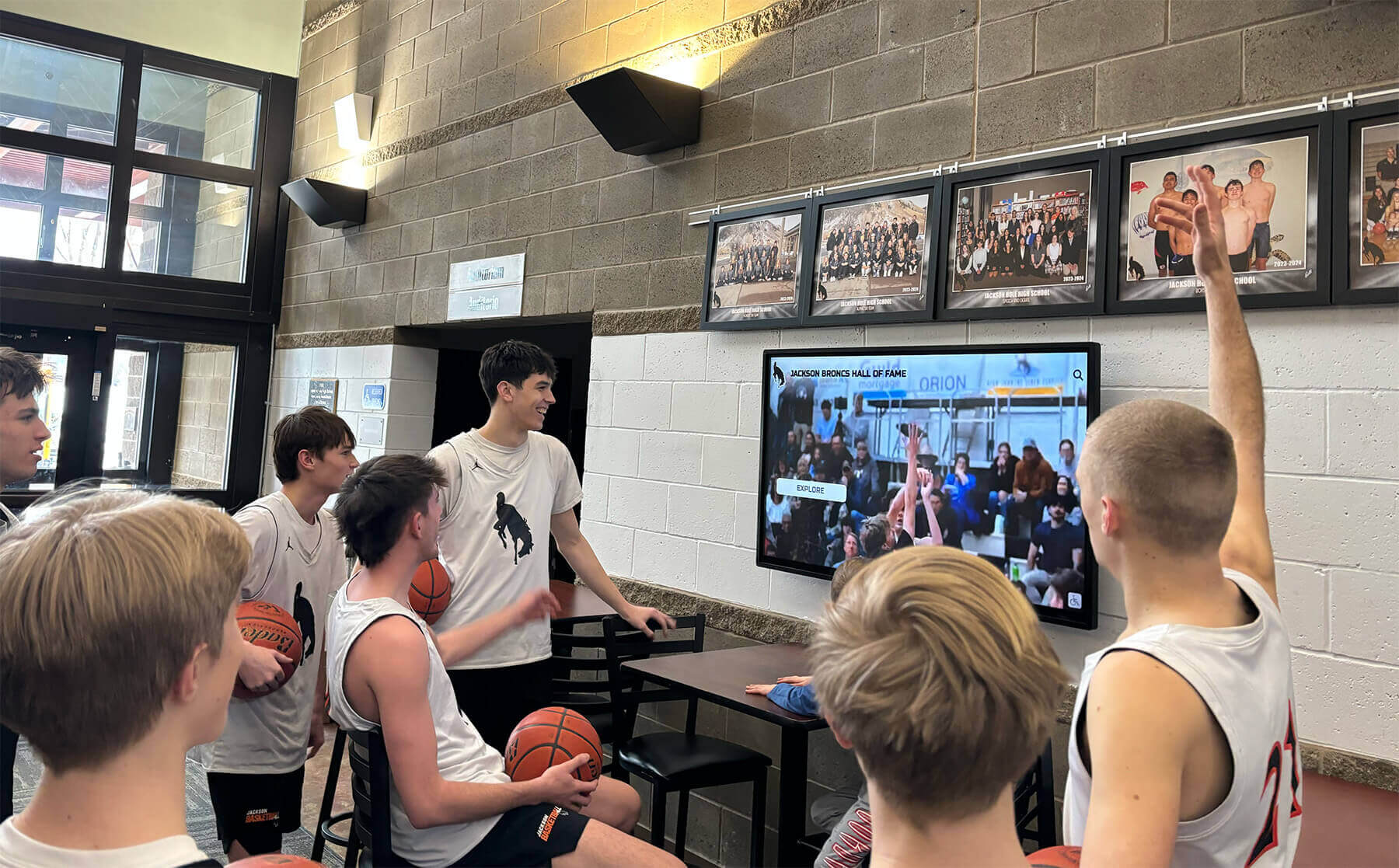




The roar of the crowd. The cutting down of the nets. The trophy presentation at center court. These moments define Big Ten championship basketball—a tradition spanning over a century of competitive excellence across America’s heartland. From the conference’s founding in 1896 through today’s expanded 18-team powerhouse, Big Ten basketball championships represent the pinnacle of college basketball achievement in one of the sport’s most competitive conferences.
Whether you’re an athletic director seeking to enhance your program’s recognition systems, a facilities manager planning championship displays, or a development professional working to leverage athletic achievement for alumni engagement, understanding Big Ten basketball championship traditions and modern recognition approaches provides valuable insights for celebrating excellence.
The History and Prestige of Big Ten Championship Basketball
The Big Ten Conference stands as college basketball’s oldest Division I conference, with championship traditions dating back to 1906 when the conference first recognized basketball as a varsity sport. Understanding this rich history provides context for why Big Ten championships carry such weight within college basketball.
Conference Origins and Evolution
The Western Conference, as the Big Ten was originally known, began formal basketball competition in 1906 with Purdue claiming the inaugural championship. The conference adopted the “Big Ten” name in 1917, despite membership fluctuations that saw the conference operate with different numbers of schools across its history—including periods with 11 teams when the name technically didn’t match membership.
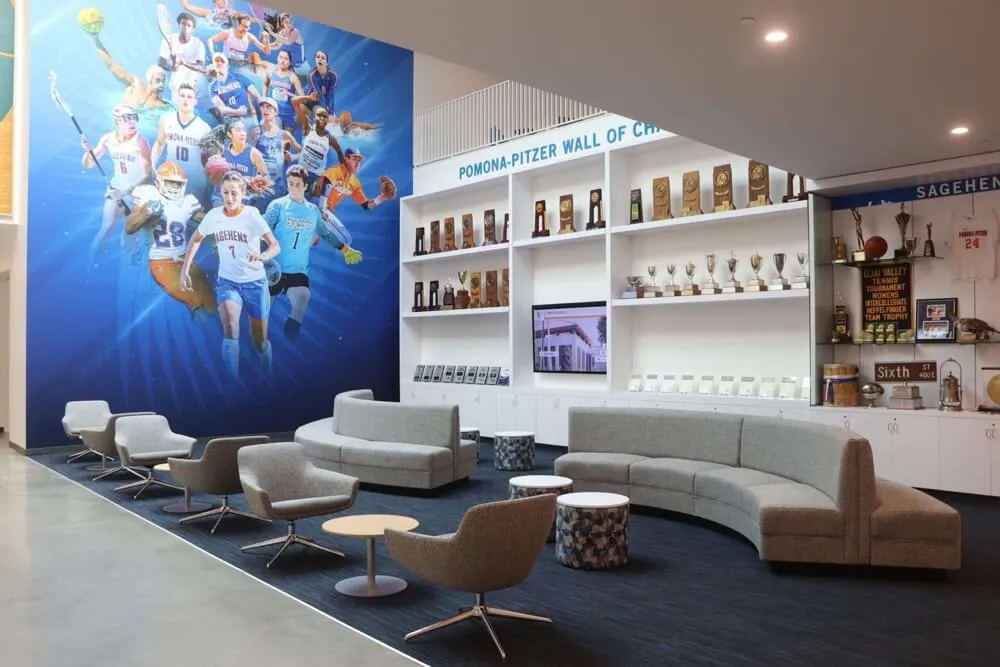
The conference has expanded significantly, with recent additions bringing membership to 18 schools by 2024. This expansion reflects the Big Ten’s status as one of college athletics’ premier conferences, combining academic excellence with athletic achievement. Current members span from Rutgers on the East Coast to USC and UCLA on the West Coast, creating a truly national basketball conference while maintaining Midwestern roots.
Big Ten basketball championship recognition has evolved alongside the conference itself. Early championships were determined solely by conference record during the regular season. The Big Ten Tournament, introduced in 1998, added a second pathway to championship glory—creating exciting postseason drama while preserving the significance of the regular season title that older traditions emphasized.
Championship Structure and Formats
Big Ten championship basketball actually encompasses two distinct championships, each carrying unique prestige and practical implications:
Regular Season Championship: Determined by conference win-loss record across 20 conference games (as of 2024-25 season), the regular season title represents consistency and excellence over months of competition. Teams finishing tied for first place are recognized as co-champions, with the Big Ten historically embracing shared championships rather than implementing tiebreakers.
Regular season champions receive significant NCAA tournament seeding benefits, as tournament selection committees heavily weight conference championships. The sustained excellence required to win 20 conference games against Big Ten competition—consistently ranked among the nation’s toughest schedules—commands tremendous respect within college basketball.
Big Ten Tournament Championship: Held annually in early March, the conference tournament brings all 18 teams to a neutral site for single-elimination competition culminating in the tournament championship game. Tournament champions receive the conference’s automatic bid to the NCAA tournament, though most Big Ten teams qualify regardless through at-large selection.
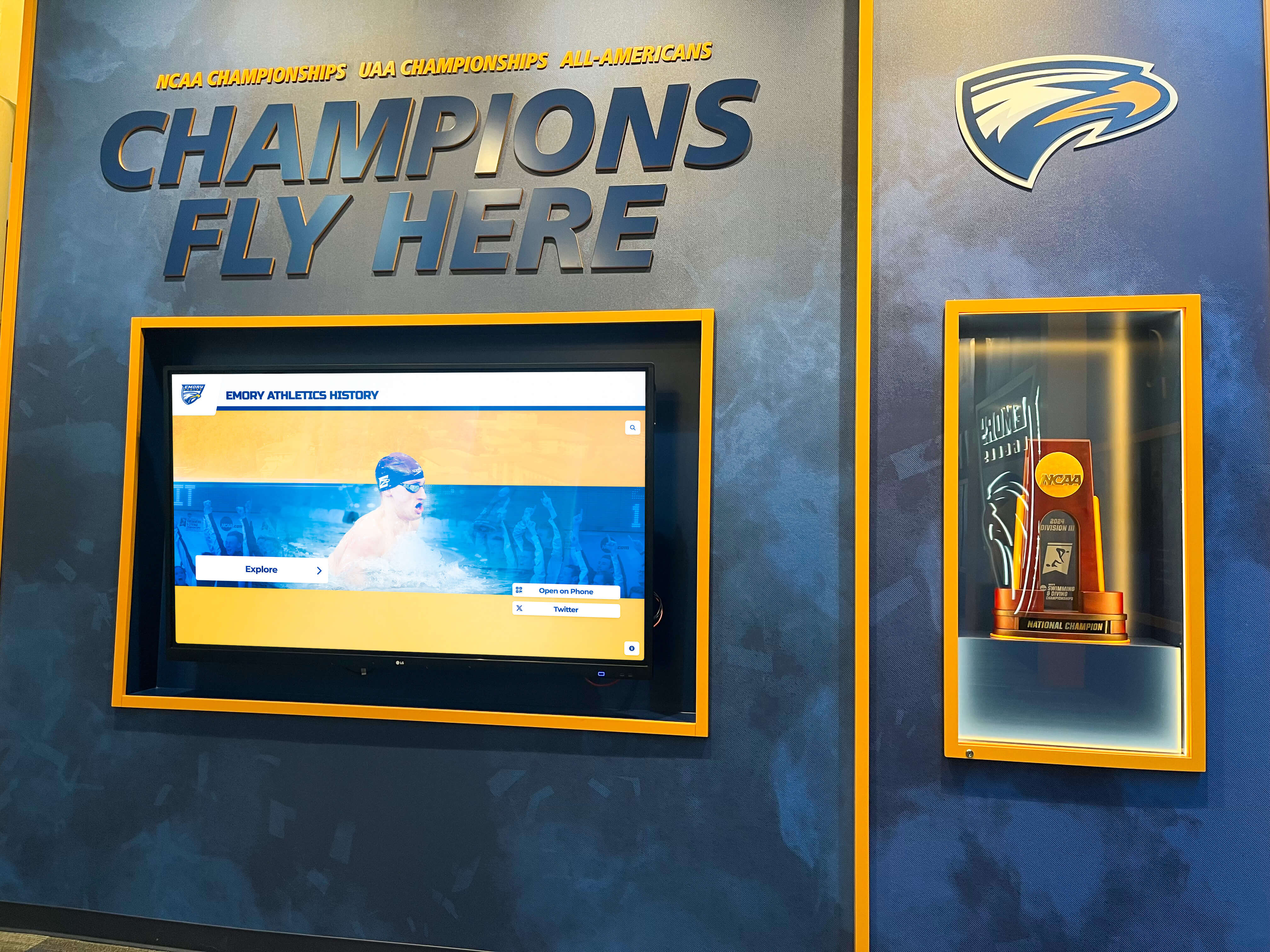
The tournament championship carries distinct value: recency momentum heading into March Madness, the drama of cutting down nets in celebratory victory, and championship hardware earned through consecutive wins against quality opponents. Some programs value tournament titles equal to regular season championships; others maintain that the regular season championship represents superior achievement given the larger sample size.
Many Big Ten schools maintain separate recognition for regular season and tournament championships rather than conflating the two achievements. This dual-championship structure creates more opportunities to celebrate excellence while acknowledging the different competitive contexts each championship represents.
Legendary Programs and Dynasty Periods
Big Ten championship basketball history features several programs with sustained excellence spanning decades, creating dynasties that defined eras of conference basketball.
Indiana Hoosiers: With 23 Big Ten regular season championships and 8 tournament titles, Indiana stands as the conference’s most decorated program. The Bob Knight era (1971-2000) brought unprecedented dominance including five national championships and 11 Big Ten titles. The 1976 Hoosiers—college basketball’s last undefeated national champion—represent not just Big Ten excellence but historic achievement in the sport itself.
Indiana’s championship tradition permeates Assembly Hall, where banners celebrating conference and national titles create an intimidating atmosphere for opponents while reminding Hoosiers players of standards they’re expected to uphold. This visible recognition of past achievement shapes program culture and recruiting narratives.
Michigan State Spartans: The Tom Izzo era transformed Michigan State into a Big Ten powerhouse with 10 regular season championships and 6 tournament titles since 1998. Izzo’s sustained excellence—never finishing lower than fourth in conference standings across his entire tenure—demonstrates the program consistency that defines Big Ten basketball at its best.
Michigan State’s Breslin Center features comprehensive championship recognition including banners, trophy displays, and interactive digital systems showcasing championship rosters and memorable moments. These displays serve recruiting purposes while strengthening alumni connections to championship eras.
Purdue Boilermakers: With 25 regular season championships—more than any other program—Purdue’s basketball tradition runs deep. The Boilermakers have claimed at least a share of the conference title in seven different decades, demonstrating sustained excellence across generations of players and coaches.

Mackey Arena’s “Cradle of Quarterbacks” football reputation has a basketball parallel in Purdue’s consistent development of All-Big Ten players and championship teams. Championship recognition in Mackey Arena emphasizes both team success and individual player development within successful programs.
Ohio State Buckeyes: The Buckeyes have captured 22 Big Ten regular season titles and 6 tournament championships, with the Thad Matta era (2004-2017) representing modern success including four regular season titles and seven NCAA tournament appearances. Ohio State’s championship tradition balances football dominance with basketball excellence, creating a comprehensive athletic identity.
Wisconsin Badgers: Bo Ryan’s 14-year tenure (2001-2015) elevated Wisconsin to Big Ten elite status with seven regular season championships and three tournament titles. The Badgers’ physical, disciplined style became synonymous with Big Ten basketball characteristics—tough defense, efficient offense, and teams that maximized talent through superior coaching and system execution.
These historic programs and others create the competitive landscape that makes Big Ten championship basketball particularly meaningful. Winning a conference title requires defeating tradition-rich programs with passionate fan bases, significant resources, and sustained excellence—achievement worthy of lasting recognition.
Modern Recognition: How Big Ten Schools Celebrate Championships
The ways universities honor Big Ten championship basketball have evolved dramatically from simple wall-mounted plaques to comprehensive multimedia recognition systems integrating championship history with current team achievements. Understanding these modern approaches provides valuable insights for athletic departments planning recognition investments.
Traditional Championship Recognition Methods
For decades, Big Ten basketball programs relied on standard recognition formats that, while meaningful, offered limited storytelling capacity and faced space constraints:
Championship Banners: The most visible traditional recognition, championship banners hang from arena rafters displaying years and titles. Indiana’s Assembly Hall features dozens of banners celebrating Big Ten and national championships, creating a visual reminder of program tradition. However, banners provide minimal information beyond basic facts—year and championship type—missing opportunities for deeper storytelling.
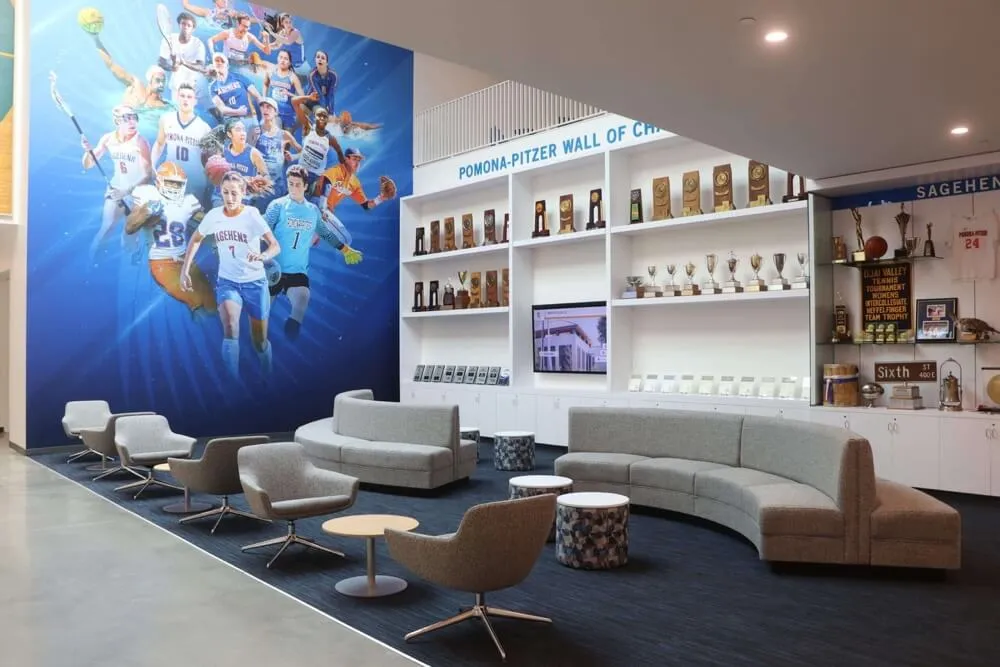
Trophy Cases: Physical trophy displays showcase championship trophies, commemorative plaques, and related artifacts. These static displays offer tangible connection to championship moments but require significant floor space, prove difficult to update, and can become cluttered as programs accumulate achievements across decades.
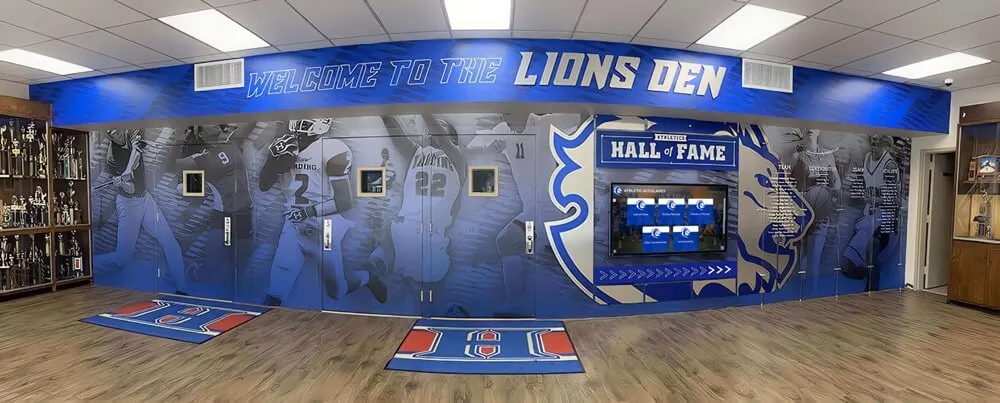
Trophy cases work well for programs with limited championship history but create challenges for tradition-rich programs where space constraints force difficult decisions about what to display. Championship trophies from the 1960s may be stored rather than displayed simply due to physical space limitations—diminishing the recognition those achievements deserve.
Wall-Mounted Plaques: Many programs display championship rosters and season summaries on plaques in basketball facility lobbies or hallways. These provide more detail than banners but share similar limitations—static information that can’t evolve, space constraints limiting comprehensive coverage, and presentation formats that feel dated compared to how modern audiences consume information.
Digital Recognition Systems Transforming Championship Celebration
Forward-thinking Big Ten programs increasingly implement digital recognition displays that overcome traditional limitations while creating engaging experiences for student-athletes, recruits, alumni, and visitors.
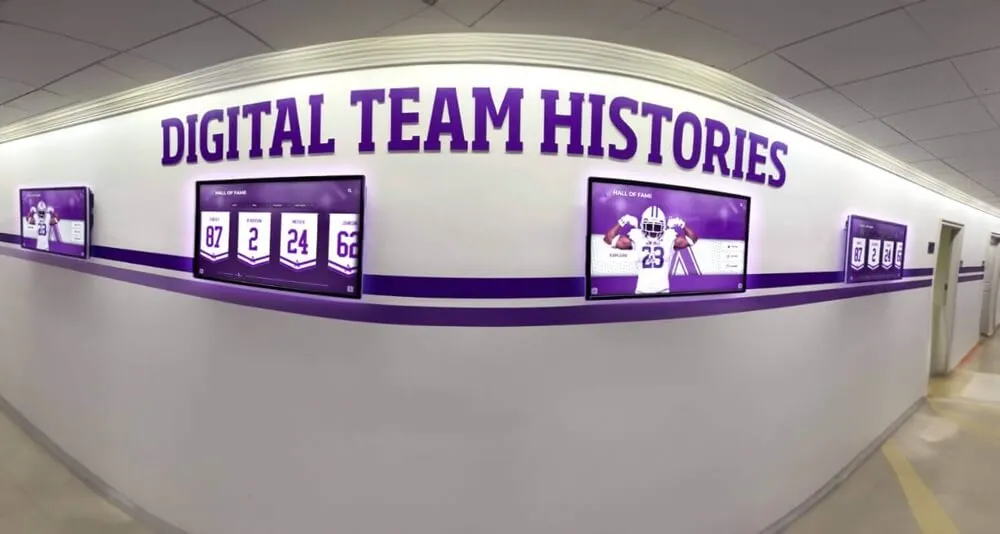
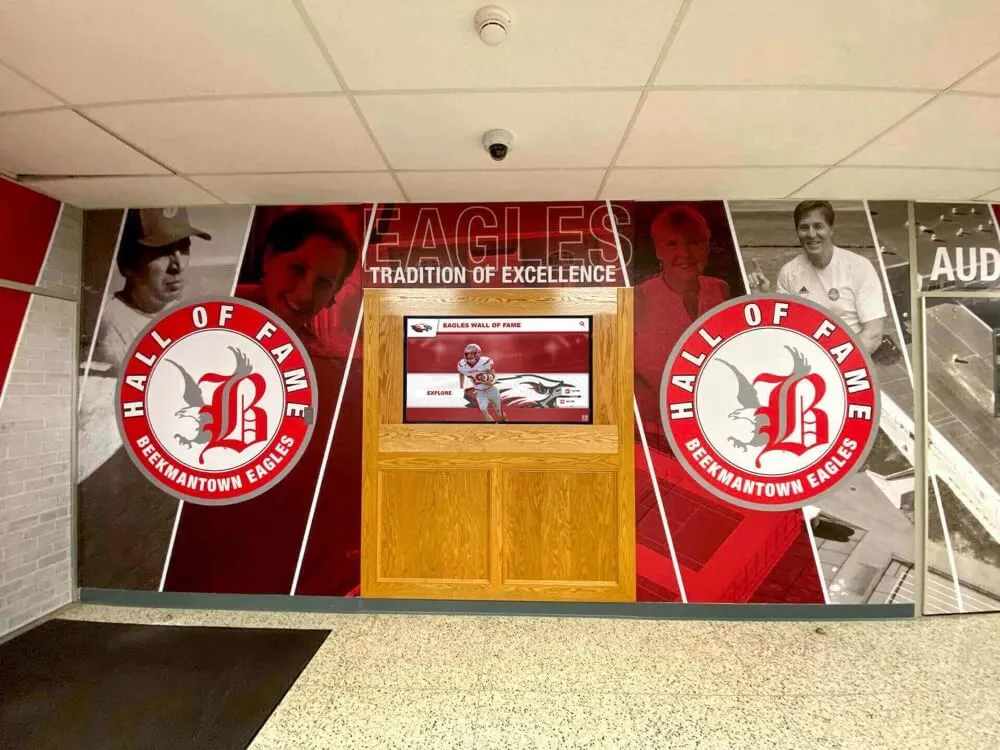
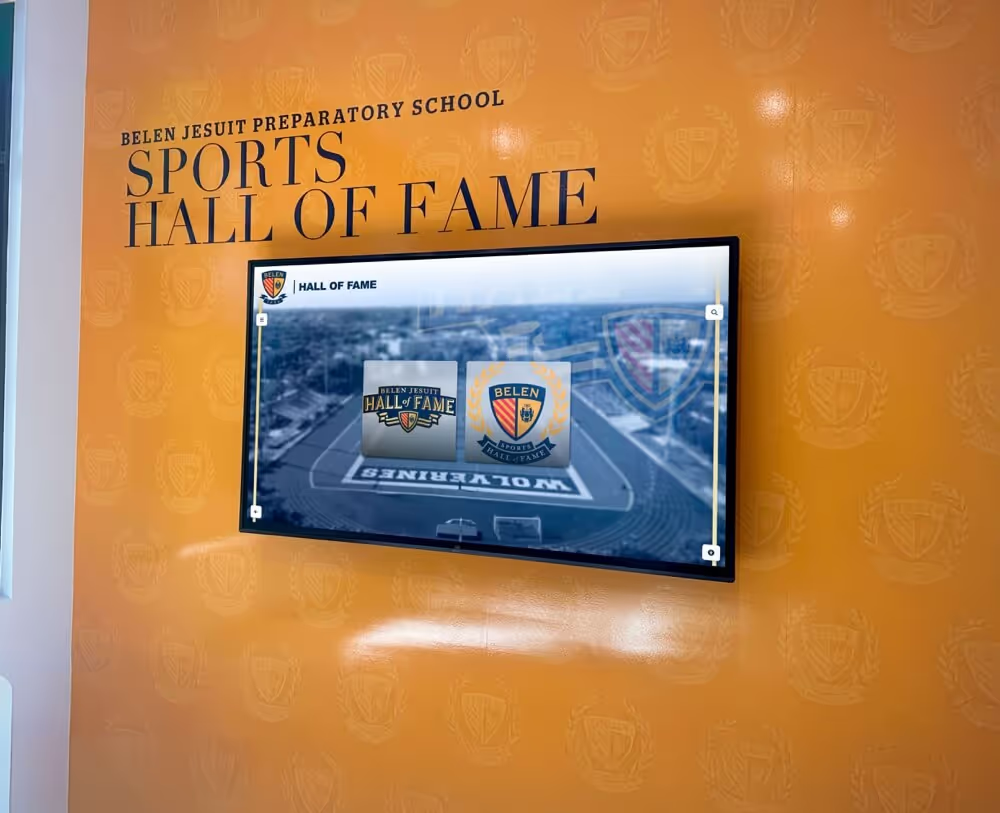
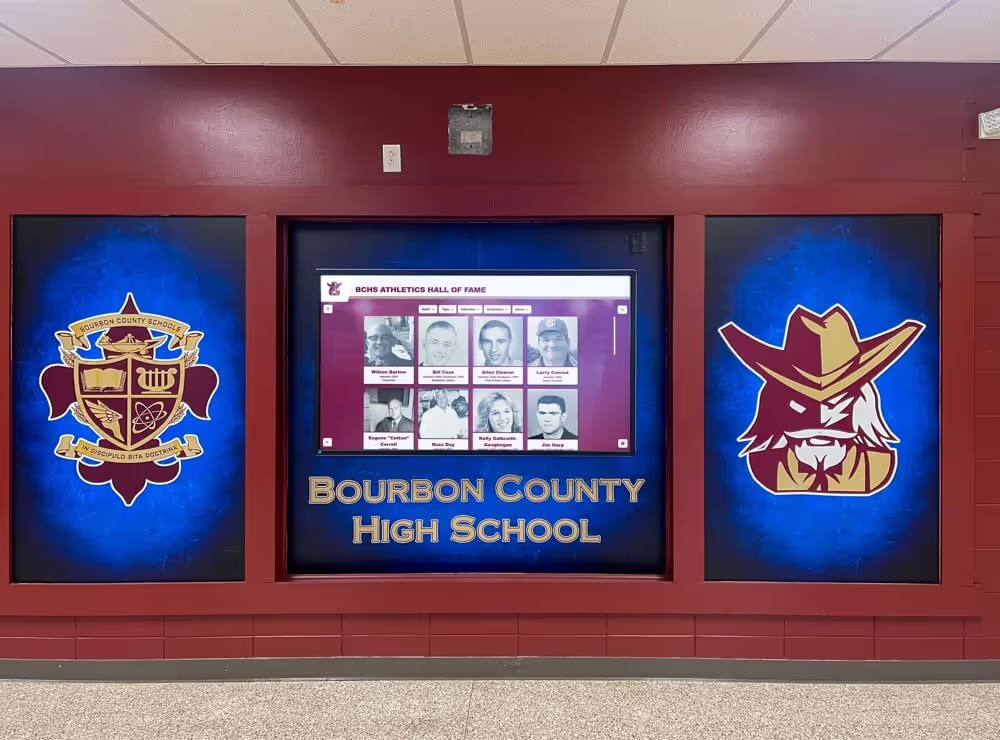
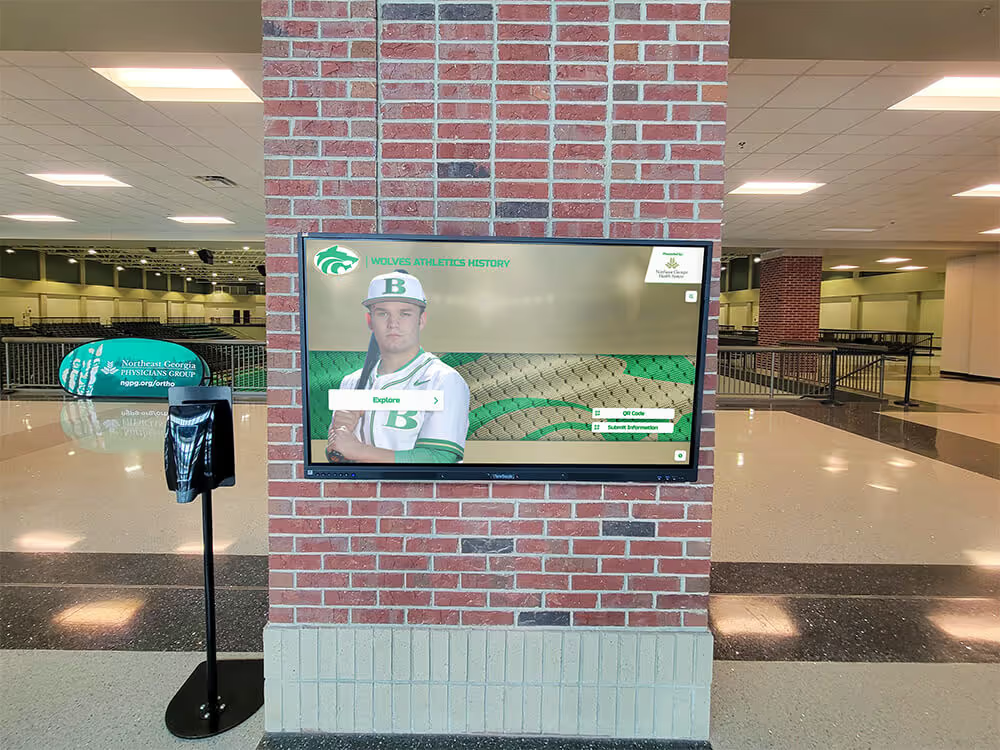
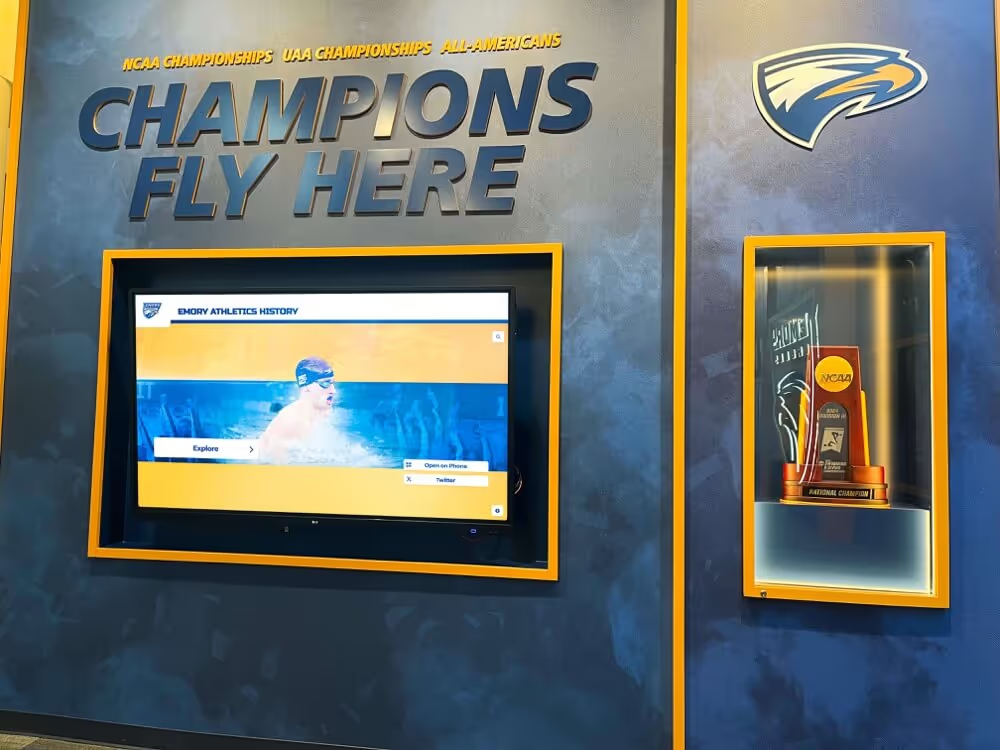
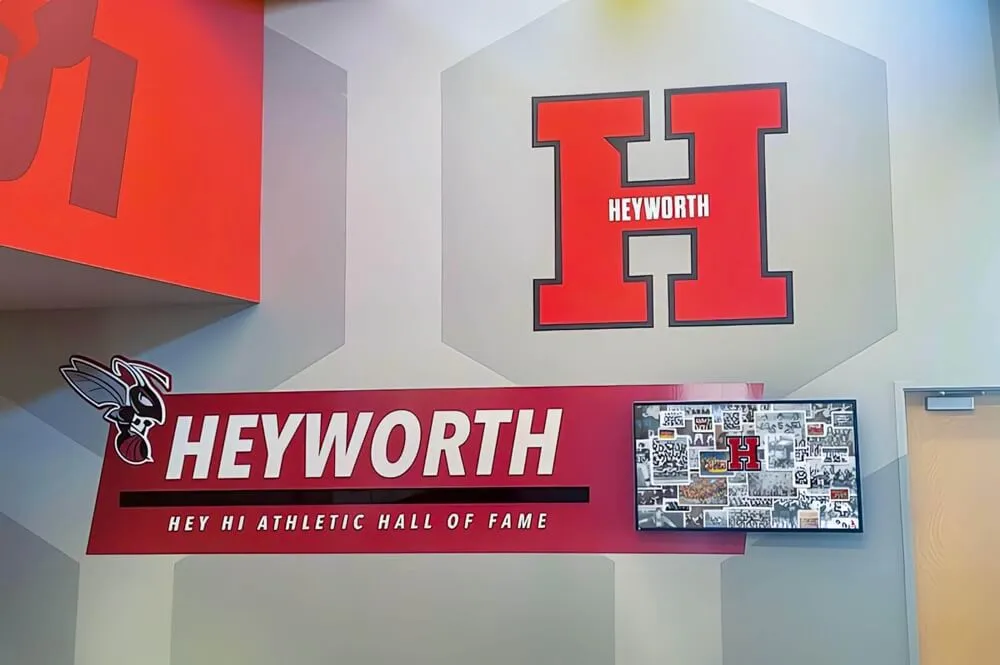
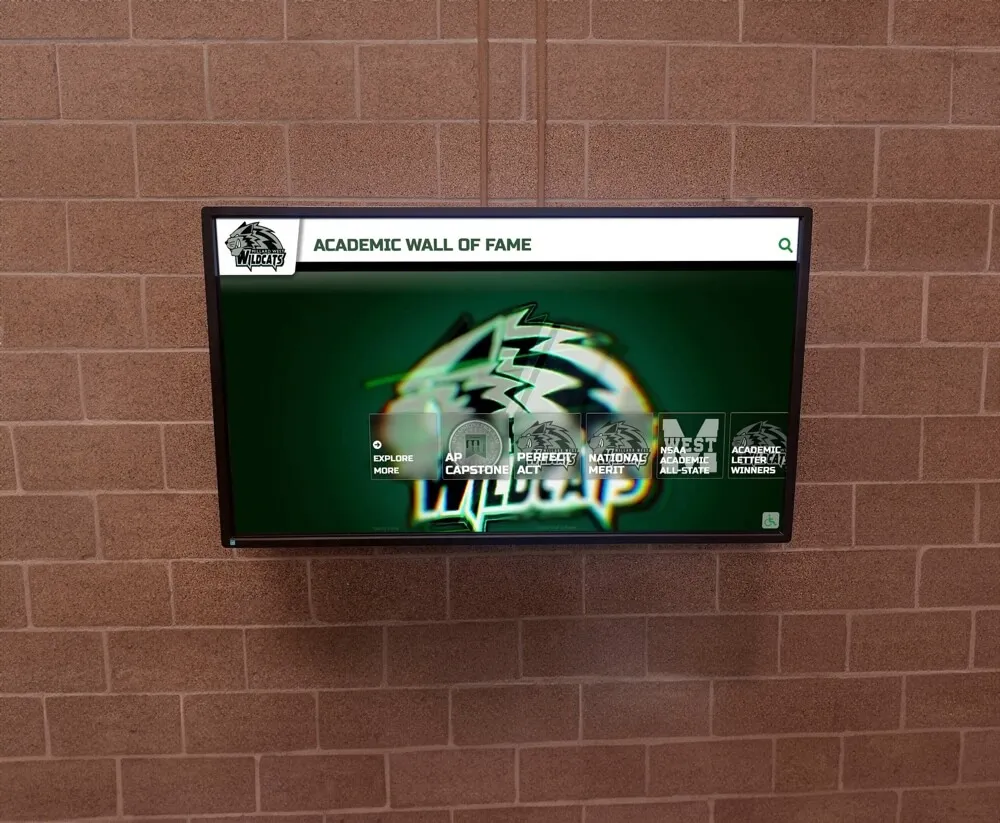
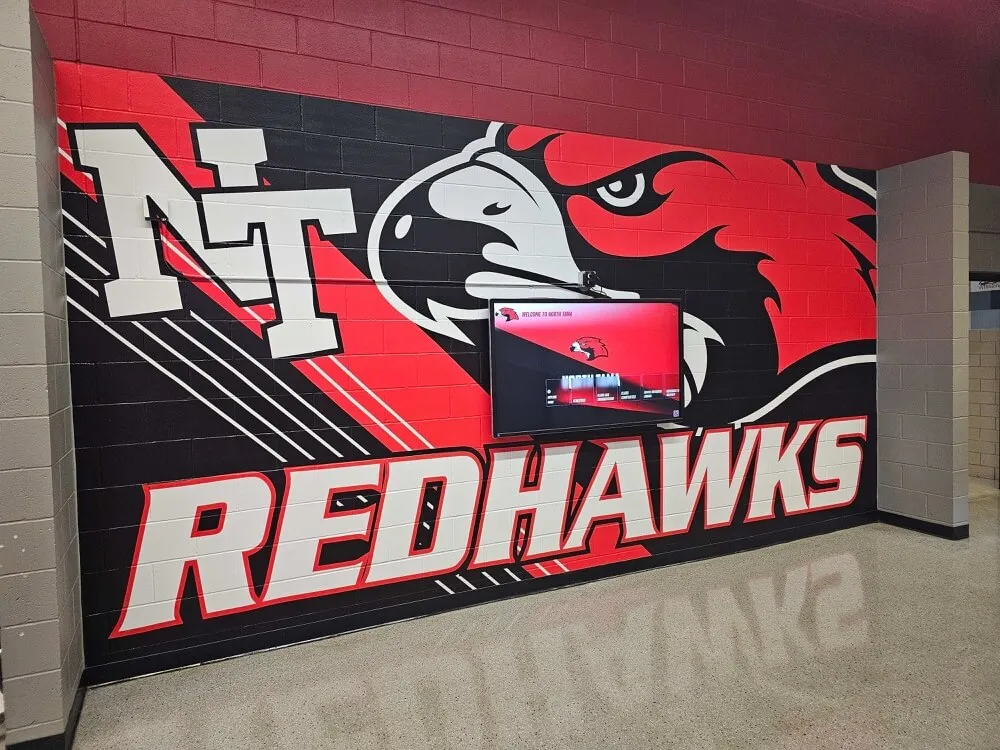
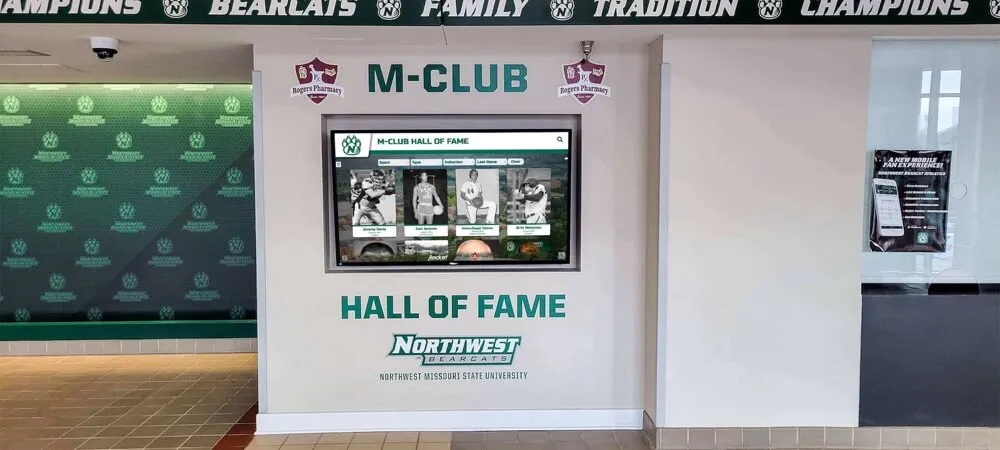
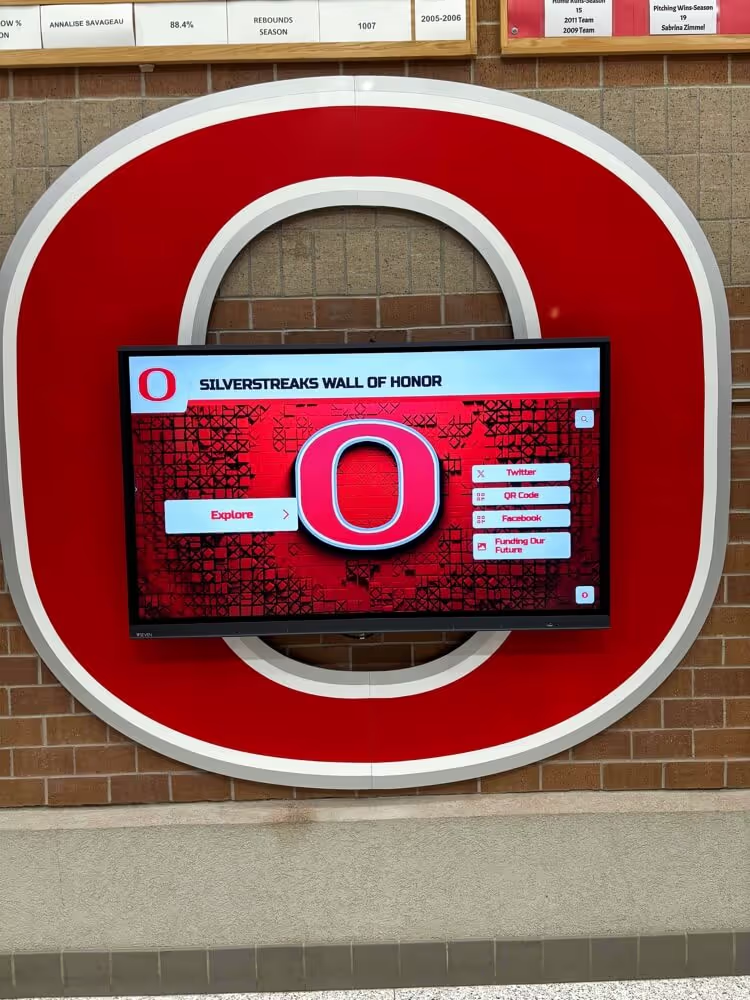
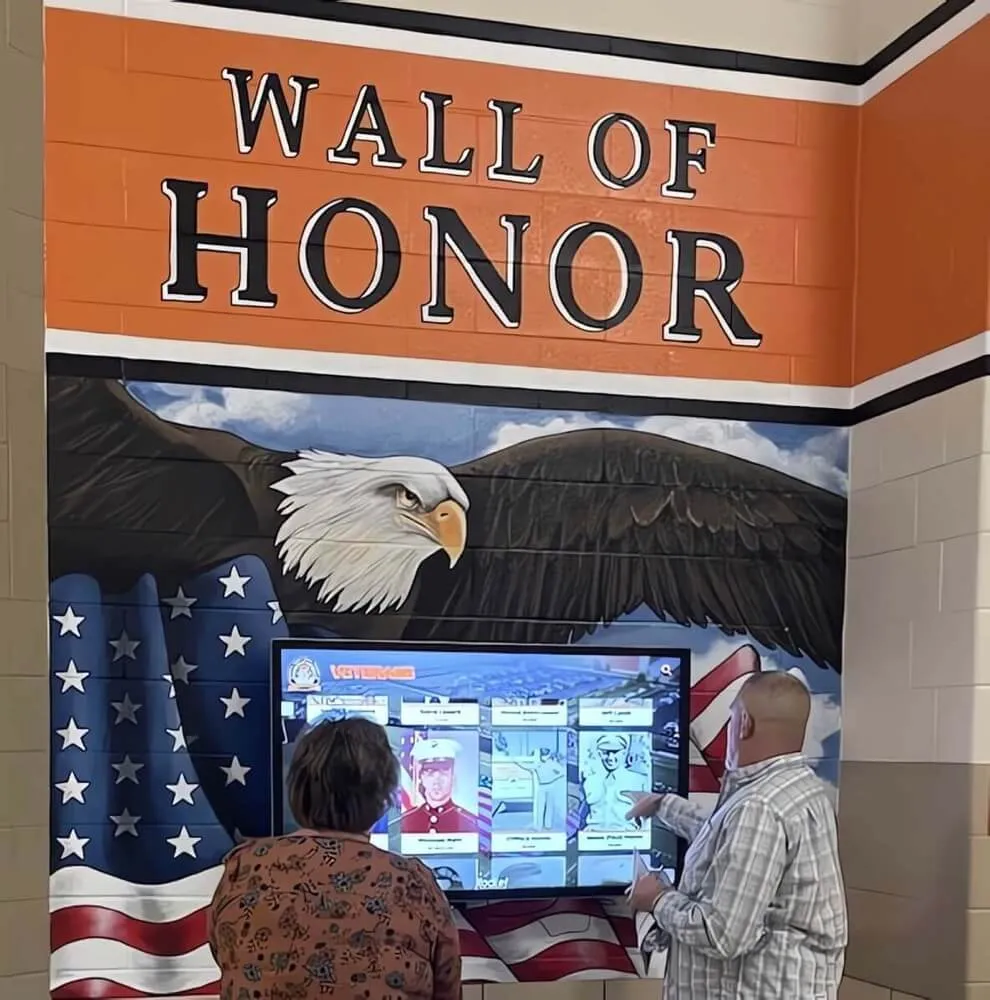
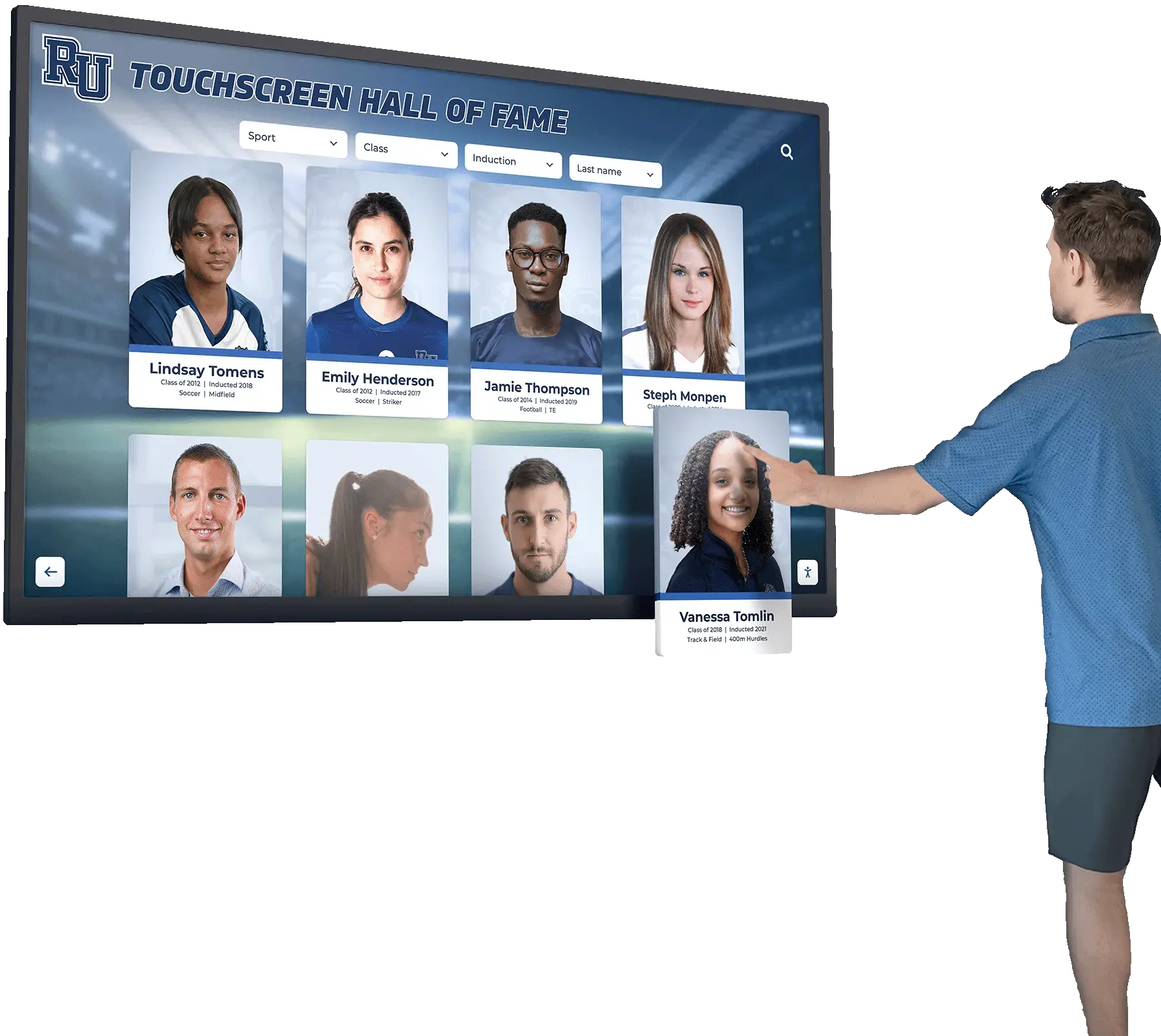
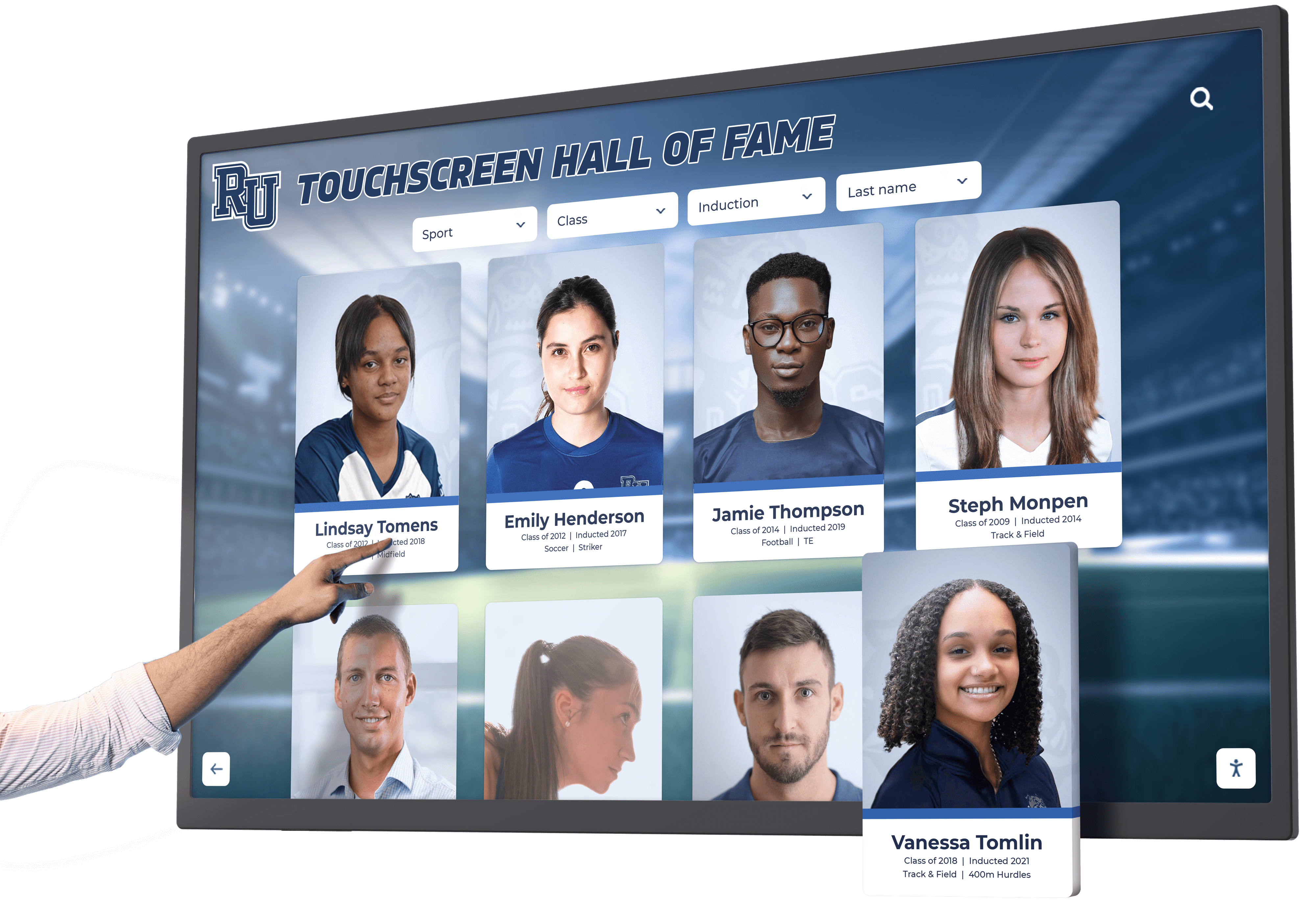
Interactive Touchscreen Displays: Commercial-grade touchscreen systems installed in basketball facilities enable comprehensive championship recognition without space constraints. Every championship season—from the inaugural 1906 title through last season’s conference tournament victory—can receive detailed recognition including:
- Complete team rosters with player photographs and statistics
- Season summaries with key wins and tournament results
- Championship game highlights and memorable moments
- Coach profiles and post-season awards
- Individual player achievements and career outcomes
- Historical context showing competitive landscape
This depth of content proves impossible with traditional physical displays. Digital systems accommodate unlimited championship content while maintaining clean, professional presentation that reflects program prestige.
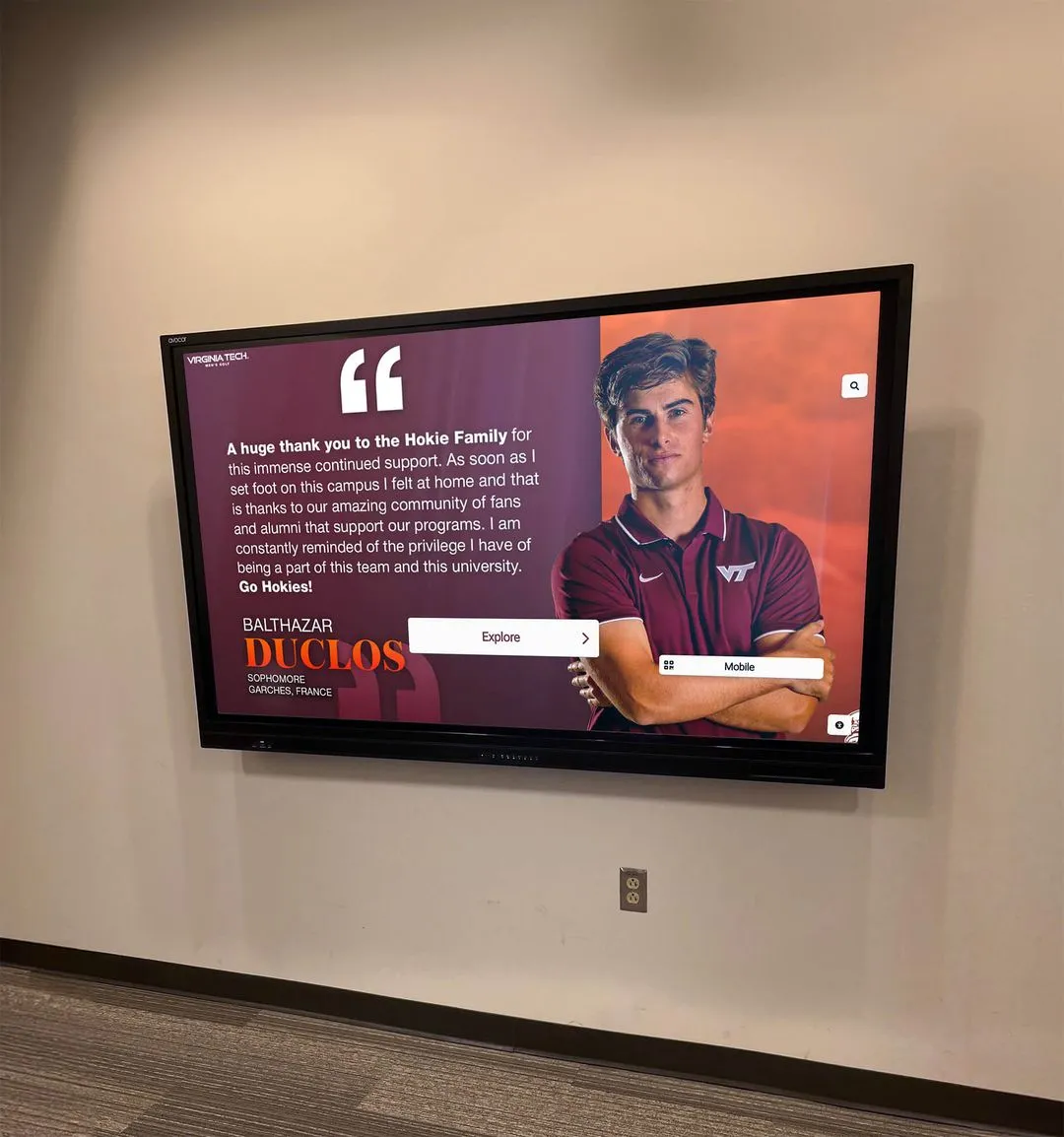
Multimedia Storytelling Capabilities: Modern recognition platforms integrate multiple content formats creating rich championship narratives:
- Video highlights of championship-clinching moments
- Audio interviews with championship team members
- Historical photographs from championship seasons
- Statistical visualizations showing team and player performance
- Archived newspaper articles and media coverage
- Social media content from championship celebrations

These multimedia elements transform championship recognition from documentation into compelling storytelling. When recruits visit campus and explore digital displays showing championship moments complete with game footage, player testimonials, and crowd reactions, they experience the program’s championship tradition rather than simply reading about it.
Searchable Championship Archives: Digital platforms enable intuitive discovery of championship content through multiple pathways:
- Chronological browsing by decade or season
- Searching for specific players, coaches, or opponents
- Filtering by championship type (regular season vs. tournament)
- Exploring connected content (player careers, coach tenures)
This searchability proves particularly valuable for programs with extensive championship histories. Alumni returning to campus can quickly find the specific championship teams they remember from their student days. Recruits can explore championships from their home states or high schools. Media members can rapidly research historical context for game previews or anniversary features.
Integration with Broader Athletic Recognition
The most effective championship recognition systems integrate Big Ten basketball achievements within comprehensive athletic recognition encompassing multiple sports and achievement types:
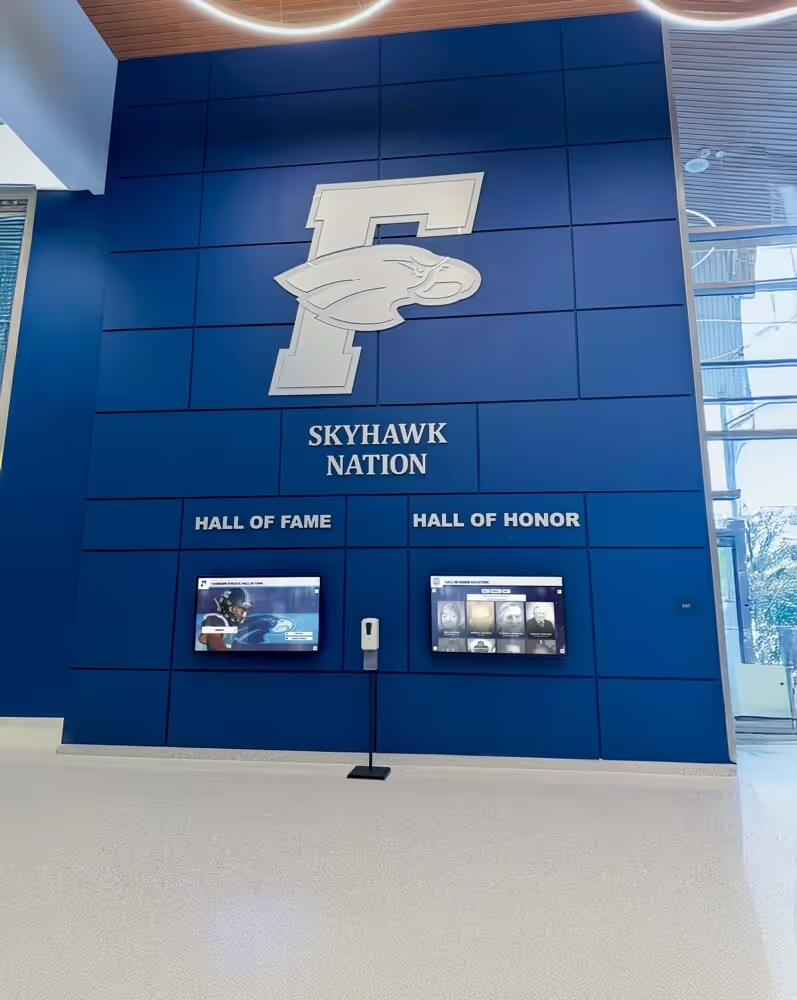
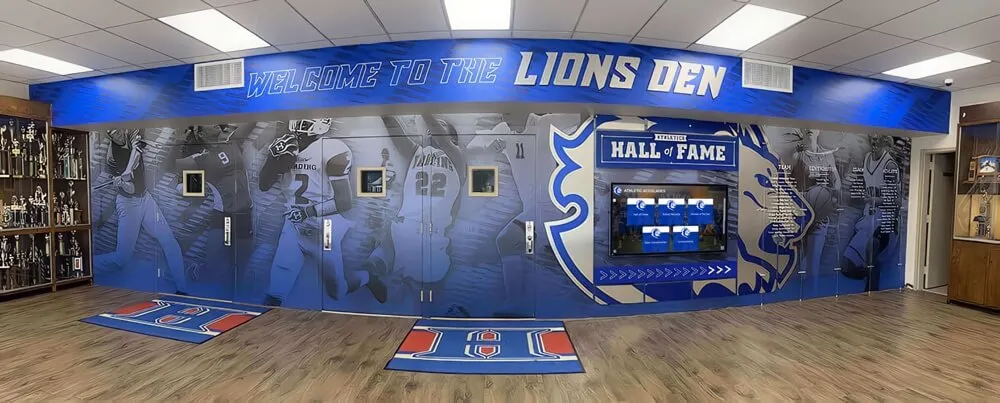
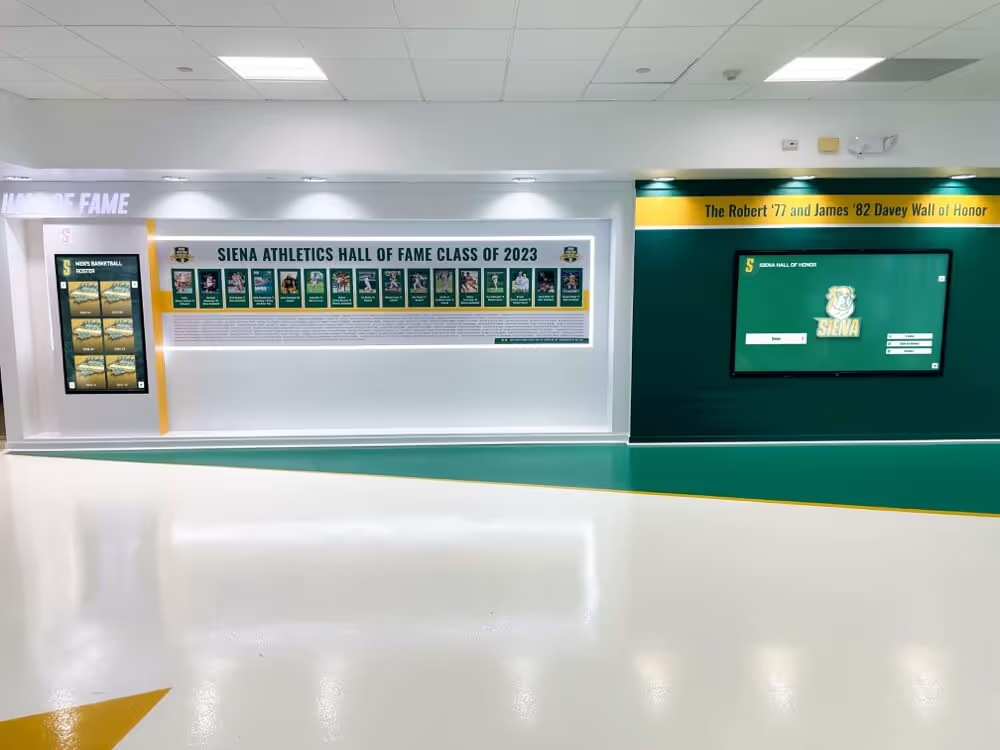
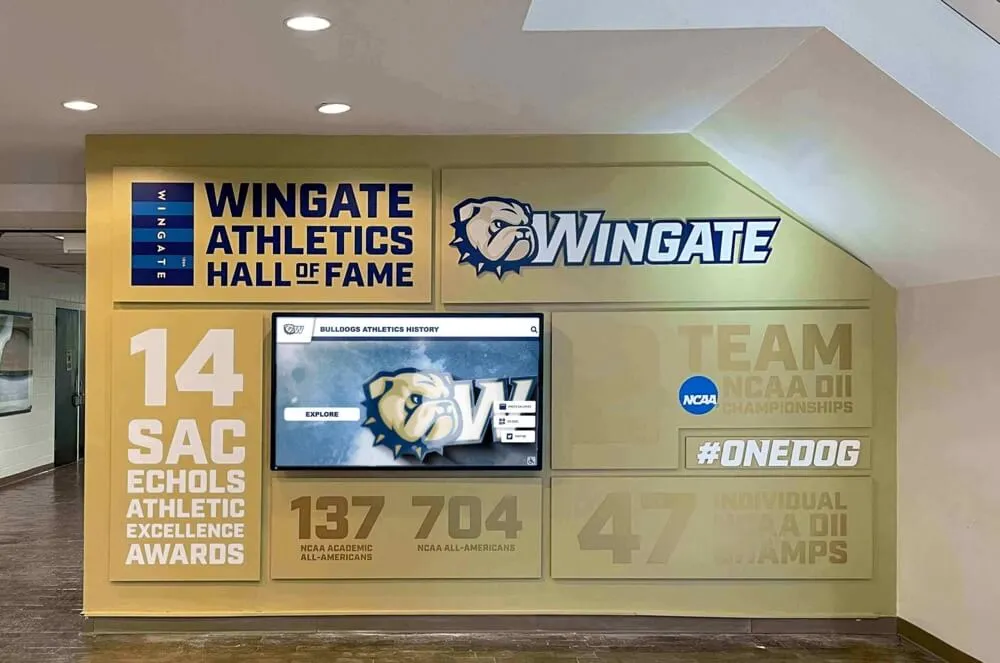
Athletic Halls of Fame: Many universities incorporate basketball championships into institutional athletic halls of fame that recognize individual inductees alongside team achievements. This integration demonstrates that championships result from collective contributions of exceptional individuals working together—connecting team and individual recognition meaningfully.
Championship teams often receive hall of fame recognition collectively, with milestone anniversaries providing opportunities for team reunions and ceremonial recognition. The integration ensures that championship achievement remains visible even decades later as programs continue evolving.
All-Sports Recognition: Universities increasingly implement all-sports recognition showing championship success across men’s and women’s sports, across multiple sports, creating institutional athletic narratives rather than sport-specific silos. Big Ten basketball championships appear alongside football conference titles, wrestling national championships, and Olympic sport excellence—demonstrating comprehensive athletic achievement.
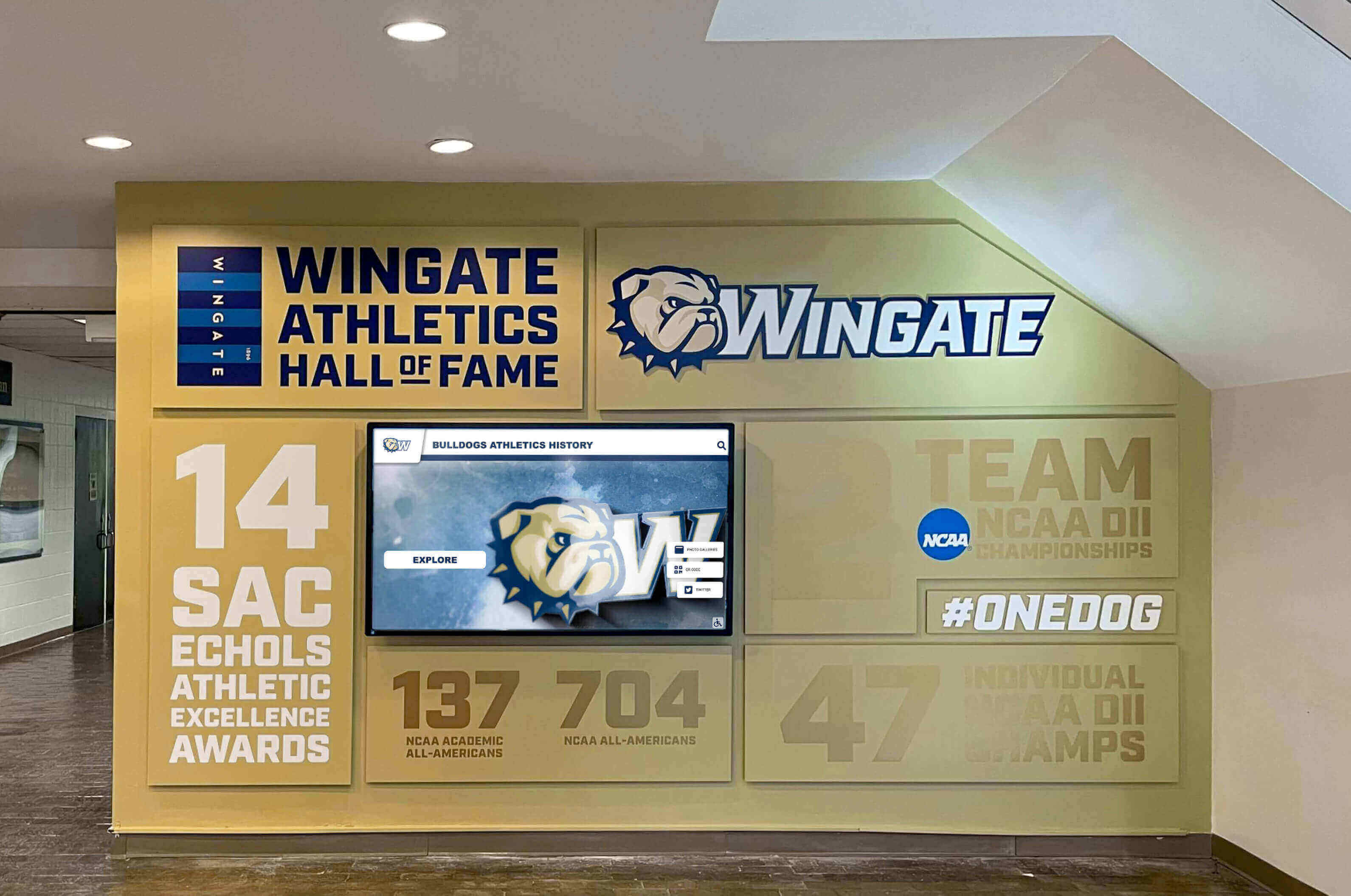
This comprehensive approach serves strategic objectives beyond simple recognition. It creates unified athletic department identity, demonstrates Title IX compliance through equitable recognition, appeals to diverse alumni constituencies, and showcases institutional commitment to excellence across all sports.
Facility-Wide Recognition Networks: Some Big Ten programs deploy multiple recognition displays throughout basketball facilities—lobby displays welcoming visitors with championship highlights, concourse displays during games showing historical moments, locker room displays inspiring current players, and practice facility recognition maintaining championship standards daily.
This distributed approach ensures championship recognition reaches audiences at optimal moments: recruits during facility tours, fans during games, and players during daily preparation. Solutions like Rocket Alumni Solutions provide cloud-based platforms enabling content consistency across multiple displays while allowing location-specific customization.
The Recruiting and Development Value of Championship Recognition
Comprehensive championship recognition delivers tangible benefits beyond honoring past achievement—it strengthens recruiting, enhances player development, and supports fundraising and alumni engagement initiatives.
Recruiting Impact and Championship Culture
Top high school basketball prospects evaluate numerous factors when selecting colleges: playing time opportunities, coaching staff quality, academic programs, campus environment, and crucially, program tradition and championship culture. Visible championship recognition provides tangible evidence of program excellence that influences recruiting conversations.
Facility Tour Moments: During official recruiting visits, facility tours represent critical opportunities to showcase program tradition. Interactive championship displays create memorable experiences where coaching staffs can:
- Show recruits championship moments from their birth years or home states
- Demonstrate player development pathways through championship rosters
- Highlight NBA careers launched from championship teams
- Create personal connections through searchable content
These interactive moments prove more memorable than passive viewing of championship banners. Recruits physically engaging with touchscreen displays exploring championship content creates experiential understanding of program tradition rather than abstract awareness.
Championship Culture Communication: Beyond specific championship facts, recognition systems communicate program culture and expectations. When recruits see decades of consistent championship recognition—not occasional success but sustained excellence—they understand the winning culture they’re joining.
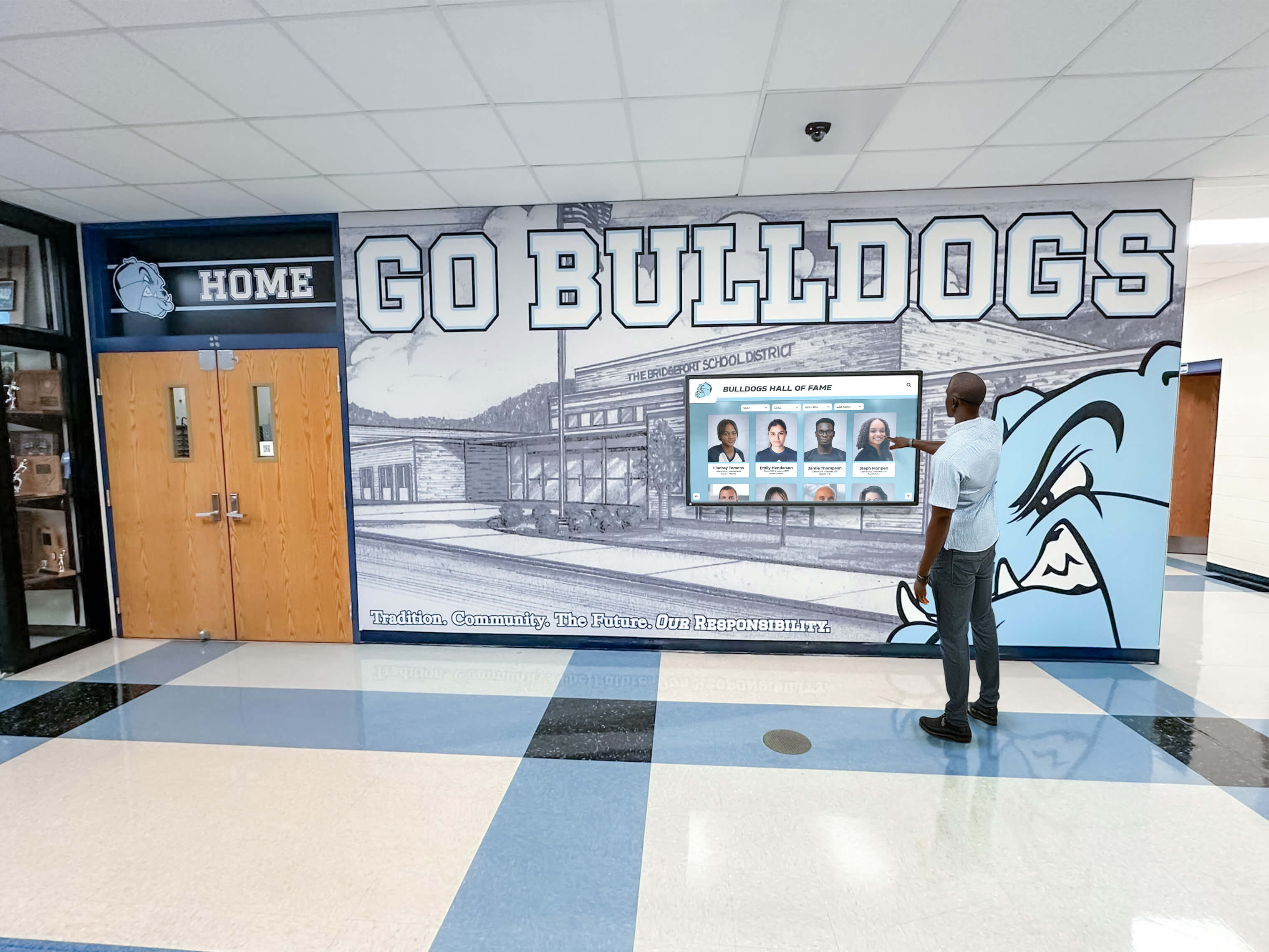
Programs with visible championship recognition can credibly message: “We don’t rebuild, we reload,” “Championship expectations never change,” or “You’ll compete for Big Ten titles every year.” This championship standard becomes self-reinforcing as recruits who value winning choose programs with demonstrated championship pedigree.
Competitive Positioning: Within the Big Ten, where most programs can tout winning tradition and conference championships, presentation quality matters. Programs with modern, comprehensive championship recognition demonstrate commitment to excellence in all aspects—not just on-court competition but also in how achievement is honored and preserved.
Recruits notice when programs invest in professional recognition systems versus outdated displays that feel neglected. The message sent through recognition quality extends beyond championships themselves to overall program investment and attention to detail.
Player Development and Motivation
Championship recognition serves current team members by establishing standards, providing inspiration, and creating tangible goals driving daily preparation.
Visual Standards: Championship displays in practice facilities create constant reminders of program expectations. When players arrive for 6 AM workouts, they’re greeted by championship moments showcasing the excellence required to achieve comparable success. This visual standard-setting helps coaches establish and maintain culture across recruiting classes and coaching staff changes.
Programs intentionally place championship recognition in player-accessible areas: locker rooms, training rooms, film rooms, and practice courts. The daily exposure keeps championship aspirations front-of-mind rather than abstract long-term goals. Athletic recognition programs research demonstrates that visible achievement recognition correlates with increased motivation and goal-directed behavior.
Historical Context and Perspective: Current players benefit from understanding program championship history. Digital recognition systems enable players to explore championships from different eras—learning how previous generations achieved success, what challenges they overcame, and how Big Ten basketball has evolved.
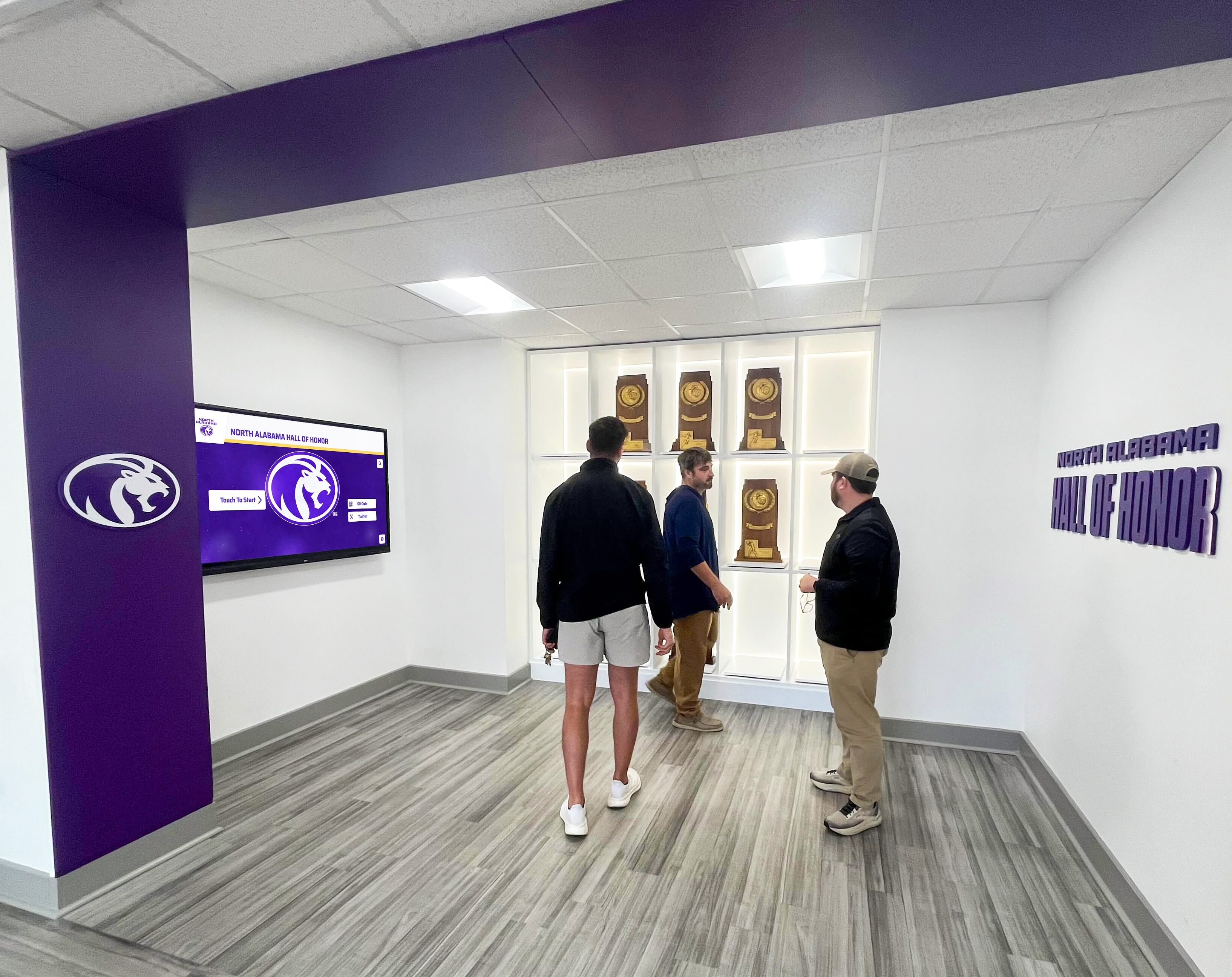
This historical perspective proves particularly valuable during difficult seasons. When teams struggle, championship history reminds players that success is possible—previous generations faced similar challenges and found championship solutions. The recognition provides tangible hope and inspiration during adversity.
Competitive Goals and Milestones: Championship recognition creates clear competitive goals for current teams. Rather than vague aspirations to “have a good season,” championship tradition establishes specific targets: compete for Big Ten championships, appear on championship recognition displays, join the program’s championship legacy.
These concrete goals influence daily behaviors. Players work harder in offseason training knowing that championship teams require exceptional preparation. They compete more intensely during practice understanding that championship rosters feature no weak links. The visible championship standard elevates daily expectations in measurable ways.
Strategic Recognition Planning for Athletic Departments
For Big Ten athletic departments and other institutions seeking to implement or enhance championship recognition systems, strategic planning ensures investments deliver maximum value across multiple stakeholder groups.
Assessment and Planning Phase
Effective recognition begins with systematic assessment of current state and strategic objectives:
Inventory Existing Recognition: Document all current championship recognition—banners, trophy cases, plaques, digital displays, and online archives. Evaluate condition, completeness, accessibility, and how well existing recognition serves current needs. Many programs discover significant gaps where championships lack adequate recognition or historical periods remain undocumented.
Stakeholder Input: Gather perspectives from diverse groups who interact with championship recognition:
- Current players and coaching staff on motivational impact
- Recruits and families on recruiting impressions
- Alumni on emotional connections and engagement value
- Development staff on fundraising applications
- Facilities managers on space constraints and maintenance
- Athletic communications staff on storytelling opportunities
This input reveals priorities and constraints that should inform recognition planning. Solutions serving only one stakeholder group miss opportunities for comprehensive value delivery.
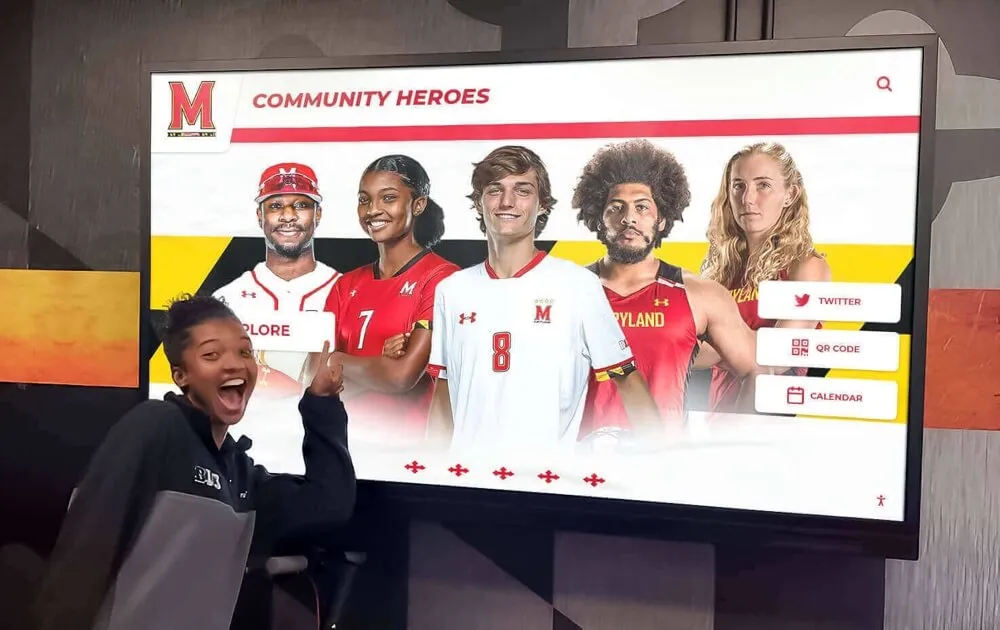
Content Audit: Assess available championship content—photographs, video footage, rosters, statistics, media coverage, and memorabilia. This audit reveals content gaps requiring research or collection efforts before recognition implementation. Programs discovering limited historical content can implement phased approaches adding historical depth over time as materials are located.
Budget and Resource Planning: Championship recognition investments vary dramatically based on scope and approach. Establish realistic budgets accounting for:
- Hardware costs for digital displays and installation
- Software platforms and annual licensing
- Content development including photography, videography, writing
- Ongoing maintenance and content updates
- Staff time for project management and content curation
Many athletic departments successfully fund championship recognition through combinations of athletic department capital budgets, booster club support, alumni fundraising campaigns, and corporate sponsorships. Donor recognition integration allows championship recognition projects to simultaneously honor athletic achievement and philanthropic support.
Technology Selection and Implementation
Choosing appropriate recognition technology significantly impacts long-term success and value:
Platform Evaluation Criteria: Athletic departments should evaluate recognition platforms against specific criteria:
- Content management ease for non-technical staff
- Multimedia support for photos, videos, statistics, and documents
- Scalability to accommodate growing championship history
- Integration with existing athletic department systems
- Analytics showing engagement and usage patterns
- Mobile and web access extending recognition beyond physical displays
- Vendor support, training, and platform evolution
- Total cost of ownership including hardware, software, and maintenance
Purpose-built athletic recognition platforms like Rocket Alumni Solutions provide sport-specific features—basketball roster displays, statistics integration, season summary templates—that generic digital signage systems lack. This specialization reduces implementation time and produces more professional results.
Hardware Considerations: Physical display hardware decisions affect both initial investment and long-term satisfaction:
- Screen size appropriate for viewing distances (55"-86" for most installations)
- Commercial-grade durability rated for continuous operation
- Touch technology supporting multi-user interaction
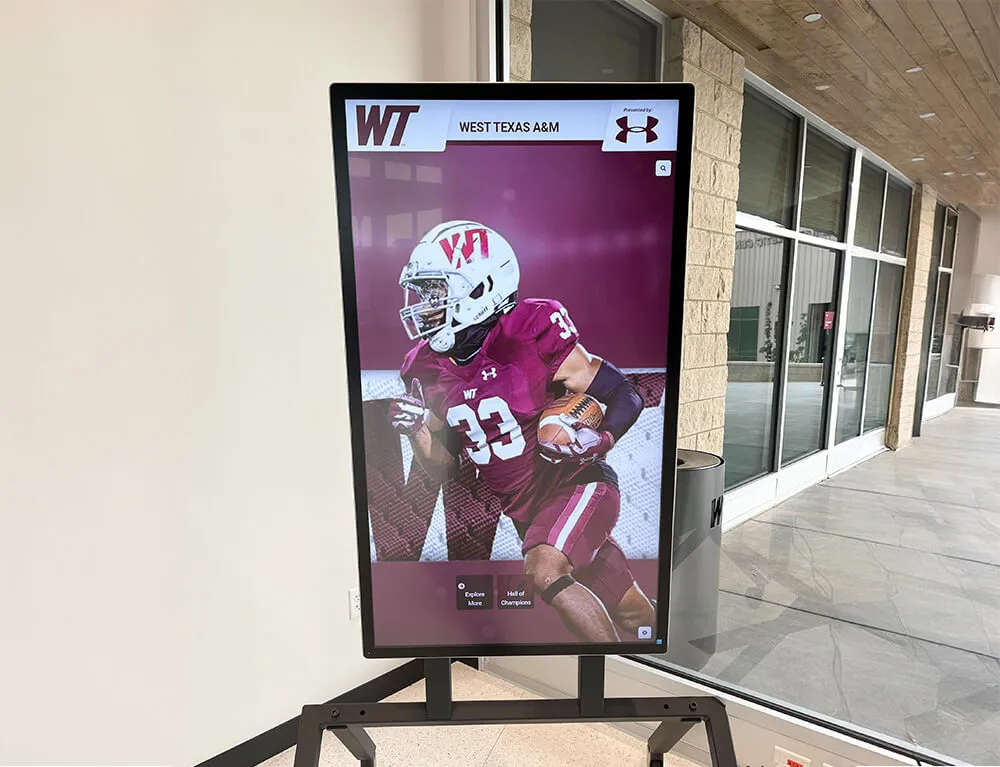
- Mounting options (wall-mounted, freestanding, ceiling-suspended)
- Network connectivity supporting content updates
- Integration with facility aesthetics and branding
Work with vendors experienced in athletic facility installations who understand the unique requirements of high-traffic basketball arenas and practice facilities. Professional installation ensures optimal performance and longevity while avoiding costly mistakes from inexperienced implementations.
Content Development Workflows: Sustainable recognition requires efficient content workflows:
- Designate responsibility for content creation and curation
- Establish content standards ensuring consistency and quality
- Create templates for common content types (championship seasons, player profiles)
- Implement approval processes maintaining content accuracy
- Schedule regular updates keeping recognition current
- Plan historical content development adding depth over time
Programs that fail to establish clear workflows often see initial enthusiasm followed by neglected displays with outdated content—undermining recognition value. Even part-time designated responsibility (5-10 hours monthly) proves dramatically more effective than assuming “someone” will maintain displays without specific assignment.
Integration with Advancement and Alumni Engagement
Championship recognition serves institutional advancement when strategically integrated with alumni relations and development programs:
Alumni Engagement Opportunities: Championship recognition creates natural touchpoints for alumni engagement:
- Reunion programming featuring championship team recognition
- Championship anniversary celebrations reuniting former players
- Online championship archives accessible to distant alumni
- Social media content celebrating championship moments
- Fundraising campaigns supporting championship recognition enhancement
Athletic departments collaborating with advancement offices create mutually beneficial programs where championship recognition supports alumni engagement goals while advancement resources fund recognition enhancements. This partnership approach often unlocks funding unavailable within athletic budgets alone.

Fundraising Applications: Championship recognition provides context for athletic giving conversations:
- Championship moments demonstrate impact of donor support
- Recognition naming opportunities for major gifts
- Championship teams featured in development campaign materials
- Former players inspired by recognition become donor prospects
Development professionals report that comprehensive championship recognition strengthens cultivation conversations by providing tangible examples of program excellence that philanthropic support enables. Rather than abstract requests for support, championship recognition grounds giving conversations in specific achievement donors helped make possible.
Community and Corporate Partnerships: Championship recognition creates visibility opportunities for corporate partners:
- Recognition displays acknowledging corporate sponsorships
- Championship content integration with partner marketing
- Hospitality opportunities around championship celebrations
- Community engagement through public access to championship history
These partnerships can help fund recognition investments while serving sponsor visibility objectives—creating value for both the athletic department and commercial partners.
Beyond the Big Ten: Applying Championship Recognition Principles
While this guide focuses on Big Ten championship basketball, the recognition principles and approaches apply across competitive levels and sports:
High School and Small College Recognition
High school basketball programs and small college athletics face similar recognition challenges and opportunities as major universities, scaled to their contexts:
Conference Championship Recognition: State conferences like Ohio’s OHSAA, Indiana’s IHSAA, or Illinois’ IHSA crown conference and sectional champions annually. These achievements deserve recognition comparable to Big Ten championships within their competitive contexts. High school athletic recognition systems celebrate conference titles, tournament success, and individual achievement milestones.
Budget-Appropriate Solutions: High schools and small colleges operate with dramatically different budgets than Big Ten programs, but modern recognition technology has democratized access to professional digital displays. Entry-level systems starting around $8,000-$12,000 provide comprehensive recognition capabilities previously available only to well-funded programs.
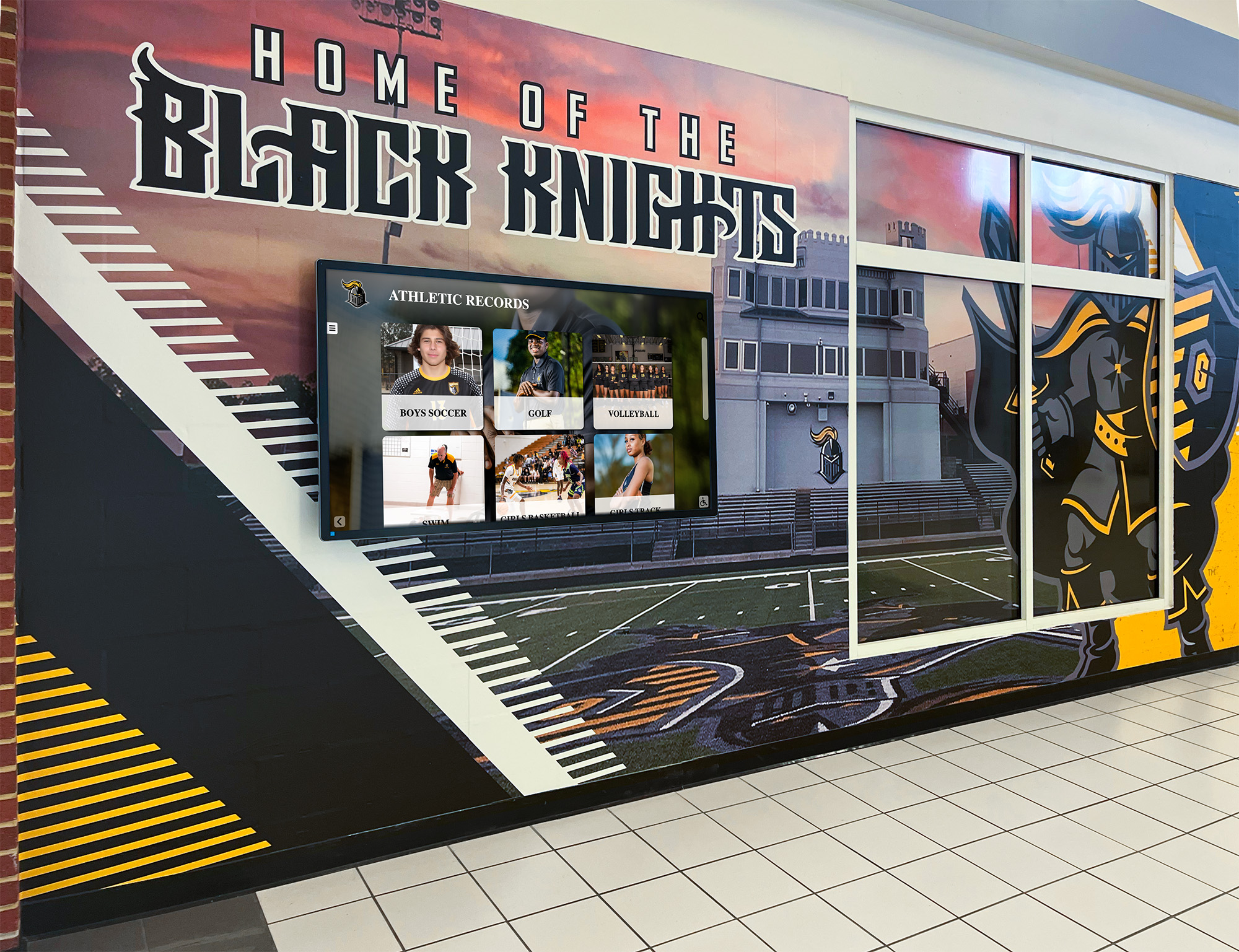
Many high schools successfully fund recognition through booster club initiatives, alumni campaigns, or corporate sponsorships. The permanent nature of digital recognition—serving programs for 10+ years—makes per-year costs modest compared to annual uniform expenses or equipment replacement.
Multi-Sport Recognition: Smaller programs often benefit from all-sports recognition systems celebrating championships across basketball, football, volleyball, and other sports within unified displays. This comprehensive approach maximizes recognition investment value while demonstrating balanced athletic excellence.
Recognition Beyond Championships
Comprehensive athletic recognition extends beyond team championships to honor individual achievement, program milestones, and community contributions:
Individual Achievement Recognition: Basketball 1,000-point scorers, All-Conference selections, and individual award winners deserve recognition alongside team championships. Modern platforms accommodate both team and individual achievement within integrated recognition systems.
Program History and Tradition: Beyond championship seasons, recognition can document complete program history—coaching tenures, facility evolution, notable games, and community impact. This comprehensive historical preservation serves educational purposes while strengthening institutional memory.
Academic and Character Recognition: Many programs integrate academic All-Conference recognition, community service awards, and character honors within athletic recognition systems. This holistic approach communicates that athletic programs value dimensions beyond competitive success—appealing to families and supporting balanced student-athlete development.
Conclusion: Honoring Championship Excellence for Future Generations
Big Ten championship basketball represents the pinnacle of conference achievement in college basketball—earned through months of competitive excellence against the nation’s toughest competition. These championships deserve recognition that matches their significance: celebration that honors past achievement, inspires current players, strengthens recruiting, engages alumni, and preserves program history for generations.

The evolution from simple championship banners to comprehensive digital recognition systems reflects changing expectations for how programs celebrate excellence. Modern audiences—student-athletes, recruits, alumni, and fans—expect engaging multimedia experiences that tell complete championship stories rather than basic documentation.
Athletic departments that invest in professional championship recognition systems deliver multiple strategic benefits: enhanced recruiting through visible program tradition, improved player development through championship culture reinforcement, strengthened alumni engagement through accessible program history, and fundraising support through tangible demonstration of program excellence.
Whether your institution competes in the Big Ten, another major conference, or state and regional competitions, championship achievement deserves lasting recognition. From Big Ten Tournament trophies in major arena concourses to conference championship banners in high school gymnasiums, every championship represents extraordinary dedication, skill development, and competitive success worthy of celebration.
Ready to transform how your program celebrates championship basketball and athletic excellence? Modern recognition solutions provide comprehensive platforms that honor achievement while inspiring future champions to add their own chapters to program history.
Explore championship recognition solutions designed specifically for honoring basketball excellence and building championship culture through professional recognition displays.