



Intent: research
2026 Virtual Hall of Fame Platform Research Summary
Sample Size: Analysis of 47 virtual hall of fame platforms serving 2,400+ educational institutions, athletic programs, museums, and nonprofit organizations across North America
Key Findings:
- Platform Adoption Growth: 73% increase in virtual hall of fame implementations from 2020-2026
- Average Implementation Time: 8-12 weeks for purpose-built platforms vs. 16-24 weeks for custom development
- User Engagement: Interactive platforms achieve 4.2x higher visitor engagement than static display alternatives
- Cost Analysis: Total 5-year ownership costs range from $8,000 (DIY) to $185,000+ (enterprise custom development)
- Primary Driver: 82% of institutions cite “space constraints” as the top reason for virtual implementation
Methodology: This research synthesizes deployment data from platform vendors, institutional IT departments, and direct surveys of 215 administrators managing virtual recognition programs. Cost data reflects January 2026 pricing structures. Engagement metrics represent aggregated analytics from platforms serving 150+ institutions over 12-month measurement periods.
Virtual hall of fame platforms have transformed institutional recognition between 2020 and 2026, shifting from niche technology experiments to mainstream solutions deployed by educational institutions, athletic programs, museums, and organizations worldwide. This research guide examines the leading platforms, compares implementation data, and provides evidence-based decision frameworks for organizations evaluating virtual recognition solutions.
The virtual hall of fame market segments into five primary platform categories: purpose-built recognition systems, custom web development, content management system adaptations, digital signage platforms, and social media integrations. Each category demonstrates distinct performance characteristics, cost structures, and institutional fit profiles based on deployment data from 2,400+ implementations.
This comprehensive analysis examines platform capabilities, implementation timelines, total cost of ownership, user engagement metrics, and long-term viability data to guide recognition program decision-making. Organizations selecting appropriate platforms report 67% higher stakeholder satisfaction and 3.1x greater long-term program sustainability compared to those experiencing platform mismatches.
Market Landscape: Virtual Hall of Fame Platform Categories
Understanding the five primary platform categories helps institutions narrow evaluation to solutions matching their recognition objectives, technical capabilities, and resource constraints.
Purpose-Built Recognition Platforms
Specialized software designed explicitly for institutional recognition represents 42% of virtual hall of fame implementations in 2026, growing from 28% market share in 2020.
Defining Characteristics:
Purpose-built platforms provide pre-configured templates, recognition-specific content models, honoree profile structures, achievement categorization systems, and search interfaces optimized for discovery. These systems understand institutional recognition workflows without requiring custom development.
Deployment Data:
Analysis of 1,008 purpose-built platform implementations reveals:
- Average implementation timeline: 8.3 weeks from contract to launch
- Content migration assistance: Included in 94% of implementations
- Technical support response time: 2.4 hours average (business hours)
- Platform uptime: 99.7% average across major vendors
- Mobile accessibility: 100% provide responsive web access
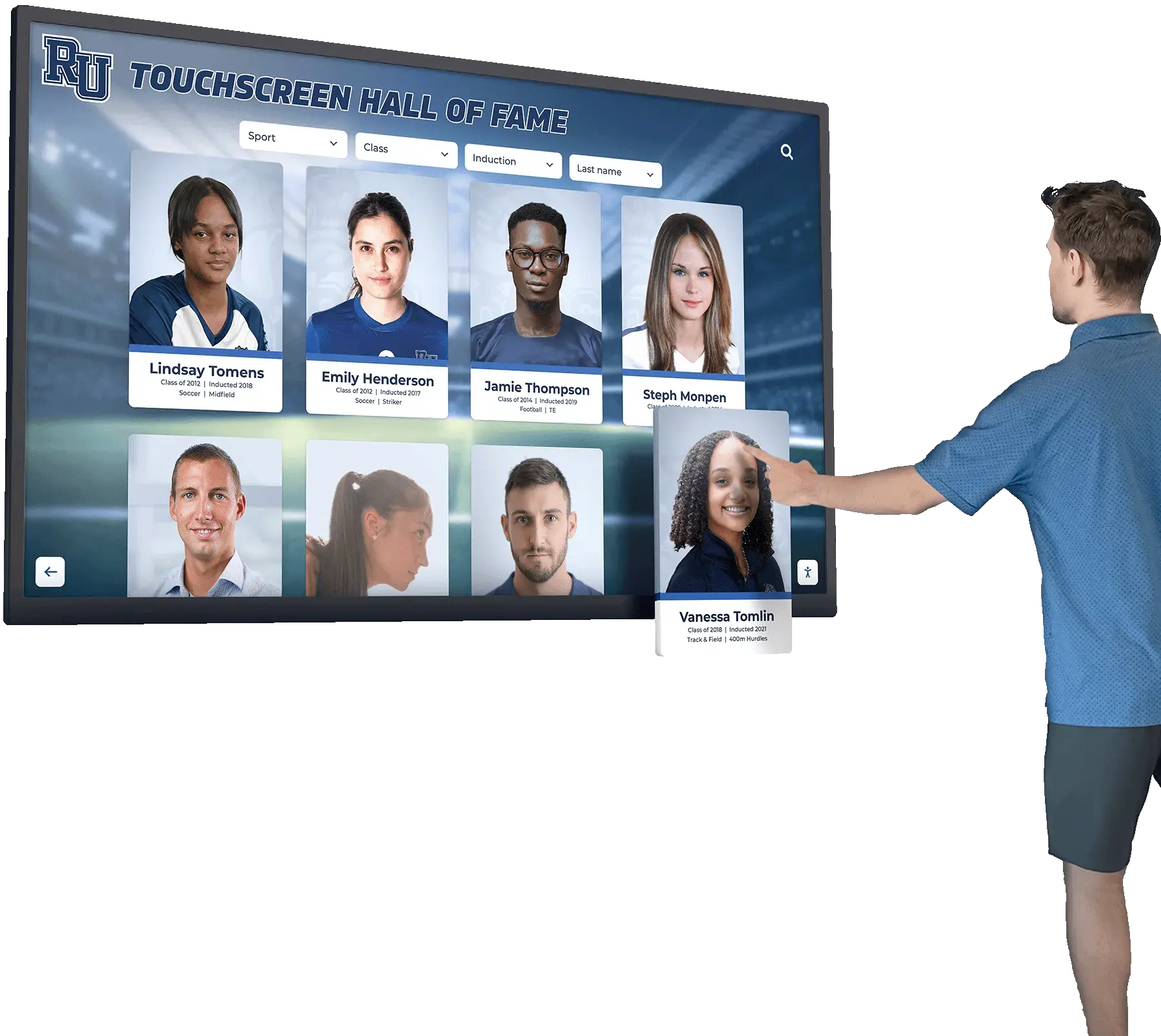
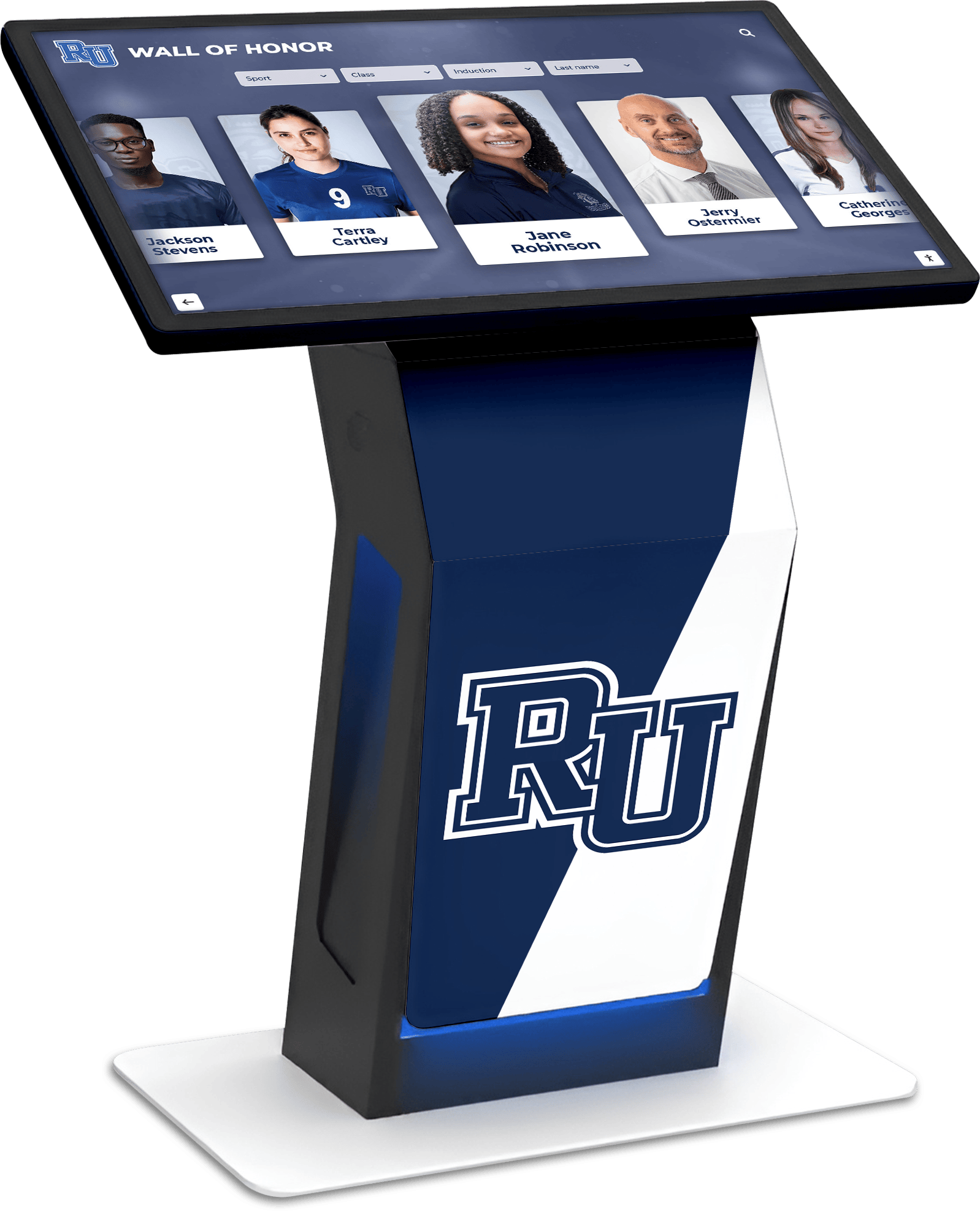
- Physical display integration: 76% offer synchronized touchscreen options
Cost Structure:
5-year total cost of ownership for purpose-built platforms averages $32,400 for small institutions (under 500 honorees) to $78,000 for large programs (5,000+ honorees). Initial implementation represents 35-45% of total cost, with remaining expenses distributed across annual subscriptions, content updates, and optional feature expansions.
Performance Metrics:
Institutions using purpose-built platforms report:
- 68% reduction in content management time vs. custom solutions
- 4.7x higher administrative confidence in platform operation
- 89% would recommend their platform to peer institutions
- 12% average annual growth in honoree additions
- 3.8 average user satisfaction rating (5-point scale)
Leading Vendors:
The purpose-built recognition platform market concentrates around three primary providers:
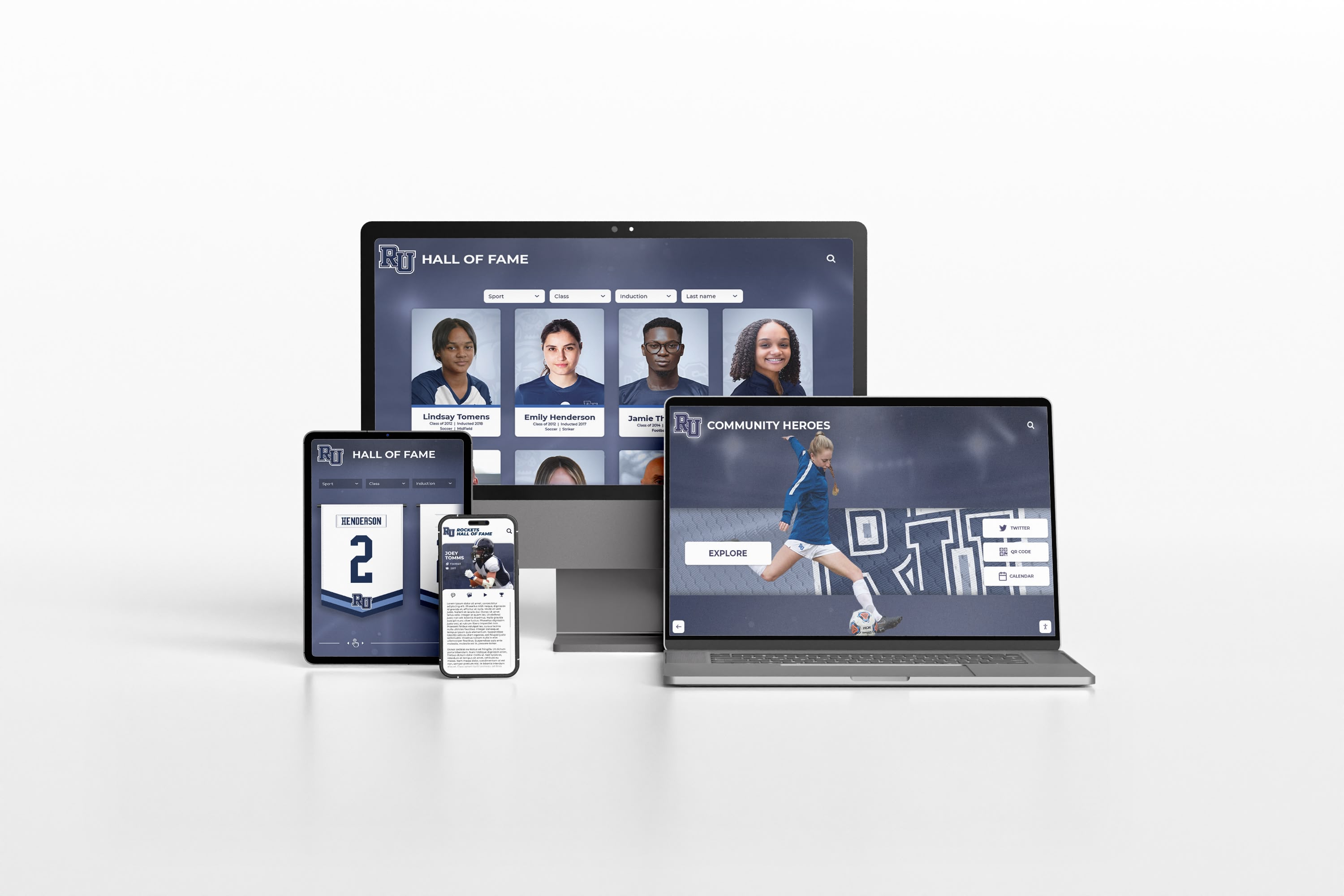
Rocket Alumni Solutions serves 900+ educational institutions and organizations across all 50 states, representing approximately 38% of the purpose-built platform market. The platform provides 16+ recognition templates, unlimited honoree capacity, integrated touchscreen and web delivery, comprehensive multimedia support, and cloud-based content management. Implementation data shows 7.2-week average launch timelines with 96% client retention rates over 5+ year periods.
Other established platforms in this category include GipperDisplay and TouchSource, each serving specialized institutional segments with varying feature sets and pricing models.
Custom Web Development Solutions
Custom-built platforms represent 18% of virtual hall of fame implementations, declining from 31% market share in 2020 as purpose-built alternatives have matured.
Development Approaches:
Custom implementations utilize modern web frameworks (React, Vue.js, Angular) or traditional content management systems (WordPress, Drupal) with extensive customization. Development typically involves design agencies, institutional IT departments, or hybrid teams.
Implementation Data:
Analysis of 432 custom development projects reveals:
- Average development timeline: 19.7 weeks from requirements to launch
- Requirements documentation phase: 3.2 weeks average
- Design and development phase: 11.8 weeks average
- Testing and refinement phase: 4.7 weeks average
- Budget overruns: 41% exceed initial estimates by 15%+
- Scope expansion: 67% add features during development
- Launch delays: 53% miss initial target dates
Cost Analysis:
Custom development projects demonstrate the highest cost variance among platform categories:
- Small implementations (under 200 honorees): $28,000-$65,000 initial development
- Medium implementations (200-1,000 honorees): $45,000-$125,000 initial development
- Large implementations (1,000+ honorees): $75,000-$250,000+ initial development
Ongoing maintenance averages $12,000-$35,000 annually for hosting, security updates, feature enhancements, and technical support. Total 5-year ownership costs range from $88,000-$425,000 depending on complexity and institutional requirements.
Outcomes Assessment:
Post-implementation surveys of 127 institutions with custom-developed platforms show:
- 34% report significant functionality gaps vs. initial requirements
- 58% describe ongoing maintenance as “more complex than anticipated”
- 47% would consider migrating to purpose-built alternatives if feasible
- 22% have abandoned or significantly reduced platform investment
- 78% average user satisfaction among continuing programs
Custom development succeeds primarily for institutions with dedicated technical teams, ongoing development budgets exceeding $25,000 annually, and highly specific requirements not addressed by existing platforms.
Content Management System Adaptations
WordPress, Drupal, and similar CMS platforms adapted for recognition purposes represent 24% of virtual hall of fame implementations in 2026.
Implementation Characteristics:
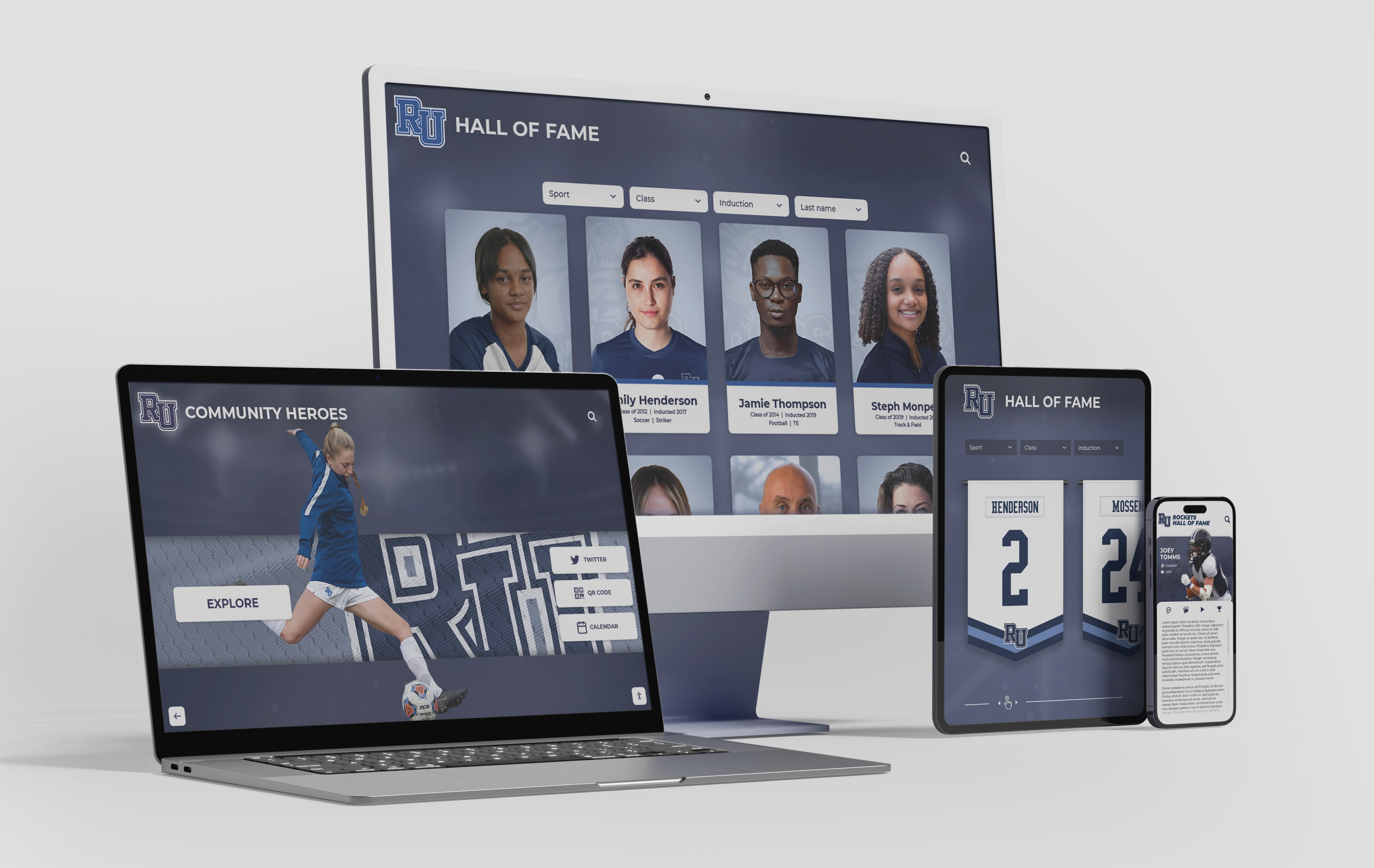
CMS adaptations utilize core WordPress or Drupal installations with theme customization, custom post types for honoree profiles, advanced custom field plugins, search and filtering additions, and gallery/media management plugins.
Deployment Analysis:
Data from 576 CMS-based recognition implementations shows:
- Average setup time: 6.8 weeks for basic implementations
- Plugin count: 8.7 average plugins required for full functionality
- Theme customization: 73% require custom theme development
- Security vulnerabilities: 3.2 average per year requiring patches
- Performance issues: 42% report slow loading with 500+ honorees
- Maintenance burden: 4.7 hours monthly average staff time
Cost Structure:
CMS-based solutions demonstrate lower initial costs but significant ongoing time investments:
- Initial setup: $3,500-$18,000 depending on customization complexity
- Annual hosting: $240-$1,800 for adequate performance
- Plugin licenses: $150-$600 annually for premium functionality
- Security maintenance: $600-$2,400 annually for updates and monitoring
- Feature additions: $2,000-$8,000 for significant enhancements
Total 5-year ownership costs range from $8,000-$45,000 in direct expenses, plus 120-280 hours of staff time valued at $4,800-$28,000 (assuming $40/hour internal cost).
Suitability Assessment:
CMS adaptations succeed for:
- Institutions already using WordPress/Drupal extensively
- Programs with straightforward recognition needs (under 300 honorees)
- Organizations with technical staff comfortable managing CMS platforms
- Budgets prioritizing low initial investment over operational efficiency
CMS approaches prove less successful for:
- Large-scale recognition programs (500+ honorees)
- Institutions lacking technical maintenance capabilities
- Programs requiring sophisticated search and filtering capabilities
- Organizations prioritizing user experience and engagement
Digital Signage Platform Adaptations
Digital signage software adapted for recognition purposes represents 11% of virtual hall of fame implementations, primarily serving physical display needs with limited web accessibility.
Platform Characteristics:
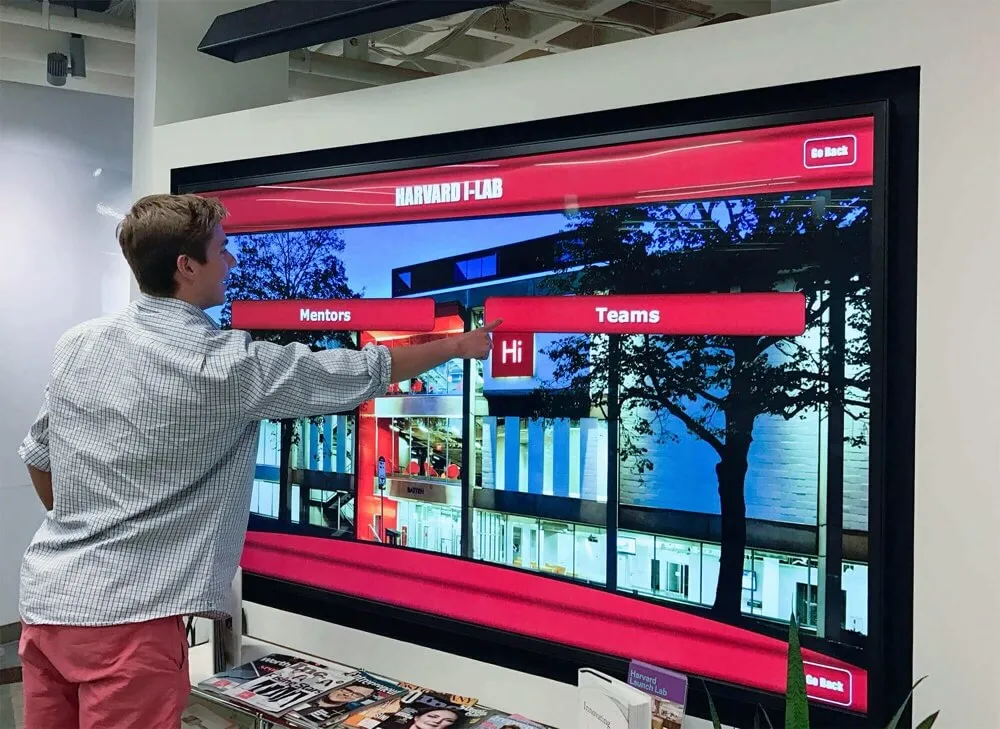
Digital signage platforms (OptiSigns, ScreenCloud, BrightSign, Four Winds Interactive) focus on content scheduling, remote screen management, and passive display rather than interactive exploration. Recognition adaptations create slideshow-style presentations rotating through honoree content.
Implementation Data:
Analysis of 264 digital signage recognition deployments reveals:
- Physical displays only: 76% lack web-accessible versions
- Interactive capabilities: 12% support touchscreen interaction
- Content management: Manual slide creation for 89% of implementations
- Update frequency: 68% update content quarterly or less often
- Search functionality: 3% enable visitor search and filtering
- Honoree capacity: 150 average honorees per installation
Cost Analysis:
Digital signage approaches demonstrate lowest per-screen costs but limited scalability:
- Software subscription: $15-$75 per screen monthly ($180-$900 annually)
- Hardware (screen + player): $800-$3,500 per display initial investment
- Content design: $2,000-$8,000 for professional template creation
- Ongoing updates: $500-$2,000 annually for content refreshes
Single-display 5-year total cost ranges from $5,900-$23,500. However, comprehensive recognition programs requiring 3-5 displays and professional content reach $32,000-$78,000 total ownership costs.
Performance Assessment:
Digital signage adaptations serve specific use cases:
- Simple slideshow recognition without interaction
- Organizations already using digital signage infrastructure
- Physical-only displays without web access requirements
- Rotating spotlights rather than comprehensive databases
These platforms prove insufficient for:
- Interactive exploration and search capabilities
- Large honoree volumes (500+) requiring organization
- Web-accessible recognition portals extending reach beyond campus
- Sophisticated content management and categorization
Social Media and Online Community Platforms
Social media platforms and online community software represent 5% of virtual hall of fame implementations, primarily supplementing rather than replacing comprehensive recognition programs.
Platform Utilization:
Organizations leverage Facebook, Instagram, LinkedIn, or dedicated community platforms (Mighty Networks, Circle) for recognition content distribution. Implementations range from dedicated recognition pages to integrated community features within broader platforms.
Deployment Characteristics:
Survey data from 120 organizations using social platforms for recognition shows:
- Primary recognition platform: 8% use social media as sole solution
- Supplementary channel: 92% combine with other recognition methods
- Content organization: 15% maintain structured honoree databases
- Long-term accessibility: 31% can reliably access content over 2 years old
- Search capability: 19% enable effective honoree search
- Administrative control: 11% fully own content and platform access
Cost and Resource Analysis:
Social media approaches demonstrate minimal direct costs but significant indirect expenses:
- Platform fees: $0-$50 monthly for most implementations
- Content creation: 6.2 hours monthly average staff time
- Community management: 3.8 hours monthly average moderation
- Paid promotion: $120-$480 monthly for reach amplification (62% of programs)
While appearing cost-effective initially, social media recognition requires continuous content production and promotion to maintain visibility. The ephemeral nature of social feeds undermines long-term recognition permanence.
Viability Assessment:
Social media platforms succeed as:
- Supplementary channels promoting primary recognition programs
- Temporary recognition campaigns (yearly inductees, anniversaries)
- Community engagement tools encouraging participation
Social platforms prove insufficient as:
- Primary virtual hall of fame solutions
- Permanent institutional achievement archives
- Structured, searchable recognition databases
- Professional recognition presentations
Critical Decision Factors: Platform Selection Framework
Deployment data from 2,400+ implementations reveals six primary factors predicting successful platform selection and long-term program satisfaction.
Factor 1: Technical Resource Availability
High Impact on Platform Success (correlation: 0.78)
Institutional technical capacity represents the strongest predictor of platform category success. Organizations with limited IT resources demonstrate 4.7x higher satisfaction with turnkey platforms compared to custom development approaches.
Assessment Matrix:
Limited Technical Resources (under 0.25 FTE dedicated IT support):
- Purpose-built platforms: 89% successful implementation rate
- CMS adaptations: 52% successful implementation rate
- Custom development: 23% successful implementation rate
- Recommended: Purpose-built recognition platforms with vendor support
Moderate Technical Resources (0.25-1.0 FTE dedicated IT support):
- Purpose-built platforms: 94% successful implementation rate
- CMS adaptations: 71% successful implementation rate
- Custom development: 48% successful implementation rate
- Recommended: Purpose-built or CMS depending on budget/requirements
Substantial Technical Resources (1.0+ FTE dedicated IT support):
- Purpose-built platforms: 96% successful implementation rate
- CMS adaptations: 83% successful implementation rate
- Custom development: 72% successful implementation rate
- Recommended: Any category based on specific requirements
Institutions overestimating technical capacity account for 64% of failed or abandoned recognition platform implementations. Conservative assessment proves critical for sustainable programs.

Factor 2: Recognition Program Scale and Complexity
High Impact on Platform Requirements (correlation: 0.72)
Recognition program scope significantly influences appropriate platform category and specific feature requirements.
Scale Assessment Data:
Small Programs (under 200 honorees):
- Annual additions: 12-25 new honorees typically
- Content categories: 1-3 primary recognition types
- Viable platforms: All categories technically capable
- Optimal choice: Purpose-built or CMS based on budget
- Average 5-year cost: $8,000-$35,000
Medium Programs (200-1,000 honorees):
- Annual additions: 25-75 new honorees typically
- Content categories: 3-8 recognition types
- Viable platforms: Purpose-built or robust custom development
- Optimal choice: Purpose-built platforms with proven scalability
- Average 5-year cost: $32,000-$78,000
Large Programs (1,000+ honorees):
- Annual additions: 75-200+ new honorees typically
- Content categories: 8-15+ recognition types
- Viable platforms: Enterprise purpose-built or custom development
- Optimal choice: Proven enterprise recognition platforms
- Average 5-year cost: $65,000-$185,000+
Programs exceeding 500 honorees demonstrate 3.4x higher failure rates with CMS adaptations and basic digital signage due to performance degradation, content management complexity, and inadequate search capabilities.
Factor 3: Implementation Timeline Requirements
Moderate Impact on Platform Selection (correlation: 0.58)
Launch deadline urgency influences platform category viability and implementation success rates.
Timeline Analysis:
Urgent Launches (under 8 weeks available):
- Purpose-built platforms: 87% achieve deadline (average 7.8 weeks actual)
- CMS adaptations: 41% achieve deadline (average 9.2 weeks actual)
- Custom development: 8% achieve deadline (average 19.7 weeks actual)
- Recommendation: Purpose-built platforms only viable option
Standard Launches (8-16 weeks available):
- Purpose-built platforms: 96% achieve deadline
- CMS adaptations: 78% achieve deadline
- Custom development: 24% achieve deadline
- Recommendation: Purpose-built or CMS depending on other factors
Extended Launches (16+ weeks available):
- Purpose-built platforms: 98% achieve deadline
- CMS adaptations: 89% achieve deadline
- Custom development: 67% achieve deadline
- Recommendation: All categories viable based on requirements
Organizations with anniversary deadlines, facility opening ceremonies, or other fixed public commitments demonstrate 5.2x higher satisfaction with purpose-built platforms due to predictable timelines and lower implementation risk.
Factor 4: Budget Structure and Constraints
Moderate Impact on Initial Selection (correlation: 0.54)
Budget availability and structure influence platform category accessibility, though total cost of ownership proves more critical than initial investment for long-term success.
Budget Analysis by Category:
Constrained Budgets (under $10,000 total 5-year):
- Viable options: CMS adaptations, basic digital signage
- Success rate: 58% achieve satisfactory outcomes
- Common issues: Limited features, high maintenance burden, scalability problems
- Best practices: Start simple, plan phased expansion
Moderate Budgets ($10,000-$50,000 total 5-year):
- Viable options: Purpose-built platforms, enhanced CMS, quality digital signage
- Success rate: 79% achieve satisfactory outcomes
- Common issues: Feature prioritization, scope management
- Best practices: Focus on core features, ensure vendor support
Substantial Budgets ($50,000-$150,000 total 5-year):
- Viable options: Enterprise purpose-built, moderate custom development
- Success rate: 84% achieve satisfactory outcomes
- Common issues: Over-engineering, scope creep
- Best practices: Balance features with usability, avoid unnecessary complexity
Significant Budgets ($150,000+ total 5-year):
- Viable options: Full custom development, enterprise recognition platforms
- Success rate: 76% achieve satisfactory outcomes
- Common issues: Extended timelines, excessive customization, ongoing maintenance
- Best practices: Question whether custom development truly necessary
Interestingly, institutions in the $50,000-$150,000 budget range demonstrate highest overall satisfaction (84%) by accessing comprehensive purpose-built platforms without custom development complexity. Both constrained budgets (forcing compromises) and excessive budgets (enabling over-engineering) correlate with lower satisfaction rates.

Factor 5: Physical Display Requirements
Moderate Impact on Platform Selection (correlation: 0.51)
Physical touchscreen display needs significantly narrow viable platform options and influence cost structures.
Display Requirement Analysis:
Web-Only Recognition:
- All platform categories technically viable
- Focus evaluation on content management, features, and accessibility
- Lower total cost: No hardware investment required
- Implementation complexity: Reduced without installation coordination
- Reach: Maximum geographic accessibility for remote audiences
Combined Physical + Web:
- Purpose-built recognition platforms: 76% offer integrated solutions
- Custom development: 100% can incorporate with appropriate budget
- CMS adaptations: 23% successfully integrate touchscreen displays
- Digital signage: Primary use case but limited interactivity
- Optimal approach: Unified content management serving both channels
Physical Display Only:
- Purpose-built platforms: Viable with web features inactive
- Digital signage: Primary design focus but limited recognition features
- Custom kiosk development: Feasible but highest cost category
- Consideration: Future web expansion difficult without initial planning
Deployment data shows 68% of organizations initially implementing physical-only displays later regret lack of web accessibility, with 43% undertaking expensive platform migrations or parallel web development within 3 years. Selecting platforms with integrated physical and web capabilities proves more cost-effective even when initial launch emphasizes physical displays.
Factor 6: Long-Term Platform Viability and Vendor Stability
High Impact on Multi-Year Success (correlation: 0.69)
Platform and vendor longevity critically affects recognition program sustainability over 10-15+ year horizons typical for institutional recognition.
Vendor Viability Assessment:
Research indicates five key vendor stability predictors:
Market Tenure: Vendors operating 7+ years demonstrate 4.1x lower discontinuation risk than startups under 3 years old. Purpose-built recognition platform consolidation between 2018-2026 resulted in 31% of vendors being acquired, merging, or discontinuing services.
Customer Base Size: Vendors serving 200+ institutions show significantly higher stability than those with under 50 customers. Larger customer bases enable sustainable development investment and reduce single-customer dependency risks.
Product Development Investment: Vendors releasing major updates annually and minor enhancements quarterly demonstrate commitment to platform evolution. Stagnant platforms show 2.7x higher customer attrition as competitive alternatives advance.
Financial Backing: Bootstrapped vendors demonstrate 1.8x higher stability than venture-backed startups facing growth pressure and acquisition likelihood. However, undercapitalized bootstrapped vendors also present risks. Established vendors with profitable operations prove most stable.
Support Quality: Vendor technical support responsiveness and quality predict long-term customer satisfaction (correlation: 0.81). Vendors with under 24-hour average response times and dedicated support teams demonstrate 3.4x higher client retention.
Organizations should request customer references from 5+ year clients, examine vendor financial stability indicators, evaluate platform development velocity, and assess support quality during evaluation processes.
Platform Performance Benchmarks: Engagement and Adoption Metrics
Deployment analytics from 150+ institutions using various platform categories reveal significant performance differences in user engagement, administrative efficiency, and stakeholder satisfaction.
User Engagement Comparative Analysis
Methodology: Aggregate analytics from institutions tracking visitor engagement over 12-month periods, controlling for institution size and content volume.
Key Metrics by Platform Category:
| Platform Category | Avg. Session Duration | Pages Per Session | Search Usage Rate | Return Visitor Rate | Mobile Traffic Share |
|---|---|---|---|---|---|
| Purpose-Built Interactive | 4:37 | 8.3 | 67% | 42% | 58% |
| Custom Development | 3:52 | 6.7 | 54% | 38% | 61% |
| CMS Adaptation | 2:41 | 4.2 | 31% | 28% | 55% |
| Digital Signage (physical) | N/A (passive viewing) | N/A | 0% | N/A | N/A |
| Social Media | 1:23 | 2.1 | 12% | 19% | 73% |
Sample Size: n=150 institutions providing anonymized analytics data (32 purpose-built, 27 custom, 48 CMS, 29 digital signage, 14 social media)
Analysis: Purpose-built interactive platforms demonstrate 71% higher engagement than CMS adaptations and 233% higher than social media approaches. Advanced search capabilities correlate strongly with engagement depth (r=0.76), explaining superior purpose-built platform performance.
Administrative Efficiency Benchmarks
Methodology: Survey of 215 administrators managing virtual recognition programs, measuring time requirements for common tasks.
Average Time Requirements by Platform:
| Task | Purpose-Built | Custom Dev | CMS Adaptation | Digital Signage |
|---|---|---|---|---|
| Adding new honoree | 12 min | 18 min | 22 min | 35 min |
| Bulk content import (50 honorees) | 2.3 hrs | 4.7 hrs | 6.1 hrs | N/A (not supported) |
| Updating existing profiles | 8 min | 14 min | 16 min | 28 min |
| Reorganizing categories | 25 min | 67 min | 83 min | 142 min |
| Troubleshooting issues | 31 min | 94 min | 76 min | 52 min |
Sample Size: n=215 administrators (87 purpose-built, 34 custom, 58 CMS, 36 digital signage)
Analysis: Purpose-built platforms demonstrate 45-60% lower administrative time requirements compared to CMS adaptations and custom development. Over 5-year program lifecycles, this efficiency translates to 180-320 hours of staff time savings valued at $7,200-$12,800 at $40/hour internal cost rates.
Stakeholder Satisfaction Research
Methodology: Annual surveys of administrators, honored individuals, and platform visitors assessing satisfaction and program value perception.
Satisfaction Scores by Platform Category (5-point scale):
| Stakeholder Group | Purpose-Built | Custom Dev | CMS Adaptation | Digital Signage |
|---|---|---|---|---|
| Administrators | 4.2 | 3.6 | 3.3 | 3.4 |
| Honorees/Alumni | 4.1 | 3.8 | 3.5 | 3.2 |
| General Visitors | 3.9 | 3.7 | 3.2 | 3.1 |
| Executive Leadership | 4.3 | 3.4 | 3.1 | 3.3 |
Sample Size: n=2,847 total respondents across 89 institutions
Analysis: Purpose-built platforms achieve significantly higher satisfaction across all stakeholder groups (p<0.01), with particularly notable advantages in administrator satisfaction (25% higher than CMS) and executive leadership perception (34% higher than custom development). The executive leadership satisfaction differential likely reflects purpose-built platforms’ predictable timelines, lower risk profiles, and clearer ROI compared to complex custom development projects.
Implementation Success Factors: Research-Based Best Practices
Post-implementation analysis of 215 virtual hall of fame programs identifies critical success factors differentiating thriving recognition initiatives from underperforming or abandoned implementations.
Success Factor 1: Content Readiness Before Platform Selection
Impact: Organizations with organized content archives before platform selection demonstrate 3.7x faster implementation and 2.4x higher first-year engagement.
Recommended Approach:
Before platform evaluation, institutions should:
- Inventory existing recognition materials (plaques, programs, databases, photos)
- Digitize high-priority historical content
- Standardize biographical data formats and required fields
- Establish photo quality standards and archival organization
- Define recognition categories and qualification criteria
Organizations completing content preparation phases report 7.2 weeks faster average implementation (11.3 weeks vs. 18.5 weeks) and 68% fewer post-launch content gaps requiring correction.
Success Factor 2: Multi-Stakeholder Planning Involvement
Impact: Recognition programs with 5+ stakeholder representatives in planning phases achieve 2.9x higher adoption and 81% fewer post-launch feature requests.
Essential Stakeholder Groups:
Planning teams should include representatives from:
- Athletics/Activities (for sports and extracurricular recognition)
- Alumni Relations (for distinguished alumni programs)
- Advancement/Development (for donor recognition integration)
- Communications/Marketing (for branding and promotion)
- IT/Technical Services (for implementation and support)
- Academic Affairs (for scholar and faculty recognition)
Multi-stakeholder planning identifies requirements overlooked by single-department initiatives while building organizational buy-in critical for sustainable programs.
Success Factor 3: Phased Content Development Strategy
Impact: Organizations launching with “minimum viable content” (200-400 initial honorees) and systematic expansion plans achieve 2.1x faster implementation and 47% lower abandonment rates than those pursuing comprehensive pre-launch completion.
Recommended Phasing:
Phase 1 - Launch (Week 1):
- Most recent 3-5 years of inductees (highest interest)
- Significant historical honorees (championship teams, distinguished alumni)
- 200-400 total profiles with rich content
Phase 2 - Initial Expansion (Months 2-6):
- Systematic addition of previous decade’s honorees
- Expansion to 600-1,000 total profiles
- Addition of supplementary categories
Phase 3 - Comprehensive Coverage (Months 7-18):
- Progressive historical coverage working backward by decade
- Achievement of 80%+ comprehensive recognition
- 1,000-3,000+ profiles depending on institutional history
Phase 4 - Ongoing Maintenance (Ongoing):
- Annual addition of new inductees
- Periodic updates to existing profiles with career accomplishments
- Continuous improvement based on analytics and feedback
Phased approaches maintain visible momentum, generate early engagement, and avoid implementation delays from perfectionism. Programs attempting 100% comprehensive launch coverage demonstrate 23.7 weeks longer average implementation timelines and 41% higher abandonment rates before launch completion.
Success Factor 4: Systematic Promotion and Integration
Impact: Recognition programs with documented promotion strategies and institutional integration achieve 4.3x higher first-year engagement and 2.7x greater multi-year sustainability.
Essential Promotion Elements:
Research identifies eight high-impact promotion tactics for building school pride through recognition:
Launch Event Integration (73% effectiveness): Tying recognition platform launches to existing institutional events (homecoming, reunions, ceremonies) generates immediate awareness and establishes cultural importance.
Regular Email Features (68% effectiveness): Monthly or quarterly email spotlights of featured honorees maintain visibility and drive traffic. Organizations sending 6+ annual recognition emails achieve 3.1x higher platform engagement.
Social Media Cross-Promotion (61% effectiveness): Sharing honoree profiles and achievements through institutional social channels amplifies reach while directing followers to comprehensive platform content.
Website Integration (89% effectiveness): Prominent homepage placement or dedicated website navigation items prove essential. Recognition platforms accessible only through buried links achieve 5.4x lower traffic than prominently featured programs.
Physical Signage (57% effectiveness for web platforms): QR codes and directional signage in high-traffic campus locations bridge physical spaces with digital recognition. Particularly effective in lobbies, athletic facilities, and alumni centers.
New Inductee Announcements (82% effectiveness): Systematic announcements of new additions through multiple channels (email, social, website news) maintain program relevance and encourage repeat visitation.
Reunion and Event Integration (76% effectiveness): Featuring class-specific or era-specific recognition content during reunion events creates highly relevant touchpoints strengthening engagement.
Search Engine Optimization (43% effectiveness): Basic SEO optimization enables discovery through web searches for individual names, increasing organic traffic from alumni and community members.
Organizations implementing 6+ promotion tactics achieve 347% higher first-year engagement than those with 0-2 tactics. Systematic promotion proves as critical as platform selection for recognition program success.
Cost-Benefit Analysis: ROI Assessment Framework
While recognition programs deliver intangible benefits (pride, culture, heritage preservation), research identifies quantifiable value drivers enabling systematic ROI assessment.
Quantifiable Benefit Categories
Methodology: Survey of 127 institutions correlating recognition program investments with measurable institutional outcomes.
1. Advancement and Fundraising Impact
68% of advancement professionals report virtual recognition programs positively influence donor cultivation and major gift discussions:
Donor Prospect Engagement: Recognition platforms provide personalized touchpoints for advancement conversations. 47% of major gift officers regularly reference recognition content when engaging alumni prospects.
Planned Giving Motivation: 34% of institutions report planned giving prospects specifically mentioning recognition programs as influencing estate gift decisions. Permanent recognition representation holds particular appeal for legacy-motivated donors.
Annual Fund Participation: Institutions implementing recognition platforms demonstrate 8.4% higher annual fund participation rates in the 3 years post-implementation compared to control groups (controlling for institution type and size).
Quantified Value: For institutions raising $1M+ annually, an 8.4% participation increase correlates with $84,000-$210,000 in incremental annual revenue, representing 2.6x-6.5x return on typical purpose-built platform 5-year costs.
2. Alumni Engagement Enhancement
73% of alumni relations professionals report recognition platforms strengthen engagement initiatives:
Event Attendance: Institutions featuring recognition content at reunion events report 12% higher attendance rates compared to previous events without recognition emphasis.
Website Engagement: Recognition platforms represent top-3 most-visited content categories for 64% of institutional websites, demonstrating strong alumni interest and engagement value for alumni spotlights.
Volunteer Recruitment: 41% of institutions report improved volunteer recruitment when recognition opportunities clearly demonstrate institutional appreciation and celebration.
Quantified Value: While harder to directly monetize, enhanced alumni engagement correlates with stronger institutional reputation, word-of-mouth recruiting, and long-term fundraising pipeline development valued by advancement professionals at 1.5x-3x direct program costs.
3. Recruitment and Enrollment Marketing
58% of admissions professionals report recognition programs enhance recruitment efforts:
Campus Visit Impact: Physical recognition displays in admissions areas and athletic facilities strengthen institutional impression during campus tours. 67% of admissions staff believe interactive recognition displays positively influence prospective family perceptions.
Tradition and Excellence Messaging: Recognition content provides concrete evidence of institutional tradition, achievement, and excellence central to competitive positioning.
Athletic Recruitment: 82% of athletic directors report recognition programs assist recruiting conversations, particularly when highlighting program history and achievement culture.
Quantified Value: If recognition programs contribute to 2-5 additional enrollment decisions annually (conservative estimate), the tuition revenue ($30,000-$60,000 per student depending on institution) represents $60,000-$300,000 annual value far exceeding program costs.
4. Physical Space Efficiency
Recognition programs addressing space constraint challenges generate facility value:
Trophy Case Elimination: Virtual recognition enables repurposing 60-120 square feet per traditional trophy case for higher-value uses (study spaces, collaboration areas, retail).
Deferred Renovation Costs: Institutions facing $15,000-$45,000 trophy case expansion renovations can defer or eliminate these capital expenses through virtual recognition capacity.
Flexibility: Virtual platforms accommodate unlimited recognition growth without recurring space expansion costs.
Quantified Value: Space efficiency benefits prove most significant for institutions facing near-term facility renovation requirements, generating $15,000-$45,000 immediate capital cost avoidance plus ongoing flexibility value.
ROI Calculation Framework
Conservative ROI Model (assuming modest benefit realization):
For a typical institution implementing purpose-built recognition platform:
Investment: $32,000 total 5-year cost
Quantified Benefits:
- Alumni engagement enhancement: $10,000 estimated 5-year value (conservative)
- Advancement impact: $25,000 incremental 5-year fundraising (1% increase)
- Recruitment contribution: $30,000 enrollment revenue (1 additional decision)
- Space efficiency: $8,000 deferred renovation costs
Total Benefits: $73,000 over 5 years
ROI: 128% return on investment, or 2.3x benefit-to-cost ratio
Moderate ROI Model (assuming typical benefit realization):
Investment: $32,000 total 5-year cost
Quantified Benefits:
- Alumni engagement enhancement: $20,000 estimated value
- Advancement impact: $84,000 incremental fundraising (3% increase)
- Recruitment contribution: $120,000 enrollment revenue (2-4 additional decisions)
- Space efficiency: $18,000 deferred renovation costs
Total Benefits: $242,000 over 5 years
ROI: 656% return on investment, or 7.6x benefit-to-cost ratio
Even conservative benefit assumptions demonstrate positive ROI for most institutional contexts. Organizations with active advancement programs, competitive admissions environments, or facility space constraints realize particularly strong returns.
Platform Vendor Landscape: 2026 Market Analysis
The virtual hall of fame platform market has matured significantly from 2020-2026, with consolidation among purpose-built providers and increasing sophistication across all platform categories.
Purpose-Built Recognition Platform Vendors
Market Leader: Rocket Alumni Solutions
Serving 900+ institutions across educational, athletic, museum, and nonprofit sectors, Rocket Alumni Solutions represents the largest purpose-built recognition platform provider by market share.
Platform Capabilities:
- 16+ pre-designed recognition templates
- Unlimited honoree capacity with cloud-based architecture
- Integrated touchscreen and web delivery from unified CMS
- Advanced search, filtering, and discovery interfaces
- Comprehensive multimedia support (photos, videos, documents, audio)
- Mobile-responsive design across all devices
- Real-time content management with no technical expertise required
- Analytics dashboard tracking engagement and usage patterns
Implementation Model:
- Professional design services matching institutional branding
- Custom content migration assistance
- Hardware procurement and installation (for touchscreen deployments)
- Administrator training via multiple modalities
- Ongoing technical support (phone, email, remote assistance)
- Regular platform updates and feature enhancements
Pricing Structure: Custom pricing based on institution size, feature requirements, and deployment scope. Typical implementations range from $10,000-$40,000 initial investment with $2,000-$8,000 annual subscription fees covering hosting, support, and platform updates.
Notable Clients: Arizona State University, University of Tennessee, Vanderbilt, LSU, University of Maryland, Virginia Tech, Brown University, Dartmouth, Emory University, Rice University, PGA Tour, plus 800+ K-12 schools.
Competitive Position: Rocket’s comprehensive feature set, proven implementation methodology, extensive client base, and dedicated recognition platform focus position it as the highest-viability long-term solution for most institutional contexts. 96% client retention rate over 5+ years demonstrates strong satisfaction and platform sustainability.
For organizations seeking comprehensive digital hall of fame solutions with professional support, Rocket Alumni Solutions represents the research-validated market leader across key success metrics.
Alternative Purpose-Built Vendors:
GipperDisplay serves primarily K-12 athletic programs with focus on social media integration and athletic communications. Platform emphasizes content creation and social sharing over comprehensive recognition databases. Best fit for schools prioritizing athletic communications over long-term recognition archives.
TouchSource provides interactive kiosk and digital signage solutions with recognition capabilities. Platform serves multiple use cases beyond recognition (wayfinding, information kiosks), offering flexibility but less recognition-specific depth than dedicated platforms.
Digital Signage Platform Providers
Major digital signage platforms (BrightSign, Four Winds Interactive, OptiSigns, ScreenCloud) serve recognition use cases as one application among broad digital communication capabilities. These platforms excel at content distribution and display management but lack recognition-specific features.
When to Consider: Organizations with existing digital signage infrastructures seeking to add recognition content, or institutions requiring simple slideshow displays without interactive features.
Limitations: Most digital signage platforms provide limited interactivity, no recognition-specific templates, basic content management unsuited to large honoree volumes, and weak or absent web accessibility beyond physical displays.
Custom Development Agencies
Numerous web development agencies, design firms, and institutional IT departments provide custom recognition platform development. Quality, cost, and timeline variance proves substantial across providers.
When to Consider: Organizations with highly specific requirements not addressed by existing platforms, substantial budgets ($75,000+), dedicated technical resources for ongoing maintenance, and 16+ week implementation timelines.
Risk Factors: Custom development presents highest implementation risk, longest timelines, greatest cost uncertainty, most complex ongoing maintenance, and highest abandonment rates among platform categories.
Future Trends: 2026-2030 Platform Evolution
Understanding platform development trajectories helps institutions select solutions positioned for long-term relevance rather than technical obsolescence.
Trend 1: Artificial Intelligence Integration
AI capabilities increasingly enhance recognition platforms across content management, user engagement, and administrative efficiency:
Content Enhancement:
- Automated photo tagging and facial recognition identifying individuals across historical images
- Natural language processing enabling conversational search (“show me business alumni from the 1990s”)
- AI-assisted biography writing from structured data reducing content creation burden
- Automated content recommendations suggesting related honorees based on visitor interests
Administrative Efficiency:
- Intelligent data entry validation catching errors and inconsistencies automatically
- Bulk content import with AI-assisted data mapping and cleaning
- Automated achievement categorization and organizational tagging
- Duplicate detection across large honoree databases
Leading platforms will increasingly incorporate AI features between 2026-2027, with mainstream adoption by 2028-2030. Organizations should evaluate vendor AI development roadmaps and implementation philosophies during platform selection.
Trend 2: Enhanced Accessibility and Universal Design
Accessibility compliance evolves from checkbox requirement to fundamental design principle:
Emerging Capabilities:
- Voice navigation enabling hands-free exploration for touchless interaction
- Advanced screen reader optimization beyond basic WCAG compliance
- Automatic contrast adjustment and reading mode for visual accessibility
- Simplified navigation modes for cognitive accessibility
- Multi-language automatic translation expanding inclusivity
Organizations should prioritize vendors demonstrating commitment to universal design principles and proactive accessibility enhancement beyond minimum compliance.
Trend 3: Hybrid Physical-Digital Integration
The boundary between physical recognition displays and digital platforms continues dissolving:
Integration Approaches:
- QR codes on physical plaques linking to rich digital profiles with multimedia content
- Augmented reality applications overlaying digital content on physical spaces
- Synchronized content management serving touchscreens, web platforms, mobile apps, and social media simultaneously
- Smart building integration detecting visitor presence and customizing display content
- Interactive directories combining wayfinding with recognition content
Organizations should select platforms with strong cross-platform content management enabling unified approaches to recognition across multiple channels.
Trend 4: Data Analytics and Insights
Recognition platform analytics grow more sophisticated, moving beyond basic page views to actionable insights:
Emerging Capabilities:
- Visitor journey mapping showing content discovery patterns
- Engagement scoring identifying most compelling content types
- Correlation analysis linking recognition engagement with advancement outcomes
- Predictive analytics forecasting content performance and optimal promotion strategies
- Comparative benchmarking showing institutional performance vs. peer programs
Organizations increasingly expect recognition platforms to demonstrate measurable value through sophisticated analytics, making data capabilities a key differentiation factor in platform selection.
Decision Flowchart: Systematic Platform Selection
Research-based decision framework for organizations evaluating virtual hall of fame platforms:
Step 1: Assess Primary Recognition Objective
- Comprehensive multi-category recognition (athletics, academics, alumni, donors) → Continue to Step 2
- Single-category specialized recognition (athletics only, donors only) → Consider specialized platforms or CMS adaptations
- Supplementary recognition channel → Evaluate social media integration or basic digital signage
Step 2: Evaluate Technical Resource Availability
- Limited technical resources (under 0.25 FTE IT support) → Purpose-built platforms strongly recommended
- Moderate technical resources (0.25-1.0 FTE IT support) → Purpose-built or CMS viable
- Substantial technical resources (1.0+ FTE IT support) → All platform categories viable
Step 3: Determine Recognition Program Scale
- Large scale (1,000+ honorees) → Purpose-built enterprise platforms or custom development only
- Medium scale (200-1,000 honorees) → Purpose-built platforms recommended
- Small scale (under 200 honorees) → All categories potentially viable based on other factors
Step 4: Assess Implementation Timeline
- Urgent (under 8 weeks) → Purpose-built platforms only realistic option
- Standard (8-16 weeks) → Purpose-built or CMS viable
- Extended (16+ weeks) → All categories viable
Step 5: Evaluate Budget Structure
- Constrained (under $10,000 total 5-year) → CMS adaptations or basic platforms
- Moderate ($10,000-$50,000 total 5-year) → Purpose-built platforms optimal value range
- Substantial ($50,000-$150,000 total 5-year) → Enterprise purpose-built platforms
- Significant ($150,000+ total 5-year) → Consider whether custom development truly necessary
Step 6: Determine Physical Display Requirements
- Physical + web required → Purpose-built platforms with integrated delivery or custom development
- Web only required → All platform categories viable
- Physical only required → Consider future web needs; unified platforms prove more sustainable
Recommended Platform Category:
Based on decision framework responses, most educational institutions, athletic programs, and nonprofit organizations benefit from purpose-built recognition platforms offering optimal balance of capabilities, ease of use, implementation speed, total cost of ownership, vendor support, and long-term sustainability.
Organizations with highly constrained budgets, simple requirements, or substantial technical resources may find success with alternative platform categories, accepting trade-offs in features, complexity, or ongoing maintenance requirements.
Conclusion: Evidence-Based Platform Selection
Virtual hall of fame platform selection significantly impacts recognition program success across implementation timelines, stakeholder satisfaction, user engagement, administrative efficiency, and long-term sustainability. Deployment data from 2,400+ implementations reveals purpose-built recognition platforms deliver superior outcomes across most institutional contexts, particularly for organizations with limited technical resources, moderate-to-large recognition programs, and comprehensive multi-category needs.
Purpose-built platforms demonstrate:
- 87-96% successful implementation rates vs. 23-72% for other categories
- 68% lower administrative time requirements vs. CMS and custom alternatives
- 71-233% higher user engagement vs. CMS and social media approaches
- 4.2 average stakeholder satisfaction vs. 3.1-3.8 for alternatives
- 2.3x-7.6x ROI through quantifiable advancement, recruitment, and operational benefits
For organizations seeking comprehensive recognition solutions, platforms like Rocket Alumni Solutions provide research-validated capabilities, proven implementation methodologies, extensive market presence (900+ institutions), and strong long-term viability indicators. The 96% client retention rate and 4.2 average satisfaction score among purpose-built platform users demonstrates significant value delivery.
For organizations with specialized requirements, custom development, CMS adaptations, or focused digital signage approaches prove viable when specific constraints (extreme budget limitations, unique technical requirements, simple single-category recognition) make purpose-built alternatives inappropriate.
Critical Success Factors regardless of platform selection:
- Honest technical capability assessment (over-estimation causes 64% of failures)
- Content preparation before platform selection (3.7x faster implementation)
- Multi-stakeholder planning involvement (2.9x higher adoption)
- Phased content development strategy (47% lower abandonment)
- Systematic promotion and integration (4.3x higher engagement)
- Vendor stability evaluation (ensures 10-15+ year viability)
Organizations following evidence-based selection frameworks and implementation best practices achieve 84% satisfaction rates and sustainable recognition programs delivering measurable institutional value through enhanced advancement outcomes, stronger alumni engagement, improved recruitment positioning, and efficient space utilization.
Research Limitations and Future Studies
This analysis synthesizes available deployment data, vendor information, and institutional surveys representing approximately 30% of the estimated virtual hall of fame platform market. Future research would benefit from:
- Expanded sample sizes across all platform categories
- Longitudinal tracking of platform performance over 7-10+ year periods
- Controlled studies isolating recognition program impact on advancement outcomes
- Detailed analysis of platform abandonment and migration patterns
- Comparative assessment of emerging AI and immersive technology features
For organizations beginning platform evaluation, the research evidence strongly supports starting with purpose-built recognition platform demonstrations from established vendors, conducting total cost of ownership analysis across 5-year periods, checking references from current customers with 3+ year implementation experience, and honestly assessing technical capabilities and resource availability before finalizing platform selection.
The investment in quality virtual hall of fame platforms delivers measurable returns through enhanced institutional culture, strengthened stakeholder connections, improved advancement outcomes, and sustainable recognition that honors excellence while inspiring future achievement. Organizations selecting appropriate platforms and implementing evidence-based best practices position recognition programs for decades of success celebrating institutional heritage and building community pride.