High school state championship tournaments represent the pinnacle of athletic achievement, drawing intense community interest and creating lasting institutional pride. Yet many schools struggle to showcase tournament brackets, playoff progression, and championship results in ways that capture the excitement and preserve these historic achievements for future generations.
Traditional paper brackets taped to gymnasium walls fade and disappear within weeks. Static trophy cases quickly fill to capacity, leaving no room for new achievements. Physical banners prove expensive to update and impossible to modify as tournaments progress. These limitations mean that some of a school’s most exciting athletic moments receive inadequate recognition or disappear entirely from institutional memory.
This guide examines the full spectrum of tournament bracket display options available to high schools, analyzing traditional approaches, modern digital solutions, and hybrid systems. We’ll explore practical considerations including budget constraints, space limitations, update frequency requirements, and long-term preservation needs that determine which display solutions best serve different institutional contexts.
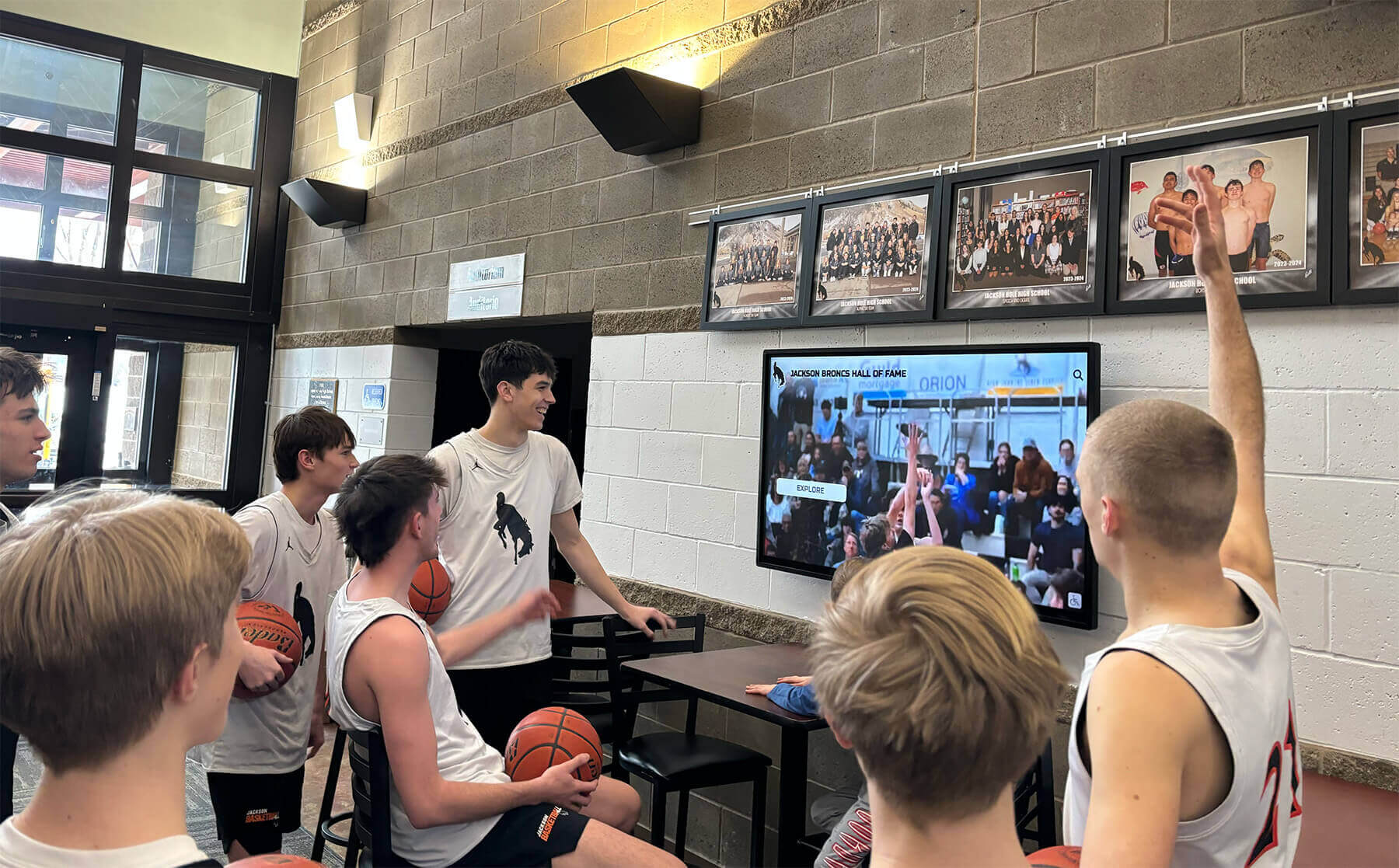
Understanding State Championship Tournament Display Needs
Before evaluating specific display solutions, schools must clarify their tournament recognition objectives, constraints, and success criteria.
Primary Display Objectives
Different stakeholders value tournament displays for distinct reasons, creating requirements that ideal solutions must address simultaneously:
Real-Time Tournament Tracking: During active championship tournaments, students, athletes, parents, and community members want immediate access to current brackets showing completed results, upcoming matchups, game times, and venue information. The display must update quickly as games conclude, allowing people to check current standings without searching websites or social media.
Historical Achievement Preservation: After tournaments conclude, the display should preserve championship history—documenting which athletes competed, final standings, scores from key games, and the path to championship victories. This historical function ensures that achievements don’t disappear after the excitement fades, maintaining institutional memory across decades.
Community Engagement and Pride: Effective displays amplify school spirit by making tournament participation visible, celebrating athletic achievement prominently, creating conversation focal points where students and visitors naturally gather, and reinforcing that the school values competitive excellence and supports its athletic programs.
Recruitment and Advancement: Prospective families touring facilities notice tournament displays, interpreting them as evidence of strong athletic programs. Alumni visiting campus reconnect with memories of championships they experienced or participated in, strengthening emotional ties that support fundraising initiatives. According to research from the National Association of Athletic Development Directors, visible athletic achievement recognition correlates with 23% higher athletic booster giving rates.
Space and Location Considerations
Tournament displays function best when positioned where audiences naturally congregate and have time to engage:
Primary Athletic Facility Locations: Gymnasium lobbies serve as ideal display locations—students and families pass through before and after games, visitors wait in these spaces, and the environment contextualizes tournament achievements within athletic settings. Locker room hallways provide displays visible to athletes daily, reinforcing achievement expectations and honoring predecessors’ accomplishments.
High-Traffic School Common Areas: Main building lobbies ensure broader visibility beyond just those attending athletic events, positioning tournament success within the school’s overall achievement narrative. Cafeterias and student centers provide extended viewing time as students gather socially, creating opportunities for displays that invite interaction and exploration rather than just glance-level recognition.
Outdoor and External Displays: Some schools position tournament recognition in outdoor locations or visible through windows from parking areas, extending visibility to the broader community and signaling athletic achievement even to those who never enter facilities.
Location selection affects display requirements—outdoor displays need weather-resistant construction and higher brightness to overcome sunlight. Lobby locations may require quieter displays (no sound) in multi-use spaces. High-traffic areas benefit from impact-resistant protective features.

Update Frequency and Maintenance Requirements
The timeline for updating tournament information significantly influences which display solutions prove practical:
During Active Tournaments: State championship tournaments often span 2-4 weeks with games occurring daily or every few days. Ideal display systems allow quick updates—within 15 minutes of game conclusions—without requiring specialized skills or tools. Schools unable to update displays promptly during tournaments find that students simply ignore them, consulting phones instead for current information.
Post-Tournament Archiving: After tournaments conclude, displays transition from tracking active brackets to preserving championship history. This shift requires different display capabilities—from emphasizing current information to presenting achievements in historical context alongside previous years’ championships and related records.
Long-Term Maintenance: Display solutions requiring regular maintenance—replacing burned-out bulbs, repairing damaged components, refreshing faded materials—often deteriorate over time as busy staff defer maintenance. Low-maintenance solutions that function reliably for years without intervention prove more sustainable in resource-constrained school environments.
Content Update Skills: Some display systems require technical skills for updates—graphic design, video editing, programming—limiting who can maintain them. Systems allowing non-technical staff to update content through simple interfaces ensure that displays remain current regardless of which personnel are available.
Budget Constraints and Total Cost Considerations
Schools evaluate display investments across different budget categories, each with distinct constraints:
Initial Capital Investment: One-time purchase or installation costs typically come from athletic budgets, booster fundraising, facilities improvement funds, or capital campaigns. Schools can sometimes justify higher upfront costs if they reduce ongoing expenses or if funding sources (donor gifts, special grants) specifically support capital purchases.
Ongoing Operational Costs: Annual expenses including software subscriptions, electricity consumption, replacement parts, and content creation time add up over years. Schools commonly underestimate total cost of ownership, focusing primarily on purchase price while overlooking operational expenses that accumulate substantially over 5-10 year display lifespans.
Opportunity Costs: Staff time updating and maintaining displays represents real costs even when no direct expenses appear in budgets. A display requiring five hours weekly for updates costs approximately $7,000 annually in staff time at typical hourly rates—often exceeding the display’s purchase price within 2-3 years.
Value Per Interaction: The most useful cost metric evaluates total investment divided by viewing interactions. A $15,000 display generating 50,000 annual views costs $0.30 per interaction, potentially delivering better value than a $3,000 display that few people notice or engage with, generating only 2,000 annual views at $1.50 per interaction.
Schools should evaluate lifetime costs across 5-10 years rather than focusing exclusively on initial purchase price, ensuring that selected solutions remain sustainable throughout their useful life.
Traditional Tournament Display Approaches
Before examining modern digital options, understanding traditional display methods clarifies their strengths, limitations, and appropriate contexts for continued use.
Printed Brackets on Paper or Poster Board
The simplest approach involves printing tournament brackets on standard paper or poster board, displaying them on walls, bulletin boards, or windows using tape, pins, or magnets.
Advantages: Extremely low cost (materials under $10), no technical skills required, quick initial setup (under 30 minutes), and complete flexibility in size and format. Schools can create brackets using free online templates or simple spreadsheet software, making this approach accessible to any institution regardless of budget or technical capabilities.
Limitations: Updates require printing and physically replacing entire brackets rather than modifying specific elements. Printed brackets deteriorate quickly—ink fades from sunlight exposure, tape residue damages walls, paper tears from handling, and moisture (especially in pools or ice rinks) causes warping and illegibility. The unprofessional appearance of hand-written updates or taped corrections undermines the significance of championship achievements.
Lifespan and Preservation: Printed brackets function adequately during active tournaments but prove inadequate for long-term preservation. Most schools discard paper brackets within weeks of tournaments ending, losing historical documentation. Those attempting to preserve printed brackets in binders or frames find that fading renders them unreadable within 3-5 years.
Best Applications: Paper brackets serve appropriately as temporary solutions during tournament weeks when real-time updates matter more than appearance, as backup displays ensuring bracket information remains visible if digital systems fail, or as take-home materials that students, families, or media can reference independently.
For schools with minimal budgets focused solely on providing tournament information during active competitions, printed brackets adequately serve immediate needs while accepting that historical preservation will require different solutions later.
Vinyl Banners and Wall Graphics
Custom-printed vinyl banners displaying tournament brackets and championship recognition provide more durable alternatives to paper, withstanding years of display without fading.
Advantages: Professional appearance rivaling digital displays at lower cost ($200-$800 depending on size), extreme durability lasting 5+ years indoors, weather resistance enabling outdoor installation, and no electricity or technical maintenance requirements. Vinyl printing technology creates photo-quality graphics including full-color images, team logos, and sophisticated designs that convey appropriate significance.
Limitations: Static content cannot update as tournaments progress—vinyl banners must show final results, making them unsuitable for tracking active brackets. Creating new banners for each year’s tournaments accumulates costs substantially: $500 annually compounded over ten years totals $5,000 plus inflation. Storage of previous years’ banners requires physical space that many schools lack.
Update Process: Schools wanting to display current year championships must remove and replace previous banners annually. This process takes 1-2 hours including taking down old banners, properly mounting new ones, and storing replaced materials. Schools often defer this task, resulting in outdated banners remaining displayed for multiple years—“2019 State Champions” still hanging in 2026—which diminishes rather than enhances recognition impact.
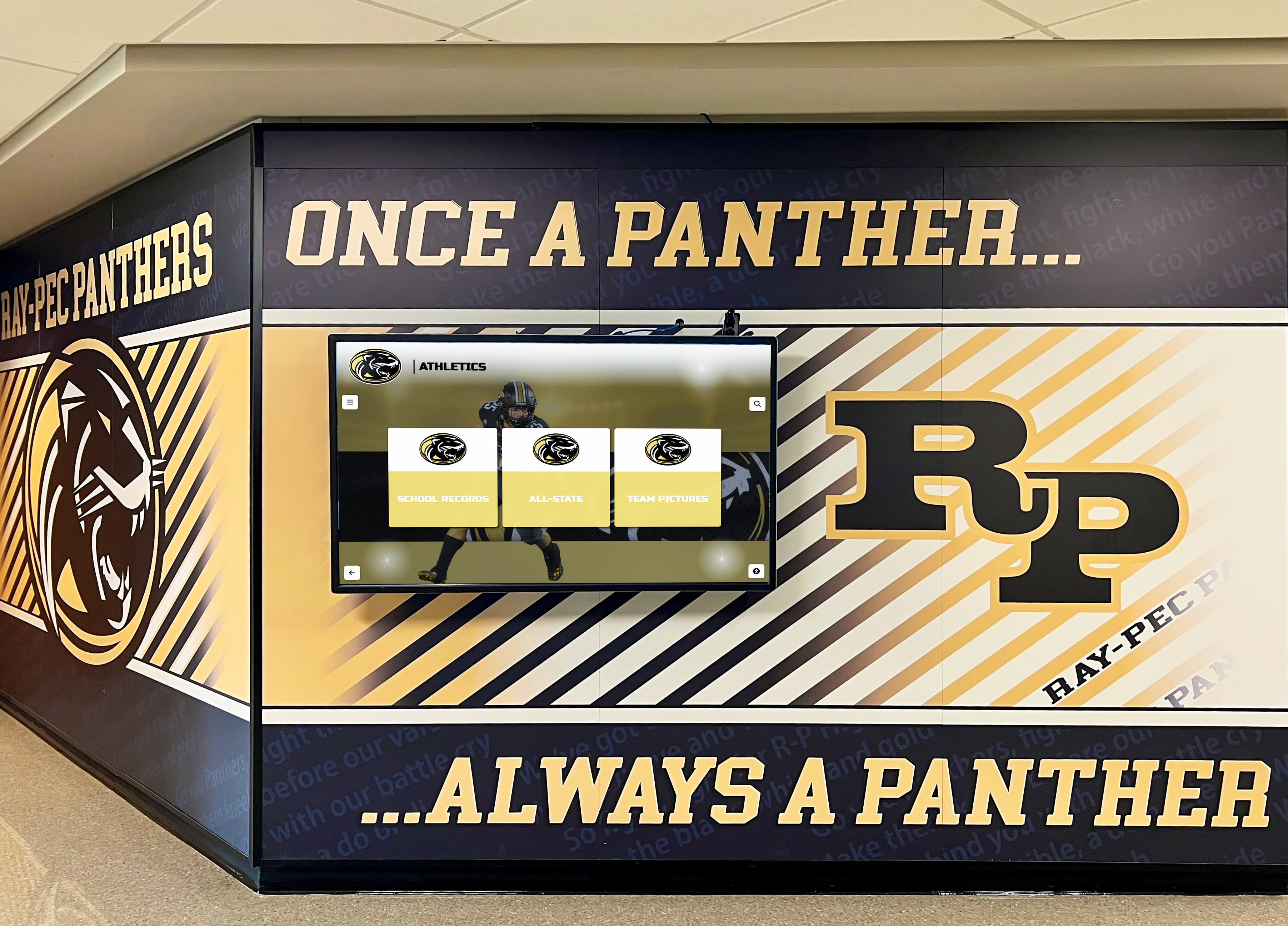
Best Applications: Vinyl banners serve well for permanent championship recognition where content doesn’t require updates—acknowledging that the school achieved a state championship regardless of who current students are. They function effectively in locations where digital displays prove impractical (outdoor stadium walls, natatoriums with constant moisture, extremely bright environments overpowering digital screens).
Schools should budget for banner replacement cycles (every 3-5 years) and storage for banners being rotated out, ensuring that recognition remains current and professional appearing.
Traditional Trophy Cases and Physical Displays
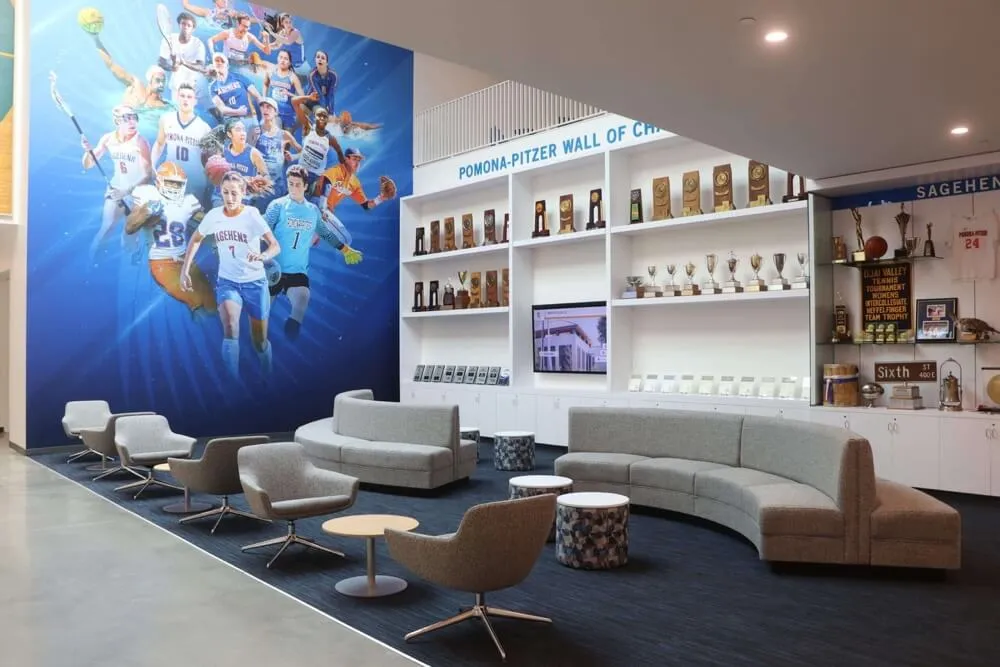
Glass-fronted trophy cases displaying physical artifacts—championship trophies, medals, plaques, game balls, photographs—provide tangible recognition that digital displays cannot replicate.
Advantages: Physical artifacts carry weight and permanence that digital content lacks. Athletes take pride in seeing actual trophies their teams won, creating connections that photographs alone don’t provide. Trophy cases require no electricity, software, or technical maintenance, functioning reliably for decades. Well-designed cases enhance facility aesthetics, particularly in traditional architectural contexts where digital screens appear jarring.
Limitations: Physical space constraints create inevitable capacity problems. Trophy cases fill completely within 10-20 years depending on size and athletic program success, forcing difficult decisions about removing older items to accommodate new achievements. Tournament brackets and detailed documentation don’t fit well in three-dimensional trophy displays, limiting information that can accompany physical artifacts.
Information Density: Trophy cases excel at showcasing select championships but cannot provide comprehensive tournament documentation. A state championship trophy occupies 18 inches of shelf space while conveying minimal information—viewers see that a championship was won but learn nothing about the tournament path, roster, scores, or season context unless supplementary text panels accompany physical items.
Cost Considerations: Quality trophy cases cost $2,000-$8,000 installed depending on size and construction. Additional cases required as earlier ones fill represent substantial ongoing investment. Custom cases designed to match facility aesthetics often cost considerably more than standard commercial models.
Best Applications: Trophy cases appropriately serve selective recognition of major championships and achievements, providing prestigious display for a school’s most significant accomplishments. They work best when complemented by additional display systems providing comprehensive tournament documentation and allowing deeper exploration beyond what physical displays accommodate.
Schools should implement trophy cases as part of broader recognition infrastructure rather than as complete solutions, acknowledging that physical limitations necessitate supplementary displays for comprehensive tournament coverage.
Combination Approaches: Hybrid Traditional Systems
Many schools combine multiple traditional methods—trophy cases for major championships, vinyl banners acknowledging specific achievements, and bulletin boards showing tournament brackets and details—creating more comprehensive recognition than any single approach provides.
Advantages: Hybrid approaches leverage each method’s strengths while compensating for individual limitations. Physical trophies provide tangible gravitas, vinyl banners offer visual impact, and changeable boards enable information updates, collectively creating more complete recognition infrastructure.
Coordination Challenges: Multiple display types require coordinated management ensuring visual consistency, preventing information duplication or contradiction, and maintaining all elements simultaneously. Schools often find that some components receive regular attention while others deteriorate, creating inconsistent recognition that undermines overall effectiveness.
Cumulative Costs: While each individual component may seem affordable, combined investment in trophy cases, annual banner printing, bulletin board supplies, and mounting hardware accumulates substantially. Schools implementing comprehensive traditional systems often invest $10,000-$25,000 across 5-10 years once all components, updates, and replacements are totaled.
Appropriate Contexts: Hybrid traditional approaches serve schools well when aesthetic priorities emphasize traditional architecture and decor, available locations lack electrical access or create digital display challenges, budgets constrain upfront capital investment but can accommodate ongoing incremental expenses, or institutional culture strongly values physical artifacts and traditional recognition methods.
Schools successfully implementing hybrid traditional systems establish clear maintenance schedules, assign specific responsibility for each component, budget realistic replacement cycles, and accept limitations regarding information depth and update flexibility.
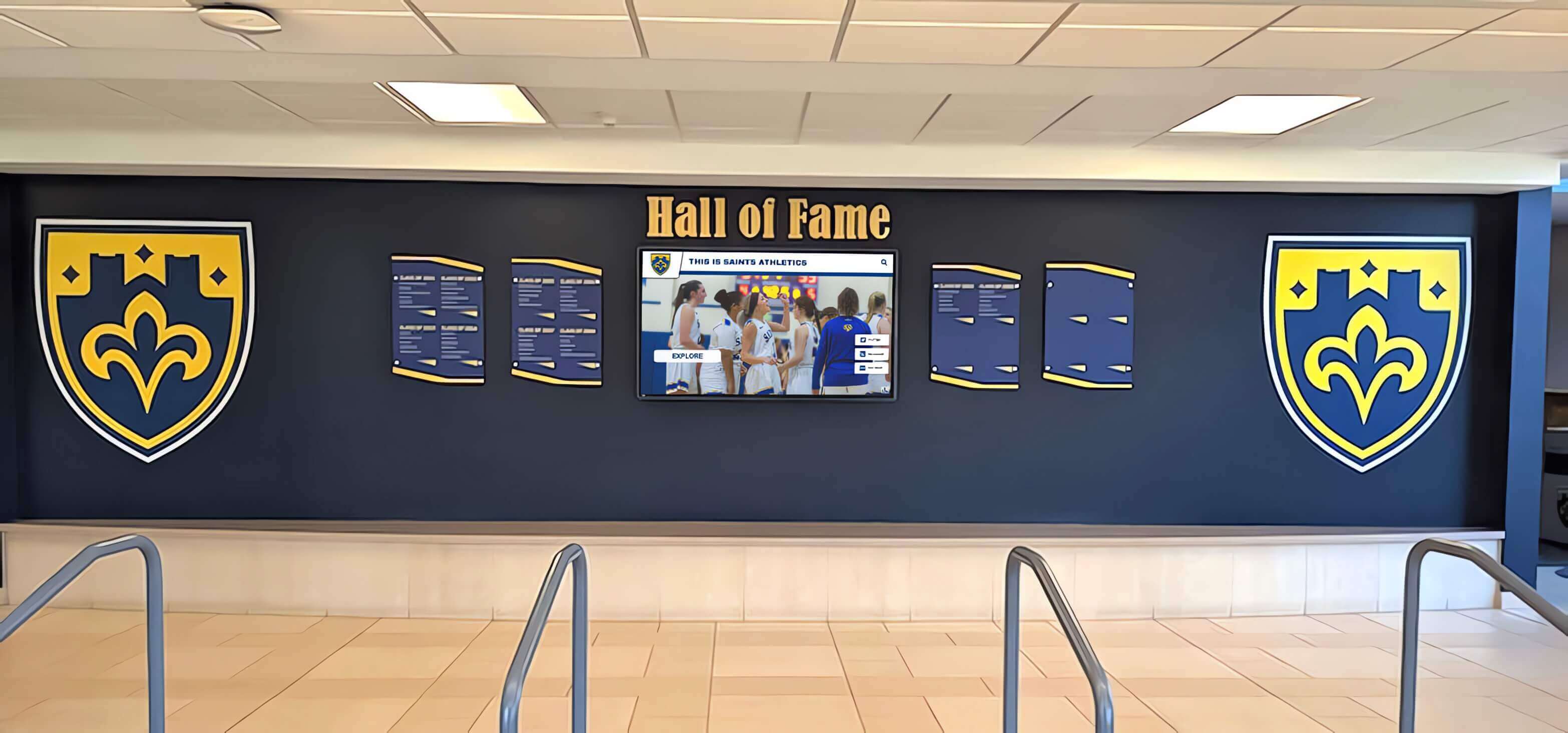
Modern Digital Display Solutions
Digital technologies fundamentally expand what tournament recognition displays can accomplish, though different digital approaches offer varying capabilities and require different investments.
Digital Signage Screens: Basic Solutions
Entry-level digital displays use standard commercial televisions or monitors showing static images or simple slideshows of tournament brackets and results.
Technology Overview: These systems connect consumer TVs or commercial displays ($400-$1,500 depending on size) to basic media players ($50-$200) running USB drives, HDMI inputs, or simple digital signage software. Schools create bracket graphics using presentation software (PowerPoint, Google Slides) or graphic design tools, exporting images that media players display.
Advantages: Dramatically lower cost compared to specialized athletic recognition systems makes digital displays accessible to schools with limited budgets. Updates simply require creating revised graphics and transferring them to display devices via USB drive or network upload—no printing costs, physical mounting, or disposal of outdated materials. Multiple displays can show identical content simultaneously, ensuring consistency across locations.
Limitations: Creating professional-quality bracket graphics requires design skills and dedicated time—typically 1-2 hours per update depending on complexity. Static images or basic slideshows provide no interactivity, limiting information displays to what fits on screen at any moment. Basic systems lack analytics showing how many people view displays or which information generates most interest.
Content Creation Burden: Someone must design attractive, readable bracket layouts; update them as tournament games conclude; export graphics in correct resolutions; and transfer files to all display locations. This workflow creates bottlenecks—if the designated person is unavailable when games finish, brackets remain outdated until they return. Schools frequently underestimate this time commitment, leading to displays showing stale information that students learn to ignore.
Appropriate Applications: Basic digital signage serves schools well when limited budgets preclude more sophisticated solutions, modest update frequency requirements (weekly or less often) make content creation burden manageable, displays primarily show completed tournament results rather than tracking active brackets, or schools are testing digital displays before committing to more comprehensive systems.
Schools implementing basic digital signage should designate backup personnel who can create and update content, establish templates that streamline graphic creation, and set realistic expectations about information depth and update frequency.
Interactive Touchscreen Displays
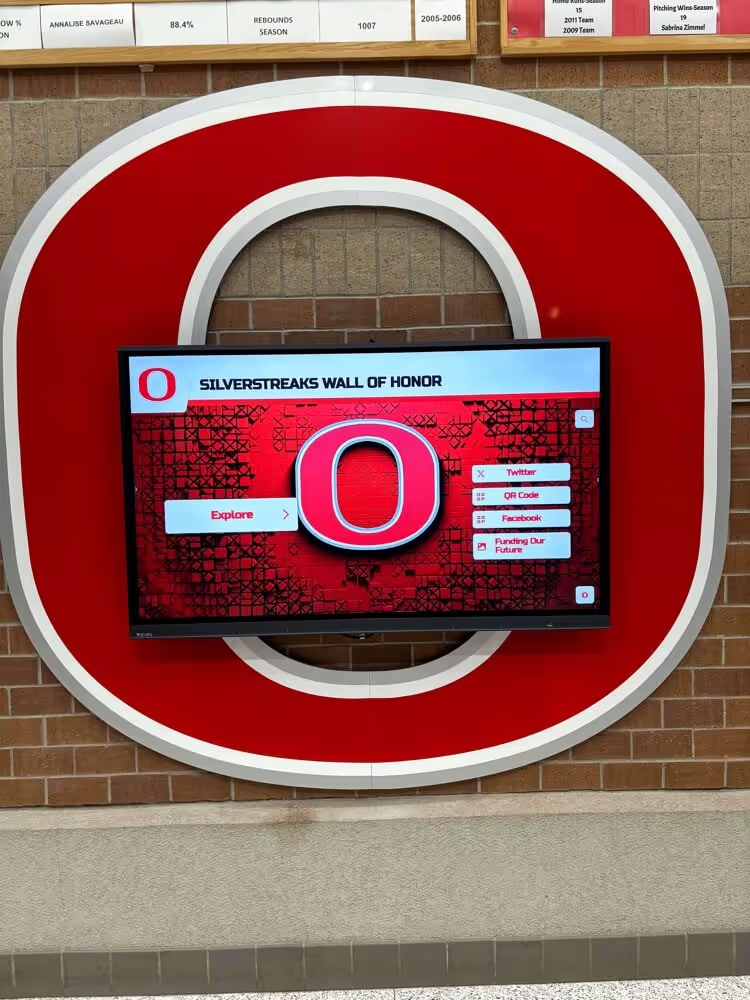
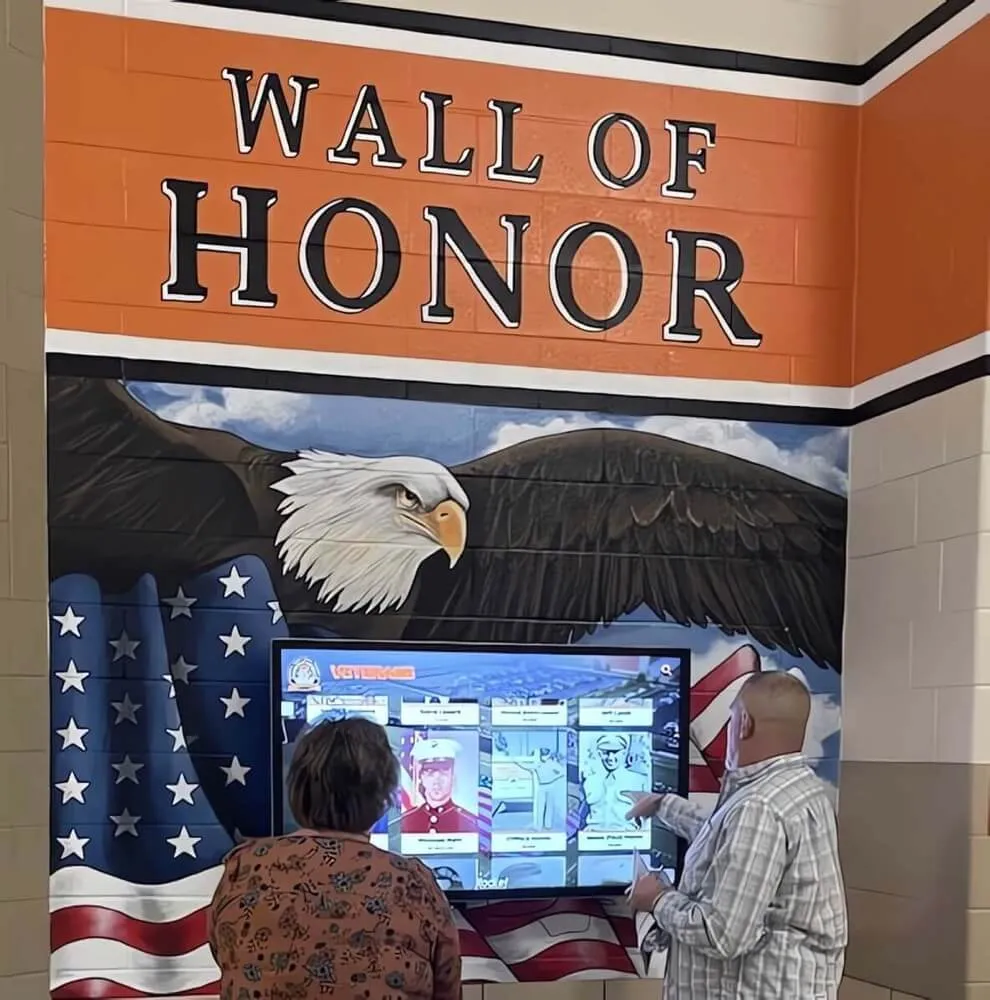
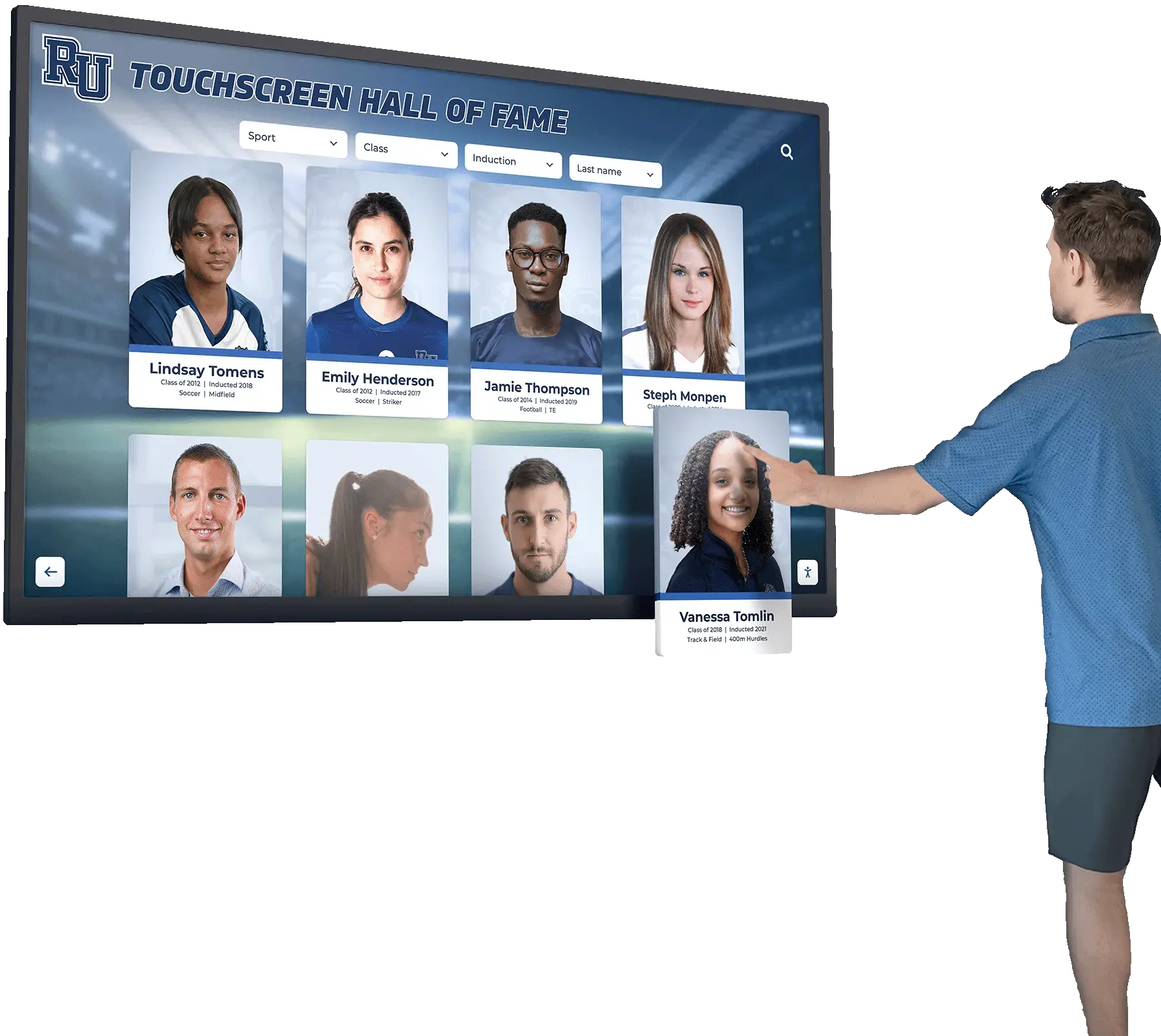
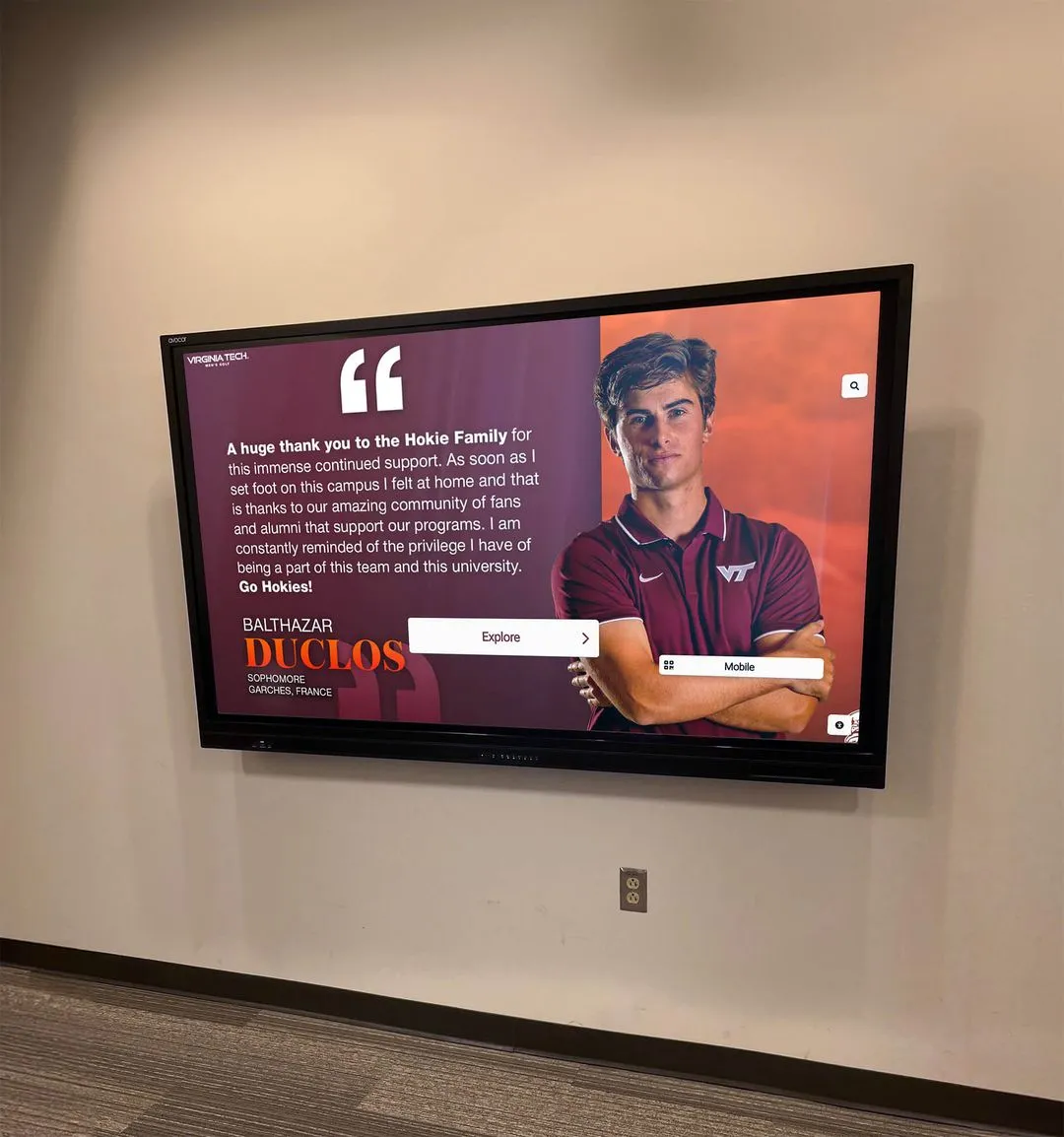
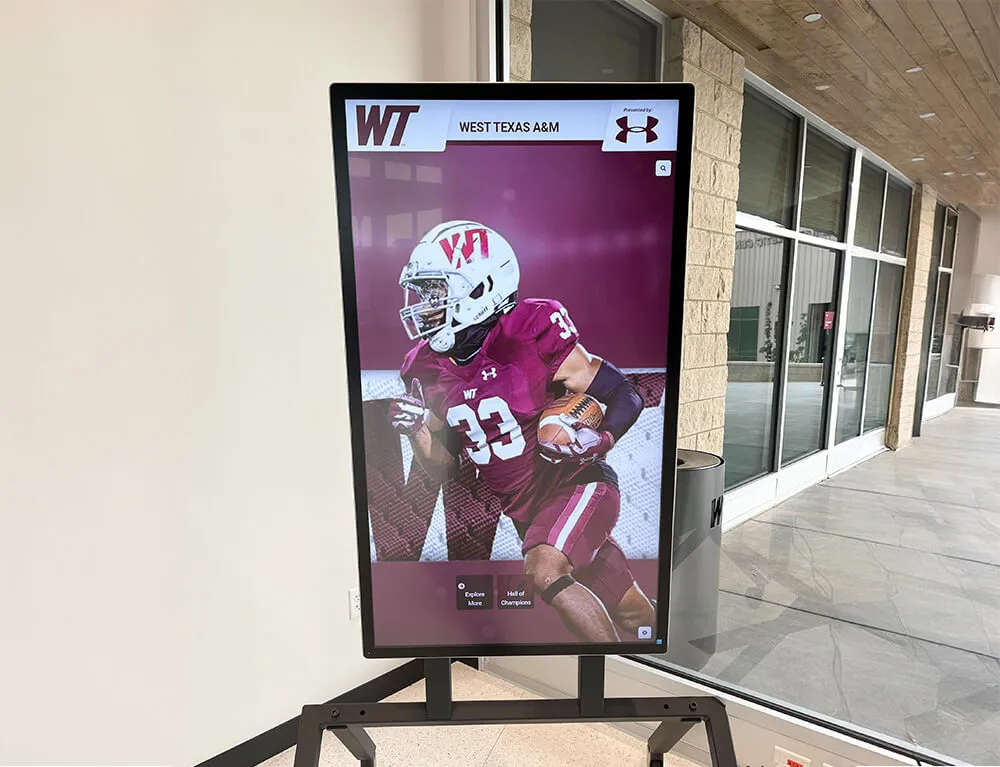
Touchscreen displays allow viewers to explore tournament information interactively—tapping to see detailed game results, player statistics, historical brackets from previous years, and related content beyond what fits on a single static screen.
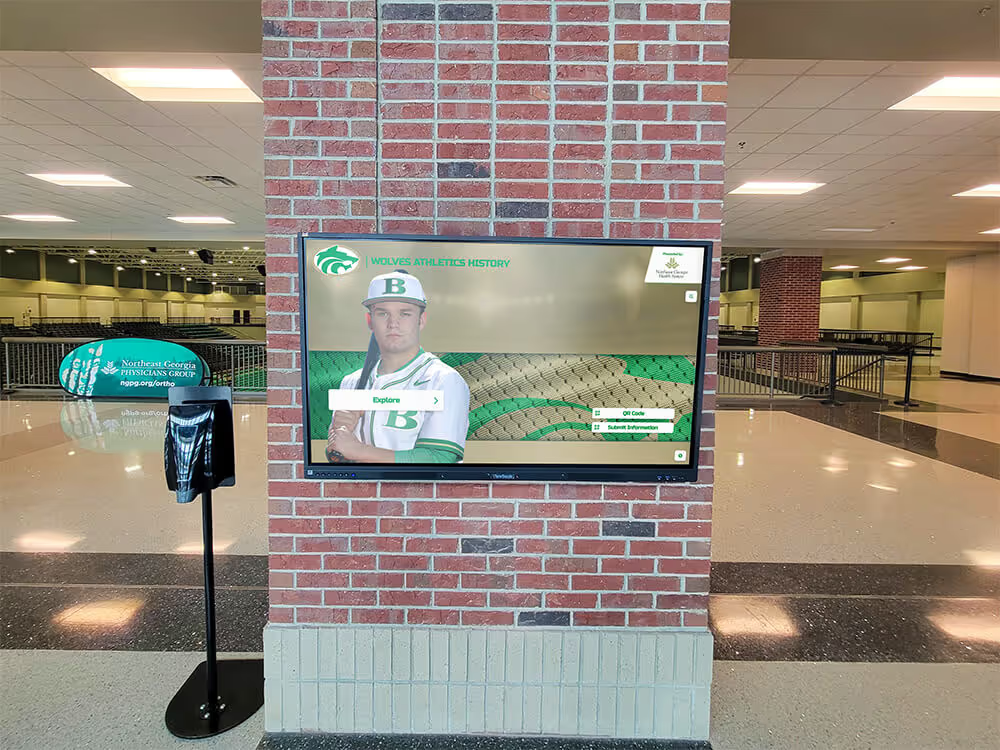
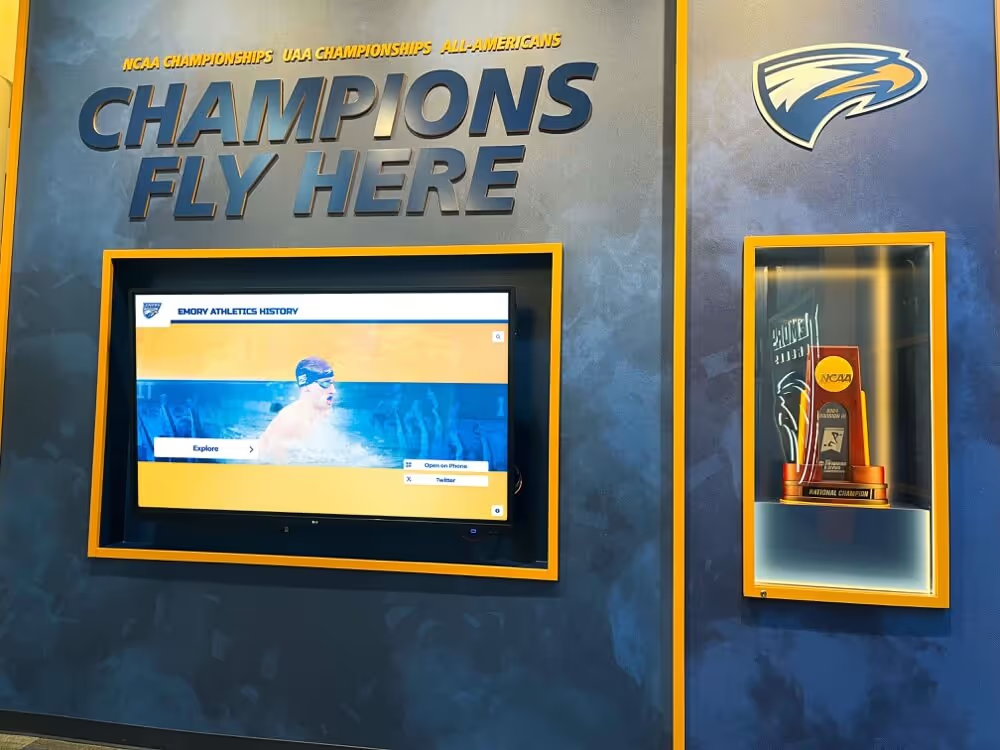
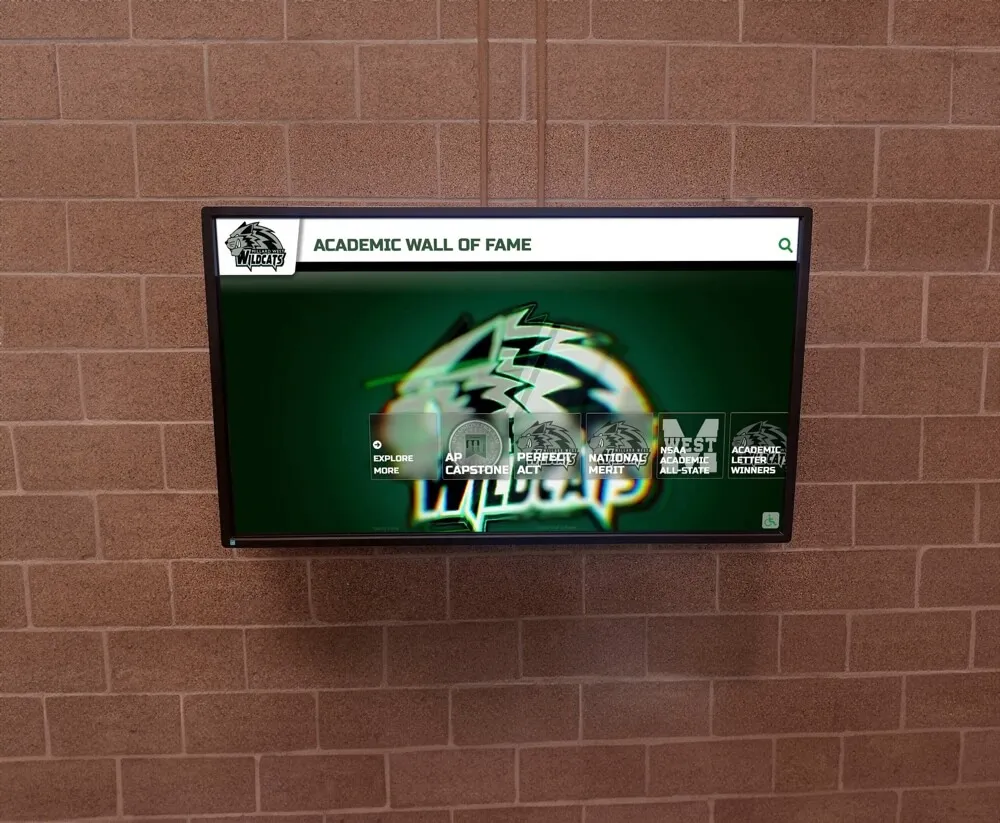
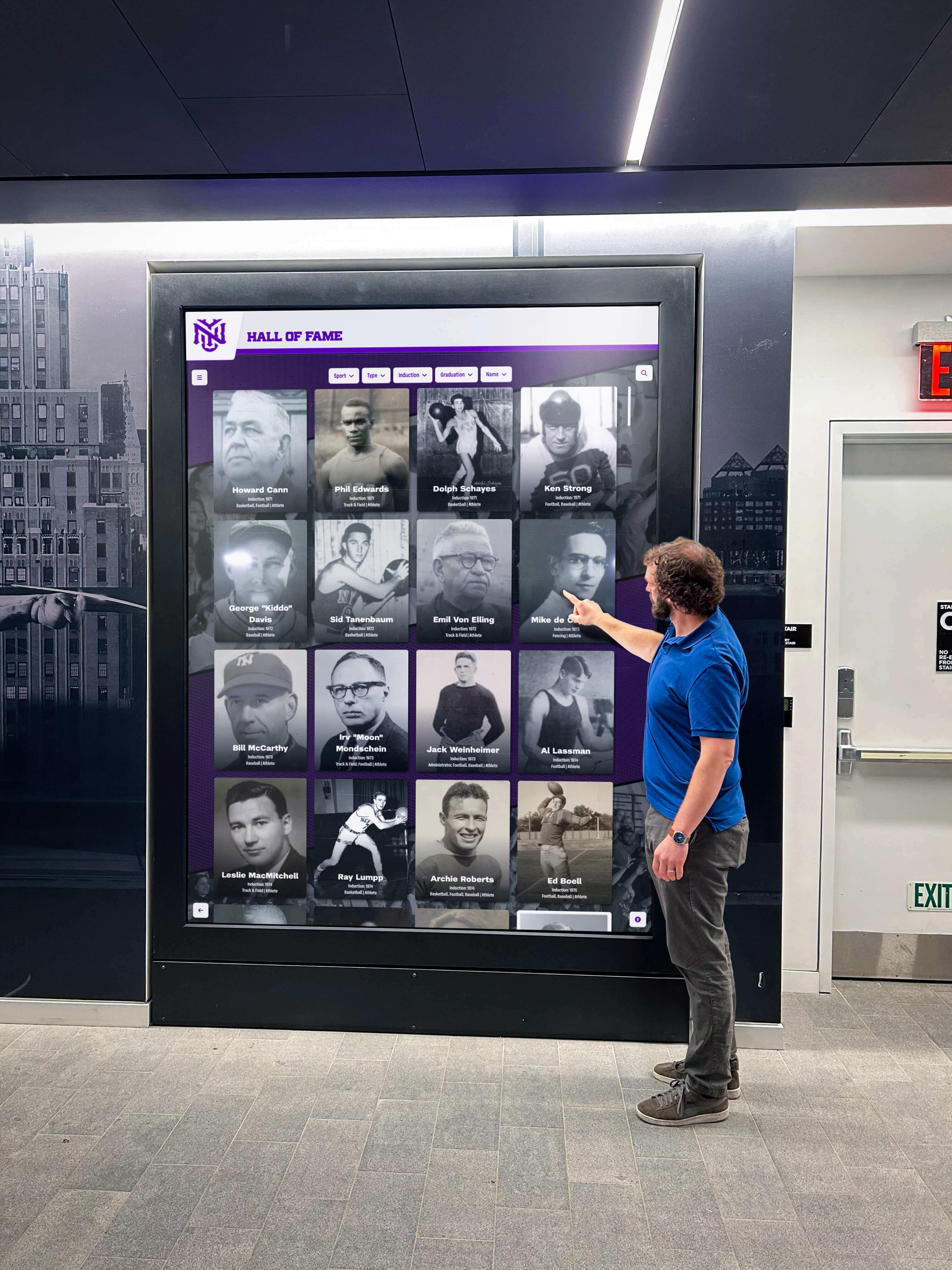
Technology and Capabilities: Commercial-grade touchscreen displays ($3,000-$8,000 depending on size and features) connect to content management systems enabling rich interactive experiences. Users navigate through bracket screens showing different tournament rounds, select specific games to see scores and statistics, view photographs from championship games, read athlete profiles, and explore historical tournament results from previous years.
Information Depth: Interactivity eliminates the constraint of fitting all information on one visible screen. A static display might show only current tournament bracket, while interactive systems provide that bracket plus detailed box scores from each game, career statistics for participating athletes, video highlights, coach interviews, historical context comparing current tournament to previous years, and related achievements like individual awards or season records.
Engagement Metrics: Interactive displays generate analytics quantifying usage—total interactions, most-viewed content, average session duration, and peak usage times. This data demonstrates display value to administrators evaluating investments and informs content strategy by revealing which information resonates most with audiences. Schools implementing interactive displays report mean engagement durations of 3-8 minutes per interaction, substantially higher than glance-level viewing of static content.
Update Advantages: Interactive touchscreen systems typically include content management interfaces allowing authorized staff to update tournament information through web browsers without graphic design skills. Changing a score or adding a new game result takes 1-2 minutes rather than the extended process required for creating revised graphics for static displays.
Implementation Considerations: Higher upfront costs ($5,000-$12,000 per display including installation and initial content) require stronger budget commitment compared to basic digital signage. Ongoing software subscription fees ($600-$2,400 annually depending on features) add to total cost of ownership. Interactive displays need regular content management—while updates are easier, someone must still monitor tournaments and input results promptly.
Best Applications: Interactive touchscreens deliver highest value when comprehensive tournament documentation matters beyond just showing current brackets, budgets accommodate higher initial investment in exchange for richer functionality, locations with viewer dwell time (lobbies where people wait, student centers where people socialize) enable meaningful interaction rather than glance-viewing, and schools want quantifiable engagement metrics demonstrating display effectiveness.
Schools implementing interactive displays should train multiple staff members on content management systems, establish clear protocols for tournament information updates, and develop content plans that leverage interactivity rather than simply replicating static bracket displays in touchscreen format.
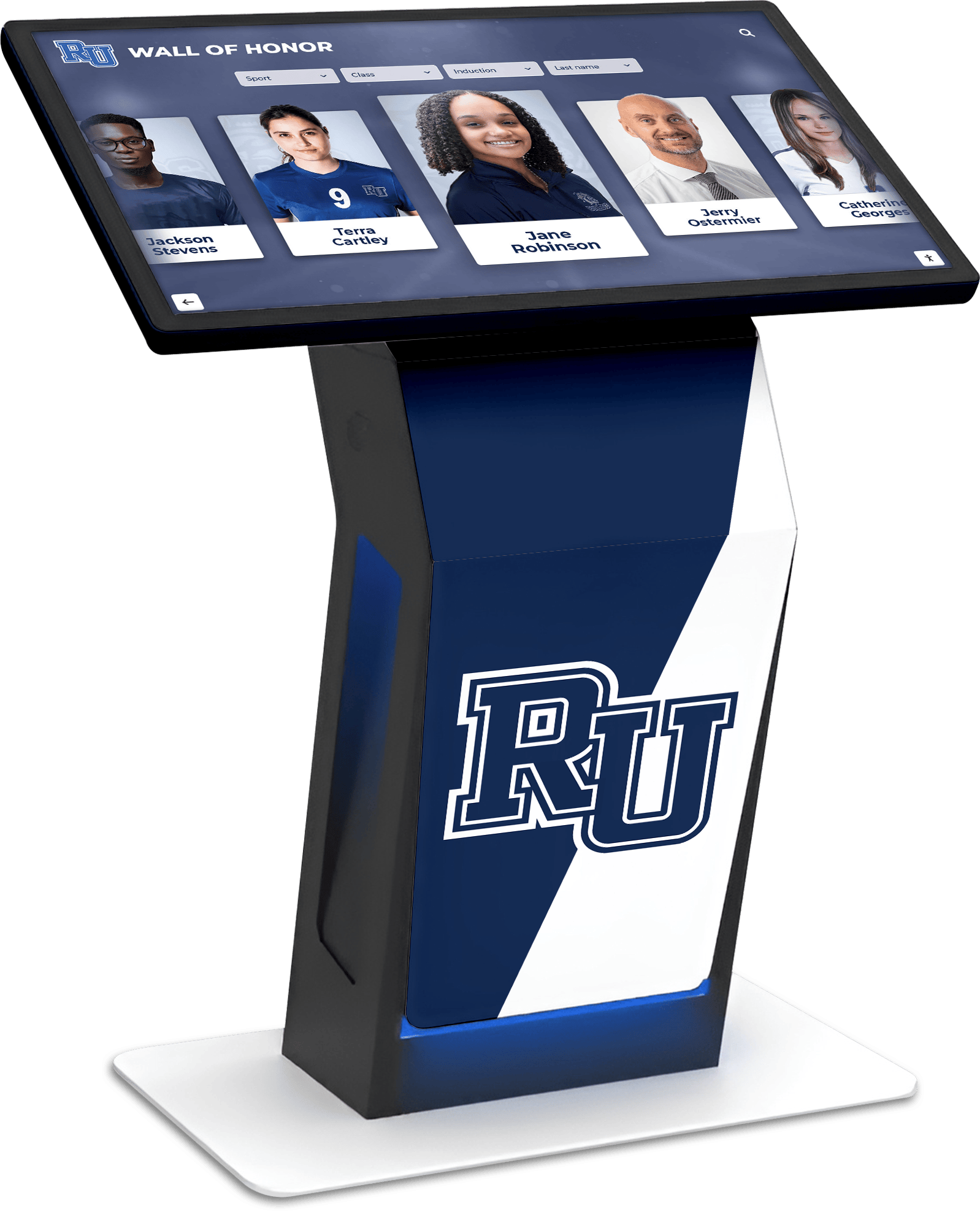
Integrated Athletic Recognition Platforms
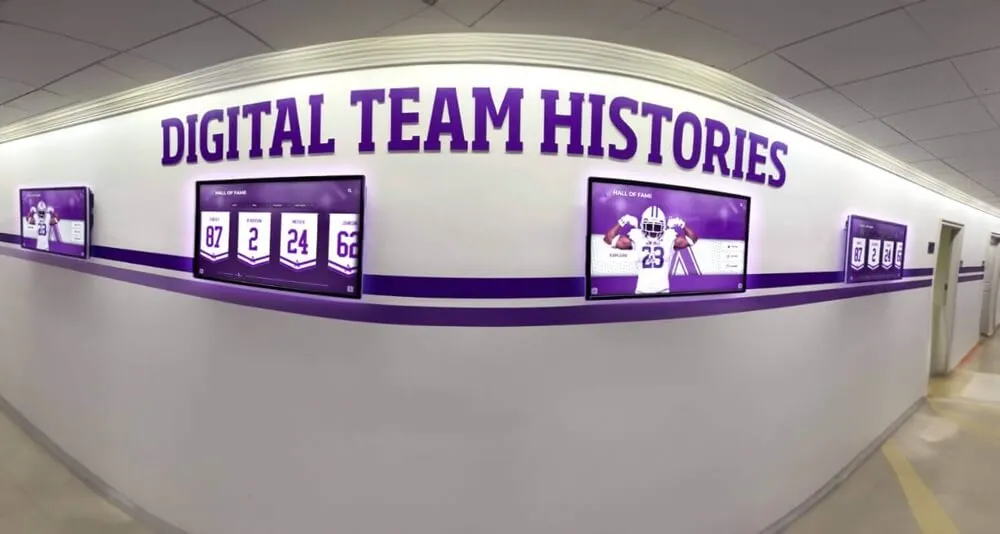
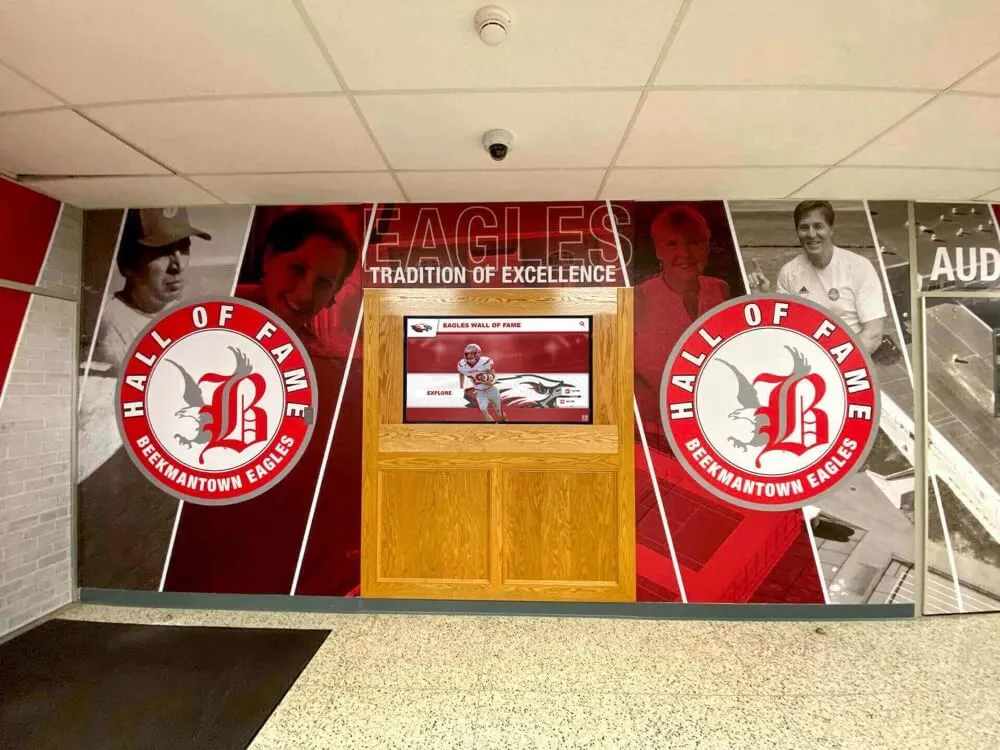
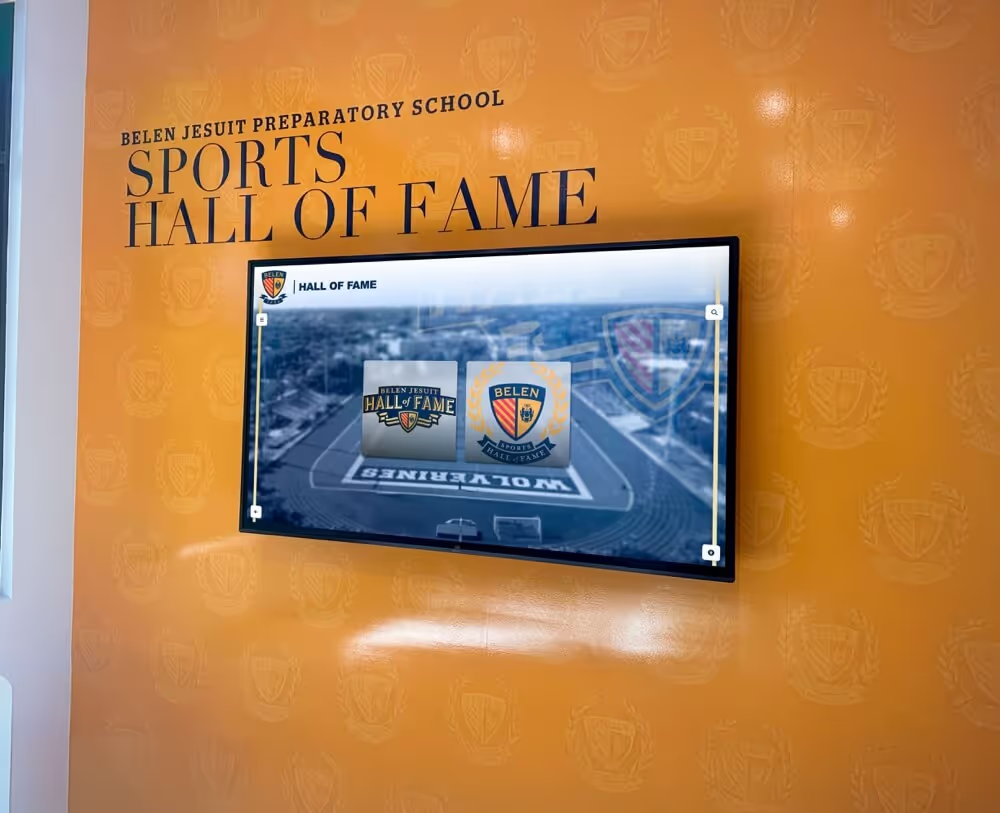
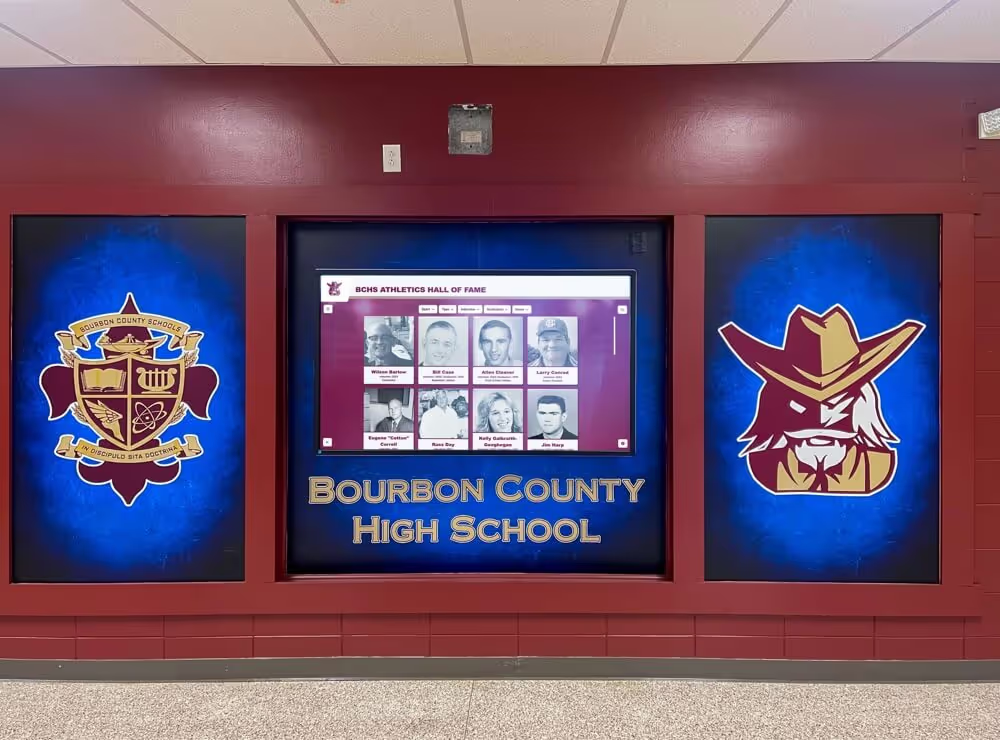
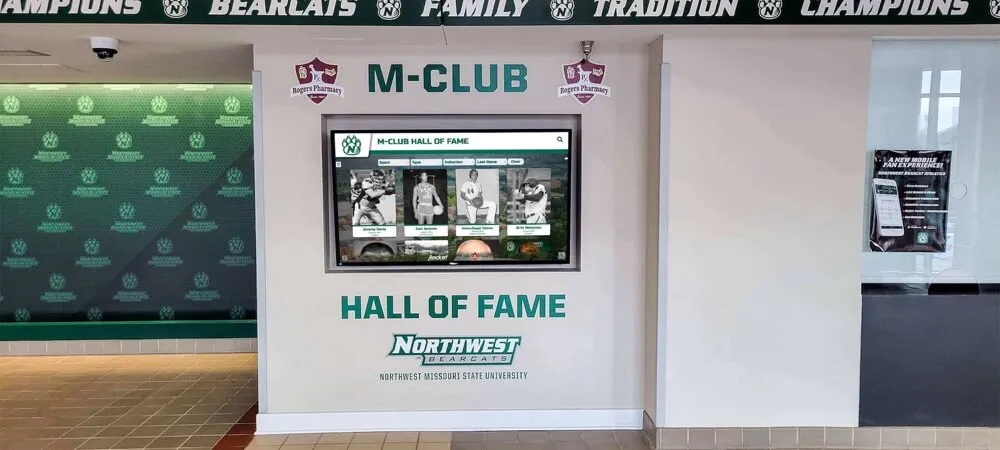
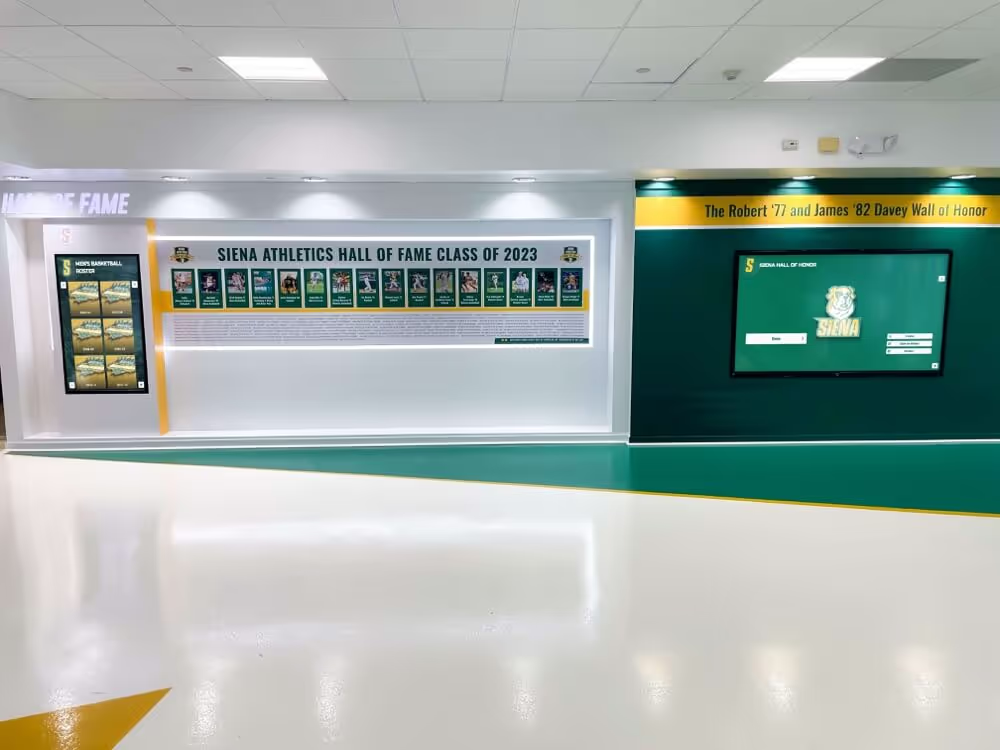
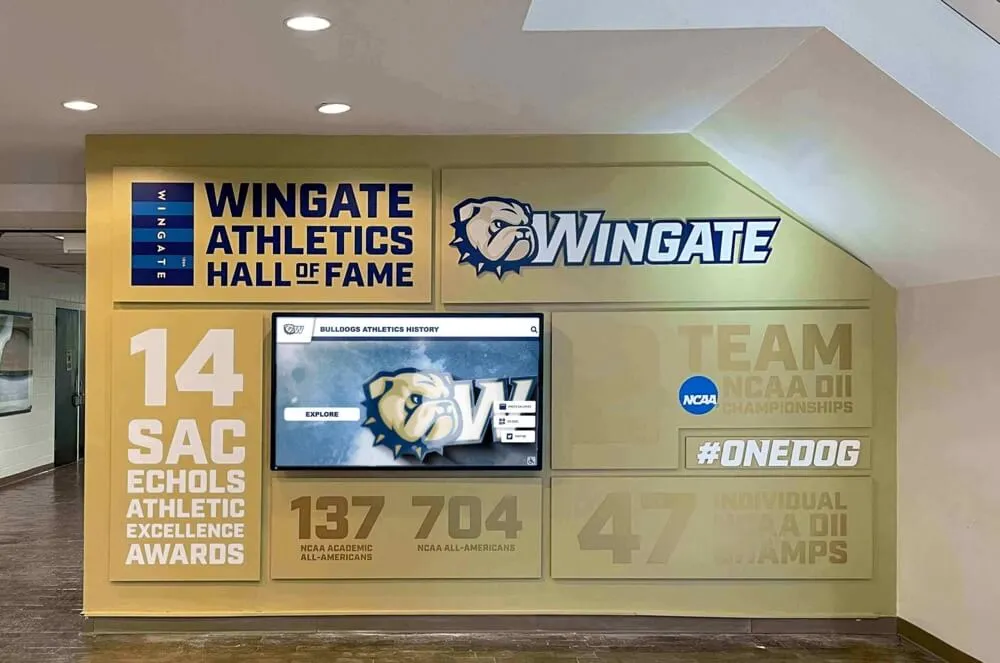
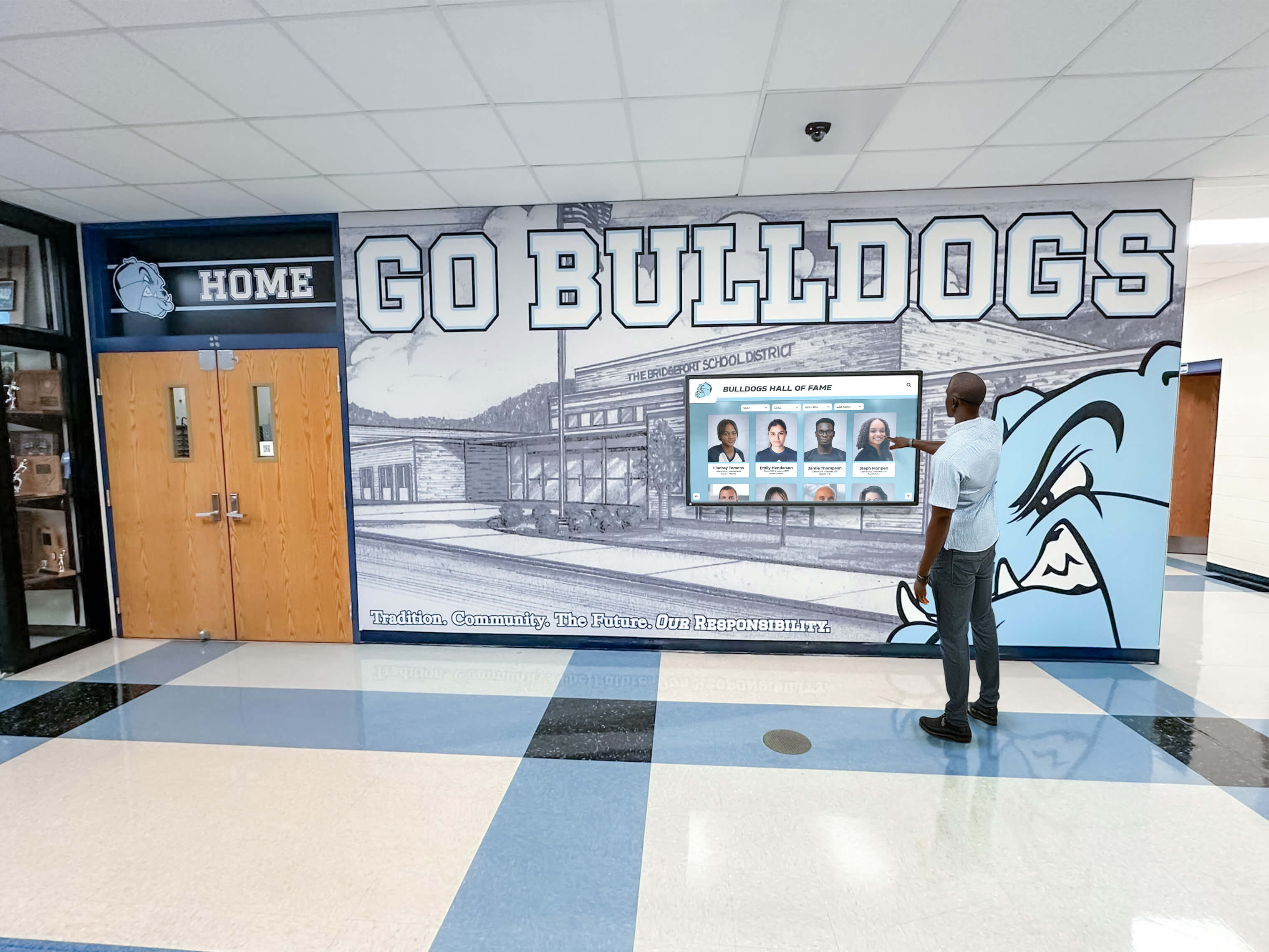
Purpose-built athletic recognition systems integrate tournament bracket displays within comprehensive platforms that also showcase athlete profiles, team records, championship history, hall of fame inductees, and other athletic achievements.
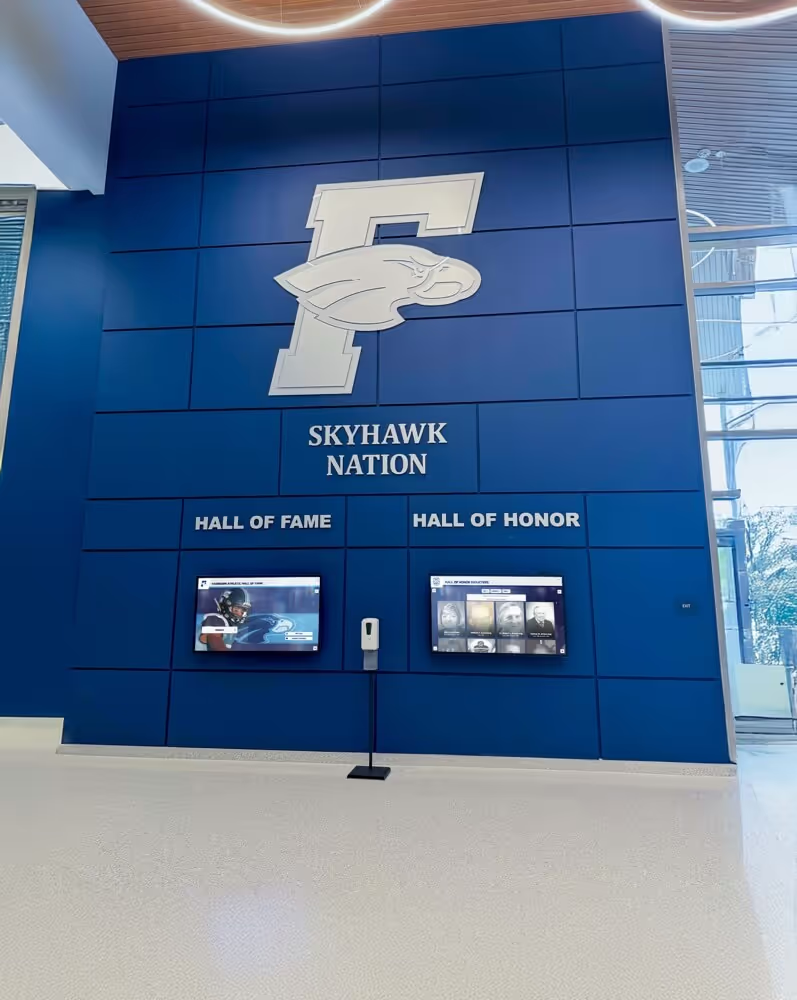
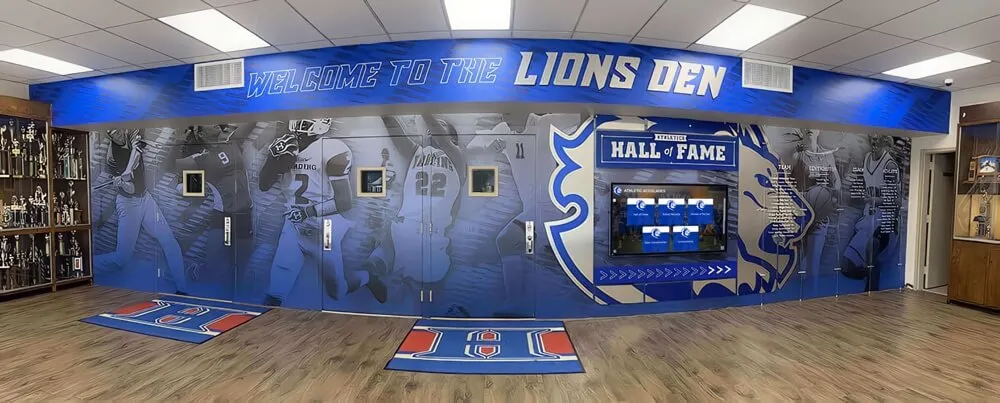
Platform Approach: Rather than standalone tournament displays, integrated systems position brackets within broader athletic recognition infrastructure. A student exploring state championship brackets can naturally navigate to see which athletes competed, view their individual statistics and awards, explore other sports’ achievements, and discover historical athletic accomplishments spanning decades.
Content Management: Integrated platforms typically provide athletic department administrators with centralized content management allowing tournament brackets, athlete information, team records, championship history, and recognition programs to be updated from a single system rather than maintaining separate solutions for each purpose. This consolidation reduces total administrative burden compared to managing multiple disconnected displays.
Multi-Location Consistency: Platforms synchronize content across multiple displays—physical touchscreens in gymnasiums, web-accessible versions viewable on phones and computers, displays in different facility locations—ensuring identical current information appears everywhere. Updates made once propagate automatically to all access points.
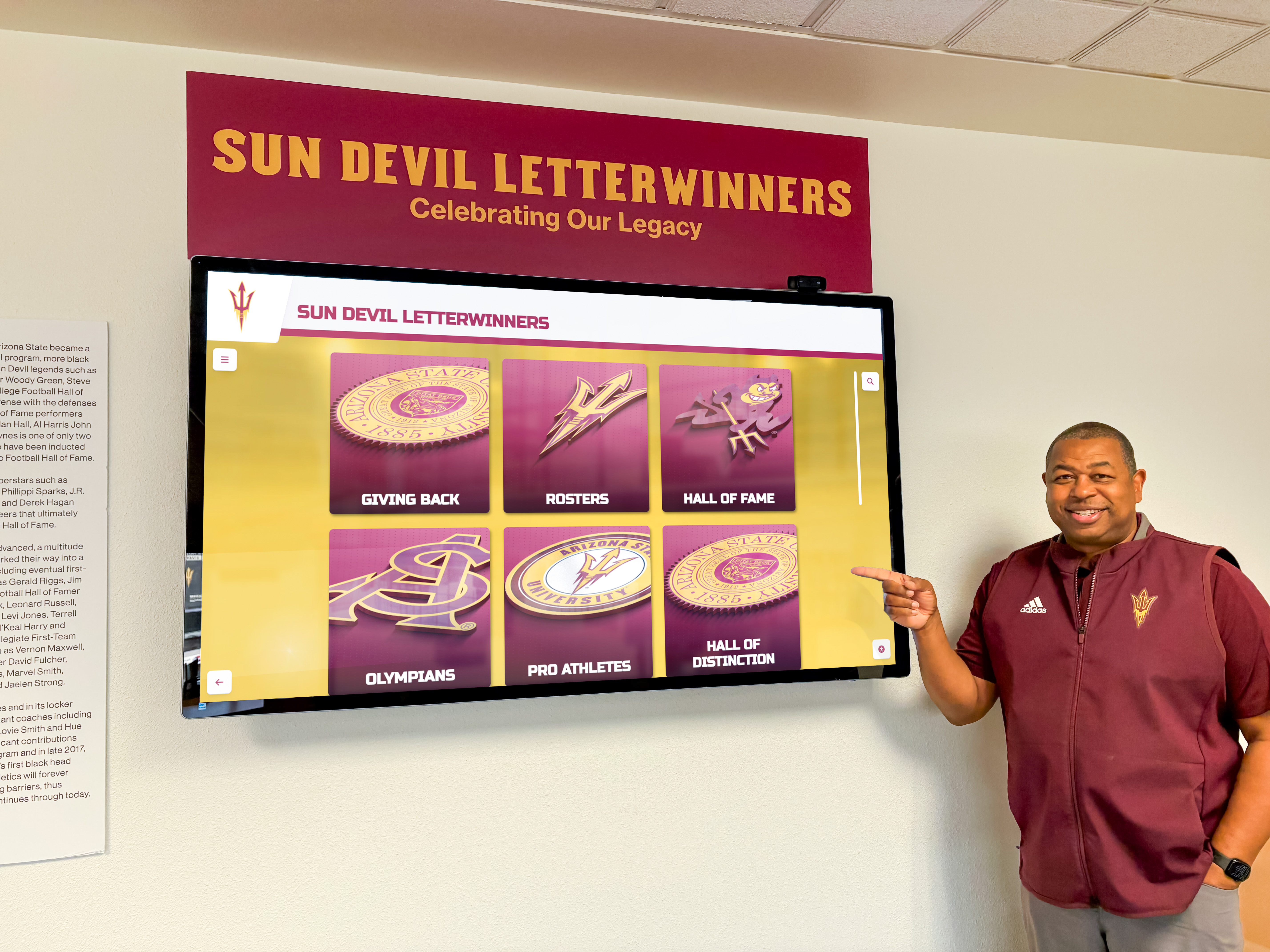
Long-Term Value: Comprehensive athletic recognition platforms serve needs extending far beyond tournament brackets alone. Schools investing in these systems gain infrastructure supporting hall of fame programs, record book documentation, alumni athlete engagement, recruiting materials, and advancement initiatives—creating value that continues even during years without state championship tournament participation.
Integration with Existing Systems: Advanced platforms integrate with other school technology including athletic management software (importing rosters, schedules, statistics), student information systems (connecting athletic and academic achievement), alumni databases (maintaining updated contact information for athlete outreach), and digital signage networks (displaying athletic content in multiple locations).
Investment Profile: Comprehensive athletic recognition platforms represent substantial investment—$8,000-$25,000 for initial implementation including displays, software, content development, and installation, plus $2,000-$6,000 annually for software hosting, support, and updates. This investment level exceeds basic digital signage dramatically, requiring demonstration that the platform’s comprehensive capabilities justify higher costs.
Best Applications: Integrated platforms deliver strongest value when athletic recognition needs extend beyond tournament brackets to comprehensive achievement documentation, budgets can accommodate higher investment in exchange for complete solutions rather than purchasing separate systems for different purposes, long-term perspective values building cumulative athletic history rather than just addressing immediate tournament display needs, and schools want solutions that professional athletic programs use, positioning high school athletics with comparable recognition infrastructure.
Schools evaluating integrated platforms should assess total athletic recognition needs beyond just tournaments, examine how comprehensive systems might consolidate multiple existing separate solutions, and calculate total cost of ownership comparing integrated platforms to maintaining disparate systems for different athletic recognition functions. Solutions like Rocket Alumni Solutions provide purpose-built platforms specifically designed for educational athletic recognition, combining tournament bracket displays with athlete profiles, team histories, championship documentation, and hall of fame systems in unified environments.
Video Walls and Large-Format Displays
Large-scale displays—video walls comprising multiple screens tiled together or single massive displays (75+ inches)—create dramatic visual impact in large gathering spaces like gymnasium lobbies or commons areas.
Scale and Impact: Video walls measuring 6-12 feet wide dominate spaces visually, capturing attention in ways that smaller displays cannot. Tournament brackets shown at this scale remain legible from 30+ feet away, allowing groups to view simultaneously and enabling quick information checks without approaching closely.
Technology Options: Schools can implement video walls using multiple consumer TVs mounted together ($2,500-$6,000 depending on quantity and size), commercial video wall displays with thin bezels creating nearly seamless appearance ($8,000-$20,000), or single large-format displays like 98-inch commercial screens ($8,000-$15,000).
Content Considerations: Large displays work best with content designed specifically for the format. Tournament brackets created for standard displays appear pixelated or awkwardly proportioned when scaled to video wall dimensions. Schools need content creation capabilities matching display ambitions—either staff with relevant design skills or service providers producing appropriate assets.
Use Case Analysis: Video walls excel in large venues where many simultaneous viewers need visibility, facilities with prominent architectural spaces that accommodate dramatic displays, schools with substantial athletic program prominence where visual impact reinforces competitive culture, and institutions where displays serve multiple purposes—showing tournament brackets during championships, achievement recognition afterward, and event content during games and ceremonies.
Investment Justification: Video walls represent significant investment rarely justified by tournament bracket display alone. Schools considering this approach should evaluate total use case including other athletic content, school events, ceremony presentations, and daily engagement applications that leverage display scale throughout the year.
Large-format displays serve schools where visual prominence drives value, budgets accommodate premium solutions, and architectural spaces provide appropriate contexts for dramatic displays that smaller screens cannot fulfill.
Comparing Display Solutions: Decision Framework
Schools face numerous variables when selecting tournament display approaches. This framework organizes decision factors systematically.
Budget-Based Recommendations
Available funding substantially constrains viable options, though schools should evaluate total cost of ownership across multiple years rather than focusing solely on initial investment.
Under $500 Budget: Limited to traditional printed brackets on paper or poster board, DIY bulletin board displays using purchased materials, or repurposing existing displays and equipment. Schools in this budget range should focus resources on creating professional-looking printed materials during tournaments, establishing clear processes for prompt updates, and accepting that long-term preservation will require future investment or alternative approaches like photographing brackets for digital archiving.
$500-$2,500 Budget: Enables vinyl banner displays showing completed tournament results, basic digital signage using consumer TVs with simple media players, modestly sized trophy cases for select recognition, or enhanced bulletin board systems with quality materials and professional mounting. This range supports adequate tournament recognition if schools invest update time and accept content limitations.
$2,500-$8,000 Budget: Supports quality digital signage with larger displays and basic content management software, entry-level interactive touchscreen systems with limited features, combination approaches mixing digital displays with physical recognition elements, or comprehensive traditional recognition including quality trophy cases and annual banner updates. Most schools operate within this range, balancing cost against capability.
$8,000-$20,000 Budget: Enables comprehensive interactive touchscreen installations with rich content management features, integrated athletic recognition platforms serving needs beyond just tournaments, multiple displays in different locations showing synchronized content, or premium traditional recognition with architect-designed trophy cases and rotating displays. Schools in this range should prioritize solutions delivering ongoing value beyond single tournament displays.
$20,000+ Budget: Supports video walls and large-format displays, state-of-the-art integrated recognition platforms with advanced features, multi-location display networks with centralized management, or complete facility recognition upgrades encompassing tournaments plus comprehensive athletic achievement documentation. Premium investments require demonstrated return through enhanced engagement, advancement benefits, or facility improvement objectives beyond tournament recognition alone.
Feature Priority Matrix
Different schools prioritize different display capabilities based on specific needs, stakeholder expectations, and institutional contexts.
Prioritizing Real-Time Updates During Tournaments: Schools where students actively track tournament progression during championships need displays enabling quick updates—ideally within 15 minutes of game conclusions. This priority favors digital solutions with easy content management over traditional approaches requiring graphic design for each update. Basic digital signage with simple update workflows or interactive platforms with dedicated content management interfaces serve this need well.
Prioritizing Long-Term Historical Preservation: Schools emphasizing permanent documentation of championship achievements need displays accommodating cumulative content rather than just current tournaments. Interactive touchscreens providing access to brackets from multiple years, integrated platforms building comprehensive athletic archives over time, or traditional trophy cases with supplementary documentation serve preservation objectives better than solutions requiring content replacement.
Prioritizing Maximum Information Depth: Schools wanting to provide detailed tournament context—rosters, statistics, game summaries, athlete profiles, season context—require interactive displays or comprehensive platforms. Static solutions cannot accommodate information depth beyond what fits on visible displays, limiting how much context viewers access.
Prioritizing Visual Impact and Pride: Schools where recognition prominence drives value—signaling athletic program strength to students, prospective families, and community—should emphasize display scale, visual quality, and prominent placement. Video walls, professionally designed vinyl installations, or interactive displays in high-traffic locations deliver stronger visual statements than modest displays in secondary locations.
Prioritizing Minimal Ongoing Maintenance: Schools with limited staff time or technical capabilities should favor displays requiring minimal management—traditional physical recognition requiring no updates, digital systems with extremely simple content workflows, or managed service models where external providers handle technical administration. Solutions requiring regular graphic design, complex content management, or frequent physical intervention prove unsustainable in low-capacity environments.
Schools should explicitly rank priorities before evaluating solutions, ensuring selected approaches align with genuine institutional needs rather than defaulting to lowest cost or most technically sophisticated options regardless of fit.
Technical Capability Assessment
Institutional technical capacity significantly influences which display solutions prove sustainable versus those that fail despite adequate initial implementation.
Organizations with Limited Technical Capacity: Schools lacking staff with graphic design, IT, or content management skills should favor turnkey solutions requiring minimal specialized knowledge. Traditional physical displays, basic digital signage with pre-formatted templates, or managed service platforms where providers handle technical elements prove more sustainable than sophisticated systems requiring skills the school lacks.
Organizations with Moderate Technical Capacity: Schools with staff possessing basic computer proficiency can successfully implement digital signage requiring simple content updates, entry-level interactive systems with intuitive content management, or combination approaches mixing straightforward digital and traditional elements. Success requires allocating realistic staff time, establishing clear responsibilities, and providing adequate training.
Organizations with Strong Technical Capacity: Schools employing skilled IT professionals, creative services staff, or athletic communications personnel can leverage advanced platforms, custom integrations connecting athletic management software with display systems, sophisticated content including video production and motion graphics, and complex multi-display networks. These capabilities enable maximizing digital display potential rather than limiting implementations to basic applications.
Organizations Outsourcing Technical Functions: Schools partnering with service providers for content creation, technical management, or comprehensive athletic communications can implement sophisticated solutions despite limited in-house capabilities. This approach shifts investment from capital equipment to ongoing professional services, ensuring displays remain current and professionally managed but creating ongoing expense dependencies.
Honest assessment of internal capabilities prevents selecting solutions that exceed organizational capacity to sustain. Initial enthusiasm cannot substitute for realistic evaluation of whether staff can maintain systems long-term.
Location and Environmental Factors
Physical environment conditions substantially affect which display technologies function reliably versus those that fail prematurely.
Indoor Climate-Controlled Environments: Standard athletic facilities with HVAC provide ideal conditions for all display technologies. Temperature-controlled gymnasiums, lobbies, and hallways accommodate digital displays without special environmental protection, trophy cases without moisture concerns, and printed materials without weather deterioration.
High-Humidity Environments: Natatoriums, ice rinks, and facilities with poor climate control challenge both traditional and digital solutions. Moisture causes paper deterioration, electronics corrosion, and glass fogging in trophy cases. Facilities with persistent high humidity should specify moisture-resistant digital displays, sealed trophy cases with climate control, or outdoor-rated vinyl materials that withstand dampness.
High-Brightness Environments: Locations with extensive windows, skylights, or outdoor exposure require high-brightness displays (700+ nits) remaining legible despite ambient light. Standard consumer TVs prove illegible in bright environments, appearing dark and washed out. Outdoor locations need even brighter specifications (1,500+ nits) and anti-glare treatments. Traditional printed materials paradoxically function better than inadequate digital displays in extremely bright locations.
High-Traffic Environments: Locations where crowds pass closely—narrow hallways, immediately adjacent to doors—need impact-resistant displays surviving accidental contact. Recessed mounting protecting screens, protective glazing over trophy cases, and vandal-resistant construction prevent damage from routine interaction. Schools should avoid protruding installations creating collision hazards or placing expensive displays where athletic equipment might strike them.
Outdoor Installations: Exterior displays require complete weatherproofing including sealed electronics protecting against moisture infiltration, extreme temperature tolerance spanning winter cold and summer heat, UV-resistant materials preventing sun damage and fading, and security features discouraging theft or vandalism. Outdoor-rated displays cost substantially more than equivalent indoor models—often 2-3x premium for weatherproofing and brightness.
Environmental assessment should occur before display selection, ensuring specified solutions appropriately match installation contexts rather than discovering incompatibility after purchase.
Implementation Best Practices
Successful tournament display installations require more than just purchasing appropriate equipment—implementation quality significantly affects long-term outcomes.
Content Planning and Structure
Effective displays communicate information clearly, supporting viewer needs rather than simply showing all available data without organization.
Information Hierarchy: Tournament displays should establish clear visual hierarchy distinguishing most important information (current bracket status, upcoming games) from secondary details (historical results, related statistics). Viewers should immediately grasp current tournament standing with 3-5 seconds of viewing, accessing deeper details through additional attention or interaction.
Progressive Disclosure: Interactive displays benefit from progressive disclosure patterns showing essential information initially while making additional details accessible through exploration. Initial bracket screen might show matchups and scores, with tap interactions revealing box scores, game summaries, player statistics, and related content. This approach prevents overwhelming viewers while accommodating those seeking depth.
Update Protocols: Establish specific processes defining who updates displays, how quickly after game conclusions updates occur, what approval workflows apply before publishing changes, and what quality checks ensure accuracy. Clear protocols prevent confusion, ensure prompt updates, and maintain content quality throughout tournaments.
Historical Context: Tournament displays gain value when positioned within historical context—showing how current performance compares to previous years, highlighting notable patterns or records, acknowledging past championships even while featuring current tournaments. This contextualization strengthens institutional pride and helps current students appreciate tradition.
Accessibility Considerations: Displays should accommodate diverse audiences including appropriate font sizes remaining legible from intended viewing distances (minimum 36-point for displays viewed from 10+ feet), sufficient color contrast meeting WCAG guidelines for readability, screen positioning accessible to wheelchair users when interactive, and text alternatives for visual information serving vision-impaired community members.
Technical Installation Considerations
Proper physical installation ensures displays function reliably, appear professionally finished, and withstand facility conditions.
Electrical Planning: Digital displays require reliable power with adequate capacity, surge protection preventing damage from electrical events, and concealed wiring maintaining professional appearance. Schools should engage licensed electricians for permanent installations rather than relying on extension cords creating tripping hazards and fire risks.
Network Connectivity: Internet-connected displays need reliable network access—either hardwired Ethernet (preferred for reliability) or strong Wi-Fi signals (adequate if properly provisioned). Content management systems require consistent connectivity functioning properly. Schools should test network performance at installation locations before mounting displays, addressing connectivity issues during installation rather than discovering problems after completion.
Mounting and Positioning: Displays should mount securely to structural supports, not just drywall, ensuring safe installation supporting equipment weight plus safety factor. Viewing height should position screen centers at 48-60 inches above floor for optimal visibility. Orientation (portrait vs. landscape) should match content design and viewing patterns. Tilt angle should minimize glare while maintaining screen visibility.
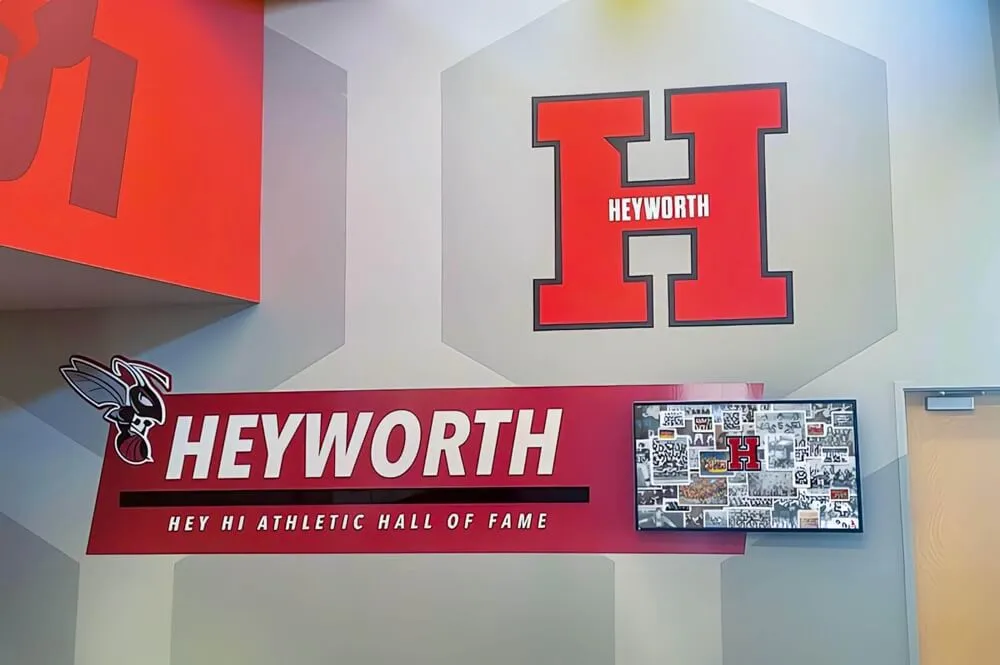
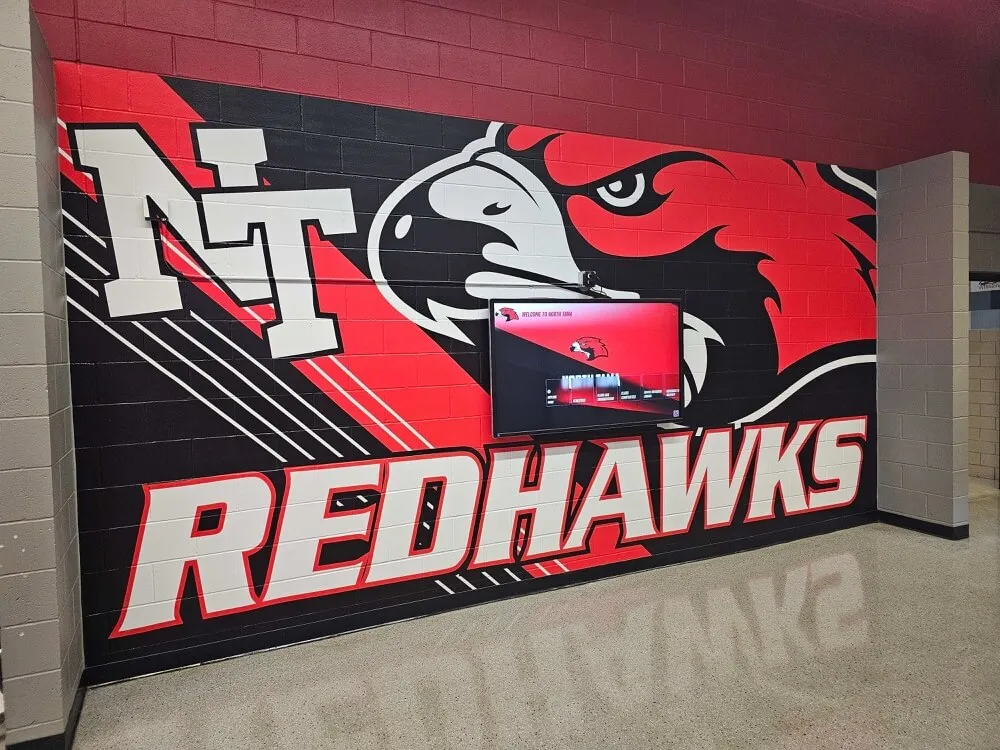
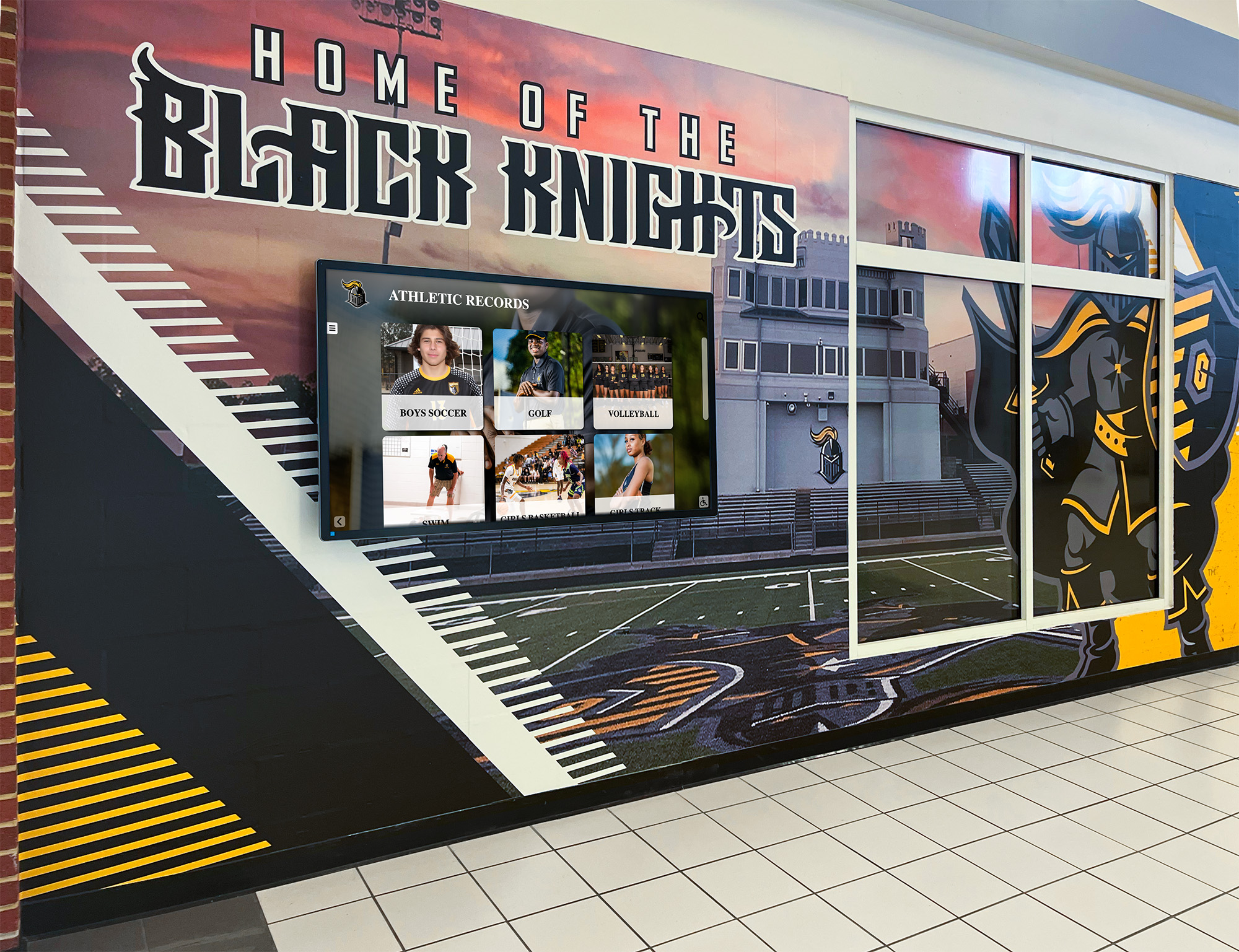
Aesthetic Integration: Displays appear most effective when integrated thoughtfully within facility design rather than appearing afterthought additions. Consider mounting displays within architectural features, coordinating mounting hardware finish with surrounding materials, concealing cables and equipment behind walls or in conduit, and positioning displays complementing rather than competing with existing recognition elements like painted murals or trophy cases.
Maintenance Access: Installation should accommodate future maintenance including accessible power for eventual replacement, removable mounting enabling display servicing or upgrading, and sufficient clearance for technicians working on installed equipment. Permanent installations with no maintenance access create expensive problems when displays require service.
Training and Support
Display investments deliver value only when personnel know how to operate and maintain them effectively.
Administrator Training: Staff responsible for tournament display management need comprehensive training including system operation and content management, update procedures for bracket changes and new information, troubleshooting common problems before calling for support, and accessing help resources when encountering unfamiliar issues.
Documentation: Installations should include clear documentation covering system capabilities and limitations, step-by-step procedures for common tasks, contact information for technical support, and warranty details and service arrangements. Documentation should remain accessible to current staff and successors who assume responsibility after personnel changes.
Backup Personnel: Single-person dependency creates vulnerabilities when that individual is unavailable. Schools should train at least 2-3 staff members on display management, ensuring continuity when primary administrators are absent, sick, or depart the organization. Cross-training prevents displays becoming outdated during personnel transitions.
Vendor Support Arrangements: Digital display purchases should include clear support terms defining what technical assistance is included, response time expectations for support requests, escalation procedures for serious problems, and continuing education as systems update and new features launch. Insufficient support arrangements leave schools struggling with problems beyond internal capabilities to resolve.
Measuring Display Effectiveness
Schools should establish metrics demonstrating display value, informing improvement opportunities, and justifying continued investment.
Engagement Metrics: Interactive displays provide built-in analytics quantifying total interactions, unique users versus returning visitors, average session duration, most-viewed content sections, and usage patterns across time (peak hours, seasonal variation). These metrics demonstrate display effectiveness and guide content strategy.
Observational Assessment: Even non-interactive displays benefit from periodic observation noting how many people pause to view displays, how long typical viewing lasts, what content generates visible interest or conversation, and what improvements might increase engagement. This qualitative assessment supplements quantitative metrics for interactive systems.
Stakeholder Feedback: Periodic surveys of students, athletes, families, and community members gather perception data including awareness of tournament displays, usefulness of information provided, suggestions for improvement, and overall satisfaction. Feedback ensures displays serve actual stakeholder needs rather than institutional assumptions about what audiences value.
Advancement Correlation: Schools implementing tournament displays as part of athletic recognition initiatives should monitor whether enhanced recognition correlates with increased athletic booster participation, higher event attendance, improved prospective family perceptions, or strengthened alumni engagement. While displays alone don’t cause these outcomes, correlation analysis helps quantify return on recognition investments.
Regular measurement cycles—quarterly reviews of engagement metrics, annual comprehensive assessments—enable continuous improvement and demonstrate ongoing value to administrators evaluating whether display investments justify continued operation and potential expansion.
Addressing Common Implementation Challenges
Schools implementing tournament displays frequently encounter obstacles that undermine success if not addressed proactively.
Content Update Burden
The most common display failure mode: initial enthusiasm ensures current content during installation and first tournament, but update burden eventually overwhelms available staff time, resulting in displays showing progressively outdated information that students learn to ignore.
Root Causes: Unrealistic initial expectations about update time required, unclear responsibility assignment leaving no one specifically accountable, content workflows requiring specialized skills that only one person possesses, and competing priorities displacing display maintenance when staff become busy with other obligations.
Mitigation Strategies: Select display systems with content management matching actual staff capabilities rather than aspirational skill levels. Establish clear responsibility assignments designating specific individuals accountable for updates. Create standardized templates and workflows minimizing time required for routine updates. Train multiple backup personnel preventing single-person dependencies. Allocate realistic staff time rather than treating display maintenance as “additional duties as assigned” competing with legitimate primary responsibilities.
Schools should honestly assess whether they can sustain content management before implementing displays requiring regular updates. Displays that cannot stay current damage recognition effectiveness more than having no displays at all.
Technical Reliability Issues
Digital displays occasionally malfunction, requiring troubleshooting and repair. Extended downtime frustrates users and wastes investment if displays remain dark for weeks while awaiting service.
Common Problems: Software crashes requiring reboots, network connectivity interruptions preventing content updates, hardware failures (screens, media players, touchscreen calibration), power issues affecting display operation, and content formatting errors causing display problems.
Prevention Approaches: Specify commercial-grade displays designed for continuous operation rather than consumer equipment intended for residential use. Implement remote management enabling IT staff to monitor display health and address problems remotely without on-site visits. Establish clear vendor support arrangements with defined response times. Maintain spare critical components (media players, cables) enabling rapid replacement while defective parts undergo service. Select proven reliable systems rather than experimental technologies with uncertain durability.
Redundancy Planning: Critical display locations benefit from redundancy planning ensuring tournament information remains accessible if primary systems fail. This might involve backup displays that activate if primary units fail, printed bracket fallbacks ready for posting, or mobile displays that substitute while permanent installations undergo repair.
Schools should evaluate vendor track records, warranty terms, and support arrangements before purchase, recognizing that lowest initial cost often correlates with poorest long-term reliability and most expensive total ownership.
Budget Constraints and Funding
Schools frequently cite inadequate budgets as insurmountable barriers to effective tournament displays, though creative funding approaches overcome this challenge.
Alternative Funding Sources: Athletic booster organizations often fund recognition infrastructure through special fundraising campaigns. Corporate sponsors may underwrite displays in exchange for modest acknowledgment. Alumni donor appeals specifically supporting athletic recognition generate contributions distinct from general fundraising. Capital improvement budgets accommodate displays as facility enhancements. Parent associations and community organizations sometimes fund projects benefiting student athletes. Grant programs from athletic associations, booster club national organizations, or community foundations occasionally support recognition technology.
Phased Implementation: Schools lacking funding for comprehensive solutions can implement displays incrementally—starting with single displays in highest-priority locations, expanding to additional locations as funding becomes available, beginning with basic capabilities and upgrading to richer features over time, or initially focusing on current tournaments while adding historical content gradually.
Leasing and Financing: Some vendors offer leasing or financing arrangements spreading costs across multiple budget years rather than requiring full payment upfront. While total cost exceeds outright purchase, this approach makes displays accessible to schools that cannot accommodate large single-year capital expenditures.
Shared Resources: Schools within districts or athletic conferences might share display costs implementing similar systems across multiple schools, negotiating volume pricing reducing per-school investment, or developing shared content that schools customize locally rather than each creating original materials.
Budget constraints prove legitimate, but schools genuinely prioritizing tournament recognition typically discover funding approaches when leadership commits to solving the challenge rather than accepting inadequate recognition as inevitable.
Future Trends in Tournament Display Technology
Emerging technologies will expand tournament display capabilities over coming years, though schools should balance innovation interest against practical reliability and cost.
Enhanced Data Integration
Future display systems will increasingly integrate directly with tournament management software, game statistics systems, and live scoring platforms, enabling automatic bracket updates as officials enter game results rather than requiring manual content management.
This integration eliminates update burden that currently challenges many implementations, ensures perfect accuracy rather than risking manual entry errors, and enables real-time displays updating while games conclude rather than waiting for staff to process information later. However, integration requires compatible systems across multiple vendors, potentially limiting schools to specific technology ecosystems.
Augmented Reality Overlays
Emerging augmented reality applications allow viewers to point smartphones at physical displays—traditional brackets, trophy cases, painted murals—revealing supplementary digital content including video highlights, detailed statistics, athlete interviews, and historical context that physical displays cannot accommodate.
This hybrid approach combines traditional display aesthetics with digital content depth, potentially satisfying schools valuing traditional recognition while desiring modern information richness. However, AR applications require users to download apps and actively engage rather than passively viewing displays, potentially limiting reach to technically savvy audiences.
Artificial Intelligence Content Generation
AI technologies may eventually automate content creation for tournament displays—generating bracket graphics from raw data, writing game summaries from box scores, creating highlight compilations from game footage, and producing athlete profiles from statistical databases—dramatically reducing human labor currently required for rich content.
While this automation promises to address content burden challenges, current AI limitations including inaccuracy, generic output lacking local flavor, and inability to capture contextual nuances mean that human oversight remains essential. Schools should view AI as potentially useful content assistance rather than complete replacement for human judgment and creativity.
Expanded Analytics and Personalization
Advanced display systems may offer personalized content based on viewer identity—showing graduating class brackets when alumni visit, emphasizing sports that current students participate in, or highlighting related achievements connecting to displayed tournaments.
This personalization requires viewer identification through login systems, mobile apps, or facial recognition (raising privacy concerns), limiting implementation to contexts where benefits justify complexity and privacy implications. Most schools likely continue favoring public displays accessible without authentication rather than personalized systems requiring viewer identification.
Schools should maintain pragmatic perspectives on emerging technologies, adopting innovations offering clear value improvements rather than implementing technology for novelty’s sake. Proven reliable solutions delivering consistent value typically serve schools better than experimental approaches with uncertain long-term viability.
Case Study Insights: Learning from Implementation Experiences
While this guide avoids fabricated case studies, examining common implementation patterns reveals instructive insights from schools’ real-world experiences.
Success Pattern: Integrated Recognition Approach
Schools achieving sustained tournament display success typically integrate bracket displays within comprehensive athletic recognition infrastructure rather than treating them as isolated projects. Tournament displays connect naturally to athlete profile systems, team history documentation, championship recognition programs, and hall of fame initiatives.
This integration creates content synergies—athlete profiles developed for general recognition purposes automatically populate tournament rosters; championship documentation feeds multiple display purposes; historical content accumulates value over years rather than serving single immediate needs. Staff managing integrated systems maintain engagement because recognition serves ongoing purposes beyond just sporadic tournament weeks.
Schools considering tournament displays should evaluate whether broader athletic recognition platforms deliver greater total value than standalone tournament solutions, even if integrated approaches require higher initial investment.
Failure Pattern: Abandoned Digital Displays
Schools most commonly abandon digital tournament displays when content management burden exceeds available staff capacity, technical problems persist without adequate support, displays show outdated information enough times that users stop consulting them, or organizational priorities shift and displays lose administrative support.
These failures typically trace to implementation decisions that seemed reasonable initially but proved unsustainable—selecting sophisticated systems without matching technical capabilities, underestimating ongoing content management time required, inadequate vendor support arrangements when problems arose, or no designated accountability ensuring displays remained operational.
Preventing these failures requires honest capacity assessment during selection, choosing solutions sustainable given actual resources rather than ideal scenarios, establishing clear responsibility and adequate support, and maintaining realistic expectations about implementation challenges.
Hybrid Success: Combining Traditional and Digital
Many schools successfully combine traditional physical recognition with complementary digital displays—trophy cases showing select major championships while digital displays provide comprehensive tournament documentation, vinyl banners acknowledging recent achievements while interactive systems enable exploring historical results, physical artifacts conveying gravitas while digital content delivers information depth and update flexibility.
These hybrid approaches leverage each method’s strengths while compensating for limitations, creating recognition infrastructure more comprehensive than either approach alone. Success requires coordinating elements so they complement rather than compete, maintaining visual consistency, and ensuring all components receive adequate maintenance rather than some elements deteriorating while others receive all attention.
Schools should avoid false binary choices between traditional versus digital recognition, instead evaluating how different approaches might work together creating complete recognition ecosystems.

Conclusion: Selecting Optimal Tournament Display Solutions
High school state championship tournaments represent peak athletic achievements deserving recognition infrastructure that matches their significance. The optimal display solution for any specific school depends on unique combinations of budget availability, technical capabilities, space characteristics, update frequency requirements, and institutional priorities.
Schools with minimal budgets and basic needs may find that thoughtfully implemented traditional displays—professional printed brackets, quality vinyl banners, well-maintained trophy cases—adequately serve recognition purposes when maintained consistently and positioned prominently. These approaches require accepting content limitations and update inflexibility in exchange for simplicity and lower cost.
Schools prioritizing information depth, real-time tournament tracking, and long-term historical preservation increasingly benefit from digital interactive solutions or integrated athletic recognition platforms. While requiring higher investment, these systems deliver capabilities that traditional displays cannot match—comprehensive content, easy updates, cumulative historical documentation, and engagement analytics quantifying value. Purpose-built platforms like Rocket Alumni Solutions provide schools with complete athletic recognition infrastructure combining tournament bracket displays with athlete profiles, team histories, championship documentation, and hall of fame systems optimized specifically for educational contexts.
Regardless of selected approach, implementation quality determines success as much as technology choice. Clear content planning, adequate staff training, realistic capacity assessment, proper technical installation, and ongoing maintenance commitment separate displays that deliver lasting value from those that fail despite adequate initial investment.
The state championship tournaments your athletes compete in and occasionally win deserve recognition infrastructure ensuring these achievements receive appropriate visibility during exciting tournament weeks while preserving accomplishments permanently within institutional memory. Effective tournament displays amplify school pride, honor athletic excellence, strengthen community connections, and create recognition experiences that athletes, students, and supporters value across generations.
By carefully evaluating display options against your specific institutional context, implementing systems matched to actual capabilities and resources, and maintaining displays consistently over time, your school can create tournament recognition infrastructure that transforms fleeting championship excitement into enduring pride celebrating athletic achievement at its highest level.