Senior night represents one of the most emotional evenings in high school basketball—the final home game where programs honor departing seniors who dedicated years to early morning practices, weekend tournaments, and countless hours perfecting their craft. While the on-court ceremony creates memorable moments for players and families, the visual elements surrounding these celebrations amplify the atmosphere and create lasting mementos that athletes treasure for decades.
Whether you’re planning recognition for a single senior or celebrating an entire graduating class, thoughtful poster design combines athletic photography, personal touches, program branding, and creative layouts that honor each athlete’s individual story while reinforcing team identity. This guide examines traditional poster approaches alongside innovative digital recognition solutions that extend senior night celebrations beyond a single evening into permanent institutional memory.
Understanding Basketball Senior Poster Traditions
Before exploring specific design ideas and creation strategies, understanding why basketball programs invest in senior posters—and how these visual elements function within broader senior night traditions—helps ensure your approach serves genuine recognition purposes rather than merely replicating what other programs do without understanding the underlying goals.
The Role of Posters in Senior Night Celebrations
Basketball senior night ceremonies typically occur before or during the final home game, with formal presentations introducing each senior alongside family members while highlighting their contributions to the program. These on-court moments create emotional highlights, but they’re inherently brief—athletic directors and coaches balance meaningful recognition against maintaining appropriate game schedules and respecting opponent preparation time.
Senior posters extend recognition beyond these compressed ceremony moments. Large-format posters displayed prominently in gymnasium entryways, along hallways leading to courts, or mounted around playing areas create sustained visual celebration that begins when families arrive hours before tip-off and continues throughout pre-game warmups, halftime, and post-game celebrations.

These displays serve practical functions beyond decoration. They guide attendees toward the recognition theme for the evening, signal to opposing teams and officials that they’re witnessing a special occasion deserving additional consideration, provide natural photo opportunity backgrounds for families capturing memories, and create artifacts seniors can take home after the ceremony concludes.
For many basketball families, that senior poster becomes one of the few tangible recognition items athletes receive from their high school career—something they can display in college dorm rooms, eventually in their own homes, and show their children decades later. This permanence justifies thoughtful design investment and production quality sufficient to endure beyond a single game night.
How Basketball Senior Posters Differ from Other Sports
While many sports implement senior night posters, basketball’s unique characteristics create specific design considerations and opportunities. Unlike football with 50+ person rosters or track programs with dozens of competitors, basketball typically celebrates smaller senior classes—often 3-8 athletes—allowing more elaborate individual poster designs without overwhelming production budgets or gym display space.
Basketball’s indoor venue provides controlled display environments. Unlike outdoor sports where weather threatens poster durability or visibility varies with field lighting, gymnasium displays benefit from consistent lighting, protection from elements, and concentrated spectator viewing in enclosed spaces. These conditions favor larger poster formats, more detailed design elements, and materials that might not survive outdoor exposure.
The sport’s visual culture also influences poster aesthetics. Basketball photography often captures dramatic action moments—athletes elevating for dunks, defensive intensity during crucial possessions, celebration after game-winning shots—that translate powerfully into poster-sized imagery. The individual nature of basketball moments (unlike the collective formations of football or the distant perspectives of soccer) creates recognizable athlete-focused images ideal for personalized recognition displays.
Balancing Individual Recognition with Team Identity
Effective basketball senior posters navigate tension between celebrating individual athletes and maintaining cohesive team identity. Each senior deserves personalized recognition reflecting their unique journey, position, playing style, and contributions. Simultaneously, these athletes succeeded within team contexts—their individual achievements emerged through collective effort, coaching, program culture, and institutional support.
The most successful senior poster approaches honor both dimensions. Design elements might incorporate individual athlete photography, statistics, and personal quotes or messages while using consistent color schemes matching team branding, unified layout templates creating visual cohesion across all senior posters, program logos and mascots reinforcing institutional identity, and team mottos or values statements connecting individual success to collective culture.
This balance prevents senior night from fragmenting into disconnected individual celebrations while ensuring each athlete receives personalized acknowledgment rather than generic recognition treating all seniors identically regardless of their distinct contributions and experiences.
Creative Basketball Senior Poster Design Ideas
With foundational understanding of senior poster purposes and contexts established, exploring specific design approaches provides concrete options for creating impactful visual recognition.
Classic Action Shot Layouts
The most traditional basketball senior poster design features a large action photograph of the athlete during competition—capturing them shooting, defending, driving to the basket, or celebrating with teammates. These images immediately communicate the athlete’s role and playing style while creating dynamic visual impact.
Effective Action Shot Design Elements:
Dramatic Cropping and Composition: Rather than standard full-body shots showing entire court context, consider tight crops emphasizing facial intensity during crucial moments, wide-angle perspectives showing athletes elevating above defenders, or creative angles capturing unique viewpoints fans never see during live games.
Background Treatment: Action photographs often include distracting elements—opposing players, crowd details, scoreboard clutter. Effective designs address backgrounds through selective blurring keeping athletes in sharp focus while softening distractions, background removal placing athletes against solid colors, gradients, or team-branded graphics, or artistic effects transforming photographs into illustrated or painted styles reducing photographic realism while enhancing poster impact.
Typography Integration: Text elements announcing athlete names, jersey numbers, graduation year, and relevant statistics or achievements should enhance rather than compete with imagery. Consider bold, athletic fonts matching basketball’s dynamic energy, text placement utilizing negative space in photographs rather than covering important image areas, color choices ensuring text legibility against photographic backgrounds, and hierarchy emphasizing most important information (athlete name) while supporting details (position, height) remain visible but secondary.

Statistical Highlights: Many basketball programs include career statistics on senior posters—total points scored, rebounds, assists, steals, games played, years on varsity. These quantitative measures provide objective recognition of athletic contribution while giving spectators unfamiliar with individual seniors concrete information about their impact on the program.
Before-and-After Timeline Designs
Particularly impactful for four-year varsity players, timeline designs contrast athlete development from freshman year through senior season. This approach celebrates visible growth—physical maturation, skill development, confidence evolution—that defines high school athletic journeys.
Timeline Implementation Approaches:
Side-by-Side Comparison: Place freshman year photograph alongside senior year image, allowing viewers to immediately recognize transformation. Add captions highlighting progression: “Freshman Year - 5'8”, averaged 3 points per game" beside “Senior Year - 6'2”, averaged 18 points per game, All-Conference selection."
Sequential Progression: For athletes with extensive photograph collections, create four-image layouts showing progression across all four years. This approach works particularly well for athletes who grew significantly, changed positions, or evolved their playing style dramatically across their high school career.
Highlight Reel Visual: Design posters featuring multiple action shots from different seasons arranged chronologically, visually narrating the athlete’s journey through changing uniforms, physical development, and increasingly prominent roles in team success.
These timeline approaches resonate emotionally because they make visible what families, coaches, and athletes themselves experienced across four years—the sometimes subtle, sometimes dramatic transformation from uncertain freshmen into confident senior leaders.
Collage and Multi-Photo Layouts
Rather than featuring a single dominant photograph, collage designs incorporate multiple images celebrating diverse aspects of athletes’ basketball experience—action shots, team bonding moments, practice intensity, championship celebrations, community service, and candid interactions with coaches and teammates.
Collage Design Strategies:
Thematic Groupings: Organize photographs around themes like “Leadership Moments” showing the senior captaining huddles and mentoring younger players, “Championship Memories” featuring tournament victories and medal ceremonies, “Practice to Performance” contrasting preparation work with game-day execution, or “Beyond Basketball” highlighting the athlete’s personality, academics, and non-athletic interests.
Varied Photo Sizes: Create visual hierarchy using one large anchor image (typically a dramatic action shot) surrounded by smaller photographs adding context and personality. This approach maintains strong focal points while incorporating breadth showing athletes as complete people rather than reducing them to single moments.
Scrapbook Aesthetic: Some programs embrace informal, handcrafted collage styles resembling scrapbooks rather than polished commercial posters. This approach feels particularly appropriate when senior parents or team families create posters themselves, incorporating personal photographs, handwritten notes, ticket stubs from memorable games, and other memorabilia creating intimate, authentic recognition artifacts.
Typography-Focused Minimalist Designs
Not all effective senior posters emphasize photography. Typography-focused designs use bold text, creative layouts, and graphic elements to create striking visual impact particularly appropriate when high-quality action photography isn’t available or when programs want distinct visual identities setting their senior recognition apart from typical athletic posters.
Minimalist Design Elements:
Bold Name Treatment: Make the athlete’s name the dominant visual element using enormous typography, creative text arrangements (vertical, diagonal, curved), or letterforms filled with subtle photograph overlays or team colors.
Quote-Based Designs: Feature meaningful quotes from the senior athlete reflecting on their basketball journey, favorite coach sayings that defined program culture, or inspirational messages about teamwork, perseverance, or growth. Typography becomes the poster’s centerpiece, with athlete photographs serving supporting rather than dominant roles.
Silhouette and Icon Approaches: Use athlete silhouettes created from photographs rather than full-color images, combine with basketball graphic elements (courts, hoops, balls rendered in team colors), and emphasize clean, modern aesthetics appealing to athletes who appreciate contemporary design over traditional sports poster conventions.
These approaches work particularly well for programs with limited photography budgets or when creating unified visual systems across multiple posters where consistent design templates matter more than individual photograph selection.
Incorporating Personal Elements and Achievements
Beyond athletic accomplishments, comprehensive senior recognition acknowledges athletes as complete individuals with academic achievements, community involvement, leadership roles, and post-graduation plans deserving celebration alongside basketball success.
Personal Recognition Elements:
Academic Honors: Highlight GPA, honor roll recognition, National Honor Society membership, academic scholarships, or college admission achievements demonstrating that athletes excelled beyond basketball.
Community Contributions: Recognize volunteer work, youth coaching, mentorship programs, charitable involvement, or leadership in non-athletic school organizations showing well-rounded character development.
College or Career Plans: Announce where athletes are heading after graduation—college names, intended majors, military service, career pathways—helping audiences understand the senior’s complete future rather than only their athletic past.
Personal Interests and Personality: Include favorite music, foods, hobbies, memorable quotes, inside jokes (when appropriate), or personality traits teammates would recognize, adding warmth and humor that transform posters from formal athletic documentation into celebrations of individuals communities genuinely know and appreciate.
Jersey Number Significance: If an athlete’s number holds personal meaning, explain it. Did they wear #23 because of Michael Jordan? Does #4 honor a family member? These details create connection points between athletes and audiences while adding narrative depth to visual recognition.
Comprehensive approaches like these align with broader trends toward holistic athlete recognition, similar to how thoughtful senior night planning celebrates complete individuals rather than reducing athletes to statistics and wins.
Practical Production and Display Considerations
Creative design concepts require practical execution through appropriate production methods, materials, and display strategies ensuring posters achieve intended visual impact while remaining feasible within budget and time constraints.
Size and Format Options
Senior poster effectiveness depends partly on physical dimensions and format choices balancing visibility, production costs, and display space availability.
Common Size Options:
Standard Poster Sizes (18"x24", 24"x36"): Widely available through printing services at reasonable costs, these sizes work well for individual athlete posters displayed together in hallway galleries or gymnasium entrance areas. Multiple posters in these dimensions create collective impact without requiring excessive wall space or production budgets.
Large Format (36"x48", 48"x72"): Dramatic oversized posters create commanding presence ideal for featuring seniors individually at gymnasium entrances or mounted prominently near basketball courts where they’re visible throughout games. Higher production costs typically limit these sizes to smaller senior classes or programs with substantial recognition budgets.
Banner Formats (24"x96", 36"x108"): Vertical banner layouts work exceptionally well for gymnasium hanging displays, allowing posters to be suspended from ceilings or mounted on columns where horizontal formats wouldn’t fit. These formats particularly suit full-body action shots showcasing athletes from head to toe.
Custom Dimensions: Digital printing capabilities enable custom sizing matching specific display locations—unusually tall vertical spaces, wide hallway sections, or integration with existing recognition walls. This flexibility allows programs to maximize available display areas rather than conforming to standard size constraints.
Material and Durability Choices
Poster longevity expectations influence appropriate material selection balancing initial cost against intended lifespan.
Temporary Display Materials:
Standard Poster Paper: Most economical option, suitable for single-event use when seniors will take posters home after senior night concludes. Quality varies from basic copy paper weight through heavier cardstock providing more substantial feel without dramatically increased cost.
Foam Core Mounting: Adhering printed posters to foam core backing (typically ½" thick) creates rigid, self-supporting displays that stand more professionally than paper alone while remaining lightweight for easy handling and transportation. Foam core adds minimal cost while significantly improving presentation quality.
Lamination: Clear laminate coating protects posters from moisture, tearing, and handling damage, extending usability from single night to multiple seasons if programs want to create permanent senior recognition displays accumulating graduated athletes year after year.
Permanent Display Materials:
Vinyl or Fabric Banners: Weather-resistant materials designed for extended display, ideal for programs hanging senior banners from gymnasium rafters permanently or seasonally. These materials withstand temperature fluctuations, humidity, and physical wear far better than paper-based options.
Aluminum or PVC Panel Mounting: Professional mounting to rigid panels creates museum-quality displays appropriate for permanent installation in trophy cases, athletic hallways, or other recognition areas where senior posters become enduring institutional memory rather than temporary event decoration.
Acrylic Face Mounting: Premium option featuring photographs mounted behind clear acrylic panels creating depth, protecting images indefinitely, and delivering gallery-quality aesthetics. Cost typically limits this approach to especially prominent displays or programs with substantial recognition budgets.
Display Location Strategies
Strategic placement maximizes poster visibility and impact while integrating smoothly with existing gymnasium environments and traffic flow patterns.
High-Impact Placement Options:
Gymnasium Entrance: Position posters at primary entrance points where every attendee passes, ensuring maximum visibility. Consider easel mounting for self-supporting displays or wall mounting if entrance areas provide suitable surfaces.
Court-Side Mounting: Place posters around basketball court perimeter—behind player benches, on walls facing spectator sections, or flanking scorer’s tables. These positions keep seniors visible throughout games while creating powerful backdrops for ceremony photographs.
Hallway Galleries: Create recognition corridors with posters lining hallways leading from school main entrances to gymnasiums. This approach builds anticipation as families and spectators walk toward courts while utilizing often-underused wall space.
Ceiling Hanging: Suspend banner-format posters from gymnasium ceilings using existing structural elements, creating dramatic visual impact visible throughout facilities without consuming valuable wall space needed for scoreboards, championship banners, or other permanent displays.
Portable Display Stands: Freestanding easels or display stands offer flexibility, allowing poster repositioning for optimal visibility during different event phases—positioned at entrances during arrival, moved courtside during ceremonies, relocated to concession areas during halftime.
DIY Creation vs. Professional Printing
Programs face choices between creating senior posters internally using design software and accessible printing resources versus outsourcing to professional design and printing services.
DIY Approach Benefits:
- Cost savings: Eliminates professional design fees and markup on printing services
- Complete creative control: Allows coaches, parents, or students to implement specific visions without external interpretation
- Flexible iteration: Easy to revise designs, incorporate last-minute changes, or create custom variations
- Personal involvement: Parents or booster club members often appreciate opportunities to contribute directly to recognition efforts
- Learning opportunities: Provides students in design, media, or marketing programs with real-world project experience
DIY Requirements and Challenges:
Success requires access to design software (Adobe Photoshop, Illustrator, Canva, or similar tools), design skills or willingness to learn through tutorials and templates, high-resolution photographs suitable for large-format printing, large-format printing access through school resources, local print shops, or online services, and sufficient time for design iteration, approval processes, and production.
Professional Service Benefits:
- Design expertise: Professional designers understand composition, typography, color theory, and layout principles producing polished results
- Efficient workflow: Established processes move from concept to production quickly with less trial-and-error
- Material knowledge: Professionals recommend appropriate printing methods, materials, and finishing options matching intended use and budget
- Reduced family burden: Eliminates need for volunteer coordination and amateur design attempts that sometimes produce disappointing results
- Consistent quality: Professional production ensures color accuracy, proper resolution, and finishing quality across all posters
Selecting Professional Services:
When outsourcing, consider local print shops familiar with sports recognition products, online poster printing services offering sports templates, school vendors already providing yearbooks or programs, or sign companies specializing in large-format printing and vinyl graphics.
Provide clear specifications including exact dimensions, material preferences, quantity needed, deadline requirements, and budget constraints. Share design files in appropriate formats (high-resolution PDFs typically preferred) and request printed proofs or digital mockups for approval before final production.
Modern Digital Alternatives to Traditional Posters
While physical posters remain popular and valuable, forward-thinking basketball programs increasingly supplement or replace temporary paper displays with permanent digital recognition systems that extend senior celebration beyond single evenings into year-round institutional memory.
Interactive Digital Recognition Displays
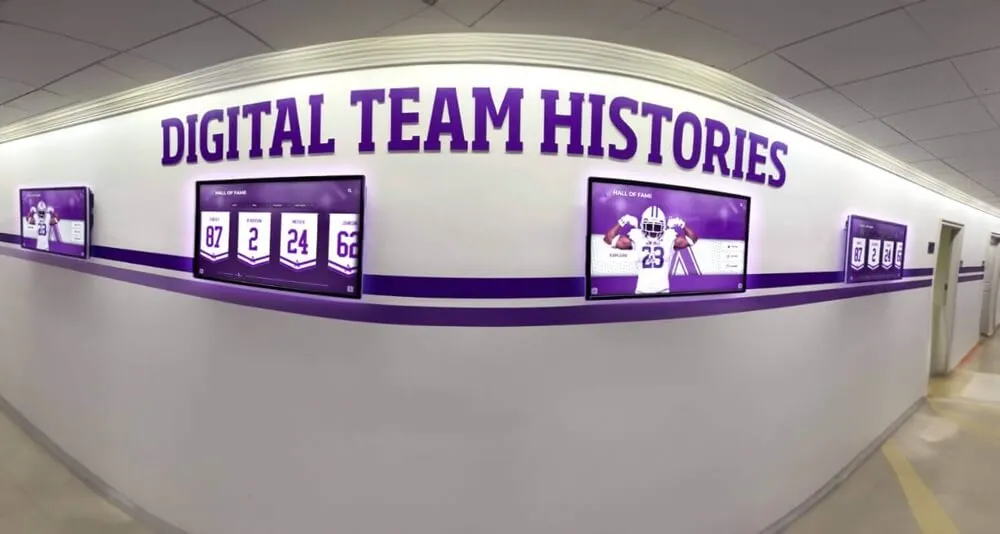
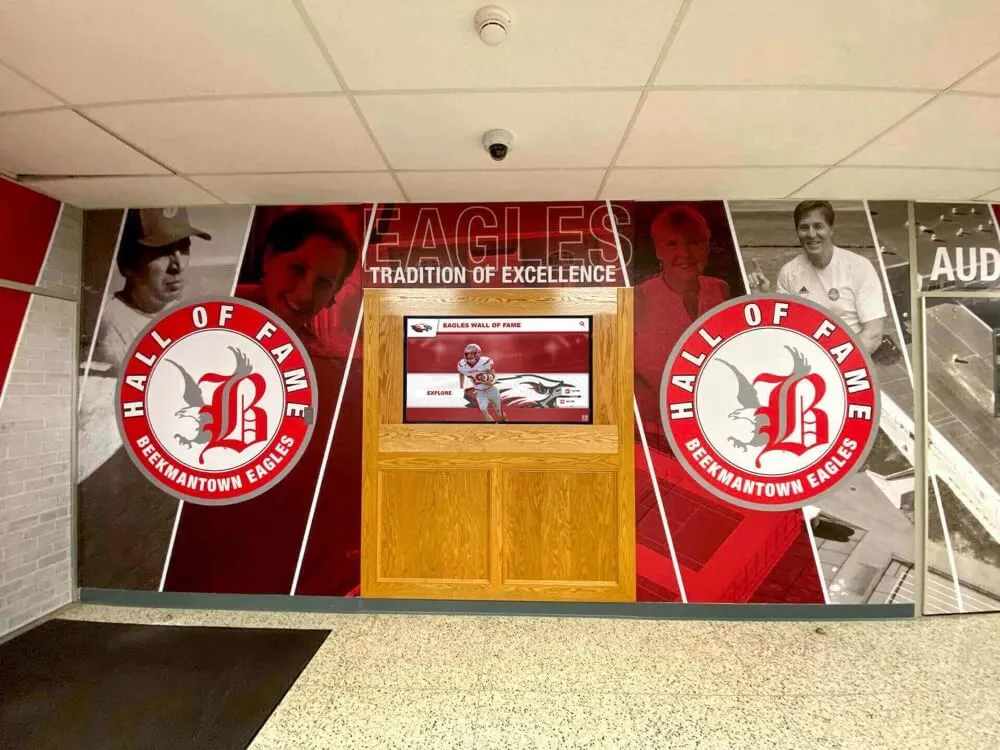
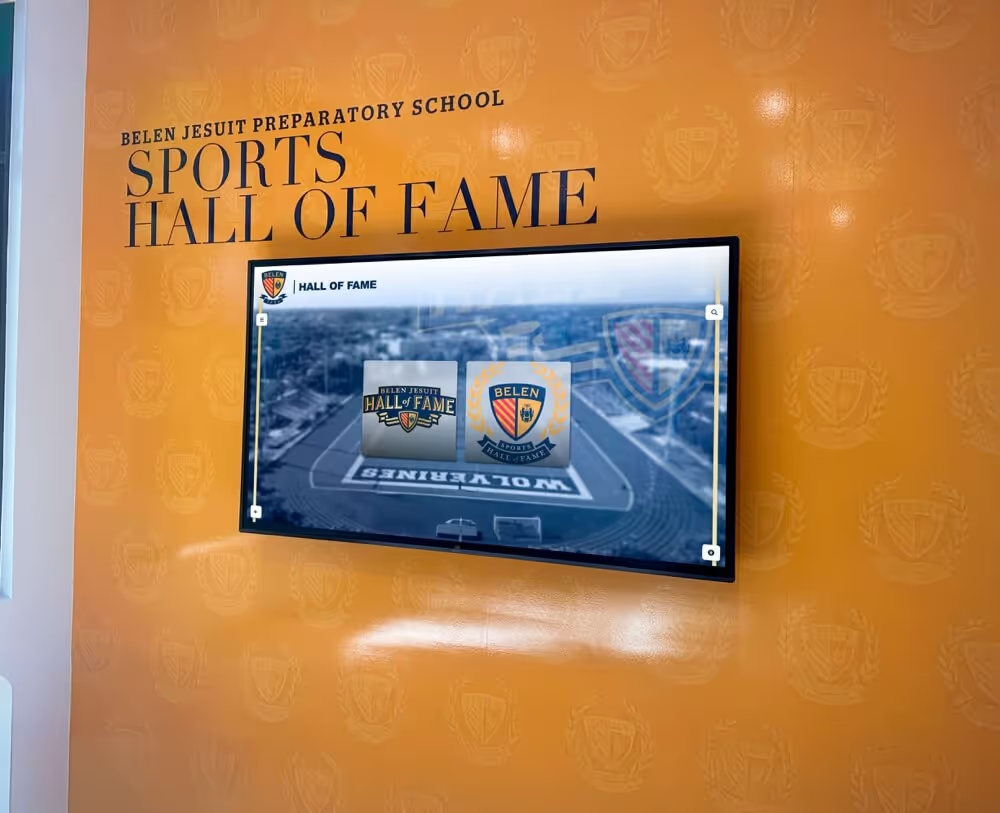
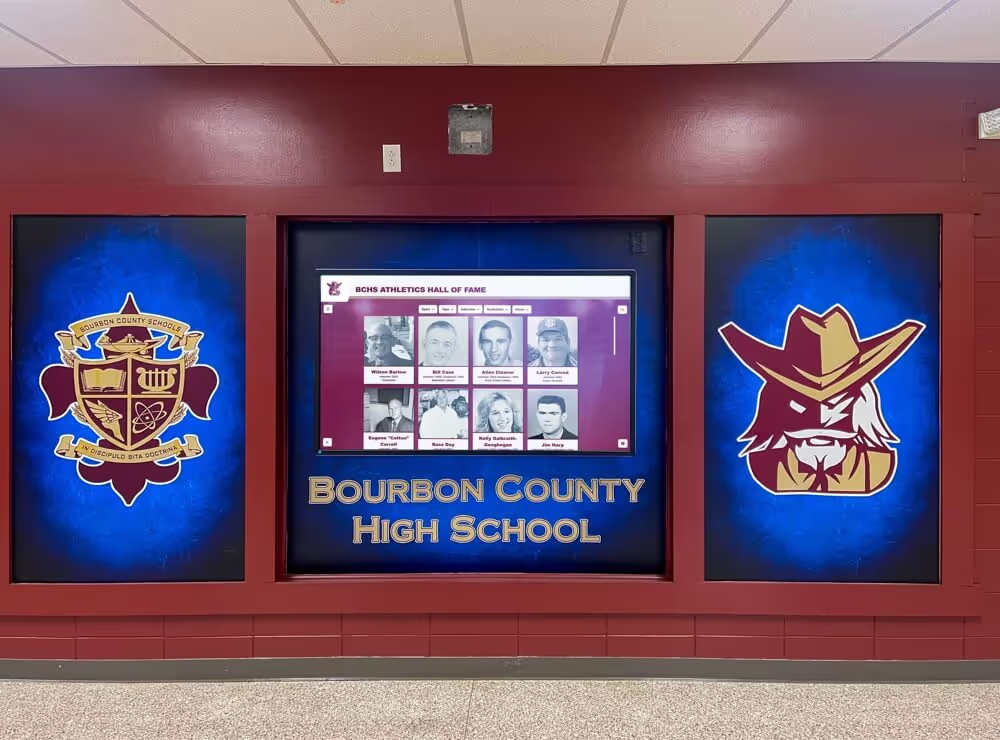
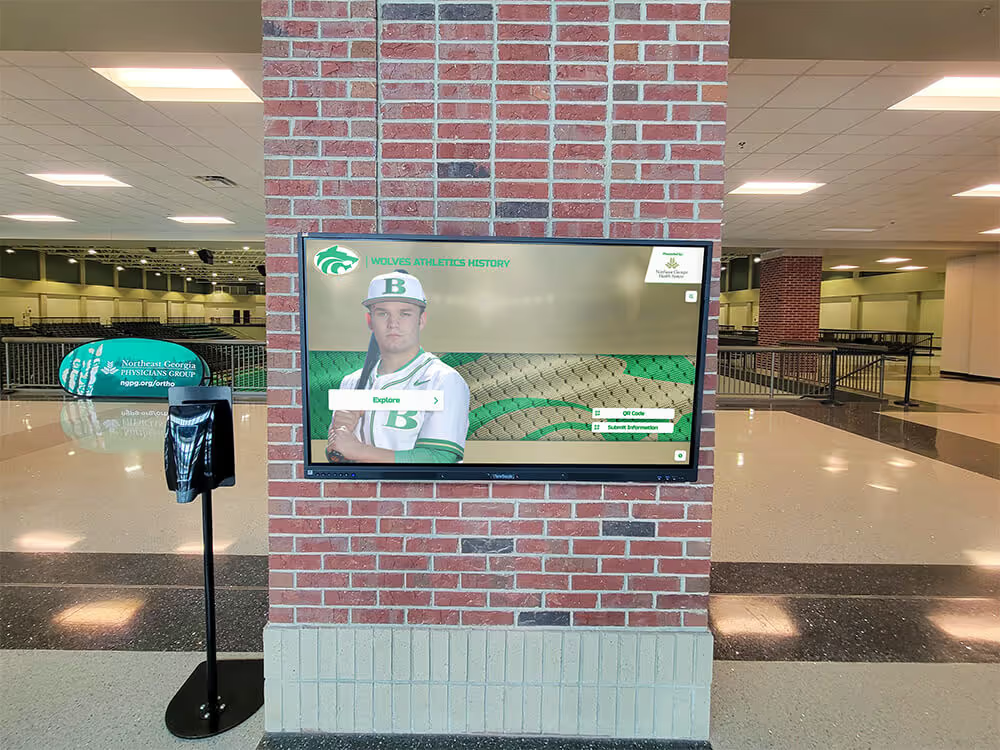
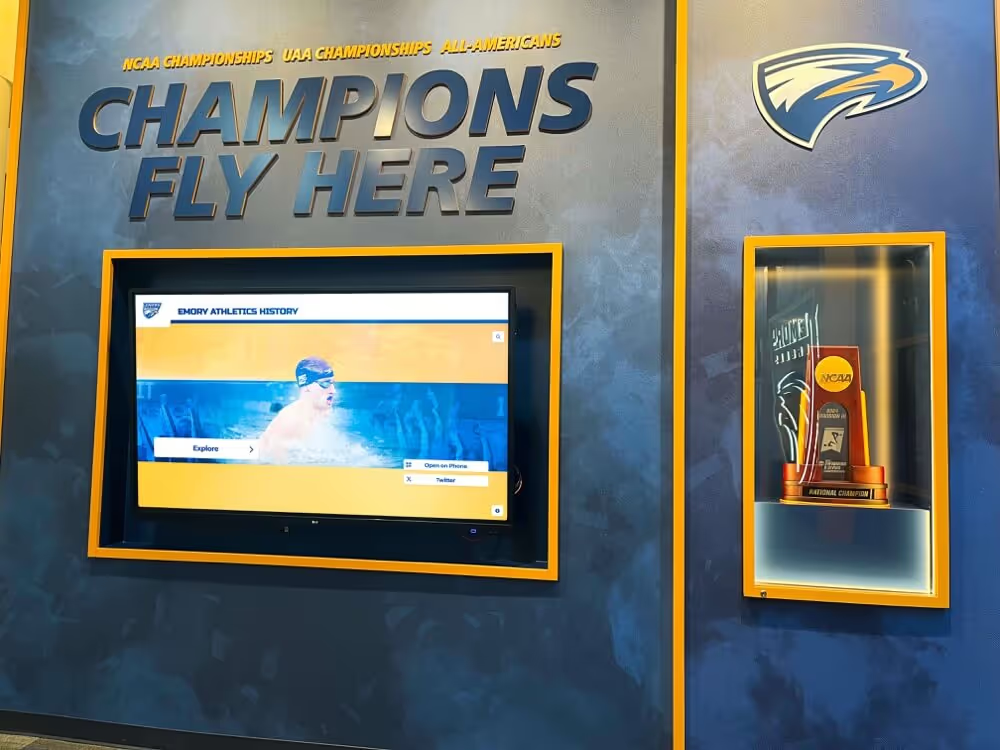
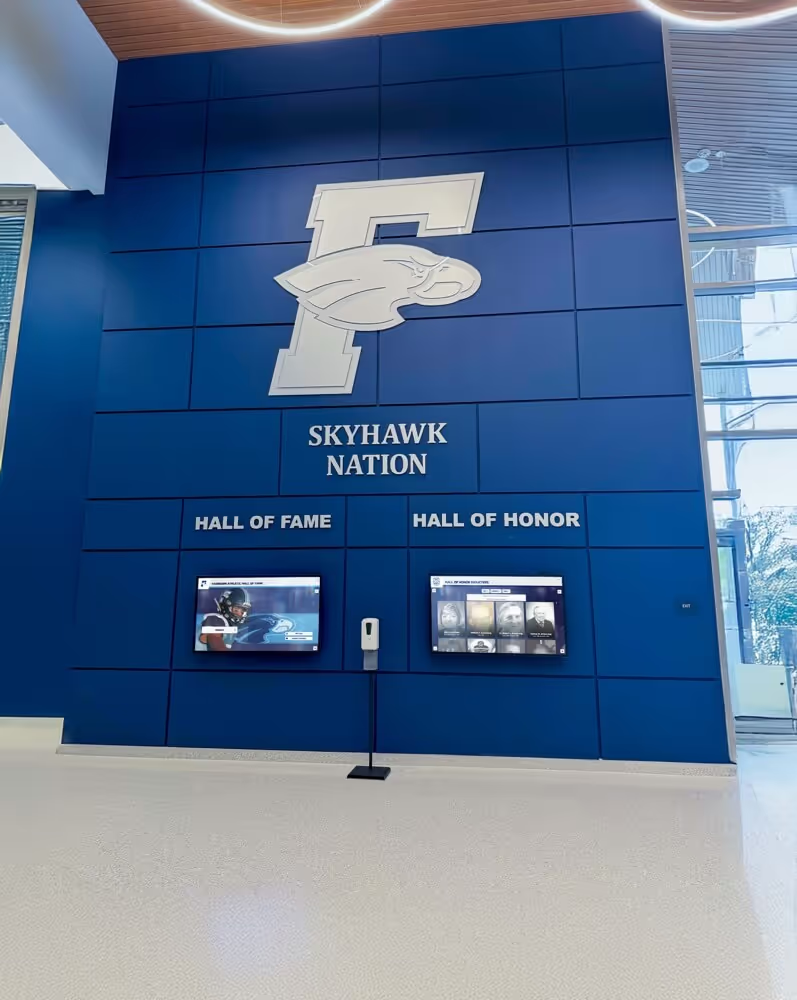
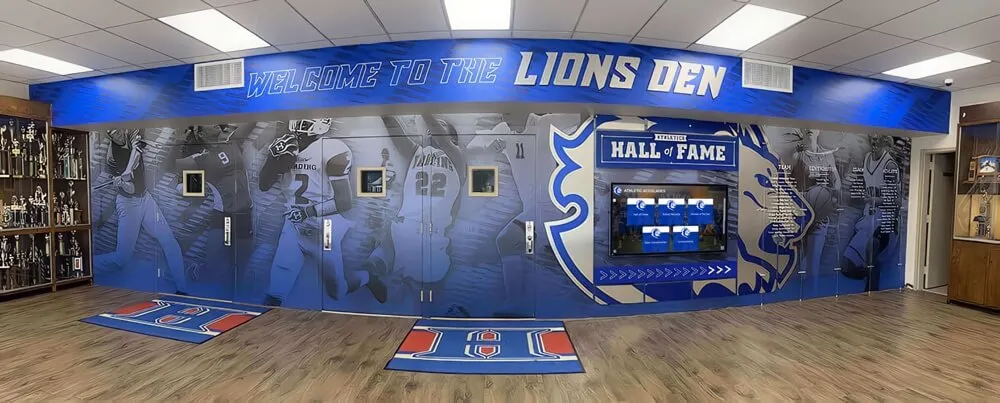
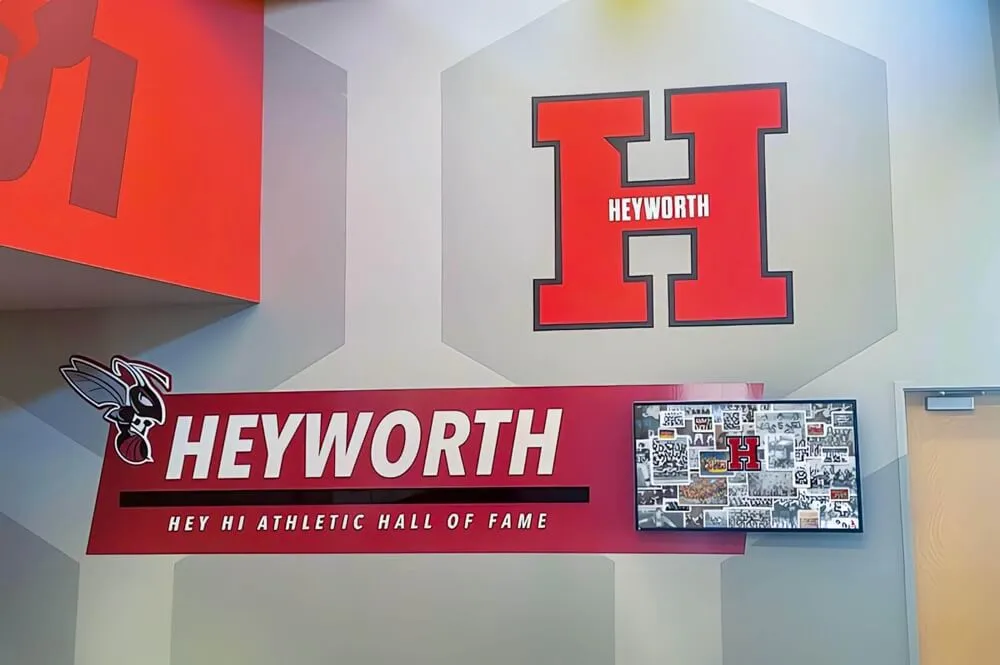
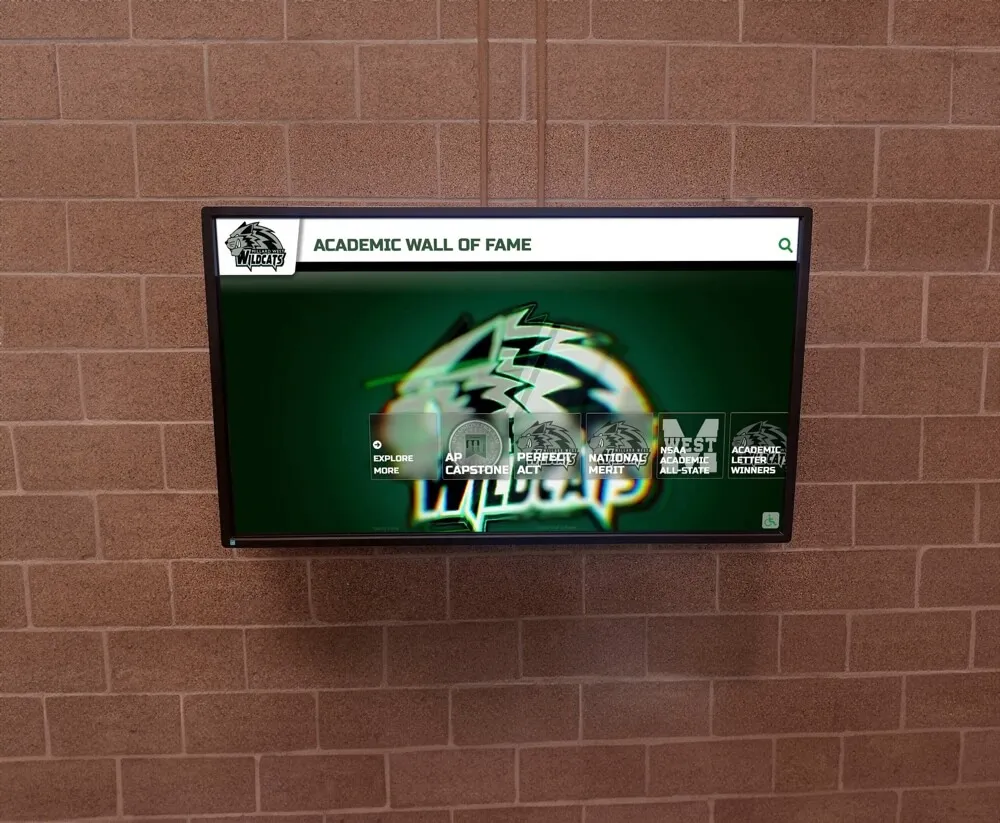
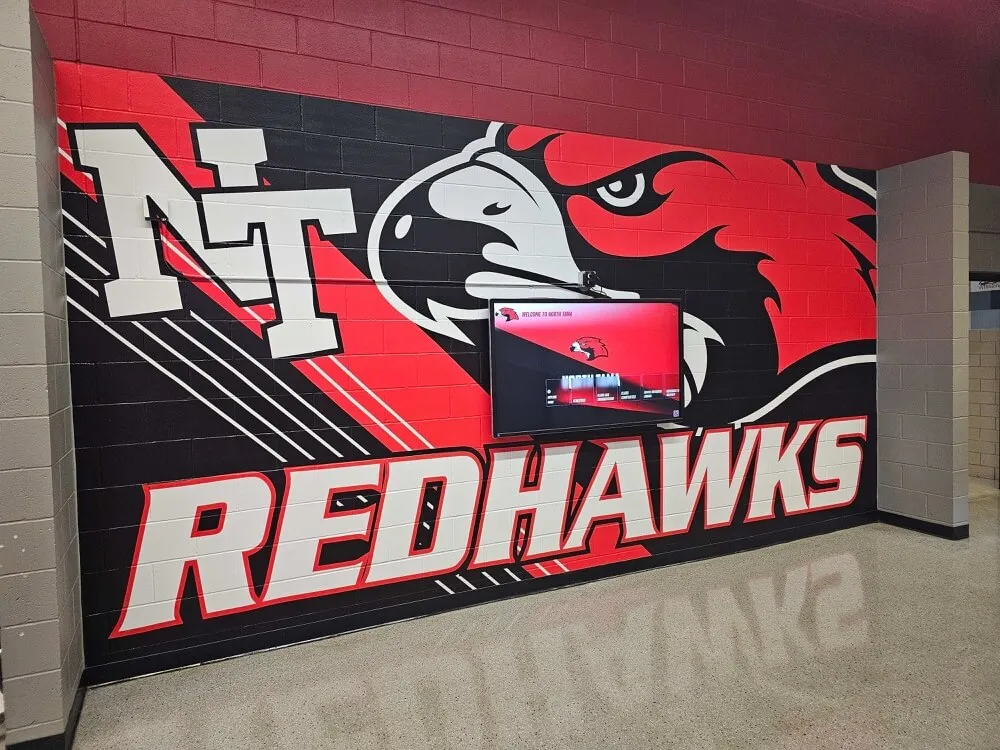
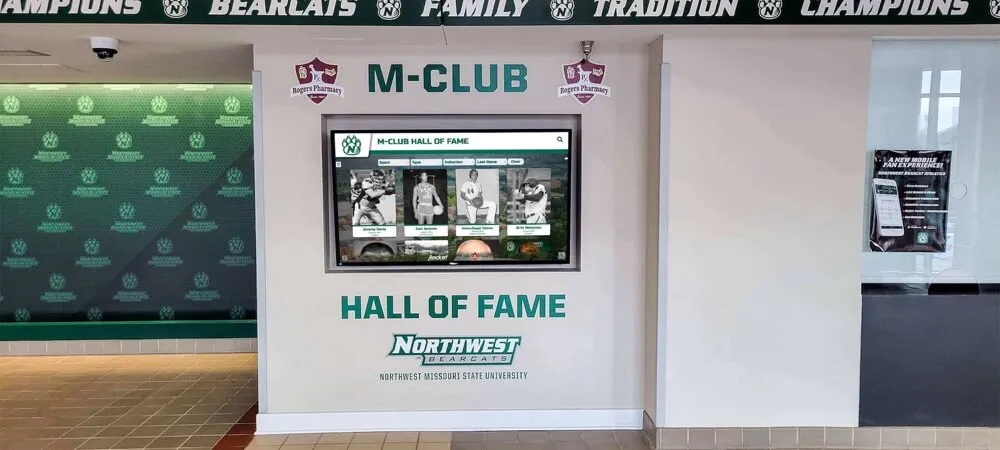
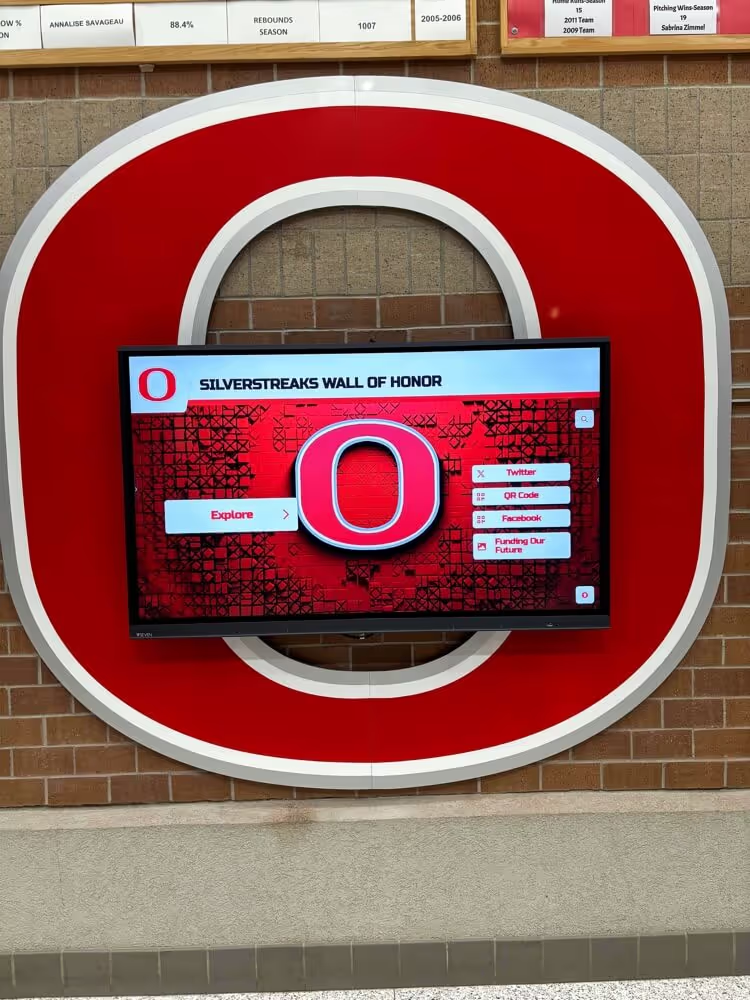
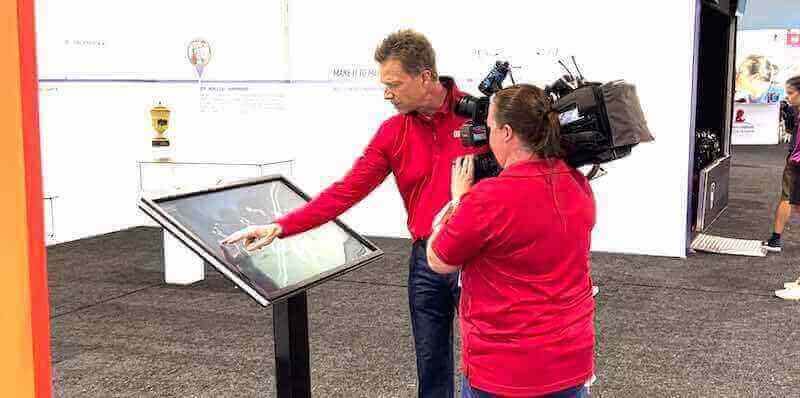
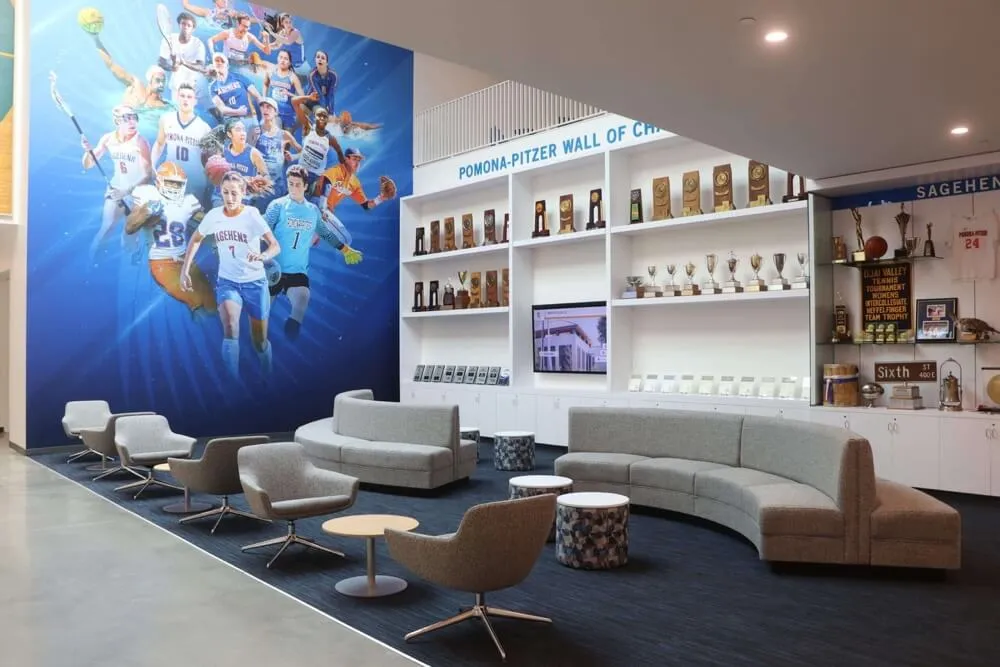
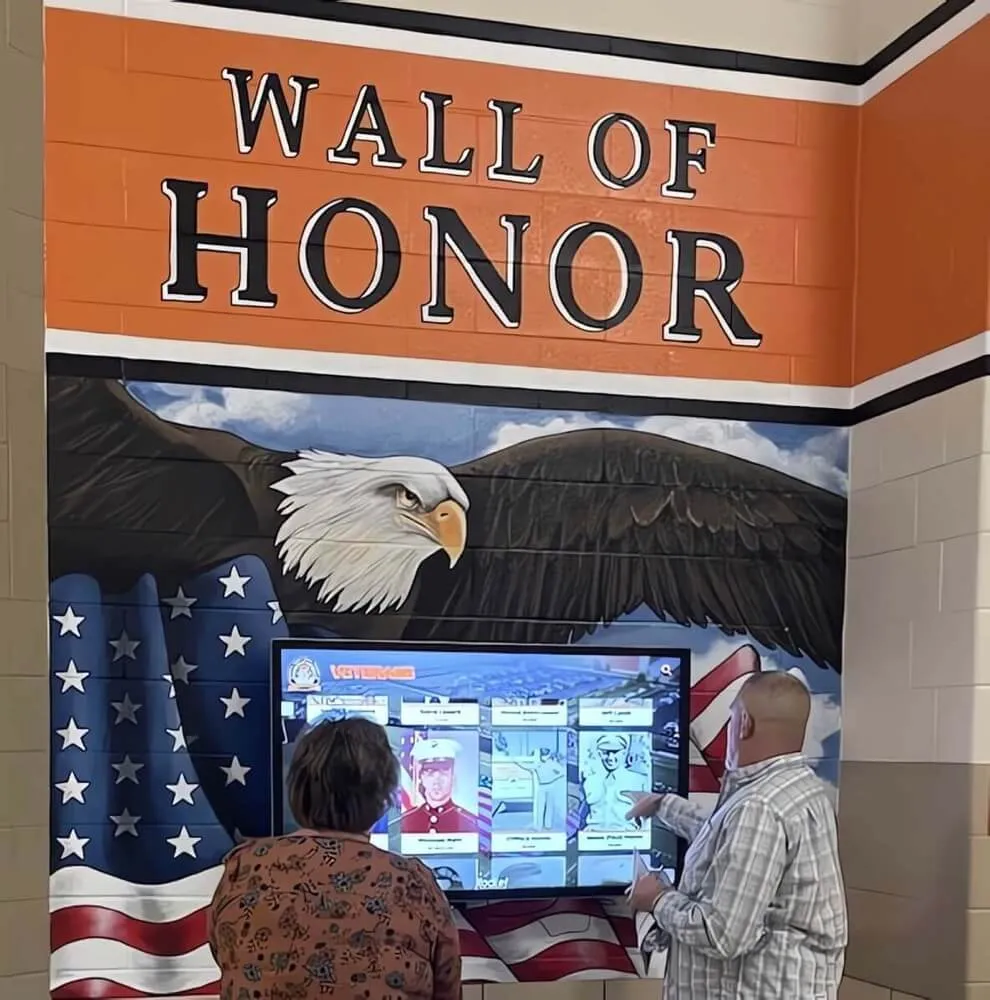
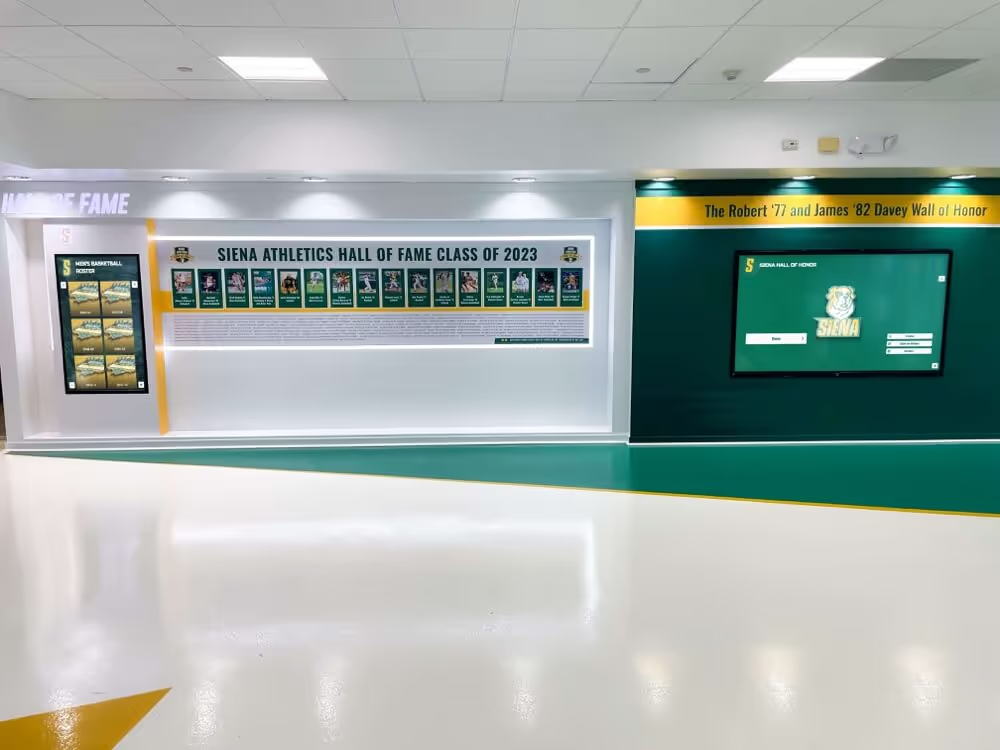
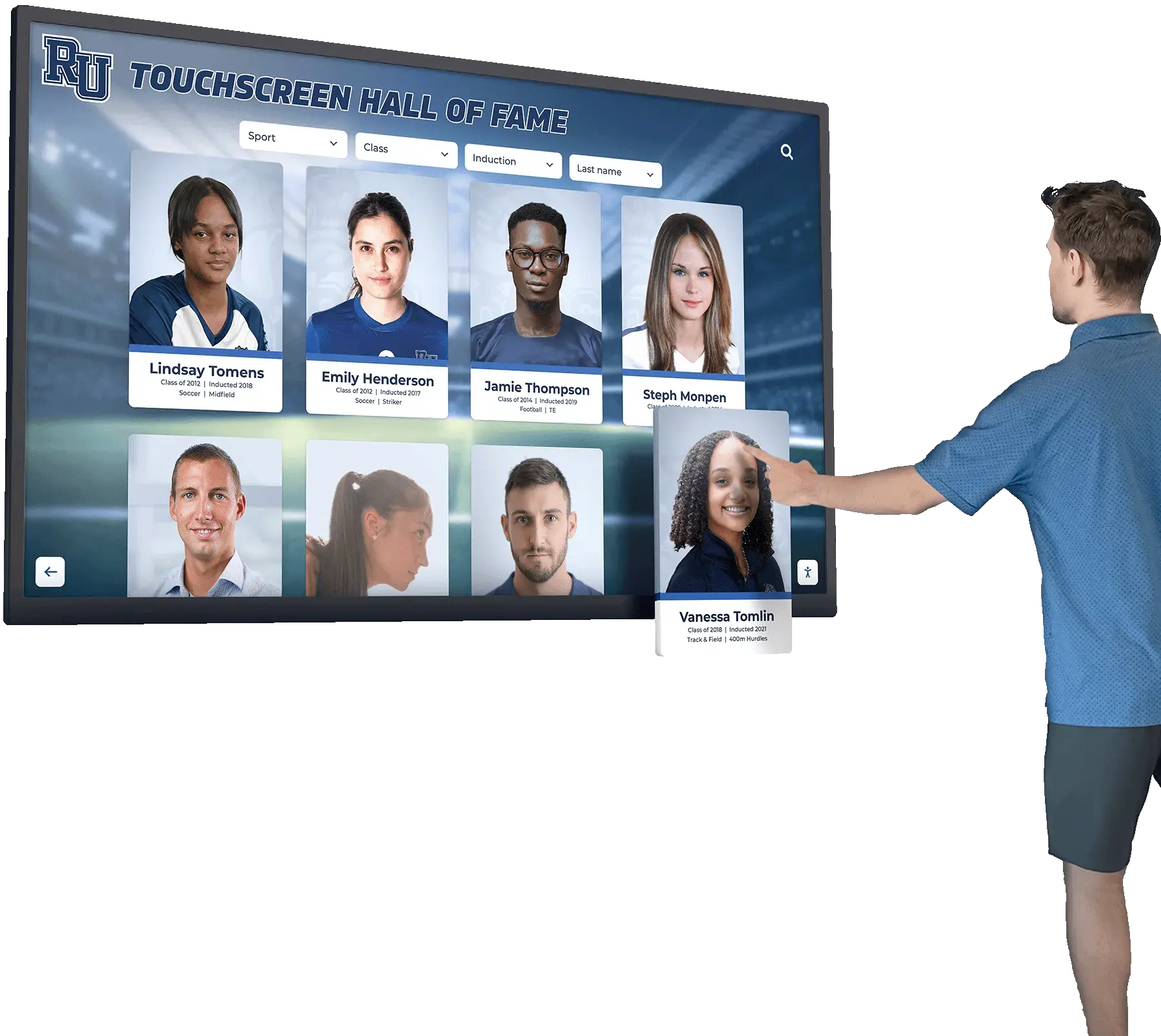
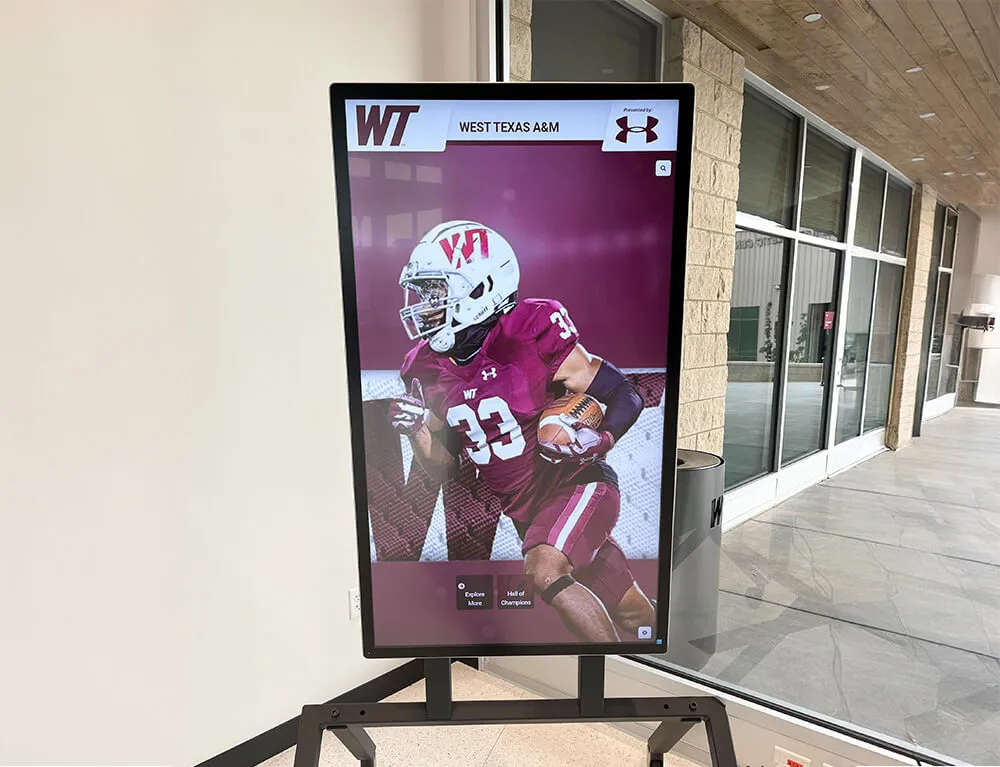
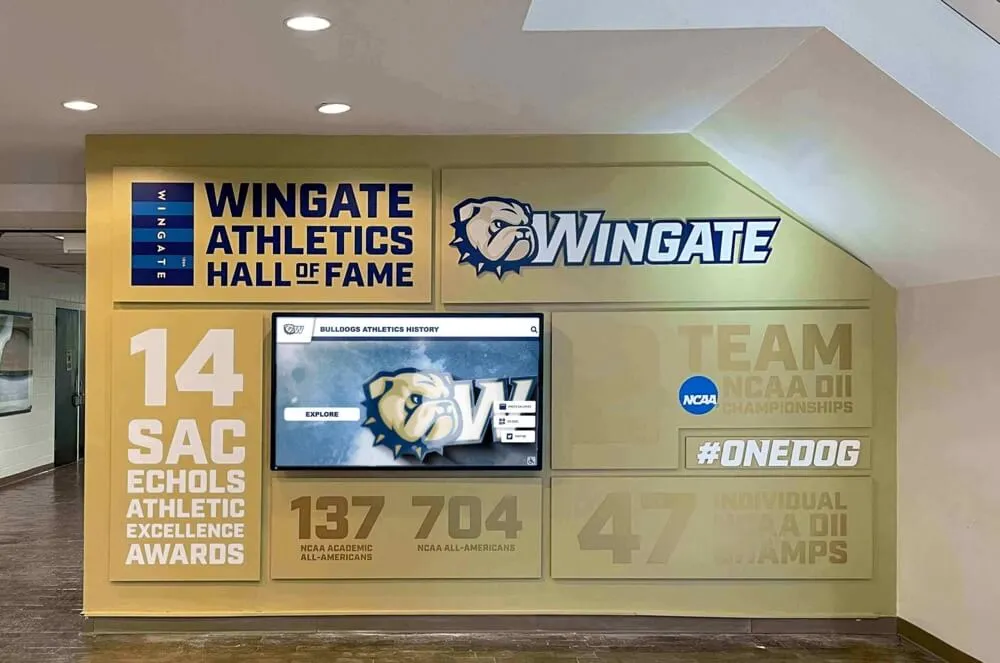
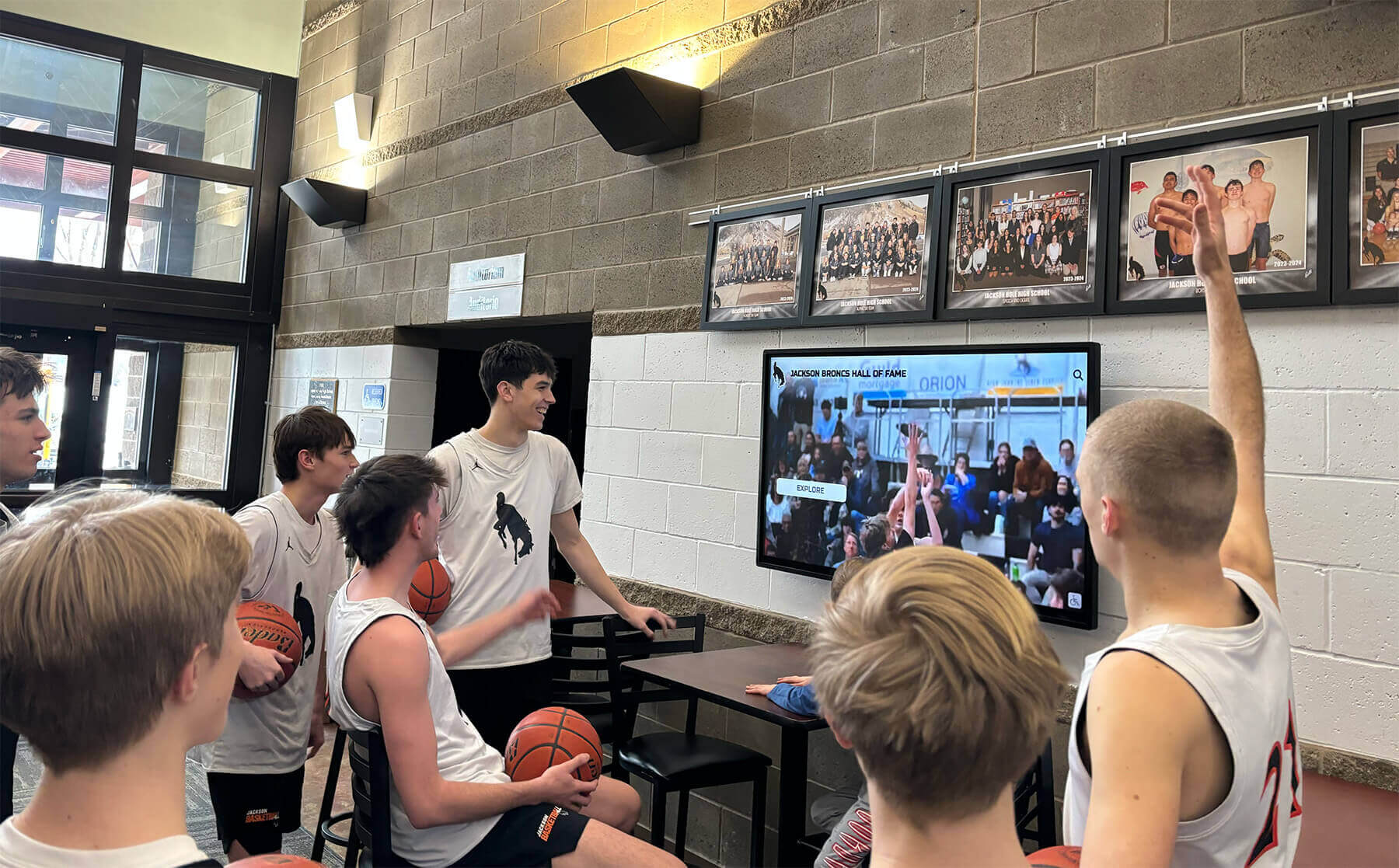
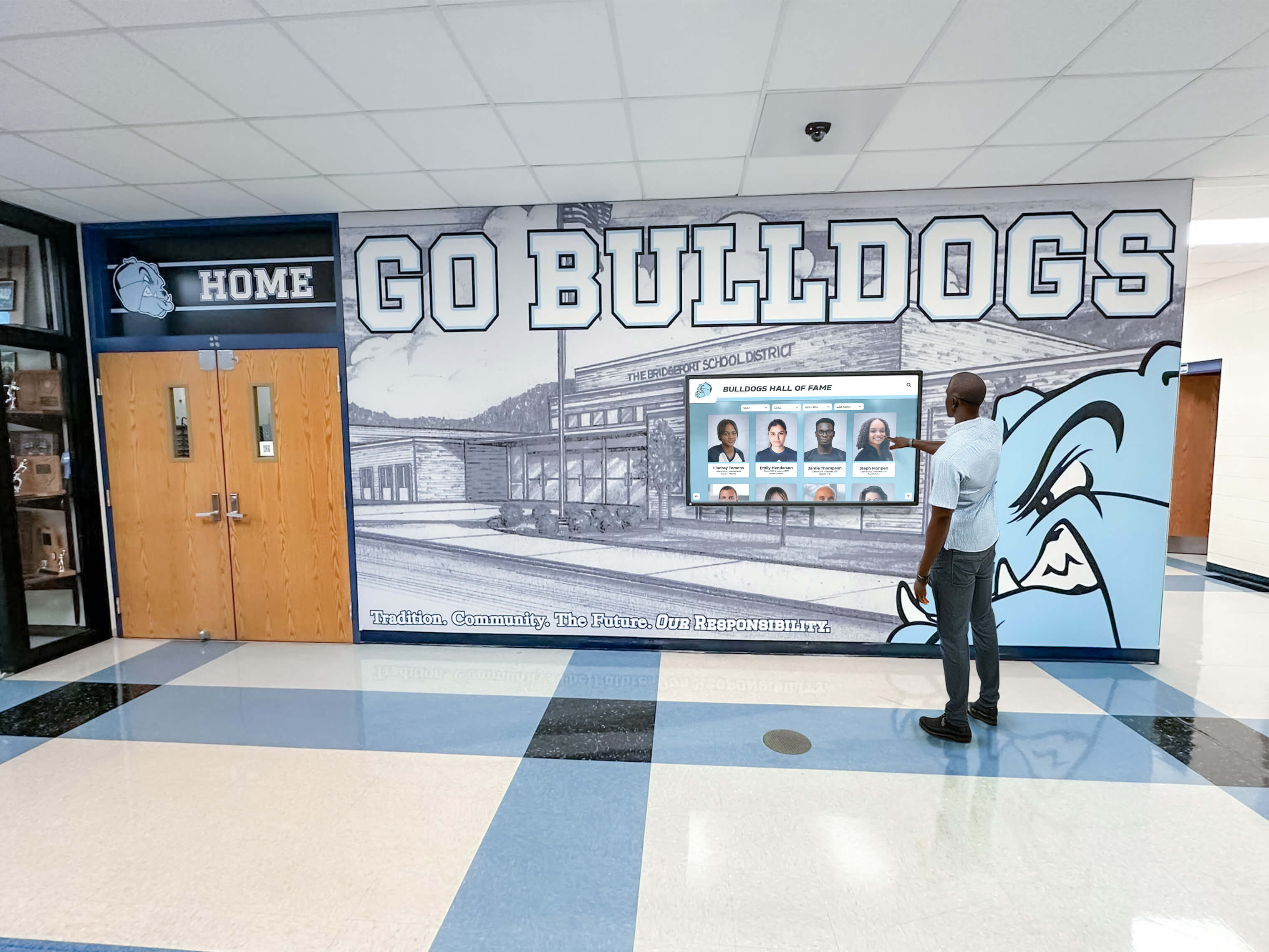
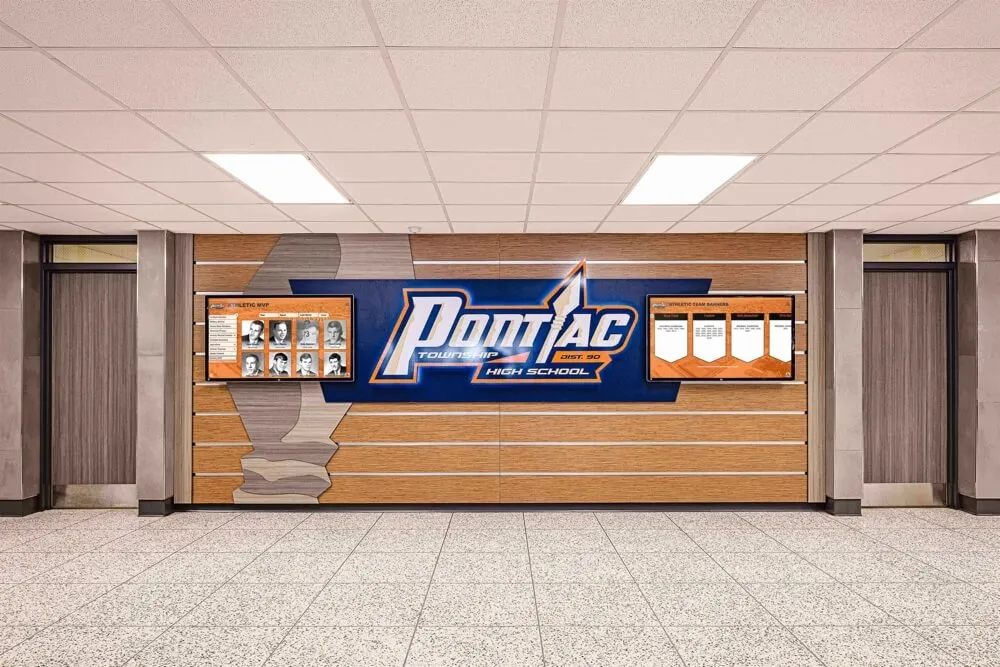
Digital touchscreen displays installed in athletic facilities, school lobbies, or high-traffic hallways provide dynamic platforms for celebrating basketball seniors more comprehensively than static posters allow. These systems create year-round recognition while accommodating unlimited senior classes without physical space constraints that limit traditional poster displays.
Digital Display Advantages:
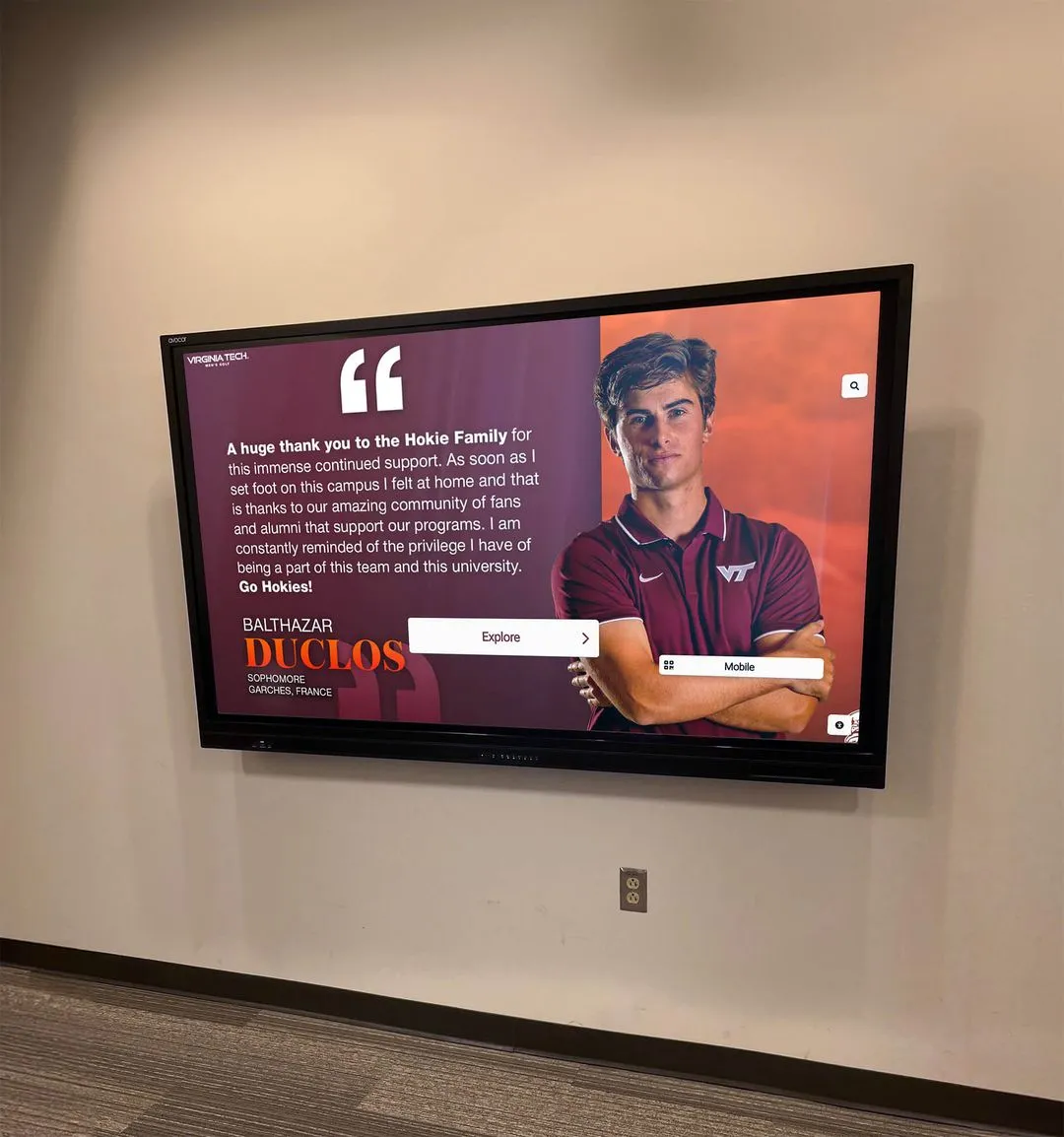
Unlimited Information Capacity: Unlike posters constrained by physical dimensions and readability concerns, digital profiles include extensive athlete biographies, complete season-by-season statistics and achievements, photo galleries showcasing multiple images from throughout careers, video highlights featuring memorable plays and championship moments, personal statements from athletes reflecting on their basketball journeys, and coach testimonials describing each senior’s unique contributions and character.
Easy Updates and Additions: Adding new senior classes requires simple content updates through cloud-based management systems rather than ordering new posters, finding additional display space, or removing previous recognition. Programs build comprehensive historical archives showcasing every senior who’s ever played rather than only the current year’s graduates.
Interactive Engagement: Visitors—prospective recruits, returning alumni, community members attending games, or current underclassmen—explore senior profiles at their own pace, search for specific athletes by name, year, or achievement, filter displays by position, championship teams, or statistical categories, and discover connections between current programs and historical seniors who built traditions.
Multimedia Storytelling: Digital platforms integrate elements impossible with paper posters including game footage highlighting seniors’ best performances, championship celebration videos capturing emotion and team joy, audio interviews with athletes and coaches, animated statistics showing career progression across seasons, and social media integration displaying posts, photos, and community recognition from senior night celebrations.
Professional Presentation: High-quality digital displays communicate program investment in recognition and institutional pride. Recruits visiting campuses notice how programs honor athletes, and comprehensive digital recognition demonstrates that basketball excellence receives lasting acknowledgment rather than temporary ceremony gestures.
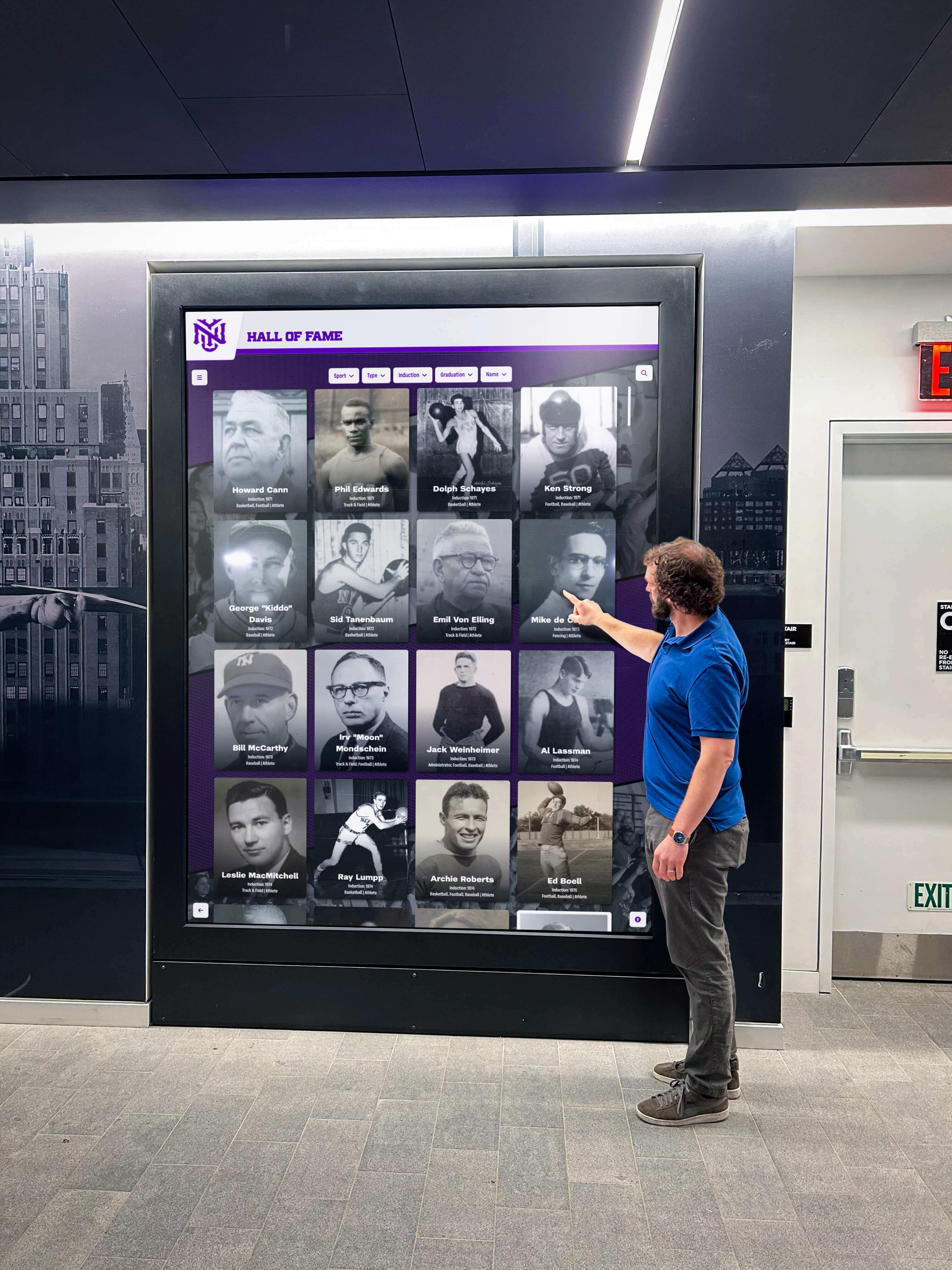
Integrating Digital Displays with Senior Night
Rather than replacing traditional poster celebrations, many programs integrate digital recognition as complementary permanent layer supporting temporary senior night visual elements.
Hybrid Recognition Approach:
Senior Night Posters: Create traditional printed posters for immediate visual impact on senior night, ceremony photography backdrops, and tangible keepsakes athletes take home.
Digital Archiving: After ceremonies conclude, digitize poster content and add comprehensive additional information into permanent digital recognition systems. Seniors receive both immediate tangible recognition through posters and enduring digital presence in program history.
Pre-Event Digital Promotion: Use digital displays in weeks leading to senior night to build anticipation through senior athlete spotlights, countdown features, historical context about previous senior classes, and invitations to community members encouraging attendance.
Post-Event Extension: After senior night passes, digital displays keep departed seniors visible throughout remainder of season and indefinitely thereafter, ensuring recognition doesn’t disappear when posters come down but transforms into permanent program memory.
This integrated approach honors tradition while embracing technology’s capacity to extend recognition beyond spatial and temporal limitations inherent in physical posters. Programs exploring comprehensive recognition systems might examine how digital athletic displays create year-round engagement impossible with traditional static approaches.
Cloud-Based Recognition Platforms
Beyond physical displays, web-based recognition platforms extend senior celebration to online environments where distant family members, college coaches evaluating recruits, alumni following programs remotely, and community members can access basketball senior profiles regardless of geographic location or facility access.
Online Recognition Benefits:
Unlimited Geographic Reach: Grandparents unable to travel for senior night can experience recognition virtually, college coaches recruiting underclassmen explore program culture and senior achievement patterns, alumni living anywhere maintain connection to program developments, and media covering athletics access athlete information and photographs without in-person facility visits.
Permanent Searchable Archives: Years or decades after graduation, former players can revisit their senior recognition, share digital profiles with their own children, or reconnect with teammates through searchable historical databases that traditional posters stored in attics or lost during moves cannot provide.
Social Media Integration: Digital platforms easily connect to social media, enabling programs to share senior spotlights across multiple channels, families to distribute recognition to extended networks, and communities to engage with content through comments, shares, and likes amplifying celebration reach.
Multimedia Flexibility: Online platforms accommodate various content formats—written biographies, photograph galleries, video highlights, audio interviews, statistical data visualizations—creating richer, more comprehensive athlete profiles than any single poster could contain.
Cost-Effective Scalability: Once implemented, digital platforms accommodate unlimited seniors across unlimited years without incremental material or production costs, making comprehensive recognition feasible even for programs with modest budgets.
Solutions like Rocket Alumni Solutions provide purpose-built platforms specifically designed for athletic recognition, offering intuitive content management enabling coaches and athletic directors without technical expertise to create professional recognition displays, pre-designed templates appropriate for basketball and other sports, integration of physical touchscreen displays with web-based accessibility, and cloud-based systems eliminating local server maintenance or technical infrastructure requirements.
Budget-Friendly Basketball Senior Poster Ideas
Meaningful senior recognition doesn’t require substantial budgets. Creative approaches and strategic resource allocation enable effective poster programs even with significant financial constraints.
Free and Low-Cost Design Resources
Template-Based Design Tools: Free platforms like Canva offer sports poster templates specifically designed for senior recognition. These provide professional starting points requiring only photograph uploads and text customization rather than designing from scratch. Even premium Canva features typically cost less than $15/month, reasonable for short-term senior night preparation.
School Design Resources: Many schools employ graphic design teachers, media production programs, or marketing departments with design expertise and software access. Collaboration with these existing resources often yields professional-quality results without external costs while providing students with authentic project experience.
Parent and Volunteer Talents: Booster clubs and parent organizations often include members with professional design, photography, or printing backgrounds willing to donate skills for senior recognition. Outreach identifying these resources sometimes uncovers free expertise superior to what budget could purchase.
Open-Source Software: Free design tools like GIMP (Photoshop alternative) and Inkscape (Illustrator alternative) provide powerful capabilities without subscription costs for families comfortable investing time learning these platforms.
Economical Printing Options
In-House Large-Format Printing: Schools with architectural, engineering, or design programs sometimes own large-format printers for blueprint and technical drawing production. These resources often sit underutilized and can produce basketball posters at material cost only—typically $10-30 per poster depending on size.
Online Printing Services: National online poster printing companies offer competitive pricing, particularly for standard sizes. Services like Vistaprint, PrintRunner, or Printful frequently run promotions reducing poster costs to $15-40 each including shipping. Bulk orders for entire senior classes often qualify for volume discounts.
Local Print Shops: Community print businesses sometimes offer discounted rates for school projects, particularly when approached as potential ongoing partnership opportunities. Local vendors also eliminate shipping costs and timelines, enabling faster turnaround when working against tight senior night deadlines.
Office Supply Stores: Retailers like Staples, FedEx Office, or Office Depot provide straightforward poster printing from digital files, typically completing orders within 24-48 hours. While not always cheapest option, convenience and reliability sometimes justify modest price premiums when managing complex senior night planning.
Creative Budget-Stretching Approaches
Poster Size Optimization: Reducing dimensions from 36"x48" to 24"x36" often cuts printing costs 50% or more while maintaining meaningful visual impact when displayed effectively. Strategic sizing allows limited budgets to provide all seniors with quality recognition rather than creating disparate treatment where budget constraints force choosing between elaborate recognition for some versus minimal acknowledgment for others.
Selective Color Use: Full-color photograph printing costs more than black-and-white or limited color designs. Creative use of monochrome photography, team color accents, or spot color highlighting creates striking visual impact at reduced production cost. Some of the most memorable senior posters embrace bold, simple two-color designs rather than attempting photorealistic full-color reproduction.
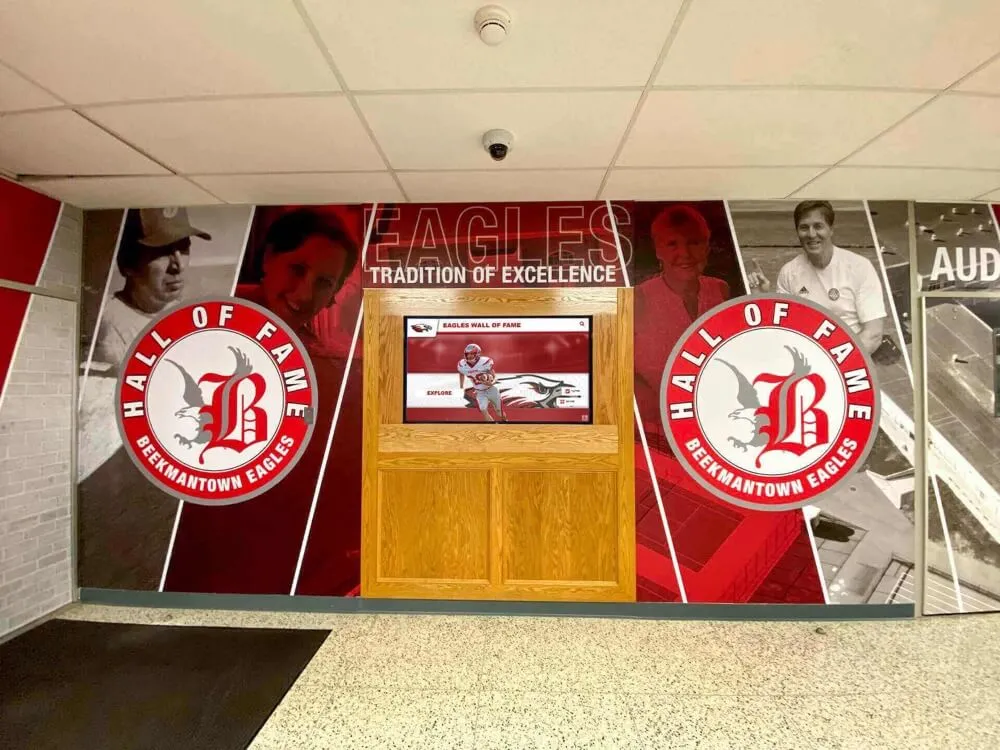
Digital-First Approach: Prioritizing comprehensive digital recognition while creating modest printed materials for actual senior night events inverts traditional spending. Instead of expensive temporary posters discarded after one evening, programs invest in permanent digital platforms providing enduring recognition while using economical printed programs, simple mounted photographs, or projection displays for the ceremony itself.
Fundraising and Sponsorship: Senior families often willingly contribute to recognition costs when approached transparently. Parent committees can coordinate modest per-family contributions ($20-50) funding professional poster production without burdening any individual family. Local business sponsorships sometimes offset costs in exchange for recognition at senior night events or inclusion in program materials, though care should ensure commercial elements don’t overshadow athlete celebration.
Personalizing Posters for Individual Athletes
Generic, template-driven recognition feels impersonal even when visually polished. Meaningful senior posters reflect genuine knowledge of individual athletes’ unique journeys, personalities, and contributions.
Gathering Personal Content and Stories
Effective personalization requires collecting information beyond basic statistics and team photographs.
Senior Questionnaires: Distribute forms asking athletes about favorite basketball memories, most influential coaches or teammates, lessons learned through basketball, funniest team moments, personal mottos or favorite quotes, and reflections on how basketball shaped their character or future plans. These responses provide authentic voice and perspective making posters feel genuinely personal rather than administratively generated.
Family Involvement: Invite parents to share perspectives about their child’s basketball journey—sacrifices they witnessed, growth they observed, or moments that particularly moved them as parents watching their athlete develop. Family input adds emotional depth and alternative perspectives athletes themselves might not articulate.
Coach Testimonials: Ask coaches to describe each senior’s unique contributions, leadership qualities, work ethic examples, or character traits that distinguished them. These professional observations provide authoritative validation of athlete value beyond self-reported achievements.
Photograph Curation: Rather than using only official team photos or standard action shots, collect personal photographs from families—childhood pictures showing love of basketball from early ages, candid moments from practices, travel tournaments, or team bonding, and images showing personality beyond athlete identity (academic achievements, community service, hobbies).
Celebrating Diverse Contributions and Roles
Not all basketball seniors accumulated impressive statistics, earned all-conference recognition, or played starring roles. Comprehensive senior night celebration honors diverse contributions—reserve players who elevated practice intensity, team managers ensuring seamless operations, athletes who mentored younger players, or seniors who exemplified program values even when playing time remained limited.
Recognizing Non-Statistical Contributions:
Leadership and Mentorship: Highlight seniors who served as team captains, organized team bonding activities, or mentored underclassmen navigating program culture and competitive pressures.
Practice Excellence: Celebrate athletes whose defensive intensity in practice sharpened starters’ offensive skills, whose competitive drive elevated daily preparation, or whose positive attitudes maintained team morale during challenging seasons.
Program Commitment: Honor four-year players who remained dedicated despite limited playing time, demonstrating loyalty to team over individual statistical achievement or playing time frustration.
Character and Citizenship: Recognize seniors exemplifying sportsmanship, academic excellence, community service, or other values central to program identity, demonstrating that basketball programs develop complete individuals rather than merely producing athletes.
Support Roles: Celebrate team managers, student athletic trainers, statisticians, videographers, and others whose non-playing contributions enabled team success.
These recognition approaches communicate that program value extends beyond game-night production, fostering cultures where all contributions receive acknowledgment and diverse strengths find appreciation. This philosophy aligns with comprehensive approaches to student-athlete support recognizing athletes as complete individuals.
Coordinating Senior Posters with Comprehensive Senior Night Planning
While posters create important visual elements, they function within broader senior night ceremonies requiring coordinated planning across multiple recognition dimensions.
Integrating Visual and Ceremonial Elements
Effective senior nights harmonize poster displays with on-court ceremonies, programs, speeches, gift presentations, and other recognition components creating cohesive celebration rather than disconnected elements.
Visual Consistency: Ensure poster designs, printed programs, digital slideshow presentations, and other visual materials share consistent color schemes, fonts, and branding reflecting team identity. This coherence signals thoughtful planning while reinforcing program professionalism.
Ceremony Choreography: Plan how posters integrate into ceremony flow—whether athletes stand beside their posters during introductions, families receive posters during on-court presentations, or displays remain visible throughout events as ceremony backdrops. These decisions affect poster placement, mounting methods, and even design orientation (horizontal versus vertical).
Photography Coordination: Designate official photographers capturing families with senior posters, ensuring these images become part of ceremony documentation families treasure. Sometimes the photograph of an athlete beside their senior poster becomes as meaningful as the poster itself.
Post-Event Plans: Determine whether seniors take posters home immediately after ceremonies, whether displays remain in gymnasiums for additional games, or if posters transition to permanent hallway displays. These intentions influence material selection and mounting approaches discussed earlier.
Comprehensive planning resources like this basketball senior night guide provide systematic frameworks ensuring all recognition elements—from posters through ceremonies and gifts—create unified, meaningful celebrations rather than fragmented efforts.
Timeline for Poster Creation and Production
Senior poster preparation requires appropriate lead time ensuring quality results without last-minute stress compromising design or production quality.
6-8 Weeks Before Senior Night:
- Confirm all seniors receiving recognition, verifying roster accuracy
- Determine poster design approach, format, and budget allocation
- Identify design resources (internal volunteers, professional services, or DIY approach)
- Begin collecting photographs from team archives, families, and photographers
- Distribute senior questionnaires gathering personal information and preferences
4-6 Weeks Before:
- Complete design concepts and select specific layout approach
- Finalize photograph selection ensuring high-resolution images suitable for large-format printing
- Draft all text content including athlete names, statistics, quotes, and biographical information
- Review preliminary designs with coaches and athletic directors for approval
- Obtain senior and family input on draft designs allowing personalization feedback
2-3 Weeks Before:
- Finalize all design elements, incorporating feedback and corrections
- Submit print orders with appropriate lead time for production and shipping
- Confirm display locations and mounting methods
- Order display hardware (easels, mounting materials, hanging systems)
- Coordinate logistics for poster distribution to families after ceremonies
Week of Senior Night:
- Receive completed printed posters and inspect quality
- Install displays in gymnasium and surrounding areas
- Conduct final walkthrough verifying placement, visibility, and ceremony integration
- Prepare posters for family presentation during ceremonies
- Designate volunteers responsible for poster handling and distribution
This timeline prevents rushed production compromising quality while allowing sufficient flexibility addressing unexpected challenges or incorporating last-minute changes.
Legal and Ethical Considerations
While celebrating seniors, programs must navigate permissions, privacy, and fairness considerations ensuring recognition efforts respect rights and maintain appropriate boundaries.
Photo Rights and Permissions
Using photographs for poster production requires appropriate permissions, particularly when images originate from sources beyond school-employed team photographers.
Permission Requirements:
Professional Photographer Contracts: Schools often hire photographers for team pictures and game coverage. These contracts should explicitly address usage rights—whether schools own images for any purpose, whether additional licensing fees apply to poster production, and whether photographers maintain control over image editing and reproduction. Clarifying these terms during initial contracting prevents disputes when creating senior posters.
Parent and Family Photographs: When soliciting personal photographs from families for poster inclusion, obtain explicit permission for public display and potential reproduction. While families willingly sharing images generally intend allowing their use, formal permission documents protect programs from potential disputes.
Action Shot Permissions: Game action photographs taken by local media, fan photographers, or others require permission before poster use. Copyright laws protect photographers’ work regardless of subject matter—schools cannot freely reproduce images simply because they feature school athletes.
Athlete Image Rights: Some states require explicit student permission for using their images in school materials beyond basic educational purposes. Senior night posters typically fall within acceptable educational and recognition purposes, but verifying compliance with applicable state laws and local policies prevents potential issues.
Ensuring Equitable Recognition
Fairness requires that all seniors—regardless of playing time, athletic ability, or program visibility—receive comparable recognition quality and prominence.
Equity Considerations:
Consistent Production Quality: All senior posters should reflect similar design investment, production quality, and physical dimensions. Creating elaborate posters for star players while providing minimal recognition for reserves communicates harmful messages about relative worth based on athletic production rather than honoring all participants’ dedication.
Balanced Information Depth: While statistical accomplishments vary legitimately between athletes, ensure all seniors receive comparable biographical depth, personal touches, and ceremony time. A reserve player’s poster highlighting leadership, academic achievement, and character contribution holds equal validity to a star’s poster emphasizing scoring records.
Family Financial Equity: If senior recognition involves family financial contributions, ensure no athlete receives lesser recognition due to family financial constraints. Programs should absorb cost differences or secure sponsorships preventing economic factors from creating recognition disparities that embarrass families or athletes.
Inclusive Language and Imagery: Design and text should reflect inclusive values, avoiding language or imagery that could marginalize athletes based on gender, race, socioeconomic background, or other identity factors. Recognition should celebrate diverse paths to program contribution rather than privileging singular definitions of basketball excellence.
These equity principles reflect broader commitments to inclusive athletic programs, similar to comprehensive approaches toward recognition across diverse achievements honoring various forms of athletic and personal excellence.
Preserving Senior Posters and Creating Lasting Memories
Senior night represents one evening, but the memories and recognition it creates should endure far beyond final whistles and closing ceremonies.
Physical Poster Preservation
Seniors taking posters home receive tangible recognition artifacts, but proper preservation ensures these items remain meaningful keepsakes rather than deteriorating or getting damaged.
Preservation Recommendations for Families:
Professional Framing: While framing adds cost, it transforms posters from fragile paper into protected displays suitable for hanging in homes, dorm rooms, or offices. Standard poster sizes accommodate readily available frames from retailers like Michael’s, Hobby Lobby, or online sources. UV-protective glass prevents photograph fading from sunlight exposure common when posters hang in well-lit rooms for years.
Poster Tubes for Storage: If immediate display isn’t possible (athletes heading to college, limited wall space), quality poster tubes protect rolled posters from crushing, moisture, and deterioration during storage. This preserves options for future display without compromising poster condition.
Digital Scanning: Creating high-resolution digital scans of physical posters provides permanent backup if originals become damaged, allows reproduction if families want multiple copies, enables sharing with distant relatives via digital means, and preserves images even if physical posters eventually deteriorate or get lost during relocations.
Creating Digital Archives
Beyond individual poster preservation, programs benefit from maintaining comprehensive archives documenting senior recognition history across graduating classes.
Archival Approaches:
Photograph Documentation: Professionally photograph all senior posters before distribution, creating digital library of historical senior classes. These archives become valuable resources when creating program history displays, anniversary celebrations, or alumni reunion materials years later.
Digital Recognition Systems: As discussed earlier, transitioning poster content into permanent digital recognition platforms transforms temporary senior night displays into enduring institutional memory. Programs can build comprehensive databases including every senior who’s ever played, creating searchable historical archives impossible with physical poster storage alone.
Social Media and Website Galleries: Publishing senior poster images on program websites or social media creates accessible archives extending recognition to audiences beyond those attending senior night ceremonies. Tagging athletes enables them to share recognition with extended networks while creating permanent digital records they can reference throughout lives.
Cloud Storage and Backup: Maintain organized cloud storage of all poster design files, source photographs, and finished products. This ensures programs never lose historical content to computer failures, staff transitions, or file corruption while enabling future reprinting or reproduction if needed.
These archival practices demonstrate institutional commitment to honoring basketball seniors not just during ceremonies but through permanent recognition ensuring their contributions remain visible long after graduation.
Frequently Asked Questions About Basketball Senior Posters
What size should basketball senior posters be?
Common basketball senior poster sizes range from 18"x24" for economical multi-poster displays through 36"x48" or larger for prominent individual recognition. The ideal size balances several factors: available display space in your gymnasium and hallways, budget constraints (larger sizes cost more to produce), number of seniors being honored (more seniors may require smaller individual posters), intended use after senior night (posters athletes take home versus permanent displays), and viewing distances (hallway displays can use smaller sizes while gym displays viewed from bleachers benefit from larger formats). Most programs find 24"x36" provides effective balance between impact and cost. If space and budget allow, 36"x48" creates commanding presence. Smaller 18"x24" works well when honoring larger senior classes or creating hallway galleries featuring multiple athletes together.
When should we start planning basketball senior posters?
Begin senior poster planning 6-8 weeks before senior night. This timeline allows sufficient time for design development, photograph collection from families and team archives, approval processes ensuring seniors and families approve designs, production through printing services with appropriate lead times, and shipping if ordering from online vendors. Rush timelines compress these phases, limiting design iteration, forcing expensive expedited printing and shipping, reducing quality control, and creating unnecessary stress during already busy senior night planning. Earlier starts provide cushion for unexpected challenges—design revisions, photograph quality issues, printing delays, or last-minute senior roster changes. Programs with elaborate custom designs or those using professional design services may benefit from 8-10 week timelines ensuring adequate creative development without rushed execution.
Can we create basketball senior posters without expensive design software?
Absolutely. Several accessible options exist for creating professional-quality senior posters without Adobe Creative Suite or other expensive design software. Free online platforms like Canva offer sports poster templates specifically designed for senior recognition, requiring only photograph uploads and text customization through intuitive drag-and-drop interfaces. PowerPoint or Google Slides, available through most school licenses, can create effective poster layouts when exported as high-resolution PDFs for printing. Free software like GIMP (photo editing) and Inkscape (graphic design) provide powerful capabilities for users comfortable with learning curves. Many online printing services offer design tools integrated into their ordering systems, with templates customizable during the print ordering process. School technology or graphic design teachers often maintain design software access and may collaborate on senior poster projects or teach students to create posters as authentic learning experiences. Parent volunteers sometimes possess professional design skills or software access they’re willing to donate for senior recognition.
What information should basketball senior posters include?
Effective basketball senior posters typically include athlete name (prominently featured), jersey number, graduation year, position and physical details (height), years on varsity roster, key statistics (career points, rebounds, assists, or season highlights), championship appearances or awards earned, memorable achievements or records, personal elements (college plans, favorite quote, or brief message), and high-quality action photographs or portraits. Avoid overcrowding—select most meaningful information rather than comprehensive statistics that reduce readability. Prioritize visual impact over data completeness, ensuring posters remain readable from viewing distances in gymnasiums and hallways. Consider what makes each senior unique rather than identical templates filled differently. Some programs include QR codes linking to comprehensive digital profiles where unlimited information can live without cluttering poster design. The goal is creating recognition that feels personal to each athlete rather than generic forms with names changed.
Should basketball senior posters be the same size for all players?
Yes. Equitable recognition requires all basketball seniors receive posters of identical size, production quality, and design investment regardless of playing time, statistical achievement, or program visibility. Creating larger or more elaborate posters for star players while giving reserves smaller or simpler recognition communicates harmful messages about relative worth based on athletic production. Senior night honors dedication, commitment, and contributions to program culture—values all four-year players demonstrate regardless of individual statistics. Consistent poster dimensions and quality demonstrate that programs value all participants equally and recognize diverse forms of contribution beyond scoring averages. Some programs intentionally vary design elements (color schemes, layout approaches, photograph selections) while maintaining identical physical dimensions, creating visual diversity without implying hierarchical recognition. This equity principle extends to all senior night elements, ensuring ceremonies honor complete senior classes rather than privileging certain athletes.
What’s the best way to display basketball senior posters during games?
Display effectiveness depends on gymnasium layout and available mounting options. High-impact approaches include gymnasium entrance displays using easel stands positioning posters where all attendees pass when entering facilities, court-side wall mounting placing posters on walls behind player benches or facing main spectator sections where they remain visible throughout games, hallway gallery installations creating recognition corridors leading from school entrances to gymnasiums, and ceiling hanging using banner-format posters suspended from gymnasium rafters or structural elements. Consider viewing angles ensuring posters face primary spectator sections rather than walls perpendicular to bleachers, lighting to adequately illuminate posters in gymnasium environments that may have uneven lighting, protection from interference by positioning posters away from warm-up areas, equipment storage, or high-traffic zones where they might get damaged, and ceremony integration by placing posters to facilitate on-court recognition if seniors will stand beside their posters during introductions. Many programs use combination approaches—entrance displays greeting attendees, court-side positioning during ceremonies, and eventual transition to permanent hallway installations after senior night concludes.
How can we make basketball senior posters special without big budgets?
Budget constraints don’t prevent meaningful senior recognition—creativity and personalization matter far more than expensive production. Cost-effective approaches include focusing on personal elements (gathering authentic stories, meaningful quotes, and personal photographs) that create emotional connection regardless of production expense, using free design platforms like Canva with sports templates providing professional starting points, leveraging school resources such as graphic design classes, media production programs, or parent volunteers with professional skills, optimizing sizes by using 24"x36" instead of larger formats cutting costs while maintaining impact, selective color application through black-and-white photography with team color accents reducing printing costs, and printing locally at office supply stores or schools with large-format printers avoiding shipping costs and premium online service fees. Consider digital-first approaches prioritizing permanent digital recognition platforms while creating economical printed programs for actual senior night events, or coordinate modest per-family contributions ($15-25) enabling professional production without burdening individual families. The most meaningful posters combine genuine personalization with quality execution at whatever production level budgets allow rather than expensive but generic designs that feel impersonal despite production costs.
Can digital displays replace traditional basketball senior posters?
Digital displays offer compelling advantages while traditional posters provide unique value—many programs implement hybrid approaches capturing benefits of both. Digital recognition systems excel at unlimited information capacity showcasing comprehensive athlete profiles, statistics, photographs, and video highlights impossible with physical posters, permanent accessibility keeping seniors visible in program history indefinitely rather than single-night events, easy updates adding new seniors annually without space constraints or physical storage, interactive engagement allowing visitors to explore content at their own pace, and multimedia integration combining photographs, video, statistics, and biographical content. Traditional posters provide tangible keepsakes athletes take home as physical mementos, immediate visual impact creating ceremony atmosphere without technology dependence, family involvement enabling parents to participate in design and creation, no technical infrastructure requirements avoiding software, hardware, or connectivity concerns, and universal accessibility functioning regardless of power, internet, or equipment availability. Effective hybrid approaches create traditional posters for senior night ceremonies and family keepsakes while digitizing content into permanent recognition systems like those offered through Rocket Alumni Solutions, ensuring recognition extends beyond temporary displays into enduring institutional memory.
Creating Lasting Basketball Senior Recognition
Basketball senior posters represent far more than decoration for single evening ceremonies. Thoughtfully designed and executed, these visual elements communicate to departing athletes that their dedication, sacrifice, and contributions to program culture receive genuine recognition and lasting appreciation.
Whether implementing traditional large-format printed posters, exploring modern digital recognition systems, or combining both approaches, the essential principle remains consistent: each senior deserves personalized acknowledgment reflecting their unique journey, individual contributions, and complete identity beyond athletic statistics. Recognition that feels authentic and personal honors the genuine investment these athletes made in programs, teammates, and personal development through basketball.
The most meaningful senior night recognition emerges when visual elements like posters integrate seamlessly with comprehensive planning addressing ceremonies, speeches, gifts, family involvement, and program culture. These coordinated efforts create experiences athletes, families, and communities treasure as defining moments in athletic careers and high school experiences.
As you plan basketball senior poster creation for your program, remember that authenticity matters more than expense, personalization resonates more than generic templates, and thoughtful execution demonstrates genuine appreciation more effectively than elaborate production. Your seniors invested years in early morning practices, competitive pressure, personal sacrifice, and team commitment. Recognition honoring that investment—through posters, ceremonies, digital displays, or other meaningful gestures—validates their dedication and communicates that basketball programs value the complete individuals who make them possible.
For programs seeking to extend senior recognition beyond temporary senior night celebrations into permanent institutional memory, solutions like Rocket Alumni Solutions provide accessible platforms transforming annual senior night moments into enduring digital recognition accessible to current students, recruits, alumni, and communities year-round. These systems ensure that the seniors you celebrate tonight remain visible parts of program history for decades to come—permanent testament to the excellence, character, and dedication that define your basketball program’s best traditions.