Defense wins championships in baseball, and nowhere is that more evident than in the outfield. A single diving catch can shift momentum, a perfectly executed relay throw can nail a runner at home, and strong outfield range turns would-be doubles into routine fly balls. Yet many baseball programs dedicate far more practice time to hitting than to the specialized skills outfielders need to patrol the grass effectively.
Elite outfield play requires a distinct skill set—the ability to read balls off the bat instantly, explosive first-step quickness to close gaps, tracking fly balls while sprinting at full speed, charging grounders aggressively, and delivering accurate throws with velocity from deep positions. These skills don’t develop through generic team drills alone. They require focused, position-specific training that challenges outfielders to master the unique demands of their defensive territory.
This comprehensive guide presents proven baseball outfield drills that transform adequate outfielders into defensive game-changers. Whether you’re coaching youth players learning outfield fundamentals or high school athletes pursuing college recruitment opportunities, these structured practice plans build the range, reads, and throwing strength that separate elite defenders from the rest.

Foundation Drills: Building Proper Outfield Mechanics
Before tackling advanced scenarios, outfielders must master fundamental mechanics that form the foundation of elite defensive play. These core drills establish proper footwork, positioning, and technique.
Drop-Step Drill: Mastering the First Move
The drop-step represents the most critical movement pattern in outfield defense. When balls are hit over an outfielder’s head, the drop-step allows players to turn and sprint toward the ball’s landing spot while maintaining vision on the ball.
Execution: Position outfielders in a line facing the coach. On the coach’s directional call (left or right), players execute a drop-step by pivoting on the appropriate foot, opening the hips toward that direction, and sprinting at a 45-degree angle backward while looking over their shoulder toward where the coach points.
Start without a ball to focus purely on footwork mechanics. Players should hear the direction, immediately drop the appropriate foot back (right foot for balls over the right shoulder, left foot for balls over the left shoulder), rotate the hips fully open to that side, and accelerate in that direction within the first two steps.
Progress to the coach tossing balls over players’ heads after they execute the drop-step. This teaches the complete sequence: react to direction, execute drop-step, locate ball while running, adjust path as needed, and make the catch on the run.
Common errors to correct: Players crossing over instead of drop-stepping (slower initial movement), turning their back completely to the ball (losing visual contact), or failing to commit fully to one direction (ending up between positions where they can’t reach either side effectively).
Advanced variation: Add competitive elements where two outfielders start side-by-side and race to catch balls thrown between them. The first to execute a clean drop-step and reach the ball wins. This competition element increases intensity and simulates game pressure.
Communication Drill: Calling the Ball
Outfield collisions cause injuries and lost opportunities on catchable balls. Effective communication prevents these disasters while ensuring the outfielder with the best angle makes every play.
Execution: Position three outfielders across the outfield (left, center, right). Fungo fly balls to various depths and angles that could potentially be caught by multiple players. Require players to communicate loudly using standard baseball calls.
The outfielder who has the best play on the ball calls “MINE! MINE! MINE!” repeatedly while approaching. Other outfielders immediately respond “TAKE IT!” and peel off to back up the play. The calling outfielder maintains communication until securing the catch.
For balls hit directly between two outfielders, establish priority rules: center fielder has priority over corner outfielders on balls both can reach, and corner outfielders defer to center field on 50-50 balls. This hierarchy prevents hesitation when two players have equal plays.
Practice scenarios include balls hit directly at players (testing whether anyone calls off others), balls clearly in one outfielder’s territory (testing whether others properly back up), shallow balls between outfielders and infielders (typically the outfielder’s ball due to facing the play), and balls in gaps requiring maximum effort from multiple players.
Teaching emphasis: Communication must be early, loud, and continuous. Silent players create dangerous situations. The phrase “I got it” is less effective than “MINE”—shorter, louder calls work better under game noise conditions.
Ground Ball Approach and Fielding
Outfielders must field ground balls differently than infielders due to the larger spaces they cover and the different throwing demands. These fundamental ground ball drills build proper technique.
Do-or-Die Drill: This drill simulates the most pressure-packed outfield scenario—a runner trying to score on a base hit with the game on the line. The outfielder must charge the ball aggressively, field it cleanly while maintaining momentum forward, and deliver an accurate throw home immediately.
Set up a cone or marker in the outfield to represent where a base hit lands. Place another outfielder or coach at home plate. The outfielder starts 30-40 feet behind the marker in a ready position. On the coach’s command, the coach rolls or hits a ground ball to the marker area.
The outfielder sprints forward aggressively, approaching the ball under control with choppy steps as they near it. They field the ball with the glove-side foot forward, immediately shuffle their feet to get squared to the target, and fire a one-hop strike to the plate.
Key mechanics: The approach should be aggressive but controlled—outfielders can’t boot the ball trying to field it at full sprint speed. As they near the ball, choppy adjustment steps allow them to field it with proper foot positioning. The glove should field the ball on the glove-side (left side for right-handed throwers), the exchange should be quick, and the throw should have carry but stay low enough to allow the catcher to handle it and make a tag.
Variations: Progress to one-hoppers instead of rollers, add baserunners who actually run from third base, vary the angles (balls hit to gaps requiring outfielders to approach from angles rather than straight-on), and create competitions where outfielders try to make the most consecutive successful do-or-die plays.
Crow-Hop Throwing Mechanics
Outfielders need to generate maximum throwing velocity and distance, requiring proper crow-hop mechanics that channel momentum into powerful, accurate throws.
Isolated Crow-Hop Drill: Without fielding balls initially, have outfielders practice crow-hop mechanics in isolation. Start in a stationary position with the ball already in the throwing hand. Execute a small hop where both feet leave the ground, landing with the glove-side foot forward and the throwing-side foot behind, creating a power position similar to a pitcher’s delivery.
The momentum from the hop should flow into the throw, with the back foot driving forward, hips rotating, shoulders following, and the arm whipping through to deliver the throw. The follow-through should bring the throwing-side leg forward past the body, indicating full weight transfer.
Common errors: Hopping too high (vertical jump rather than forward momentum), landing flat-footed (losing power), or failing to rotate the hips (throwing all arm, risking injury and reducing velocity).
Progression Drill: Combine fielding and throwing. Roll ground balls to outfielders positioned 60-80 feet away from a target. They field the ball, execute the crow-hop, and deliver throws to the target. Focus on seamless transition from fielding to throwing—no pause or reset between catching and releasing.
Track throwing accuracy and velocity over time. Many players who struggle initially to reach certain bases from deep outfield positions gain 20-30 feet of carry after mastering efficient crow-hop mechanics. Those improvements often become part of their permanent athletic achievement record as defensive standouts.
Reading the Ball: Developing Elite Jump and Tracking
The separation between average and elite outfielders often comes down to reading ability—getting exceptional jumps on batted balls by reading swing and contact instantly, then tracking the ball perfectly while running.
Fungo Reading Drill
This drill teaches outfielders to read balls off the bat by observing the hitter’s swing path and contact point, giving them a head start toward the ball’s landing location.
Setup: Position outfielders in their standard defensive positions. A coach stands at home plate with a fungo bat. Rather than telling outfielders where balls are going, the coach simulates various swing types and contact points, forcing outfielders to read and react.
Variations: High fly balls to straightaway positions (reading the arc and depth), line drives requiring immediate forward or backward reactions, balls hit to gaps requiring drop-steps and sprint angles, shallow flies that outfielders must charge aggressively, and balls hit over their heads testing drop-step execution.
Teaching points: Outfielders should watch the hitter’s bat path through the zone. Uppercut swings typically produce high fly balls. Level swings produce line drives. Downward swing paths can produce topped balls. Contact point matters too—contact out front of the plate typically pulls the ball, while contact deeper in the zone drives balls to the opposite field.
The first step should happen as the ball is contacted, not after processing where it’s going. Elite outfielders begin moving in the correct general direction within a fraction of a second after contact by reading the swing, then make fine adjustments as they track the ball’s actual flight.
Progressive challenge: Start with exaggerated, obvious swings (high pop-ups, hard grounders). Progress to more subtle differences requiring finer discrimination. Advanced players should track statistics on their success rate reading different types of batted balls, working specifically on weaknesses they identify.
Sun Ball Drill
Playing balls in bright sun represents one of the most challenging outfield skills. This drill builds comfort and technique for these difficult plays.
Execution: On sunny practice days, intentionally hit high fly balls directly into the sun. Outfielders must learn to use their glove to shade their eyes while maintaining vision on the ball, track balls by looking slightly to one side rather than directly at the sun, and trust their initial read even when losing sight of the ball temporarily.
Key techniques: Hold the glove above the eyes with the pocket facing the ball, creating shade while maintaining peripheral vision of the ball. As the ball descends below the sun’s glare, lower the glove to the catching position. On balls where the sun completely obscures vision, outfielders must trust their initial read and get to the estimated landing spot, making final adjustments when the ball emerges from the glare.
Safety considerations: Build confidence progressively. Start with balls that require minimal sun play, gradually increasing difficulty. Never criticize players for difficulty with sun balls—the challenge is real and requires specific practice to overcome.
Wall Drill: Reading Caroms and Playing the Bounce
Outfielders in many ballparks must play balls off outfield fences. The wall drill develops this specialized skill.
Setup: If your practice facility has an outfield fence, this drill provides realistic practice. Hit or throw balls that bounce off or over the wall at various angles and speeds. Outfielders must approach the wall properly, read the carom angle, field the rebound cleanly, and execute relay throws.
Teaching points: Approach the wall under control—never at full sprint where you can’t adjust to unexpected bounces. Get positioned to catch or field the ball in a spot that allows immediate throwing without complete reorientation. Know where the relay cutoff person should be positioned. On potential extra-base hits, the priority is getting the ball back to the infield quickly to prevent additional bases rather than making perfect catches.
Variations: Balls that hit the wall and drop straight down (requiring quick pickup), balls that carom at sharp angles, balls that roll along the base of the wall, and balls that bounce over the fence (testing judgment on when to attempt catches versus immediately turning to retrieve).
Range-Building Drills: Covering More Ground
Expanding defensive range separates good outfielders from great ones. These drills specifically develop the speed, acceleration, and route efficiency that allow outfielders to track down balls others can’t reach.
Gap-to-Gap Sprints
This conditioning and range drill simulates the maximum-effort sprints outfielders make pursuing balls hit to gaps or down the lines.
Execution: Position an outfielder in center field. On command, they sprint to the left-center gap, touching the ground or a marker, then immediately sprint across to the right-center gap, touching that marker, then return to center. This represents the full range a center fielder must cover.
Progression: Start with simple sprints focusing on speed. Progress to having coaches call out directions mid-sprint, forcing outfielders to change direction while running. Advanced version includes throwing balls to various gap locations that outfielders must catch at the end of their sprint, simulating full-effort plays.
Track times and distances. Most high school center fielders should be able to cover gap-to-gap (approximately 90 feet each direction) in 6-7 seconds per gap. Elite college and professional prospects often cover these distances in 5-5.5 seconds, giving them range that allows them to take away hits from both gaps.
Triangle Drill: Attacking at Angles
Outfielders rarely run straight forward or backward—most plays require diagonal routes. The triangle drill develops efficient route-running.
Setup: Create a triangle using three cones or markers approximately 60 feet apart. Position an outfielder at one corner. Hit or throw balls to the other two corners in random sequence.
The outfielder must sprint from their current position to the ball’s location, make the catch, and immediately prepare for the next ball thrown to a different corner. This forces constant diagonal movement, quick direction changes, and staying in athletic ready position between catches.
Coaching points: Take efficient angles rather than rounding routes (the shortest distance between two points is a straight line). Maintain body control to make catches while moving at speed. Stay balanced and ready for quick direction changes.
Competitive element: Run multiple outfielders simultaneously on separate triangles, tracking who makes the most consecutive catches or completes the most cycles in a set time period. Programs that recognize defensive excellence alongside offensive achievements often feature these standout defenders on sports banquet awards celebrating comprehensive athletic performance.
Fence-Crash Drill: Playing the Wall with Confidence
Fear of outfield fences limits many players’ range on deep fly balls. This drill builds the spatial awareness and confidence needed to make plays at the fence.
Progressive approach: Begin by having outfielders simply run backward toward the fence while looking up at the sky, extending one arm behind them to find the fence with their hand before making contact. This builds awareness of distance without collisions.
Progress to short toss fly balls near the fence that players must catch while aware of fence proximity. Finally, hit or throw balls that require players to run toward the fence, time their arrival, and make catches at or near the fence.
Safety focus: Never run players into fences at full speed without progressive preparation. Teach proper technique for warning track awareness (feeling the change in ground texture), using the extended arm to sense fence proximity, and making catches while protecting themselves from injury. Some programs paint distance markers on fences to help outfielders judge their position.
Throwing Drills: Building Cannon Arms
Strong, accurate throwing separates defensive outfielders from defensive liabilities. These drills develop arm strength, accuracy, and game-situation decision-making.
Long Toss Program
Long toss builds arm strength gradually while improving throwing mechanics. A structured program prevents injury while maximizing development.
Protocol: Start at 60 feet apart, making 5-10 throws with easy effort, focusing on proper mechanics. Move back to 90 feet, maintaining relaxed throws with good arc. Continue backing up in 15-foot increments to 120, 150, and potentially 180+ feet for advanced players.
At maximum distance, make 8-10 throws, then work back in, decreasing distance in the same increments. Finish with several throws at 60 feet, focusing on accuracy after the arm is fully warmed up.
Frequency: Incorporate long toss 2-3 times per week during the season, 3-4 times during off-season training. Avoid long toss the day before games to prevent arm fatigue. The day after games, limit to lighter throwing at shorter distances for recovery.
Progression: Young players (12-14) may max out at 120-150 feet initially. High school players should gradually work toward 180-210 feet. College and professional players often extend to 250+ feet. Never push distance too quickly—gradual progression over months and years prevents injury while building strength.
Relay and Cutoff Drills
Outfielders must master relay throws—getting the ball back to the infield quickly and accurately on extra-base hits.
Basic relay setup: Position a shortstop or second baseman in shallow outfield relay position. Outfielders start in their positions. Hit or throw balls that simulate extra-base hits to various outfield locations.
The outfielder fields the ball and fires a one-hop throw to the relay man’s chest. The relay man positions themselves in direct line between the outfielder and the target base, creating a straight throwing lane. The relay man catches and immediately delivers the throw to the appropriate base.
Communication requirements: The relay man verbally directs the outfielder: “Third base! Third base!” or “Four! Four! Four!” (meaning home plate, the fourth base). This tells the outfielder where the play is going. The relay man raises both arms above their head as a target.
If the throw from the outfield is off-line or lacks carry, the relay man must catch and redirect the throw accurately rather than letting a poor throw skip through. If the throw is on-line with sufficient carry, the relay man may let it cut through to the base, calling “Cut!” if they need to intercept.
Advanced scenarios: Practice situations with multiple baserunners where relay men must make split-second decisions about which runner to throw out. Add baserunners who actually run to create game pressure and force quicker exchanges and decisions. Include scenarios where outfielders must hit relay men in positions they can’t see (behind them after making catches).
Target Practice: Hitting Bases from Distance
Accuracy matters as much as arm strength. This drill develops precision on crucial throws.
Setup: Place targets (cones, buckets, or actual bases) at realistic distances: 200-250 feet for throws from right field to third base, 250-300 feet for throws from corners to opposite corners, and 280-320 feet for throws to home plate from deep outfield positions.
Outfielders take turns fielding ground balls or catching fly balls, then making throws to specific targets on command. Track accuracy rates—what percentage of throws land within 10 feet of the target on one hop or less?
Progression: Start with stationary throws (ball already in hand, focusing purely on throwing mechanics and accuracy). Progress to fielding and throwing combinations. Advanced work includes competitive games where outfielders earn points for hitting specific targets from various positions.
Arm care integration: Balance throwing volume to prevent overuse injuries. Track pitch counts and high-effort throws. Young players (under 14) should have clear limits on maximum throws per practice and per week. Include proper warm-up, cool-down, and recovery protocols in all throwing programs.
Game-Situation Drills: Putting It All Together
The most valuable practice drills simulate real game scenarios that require outfielders to make complete plays under pressure.
Situations Drill
This comprehensive drill practices specific game scenarios outfielders face.
Scenario examples:
Runner on second, no outs: Base hit to left field. Left fielder must field cleanly and deliver an accurate throw to third base to try to prevent the runner from advancing. Priority is accuracy over pure velocity—a wild throw allows the batter to advance to second.
Runner on third, less than two outs: Fly ball to medium depth. Outfielder must catch the ball under control with momentum moving toward home plate, then deliver a strong throw to the plate attempting to throw out a tagging runner. This tests the ability to make catches that facilitate strong throws.
Extra-base hit with runner on first: The outfielder must field the ball quickly, assess whether the lead runner might try for home, and deliver an accurate relay throw to the cutoff man who can make plays on either runner.
Bases loaded, fly ball: The outfielder must make the catch with awareness of which base to throw to after the catch, considering which runner tags and the likelihood of making plays at different bases.
Structure: Set up actual baserunners who execute realistic base-running strategies. Call out the situation before each play. The outfielder must process the game situation, make the catch, and make the correct throwing decision. Coaches provide immediate feedback on decision quality separate from execution quality.
This drill builds game awareness and decision-making—it’s not enough to make catches and throws. Elite outfielders understand situations and make smart plays that account for game context.
Live Batting Practice Defense
The most realistic practice comes from live batting practice where actual hitters swing against pitchers while outfielders play defense.
Protocol: Position all outfielders in their defensive positions during batting practice. Unlike typical BP where outfielders shag balls casually, this version requires outfielders to treat every ball like a game situation.
Outfielders must read balls off the bat, communicate on potential catches involving multiple players, charge grounders aggressively, and make throws to appropriate bases. Coaches can call specific situations (“runner on second” or “bases loaded”) that outfielders must execute properly on balls hit to them.
Benefits: Outfielders get realistic reads off live hitting rather than fungo swings. They practice in game-like conditions with multiple people on the field. They build stamina playing multiple consecutive reps. They develop chemistry working with the same teammates they’ll play alongside in games.
Integration: Schedule 2-3 live defensive BP sessions per week. Rotate which outfielders get focused work—some days emphasize corner outfielders, others focus on center field depth. Maintain high energy and attention throughout despite potential for periods with no balls hit to specific outfielders.
Championship Drill: Competition Under Pressure
This competitive team drill creates pressure situations similar to championship games while developing complete outfield skills.
Setup: Divide outfielders into teams (2-3 players per team). Run a tournament where teams compete through various outfield challenges:
- Catching fly balls to gaps (points for catches, deductions for drops)
- Throwing accuracy to specific bases from various positions
- Do-or-die ground balls with runners attempting to score
- Communication drills where both team members must call correctly
- Fence-crash catches requiring maximum range
Scoring: Award points for successful plays and deduct points for errors. Track cumulative scores across multiple rounds. The winning team might earn prizes, privileges, or recognition. Creating stakes raises intensity and simulates championship pressure.
Programs that celebrate defensive excellence often feature these championship moments in school athletic recognition displays, ensuring defensive standouts receive appropriate recognition alongside offensive stars.
Building Complete Outfield Development Programs
Individual drills build specific skills, but complete programs integrate these elements into comprehensive training.
Practice Structure and Time Allocation
Most baseball practices dedicate the majority of time to hitting and pitching. However, championship programs carve out dedicated outfield work.
Recommended allocation: In 2-hour practices, dedicate at least 20-30 minutes exclusively to outfield-specific drills. This might occur during designated defensive periods where infielders work separately on infield skills.
Weekly structure: Each week should include at least one practice with extended outfield focus (40-60 minutes), 2-3 practices with standard outfield sessions (20-30 minutes), and live game-speed situations integrated into most practices.
Seasonal progression: Early season emphasizes fundamentals—proper footwork, drop-steps, communication, basic catching mechanics. Mid-season shifts to range extension, advanced reads, and throwing development. Late season focuses on game situations, pressure scenarios, and maintaining skills.
Individual Skill Assessment and Tracking
Elite programs assess each outfielder’s specific strengths and weaknesses, creating individual development plans.
Assessment categories:
- Speed and acceleration (timed sprints, gap-to-gap coverage)
- Route efficiency (ability to take optimal paths to balls)
- Ball-tracking skill (success rate on balls requiring maximum range)
- Throwing velocity (measured maximum throw velocity from standard distances)
- Throwing accuracy (percentage of one-hop strikes to bases from various positions)
- Game awareness (situation-specific decision-making quality)
Development planning: After assessment, create specific focus areas for each outfielder. A player with excellent range but weak throwing might emphasize arm-strengthening programs and throwing mechanics. An outfielder with a cannon arm but average range might focus on first-step quickness and route efficiency.
Track progress throughout the season. Quantifiable improvement in specific metrics provides motivation and validates training approaches. Outstanding defensive achievement often earns recognition at year-end team awards ceremonies.
Incorporating Technology and Video Analysis
Modern technology enhances outfield training when used strategically.
Video review: Record outfielders during drills and games. Review footage to analyze footwork on drop-steps, route efficiency on balls requiring maximum range, throwing mechanics during high-effort throws, and positioning before pitches.
Video provides objective evidence of technique issues that players might not feel. Comparing current video to earlier footage demonstrates improvement concretely.
Tracking metrics: Use radar guns to measure throwing velocity periodically. Track this data over seasons to ensure arm strength develops appropriately. Use GPS or timing systems to measure sprint speeds and acceleration if available.
Apps and software can chart defensive performance—range factors, catch success rates by zone, throwing accuracy statistics, and error rates by situation type.
Balance: Technology supplements quality coaching but never replaces it. The human element—coach observation, immediate feedback, relationship-based motivation—remains central to development. Technology serves as a tool that enhances these fundamental coaching elements.
Recognizing Defensive Excellence: Celebrating Complete Players
Baseball culture traditionally emphasizes offensive statistics—batting average, home runs, RBIs. However, programs that want to build championship-level defenses must equally celebrate defensive excellence.
Creating recognition systems that honor outstanding defensive play motivates outfielders to invest in their defensive development and signals that the program values complete players, not just hitters.
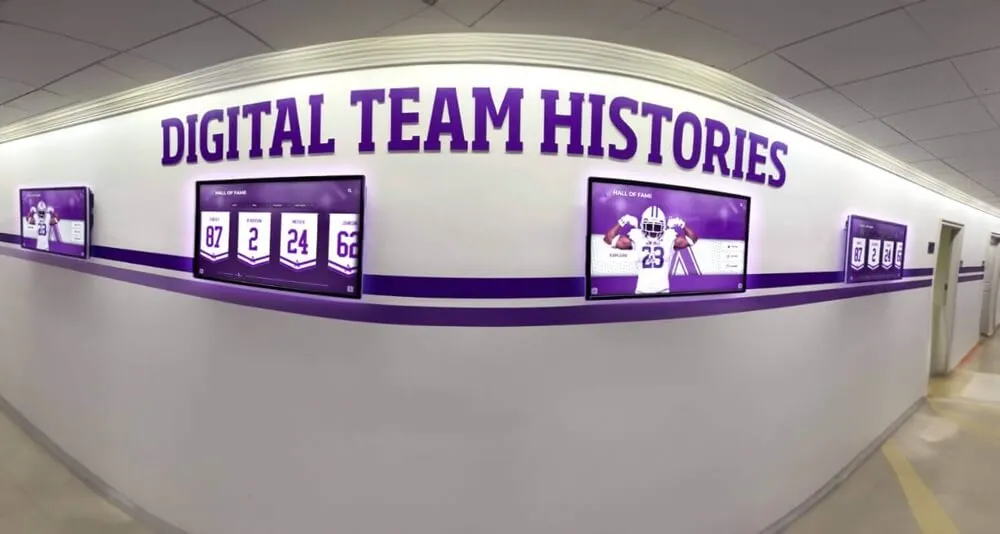
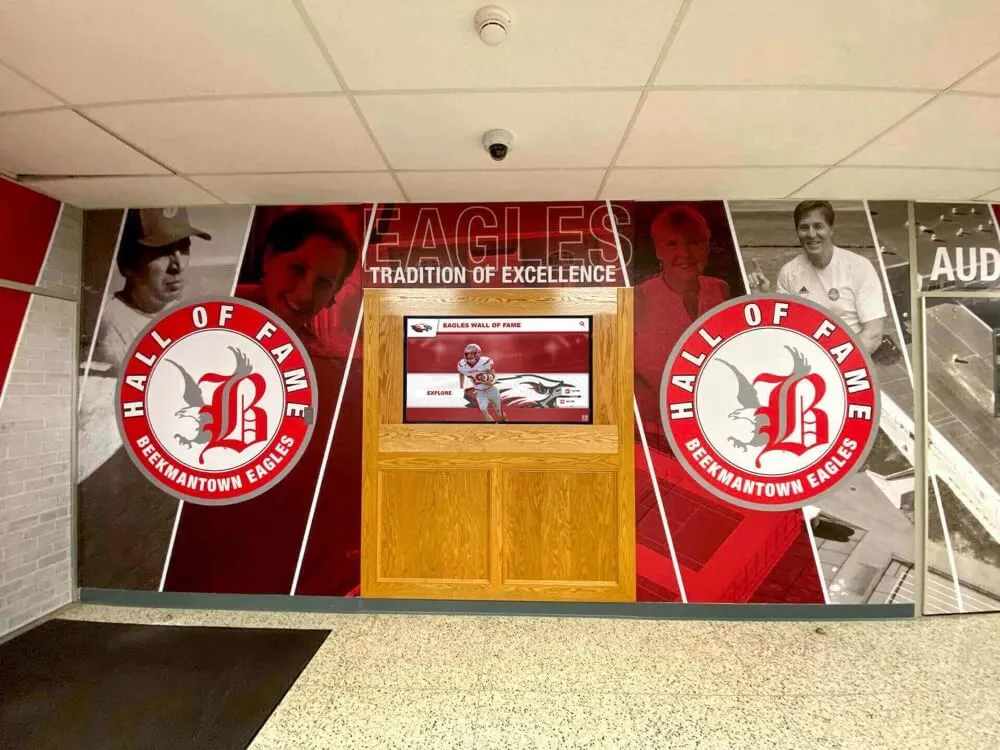
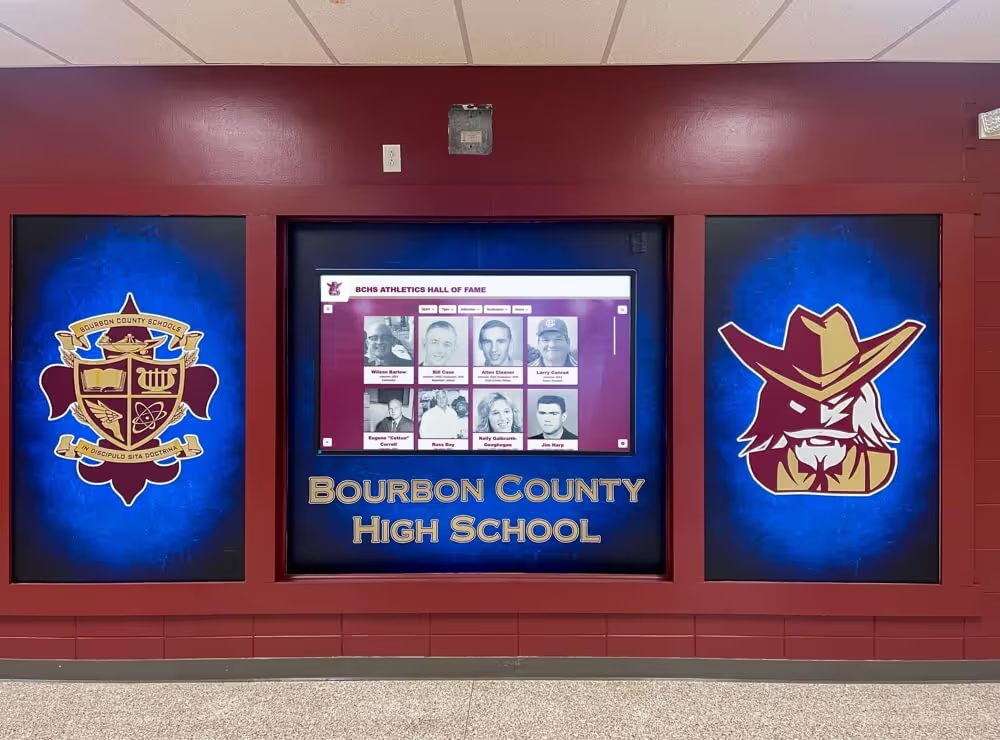
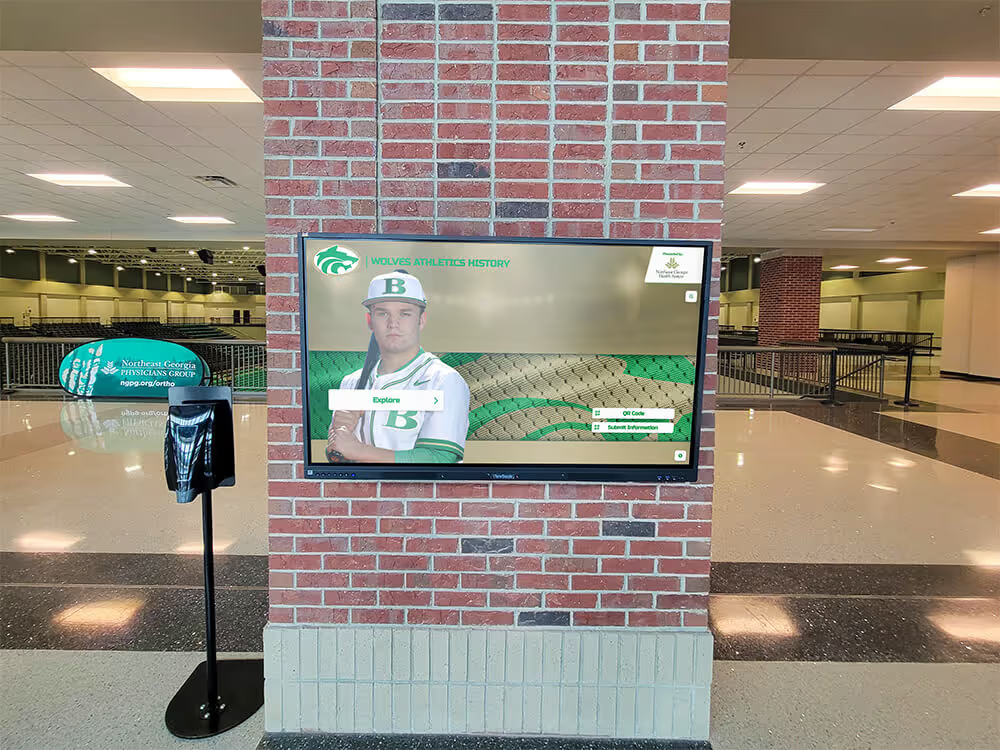
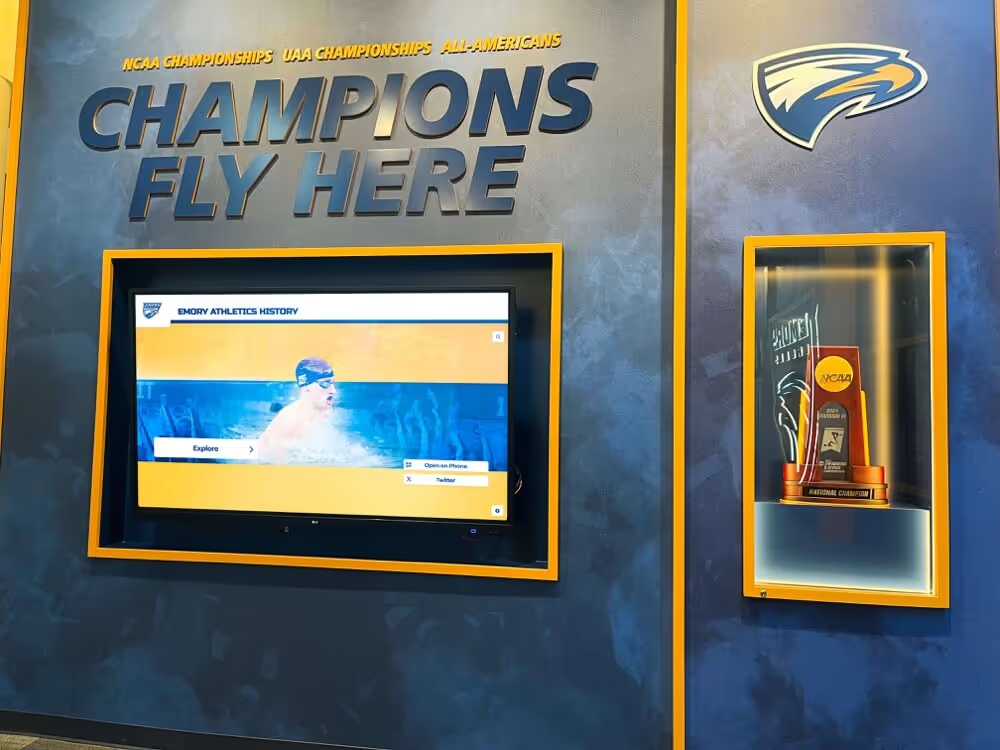
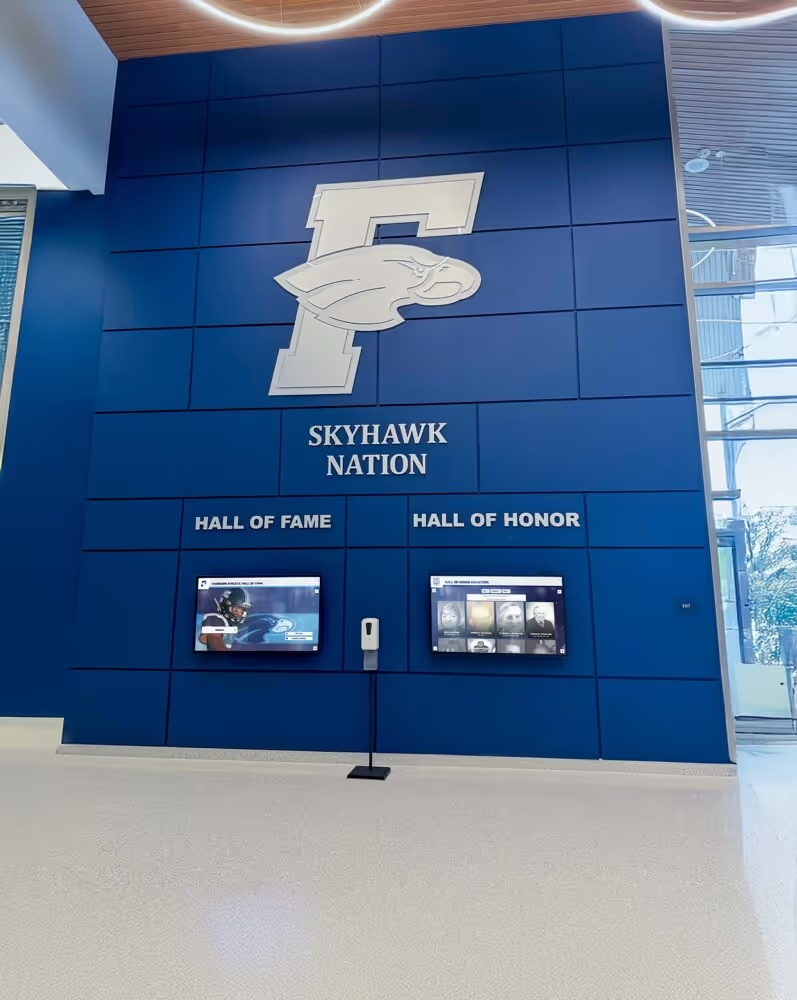
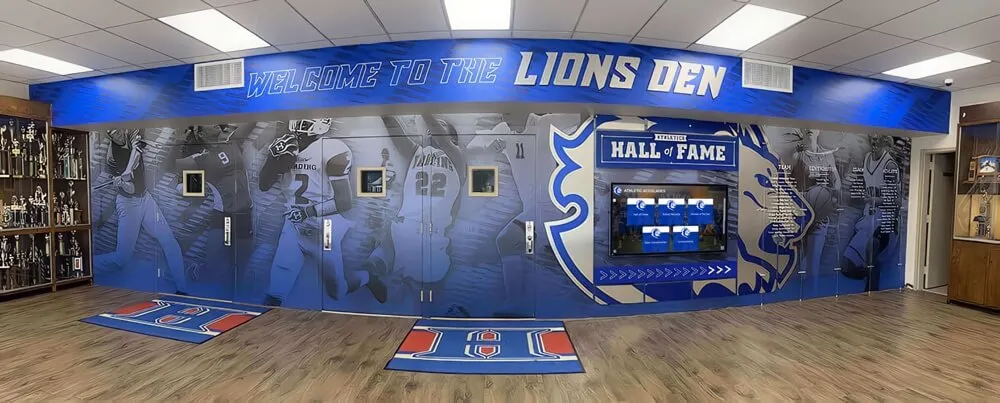
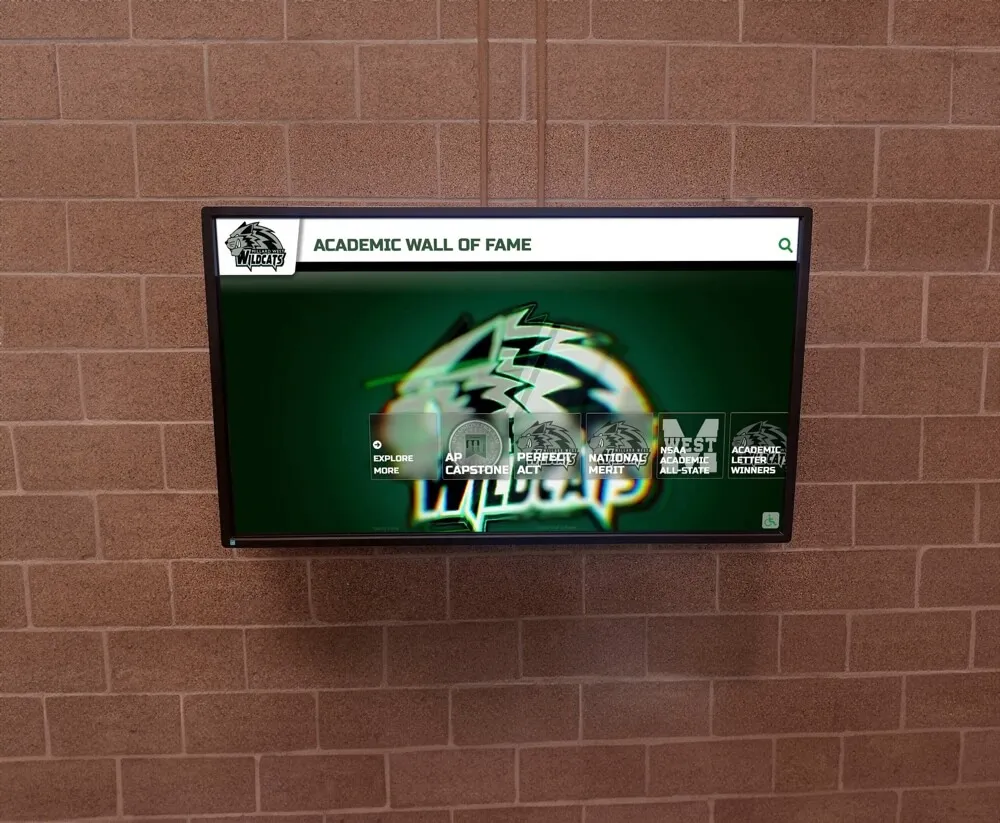
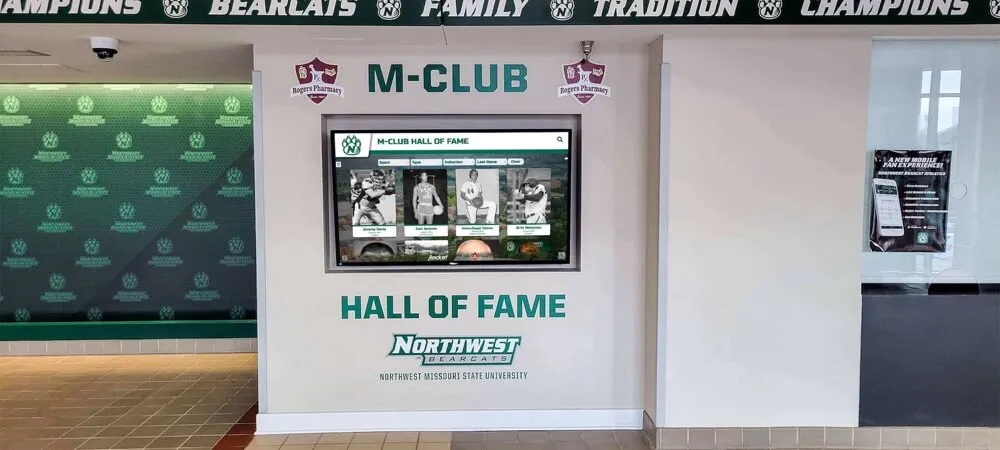
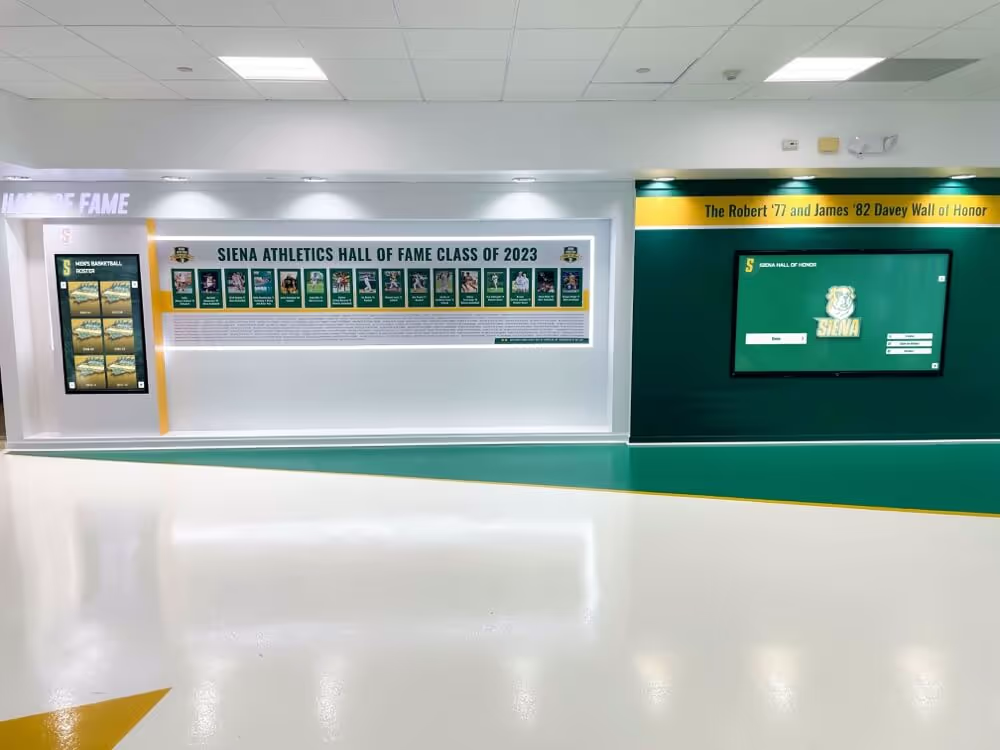
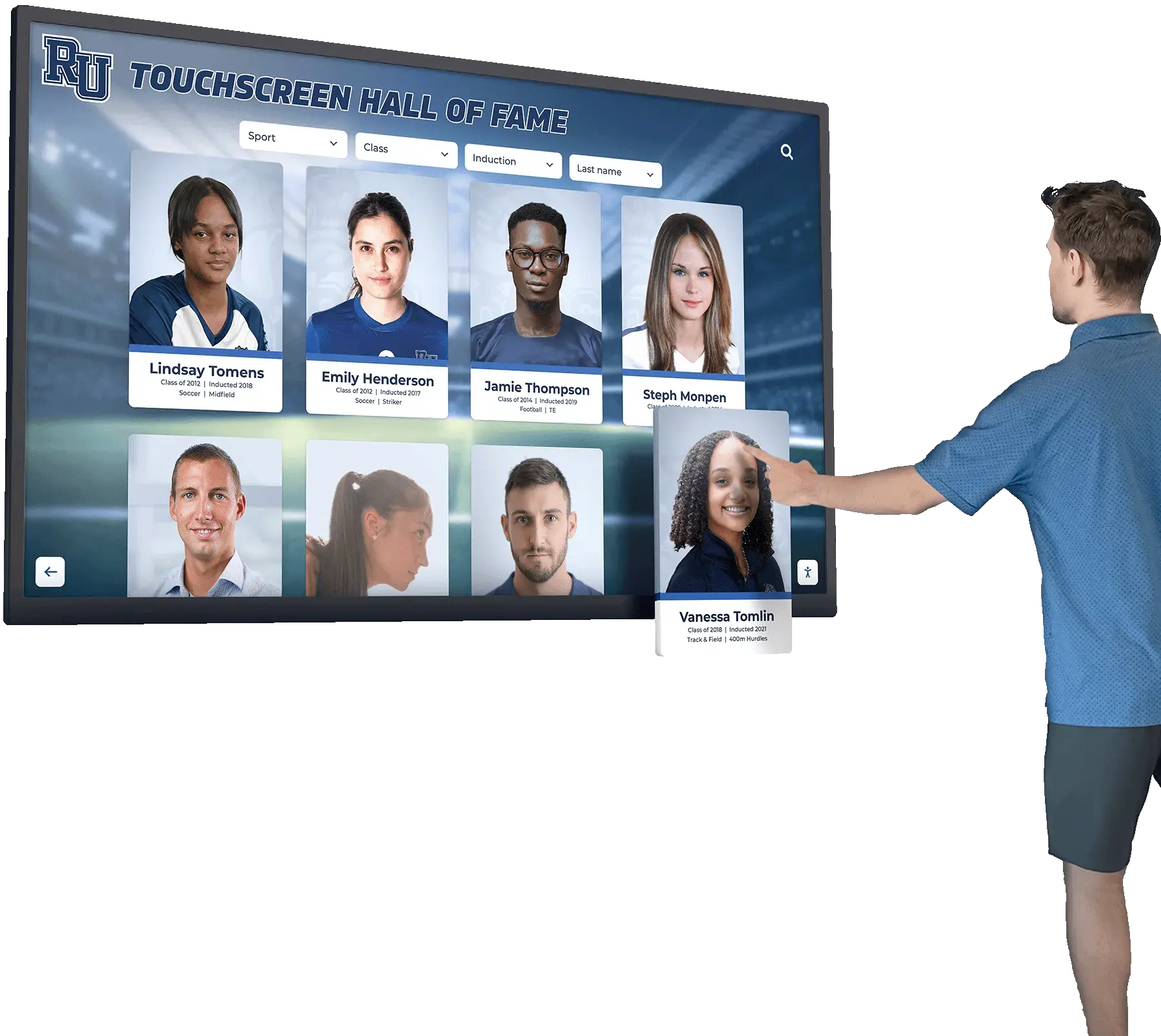
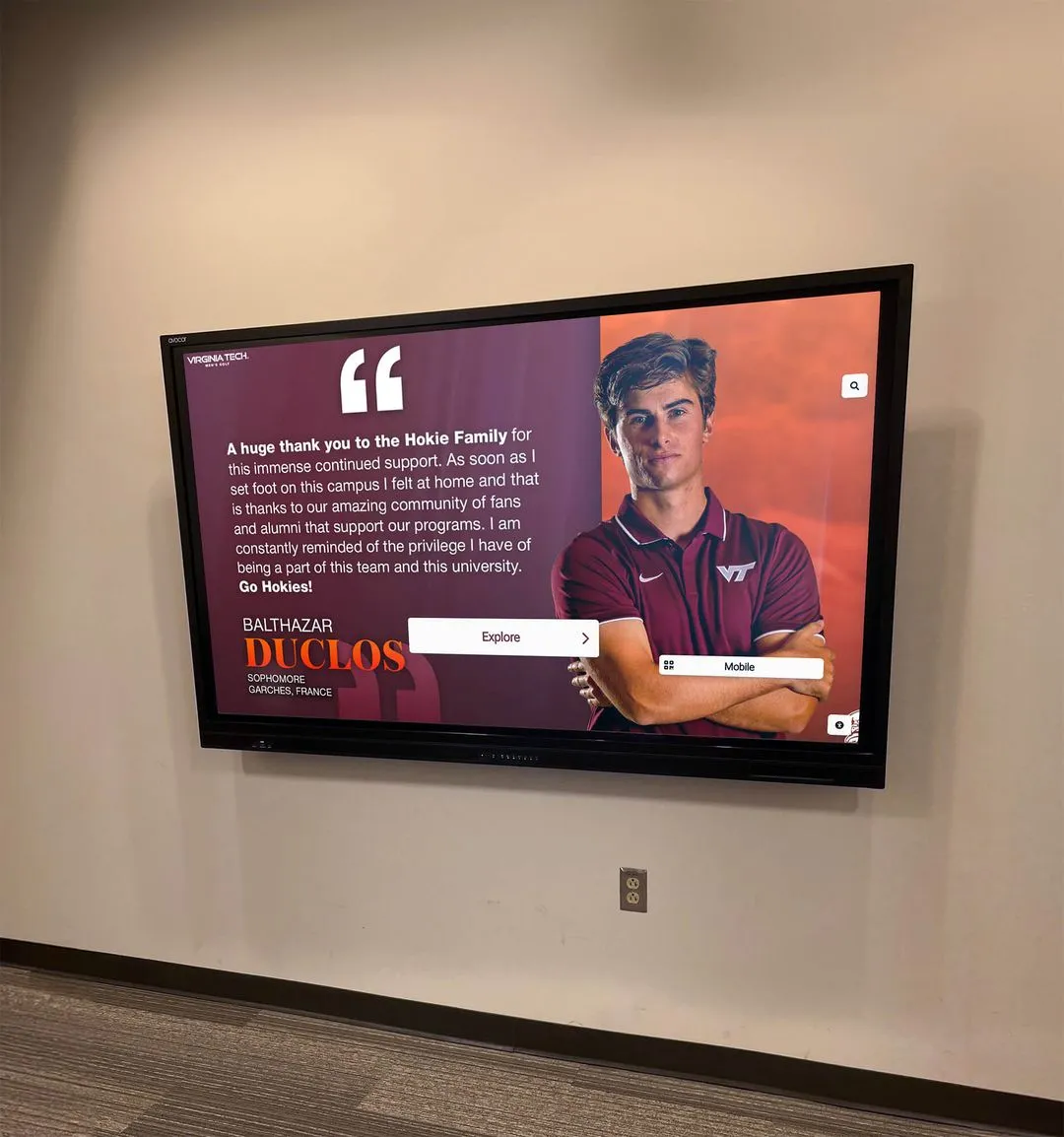
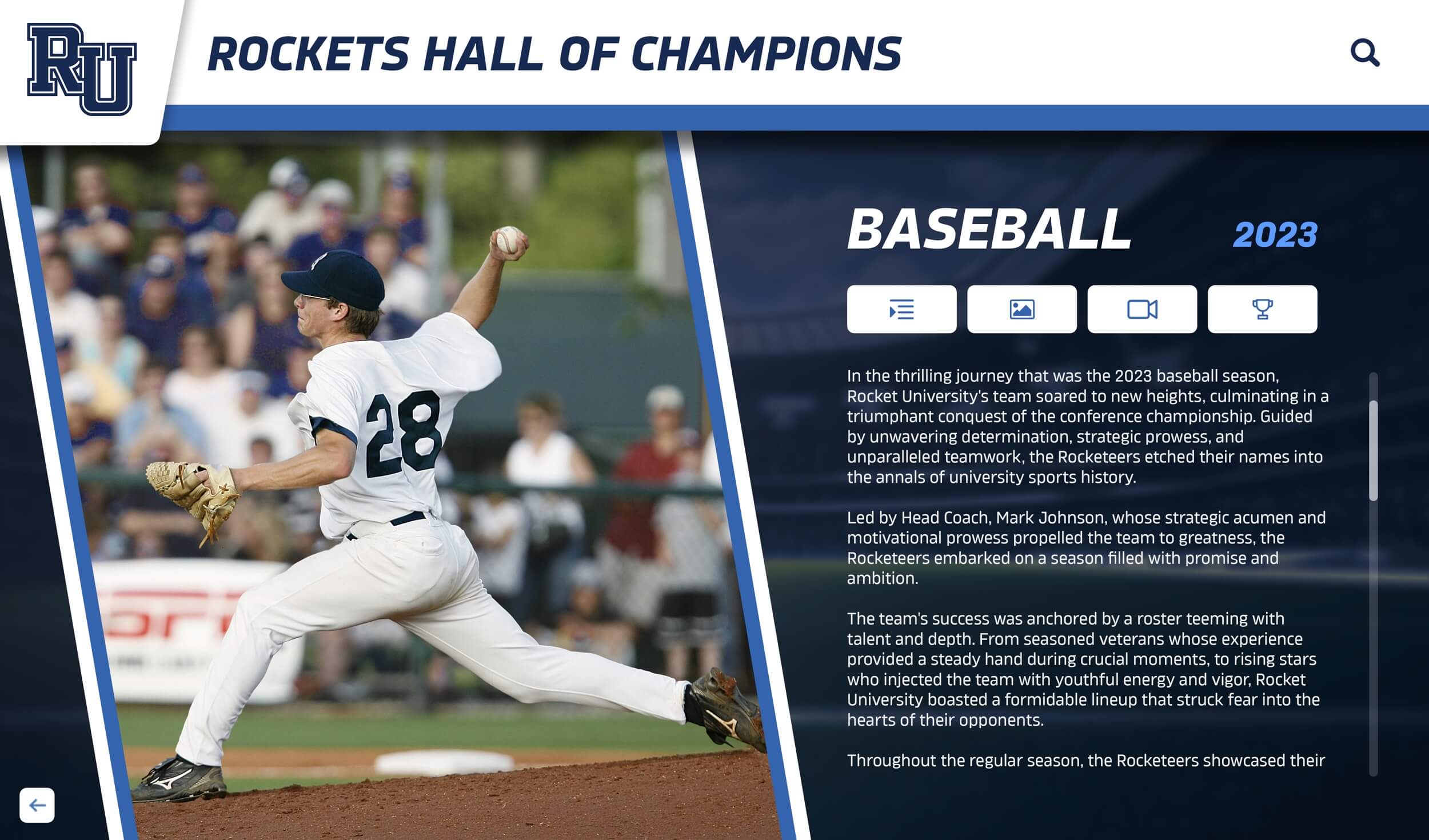
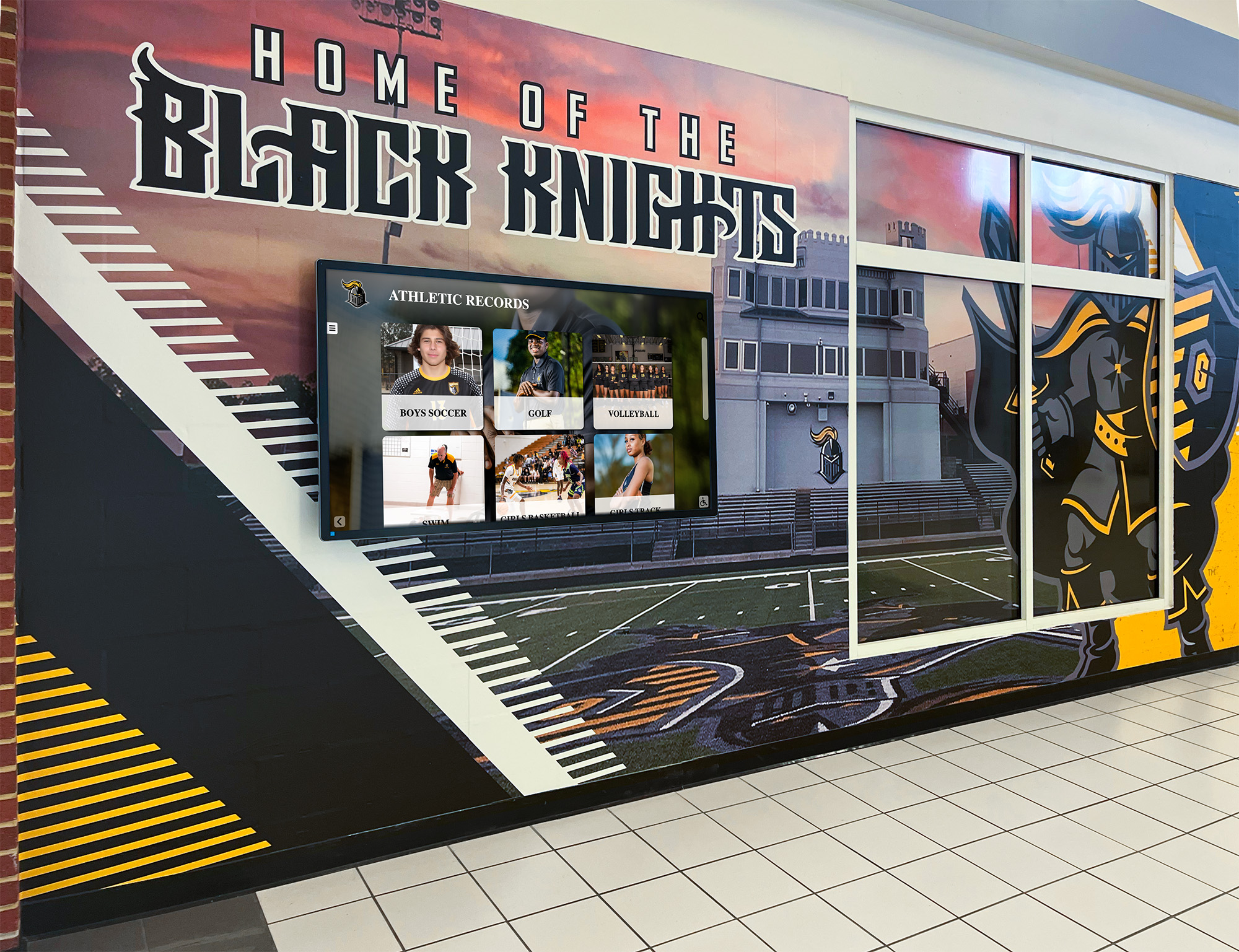
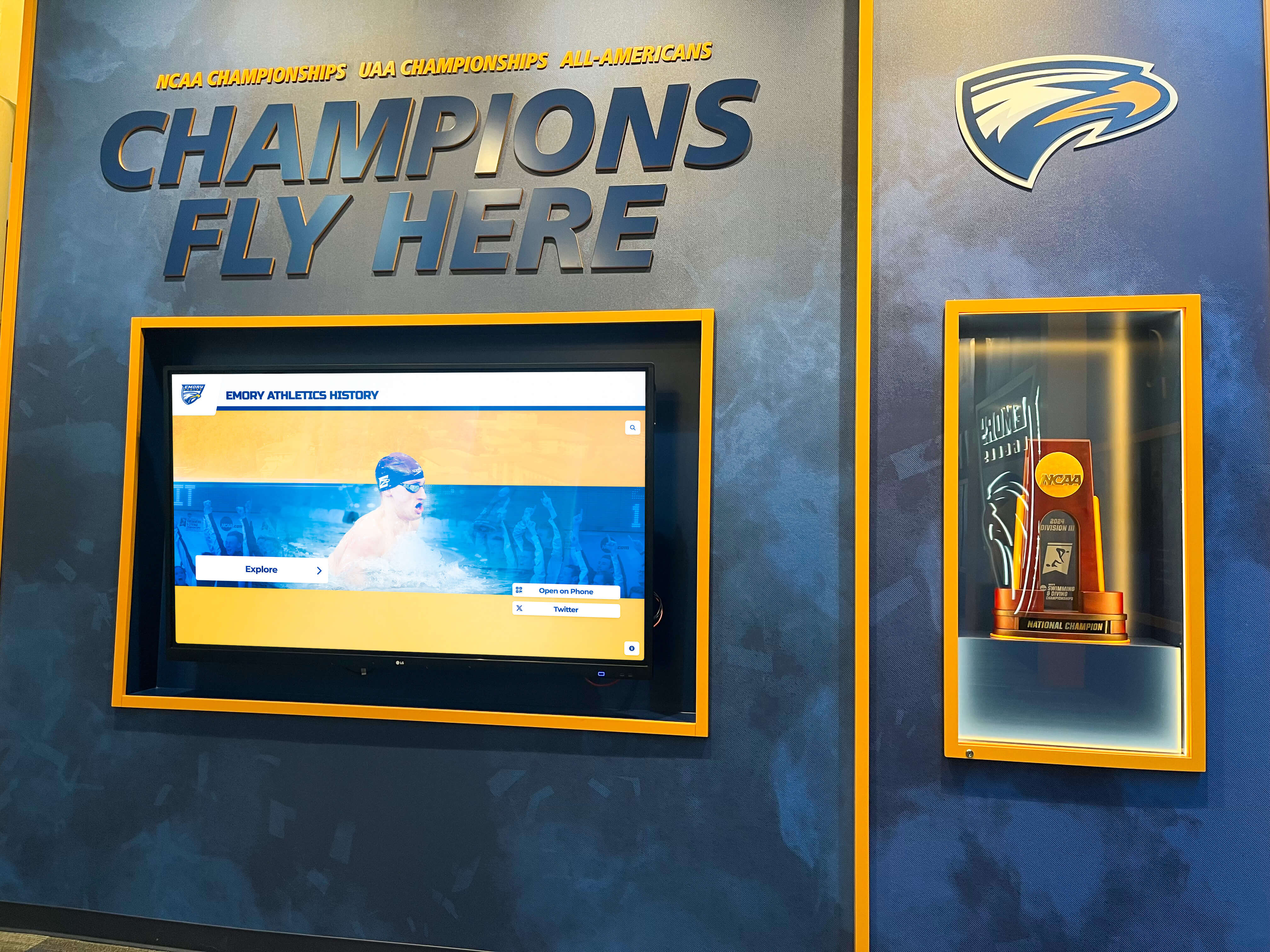
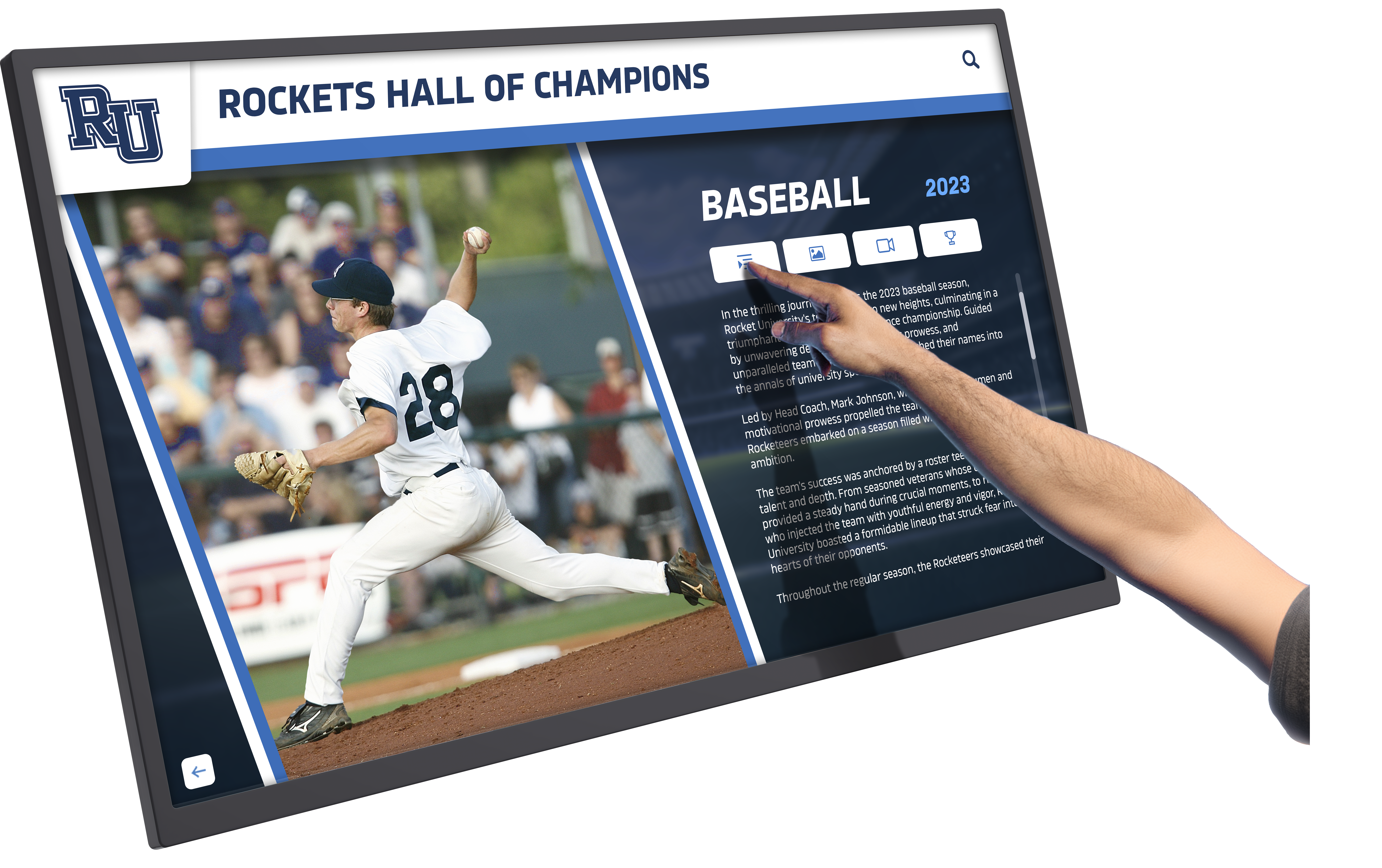
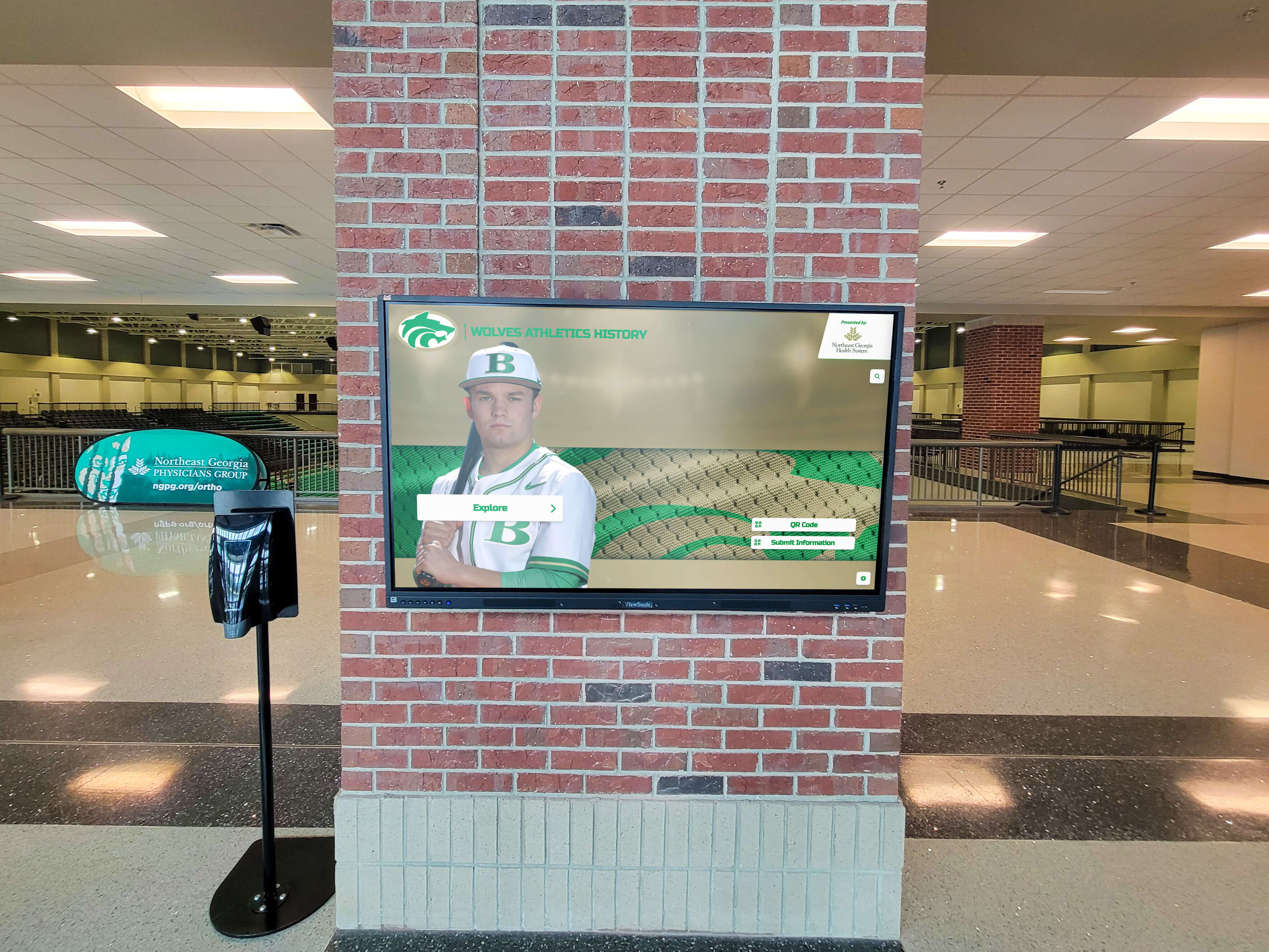
Modern digital recognition displays allow programs to showcase defensive standouts alongside offensive stars. Interactive touchscreen systems can feature game-saving catches, display defensive metrics like range factor and throwing assists, highlight Gold Glove-caliber defenders in program history, and recognize season-long defensive consistency.
When young outfielders see defensive excellence honored as prominently as home run records, they understand that complete player development matters. This cultural shift often separates good programs from great ones—championship teams typically excel on both sides of the ball because they cultivate environments where defense receives appropriate recognition and respect.
Programs investing in comprehensive athlete recognition systems create lasting impressions on recruits, build deeper connections with alumni who see their defensive contributions remembered, and establish cultures where excellence in all aspects of the game receives celebration. These same displays become sources of pride during homecoming weekends and alumni events, connecting past defensive standouts with current players developing the same skills.
Conclusion: From Routine to Remarkable
The gap between routine outfield play and remarkable defensive performance isn’t talent alone—it’s dedicated, focused training on position-specific skills. Coaches who implement structured baseball outfield drills that develop range, improve ball-reading ability, and build throwing strength create defensive game-changers who turn potential extra-base hits into outs and prevent runs that win championships.
These drills require time, intentionality, and progression. They demand attention to fundamentals before advancing to complex skills. They benefit from measurement, tracking, and individual development planning. Most importantly, they need cultural support—program environments where defensive excellence receives recognition equal to offensive achievement.
Start with the foundation drills that build proper mechanics. Progress to reading and tracking drills that expand range. Develop throwing programs that create strong, accurate arms. Integrate game-situation work that builds decision-making and composure. Track improvement, celebrate achievement, and build cultures where outfield excellence matters.
The outfielders who master these skills become the defensive anchors that championship programs need—players whose game-saving catches shift momentum, whose cannon arms prevent runners from taking extra bases, and whose consistent excellence allows teams to win close games where defense determines outcomes.
Ready to build a program culture that celebrates defensive excellence alongside offensive achievement? Rocket Alumni Solutions provides schools with modern digital recognition systems that showcase complete player achievement—from Gold Glove-caliber defense to power-hitting excellence. Our interactive touchscreen displays engage athletes, recruits, and communities while preserving your program’s championship heritage for generations. Schedule a consultation to discover how permanent recognition can strengthen your baseball program’s culture and celebrate the outfielders who patrol your grass with excellence.