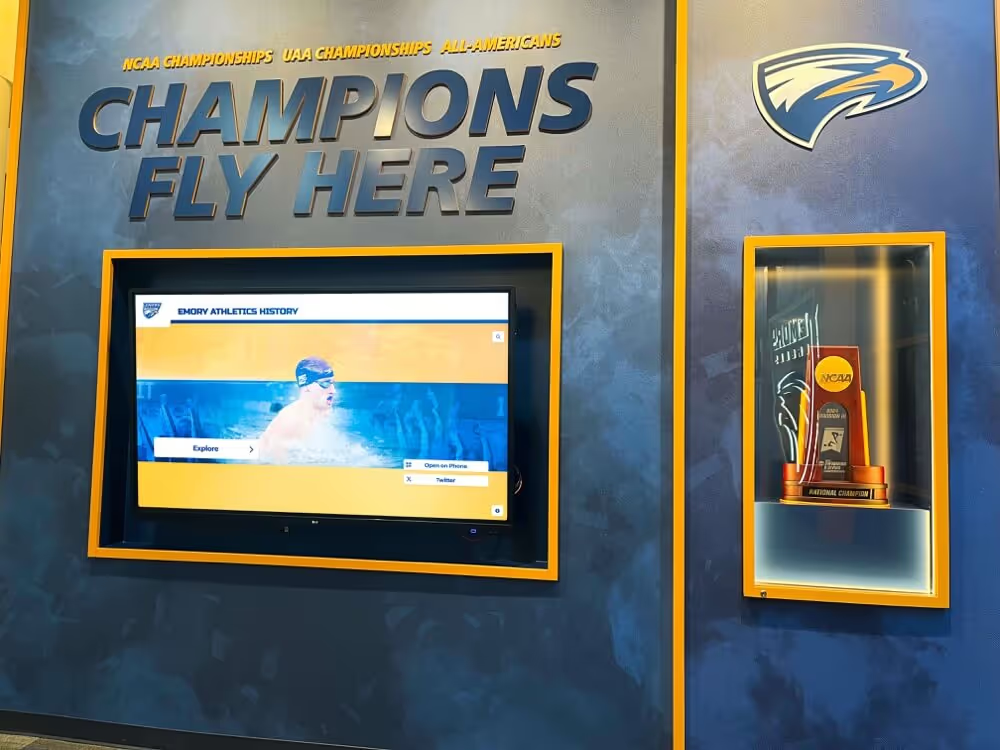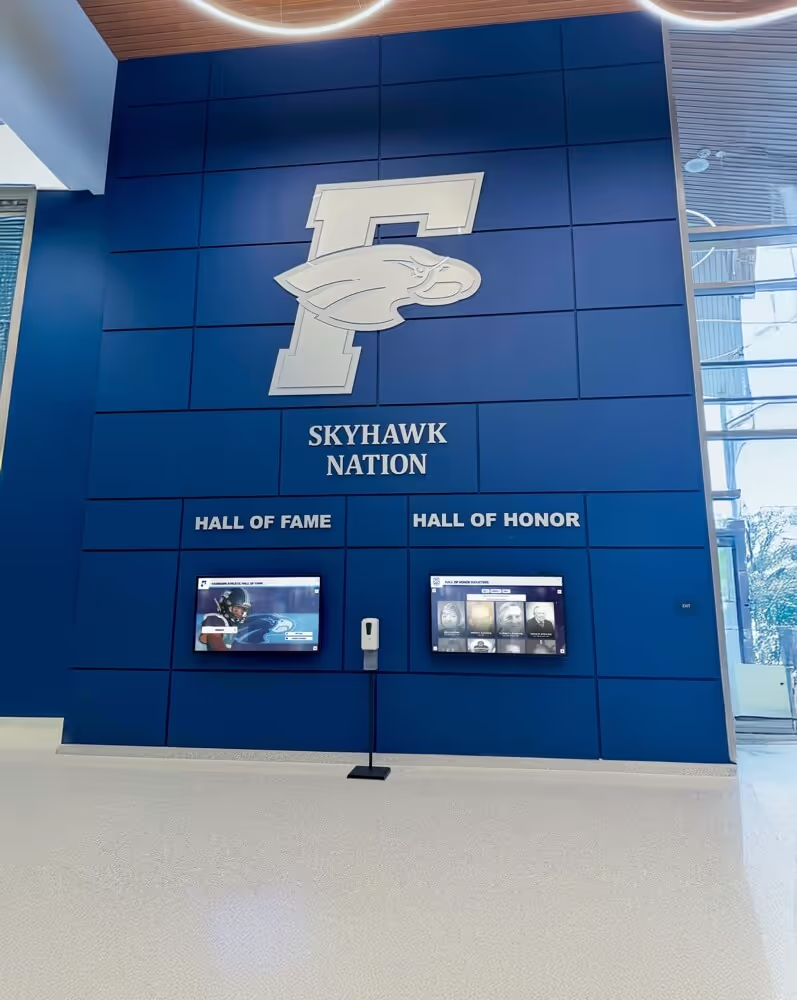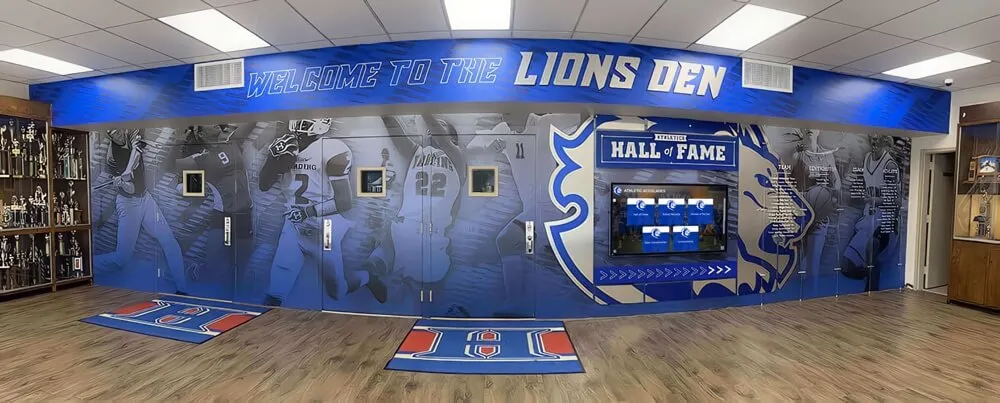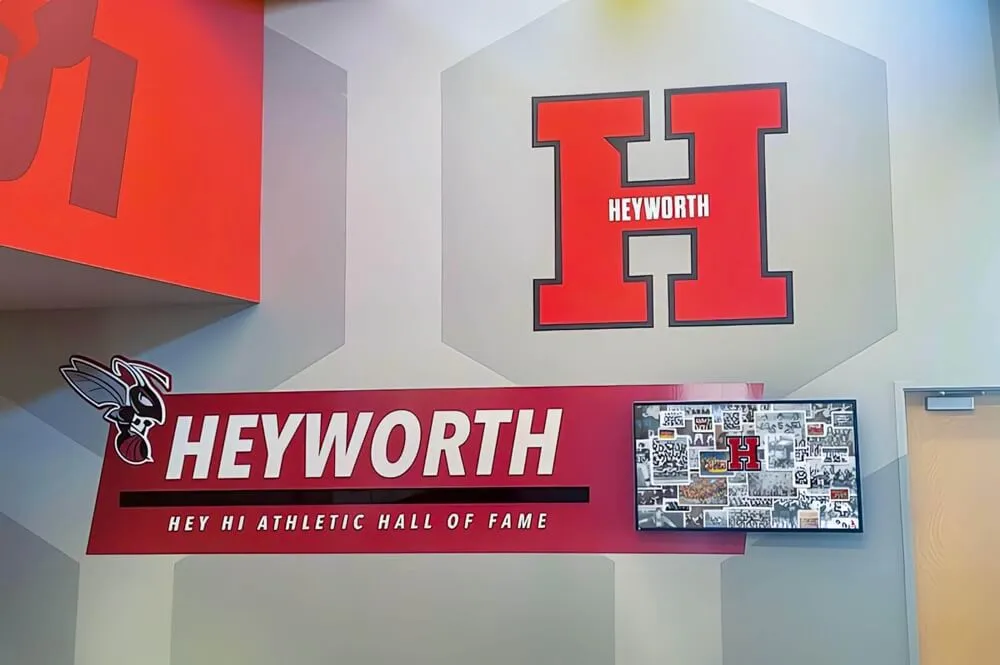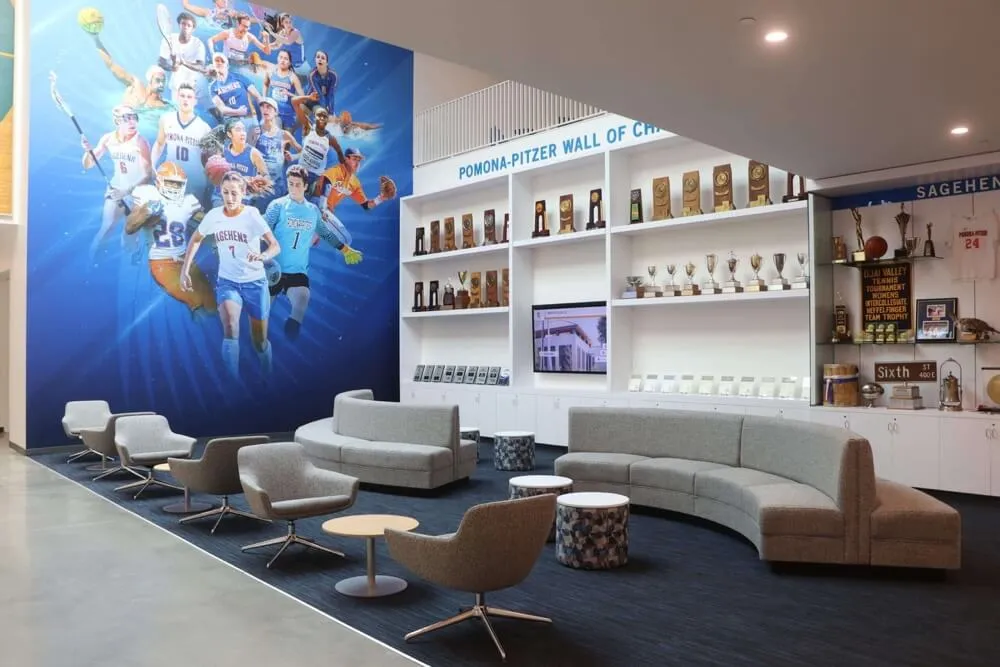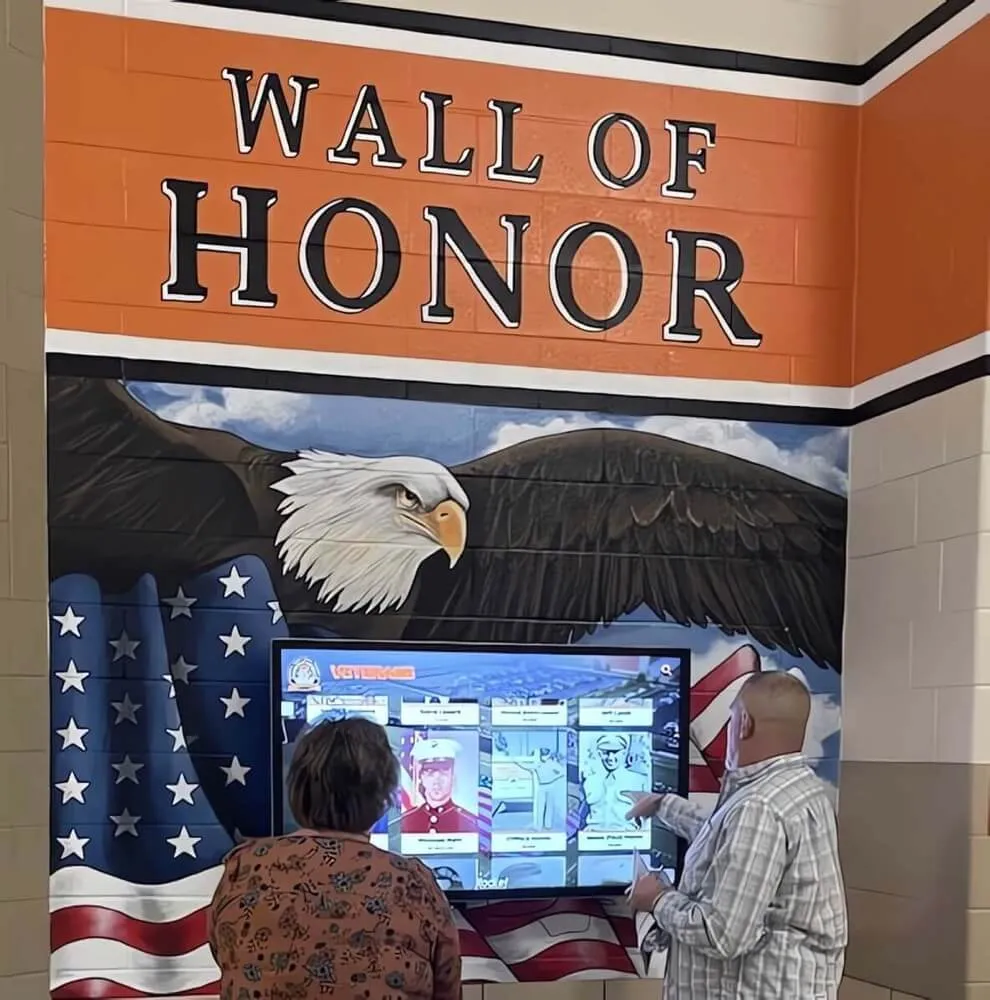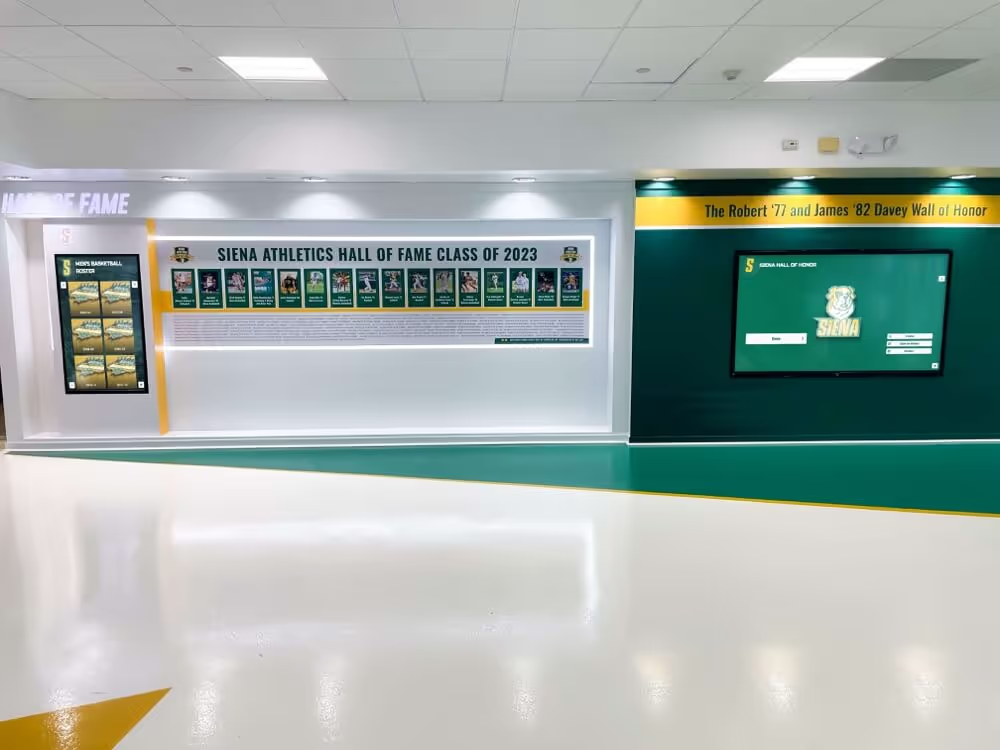
Every school that has fielded teams long enough accumulates a rich store of athletic history — record-setting performances, championship seasons, beloved coaches, and alumni who went on to compete at the next level. The challenge is not whether that history exists; it is whether your community can find it, experience it, and be inspired by it. An athletic tradition wall turns scattered records, faded photographs, and oral history into a coherent, lasting display that connects current students to the generations before them.
This planning guide answers the three questions athletic directors, recognition committees, and advancement staff consistently ask: What content belongs on an athletic tradition wall? How do you plan and prioritize the build-out? And who governs it after it launches?
- Content inventory — the eight categories every athletic tradition wall should include
- Display format — physical vs. digital touchscreen and what each preserves best
- Launch checklist — 30 action items from initial audit to ribbon cutting
- Governance table — role assignments for content ownership, updates, and approvals
What Belongs on an Athletic Tradition Wall
The most common planning mistake is treating the athletic tradition wall as a trophy shelf — limited to championships and MVPs. A tradition wall serves a broader purpose: it documents the full character of a program over time. The eight content categories below represent what schools consistently include when building recognition displays that hold their value for decades.
1. All-Time Athletic Records
Individual and team records form the factual backbone of any athletic tradition wall. These include single-season scoring records, career statistics, individual event bests in track and field or swimming, and team-win milestones. Displaying each record with the athlete’s name, graduation year, and date set gives future students a concrete target and keeps the display current as records fall.
Schools that have invested in creative ways to display athletic records consistently find that presenting records visually — rather than as a typed list pinned to a bulletin board — substantially increases the time students and visitors spend engaging with the display.
2. Team Histories and Championship Banners
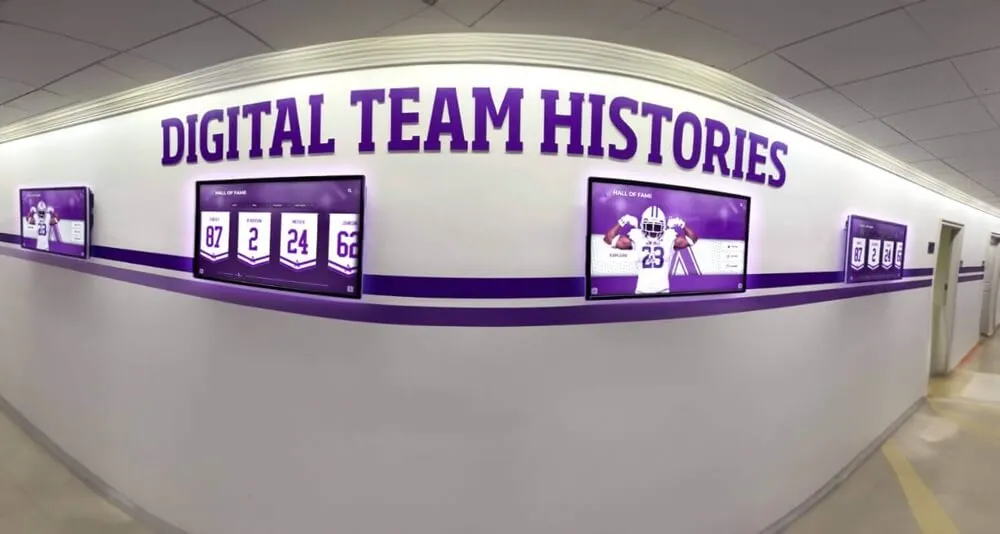
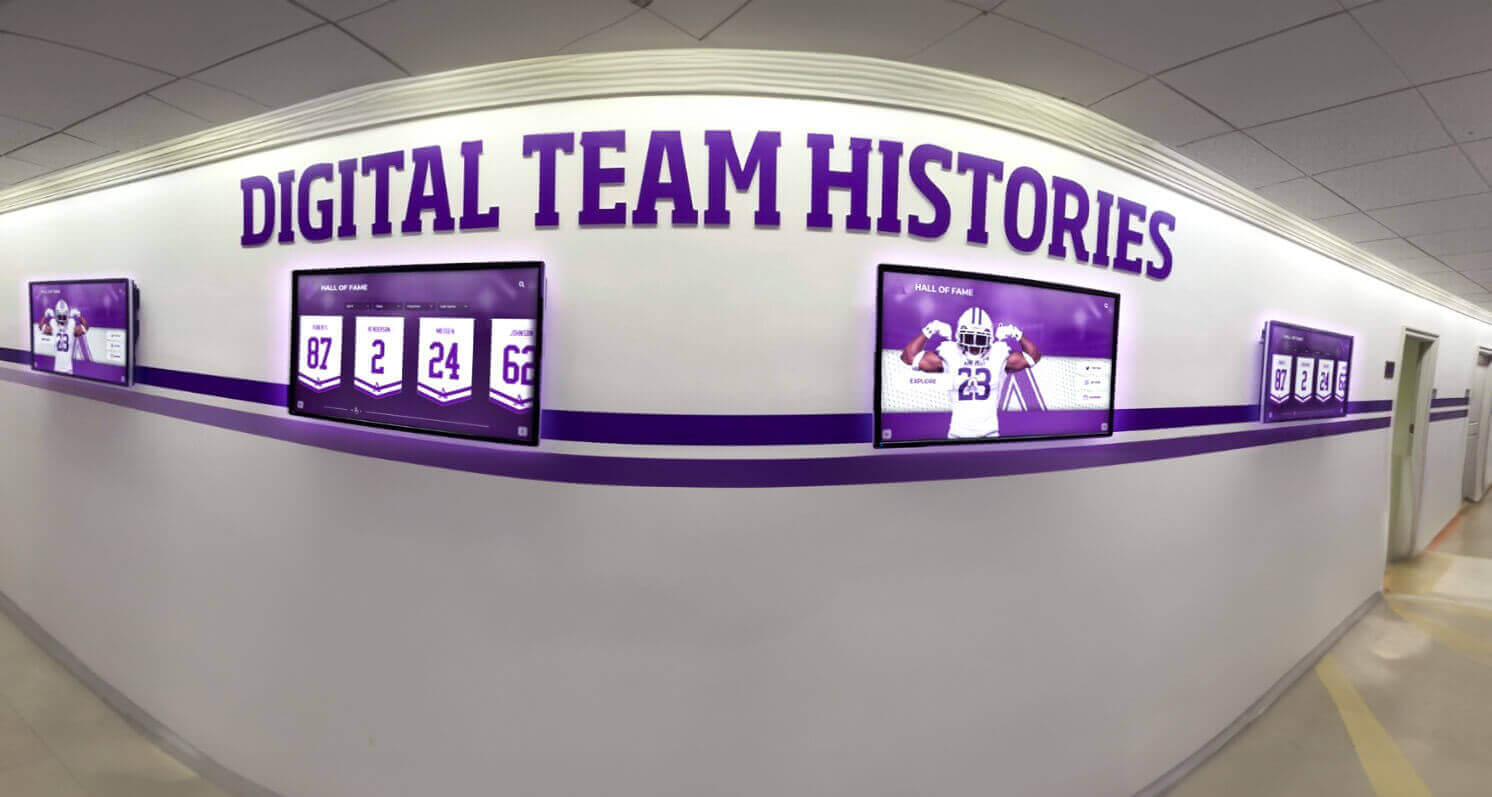
Season-by-season records, coaching tenures, conference championships, and state tournament results belong in a dedicated team history section. Many schools maintain physical banners for championships but have no systematic archive of near-miss seasons, rivalry results, or regular-season milestones that shaped a program’s identity.
Digital team history panels solve the space problem: a touchscreen can surface fifty years of season records for every varsity sport without requiring fifty feet of wall space. The legacy wall designs that inspire for decades that schools have adopted make it practical to honor every season rather than only the championship years.
3. Alumni Stories and Career Highlights
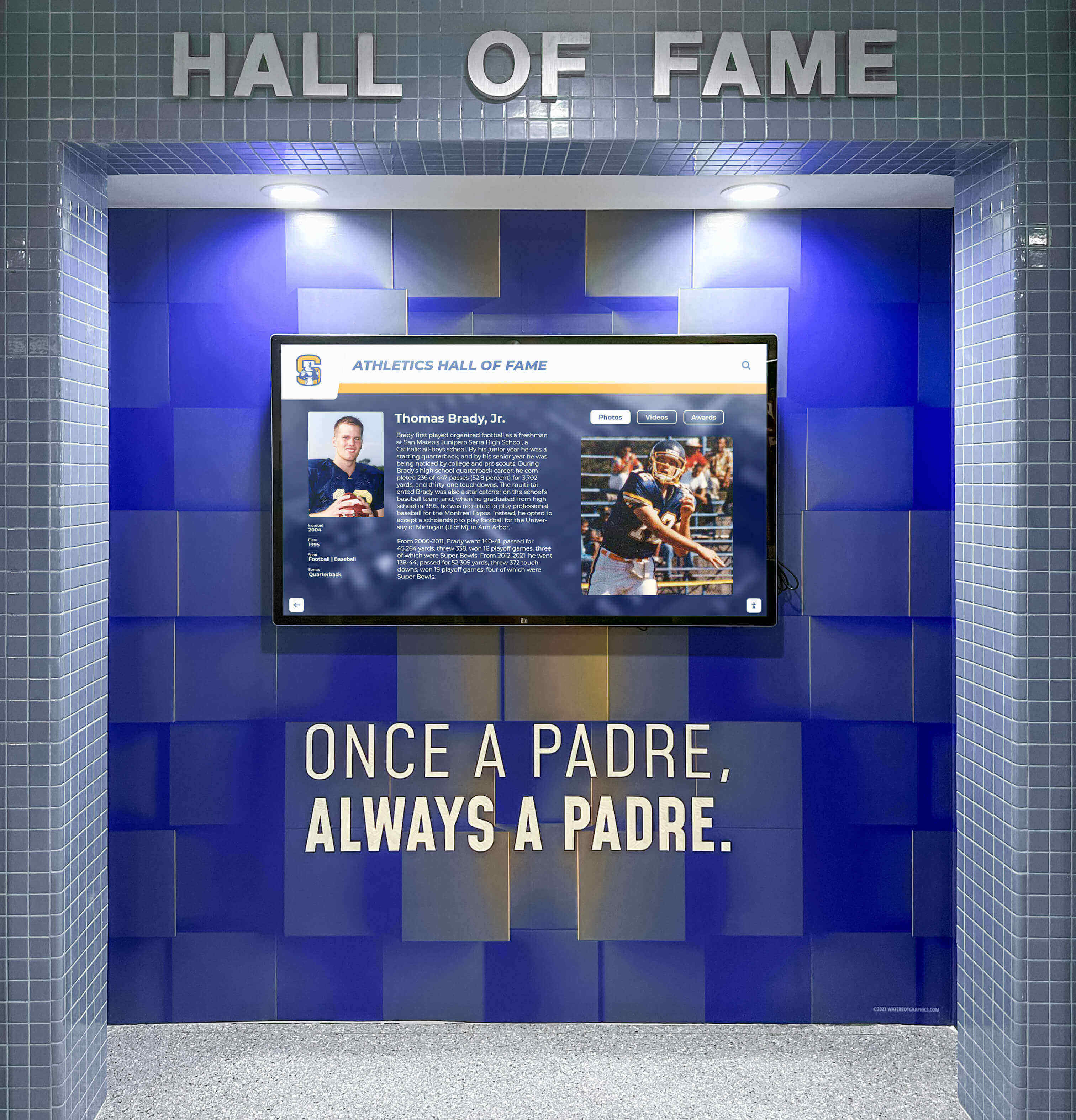
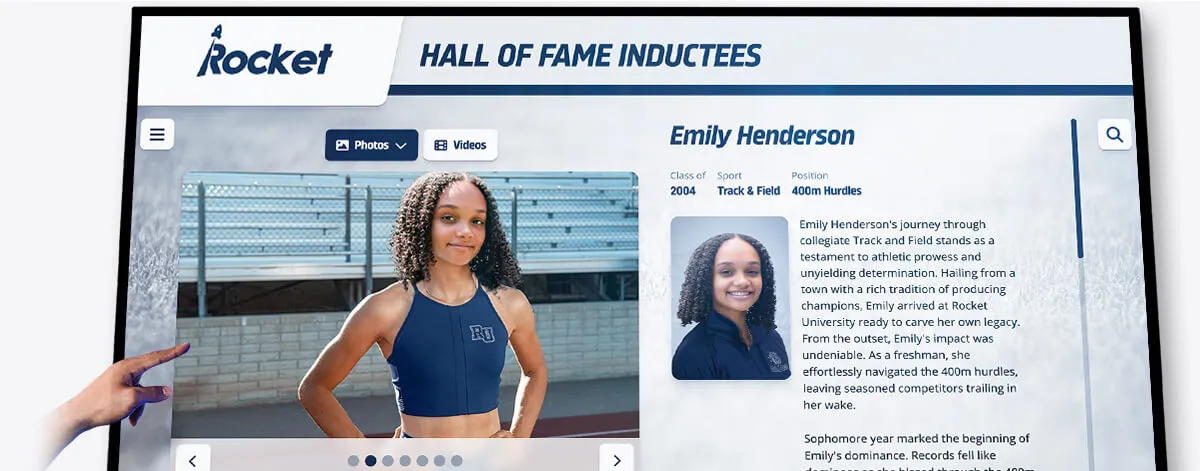
Athletes who competed for your school and went on to play in college, reach the professional level, or represent their country deserve dedicated recognition. Alumni profiles typically include a headshot or action photo, sport and graduation year, college or professional career summary, and any notable post-graduation achievements.
Collecting these stories requires active outreach, which is why building modern alumni recognition walls increasingly relies on digital intake forms and social channels that alumni can update themselves — keeping profiles accurate without burdening administrative staff.
4. Individual Award Winners
Sport-specific awards — Most Valuable Player, Defensive Player of the Year, Coaches’ Award — and multi-sport recognition such as Scholar-Athlete of the Year or the Principal’s Athletic Award deserve a dedicated section. Many schools have years of award records stored in filing cabinets or yearbooks that have never been compiled into a single, accessible display. Bringing those records forward is one of the most impactful steps a tradition wall project can accomplish.
5. Coaching Legacy
Coaches who built programs, mentored generations of athletes, and achieved milestone win totals are central to any school’s athletic tradition. A display that honors players without honoring coaches tells only half the story. Include coaching tenure, win-loss records, notable achievements, and a brief narrative about program philosophy whenever documentation allows.
6. Photo and Video Archives
Historic game photos, team portraits, and action images give the tradition wall visual depth that statistics alone cannot provide. Even low-resolution scans of yearbook photos add authenticity. Schools that have explored archiving student records and athletic history consistently find that digitizing photo archives is the most time-intensive step — but also the one that generates the most sustained visitor engagement.
7. Donor and Sponsor Recognition
Facilities, uniforms, equipment, and endowed awards that donors and sponsors have funded belong on the tradition wall. Recognizing this support publicly reinforces the relationship between your athletic program and the community partners who sustain it. Schools that integrate donor recognition into athletic displays — rather than siloing it in a separate corridor — report stronger donor retention and more frequent conversation-starter moments during campus tours.
For layout approaches that merge athletic and donor recognition effectively, donor wall ideas that inspire continued giving covers design strategies that keep both audiences engaged without either feeling buried.
8. Records by Sport and Gender
Equity in recognition is both a legal consideration under Title IX and a practical one for community trust. An athletic tradition wall that prominently features male sports and marginalizes female programs erodes confidence with significant portions of your community. Build content parity into the planning process from the start, allocating equivalent display real estate and curation effort to all programs — not as an afterthought, but as a founding principle.
Choosing a Display Format
The content categories above are format-agnostic. Schools implement athletic tradition walls across a wide spectrum of physical and digital approaches, and the right choice depends on budget, available wall space, and long-term update capacity.
Physical Displays
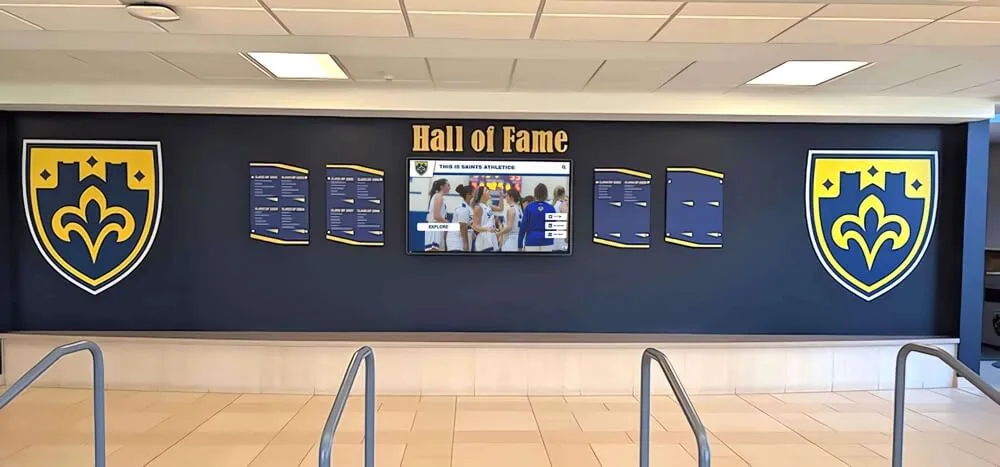
Traditional physical walls use engraved plaques, printed shields, framed photographs, custom display cases, and painted murals. Physical displays are durable, require no ongoing technology infrastructure, and communicate permanence to visitors. Their core limitation is scalability: every new record or alumni profile requires a fabrication and installation process that costs time and money.
A detailed comparison of wall-mounted vs. touchscreen recognition wall options outlines the trade-offs clearly: physical walls excel at ceremonial presence and long-term durability, while digital systems excel at content depth and ongoing updatability.
Digital Touchscreen Displays
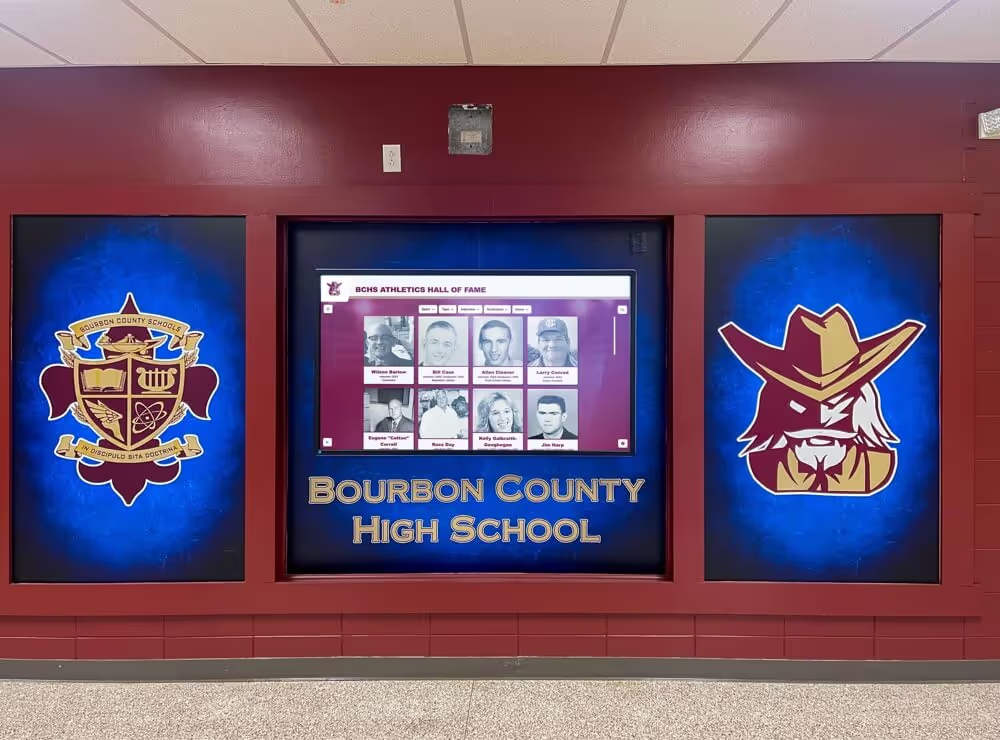
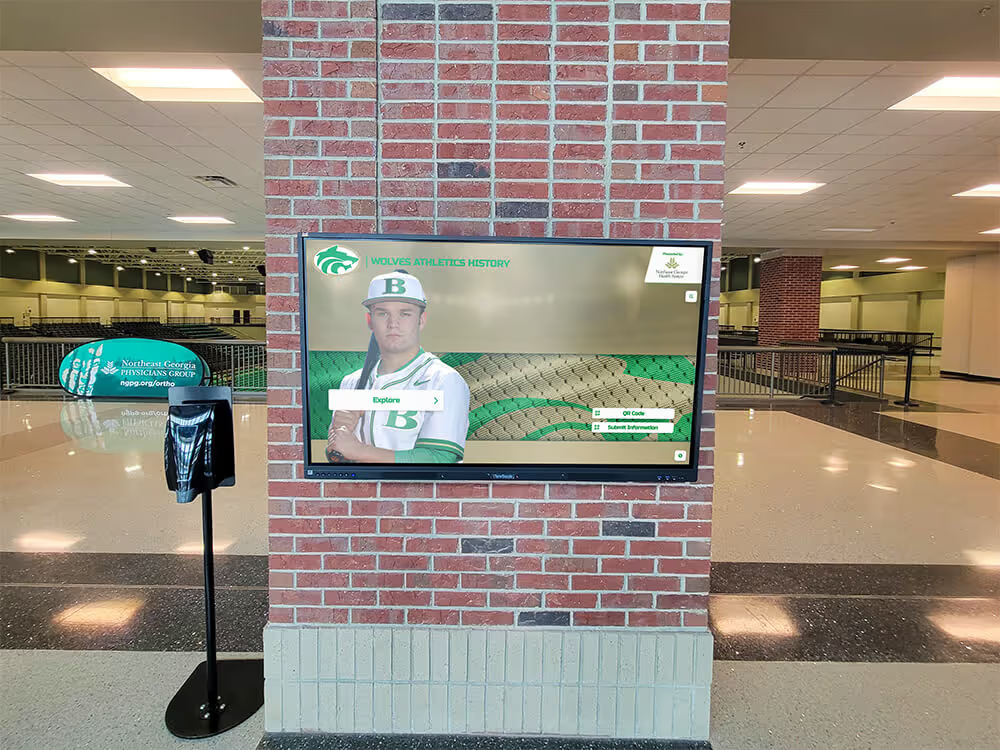
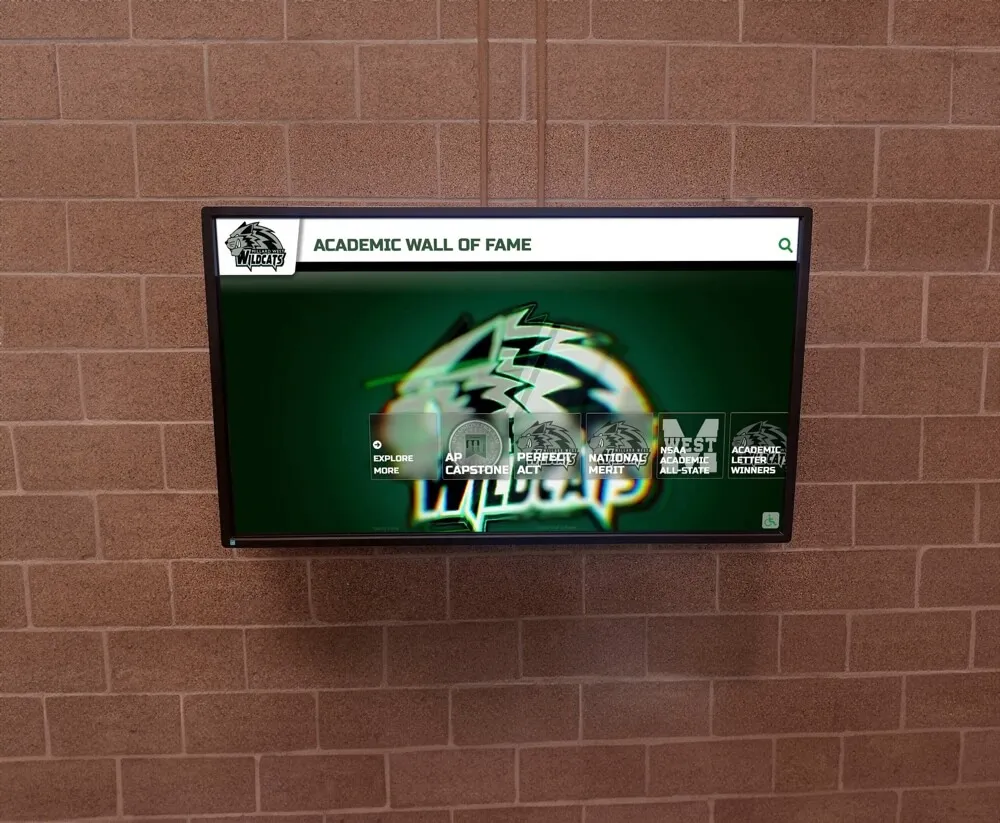
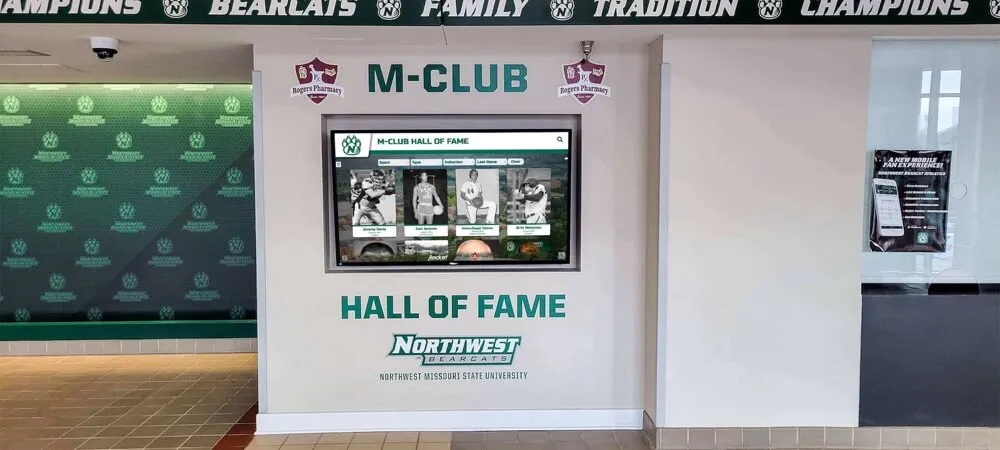
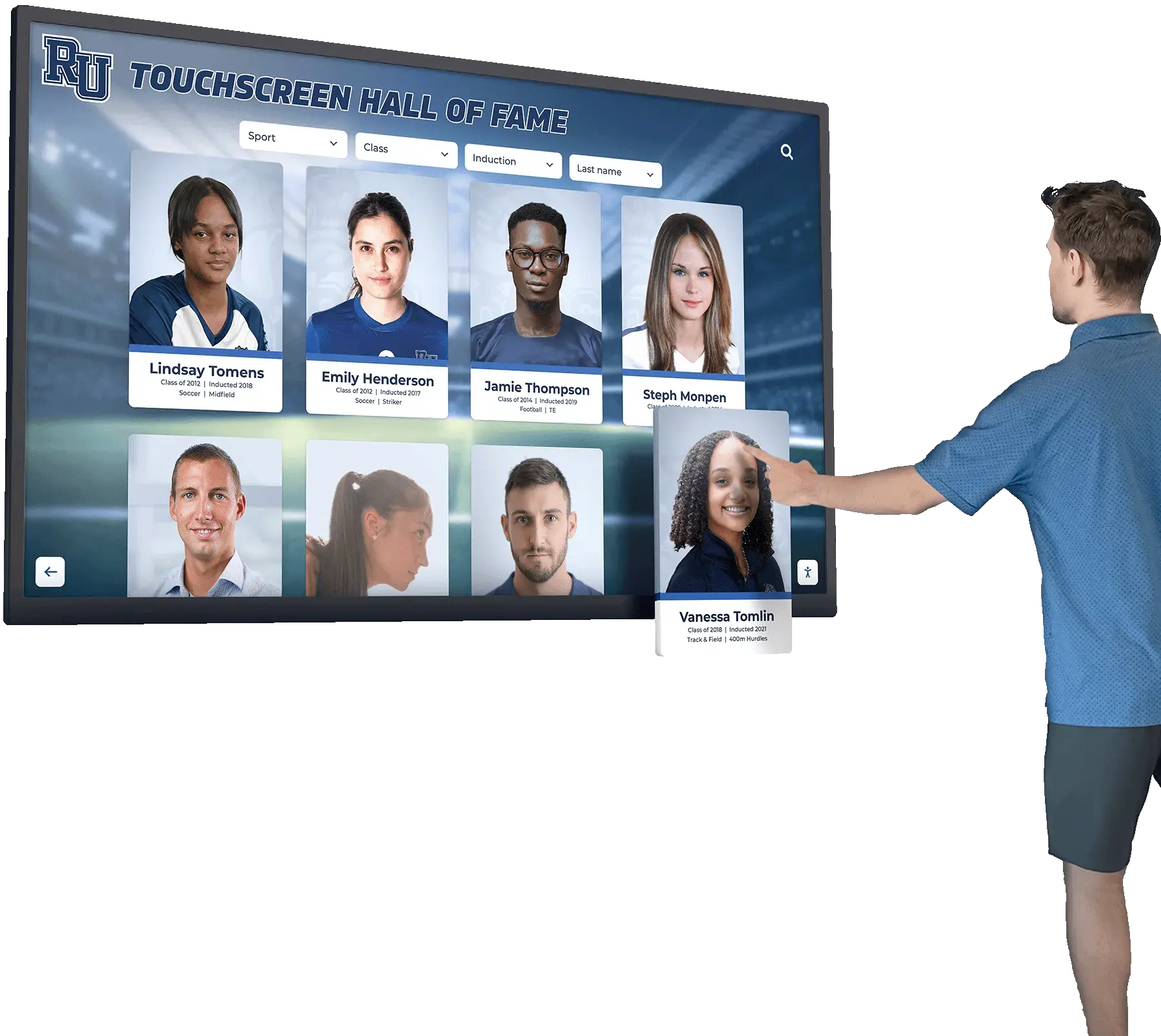
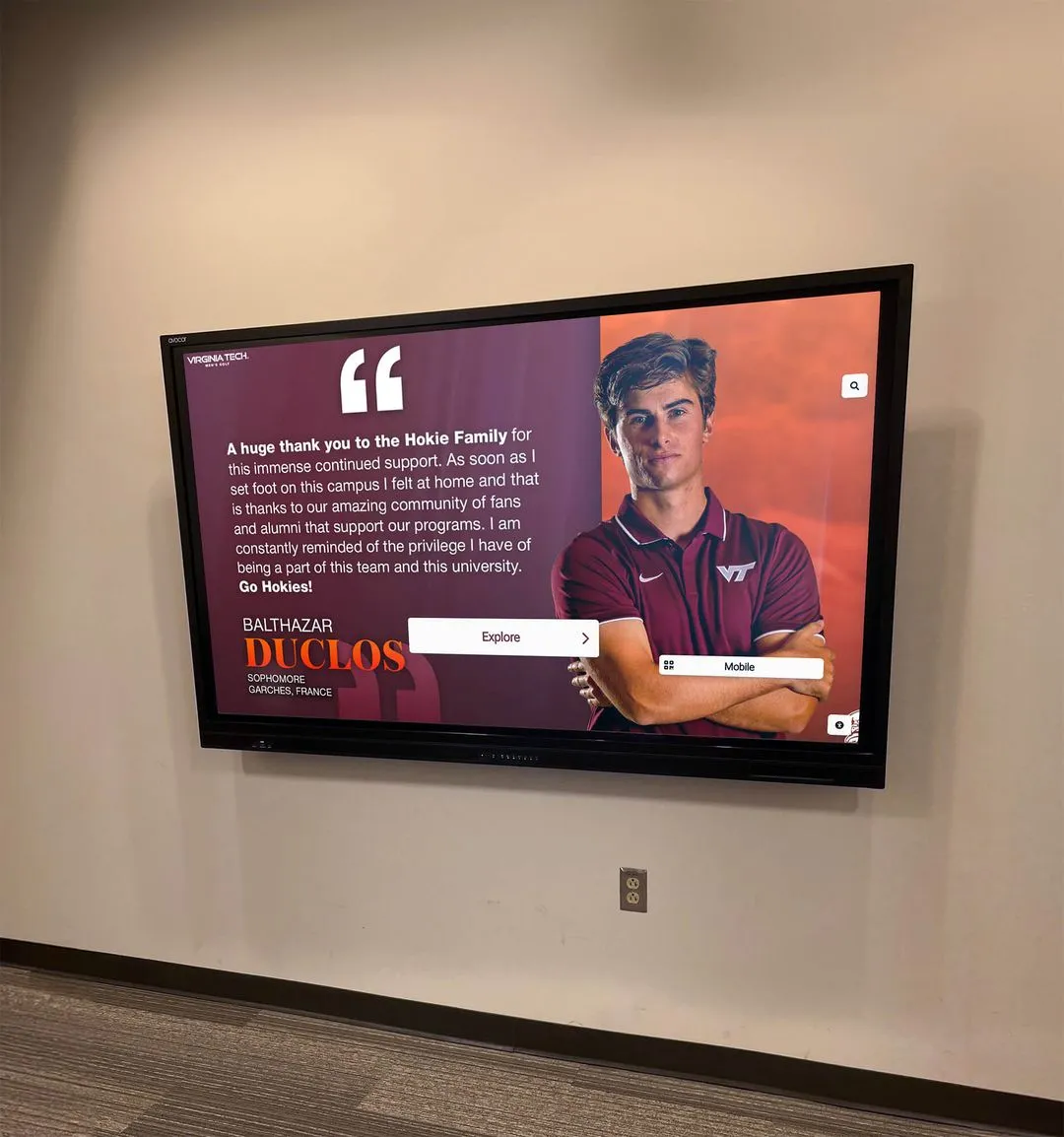
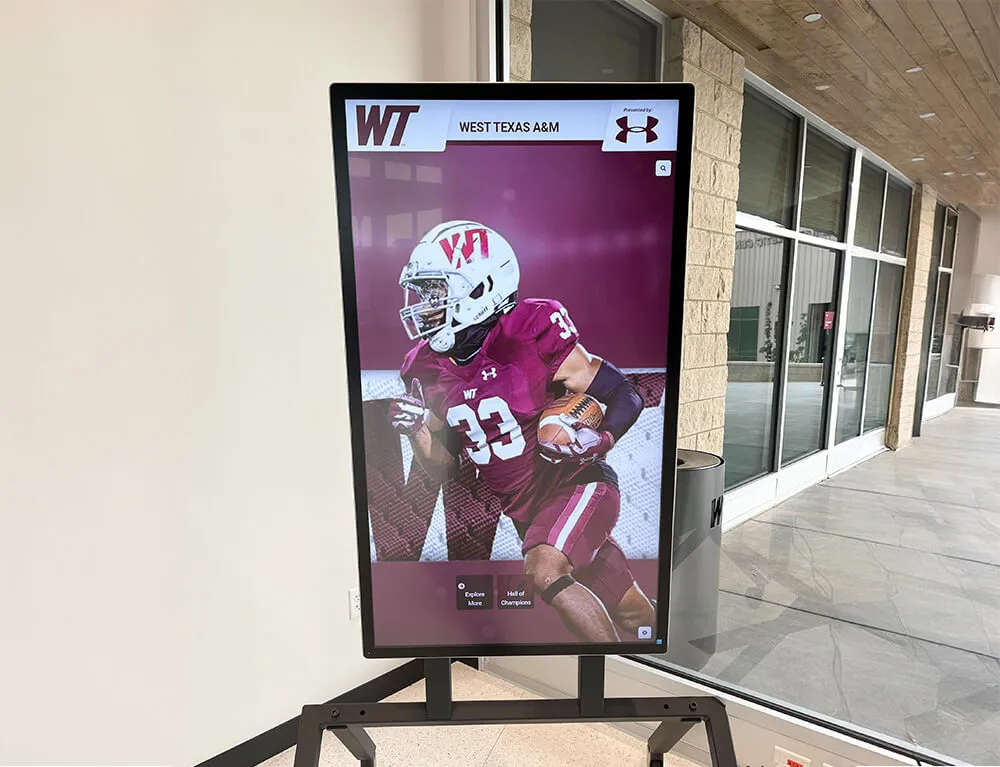
Interactive touchscreen panels eliminate the space constraint entirely. A single 65-inch display can surface thousands of athlete profiles, decades of team records, photo galleries, and video highlights — all searchable by name, sport, year, or record type. Updates that would require a fabrication order on a physical wall take minutes in a web-based content management system.
The dynamic content capabilities of school athletic displays that touchscreen systems enable — rotating “today in school sports history” headlines, real-time record updates after each season — turn a static display into a living archive that gives students a reason to return repeatedly.
Schools that have worked through how to preserve and display track and field records report that the event-by-event granularity of individual-event athletics makes a searchable digital format far more practical than a physical record board that quickly runs out of wall space. The same principle applies to swimming, wrestling, and any sport tracked at the individual event level.
Hybrid Approaches
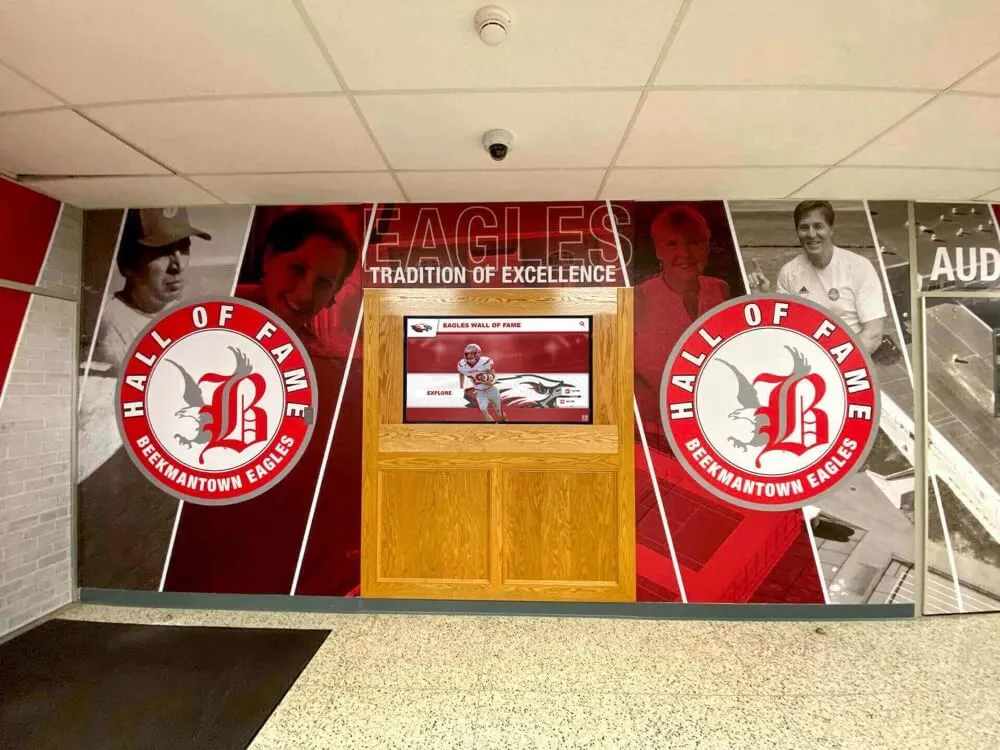
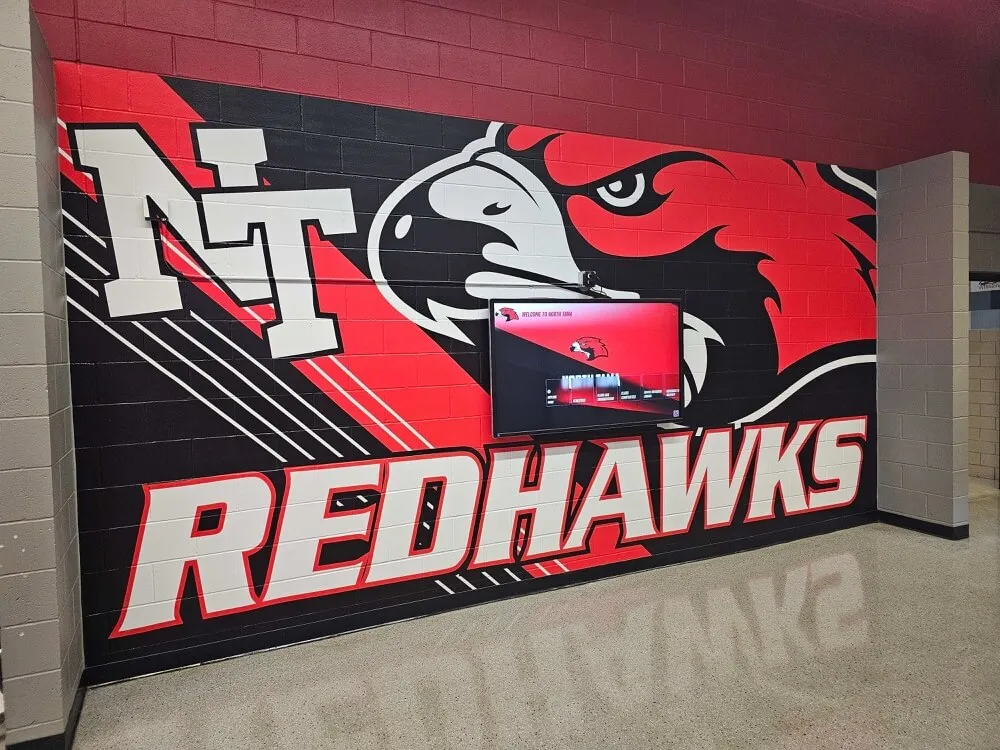
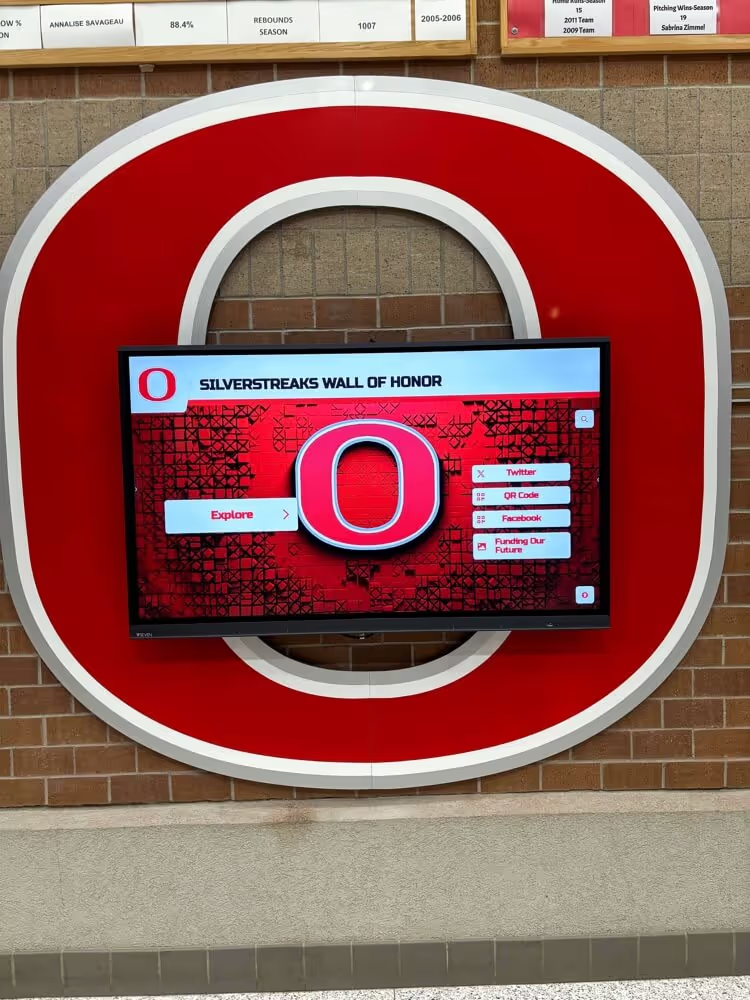
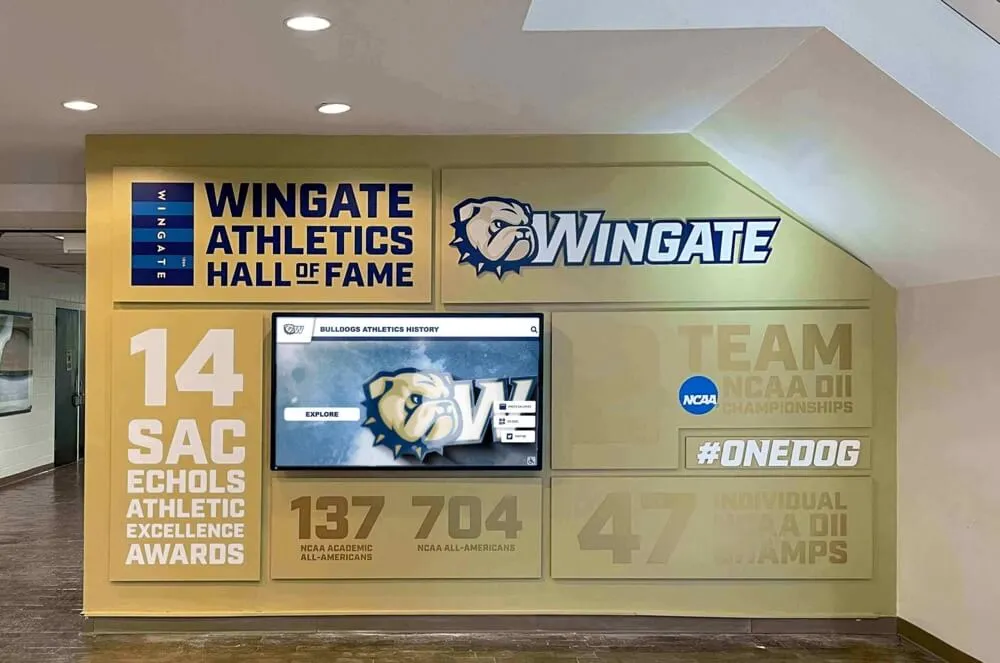
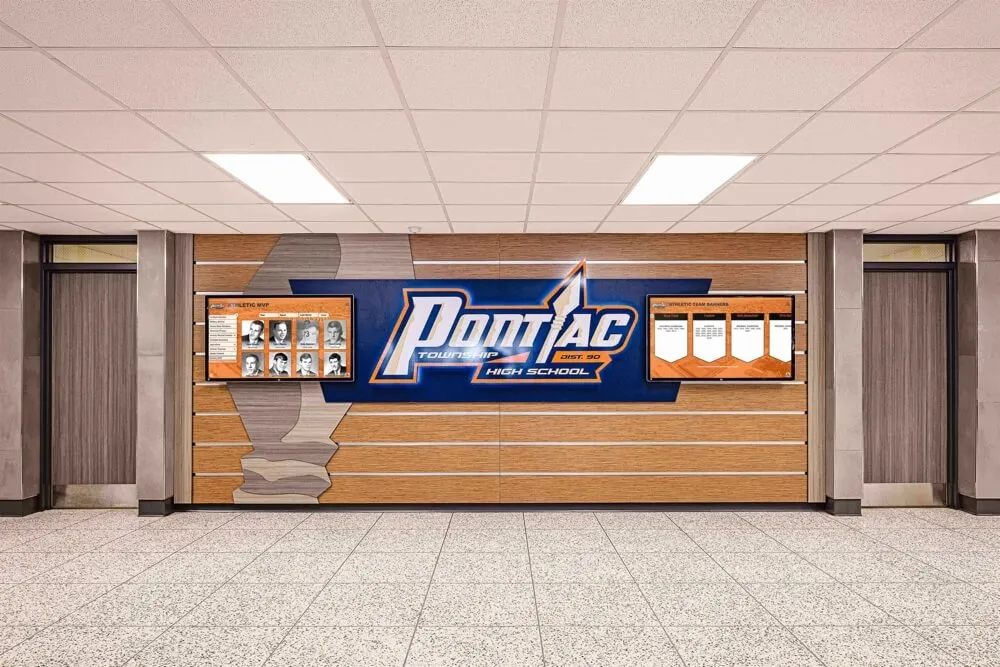
Many schools combine both formats: a physical mural or display case creates the ceremonial anchor, while integrated digital screens provide content depth and updatability. The physical component signals permanence; the digital component handles the content volume that physical fabrication alone cannot sustain. This approach also stages investment — a school can install the physical mural in year one and add digital touchscreen panels in year two or three as budget allows.
See How Schools Build Athletic Tradition Walls
Rocket Alumni Solutions designs touchscreen walls of fame, digital record boards, and alumni recognition systems specifically for school athletic programs — built to last and easy to update.
Request a DemoAthletic Tradition Wall Planning Checklist
Use this checklist as your working document from initial audit through launch. Assign an owner and target date for each item.
Phase 1: Content Audit (Weeks 1–4)
- Identify a project lead — athletic director, recognition committee chair, or advancement staff member
- Survey all storage locations: trophy cases, athletic office files, yearbook archives, library storage, coaching offices
- Catalog existing championship banners, plaques, and display cases
- Request record books and stat sheets from each varsity sport’s head coach
- Pull all-time record lists from conference or state athletic association archives
- Compile award winner lists from available yearbooks (assign a volunteer researcher per decade)
- Contact alumni association or booster club for alumni rosters and contact information
- Send an alumni outreach email requesting career updates and photos
- Survey coaching staff for coaching history, tenures, and milestone records
- Collect donor and sponsor lists from the advancement office for recognition inclusion
Phase 2: Content Prioritization (Weeks 5–6)
- Rank sports by participation volume to guide relative display space allocation
- Establish record eligibility criteria: which statistical categories are tracked, minimum threshold for display
- Define alumni induction criteria: college play, professional play, or distinguished post-athletic achievement
- Set award display criteria: which annual awards are included and how far back records extend
- Identify content gaps and assign research tasks to fill the most significant ones
- Confirm gender parity across all content categories before design begins
- Review how high schools define and track athletic records to benchmark your eligibility standards against peer institutions
Phase 3: Format and Design (Weeks 7–10)
- Set total budget and allocate between hardware, fabrication, content migration, and ongoing maintenance
- Decide on physical, digital, or hybrid display format based on content volume and update capacity
- Survey available wall space; identify optimal high-traffic location (main lobby, athletics wing, gym entrance)
- Request proposals from display vendors; compare physical fabricators and digital platform providers
- Review ADA compliance requirements: viewing height, touchscreen reach range, contrast ratios for low-vision users
- Select a design aesthetic aligned with school colors, mascot, and facility architecture
- Define content management system requirements: who updates it, how often, and with what approval workflow
- Draft content structure: top-level navigation categories, search fields, profile templates
Phase 4: Content Build (Weeks 11–18)
- Finalize all record data and format it for entry into the display system
- Write athlete and alumni profiles (50–150 words each; consider assigning to journalism or English classes as a project)
- Scan and clean all archival photographs; establish minimum resolution standards for display quality
- Build team history entries for each sport, organized by decade
- Enter coaching history and tenure data
- Migrate donor and sponsor recognition content
- Conduct internal accuracy review; route sport-specific content to respective coaches for verification
- Send alumni profiles to named individuals for accuracy confirmation before launch
- Review how schools track and display aquatic athletic excellence for a model of structuring individual-event records in sports with complex record categories
Phase 5: Launch and Governance (Weeks 19–24)
- Conduct a comprehensive quality-assurance review of all content before display activation
- Plan a formal unveiling event with current athletes, alumni, coaches, and donors in attendance
- Establish a public submission process for alumni and community members to request profile additions
- Publish your governance policy to the athletic department website so criteria are transparent
- Schedule an annual content review cycle (most schools complete this in July or August before the fall season)
- Back up all digital content to school servers or cloud storage
- Document update procedures and train staff responsible for content management
Governance Table: Who Owns What
Establishing clear ownership before launch prevents outdated content and disputes over eligibility decisions. The table below defines the roles schools commonly assign across content areas.
| Content Area | Primary Owner | Approval Authority | Update Frequency |
|---|---|---|---|
| Athletic records (all sports) | Athletic Director | Athletic Director | After each season |
| Team season histories | Head Coach (by sport) | Athletic Director | Annually, end of season |
| Alumni profiles | Recognition Committee | Athletic Director + Principal | Rolling; reviewed annually |
| Coaching history | Athletic Director | Principal | As changes occur |
| Individual awards | Athletic Director | Athletic Director | Annually |
| Photo and video archive | Activities or Media Staff | Athletic Director | As materials are acquired |
| Donor and sponsor recognition | Advancement or Booster Club | Principal or Athletic Director | Annually; upon new gifts |
| Eligibility criteria changes | Recognition Committee | Principal + Athletic Director | By formal committee vote only |
| Factual error corrections | Athletic Director | Athletic Director | Within 5 business days |
Governance Best Practices
Separate nomination from approval. Allow coaches, alumni, and community members to submit nominations or flag record corrections, but route all final approvals through the athletic director and a designated committee. This prevents individual advocacy from bypassing consistent standards.
Publish eligibility criteria publicly. When the standards for record display, alumni inclusion, and award listing are documented and accessible, families and alumni can assess whether a submission meets the threshold before it reaches the committee — reducing the volume of formal appeals.
Set a correction window. Agree in advance that factual errors (wrong year, misspelled name, incorrect record value) can be corrected by the athletic director within five business days without a full committee review. Reserve the committee process for eligibility disputes and new induction decisions.
Document the policy in writing. A one-page governance document — stored on the athletic department website and updated annually — is far more effective than verbal agreements that change as staff turns over.
What Makes Athletic Tradition Walls Last
Athletic tradition walls that remain accurate and engaging ten years after installation share three characteristics: they were built with content governance embedded from the start rather than retrofitted after launch; they use a display format that makes updates manageable for non-technical staff; and they were designed with future content volume in mind rather than only the records available at the time of installation.
Physical walls look impressive on opening day but create ongoing fabrication costs as records fall and alumni multiply. Digital platforms absorb new content without fabrication costs, but they require institutional commitment to content management. A hybrid approach — physical mural plus integrated touchscreen — delivers ceremonial impact alongside updatable content depth, and the two components reinforce rather than compete with each other.
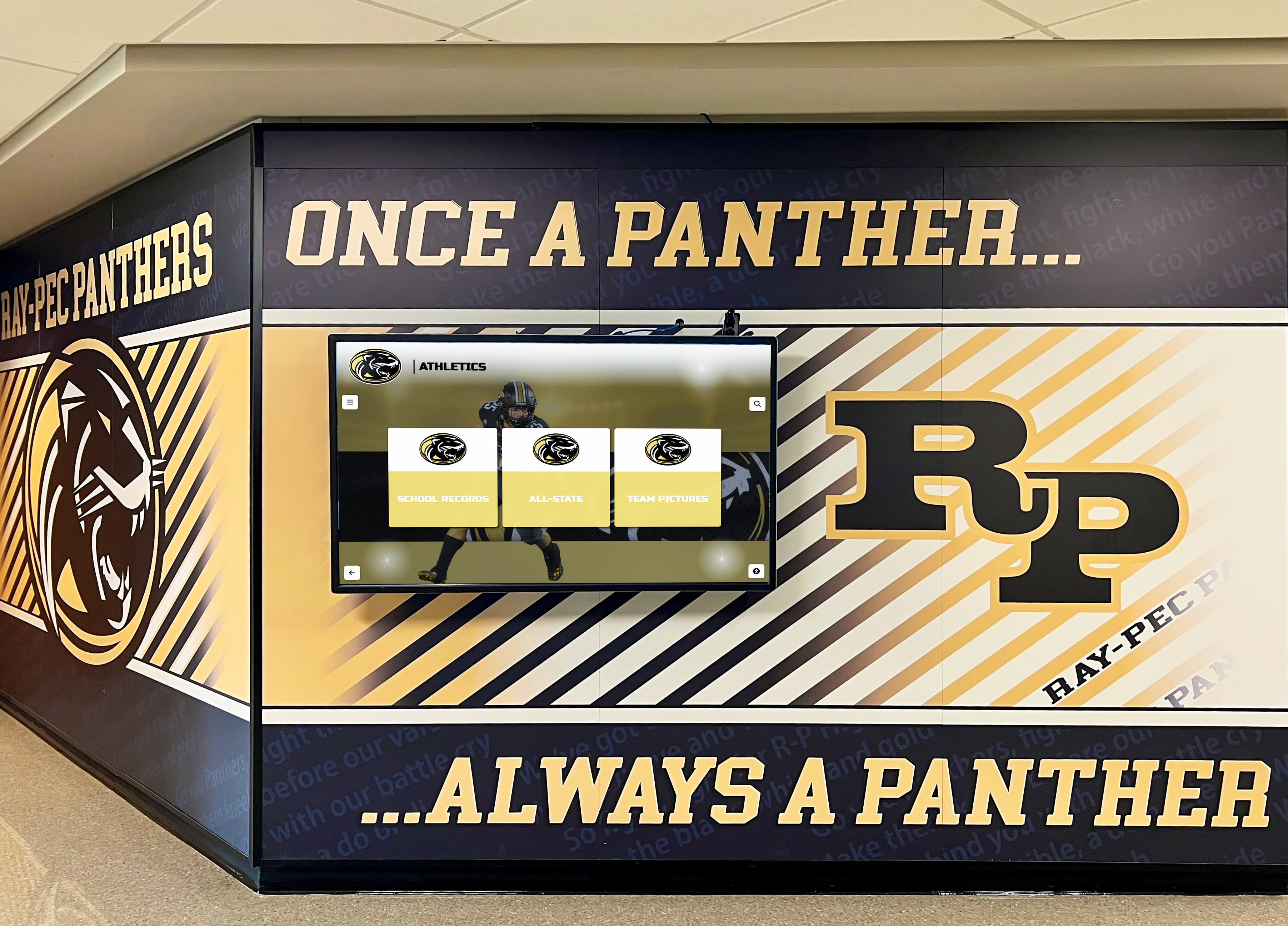
Platforms built specifically for school athletic recognition — rather than adapted from generic digital signage tools — include content management interfaces designed for non-technical administrators. Athletic directors and designated staff can update records, publish new alumni profiles, and add season histories without filing a support ticket for every routine content change. That operational independence is what separates a display that stays current from one that dates itself within three years of installation.
Frequently Asked Questions
How far back should an athletic tradition wall go?
Who should be eligible for alumni recognition on an athletic tradition wall?
How do we handle records that were broken multiple times by the same athlete?
What is the typical timeline for an athletic tradition wall project?
Can a digital athletic tradition wall be updated without vendor support?
Ready to Build Your Athletic Tradition Wall?
Rocket Alumni Solutions helps schools design, launch, and maintain athletic tradition walls that preserve records, honor alumni stories, and inspire current athletes for decades to come.
Schedule a Free Demo