A donated championship trophy from 1963, a hand-painted plaque from the 1970s, a battery-powered award clock that has not been opened since a different generation of athletic directors sat in the office—these objects carry decades of institutional history and, in some cases, materials that were standard practice when they were made but are now understood to carry occupational and environmental risks. Athletic hall-of-fame committees, archives staff, and athletic directors who receive donated or transferred physical memorabilia for display need a structured intake process that identifies potential hazards before items are handled extensively, mounted in shared spaces, or placed in high-traffic areas accessible to students.
This checklist covers the most common hazard categories found in older athletic memorabilia, provides a field-by-field screening protocol appropriate for initial intake review by non-specialist staff, and establishes clear escalation criteria for when professional environmental assessment is warranted before proceeding.
General guidance, not professional environmental or legal advice: This checklist is intended as operational screening guidance for school staff performing initial intake review of donated or archived athletic memorabilia. It is not a substitute for assessment by a certified industrial hygienist, licensed environmental professional, or occupational health specialist. When any checklist step surfaces a confirmed or suspected concern—visible coating deterioration, unknown powders or residues, corroded battery compartments with deposits, or items of genuinely uncertain age and composition—the appropriate response is to isolate the object and contact a qualified professional before proceeding further. Authoritative guidance on specific materials is available from the U.S. Environmental Protection Agency (EPA), the Consumer Product Safety Commission (CPSC), and the Occupational Safety and Health Administration (OSHA).
Key Screening Priorities
Before working through the full checklist, intake reviewers should understand the four highest-priority categories for older athletic memorabilia:
- Surface coatings on pre-1978 items. The Consumer Product Safety Commission (CPSC) banned lead-based paint for use on furniture, residential surfaces, and toys in 1978. Items with painted surfaces manufactured before that year may carry lead-based coatings. Painted wooden bases, metal figures with colored finishes, and hand-lettered plaques from this era represent the highest-priority screening category.
- Battery compartments in any battery-powered object. Alkaline batteries that have remained inside trophy clocks, illuminated award cases, and electronic displays for years or decades can corrode severely, releasing caustic potassium hydroxide. Pre-1996 button-cell batteries may also contain mercury.
- Structural deterioration exposing core materials. Flaking, chalking, or powdering surfaces on painted or coated objects—regardless of age—warrant careful handling and assessment before display.
- Unknown provenance items. Objects donated without documentation of manufacturer, year, or material composition carry inherently higher uncertainty and should receive more thorough screening regardless of apparent condition.
Who Uses This Checklist
This checklist is designed for athletic directors, hall-of-fame committee chairs, archives staff, and recognition-program coordinators who receive physical memorabilia donations, conduct storage cleanouts, or are integrating older objects into a new or renovated display space. It is not designed for construction workers performing renovation work that disturbs building materials—that work falls under separate regulatory frameworks including OSHA’s asbestos and lead standards for general industry and construction.
The checklist is equally relevant when a school is preparing to inventory a storage room full of objects accumulated over decades, when a retiring coach donates a personal collection, when an alumni estate transfers a family collection, or when a school undertakes a hall-of-fame renovation and must temporarily handle objects that have been mounted or stored for years.
Phase 1: Age and Origin Assessment
The first step in any hazardous materials intake review is establishing when and where an object was made. Manufacturing era is the single most useful proxy for potential hazard exposure, because many hazardous materials in consumer products were phased out under specific regulatory timelines.
Age Screening Questions
For each item received, the intake reviewer should document the following:
- Approximate manufacture or award year. Donor records, trophy manufacturer labels, yearbook photos, and ceremony programs are all useful sources. If exact year is unknown, estimate a decade.
- Manufacturer name or label. Check the base, back panel, or any attached plate. A manufacturer name and location can help identify production era and practices.
- Material composition as stated by donor or visible on inspection. Note whether the object is primarily metal, wood, plastic, glass, or a composite. Note any painted or coated surfaces.
- Any known previous storage conditions. Items stored in basements, boiler rooms, or unconditioned spaces for extended periods may have experienced moisture, temperature extremes, or pest exposure that affects their current condition.

Age-Based Risk Tiers
The following table identifies risk priorities by manufacturing era for the most common hazard categories. Items that fall into multiple higher-risk categories warrant escalated screening.
| Manufacture Era | Higher-Priority Hazard Categories | Notes |
|---|---|---|
| Before 1978 | Lead-based surface coatings; cadmium plating; older solder on electronic components | CPSC banned lead in residential paint in 1978. Items with painted or coated surfaces are highest priority for surface assessment. |
| 1978–1990 | Battery corrosion; older mercury-containing batteries; early lead-free transition inconsistencies | Battery standards began transitioning in the late 1980s and early 1990s. Battery-powered items from this era should be inspected carefully. |
| 1990–2000 | Battery corrosion; mercury-containing button cells manufactured before the 1996 federal standard; fluorescent lamp mercury in illuminated cases | The Mercury-Containing and Rechargeable Battery Management Act of 1996 phased mercury out of most consumer batteries. Pre-1996 stock may still be in circulation in stored items. |
| After 2000 | Battery corrosion (ongoing risk for any battery left in place); standard corrosion and structural wear | Most specific chemical hazard risks decrease significantly for post-2000 manufactured items under modern consumer product regulations, but battery corrosion remains a universal risk for any item with a battery compartment. |
| Unknown era | All categories—treat as pre-1978 for screening purposes | When manufacture date cannot be established, apply the most conservative screening tier until provenance is documented. |
Phase 2: Surface Coating and Paint Screening
For objects with painted, lacquered, or coated surfaces—particularly those manufactured before 1978—the surface coating is the highest-priority concern for routine intake review.
What to Look For
Visual indicators of concern on painted surfaces include:
- Chalking, powdering, or dusty residue on the surface when lightly touched with a gloved hand
- Chipping, flaking, or peeling paint, particularly at edges, corners, and high-contact areas
- Evidence that prior coatings have been sanded, stripped, or reworked, which may have generated and redistributed surface material
- Unusual orange, red, or yellow pigments on pre-1978 objects—color alone is not diagnostic for lead, but these pigments were common in lead-based formulations of that era
Appropriate precautions during visual screening: staff should wear disposable nitrile gloves during handling, avoid sanding or scraping any surfaces, wash hands thoroughly after handling, and not eat, drink, or apply cosmetics in the area where items are being reviewed.
Important limitation: Visual inspection cannot confirm or rule out lead in a surface coating. The only way to confirm lead content is through testing—either an EPA-recognized lead test kit or laboratory analysis performed by a certified environmental laboratory. If lead testing is warranted, consult your district’s facilities or environmental health department for approved testing protocols before purchasing or applying any test kit.
When to Escalate
Escalate to a certified industrial hygienist or licensed lead assessor when:
- Visible deterioration (flaking, powdering, chalking) is present on a pre-1978 painted item
- The item will be displayed in an area frequently occupied by children, including gymnasium lobbies, hallways adjacent to classrooms, or high-contact zones
- A positive or inconclusive result is returned from a general screening test
- The object is large—a painted display case, a fabricated wooden backdrop, a large mounted panel—rather than a small individual trophy figure
Phase 3: Metal and Plating Inspection
Metal trophies, plaques, and award figures present a different set of concerns from painted objects. The primary concerns for metal athletic memorabilia are the plating processes used at manufacture and any deterioration that exposes base materials.
Common Metal Hazard Categories
Cadmium plating. Cadmium was used in electroplating processes for corrosion resistance on trophy hardware before its health risks were more widely recognized. Cadmium-plated finishes were more common in mid-twentieth-century trophy manufacturing, particularly on hardware fittings, column sections, and some figure bases. Intact cadmium plating on a mounted display object presents lower routine exposure risk than a damaged or corroded plated surface. The CPSC has documented cadmium in older decorative metal objects. Items with visibly corroded, pitted, or flaking metallic surfaces that predate the 1990s should be handled with gloves and assessed before display.
Hexavalent chromium. Older electroplating processes sometimes used hexavalent chromium compounds to achieve bright chrome finishes. OSHA regulates hexavalent chromium exposure in occupational settings under 29 CFR 1910.1026. For standard display objects in good condition, hexavalent chromium risk is primarily relevant to workers who perform grinding, sanding, or welding on chrome-plated materials—not to routine visual inspection or display. Damaged chrome-plated items with corroded or pitted surfaces warrant professional assessment before any sanding or reworking.
Lead in solder and fittings. Older electronic components in battery-powered trophies, award clocks, and illuminated cases may contain lead-tin solder. As with plating, intact solder in a mounted display object presents lower routine exposure risk. The concern escalates when components are damaged, corroded, or being handled for modification or disposal.
Metal Inspection Protocol
For each metal object:
- Inspect all surfaces for visible corrosion, pitting, white powder deposits, or discoloration beyond expected tarnishing
- Check any hardware fittings—column connections, base mounting screws, figure attachment points—for corrosion or separation
- Note any damaged or separated plating that exposes base metal
- Document condition with a photograph before cleaning or handling further
Routine surface tarnishing on silver- or gold-colored trophy surfaces does not require escalation. Powdery white or green deposits, significant pitting, or flaking metallic layers on objects of uncertain age or composition do warrant escalation before any cleaning, display mounting, or reworking.
Phase 4: Battery Compartment and Electronic Component Inspection
This is the most consistently applicable hazard category across all eras of athletic memorabilia. Any trophy, award, clock, illuminated case, or electronic display with a battery compartment is a candidate for battery corrosion regardless of its age, apparent condition, or original quality.
Battery Corrosion Hazards
Alkaline battery corrosion. When alkaline batteries discharge fully and remain in equipment, they can leak potassium hydroxide (KOH), a caustic substance that can cause skin irritation and chemical burns on contact. Leaking batteries typically leave visible white or yellowish crystal deposits around the compartment contacts and interior surfaces.
Mercury in pre-1996 button-cell batteries. Button-cell batteries manufactured before the Mercury-Containing and Rechargeable Battery Management Act of 1996 could contain significant amounts of mercury. Older battery-powered award clocks and small electronic trophy displays may still contain batteries from this era, particularly if the device was placed in storage without removing the batteries.
Nickel-cadmium (NiCd) rechargeable batteries. Some older electronic display components and illuminated award cases used NiCd rechargeable batteries. Cadmium in these batteries warrants appropriate disposal; the EPA’s Universal Waste regulations govern proper handling and disposal procedures.
Battery Compartment Inspection Protocol
- Before opening: Wear disposable nitrile gloves. If any visible deposit is present around the battery cover, also wear eye protection.
- Open the compartment carefully. Do not force the cover if resistance is present—corrosion may have bonded it in place. Work slowly.
- Assess battery condition. Note: swelling, leakage (liquid or crystalline deposits), discoloration of contacts, or obvious discharge failure.
- If batteries are corroded: Do not touch deposits with bare hands. The CPSC publishes guidance on safe battery removal at cpsc.gov. Minor alkaline deposits on contacts can be neutralized with a small amount of white vinegar on a cotton swab before removal; do not attempt this if deposits are extensive or if mercury-containing batteries are suspected.
- Dispose of removed batteries appropriately. Standard alkaline batteries may be disposed of with regular trash in most U.S. states, but check local regulations. NiCd and mercury-containing button-cell batteries require hazardous waste or take-back disposal. The EPA maintains a battery disposal locator at epa.gov.
- Document and photograph the compartment before and after battery removal for institutional records.

Phase 5: Structural and Material Integrity
Beyond specific hazard categories, the overall structural condition of a memorabilia object affects both its display suitability and its safe handling.
Integrity Indicators to Assess
Foam and rubber components. Older foam padding in display case interiors, rubber gaskets on trophy bases, and foam-backed mounting materials can degrade significantly over decades. Degraded foam may crumble and generate fine particles during handling. Significant degradation is a practical handling concern and an indicator that an item may need conservation assessment before display.
Glass and acrylic panels. Trophy cases with glass panels should be checked for cracks or chips before relocation. Acrylic display panels degrade under ultraviolet exposure over time and may become brittle or discolored.
Wooden components. Older wooden trophy bases and display frames may have been treated with wood preservatives that are now restricted or banned. Pentachlorophenol (PCP) and chromated copper arsenate (CCA) compounds were used in wood treatment before regulatory action limited their applications. Treated wood in good condition generally presents lower risk during routine handling than treated wood that is visibly deteriorating or weathered. When wooden components show significant surface decay, powdering, or unusual green discoloration—characteristic of CCA-treated wood—professional assessment before extensive handling is appropriate.
Adhesives and laminates. Some older trophy plaques and award displays used adhesives in composite wood panels such as particleboard or medium-density fiberboard (MDF). Items with damaged or delaminating composite wood surfaces may off-gas at higher rates than intact surfaces. This is a secondary concern for stable, well-maintained items; it becomes more relevant during renovation or disposal when composite panels are cut or broken.
Phase 6: Intake Documentation and Disposition
Every item screened through this checklist should generate a brief intake record that follows it through storage, display preparation, and eventual disposition. The intake record protects the institution by documenting what was known about an item at the time of receipt and what steps were taken before it was placed in a student-accessible space. How a hall-of-fame committee structures its review calendar and inductee workflow often determines whether intake records get maintained consistently or fall through the gaps between induction cycles.
Intake Record Fields
| Field | Content Guidance |
|---|---|
| Object description | Type (trophy, plaque, clock, display case), approximate dimensions, primary materials visible |
| Approximate manufacture year or era | Year if known; decade if estimated; "unknown" if genuinely undetermined—never leave blank |
| Donor or source | Name and contact information of donor, or name of source collection or storage location |
| Condition at intake | Good (intact, clean), Fair (minor wear, tarnishing), Poor (active deterioration, damage, deposits) |
| Hazard screening result | No concerns identified / Concerns noted—describe / Escalated to professional—name and date |
| Battery status | No compartment / Compartment empty / Batteries removed—describe condition / Batteries present, untested |
| Disposition | Approved for display / Approved for storage / Held pending professional assessment / Returned to donor / Deaccessioned |
| Reviewer and date | Name of staff member who completed intake screening and date of review |
For programs building or managing a searchable digital archive alongside physical displays, intake record data is the foundation of the object-level metadata that makes archives useful over time. The same structured fields that protect the school from undocumented handling decisions become the provenance layer in a digital record—providing future administrators, donors, and families with verifiable history rather than institutional memory that changes with each staff turnover.
Escalation Criteria Summary
The following conditions require stopping routine intake handling and contacting a certified industrial hygienist, licensed environmental professional, or your district’s facilities and environmental health department before proceeding:
- Any painted or coated object manufactured before 1978 that shows active surface deterioration (flaking, powdering, chalking)
- A positive or inconclusive result from an EPA-recognized lead test kit on any surface
- Battery compartments with extensive corrosion, large crystal deposits, or liquid evidence of leakage
- Suspected pre-1996 mercury-containing button-cell batteries, particularly in older award clocks or illuminated displays
- Metal components with significant pitting, corrosion, or flaking plating on objects of uncertain manufacture era
- Wooden components with visible green discoloration, powdering, or crumbling surface layers
- Any object where the donor, committee, or reviewing staff member has a specific concern they cannot resolve through visual inspection
When in doubt, isolate the object in a sealed container labeled with the date and the nature of the concern, and do not proceed until a qualified assessment is complete. The cost of a professional consultation is substantially lower than the liability associated with a documented decision to display an item with unresolved material concerns in a space occupied by students.
Building a Safe Intake Workflow for New Donations
Most hazardous material concerns in athletic memorabilia arrive through the donation pipeline—items held in private collections for decades that are being transferred to the school because the original recipient has retired, relocated, or passed away. Building a donation intake policy that includes a standard hazardous materials screening step protects the school from inheriting undocumented risks.
Practical Policy Elements
Pre-donation questionnaire. Before accepting a donation, send donors a brief questionnaire asking for the approximate year of the award, the material composition if known, and the storage conditions. This surfaces higher-risk items before they arrive on school property.
Designated intake area. Conduct physical screening in a well-ventilated area away from student spaces, with disposable gloves, eye protection, and a supply of sealable plastic bags available. Do not open or unbox donated items in trophy cases, shared athletic offices, or hallways.
Trained intake staff. At least one member of the committee or archives staff should be familiar with this checklist and able to conduct the initial screening review. This does not require professional certification; it requires knowing what to look for, what to do when something is found, and when to stop and escalate.
Rejection and return criteria. Not every donated item needs to be accepted. Committees should be prepared to respectfully decline donations that pose unresolved hazard concerns—particularly when professional assessment would exceed the institutional value of the item. Documenting the reason for declining a donation protects the school and maintains the donor relationship.
For recognition programs evaluating how physical memorabilia fits alongside modern display environments, donor wall design principles and material selection for modern spaces covers how contemporary display materials compare to older fabrication approaches and why new material choices matter for long-term maintenance and safety.
Connecting Physical Memorabilia to Digital Archives
One of the most practical ways to reduce ongoing exposure risk from older physical memorabilia is to make the physical object itself less central to the recognition program. When a school’s athletic archive migrates key historical records to a searchable digital format—photographs, scanned programs, caption data, award documentation—the physical trophy becomes a historical artifact rather than a daily-access recognition tool. That shift reduces handling frequency, reduces the number of people who need physical access to the object, and makes it easier to isolate or conserve items that raise screening concerns without removing them from the recognition narrative.
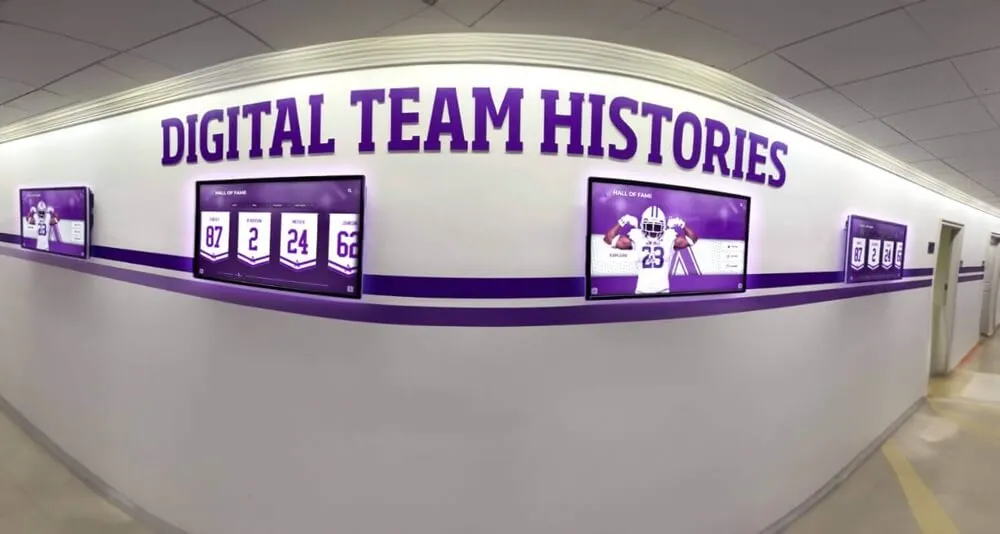
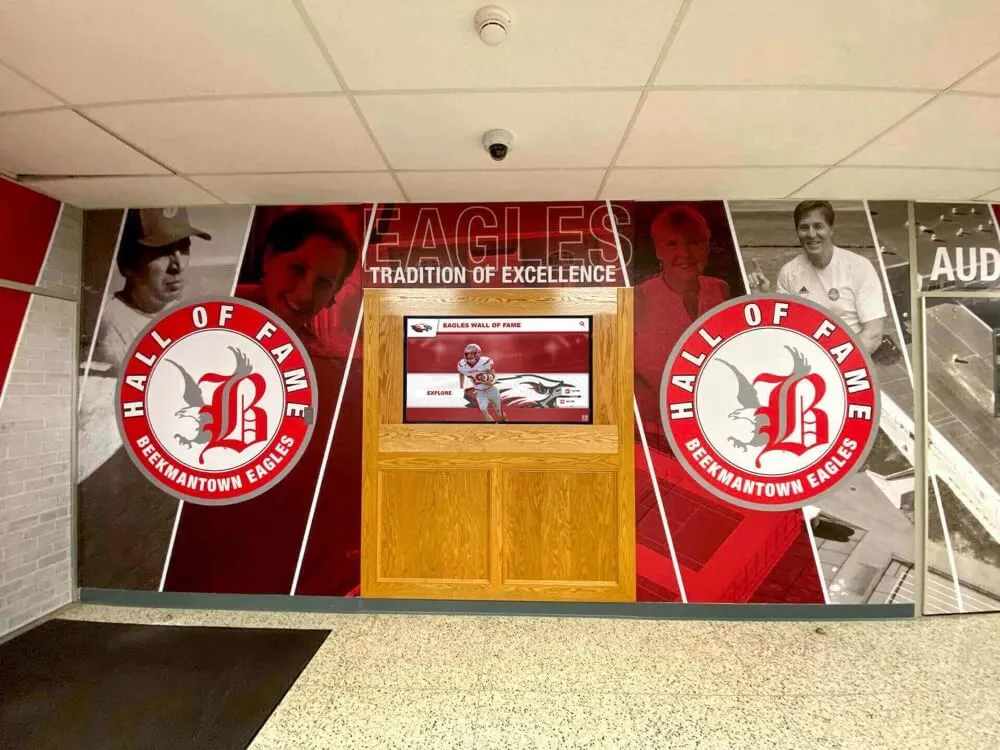
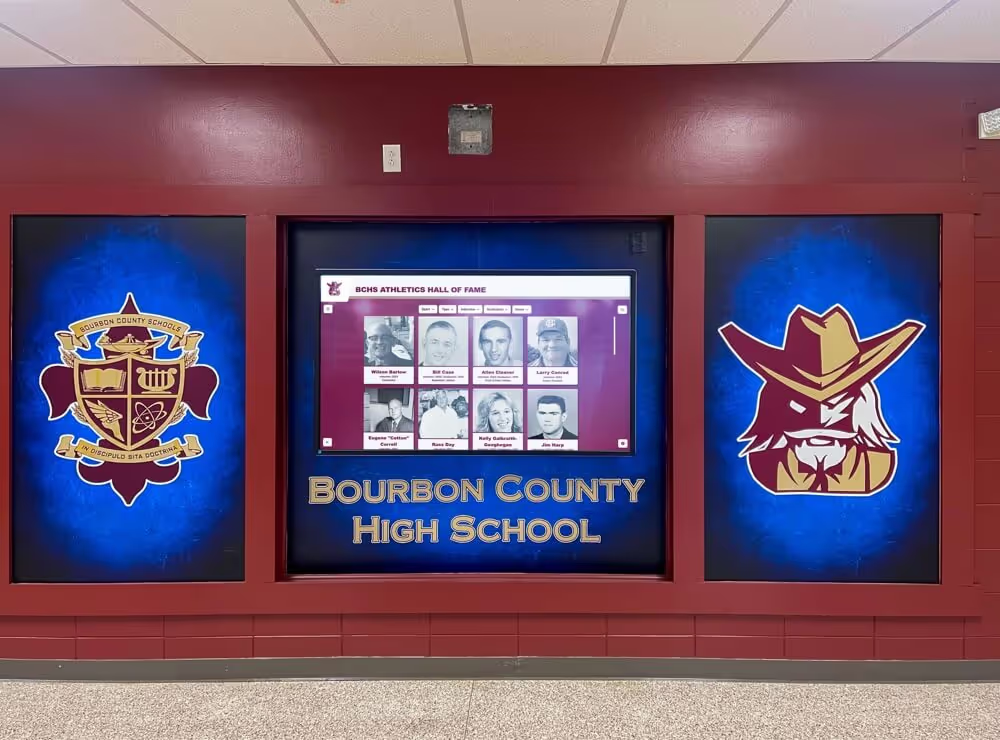
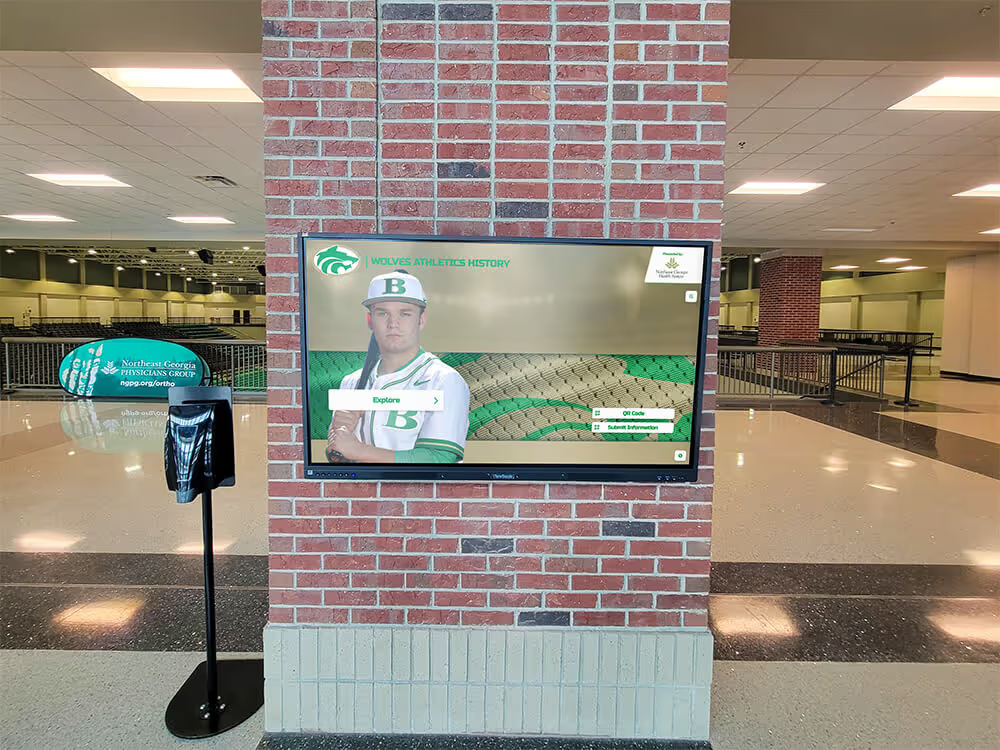
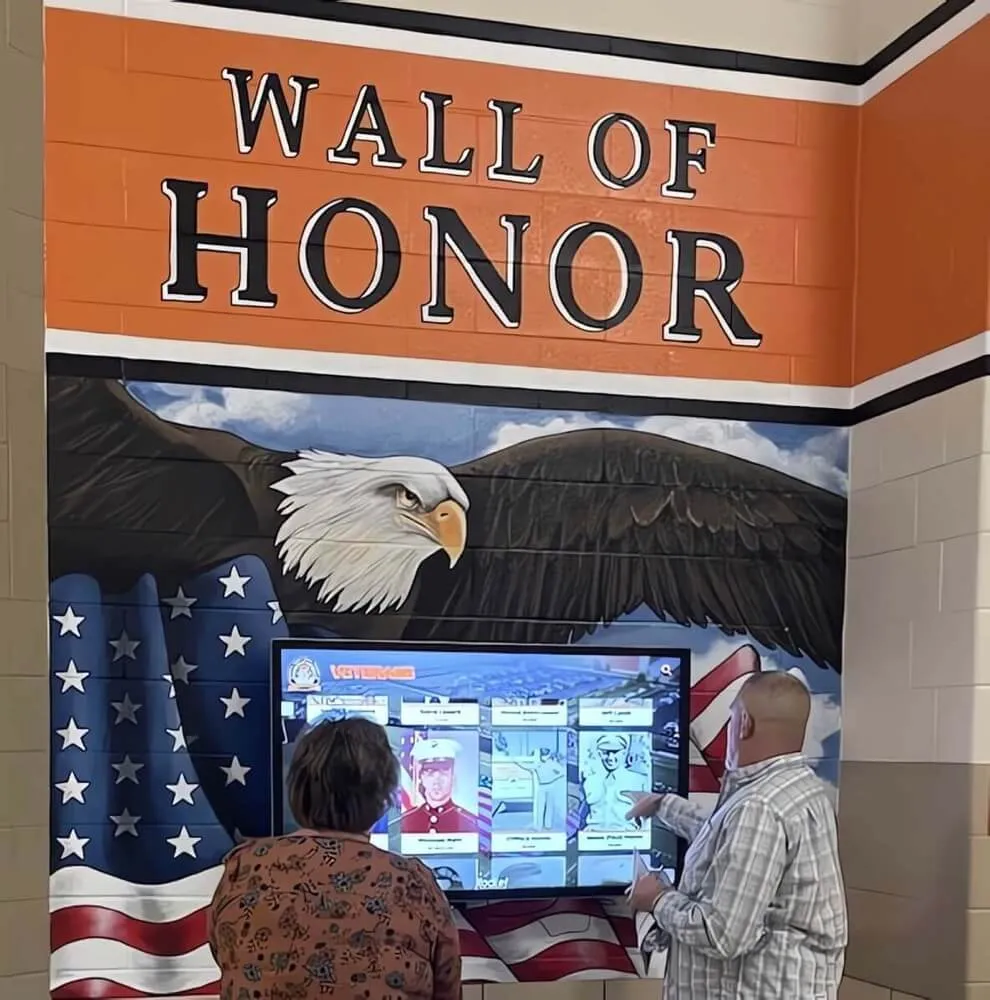
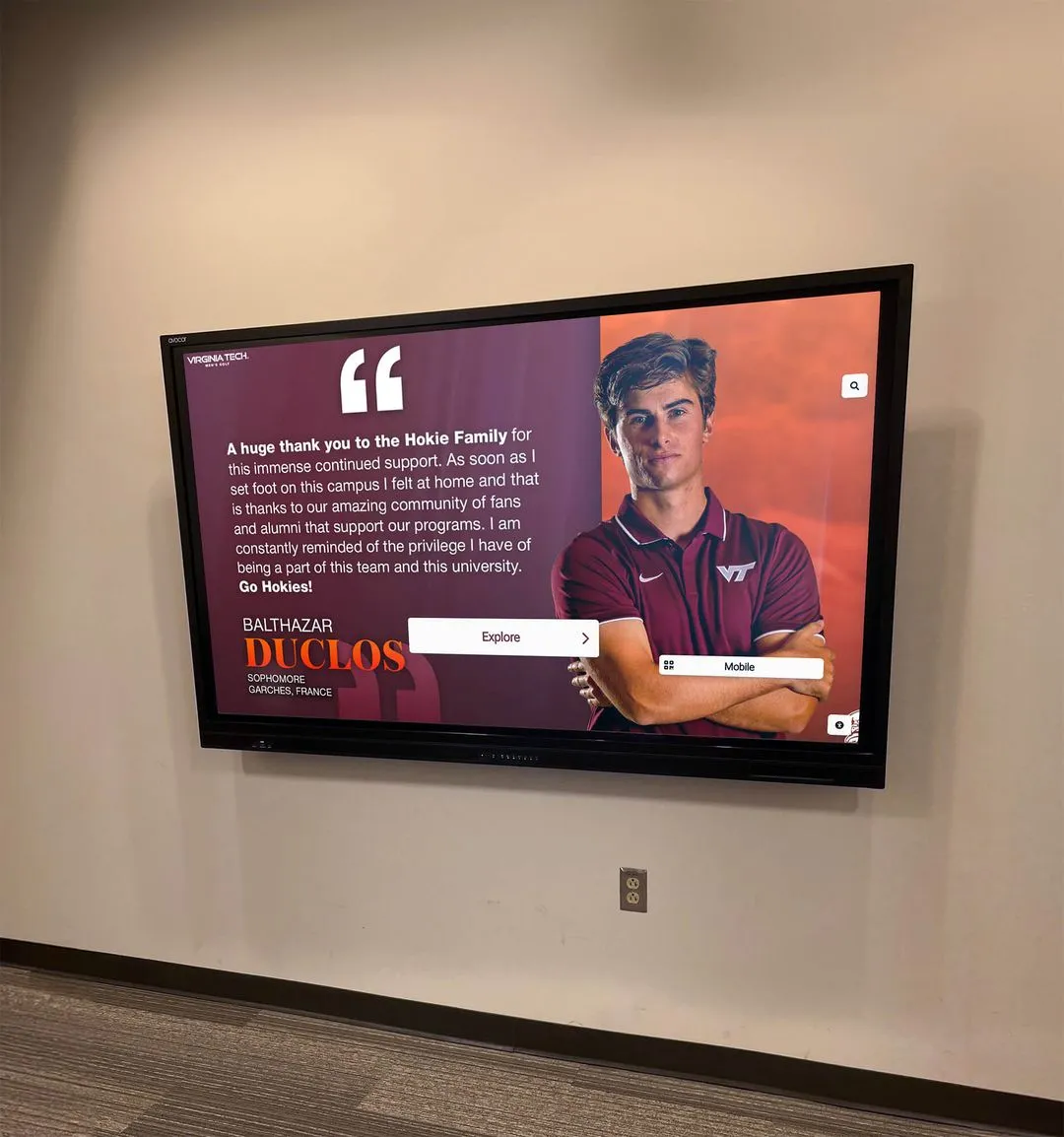
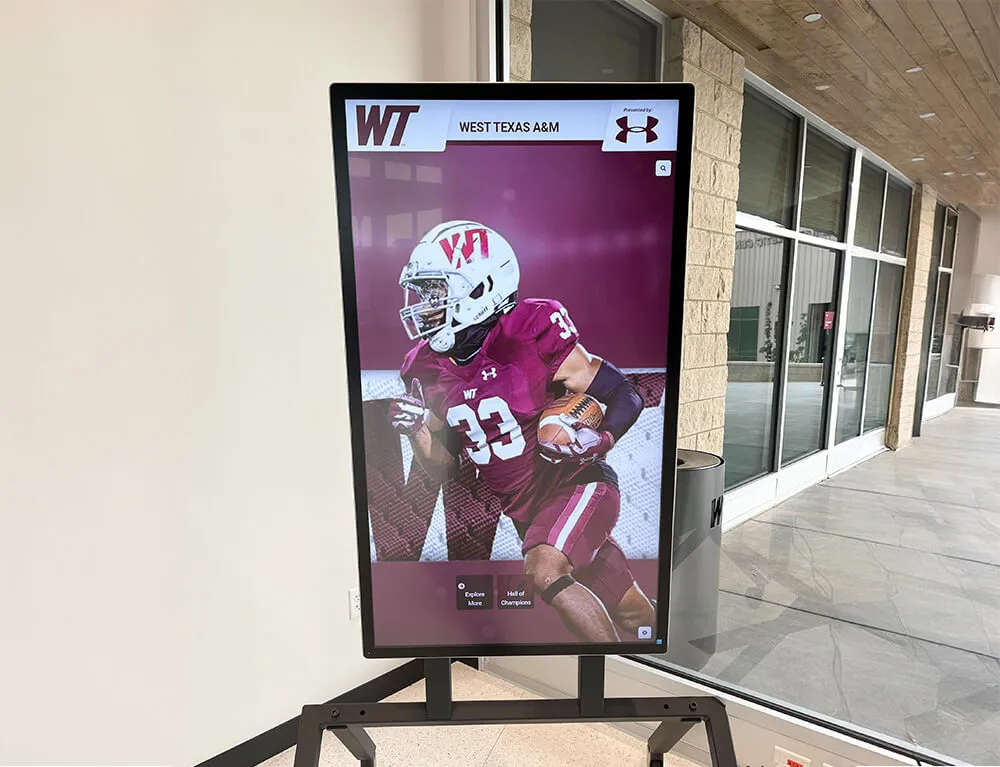
Digital displays in athletic halls of fame can surface historical championship records, inductee profiles, and award documentation for student-athletes, visitors, and alumni without requiring direct access to physical objects. When a 1961 state championship trophy needs to remain in a climate-controlled archive cabinet rather than a high-traffic hallway case, a digital display can carry the same institutional pride without the same exposure risk.
Recognition programs evaluating the shift from physical-only to hybrid or digital-first display should review donor recognition wall ideas for modern school spaces and the guidance in FBLA awards and digital display approaches for school recognition programs. The visual and narrative continuity of a recognition program does not require every object to be physically accessible—it requires that the story the object represents is reliably documented and retrievable.
For programs working to represent historical athletic achievements digitally across communications channels and graphic materials, the AI school graphics guide at Rocket Graphics covers how schools can produce professional-quality digital recognition materials that represent historical awards without requiring ongoing physical access to original objects.
Disposition Options for Items That Cannot Be Displayed
Not every item that enters the intake process will be appropriate for public display. Committees sometimes receive items that are too deteriorated for display, too hazardous for available mitigation, or too historically uncertain to include in a verified public archive. Having a documented set of disposition options prevents committees from defaulting to display because no alternative has been defined.
Conservation and stabilization. Some historically significant items are worth professional conservation treatment before display. Conservation can stabilize deteriorating surfaces, treat active corrosion, and document the item’s condition and composition for the institutional record. Conservation treatment is performed by accredited conservators, not general contractors or restoration services.
Controlled archival storage. Items that are historically significant but not appropriate for public display can be moved to controlled archival storage—a sealed, climate-stable environment with documented access procedures. The item remains part of the institutional collection without being accessible to general visitors.
Deaccessioning with donor notification. For items that no longer meet the school’s collection or safety criteria, deaccessioning—formally removing an item from the collection—with documented notification to the original donor, where the donor can be identified and is still living, is the professionally appropriate procedure. Deaccessioning does not always mean disposal; it may mean transfer to another institution or return to the donor family.
Regulated disposal. Items containing confirmed hazardous materials require regulated disposal, not standard trash disposal. Contact your district facilities department or a licensed hazardous waste contractor for guidance on disposal procedures applicable to specific material categories.
Digital alternatives to physical display—including scanned photographs of the original award, digitized documentation of the achievement it represents, and a searchable profile in the institutional archive—can preserve the recognition record even when the physical object is no longer suitable for display. Understanding how digital display approaches serve recognition programs in award-focused organizations is useful context for committees deciding which elements of a historical memorabilia collection to digitize and which physical objects to retire.
Quick-Reference Checklist Summary
| Screening Area | Key Check | Action If Concern Found |
|---|---|---|
| Age assessment | Document manufacture year or era; flag pre-1978 items for elevated screening | Treat unknown-era items as pre-1978 until provenance is documented |
| Painted or coated surfaces | Look for flaking, chalking, or powdering on any painted surface | Isolate; escalate to a qualified professional for testing if deterioration is present or item will be in a student-accessible space |
| Metal surfaces | Check for pitting, white or green deposits, and flaking plating on pre-1990 items | Wear gloves; do not sand or rework; escalate if damage is significant |
| Battery compartments | Open and inspect every battery compartment; check for corrosion deposits | Remove batteries with gloves; neutralize minor alkaline deposits with caution; escalate if leakage is extensive or mercury batteries are suspected |
| Wooden components | Check for green discoloration, crumbling surfaces, or unusual chemical odor | Handle with gloves; escalate if treated-wood deterioration is suspected |
| Structural integrity | Check for broken glass, crumbling foam, and delaminating composite panels | Stabilize or bag; do not display structurally deteriorating objects in student spaces without assessment |
| Documentation | Complete an intake record for every item received | No item should reach display without a completed intake record on file |
Next Steps for Athletic Recognition Programs
An athletic memorabilia hazardous materials checklist is most effective when it is embedded in the broader recognition program workflow—treated not as a one-time storage-room project but as a standard intake procedure that runs for every donated, transferred, or newly surfaced object before it enters the institutional collection. Building this process takes an initial investment in documentation and staff familiarity, but it produces a permanent intake record for every object in the collection and a clear escalation path when concerns arise.
For schools managing active hall-of-fame induction programs alongside historical physical collections, integrating physical intake review with digital record-keeping creates the most resilient institutional archive. When physical objects need to be moved to archival storage or stabilized, their digital record—photographs, caption data, achievement documentation—remains accessible and searchable for current students, alumni, and donors regardless of where the object itself is stored.
When your institution is ready to build a searchable, professionally maintained athletic hall of fame that connects historical recognition to current student achievement—with a platform designed to support both physical displays and digital archives—see how Rocket Alumni Solutions supports schools like yours.