Stand outside an Army ROTC battalion formation on any university campus on a Tuesday morning, and you can read the entire cadet hierarchy without a single introduction. The shoulder boards tell the story: a gold bar here, an oak leaf cluster there, chevrons and rockers on the NCO grades in the rear ranks. Rank in Army ROTC is not ceremonial decoration — it is a functioning organizational system that assigns accountability, distributes authority, and teaches future officers how military command actually works before they pin on their first real lieutenant’s bar.
Army ROTC operates at the college level, drawing students who choose to pursue a commission while completing their degree. The parallel program at the high school level — Army JROTC — introduces thousands of students to military structure, leadership principles, and the cadet rank system that ROTC builds upon. Understanding what Army ROTC ranks mean — and what it takes to earn them — helps families and schools appreciate that ROTC achievement sits alongside the impressive awards high school and college students can win across academic and leadership programs.
Understanding Army ROTC ranks requires understanding the program’s four-year structure, the distinction between enlisted cadet grades and officer cadet grades, and how position and rank interact in ways that differ from civilian notions of seniority.

How Army ROTC Is Organized: The Military Science Framework
Army ROTC structures its four-year program around Military Science (MS) course levels that correspond broadly — though not rigidly — to academic years.
MS I students are typically freshmen encountering Army ROTC for the first time. Many are exploring whether they want to commit to a military career; during this year, participation is non-binding. MS I cadets focus on physical fitness, basic drill and ceremonies, land navigation fundamentals, and the historical and cultural foundations of Army service. They hold the most junior cadet grades and are building the baseline competencies the program builds upon.
MS II students are sophomores who have moved beyond initial exploration. Many are still non-contracted — they retain the option to step away from the program without a military service obligation — but they take on increased responsibilities and begin functioning as subordinate leaders within the cadet battalion. Their rank grades reflect growing seniority.
MS III students represent the critical transition in the program. Before this year, most cadets attend either Leader’s Training Course (a summer program at Fort Knox that serves as the gateway to contracting) or qualify through prior military service. MS III cadets who contract accept a legal obligation to complete the program and accept a commission. They hold leadership positions within the battalion and frequently carry NCO or junior officer grades.
MS IV students are senior cadets completing their final year before commissioning. They hold the battalion’s key leadership positions — company commander, battalion staff officer, battalion executive officer, battalion commander — and carry the officer grades that reflect those command responsibilities. Their focus shifts toward branch selection, the commissioning process, and the transition to active or reserve service.
This MS-level framework matters for understanding rank: advancement through cadet grades is not purely time-based. It reflects demonstrated performance, leadership assessment, and successful completion of program milestones.
Army ROTC Cadet NCO Ranks: The Foundation of Unit Leadership
Cadet NCO grades mirror the Army’s enlisted rank structure, adapted for the cadet environment. These grades dominate the lower MS levels and carry genuine leadership responsibilities within the cadet battalion — small-unit leaders, staff assistants, and event managers who keep the battalion’s daily operations running.
| Cadet NCO Rank | Abbreviation | Insignia | Typical Level |
|---|---|---|---|
| Cadet Private | CDT PVT | No chevrons; blank shoulder board | MS I |
| Cadet Private First Class | CDT PFC | One chevron | MS I |
| Cadet Corporal | CDT CPL | Two chevrons | MS I–II |
| Cadet Sergeant | CDT SGT | Three chevrons | MS II |
| Cadet Staff Sergeant | CDT SSG | Three chevrons, one rocker | MS II–III |
| Cadet Sergeant First Class | CDT SFC | Three chevrons, two rockers | MS III |
| Cadet Master Sergeant | CDT MSG | Three chevrons, three rockers | MS III |
| Cadet First Sergeant | CDT 1SG | Three chevrons, three rockers, diamond center | MS III–IV |
| Cadet Sergeant Major | CDT SGM | Three chevrons, three rockers, star center | MS III–IV |
The cadet NCO grades are not merely organizational placeholders. A Cadet Sergeant First Class running a platoon during a field training exercise is responsible for every soldier in that element — accounting for personnel, managing equipment, communicating with command, and executing the mission assigned. The grade reflects both seniority and the responsibility level the cadet is trusted to handle.
Army ROTC Cadet Officer Ranks: Command and Staff Positions
Cadet officer grades are appointment-based, assigned by the battalion’s Professor of Military Science (PMS) — typically an active-duty Army Lieutenant Colonel — in consultation with senior cadets and ROTC staff. These grades correspond to specific command and staff positions within the cadet battalion structure.
| Cadet Officer Rank | Abbreviation | Insignia | Typical Position |
|---|---|---|---|
| Cadet Second Lieutenant | CDT 2LT | Single gold bar | Platoon leader |
| Cadet First Lieutenant | CDT 1LT | Single silver bar | Platoon leader / company XO |
| Cadet Captain | CDT CPT | Two silver bars ("railroad tracks") | Company commander |
| Cadet Major | CDT MAJ | Gold oak leaf cluster | Battalion XO / staff officer |
| Cadet Lieutenant Colonel | CDT LTC | Silver oak leaf cluster | Battalion deputy commander |
| Cadet Colonel | CDT COL | Silver eagle | Battalion commander |
The Cadet Colonel who commands the battalion holds a position of genuine institutional authority within the cadet organization. This cadet runs formations, chairs leadership councils, represents the battalion at university and community events, and serves as the primary interface between the cadet corps and the PMS. The appointment requires sustained performance across multiple MS levels and represents the program’s highest cadet honor.
At multi-battalion brigade programs — larger ROTC formations that coordinate several university battalions — a Cadet Brigadier General may serve as the senior cadet, wearing a single star that mirrors the first general officer grade in the actual Army.
Understanding Rank Insignia: Reading the Army ROTC Uniform
The cadet uniform communicates rank through shoulder boards — stiff, rectangular boards worn on each shoulder of the service uniform and visible at a distance. Each shoulder board carries identical devices, so rank is visible from any angle during formation.
Cadet NCO shoulder boards use chevrons (upward-pointing angular stripes) and rockers (curved stripes below the chevron cluster). The combination of chevrons and rockers determines the grade, following the same pattern as active-duty Army NCO insignia. An observer familiar with Army rank can read a cadet’s NCO grade instantly.
Cadet officer shoulder boards use metal devices that parallel active-duty officer insignia:
- Gold and silver bars for lieutenant grades
- Oak leaf clusters (gold for Major, silver for Lieutenant Colonel) for field grade officers
- The silver eagle for the Colonel grade
These devices are worn in a “CDT” configuration that identifies their wearer as a cadet rather than an active-duty officer, distinguishing program participants from commissioned officers without obscuring the rank structure being communicated.
Beyond rank devices, cadets wear additional uniform elements that communicate achievement and program standing. Physical fitness excellence, academic distinction, and competitive accomplishment may appear as additional badges and devices. For schools building a systematic approach to recognizing these visible markers of achievement, digital recognition frameworks for AP scholars and academic distinction offer useful parallels — the principle of making achievement visible and permanent translates directly to ROTC recognition contexts.
The Army ROTC Rank Chart: A Visual Quick Reference
For cadets, families, and school administrators who need a single-reference visual guide, this summary organizes Army ROTC ranks from most junior to most senior:
Army ROTC Rank Quick Reference — Junior to Senior
- Cadet Private — no insignia, MS I entry
- Cadet Private First Class — one chevron
- Cadet Corporal — two chevrons
- Cadet Sergeant — three chevrons
- Cadet Staff Sergeant — three chevrons + one rocker
- Cadet Sergeant First Class — three chevrons + two rockers
- Cadet Master Sergeant — three chevrons + three rockers
- Cadet First Sergeant — three chevrons + three rockers + diamond
- Cadet Sergeant Major — three chevrons + three rockers + star
- Cadet Second Lieutenant — gold bar
- Cadet First Lieutenant — silver bar
- Cadet Captain — two silver bars
- Cadet Major — gold oak leaf
- Cadet Lieutenant Colonel — silver oak leaf
- Cadet Colonel — silver eagle (battalion commander)
One important clarification this chart makes visible: cadet rank and commissioning grade are separate things. Every ROTC cadet who successfully completes the program and meets Army standards commissions as an O-1 Second Lieutenant — regardless of whether they held the cadet grade of Corporal or Colonel. Cadet rank structures the training environment; commissioning grade is determined by program completion, academic performance, ROTC performance scores, and other factors evaluated across the full program.
Commissioning, Scholarships, and What Rank Means Beyond Graduation
The ultimate purpose of the Army ROTC rank system is to prepare cadets for commissioned service as Army officers. The cadet who spends four years advancing through the rank structure — leading squads, running platoon field exercises, managing battalion staff sections — is acquiring the applied leadership experience that makes the transition to Second Lieutenant something other than purely theoretical.
Cadets who contract with the Army as MS III or MS IV students typically receive ROTC scholarships covering tuition and fees in exchange for a service commitment after commissioning. Scholarship cadets are evaluated continuously on academic performance, physical fitness scores (Army Combat Fitness Test), leadership assessments, and ROTC performance ratings that factor into their branch selection and first duty station assignment.
The most competitive cadets — those who perform at the highest levels across all evaluation categories — can compete for prestigious assignments including Ranger School attendance, the Airborne course, and selection for branches with highly competitive access like Special Forces, Aviation, and Infantry. Performance in the cadet rank structure is a direct input into those outcomes.
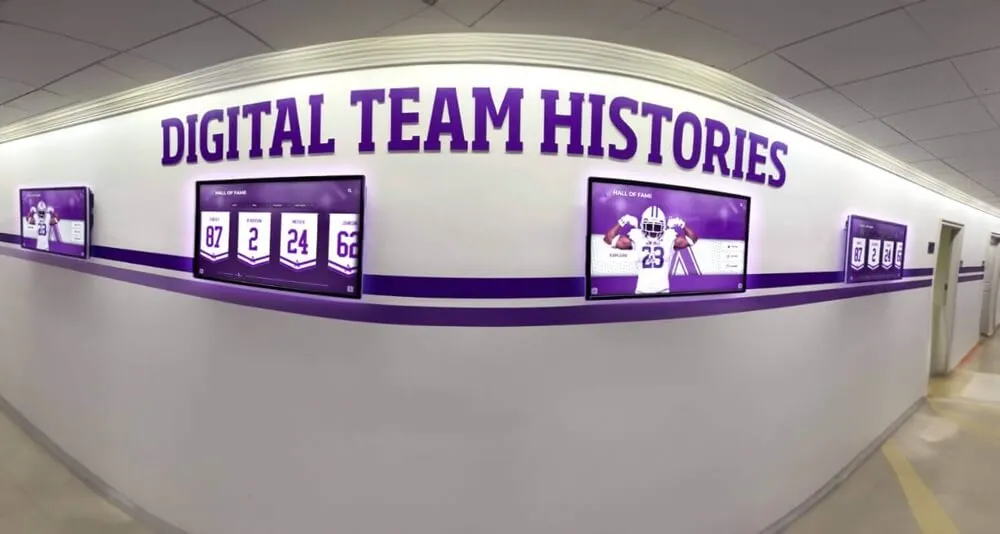
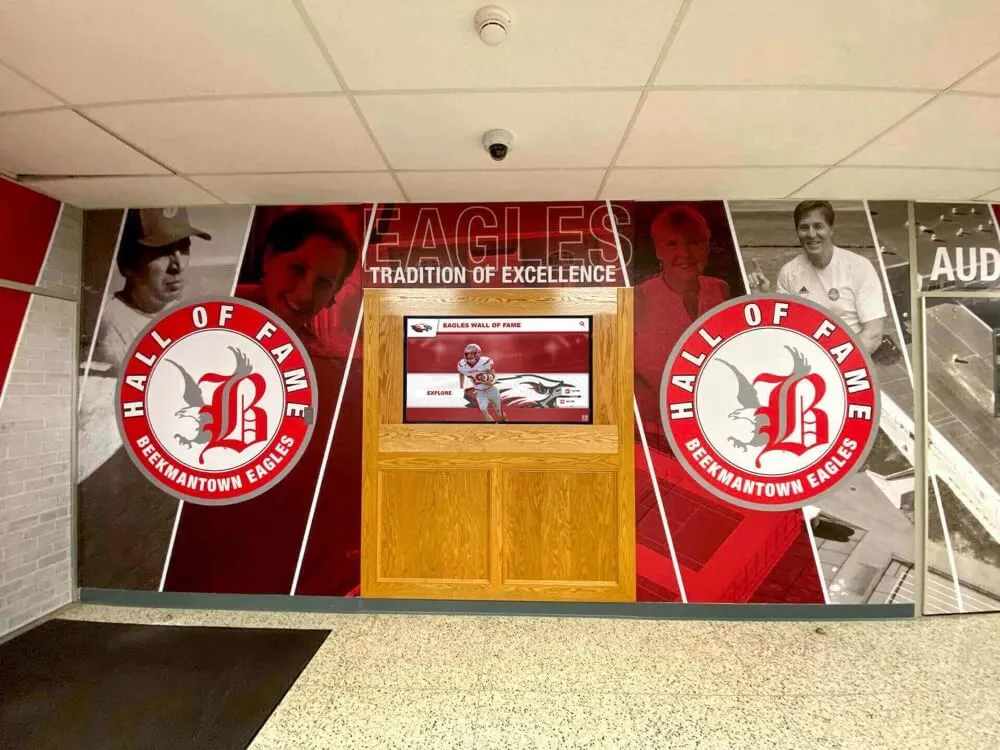
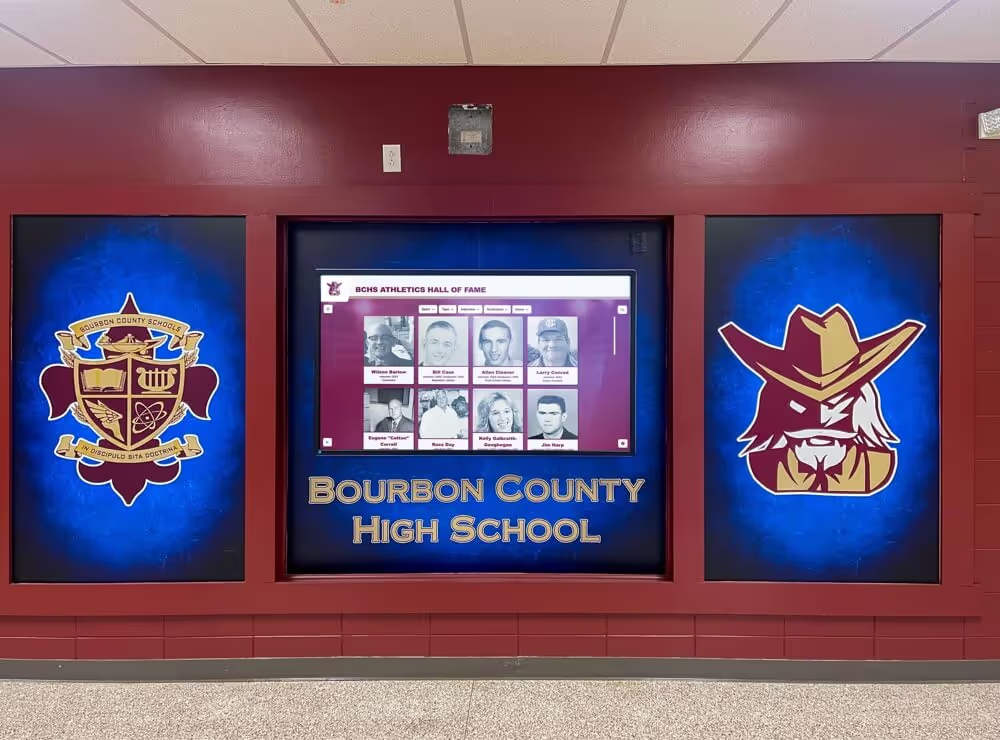
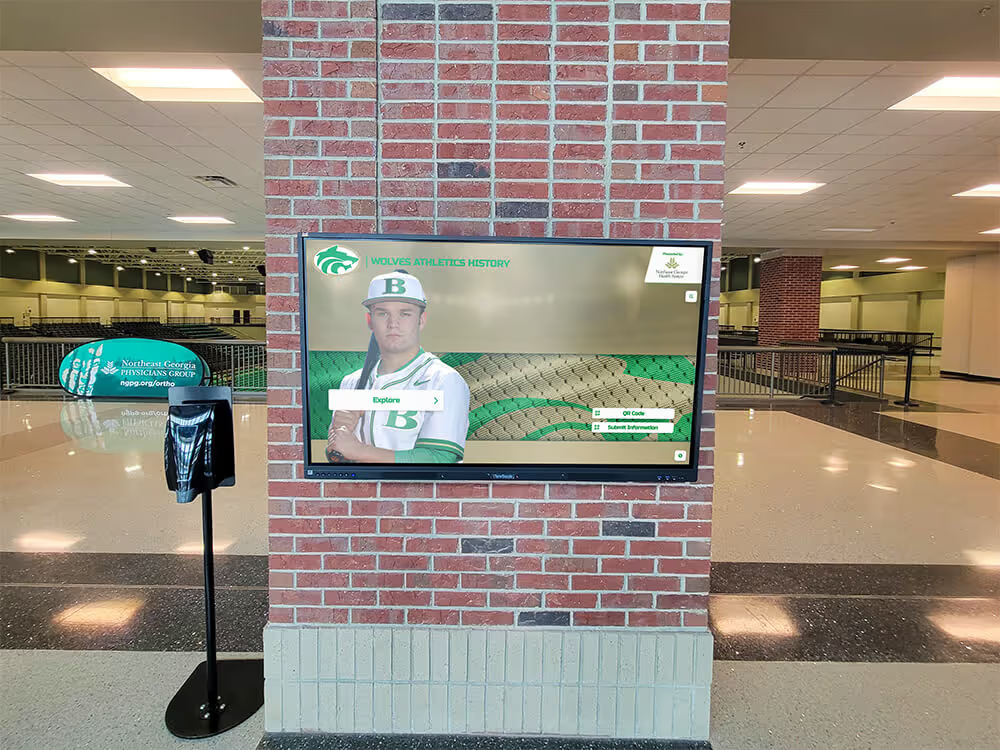
Schools and universities that build recognition programs around ROTC achievement have an opportunity to make this pipeline visible. When a Cadet Colonel’s profile appears on a digital display in the university commons, the broader campus community can see what sustained excellence in the program actually leads to — and what the journey from Cadet Private in freshman year to battalion commander as a senior actually requires.
How Universities Honor Army ROTC Cadets: Building Recognition That Matches the Achievement
University ROTC programs face a recognition challenge that mirrors what high schools experience with JROTC: the achievement cadets accumulate is real, demanding, and significant — but it is largely invisible to the campus community that surrounds the program.
A student who has advanced from Cadet Private to Cadet Captain over three years, contracted with the Army, attended Advanced Camp, passed the ACFT at the “Gold” standard, and earned a ROTC scholarship has a biography of distinguished achievement that deserves institutional acknowledgment. Most campuses provide none.
Integrating ROTC Into University Recognition Systems
The first step toward appropriate recognition is ensuring that ROTC achievement appears in the same institutional channels as academic and athletic distinction. When the university announces academic honor rolls, dean’s lists, and department excellence awards, ROTC scholarship recipients and distinguished cadets should appear with equivalent visibility.
End-of-year recognition events that systematically include ROTC categories — best cadet, leadership excellence, physical fitness distinction — communicate institutional values as clearly as any mission statement. Programs that invest in building a dedicated athletics wall of honor find that comprehensive recognition programs strengthen campus culture and alumni engagement across every recognized group — ROTC cadets included.
Dedicated ROTC Display Walls and Digital Recognition
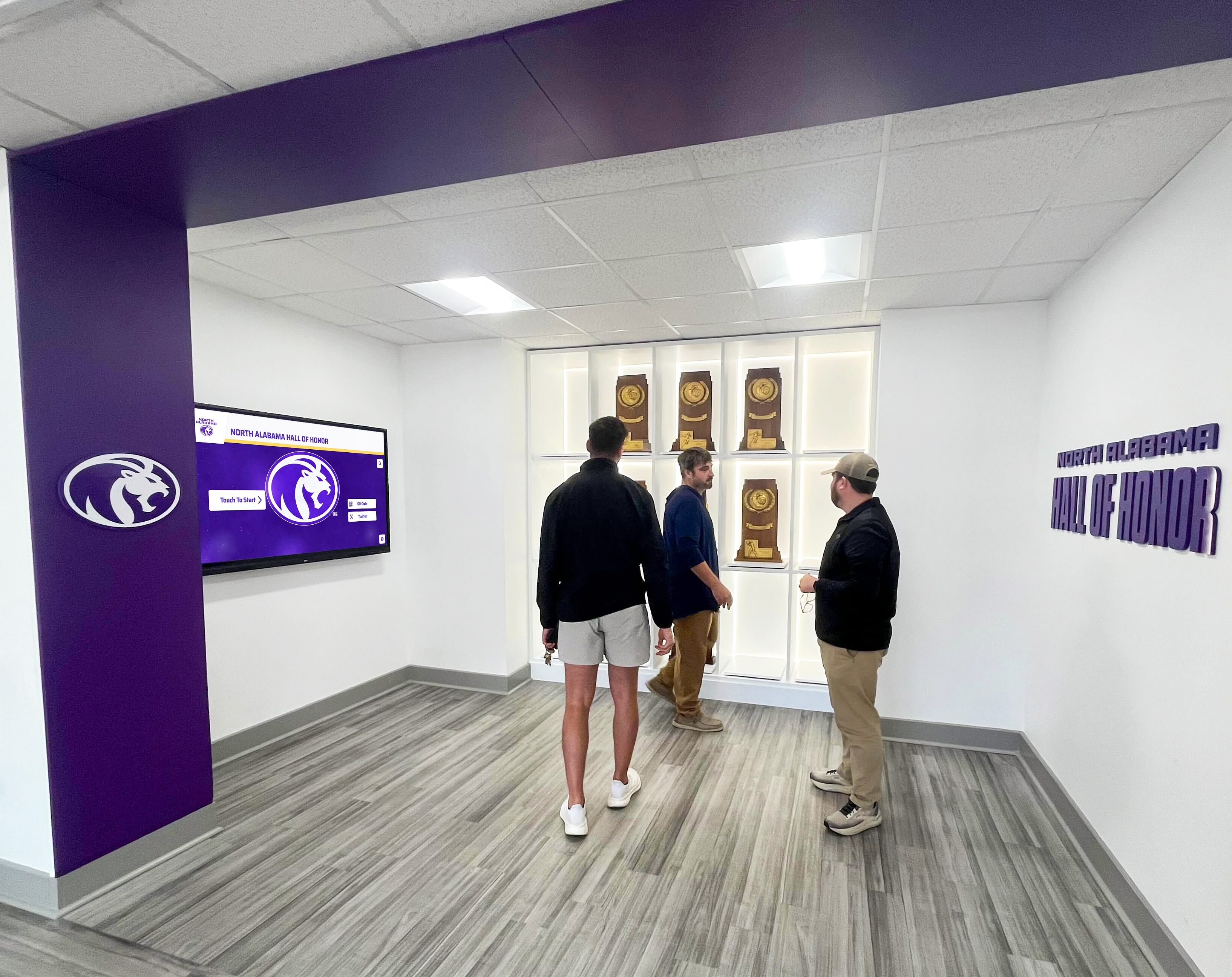
Physical display areas dedicated to ROTC history and achievement serve multiple simultaneous purposes: honoring current and former cadets, educating the campus community about the program, and creating visual evidence of institutional pride.
Effective ROTC display systems typically include:
Battalion history documentation covering the program’s founding, its Professors of Military Science across decades, significant milestones, and competitive achievements that establish the unit’s record.
Distinguished cadet profiles identifying scholarship recipients, Distinguished Military Graduates (the ROTC equivalent of a high-honor designation), program alumni who have advanced to significant military careers, and cadets who received prestigious assignments or selections after commissioning.
Cadet rank and structure displays that help campus visitors understand what the insignia on ROTC uniforms means — translating the cadet rank system from military shorthand into a legible story about what individual cadets have accomplished.
Annual Cadet of the Year recognition acknowledging the battalion’s outstanding performer with a profile that persists in the display system rather than disappearing at semester’s end.
Physical display cases create space limitations that grow tighter with each passing year. Preserving memorabilia, trophies, and recognition records in digital display systems allows programs to document decades of achievement without being constrained by wall space or cabinet capacity — a significant advantage for programs that span thirty, forty, or fifty years of cadet history.

Interactive Digital Recognition for ROTC Programs
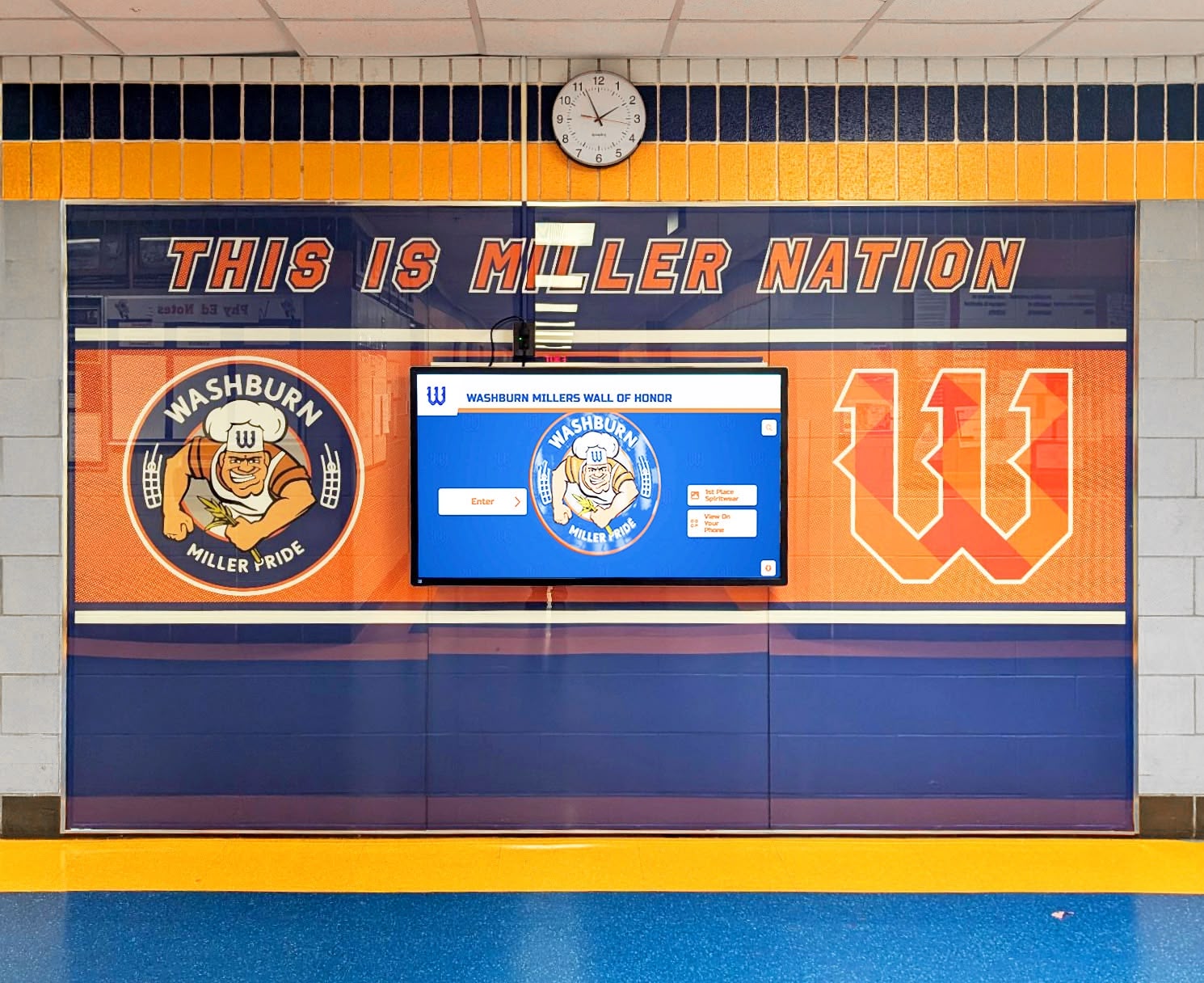
The most compelling recognition infrastructure for Army ROTC programs uses interactive digital displays that can hold far more information than any physical display case could accommodate.
An interactive touchscreen recognition system for an ROTC battalion might include:
- Complete cadet rosters going back to the program’s founding, searchable by name, year, and cadet rank
- Distinguished Military Graduate profiles with photos, rank history, branch selection, and career updates
- Annual battalion commander succession documenting every Cadet Colonel who has held the top position
- Advanced Camp and Leader’s Training Course records showing which cadets earned which performance tier at Army’s evaluative summer programs
- Alumni career tracking following commissioned officers from their first assignment through subsequent promotions and command selections
This kind of comprehensive digital record makes interactive touchscreen displays for institutional recognition especially valuable for ROTC programs whose alumni are frequently stationed globally and whose post-commissioning achievements unfold over decades rather than a single semester.
Outstanding students honor wall programs provide a direct model for what ROTC recognition can look like at the institutional level: named profiles, achievement documentation, and a permanent record that grows more valuable each year as the program adds new graduates and tracks their careers.
Building an Army ROTC Hall of Fame: Criteria and Structure
For universities ready to build a formal, permanent recognition system around ROTC achievement, establishing clear criteria aligned with Army ROTC’s own evaluation standards provides a defensible, externally validated foundation.
Distinguished Military Graduate (DMG) designation is awarded by each program to roughly the top ten percent of commissioned graduates — cadets who have demonstrated superior performance across academic, physical, and leadership dimensions throughout the program. DMG status is recognized by Army personnel systems and provides a national standard that requires no local interpretation.
ROTC Scholarship recipients represent a clearly identified population whose selection involved evaluation at program, regional, and national levels — appropriate thresholds for recognition that extends beyond participation.
Battalion commanders — the Cadet Colonels who have held the senior command position — represent a finite, annually selected group whose leadership achievement is genuine and identifiable.
Competitive achievement at Army-sponsored events including Ranger Challenge (a multi-event military skills competition between battalions), physical fitness competitions, and other program-wide challenges provides additional recognition thresholds appropriate for inclusion.
Developing comprehensive academic recognition programs shows that the most effective institutional recognition systems use a combination of criteria — some threshold-based (DMG), some competitive (Ranger Challenge placing), some positional (battalion commander) — rather than relying on a single metric that may not capture the full range of how cadets distinguish themselves.
Planning the Induction Event
The recognition structure becomes real and meaningful through ceremony. A formal annual ROTC recognition event that inducts new hall of fame members in front of the current cadet corps — with families in attendance, in uniform, with appropriate military ceremony — transforms abstract recognition into a cultural moment that current cadets experience as evidence of what the program truly values.
Using professional recognition awards wording and certificate templates that balance military formality with the warmth appropriate to a family recognition event requires the same attention to detail that any Army event demands — advance communication to inductees and families, a clear program structure, and a venue that communicates institutional gravity.
Why Families Search “Army ROTC Ranks”
One consistent pattern in how families engage with Army ROTC: they want to understand what they are watching. A parent sitting in the stands during a cadet formal inspection, or attending a commissioning ceremony, is looking at a formation of people in uniforms with shoulder boards they cannot read. Understanding that their son or daughter holds the grade of Cadet Captain — that this represents three years of advancement, a contractual commitment, and genuine leadership responsibility — transforms attendance into comprehension.
A complete guide to building an athletic and program hall of fame built around clear criteria and visual rank displays serves families directly: a display that explains cadet rank insignia, shows how advancement works, and profiles the cadets who have achieved distinction gives parents and siblings the context to understand and celebrate what their cadet has accomplished.
Getting Started: Practical Steps for Building Army ROTC Recognition
Universities and schools looking to strengthen recognition for their ROTC programs can approach implementation in phases.
Audit current recognition: Document what ROTC achievement currently receives university-level visibility. Most programs discover that distinguished cadets and battalion commanders are recognized within the program but invisible to the broader campus and alumni community.
Identify historical records: Work with the PMS and battalion staff to compile records of Distinguished Military Graduates, scholarship recipients, and battalion commanders across the program’s full history. University archives, alumni networks, and departmental records often hold significant information that has never been compiled in one place.
Establish recognition criteria: Use Army ROTC’s own national standards — DMG designation, scholarship status, Ranger Challenge performance, battalion command — as the foundation for recognition criteria rather than creating parallel local standards that require ongoing interpretation.
Choose scalable display infrastructure: Whatever format the university selects for ROTC recognition, choose systems designed to grow. A digital platform that can hold one hundred profiles today should be evaluated on whether it can hold one thousand profiles in twenty years without requiring a complete redesign. Alumni donor recognition walls offer a proven model for scalable recognition infrastructure that institutions have used successfully to grow recognition programs across decades.
Connect to commissioning ceremonies: The annual commissioning ceremony, where ROTC graduates receive their officer’s commission, is the natural moment for recognizing distinguished performance. Building recognition ceremonies into — or alongside — commissioning events creates visible institutional acknowledgment at the moment it carries the most meaning for cadets and families.
Rocket Alumni Solutions builds recognition platforms specifically designed for scholastic programs — systems that can house ROTC distinguished cadet halls of fame, display cadet rank histories, integrate multimedia content, and scale without space constraints across decades of program history. For ROTC programs ready to build recognition infrastructure that matches what their cadets actually accomplish, purpose-built platforms deliver capabilities that repurposed athletic display systems or general digital signage cannot match.
Conclusion
Army ROTC ranks form a functioning organizational system that prepares future officers for the command responsibilities they will carry on graduation day. Cadet Privates, Sergeants First Class, Captains, and Colonels are not honorifics — they are positions in a working organization that runs formations, executes field training, leads units, and develops the leadership competencies that the Army depends on in its commissioned officer corps.
Families who understand the cadet rank system can follow a cadet’s progress with genuine comprehension rather than watching from the sidelines without context. Schools and universities that build recognition programs around ROTC achievement make that progress visible to the broader community — honoring cadets appropriately while building program cultures that attract future participants and engage alumni who went through the same formation years before.
The gold bar on a Cadet Second Lieutenant’s shoulder board, earned over two or three years of demonstrated performance, represents something worth displaying. Universities that invest in recognition infrastructure worthy of their cadets’ accomplishments create a permanent institutional record of the future officers who developed on their campuses.
Ready to build recognition infrastructure that does justice to your Army ROTC program? Explore how Rocket Alumni Solutions helps universities and schools create permanent, engaging recognition systems for cadet programs, distinguished graduates, and military achievement that grows more meaningful with every commissioning class.
Frequently Asked Questions
What are the Army ROTC ranks in order from lowest to highest?
Army ROTC cadet ranks begin with Cadet Private (no insignia) and progress through NCO grades — Private First Class, Corporal, Sergeant, Staff Sergeant, Sergeant First Class, Master Sergeant, First Sergeant, and Sergeant Major — before moving into cadet officer grades: Second Lieutenant (gold bar), First Lieutenant (silver bar), Captain (two silver bars), Major (gold oak leaf), Lieutenant Colonel (silver oak leaf), and Colonel (silver eagle), which is typically the battalion commander.
How do Army ROTC cadets earn promotions?
Promotions through cadet NCO grades are based on demonstrated performance, time in the program, successful completion of Army ROTC training milestones, and leadership assessment by program staff and senior cadets. Cadet officer grades are appointment-based — assigned by the Professor of Military Science for specific command and staff positions within the battalion. Neither NCO nor officer cadet grade advancement is purely automatic; performance matters at every step.
Does cadet rank in ROTC affect commissioning grade?
No. All Army ROTC graduates who successfully complete the program and meet Army standards commission at the same grade — Second Lieutenant (O-1) — regardless of what cadet grade they held in the program. Cadet rank organizes the training environment and reflects leadership position; it does not determine the grade a new officer receives at commissioning. That grade is fixed at O-1 for all ROTC-commissioned officers.
What is the highest rank a cadet can hold in Army ROTC?
At most university programs, Cadet Colonel is the highest grade, held by the battalion commander. At larger multi-battalion brigade programs, a Cadet Brigadier General may serve as the senior cadet across several battalions. Both positions represent the peak of cadet leadership within their respective organizational structures and are appointment-based rather than achieved through a promotion sequence.
What is a Distinguished Military Graduate in Army ROTC?
Distinguished Military Graduate (DMG) designation is awarded to approximately the top ten percent of graduating ROTC cadets nationally. It recognizes exceptional performance across academic achievement, physical fitness, and ROTC leadership evaluations throughout the full program. DMG status is recorded in Army personnel files and is recognized as a significant credential by graduate schools, employers, and military personnel systems. Many ROTC programs use DMG designation as a primary threshold for permanent hall of fame recognition.
How can universities recognize Army ROTC achievements in their broader recognition programs?
Universities can integrate ROTC recognition by including Distinguished Military Graduates and battalion commanders in institution-wide recognition events; building dedicated ROTC display walls or interactive digital recognition systems in high-visibility campus locations; establishing annual cadet halls of fame using DMG status and other program-specific criteria; documenting historical records of distinguished cadets going back to the program’s founding; and connecting recognition ceremonies to the annual commissioning event when cadets and families are present and the context gives recognition its full meaning.
How does Army ROTC rank compare to Army JROTC rank?
Army JROTC (high school level) uses a parallel cadet rank structure that mirrors Army grades in the same way college ROTC does, but within a high school unit rather than a university battalion. JROTC ranks span the same enlisted and officer grade spectrum and use the same insignia conventions. Students who complete Army JROTC and then enroll in college ROTC begin the ROTC program at MS I, though some programs allow JROTC graduates to waive entry-level requirements or receive credit for prior training. The two programs form a connected pathway toward military service.