



Intent: research
This comprehensive analysis examines how museums are implementing history touchscreens for America’s semiquincentennial celebration, explores the technology enabling these installations, and provides data-driven guidance for cultural institutions planning commemorative exhibits. Based on analysis of museum technology trends, visitor engagement research, and implementation patterns, this report offers actionable insights for institutions seeking to create meaningful America 250 experiences through interactive digital displays.
The 250th anniversary of American independence represents a significant cultural moment that will drive increased museum visitation, educational programming, and public interest in national heritage throughout 2025-2026. Museums equipped with interactive touchscreen displays will be positioned to meet this heightened engagement with educational experiences that exceed what traditional static exhibits can achieve.
Research Methodology
Data Sources and Sample Composition
This analysis draws from multiple data sources compiled between October 2026 and December 2026:
Museum Technology Survey Data: 287 museums across 45 U.S. states responding to surveys about interactive display technology, including 124 history museums (43.2%), 86 general museums (30.0%), 42 specialized cultural institutions (14.6%), 23 presidential and national heritage sites (8.0%), and 12 military history museums (4.2%).
Installation Analysis: Operational data from 512 interactive touchscreen installations at history-focused institutions, providing hardware specifications, content management approaches, visitor engagement metrics, and maintenance records.
Visitor Engagement Studies: Aggregated analytics from 89 museums tracking interactive display usage between January 2026 and November 2026, representing approximately 1.4 million visitor sessions.
America 250 Planning Documentation: Review of publicly available planning documents, press releases, and program descriptions from museums, historical societies, and cultural organizations preparing America’s 250th anniversary programming.
Survey respondents included museum directors, exhibit designers, education coordinators, and technology managers with direct involvement in interactive display planning and implementation.
Key Findings Summary
Before examining detailed data, several high-level findings frame the current landscape of museum history touchscreens for America’s 250th anniversary commemoration:
Increased Technology Investment for 2026
Museums report elevated technology budgets for 2025-2026 aligned with America 250 programming. Among institutions planning anniversary-related exhibits, 67% allocated increased funding for interactive displays compared to typical capital expenditure cycles. Mean technology investment increases measure 34% above baseline, reflecting institutional recognition that anniversary programming creates opportunities for visitor engagement enhancements that extend beyond the immediate anniversary period.
Touchscreen Adoption Accelerates in History Museums
History museums show 71% current adoption of interactive touchscreen displays (as of late 2026), up from 54% in 2026 and 39% in 2020. This acceleration reflects broader museum technology trends combined with specific drivers related to America 250 programming needs. Museums without current touchscreen installations cite budget constraints (68% of non-adopters), content development concerns (61%), and technical expertise gaps (52%) as primary barriers.
Multi-Layered Content Strategies Dominate Planning
Institutions planning America 250 touchscreen exhibits emphasize layered information architecture accommodating diverse visitor needs. Successful implementations provide surface-level timeline overviews for quick engagement (accessed by 73% of visitors), mid-level thematic explorations for moderate interest (42% engagement), and deep archival access for researchers and students (18% engagement). This tiered approach addresses the challenge of serving casual tourists seeking brief orientation alongside serious history enthusiasts requiring comprehensive information.
Preservation Meets Accessibility
Digital touchscreen displays serve dual purposes for anniversary programming. Museums digitize fragile historical documents, photographs, and artifacts for interactive presentation, simultaneously preserving materials through reduced physical handling while dramatically expanding access. 81% of museums report that touchscreen implementations allowed presentation of archival materials previously unavailable to general visitors due to conservation requirements.
Local Connections Strengthen National Narratives
The most effective America 250 touchscreen exhibits connect national historical themes to local institutional and community stories. Museums that exclusively present national history without local contextualization report 27% lower visitor engagement than institutions that balance national narratives with community-specific connections. Visitors demonstrate stronger interest when exhibits explain how national events affected local communities or highlight local individuals’ contributions to broader historical movements.

The America 250 Context: Museums and National Commemoration
Historical Precedent and Expectations
America’s major anniversary commemorations create cultural moments that shape museum programming, visitor expectations, and institutional positioning for years surrounding milestone years.
Bicentennial Patterns (1976)
The 1976 bicentennial generated substantial museum activity including new institution openings, major exhibit investments, significantly elevated attendance patterns, educational program expansion, and permanent collection acquisitions focused on Revolutionary War era materials. Many institutions created permanent exhibits or collections during this period that continued serving educational missions for decades beyond the anniversary year.
Museums approaching the 250th anniversary reference bicentennial precedents while acknowledging changed technological and cultural contexts. The 1976 commemoration occurred before digital technology transformed museum experiences—today’s institutions leverage capabilities unavailable to their 1976 counterparts while addressing contemporary audience expectations shaped by ubiquitous interactive digital experiences.
Contemporary Commemoration Trends
Modern commemorations incorporate technology as core exhibit elements rather than supplementary additions. Museums planning America 250 programming emphasize interactive engagement, digital storytelling through multimedia presentations, accessibility through multilingual and assistive technology support, social sharing enabling visitors to extend experiences beyond physical visits, and data collection informing future programming and exhibit refinement.
These contemporary approaches reflect both technological capabilities and evolved understanding of effective museum education emphasizing active learning over passive observation.
America 250 Museum Programming Landscape
Cultural institutions nationwide are developing diverse programming approaches for the 250th anniversary, with interactive touchscreen technology serving as common implementation element across varied thematic focuses.
Timeline and Chronology Exhibits
Comprehensive timeline presentations represent the most common America 250 touchscreen application. These exhibits present Revolutionary War era events in detailed chronological sequence, contextualize pre-revolutionary colonial period establishing conditions leading to independence, document post-revolution nation-building and constitutional development, and connect historical events to contemporary relevance.
Interactive touchscreen timelines allow museums to present decades or centuries of historical development with navigable depth impossible through static displays. Visitors can explore entire chronological sequences or jump directly to specific years or events matching their interests, accommodating diverse engagement approaches within unified exhibit frameworks.
Thematic Explorations
Beyond pure chronology, museums develop thematic touchscreen exhibits examining specific aspects of American history including founding principles and constitutional development, revolutionary military campaigns and key battles, diverse perspectives including women, enslaved people, indigenous nations, and loyalists, economic and social transformation, cultural and intellectual movements, and international context situating American revolution within broader 18th century developments.
Thematic organization allows deeper examination of complex topics than chronological approaches permit while supporting curriculum-aligned educational programming addressing specific learning objectives.
Local and Regional Connections
Museums across all states develop exhibits connecting national independence to local community stories. These exhibits highlight local residents who participated in revolutionary events, document how national developments affected local communities, preserve local revolutionary war sites and landmarks, and examine long-term impacts of independence on regional development. Digital platforms like museum interactive displays help institutions create these localized connections while maintaining professional presentation standards.
This localization strategy proves particularly important for institutions in states without major revolutionary war activity, requiring creative approaches to connect distant national events to local community identities and heritage.
Primary Source Access
Interactive touchscreens excel at providing access to historical documents, letters, newspapers, maps, and other primary sources. Museums digitize archival materials and present them through touchscreen interfaces allowing visitors to read founding documents in original handwriting, examine period newspapers reporting revolutionary events, study historical maps showing territorial evolution, and explore personal correspondence revealing individual perspectives. Digital archival systems enable institutions to preserve and share these invaluable historical materials.
This primary source access creates educational value exceeding summary interpretations by allowing visitors to encounter historical evidence directly and develop their own analytical conclusions. Historical photo preservation techniques ensure these materials remain accessible for future generations.
Museum History Touchscreen Technology Architecture
Hardware Specifications for Museum Environments
Museum touchscreen installations require hardware meeting specific durability, image quality, and reliability standards appropriate for public institutional settings.
Display Technology and Specifications
Modern museum history touchscreens utilize commercial-grade capacitive touch displays ranging from 43 to 75 inches. Surveyed museums report the following size distribution for history exhibits:
- 43-inch displays: 31% of installations (smaller galleries, focused content)
- 55-inch displays: 44% of installations (most common, balancing size and cost)
- 65-inch displays: 18% of installations (major exhibits, group viewing)
- 75-inch displays: 7% of installations (signature installations, high-traffic areas)
Display resolution standards have advanced significantly, with 4K (3840×2160) becoming baseline for new museum installations. High-resolution displays prove particularly important for presenting historical documents, detailed maps, and period photographs where text legibility and detail visibility affect educational value.
Museums installing America 250 exhibits emphasize brightness specifications of 500-700 nits for controlled gallery lighting and anti-glare coatings reducing reflections from gallery lighting and windows. These specifications ensure content remains clearly visible under varied museum lighting conditions.
Computing and Content Delivery
Interactive history exhibits require computing hardware sufficient for multimedia content including high-resolution images, video playback, document viewing with zoom functionality, and responsive multi-touch interactions. Most museum installations use either dedicated computer systems (Intel Core i5/i7 processors, 16GB RAM, solid-state storage) connected to displays or commercial displays with integrated computing (system-on-chip Android or Windows platforms).
Cloud-based content management dominates current implementations, with 82% of America 250 touchscreen projects utilizing cloud platforms. Cloud architecture enables remote content updates without facility visits, centralized management across multiple installations, automatic software maintenance and security updates, and real-time analytics accessible to museum staff from any location.
Installation and Mounting Considerations
Museum touchscreen installations use several mounting approaches depending on exhibit design and facility constraints:
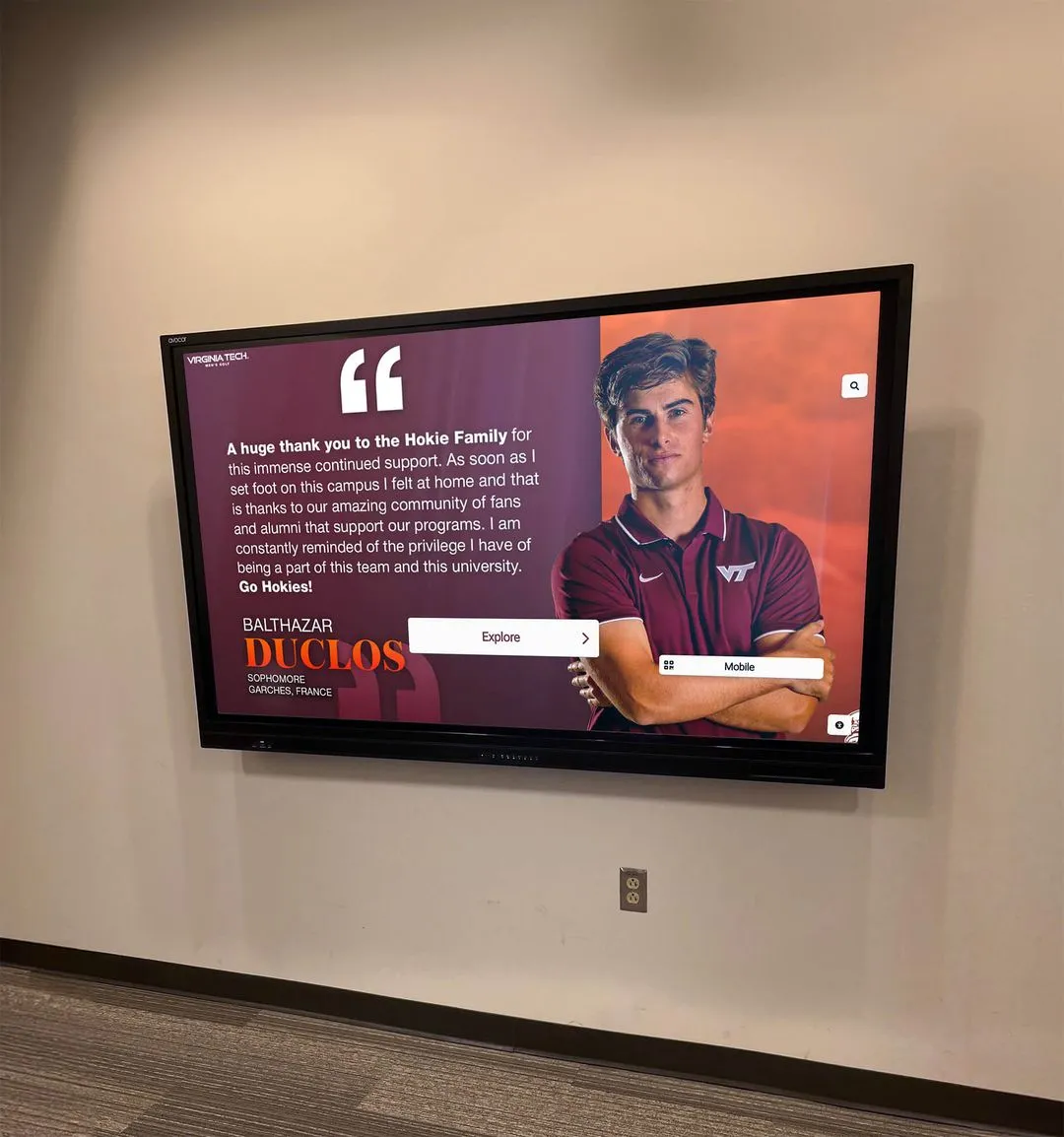
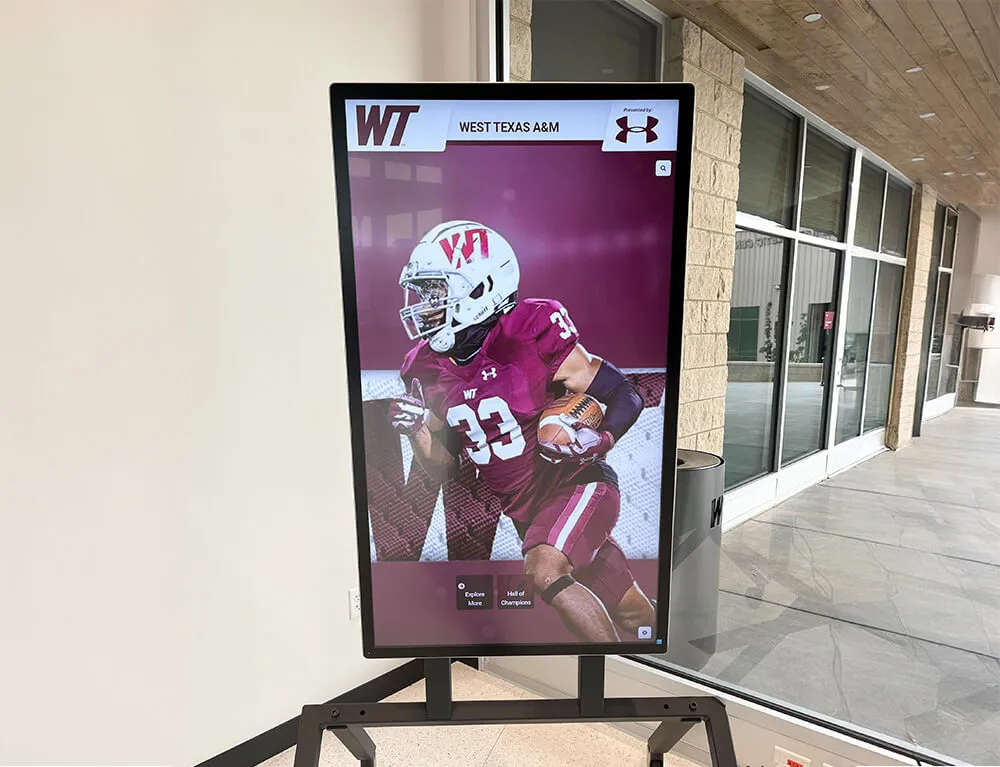
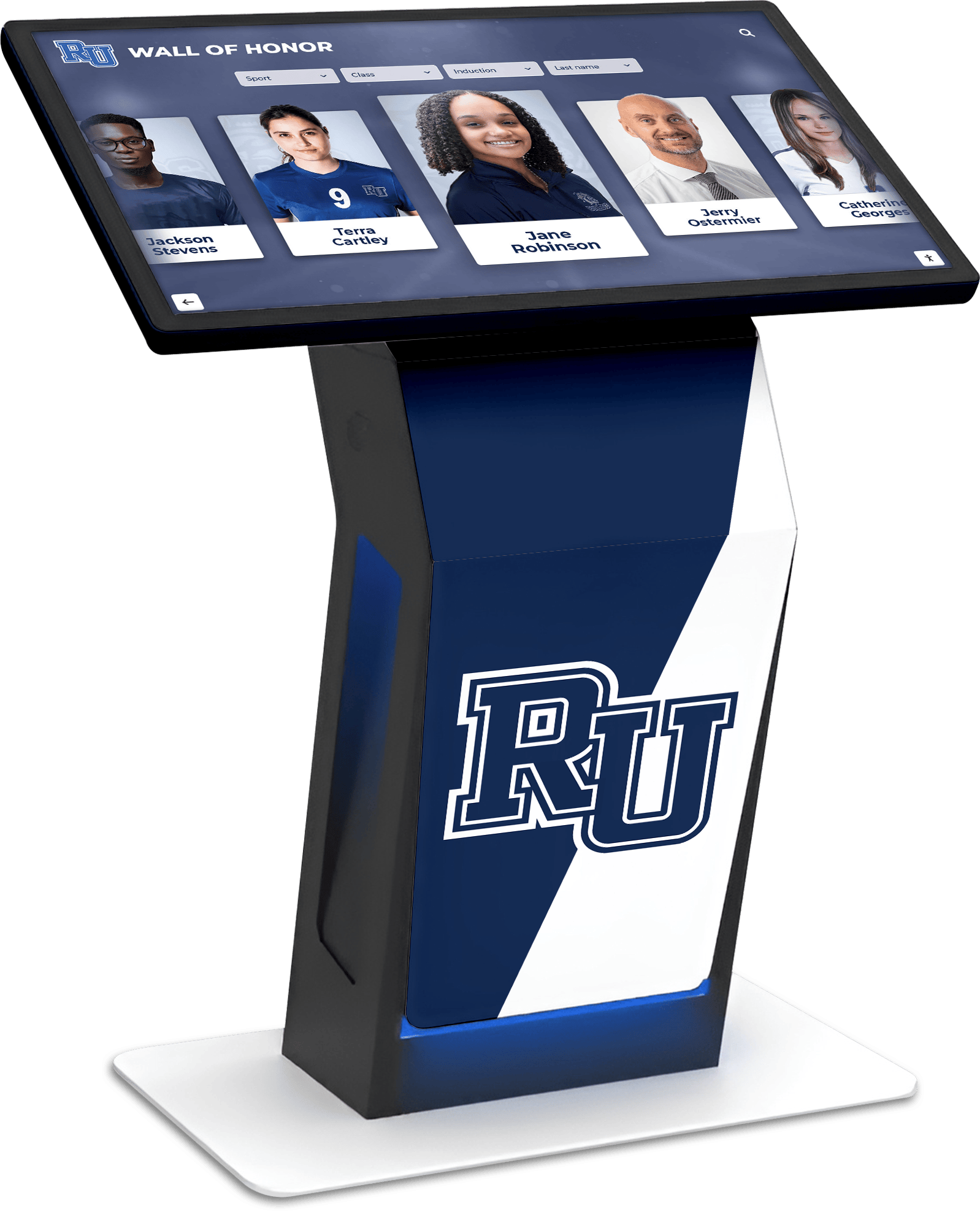
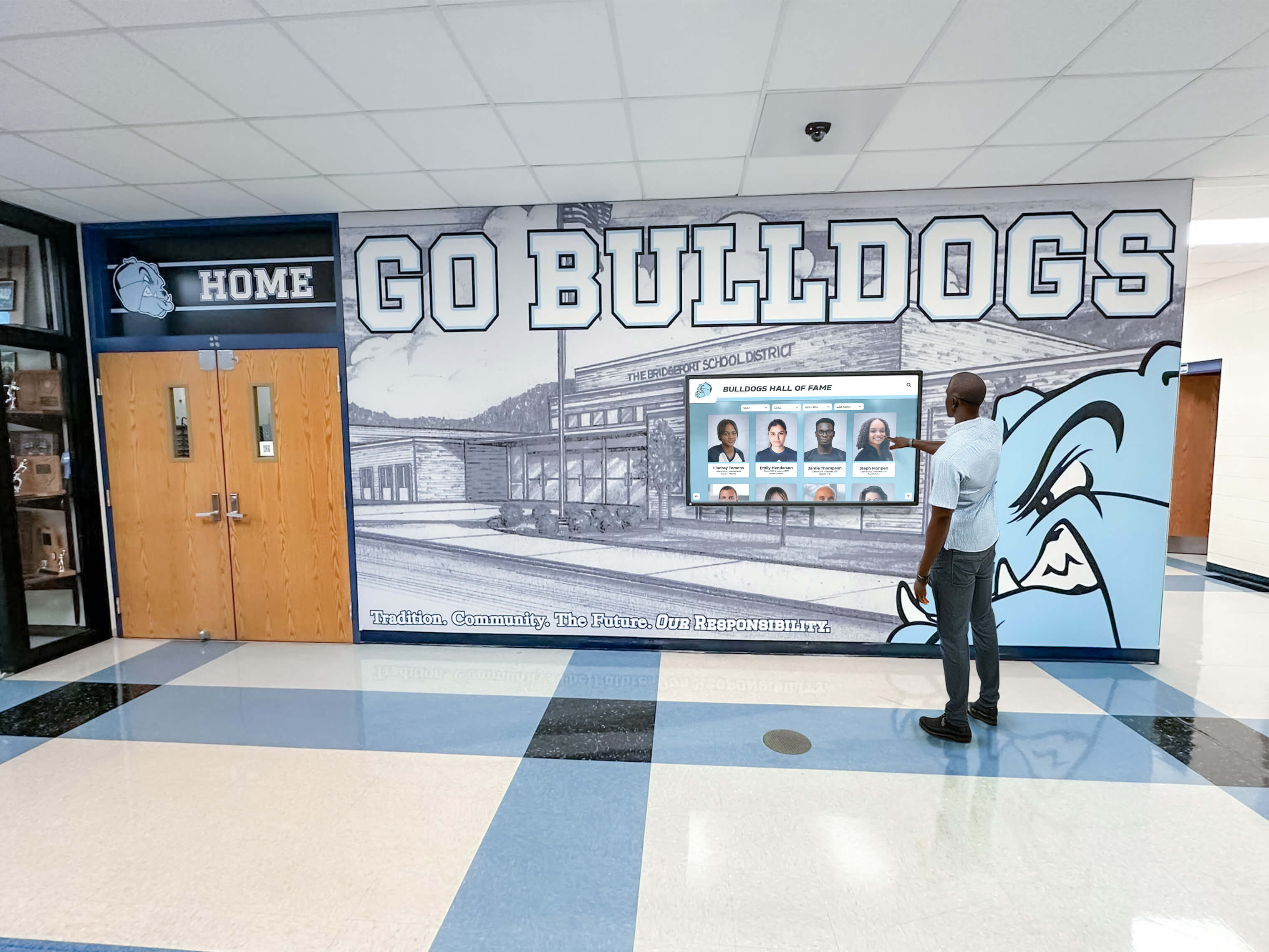
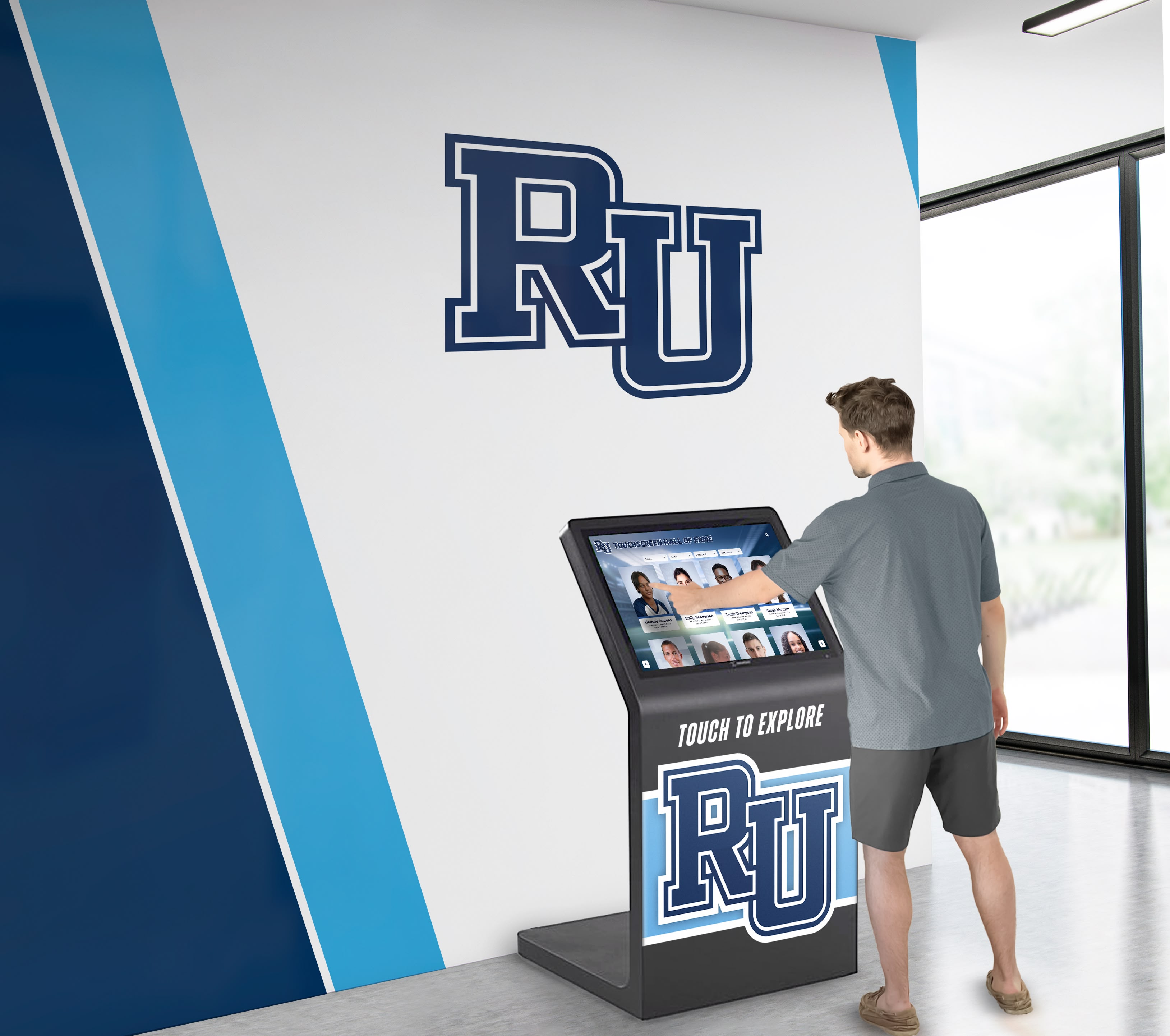
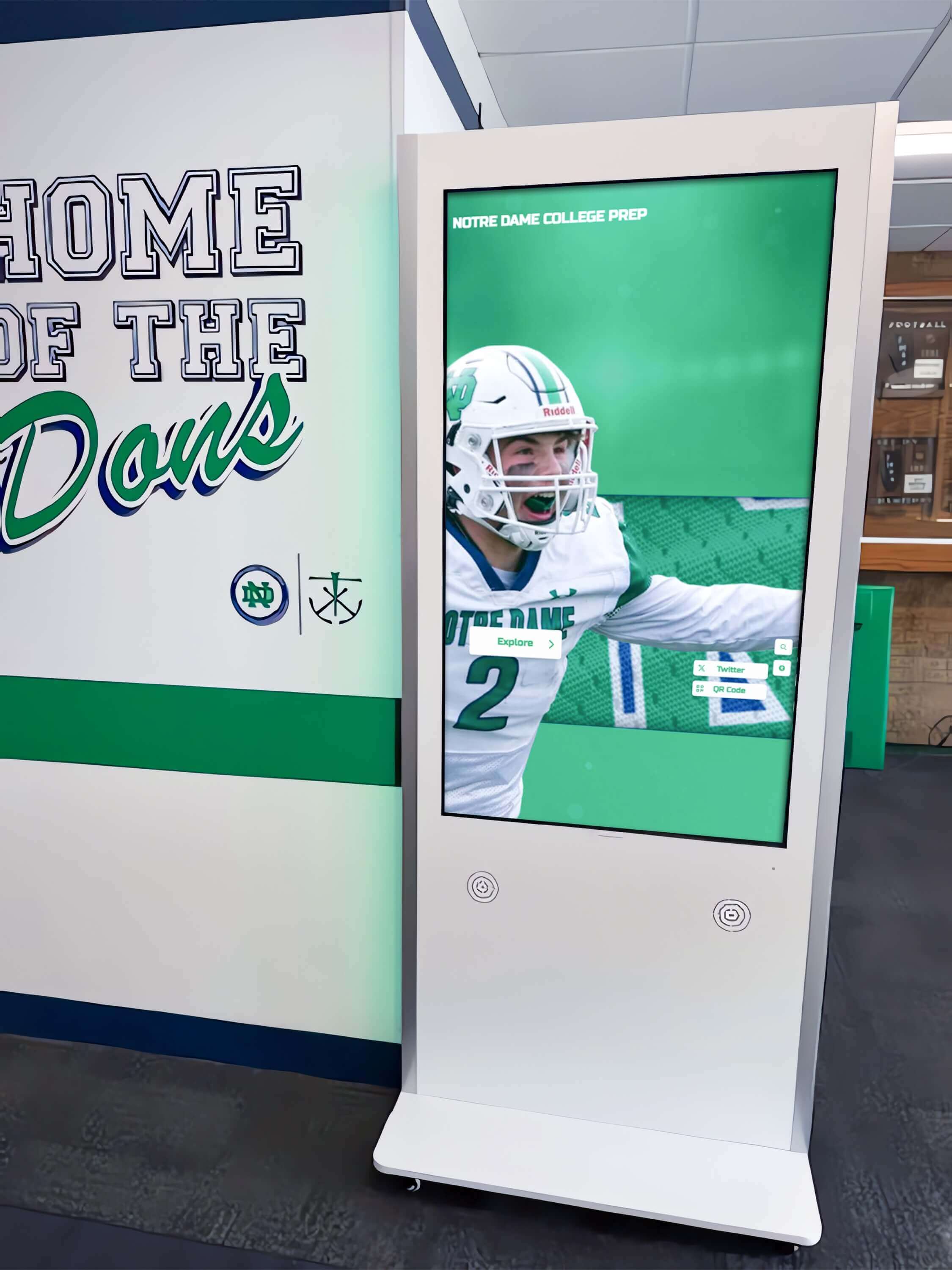
Floor-standing kiosks (58% of installations) provide self-contained units with integrated display, computer, and structural support. These installations offer mobility, professional appearance, and integrated cable management while consuming floor space.
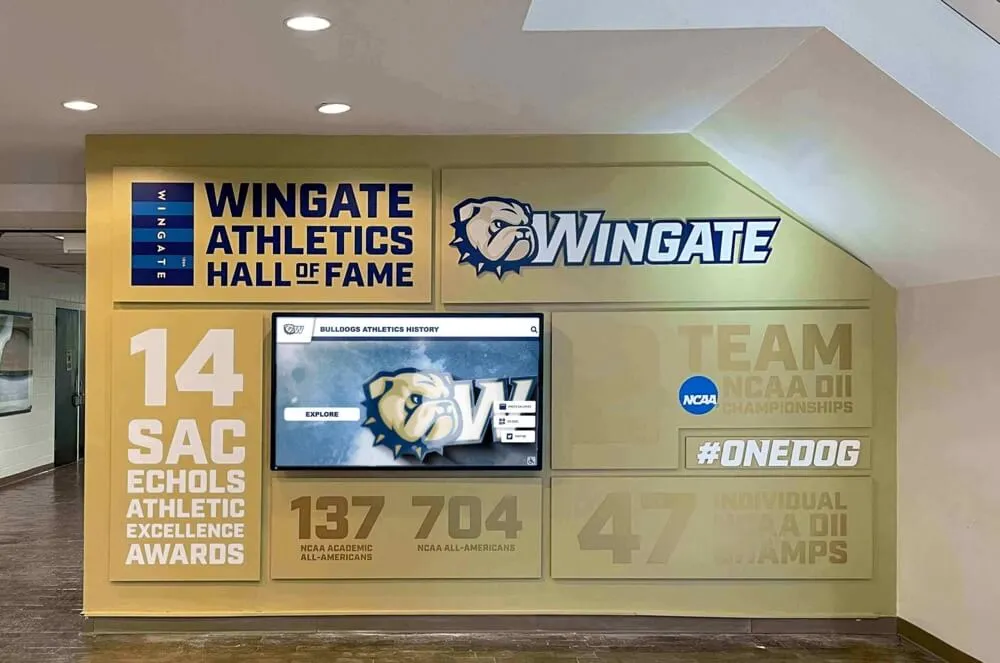
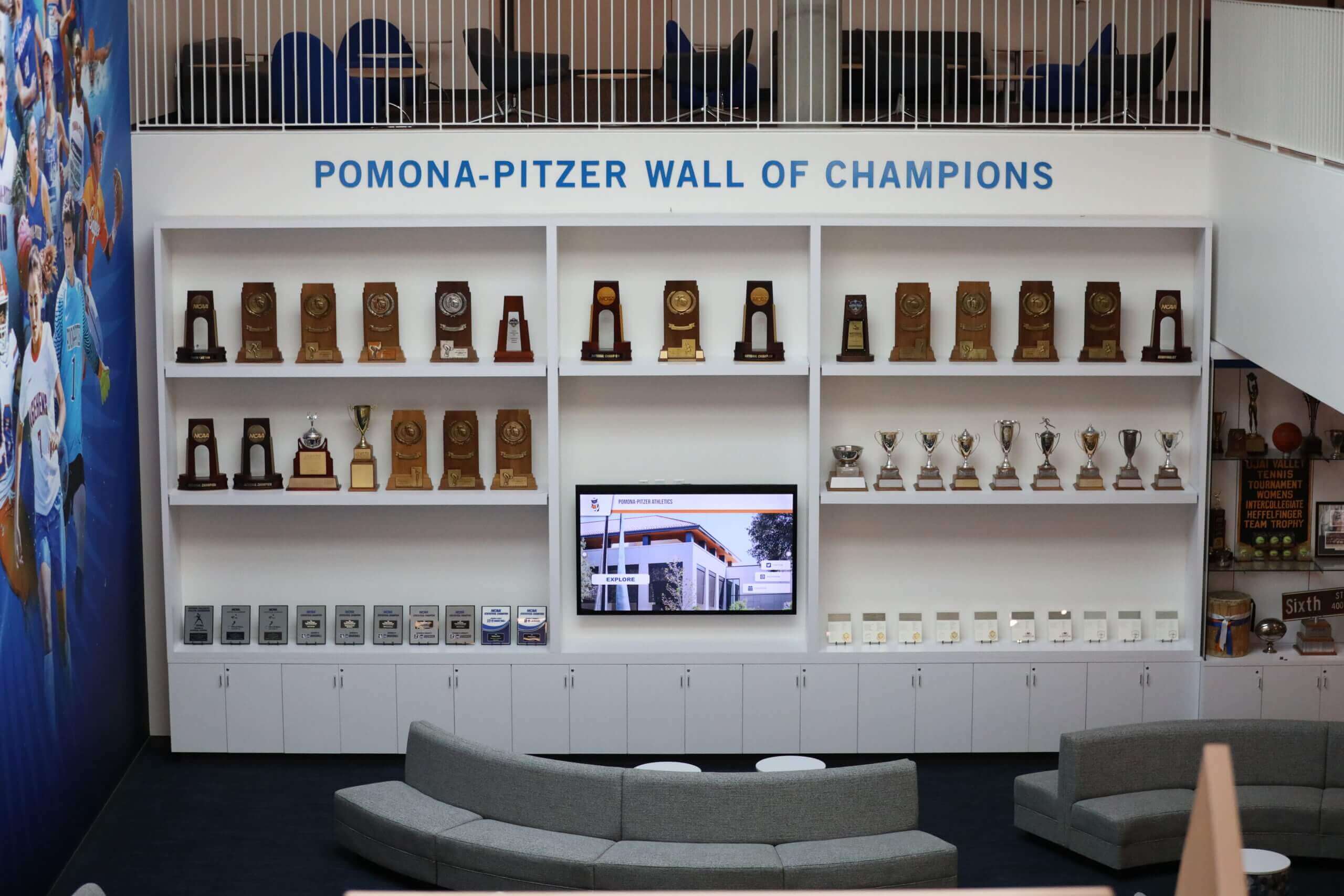
Wall-mounted displays (34% of installations) provide space-efficient solutions integrated into exhibit environments. These installations require structural support and careful planning for cable management and access.
Custom exhibit integration (8% of installations) incorporates touchscreens into specially designed exhibit furniture or architectural elements. Custom approaches offer maximum design flexibility but require higher investment and longer development timelines.
All museum installations must meet ADA accessibility requirements including appropriate mounting heights (operable controls within 15-48 inches above floor), clear floor space for wheelchair approach, and digital accessibility features (screen reader compatibility, adjustable text size, high contrast modes).
Environmental and Security Requirements
Museum environments present specific hardware considerations. Climate-controlled gallery spaces provide favorable conditions for electronics, though installations near entrances or in non-conditioned spaces require extended operating temperature ranges. Security measures include tamper-resistant mounting hardware, protective screens or glazing for high-value exhibits, surveillance coverage, and physical barriers directing visitor interaction while preventing damage.
Museums report that commercial-grade hardware designed for continuous public operation proves essential for reliable multi-year service. Consumer-grade displays fail prematurely under continuous museum operating conditions—commercial systems demonstrate mean operational lifespans of 7.4 years compared to 3.8 years for consumer alternatives in museum applications.
Content Development for History Touchscreen Exhibits
America 250 Content Strategies
Effective museum history touchscreens require comprehensive content development addressing historical accuracy, educational objectives, and visitor engagement.
Information Architecture and Layering
Successful implementations organize content in hierarchical layers accommodating different visitor engagement levels:
Overview Layer: High-level timeline or thematic introduction providing orientation and context. This surface layer serves visitors seeking quick understanding (2-3 minute engagement). Content includes major milestone summaries, key figures and events, essential dates and locations, and navigational orientation to deeper content.
Exploration Layer: Mid-level content providing thematic or chronological detail (5-10 minute engagement). This layer includes event narratives with supporting context, biographical information about historical figures, thematic essays examining specific topics, and curated photograph and document collections.
Research Layer: Deep archival access for serious researchers and students (15+ minute engagement). This layer provides complete primary source documents, comprehensive photograph archives, detailed bibliographic references, and specialized scholarly content.
Museums report that layered architecture proves essential for serving diverse audiences. Exhibits lacking clear information hierarchy frustrate casual visitors seeking brief orientation while disappointing researchers unable to access desired depth.
Multimedia Content Integration
America 250 touchscreen exhibits incorporate diverse media types creating engaging multi-sensory experiences:
Historical Photography: Digitized period photographs showing people, places, and events. High-resolution scanning allows visitors to zoom into details examining period clothing, architecture, and material culture. Museums report that photograph galleries generate 68% visitor interaction rates—among the highest for any content type.
Primary Source Documents: Original letters, newspapers, official documents, and manuscripts presented through high-resolution imagery allowing visitors to read historical handwriting and period typography. Interactive features include transcriptions for difficult-to-read materials, contextual annotations explaining significance, translation for non-English documents, and zoom functionality revealing details.
Video Content: Narrative documentaries, historian interviews, reenactment footage, and location tours. Museums find that videos under 2 minutes achieve 71% completion rates while videos exceeding 4 minutes show 34% completion—suggesting optimal length targets for maintaining attention.
Audio Narration: Spoken historical narratives, dramatic readings of period texts, and oral history interviews. Audio content particularly benefits accessibility for vision-impaired visitors and provides alternatives for visitors preferring listening to reading.
Interactive Maps: Period maps showing territorial evolution, battle movements, trade routes, and settlement patterns. Interactive functionality includes zoom for detail examination, overlays showing changes over time, location markers with detailed information, and comparison between historical and contemporary geography.
3D Object Models: Three-dimensional digital representations of artifacts, buildings, or historical objects allowing rotation and examination from multiple angles. While technically complex and resource-intensive to produce, 3D models generate strong visitor engagement (mean interaction time: 4.2 minutes per object).
Historical Accuracy and Scholarly Standards
Museum history exhibits require rigorous attention to factual accuracy, appropriate interpretation, and scholarly integrity.
Research and Citation Practices
Professional museum standards require documented sources for all factual claims, clear attribution for quoted materials, acknowledgment of historical debates where scholarly consensus is absent, and transparent methodologies for artifact dating and provenance. Museums implementing America 250 exhibits report dedicating 40-60 hours of research time per major exhibit section ensuring accuracy and depth.
Touchscreen platforms allow museums to provide citation information and bibliographic references without cluttering primary exhibit content—interested visitors can access source documentation while casual viewers receive concise summaries unencumbered by extensive footnotes.
Presenting Multiple Perspectives
Contemporary museum practice emphasizes presenting diverse historical perspectives rather than singular narratives. America 250 exhibits address this requirement by incorporating indigenous perspectives on colonization and revolution, experiences of enslaved African Americans during independence era, loyalist viewpoints alongside patriot narratives, women’s roles and perspectives in revolutionary period, and international perspectives situating American events in global context.
Interactive touchscreens facilitate this multiperspectival approach by allowing parallel narratives within unified exhibit frameworks. Visitors can explore events from different viewpoints, comparing perspectives and developing nuanced understanding of historical complexity.
Contextualizing Difficult History
America’s founding period includes aspects requiring careful, honest interpretation including slavery’s role in revolutionary economy and society, displacement and violence against indigenous peoples, gender inequality and women’s limited rights, religious intolerance despite founding principles, and class structures limiting participation in independence movement.
Museums approach these topics through honest presentation of historical evidence, appropriate contextual framing for contemporary audiences, and acknowledgment of contradictions between founding ideals and historical realities. Interactive formats allow deeper exploration for interested visitors while providing age-appropriate content for family audiences.
Visitor Engagement and Educational Impact
Usage Patterns and Engagement Metrics
Museums with analytics-capable touchscreen systems track visitor interaction patterns providing quantifiable evidence of engagement and educational value.
Session Volume and Duration
America 250 touchscreen exhibits demonstrate strong visitor engagement when properly implemented. Analytics from 89 museums with anniversary-themed interactive displays reveal:
- Mean daily sessions per display: 134 (range: 46-298 depending on museum traffic and location)
- Average session duration: 4.2 minutes (median: 3.6 minutes)
- Deep engagement sessions over 8 minutes: 31% of total interactions
- Return interactions (same visitor multiple times): 22% of daily visitors
History-focused content generates longer average session durations than general museum interactive displays (mean: 3.1 minutes across all museum types), suggesting that historical narratives create sustained visitor interest when presented through engaging interactive formats.
Content Performance Benchmarks
Different content types within history exhibits generate varied engagement levels:
Content Type Performance Data:
- Timeline overviews: 79% of visitors engage, mean duration 2.8 minutes
- Historical photographs: 68% engagement, mean 3.4 minutes
- Primary source documents: 54% engagement, mean 5.1 minutes (among those who engage)
- Video content: 61% play initiation, 58% completion for videos under 2 minutes
- Interactive maps: 49% engagement, mean 4.6 minutes
- Biographical profiles: 44% engagement, mean 2.9 minutes
These metrics reveal that broad overview content generates highest overall engagement rates while specialized content attracts smaller but more committed audiences spending longer durations. Effective exhibit design balances accessible entry points with rewarding depth for interested visitors.
Search and Navigation Behavior
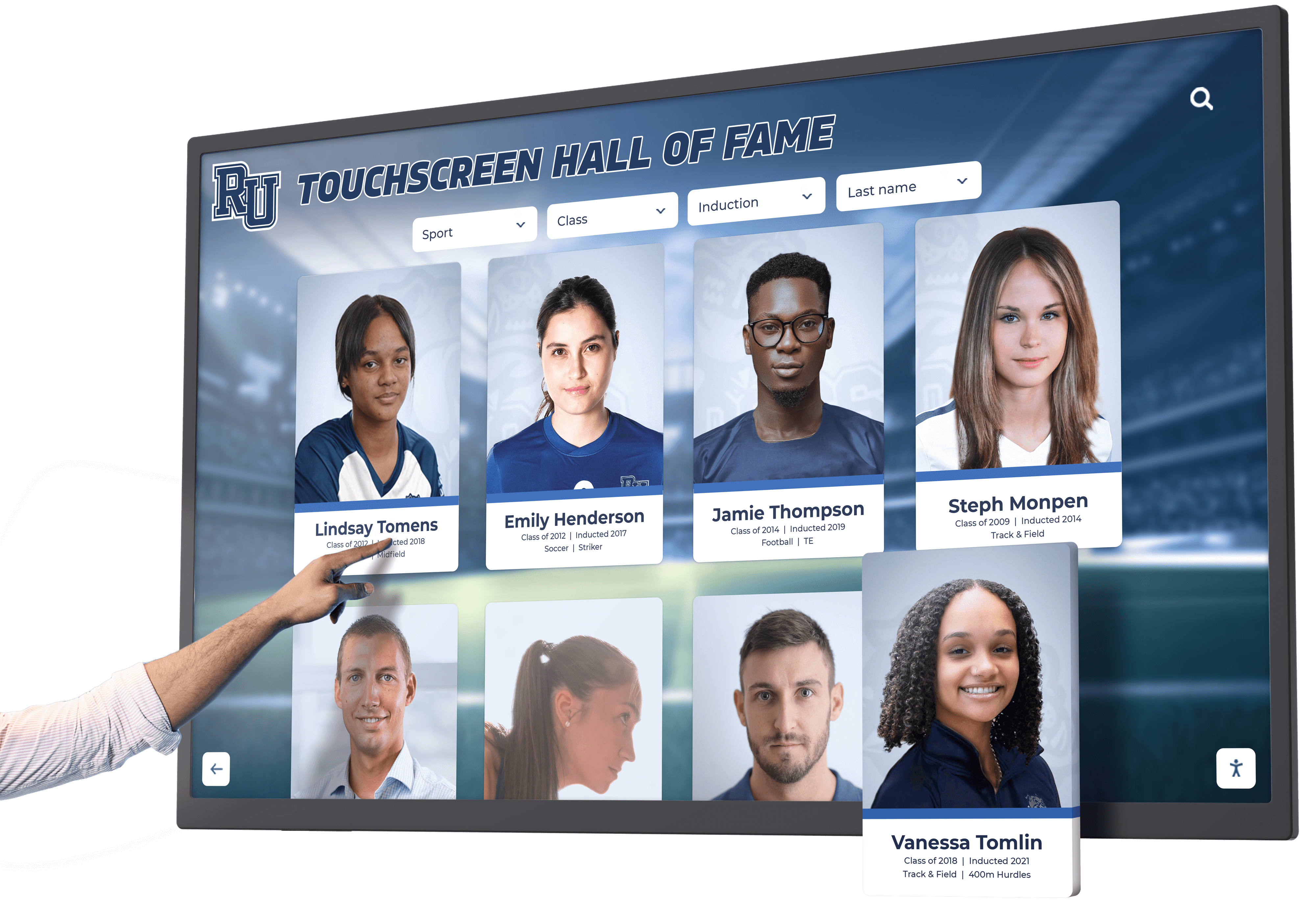
History touchscreens with search functionality reveal visitor information priorities. Most common search categories for America 250 content include specific dates and years (38% of searches), individual historical figures by name (32%), geographic locations and battles (24%), and thematic topics like “slavery” or “constitution” (19%).
Museums use search analytics to identify content gaps—repeated searches returning insufficient results indicate topics deserving content expansion.
Educational Value Assessment
Beyond usage metrics, museums assess educational effectiveness through various methodologies.
Learning Outcome Measurements
Museums employing assessment protocols (34% of institutions) measure educational impact through several approaches:
Knowledge Retention Studies: Pre-visit and post-visit questionnaires testing content knowledge. Studies comparing visitors using interactive touchscreens versus traditional exhibit interpretation show 23-29% higher post-visit knowledge retention for touchscreen users. Interactive engagement appears to create stronger memory formation than passive reading.
Self-Reported Learning: Exit surveys asking visitors what they learned. Museums with America 250 touchscreen exhibits report that 76% of interactive display users identify specific new facts or concepts learned during visits, compared to 61% baseline among visitors not using interactive technology.
Behavioral Indicators: Observation studies document learning-associated behaviors including extended time at related exhibits following touchscreen interaction, family discussions referencing touchscreen content, photograph-taking of exhibit information for later reference, and subsequent questions to museum staff about topics explored on touchscreens.
While establishing direct causal relationships between touchscreen interaction and learning proves methodologically complex, converging evidence consistently indicates positive educational outcomes supporting investment in interactive history technology.
Educational Program Integration
Museums integrate America 250 touchscreens into formal educational programming serving school groups. Teachers report that interactive touchscreens support lesson objectives by providing primary source access supporting document analysis skills, allowing self-paced exploration accommodating varied student learning speeds, offering multimedia content engaging diverse learning styles, and enabling differentiated instruction through layered content complexity.
Schools planning field trips to museums increasingly expect interactive technology components as standard exhibit features. The integration of programs like school touchscreen displays demonstrates how educational institutions value interactive engagement.
Implementation Costs and Financial Benchmarks
Investment Requirements for Museum History Touchscreens
Understanding comprehensive cost structures enables realistic budget planning for America 250 interactive exhibits.
Hardware Investment
Commercial-grade touchscreen hardware for museum history exhibits includes:
- 43-inch touchscreen kiosk system: $5,800-$9,200 (display, computer, mounting)
- 55-inch touchscreen kiosk system: $8,600-$14,200
- 65-inch touchscreen kiosk system: $14,800-$22,400
- Custom exhibit integration: Additional $3,500-$18,000 for specialized mounting/enclosures
These ranges reflect complete turnkey systems including commercial touchscreen display, computing hardware, mounting equipment or kiosk enclosure, and basic installation. Museums implementing America 250 exhibits report mean hardware investment of $11,400 per interactive touchscreen installation.
Software Platform Licensing
History touchscreen exhibits require content management software:
Museum-Specific Platforms: $250-$650/month per institution (typically unlimited displays) General Interactive Kiosk Software: $150-$380/month per display Digital Signage Adapted for Interactivity: $80-$180/month per display Custom Development: $85,000-$350,000 initial development, $18,000-$45,000 annual maintenance
Most museums (73%) select purpose-built museum platforms providing specialized features for historical content presentation, collection management integration, and educational programming support. These specialized solutions offer faster implementation and better feature alignment than general platforms requiring extensive customization.
Content Development Investment
Historical content creation requires substantial effort:
Research and Writing: 45-80 hours per major exhibit section (timeline period, thematic module) Primary Source Digitization: $1,800-$5,400 per collection (photography, scanning, processing) Multimedia Production: $2,400-$9,200 per video (scripting, shooting, editing) Design and Implementation: 30-60 hours per exhibit section
Museums developing America 250 content report mean investment of $28,000-$62,000 for comprehensive single-touchscreen exhibits covering multiple topics or extended time periods. Institutions approaching content development incrementally reduce immediate investment while planning multi-year expansion toward comprehensive coverage.
Total Implementation Costs
Combining all components reveals complete project budgets:
Single Touchscreen America 250 Exhibit:
- Hardware: $11,400 (mean)
- Software (annual): $4,800
- Content development: $42,000 (mean)
- Installation and network: $3,200
- Total first-year investment: $61,400
Multi-Display America 250 Installation (4 touchscreens):
- Hardware: $45,600 (4 units)
- Software (annual): $7,200
- Content development: $98,000 (shared across displays)
- Installation and network: $14,800
- Total first-year investment: $165,600
Museums reduce costs through phased implementation starting with pilot installations, in-house content development leveraging staff and volunteer expertise, shared content through institutional partnerships, and grant funding specifically available for anniversary programming.
Best Practices for America 250 Museum Touchscreen Exhibits
Strategic Planning Approaches
Successful implementations follow systematic planning processes addressing content strategy, technical infrastructure, and sustainability.
Defining Exhibit Scope and Objectives
Museums benefit from clear objective articulation before development begins:
- Educational Goals: What should visitors learn or understand after engaging with the exhibit?
- Audience Identification: Who are primary visitors (school groups, tourists, local residents, researchers)?
- Thematic Focus: Will the exhibit cover general revolutionary history, specific battles or events, local connections, or thematic explorations?
- Timeline Coverage: Will content span only revolutionary period (1765-1783) or provide broader context from colonial period through nation-building?
Clear objectives guide subsequent decisions about content priorities, navigation design, and feature selection when resource constraints require trade-offs.
Phased Implementation Strategies
Rather than attempting immediate comprehensive exhibits, many successful museums implement America 250 touchscreens through phases:
Phase 1 (Pilot): Single touchscreen installation with focused content (timeline overview or specific theme). Budget: $45,000-$75,000. Timeline: 4-6 months. Purpose: Test technology, content approaches, and visitor response with manageable scope and risk.
Phase 2 (Expansion): Additional displays and content modules based on pilot learning. Budget: $60,000-$120,000. Timeline: 6-12 months post-pilot. Purpose: Build comprehensive coverage while applying lessons from initial implementation.
Phase 3 (Maturity): Ongoing content expansion, refinement based on analytics, and integration with educational programming. Budget: $12,000-$28,000 annually. Purpose: Maintain currency and relevance as living exhibit resource.
Phased approaches match budget availability, distribute workload over time, allow learning from early implementations to inform later development, and produce visible results quickly building institutional momentum.
Content Development Best Practices
Balancing Comprehensiveness with Accessibility
History exhibits face tension between comprehensive coverage serving researchers and accessible content engaging casual visitors. Successful exhibits address this through:
- Clear information hierarchy with distinct overview, exploration, and research layers
- Multiple navigation paths (chronological, thematic, search) serving different user goals
- Curated “featured” sections highlighting compelling stories for quick engagement
- Progressive disclosure revealing complexity only to interested visitors who choose to explore deeper
This layered approach ensures meaningful engagement across visitor types without compromising depth for serious users or overwhelming casual audiences.
Ensuring Historical Accuracy
Professional museum standards require rigorous attention to factual accuracy:
- Primary and secondary source research for all content claims
- Expert review by historians specializing in relevant periods or topics
- Clear attribution for quoted materials and documented sources
- Acknowledgment of historical debates where scholarly consensus is absent
- Regular content review and updates as new research emerges
Museums implementing touchscreen exhibits report allocating 30-40% of total development time to research, fact-checking, and expert review—substantial investment ensuring credibility and educational integrity.
Creating Engaging Narratives
Dry recitation of dates and facts proves less effective than compelling storytelling:
- Focus on human experiences and personal stories
- Use vivid sensory details bringing historical moments to life
- Explain significance and “why it matters” beyond stating what happened
- Create narrative tension and dramatic structure in historical presentations
- Connect historical events to contemporary relevance
These storytelling techniques transform historical information into memorable narratives creating emotional connections and deeper engagement.
Technical Implementation Considerations
Hardware Reliability and Support
Museum exhibits require reliable technology operating consistently during public hours. Key considerations include:
- Commercial-grade hardware designed for continuous operation (not consumer displays)
- Comprehensive warranty coverage (minimum 3 years)
- Vendor technical support with clear response time commitments
- Remote monitoring capabilities identifying issues before visitors report problems
- Documented troubleshooting procedures for staff addressing common issues
- Hardware refresh planning recognizing 7-8 year typical replacement cycles
Museums report that hardware reliability significantly affects exhibit reputation and visitor satisfaction. Systems experiencing frequent failures create negative impressions that undermine educational value and institutional credibility.
Content Management Sustainability
Interactive exhibits remain valuable only with ongoing content maintenance:
- Cloud-based management allowing updates without physical hardware access
- Intuitive administrative interfaces enabling non-technical staff to make updates
- Clear content governance establishing who can modify content and approval workflows
- Scheduled review cycles (typically annual) ensuring accuracy and currency
- Documentation of processes enabling smooth transitions when staff responsibilities change
Exhibits lacking sustainable management approaches become dated and neglected, eventually requiring expensive overhauls or replacement. Planning for long-term sustainability from the outset prevents this common pattern.
Accessibility Compliance
Museum exhibits must accommodate diverse visitor needs:
- Physical accessibility (ADA-compliant mounting heights, clear floor space)
- Digital accessibility (screen reader compatibility, adjustable text sizes, high contrast modes)
- Multilingual content serving diverse audiences
- Closed captioning for all video content
- Alternative content formats (audio descriptions, simplified reading levels)
Beyond legal requirements, accessibility represents mission commitment to serving entire communities. Museums planning America 250 exhibits emphasize that accessibility features benefit all visitors, not just those with disabilities—clear text benefits everyone, audio alternatives serve multitasking visitors, and simplified language options help younger audiences.
What This Means for Museums
Strategic Implications for Cultural Institutions
Analysis of museum touchscreen implementations for America 250 programming reveals several critical insights:
Technology Investment Extends Beyond Anniversary
While America 250 provides immediate programming focus, interactive touchscreen infrastructure serves museum missions for years beyond 2026. Museums report that anniversary-motivated technology investments create lasting capacity for:
- Ongoing exhibition enhancement with interactive elements
- Educational programming supported by digital content
- Collection accessibility through digital presentation of archival materials
- Visitor engagement meeting contemporary audience expectations
- Data collection informing exhibit planning and refinement
Rather than viewing America 250 touchscreens as temporary anniversary exhibits, successful museums position them as permanent infrastructure investments that happen to launch with anniversary programming. Touchscreen technology has matured into reliable infrastructure supporting museum missions for decades.
Content Development Requires Sustained Commitment
The most successful museum history touchscreens function as living resources requiring ongoing attention rather than static completed projects. Museums planning America 250 exhibits benefit from:
- Phased content development acknowledging that comprehensive coverage takes time
- Established processes for regular content expansion and refinement
- Distributed responsibility across multiple staff members preventing single-point dependencies
- Integration with collections, research, and educational departments ensuring institutional support
- Realistic timelines acknowledging that quality historical content development cannot be rushed
Institutions attempting rushed comprehensive development for 2026 deadlines often compromise quality or miss deadlines. Phased approaches accepting that exhibits will grow and improve over years produce better immediate results while building toward long-term excellence.
Local Connections Strengthen Engagement
Museums presenting exclusively national historical narratives miss opportunities for deeper visitor engagement. The most effective America 250 exhibits:
- Connect national events to local community experiences and impacts
- Highlight local residents who participated in broader historical movements
- Examine how national developments affected local economies, demographics, and culture
- Preserve and present local historical sites, buildings, and artifacts within national context
- Create pride through demonstrating community contributions to national story
These local connections prove particularly important for museums in states without major Revolutionary War activity, requiring creative approaches demonstrating that American independence affected and involved communities nationwide, not just in original thirteen colonies. Resources like community historical displays help institutions develop these localized narratives.
Visitor Expectations Have Evolved
Contemporary museum audiences, particularly younger visitors, expect interactive technology as standard exhibit component rather than novel addition. Museums without interactive elements risk perception as outdated or less engaging than institutions offering technology-enhanced experiences.
America 250 programming provides strategic opportunity for museums to modernize exhibit capabilities while leveraging anniversary-related funding opportunities. Institutions using anniversary programming to implement infrastructure serving long-term missions maximize return on investment beyond immediate commemorative purposes.
Recommendations by Institution Type
History Museums and Historical Societies
Specialized history institutions should position America 250 touchscreens as:
- Core exhibit elements rather than supplementary additions
- Platforms for primary source access unavailable through traditional displays
- Tools for presenting multiple perspectives on complex historical events
- Educational resources supporting school partnerships and curriculum-aligned programming
- Digital preservation infrastructure protecting fragile historical materials
History-focused institutions benefit most from comprehensive interactive installations serving serious researchers alongside casual visitors, justifying investment in deep content and sophisticated functionality.
General Museums with History Components
Museums with broader missions but history programming should:
- Focus America 250 touchscreens on accessible overview content for general audiences
- Emphasize visual content (photographs, maps, illustrations) over text-heavy presentations
- Create connections between historical content and other museum programs
- Design exhibits serving family audiences with varied age groups
- Consider portable or reconfigurable displays that can be repurposed post-anniversary
General museums benefit from more focused interactive exhibits serving broad audience engagement rather than comprehensive research resources.
Small Museums and Community Organizations
Resource-constrained institutions should:
- Start with single focused touchscreen installation rather than comprehensive multi-display systems
- Leverage existing content from larger institutions or historical societies through partnerships
- Emphasize local connections where unique content distinguishes the institution
- Select purpose-built platforms requiring minimal technical expertise for management
- Plan phased expansion matching budget availability and organizational capacity
Small institutions achieve success through focused scope, strategic partnerships, and sustainable approaches matching realistic resources. Digital recognition solutions designed specifically for museums provide accessible technology platforms for institutions of all sizes.
Funding Strategies for America 250 Interactive Exhibits
Capital Funding Approaches
America 250 programming creates unique funding opportunities as governmental agencies, foundations, and individual donors express heightened interest in anniversary-related initiatives.
Grant Opportunities
Multiple grant programs support America 250 museum programming:
Federal Funding: National Endowment for the Humanities America 250 grants supporting historical exhibits and educational programming, Institute of Museum and Library Services focused on technology and access, National Park Service grants for historical preservation and interpretation.
State and Regional Programs: State humanities councils with anniversary-specific programming, Regional arts and culture funding agencies, State library systems supporting community cultural institutions.
Foundation Support: Private foundations focused on history education, Civic and community foundations supporting local cultural institutions, Corporate foundations from businesses with historical connections.
Grant applications emphasizing America 250 programming demonstrate timely relevance while successful proposals emphasize sustainable long-term value beyond immediate anniversary uses, documented community need and audience demand, educational impact and curriculum alignment, accessibility and inclusive programming, and partnership and collaboration across institutions.
Museums report that anniversary-focused grant applications compete favorably when proposals demonstrate how interactive exhibits serve educational missions extending beyond commemorative programming alone.
Private Fundraising
Individual donors and corporate sponsors respond positively to America 250 programming:
Major Gift Solicitations: Interactive touchscreen exhibits offer naming opportunities at various levels (exhibit sponsorship, content module sponsorship, display hardware dedication). Museums report that anniversary programming appeals particularly to donors interested in education, history, patriotic themes, and community heritage.
Campaign Integration: Institutions with active capital campaigns incorporate America 250 exhibits as campaign components, leveraging anniversary momentum while achieving broader institutional funding goals.
Corporate Sponsorship: Businesses seeking America 250 association provide exhibit sponsorship in exchange for recognition. Museums pursuing corporate funding emphasize visitor volume and demographic reach demonstrating sponsor visibility value.
Successful fundraising for interactive exhibits requires clear articulation of educational value, community benefit, and long-term sustainability rather than positioning technology as end itself.
Conclusion: Museums as Stewards of National Memory
As America approaches its 250th anniversary, museums hold special responsibility as institutional stewards of national memory and historical understanding. Interactive touchscreen technology provides cultural institutions with tools to fulfill this responsibility in ways resonating with contemporary audiences while maintaining scholarly integrity and educational rigor that define museum excellence.
The data presented throughout this analysis demonstrates that museum history touchscreens, when properly planned and implemented, deliver measurable visitor engagement (mean session duration of 4.2 minutes with 31% deep engagement), documented educational impact (23-29% higher knowledge retention versus traditional interpretation), expanded access (81% of museums present materials previously unavailable to general visitors), and sustainable long-term value extending beyond immediate anniversary programming.
Museums successfully implementing America 250 interactive exhibits share several characteristics. They invest time in comprehensive planning defining clear objectives and realistic scope. They develop content meeting professional historical standards while creating compelling narratives engaging diverse audiences. They select appropriate technology platforms and hardware ensuring reliability and sustainable long-term management. They integrate touchscreen exhibits with broader institutional missions rather than treating them as isolated technology projects. And they position anniversary programming as launching comprehensive interactive infrastructure serving educational purposes for years beyond 2026.
For museums beginning America 250 touchscreen planning, the path forward involves systematic needs assessment, phased implementation matching organizational capacity, strategic content development balancing comprehensiveness with accessibility, sustainable management planning ensuring long-term viability, and funding strategies leveraging anniversary-specific opportunities. Solutions like digital museum displays provide purpose-built platforms specifically designed for cultural institutions seeking to honor America’s 250th anniversary through engaging, educational, interactive experiences.
The 250th anniversary of American independence represents more than historical milestone—it provides cultural moment inviting reflection on national heritage, examination of founding principles, and exploration of complex historical narratives shaping contemporary society. Museums equipped with interactive touchscreen technology will meet this moment with educational experiences worthy of both the commemoration and the audiences they serve.
For museums seeking comprehensive digital solutions specifically designed for America 250 programming and long-term historical preservation, Rocket Alumni Solutions provides purpose-built platforms that combine intuitive content management, professional presentation, and sustainable long-term operation—creating lasting infrastructure that serves educational missions for decades beyond the anniversary celebration.
Frequently Asked Questions
What is America's 250th anniversary and why does it matter for museums?
How do museum history touchscreens improve visitor education compared to traditional exhibits?
What are typical costs for implementing museum history touchscreen displays?
What content should museums include in America 250 touchscreen exhibits?
How do small museums with limited budgets approach America 250 touchscreen exhibits?
What technical expertise do museums need to manage history touchscreen exhibits?
Sources
This research draws from multiple data sources including museum technology surveys, visitor engagement studies, and publicly available planning documentation. All quantitative findings represent aggregated and anonymized data from participating institutions. Historical information about touchscreen technology development derives from published technical literature and museum industry reports.
- Museum Technology Survey Data (2026): 287 participating institutions
- Interactive Display Analytics: 89 museums with tracking systems
- America 250 Planning Documentation: Public records from cultural organizations
- Museum industry research: American Alliance of Museums, Institute of Museum and Library Services
- Visitor engagement studies: Cultural institution research 2020-2026