



The transition from student to professional remains one of the most challenging phases in any graduate’s life. Despite years of academic preparation, many recent graduates struggle with fundamental career questions: How do I translate my degree into practical opportunities? What skills matter most in the real world? How do I navigate workplace politics and professional relationships?
Alumni who have successfully made this transition possess invaluable wisdom that can dramatically shorten learning curves and prevent costly early-career mistakes. Yet most graduates never access this guidance, either because they don’t know how to find mentors or because their institutions lack structured alumni engagement systems connecting experienced professionals with those just starting out.
This guide examines what successful alumni consistently advise new graduates, explores how institutions facilitate these connections through mentorship infrastructure, and analyzes the systems that transform occasional advice into sustained professional development support throughout alumni careers.
The Most Valuable Alumni Advice for Recent Graduates
Successful alumni consistently emphasize similar themes when advising recent graduates—insights gained through years of professional experience that prove far more valuable than abstract academic knowledge.
Your First Job Doesn’t Define Your Career
Many recent graduates experience paralysis searching for “perfect” first positions that align precisely with long-term career aspirations. Experienced alumni consistently counsel that first jobs serve primarily as learning opportunities rather than permanent commitments.
According to Bureau of Labor Statistics data, the average worker changes jobs 12 times throughout their career, with the highest frequency occurring in the first five years after graduation. Successful alumni advise focusing on organizations offering strong training, supportive managers, and skill development opportunities rather than obsessing over job titles or exact role descriptions.
The skills acquired in early positions—professional communication, project management, stakeholder relationships, and workplace adaptability—prove transferable across industries and roles. Alumni emphasize that lateral moves, industry changes, and career pivots become increasingly common, making adaptability more valuable than finding an immediate “perfect fit.”
Relationships Matter More Than Credentials
While academic credentials open initial doors, alumni universally emphasize that professional relationships determine long-term career trajectories. The colleagues you develop strong working relationships with today become tomorrow’s references, collaborators, clients, or employers.
Research from sociologist Mark Granovetter’s “strength of weak ties” theory demonstrates that approximately 70% of jobs come through personal networks rather than traditional applications. Alumni who maintain diverse professional networks report significantly more career opportunities, faster promotions, and higher compensation compared to those who remain isolated.
Practical relationship-building advice from successful alumni includes treating everyone with respect regardless of position or status, staying in touch with former colleagues and classmates through occasional check-ins, offering help before asking for favors, and participating in professional associations and alumni communities where organic networking occurs naturally. Alumni engagement platforms increasingly facilitate these connections by creating searchable directories enabling graduates to discover fellow alumni working in relevant fields or geographic locations.
Continuous Learning Outweighs Your Degree
Alumni consistently emphasize that formal education represents the beginning rather than the conclusion of professional learning. In rapidly evolving industries, the shelf life of specific technical skills continues decreasing, making continuous learning essential for sustained career relevance.
According to research from the World Economic Forum’s Future of Jobs Report, 50% of all employees will need reskilling by 2026 as technology adoption accelerates. Successful alumni advise developing learning habits early—reading industry publications regularly, pursuing relevant certifications, attending conferences and workshops, learning from colleagues with different expertise, and staying curious about emerging trends affecting your field.
Many institutions now offer alumni continuing education programs providing graduates with ongoing access to professional development resources, online courses, and workshops that extend educational relationships well beyond graduation.
Failure Provides Your Best Education
Perhaps the most consistent message from successful alumni: early career setbacks represent normal, valuable learning experiences rather than catastrophic failures. Nearly every accomplished professional experienced significant disappointments—failed projects, missed promotions, job terminations, or business ventures that didn’t succeed.
The difference between those who ultimately succeed and those who stagnate often relates to how they respond to setbacks. Alumni advise reframing failures as data points providing information about what doesn’t work, opportunities to develop resilience and problem-solving skills, and chances to reassess whether current paths align with genuine interests and strengths.
Research published in the Journal of Vocational Behavior found that professionals who experienced and recovered from early career setbacks reported higher long-term job satisfaction and career achievement compared to those with uninterrupted success trajectories. The resilience developed through navigating challenges proves more valuable than avoiding difficulties entirely.
Clarity Comes Through Action, Not Planning
Recent graduates often delay career decisions seeking perfect clarity about long-term goals before taking action. Experienced alumni consistently advise the opposite approach: clarity emerges through experimentation and experience rather than extensive planning.
You cannot fully understand what you enjoy, what you’re good at, or what you want until you’ve tried multiple things and gathered real-world data about your preferences and abilities. Alumni recommend trying roles that seem interesting even without certainty, taking on projects outside your comfort zone, volunteering for assignments that stretch your capabilities, and remaining open to unexpected opportunities that don’t align with predetermined plans.
Career counseling research supports this action-oriented approach. Stanford psychologist John Krumboltz’s “planned happenstance theory” demonstrates that successful careers often result from being open to unplanned opportunities rather than following rigid predetermined plans. Alumni who embrace experimentation report higher career satisfaction than those who remain paralyzed seeking certainty before acting.
Work-Life Integration Requires Active Management
Alumni consistently caution that healthy work-life balance doesn’t happen automatically—it requires active boundary-setting and conscious decision-making, particularly early in careers when establishing professional reputations.
While hard work and dedication matter, alumni warn against sacrificing health, relationships, and personal wellbeing for professional achievement. Burnout doesn’t just reduce current productivity; it creates long-term consequences affecting career sustainability and life satisfaction.
According to research from the American Psychological Association, chronic workplace stress contributes to substantial health problems, reduced productivity, and higher turnover. Alumni advise establishing sustainable work patterns early—setting boundaries around availability, prioritizing health and relationships, learning to decline non-essential commitments, and recognizing that long-term career success requires sustainable pacing rather than unsustainable sprints.
How Alumni Mentorship Programs Deliver Career Guidance
While individual alumni advice proves valuable, structured mentorship programs systematize knowledge transfer, ensuring consistent guidance reaches graduates who need it most.
The Structure of Effective Alumni Mentorship
Successful programs balance structure with flexibility, providing frameworks that facilitate meaningful connections without becoming overly bureaucratic or time-consuming for busy professionals.
Effective programs typically include clear matching processes pairing mentors and mentees based on career interests, geographic proximity, or specific skill development goals. Structured frameworks suggest meeting frequency, conversation topics, and relationship milestones without becoming prescriptive. Time-bounded commitments spanning 6-12 months create manageable expectations while allowing natural extension when relationships prove particularly valuable.
According to research from the International Journal of Evidence Based Coaching and Mentoring, structured mentorship programs demonstrate significantly better outcomes compared to informal arrangements. Participants in formal programs report 23% higher goal achievement rates and 34% greater satisfaction compared to those with informal mentoring relationships lacking structure or institutional support.
Programs offering training for mentors ensure alumni understand effective mentoring practices, avoiding common pitfalls like being overly directive rather than facilitative, failing to establish clear expectations, or allowing relationships to drift without purposeful engagement.
Digital Platforms Enabling Alumni Connection
Modern mentorship increasingly relies on technology platforms facilitating discovery, communication, and relationship management between alumni mentors and recent graduates.
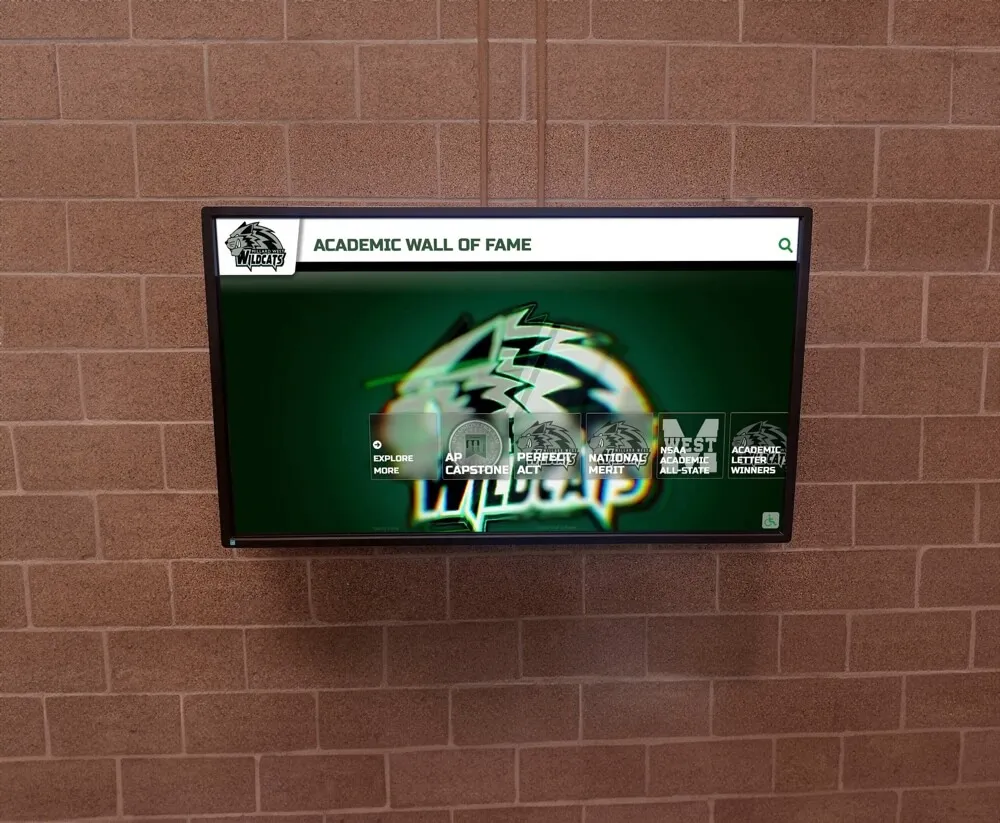
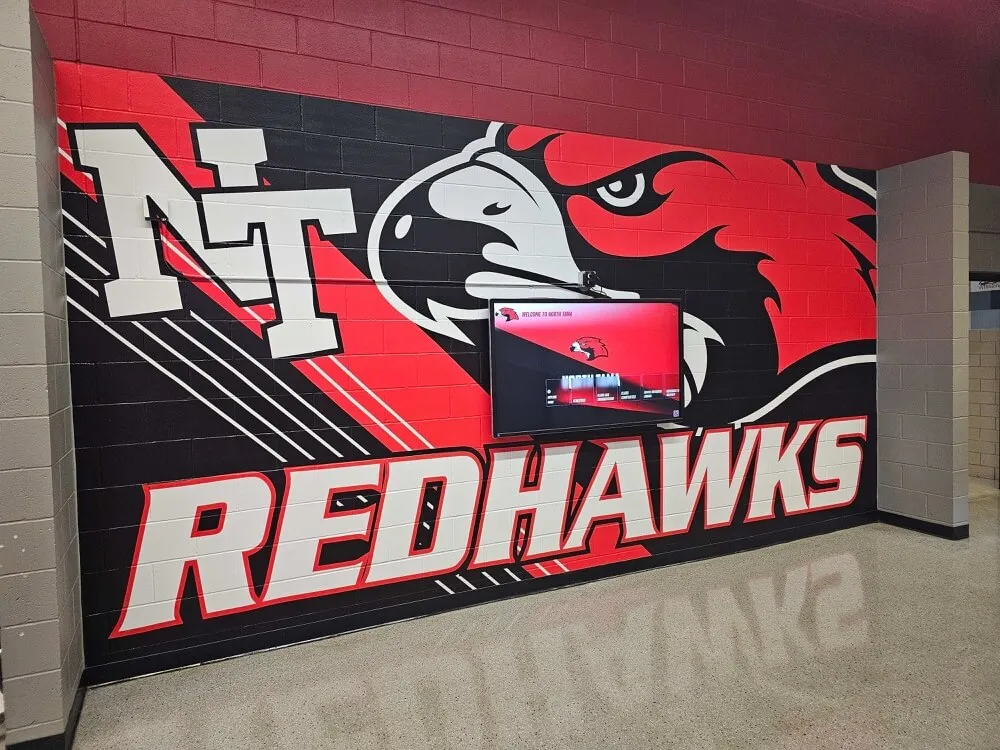
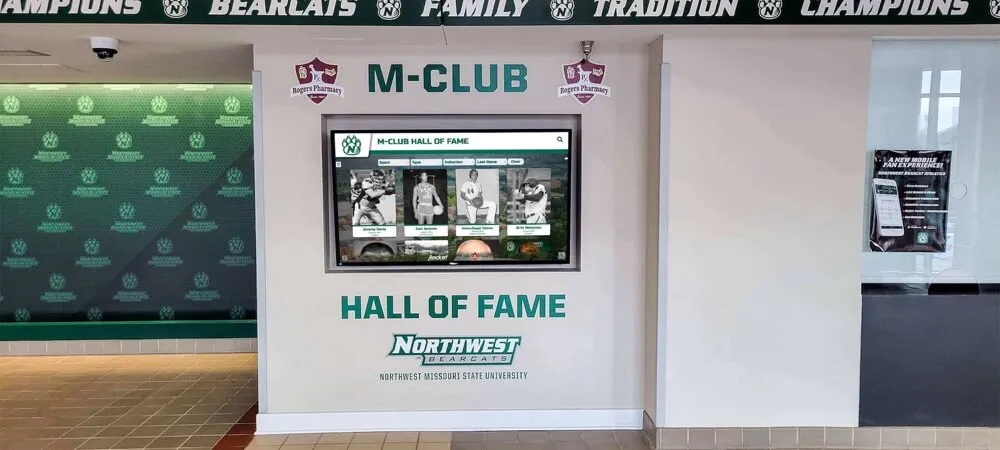
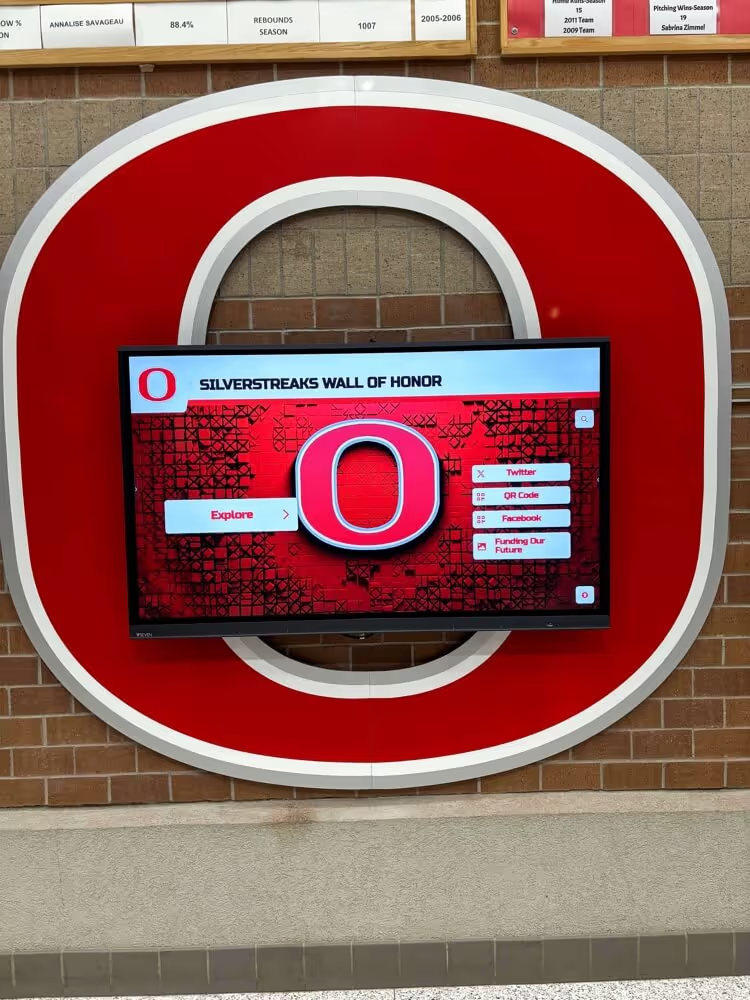
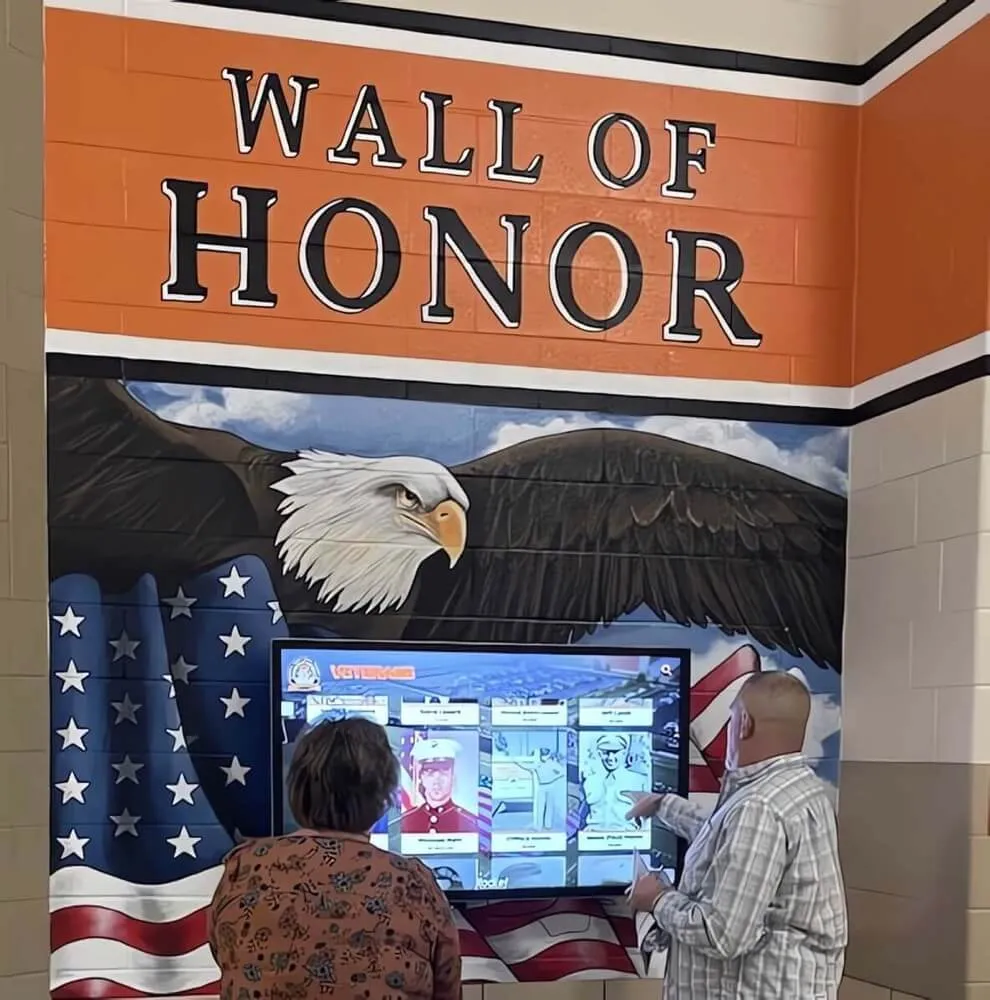
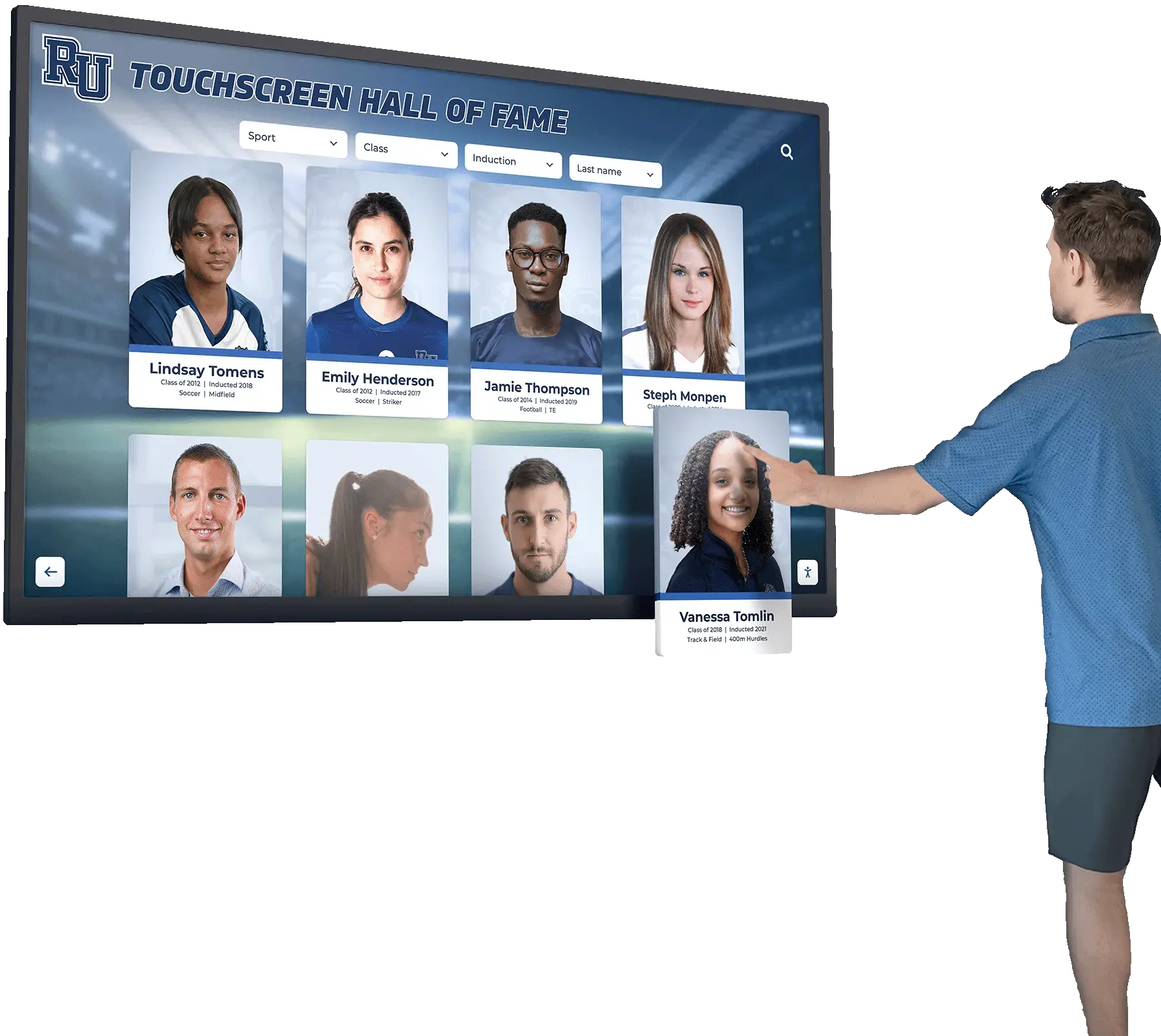
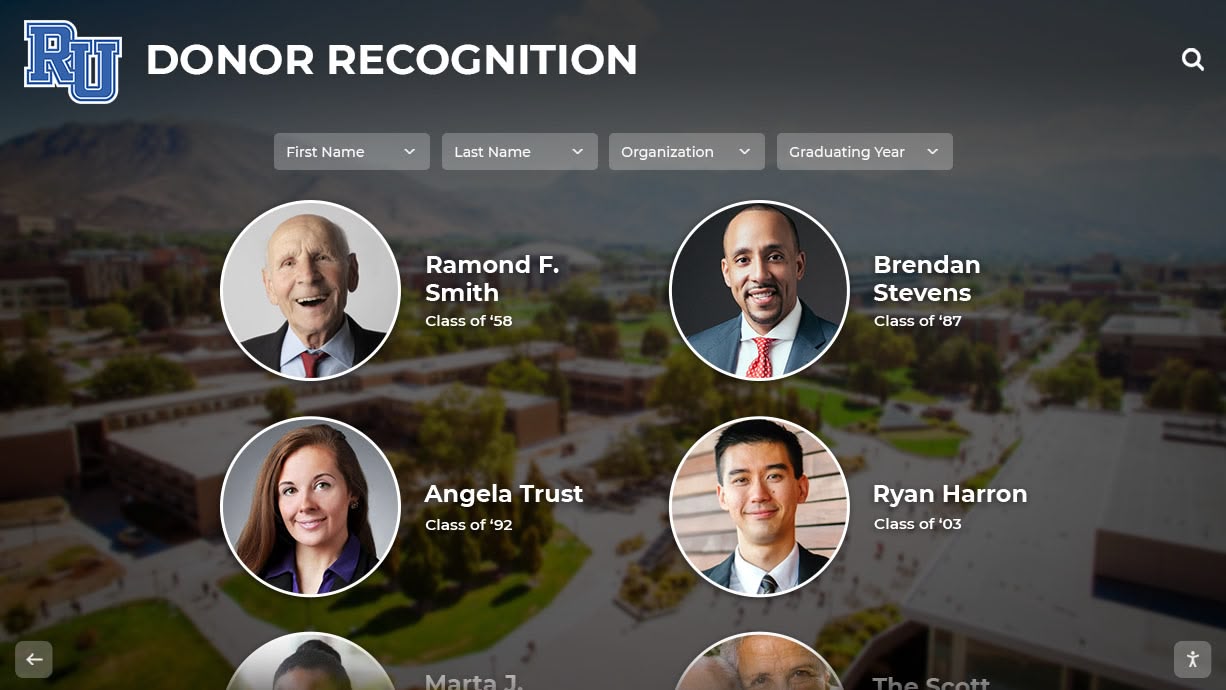
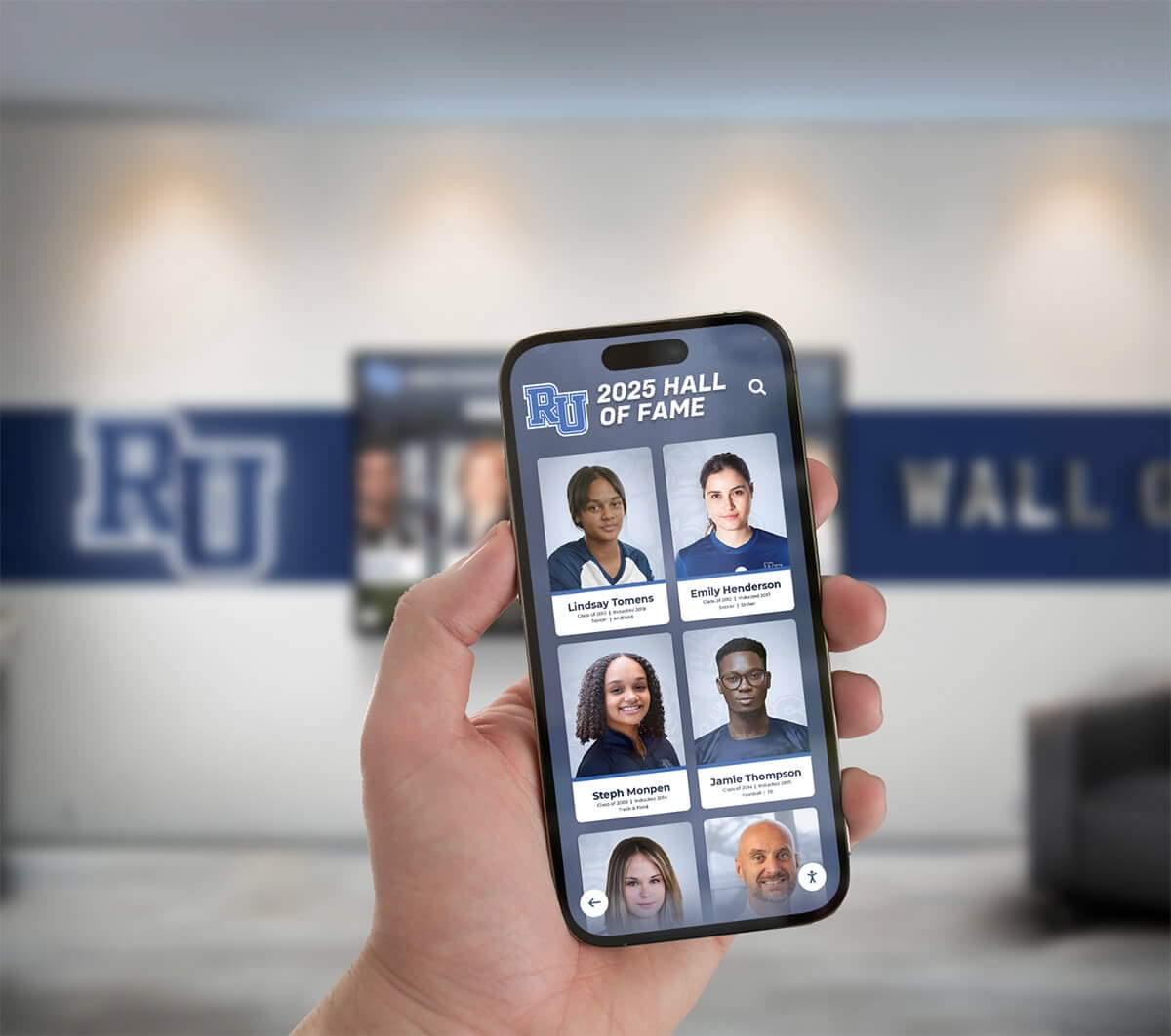
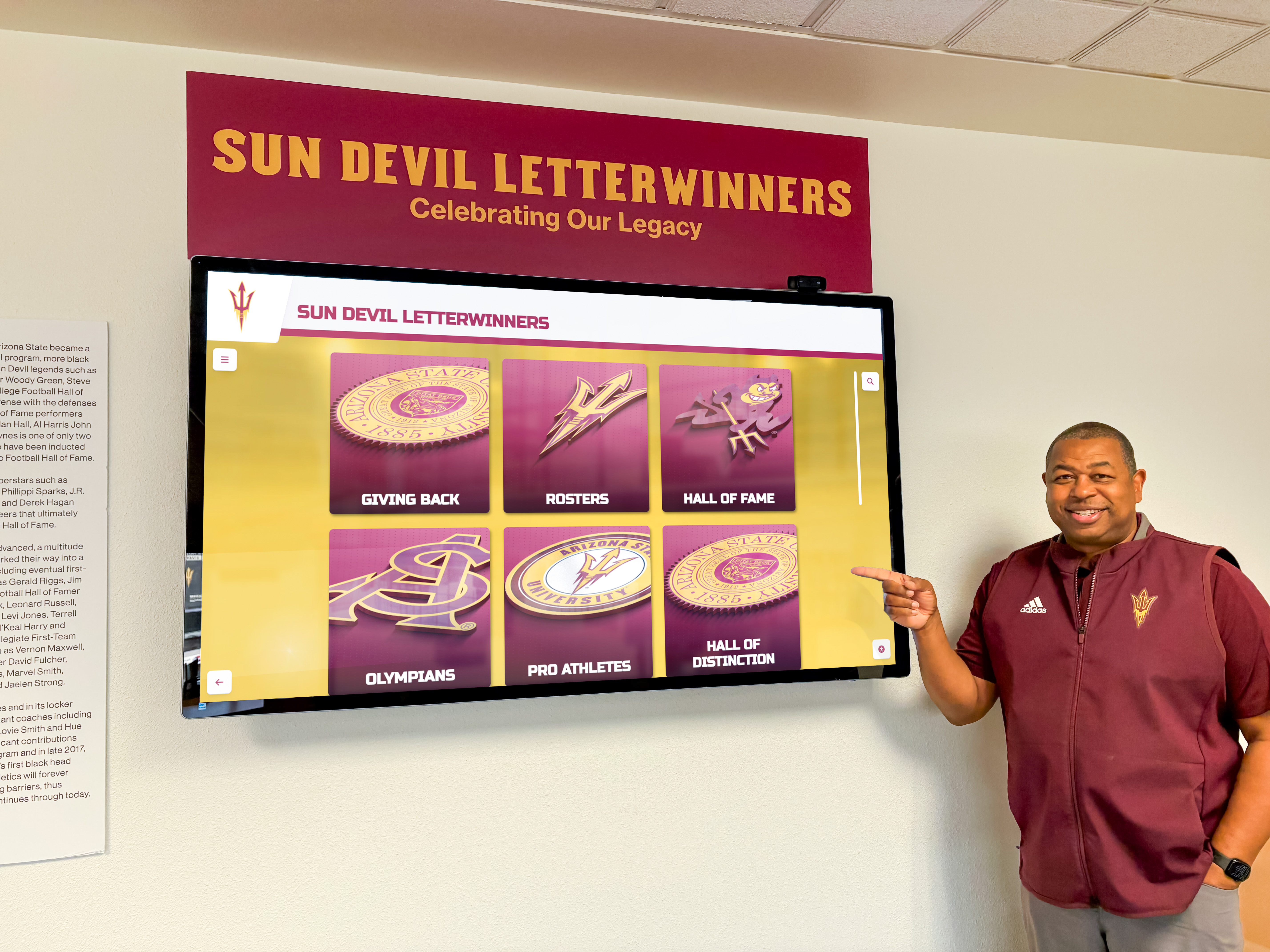
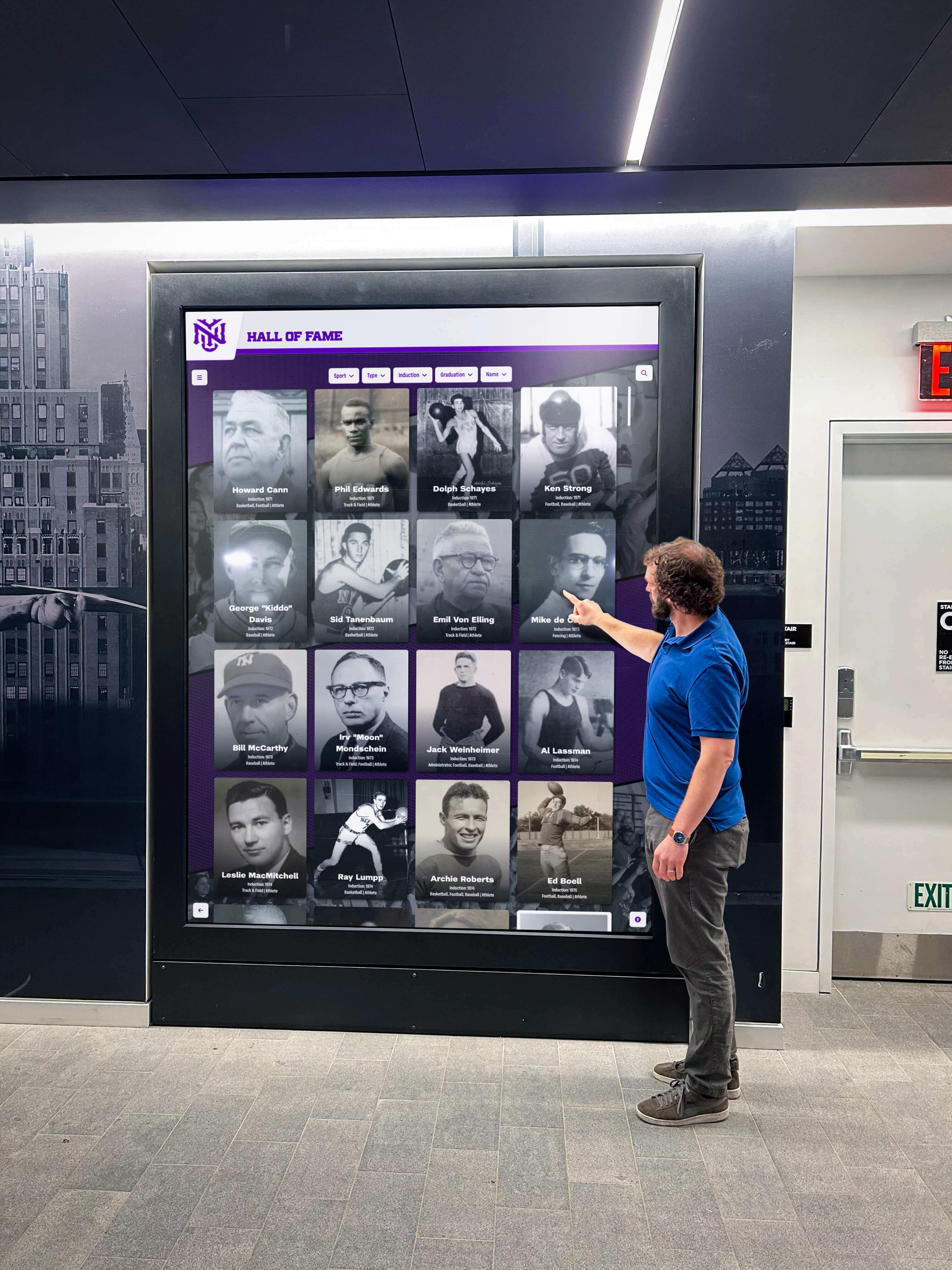
Searchable alumni directories enable students and recent graduates to identify potential mentors based on industry, job function, geographic location, or career trajectory. Interactive alumni discovery boards installed on campuses allow current students to explore successful alumni working in fields they’re considering, viewing career progressions, reading advice, and reaching out for informational interviews or mentorship.
Virtual communication tools eliminate geographic barriers that previously limited mentorship to alumni living near campus. Video conferencing, messaging platforms, and collaborative tools enable rich mentorship relationships regardless of physical location, dramatically expanding the pool of potential mentors available to any graduate.
Analytics and tracking features help institutions monitor program health—identifying active relationships, measuring engagement levels, gathering feedback from participants, and demonstrating program value through concrete metrics rather than anecdotal evidence.
Measuring Mentorship Program Success
Institutions with sustainable mentorship programs establish clear metrics demonstrating value to administrators, alumni volunteers, and current students evaluating participation.
Common success indicators include participation rates showing what percentage of eligible students and alumni actively engage, relationship longevity indicating average mentorship duration, satisfaction scores from both mentors and mentees, career outcome improvements comparing mentored versus non-mentored graduates, and alumni engagement increases as mentorship participants often become more involved in other institutional programs.
According to data from CASE (Council for Advancement and Support of Education), institutions with robust mentorship programs report 35-50% higher alumni giving participation rates compared to those lacking structured mentorship initiatives. The engagement created through meaningful mentorship relationships extends beyond the program itself, increasing likelihood that mentors remain involved through other volunteer activities, event attendance, and philanthropic support.
Industry-Specific Alumni Advice Patterns
While general career guidance applies broadly, successful alumni in different sectors emphasize field-specific insights that prove particularly valuable for graduates entering those industries.
Technology and Engineering Fields
Alumni in technology sectors consistently emphasize that practical skills demonstrated through portfolios, GitHub repositories, or completed projects matter far more than academic pedigree alone. Technical interviews focus heavily on problem-solving ability and coding proficiency rather than where you studied or your GPA.
Continuous learning proves especially critical in rapidly evolving technical fields. Technologies popular during undergraduate education often become outdated within 5-7 years, requiring ongoing skill development to remain professionally relevant. Alumni advise developing learning agility—the ability to quickly acquire new technical skills—as more valuable than mastery of any specific programming language or framework.
Open source contributions, technical blogging, and participation in developer communities help establish professional credibility while creating portfolios demonstrating practical abilities to potential employers. Alumni emphasize that technical careers require balancing deep technical expertise with communication skills enabling effective collaboration with non-technical stakeholders.
Business and Finance Sectors
Alumni in business fields emphasize that analytical skills and quantitative comfort prove essential even for non-finance roles. Understanding financial statements, data analysis, and business metrics enables more strategic decision-making regardless of specific job function.
Professional presentation and communication skills receive particular emphasis. The ability to distill complex information into clear, persuasive presentations for various audiences—executives, clients, cross-functional teams—often determines who advances into leadership positions.
Networking proves especially important in business sectors where relationships frequently drive opportunity. Alumni advise maintaining visibility within organizations through cross-functional projects, volunteering for high-profile initiatives, and developing relationships with senior leaders who can sponsor career advancement.
Healthcare and Medical Professions
Alumni in healthcare emphasize resilience and emotional intelligence given the demanding nature of medical careers. Clinical competence matters fundamentally, but the ability to manage stress, maintain empathy despite difficult circumstances, and communicate effectively with patients and families often determines professional satisfaction and success.
Continuing medical education requirements formalize what applies across industries—professional learning must continue throughout careers. Alumni advise developing habits around staying current with medical literature, attending conferences, and pursuing specializations that align with genuine interests rather than simply selecting the most prestigious or lucrative options.
Work-life balance challenges require particular attention in healthcare given the intensity and unpredictability of medical careers. Alumni emphasize finding sustainable practice patterns early, developing support systems, and prioritizing self-care to avoid burnout that affects both personal wellbeing and patient care quality.
Education and Nonprofit Sectors
Alumni working in education and nonprofit fields emphasize passion and mission alignment given that these sectors typically offer lower compensation compared to corporate alternatives. Finding work that feels meaningful and impactful matters especially when financial rewards prove modest.
Resourcefulness and creativity receive particular emphasis. Educators and nonprofit professionals often work within constrained budgets, requiring innovation and efficient use of limited resources. Alumni advise developing skills in grant writing, fundraising, and resource development that expand what’s possible despite budget limitations.
Recognition programs celebrating alumni achievements in education and nonprofit fields help validate these career choices, demonstrating that success manifests through impact and contribution rather than compensation alone.
Building Alumni Advice Infrastructure in Educational Institutions
Institutions serious about supporting graduate career success establish systematic infrastructure ensuring alumni wisdom reaches those who need it most.
Creating Searchable Alumni Networks
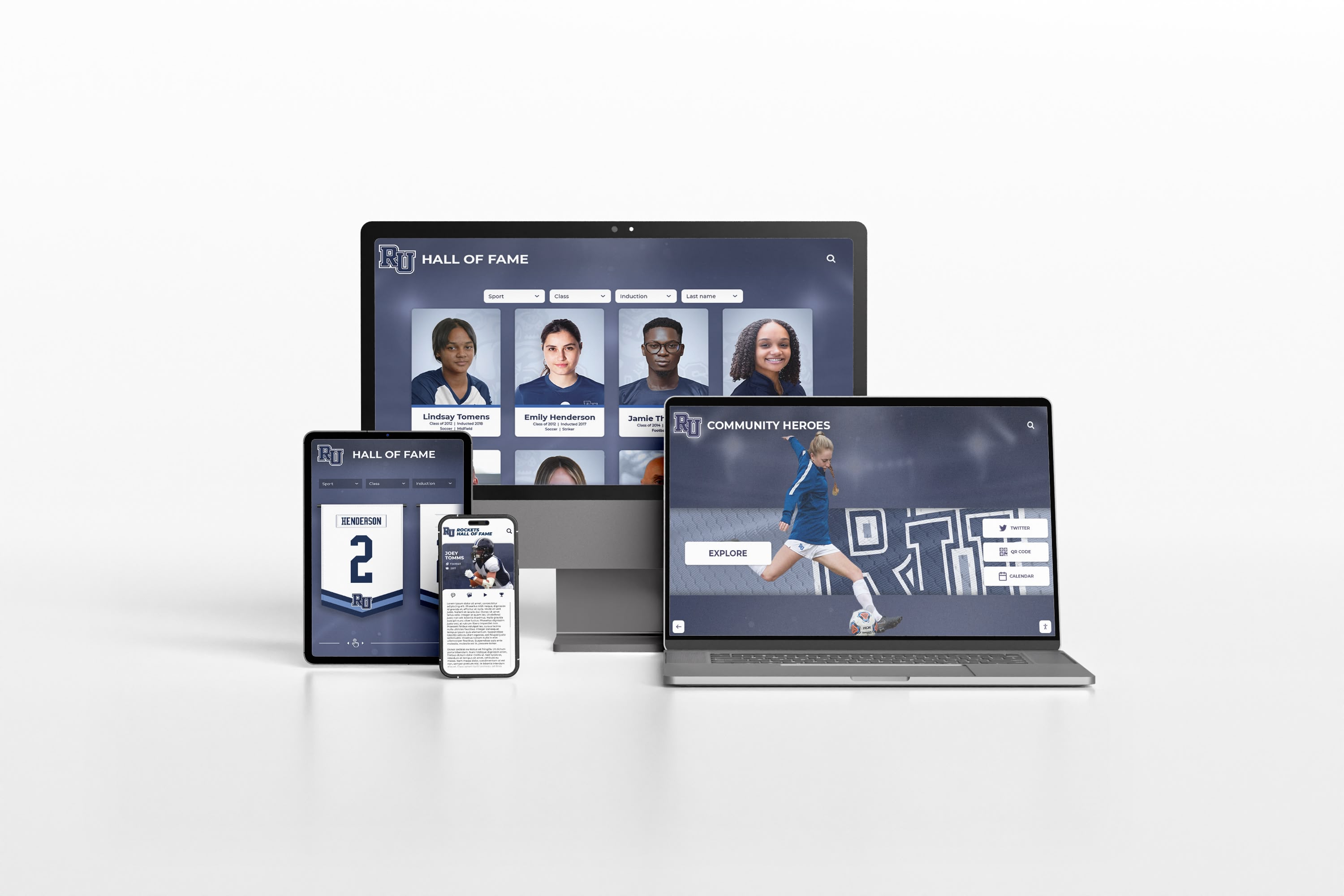
The foundation of effective alumni advice infrastructure involves comprehensive, searchable directories enabling students and recent graduates to discover relevant alumni connections. Modern platforms allow filtering by industry, job function, company, geographic location, and graduation year, helping users identify alumni whose experiences align with their interests.
Encouraging alumni profile completion requires demonstrating value—showing alumni how participation benefits them through networking opportunities, professional visibility, and satisfaction from helping the next generation. Gamification elements, recognition for participation, and regular communication highlighting success stories all drive profile completion rates higher.
Integration with LinkedIn and other professional networks reduces friction by enabling automatic profile population, eliminating manual data entry that creates barriers to participation. The easier institutions make profile creation and maintenance, the more comprehensive and current alumni directories remain.
Facilitating One-on-One Connections
Beyond directories, successful institutions provide tools and frameworks facilitating direct mentorship relationships. Matching algorithms consider interests, goals, and compatibility factors rather than leaving connections to chance.
Clear guidelines help alumni understand time commitments, appropriate boundaries, and effective mentoring practices. Many institutions provide mentor training resources, suggested conversation topics, and frameworks for productive mentoring relationships that maximize value while respecting busy professional schedules.
Platforms enabling scheduling, video conferencing, and communication within integrated systems reduce friction compared to coordinating across disparate tools. The smoother the logistics, the more likely mentorship relationships remain active and productive over time.
Scaling Advice Through Alumni Panels and Events
One-on-one mentorship provides deep value but doesn’t scale efficiently. Complementary approaches include panel discussions featuring diverse alumni sharing career journeys and advice, industry networking events connecting students with multiple alumni simultaneously, webinar series on specific career topics featuring successful alumni, and career fairs bringing alumni recruiters to campus representing their organizations.
Alumni events that celebrate institutional history and achievement create natural opportunities for advice sharing while strengthening emotional connections between current students and successful graduates.
Documenting and Sharing Alumni Wisdom
Capturing alumni advice in durable formats extends its reach beyond those attending specific events. Video interviews with successful alumni discussing career journeys, challenges overcome, and advice for current students create compelling content that remains valuable for years.
Written profiles, blog posts, and Q&A features provide searchable, evergreen resources that students can access on demand. Podcast series featuring alumni conversations reach audiences who prefer audio content while commuting or exercising.
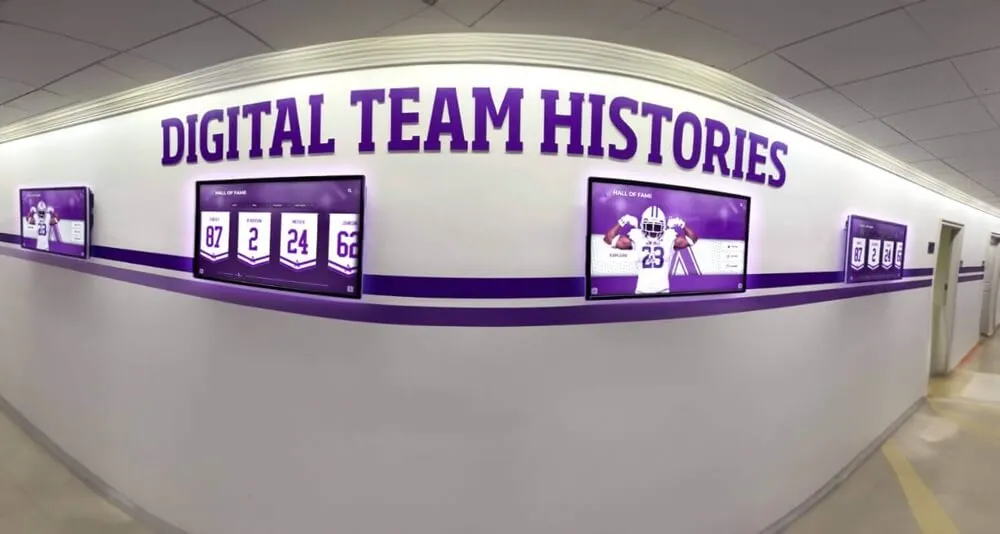
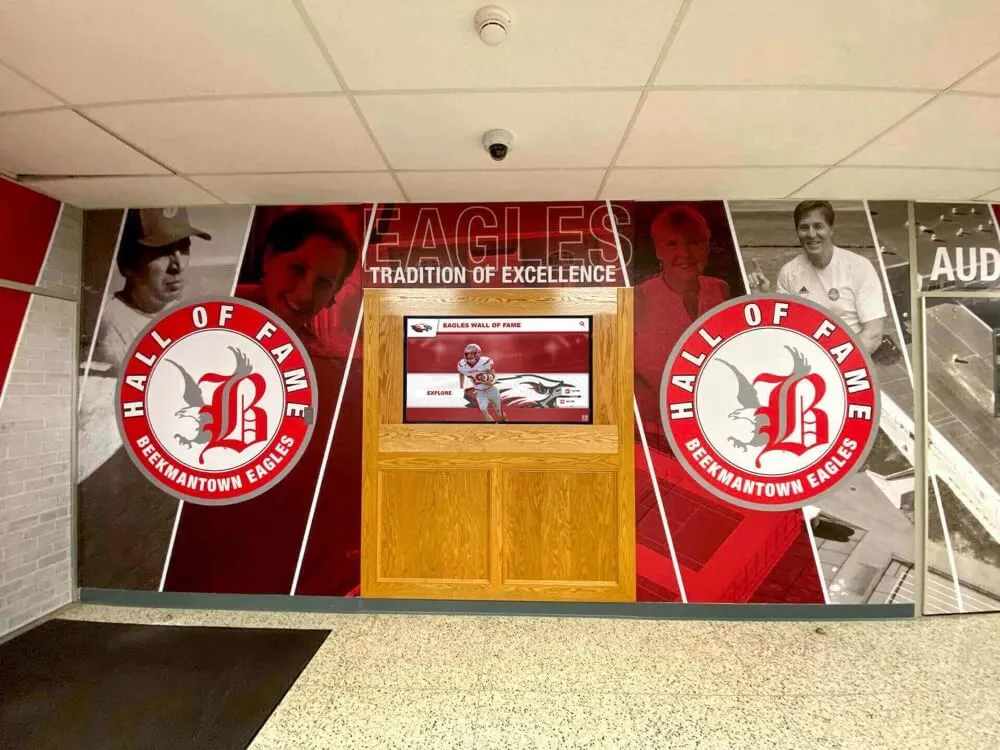
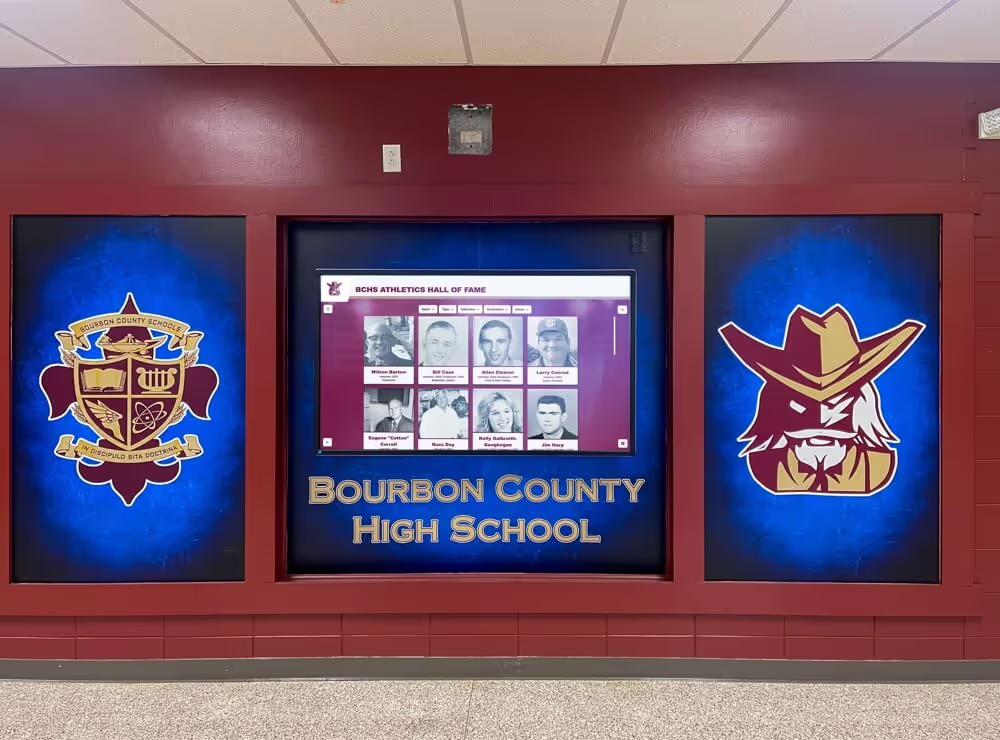
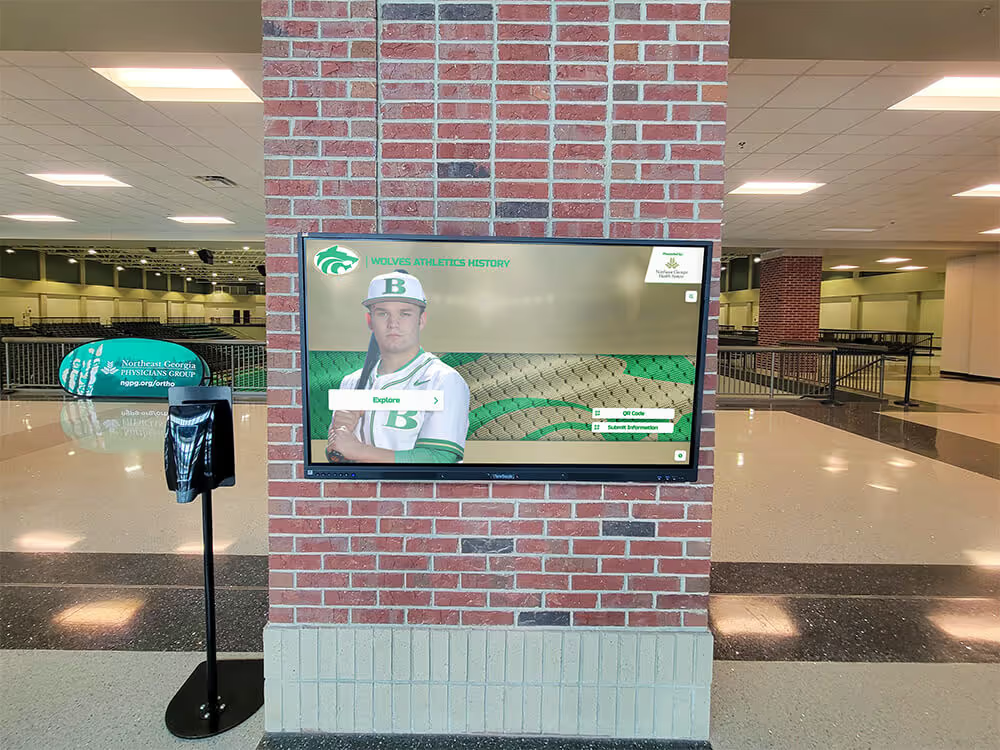
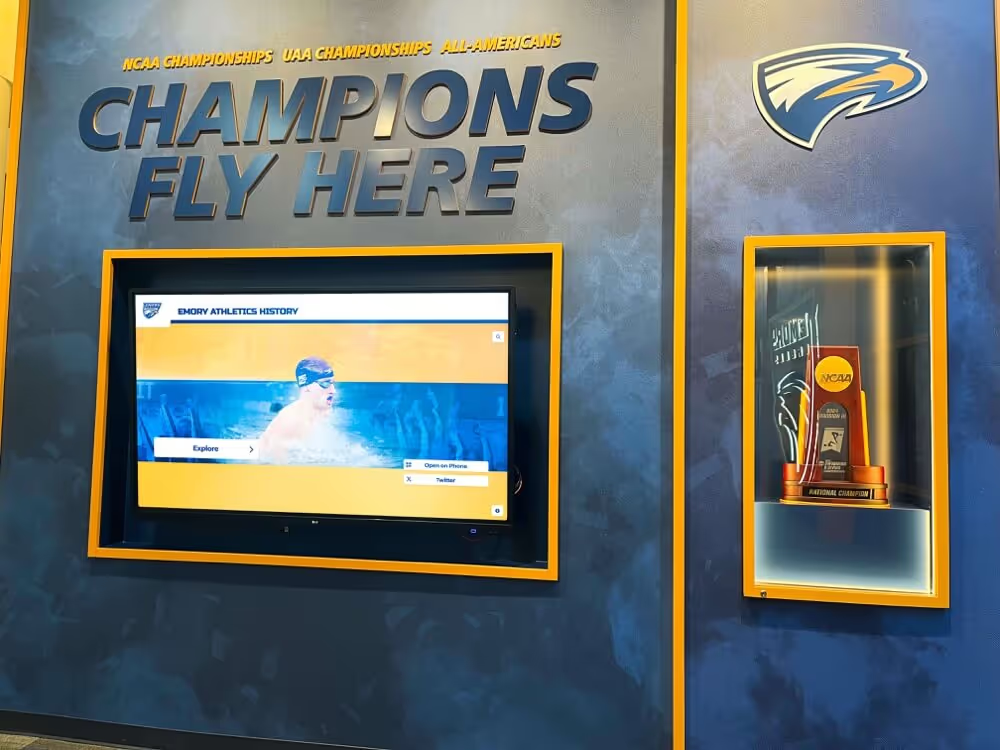
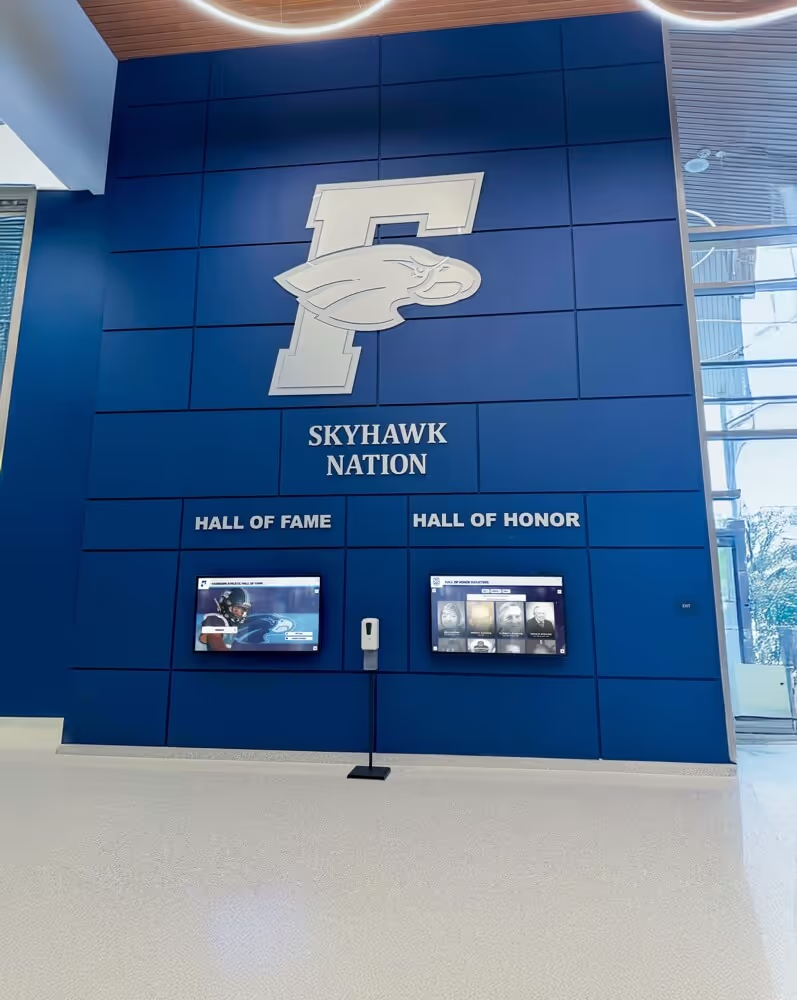
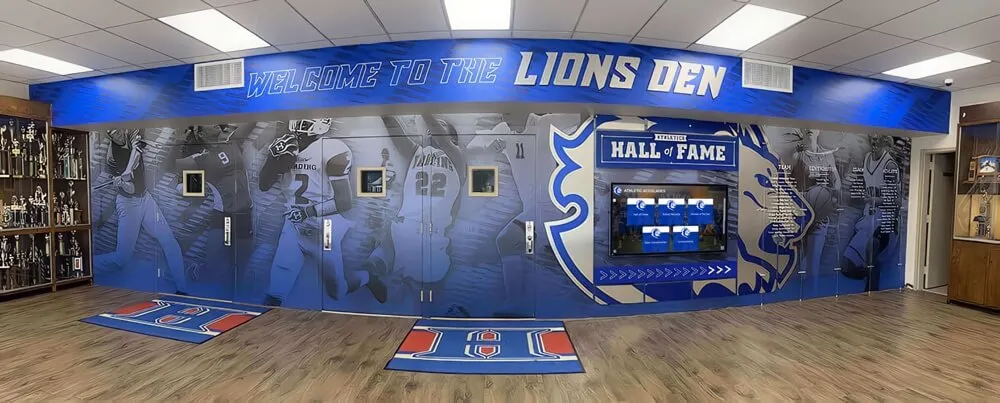
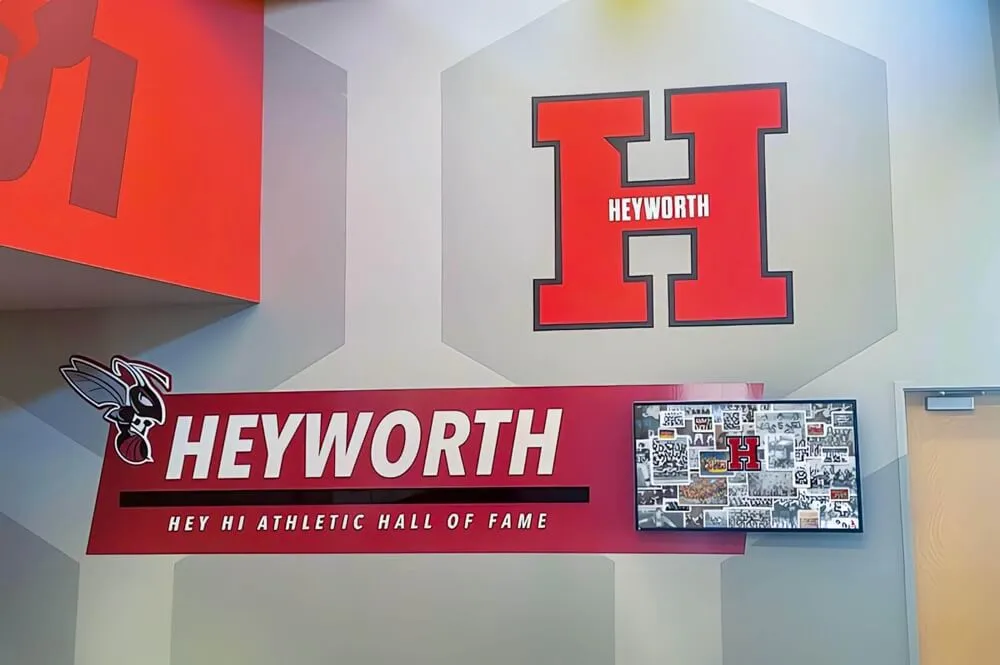
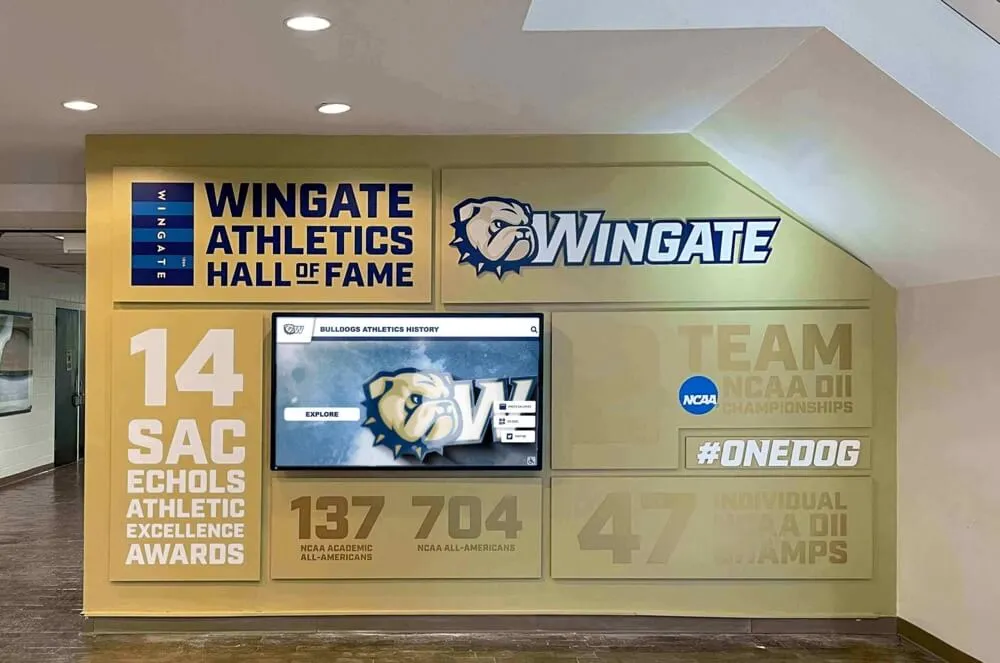
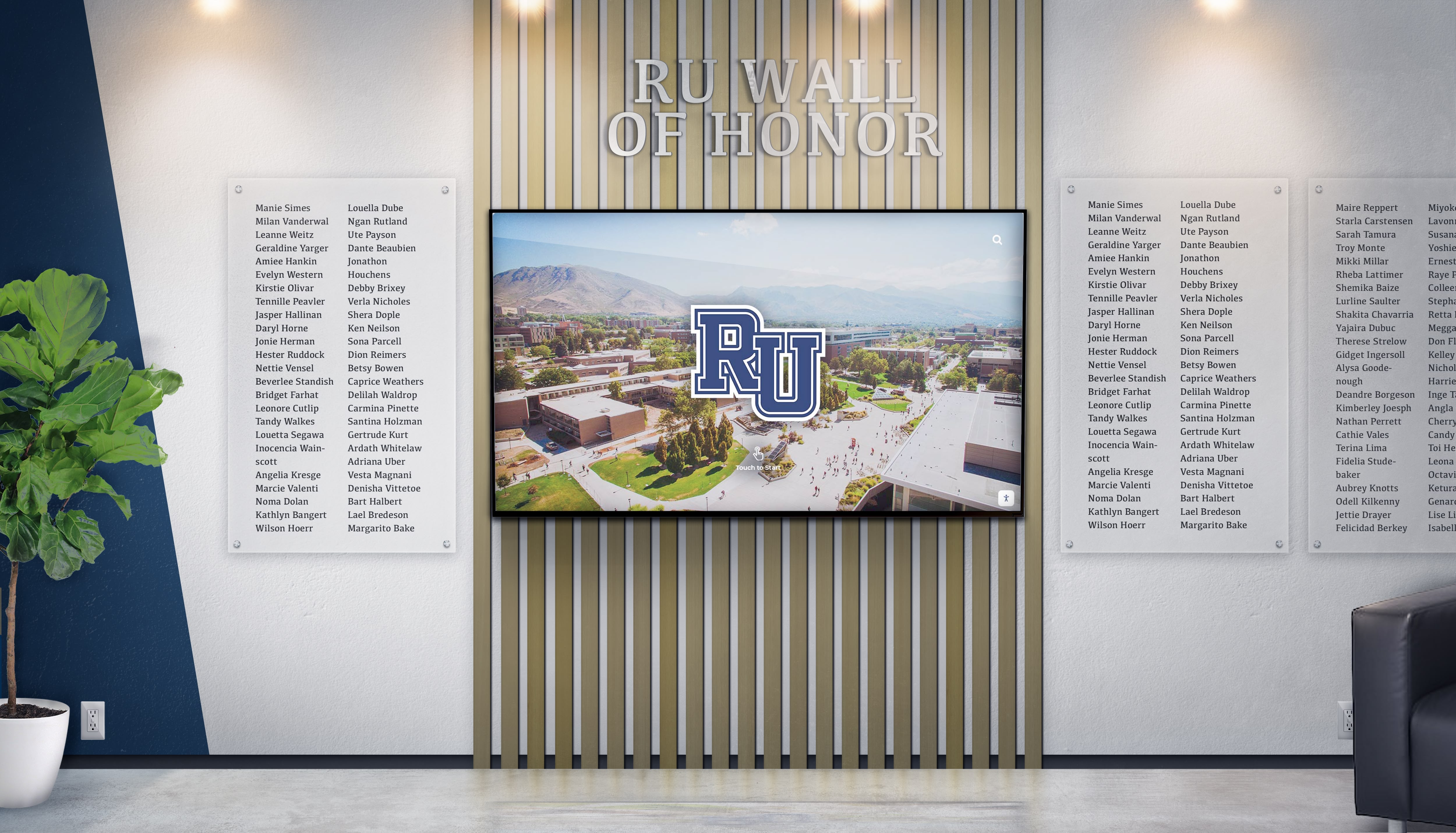
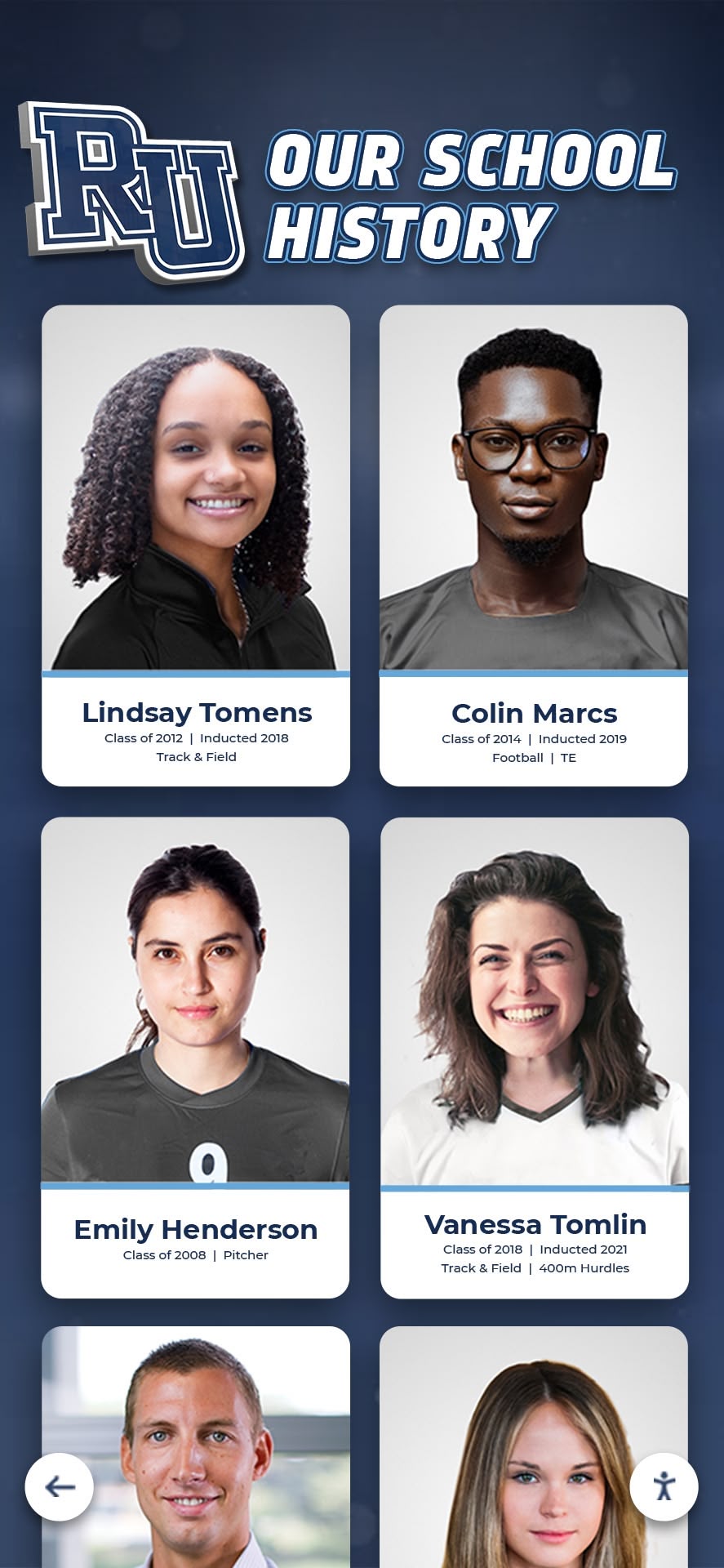
Recognition programs honoring distinguished alumni naturally generate content through induction ceremonies, acceptance speeches, and biographical materials. Solutions like Rocket Alumni Solutions help institutions create interactive displays showcasing alumni achievements while capturing their advice and career insights for future students to explore.
Common Questions Graduates Ask Alumni
Understanding the most frequent questions recent graduates ask successful alumni helps institutions anticipate needs and create resources addressing these concerns proactively.
“How Did You Get Your First Job After Graduation?”
This question reveals anxiety about the job search process and uncertainty about effective strategies. Alumni typically share that first jobs came through diverse paths—campus recruiting, networking connections, targeted applications, internships converting to full-time offers, or sometimes unexpected opportunities.
The commonality across successful job searches: persistence and willingness to leverage all available resources including career services offices, alumni networks, professional associations, informational interviews, and direct outreach to companies of interest. Alumni emphasize that rejection proves normal—most received numerous “no” responses before securing first positions.
“What Skills Do I Actually Need That I Didn’t Learn in School?”
Graduates often feel underprepared for professional environments despite academic achievement. Alumni consistently mention practical skills rarely emphasized in academic settings including professional communication for emails, meetings, and presentations, project management and organizational systems, navigating workplace politics and interpersonal dynamics, and time management balancing multiple competing priorities.
This gap explains why employers consistently rank soft skills—communication, collaboration, adaptability, problem-solving—as more important than technical knowledge when evaluating candidates. Alumni gathering spaces that facilitate informal conversations between students and graduates help transmit these tacit professional skills that formal education often overlooks.
“How Do I Know If I’m on the Right Career Path?”
Early career uncertainty about whether current paths align with long-term goals generates significant anxiety. Alumni provide reassurance that uncertainty proves normal and that clarity develops gradually through experience rather than appearing suddenly.
Warning signs suggesting reassessment might include persistent dread about work unrelated to normal stress, complete lack of learning or growth opportunities, fundamental values misalignment with organizational culture, or health consequences from chronic stress and burnout. However, alumni caution against overreacting to temporary dissatisfaction—all jobs include difficult aspects and challenging periods.
Alumni advise giving positions sufficient time (typically 12-18 months) to learn and develop before concluding they’re wrong fits, seeking growth opportunities within current roles before assuming change requires leaving, and distinguishing between jobs that don’t fit versus normal adjustment challenges that resolve with time and experience.
“How Important Is Graduate School?”
Graduate degree value varies dramatically by field, making this question impossible to answer universally. Alumni emphasize that graduate school makes sense when it’s required for desired careers (law, medicine, academia), clearly increases earning potential sufficient to justify costs (MBA for certain business roles), or genuinely aligns with intellectual interests and career goals.
However, alumni caution that graduate school often serves as expensive procrastination for those uncertain about career direction. Working first provides clearer perspective on whether advanced degrees would prove valuable, helps identify specific programs aligned with goals, and sometimes results in employer-funded education.
According to data from the Georgetown University Center on Education and the Workforce, graduate degrees increase median earnings by approximately 27% compared to bachelor’s degrees alone, but outcomes vary dramatically by field—ranging from substantial premiums in healthcare and business to minimal advantages in other sectors.
“How Do You Balance Career Ambition with Personal Life?”
Work-life balance questions reflect concerns about sustaining demanding careers without sacrificing relationships, health, and personal fulfillment. Alumni acknowledge this as an ongoing challenge rather than a problem with permanent solutions.
Successful approaches include establishing clear priorities and accepting tradeoffs, communicating boundaries respectfully but firmly, recognizing that balance looks different across career stages, and redefining success to include wellbeing and relationships rather than purely professional achievement.
Alumni who maintain sustainable careers emphasize that protecting personal time doesn’t reflect lack of ambition—it demonstrates self-awareness and long-term thinking recognizing that burnout undermines rather than advances career success.
The Impact of Alumni Recognition on Mentorship Participation
Recognition programs that celebrate alumni achievement create natural foundations for mentorship by identifying successful graduates, validating their accomplishments publicly, creating platforms for sharing their stories and advice, and strengthening emotional connections with alma maters that increase willingness to volunteer time mentoring.
Recognition as Mentorship Recruitment
Alumni selected for halls of fame, distinguished alumni awards, or other honors represent ideal mentorship candidates—they’ve achieved notable success, demonstrate commitment to their fields, and often feel gratitude toward institutions that launched their careers.
Induction ceremonies and recognition events create natural opportunities to recruit mentors. When alumni return to campus for honors, they’re in reflective moods about educational experiences and often enthusiastic about giving back. Institutions can formalize mentorship invitations as part of recognition programs, positioning mentorship as the next level of contribution beyond receiving honors.
According to research on alumni engagement, recognized alumni participate in volunteer activities at rates 40-60% higher compared to unrecognized peers. Recognition creates psychological reciprocity—honored alumni feel moved to contribute to institutions that celebrated their achievements.
Digital Recognition Platforms as Mentorship Portals
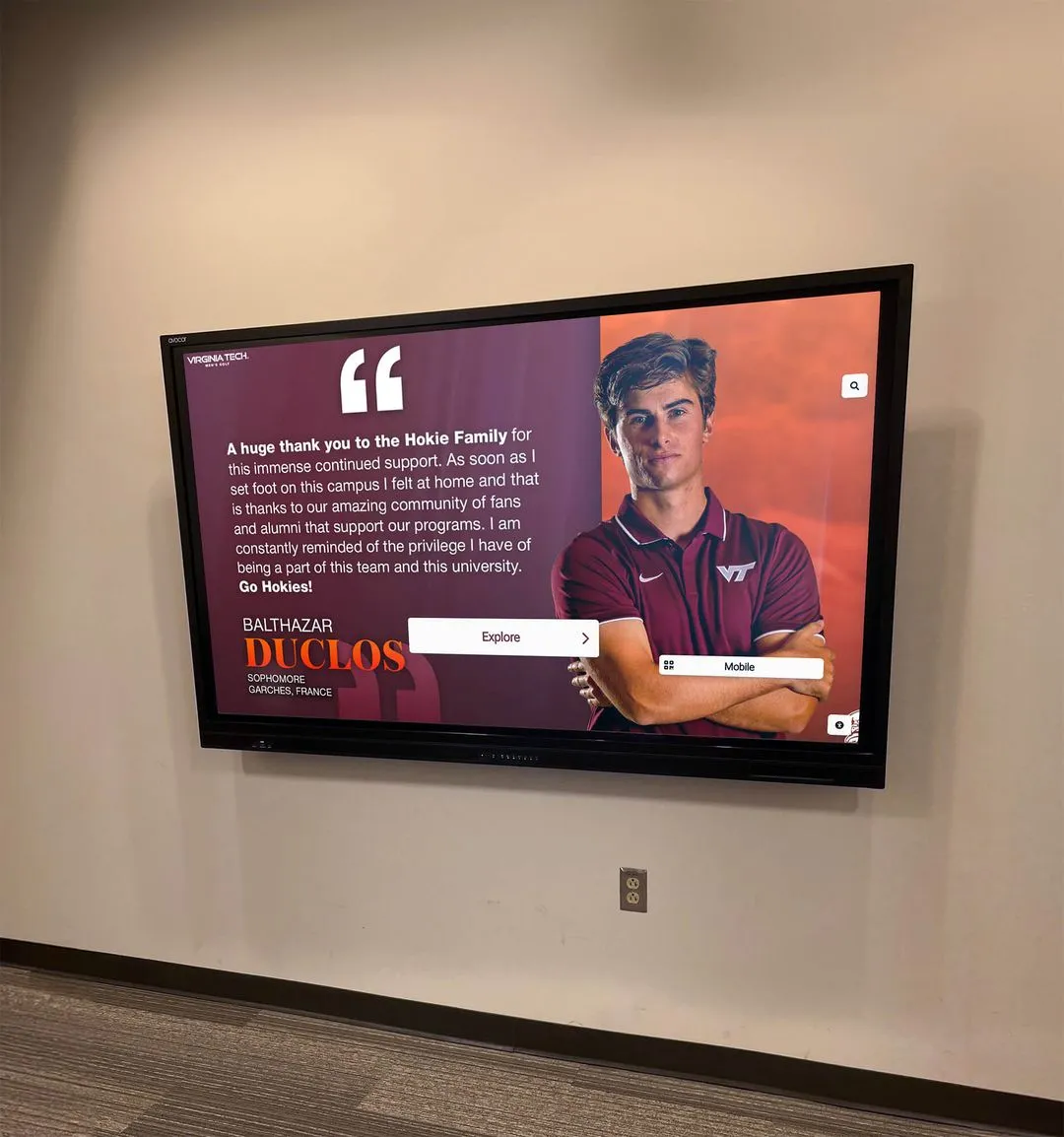
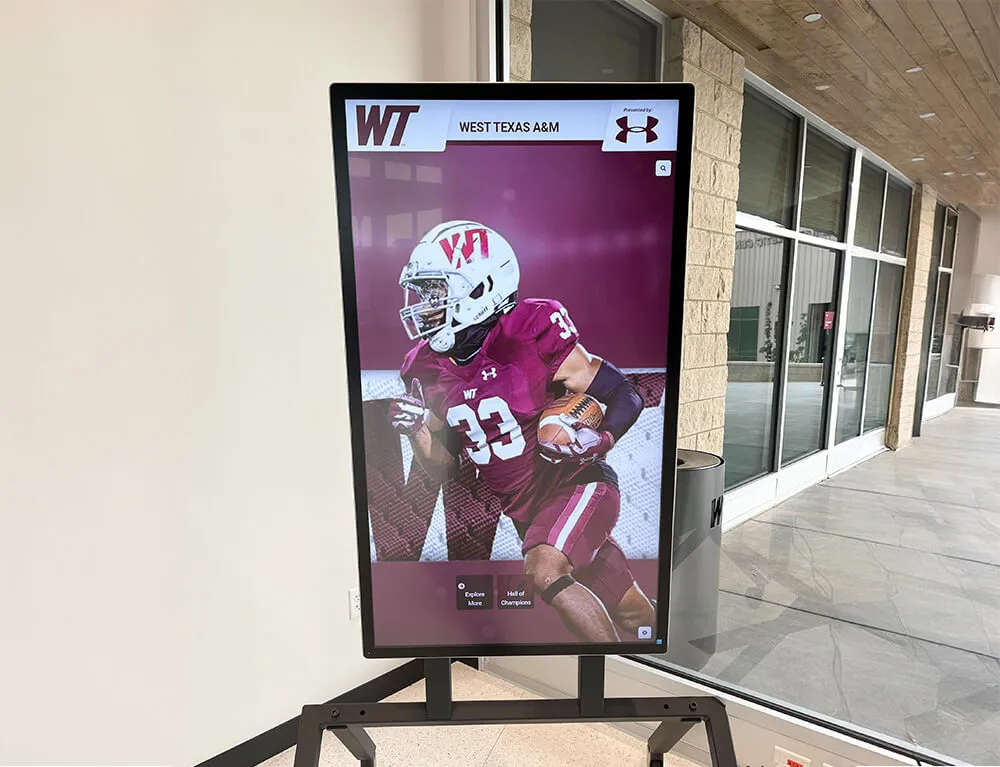
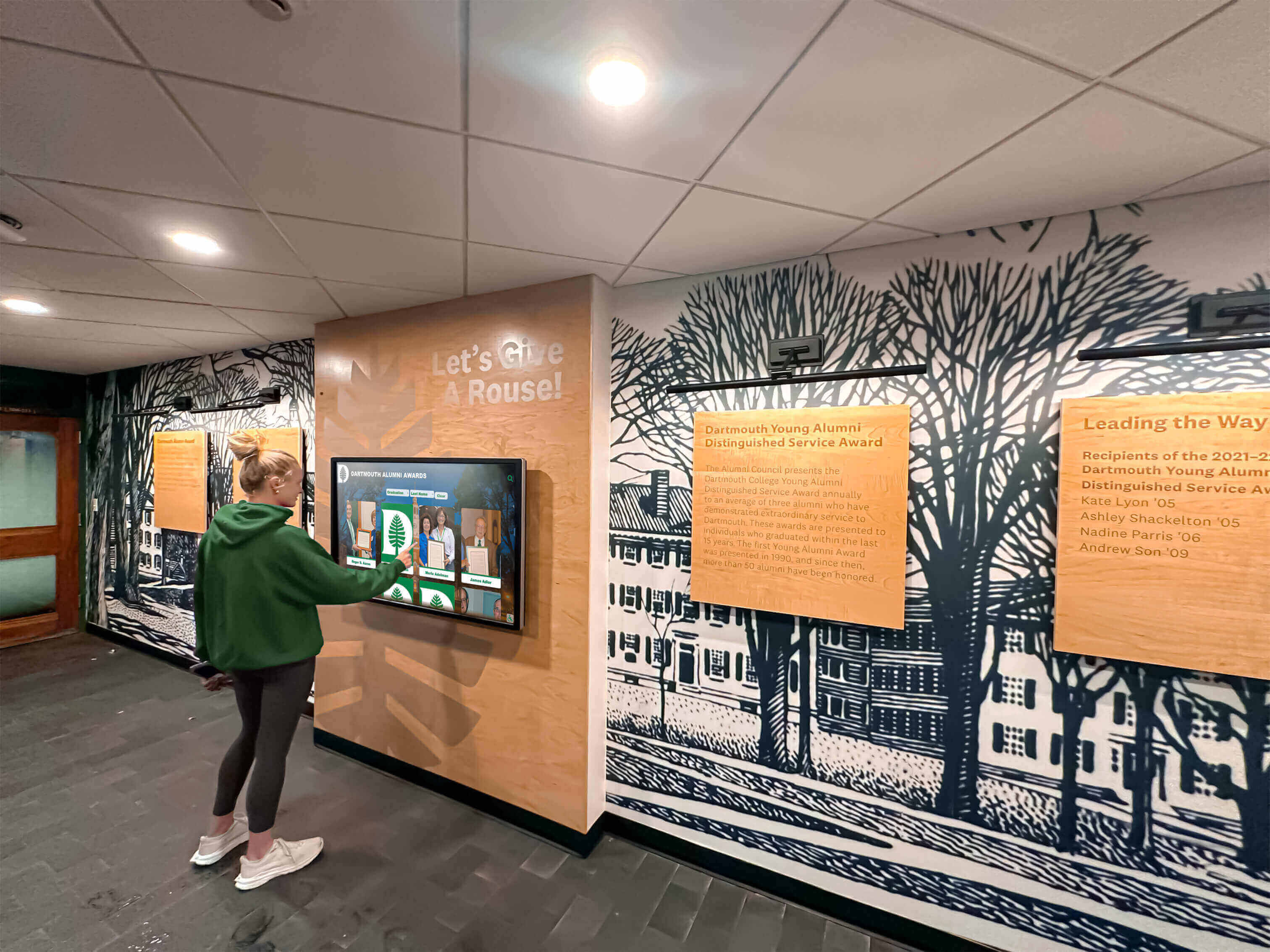
Interactive digital recognition displays serve dual purposes—celebrating achievement while facilitating mentorship connections. When students explore alumni profiles on touchscreens, they can see contact information, watch video interviews, and request informational interviews or mentorship directly through integrated systems.
This seamless integration transforms passive recognition viewing into active mentorship recruitment. Rather than wondering how to find mentors, students discover compelling alumni profiles and can immediately initiate contact through platforms that reduce friction and awkwardness.
Analytics from these systems help institutions identify which alumni profiles generate most student interest, enabling targeted mentorship recruitment focused on graduates whose experiences resonate strongly with current students. Data showing how many students expressed interest in connecting provides powerful motivation for busy alumni considering whether to volunteer as mentors.
Storytelling That Inspires and Informs
Recognition programs generate rich biographical content—career histories, challenges overcome, lessons learned, advice for current students—that serves both inspirational and practical purposes. When recognition includes video interviews, alumni share personal stories that humanize career paths, making success feel achievable rather than impossibly distant.
This storytelling helps students understand that successful alumni faced similar doubts, setbacks, and uncertainties during their own transitions from student to professional. Knowing that accomplished graduates weren’t always confident or successful makes current students more willing to seek advice and less intimidated about approaching potential mentors.
Programs that recognize diverse alumni achievements ensure students from all backgrounds see themselves reflected in institutional success stories, increasing confidence that their particular goals and paths merit support through mentorship.

Creating Sustainable Alumni Advice Ecosystems
One-time mentorship programs or sporadic career events rarely create lasting impact. Sustainable systems require ongoing commitment, clear ownership, adequate resources, and continuous improvement based on participation data and feedback.
Staffing and Program Ownership
Someone must own alumni mentorship initiatives—either dedicated career services staff, alumni relations professionals, or shared responsibility with clear coordination. Without explicit ownership, programs drift as competing priorities consume attention.
Successful institutions staff appropriately for program scale. Small schools might designate one career services counselor to coordinate mentorship alongside other duties, while large universities employ full-time alumni engagement coordinators managing mentorship, career networking, and related programming.
Student volunteers and graduate assistants can extend capacity when properly supervised. Training student workers to coordinate logistics, schedule events, manage platforms, and communicate with participants enables professional staff to focus on strategy, relationship management, and program development.
Technology Infrastructure Requirements
Modern mentorship requires robust technology supporting participant matching, communication, scheduling, and tracking. While spreadsheets and email suffice initially, growing programs require dedicated platforms enabling searching alumni directories, managing mentorship applications and matching, facilitating communication between mentors and mentees, tracking engagement and relationship progress, and generating reports demonstrating program value.
Integration with existing systems—alumni databases, career services platforms, student information systems—prevents duplicate data entry and maintains consistency. Comprehensive alumni engagement platforms often include mentorship modules alongside recognition, giving, event management, and communication tools.
Continuous Improvement Through Feedback
Programs improve through systematic feedback collection and responsive adjustments. Regular surveys to both mentors and mentees asking what’s working, what could improve, and what barriers prevent fuller participation inform iterative improvements.
Participation data reveals patterns—which matching criteria generate successful relationships, what industries or graduation years show highest engagement, when relationships typically end, and which communication approaches drive better response rates. Data-driven program evolution ensures limited resources focus on highest-impact activities while phasing out ineffective approaches.
Annual program reviews examining participation trends, outcome metrics, and stakeholder feedback help leadership understand value delivered, challenges encountered, and investment required for continued success or expansion.
Conclusion: Connecting Alumni Wisdom with Graduate Needs
The career guidance that successful alumni can provide represents one of education’s most underutilized assets. While academic programs develop knowledge and credentials, practical career navigation requires insights that only experience provides—insights that alumni possess in abundance but that rarely reach graduates who need them most.
Institutions that systematically connect alumni wisdom with graduate needs create measurable value including higher graduate employment rates, faster career progression for mentored students, increased alumni engagement and giving, stronger employer relationships, and enhanced institutional reputation for producing successful, well-supported graduates.
The infrastructure supporting these connections—searchable directories, matching platforms, communication tools, recognition systems that identify and celebrate successful alumni—requires thoughtful investment but delivers returns that compound over decades. Graduates who receive valuable mentorship become tomorrow’s engaged alumni, creating virtuous cycles where support flows naturally across generations.
Keys to Effective Alumni Advice Programs
- Create systematic infrastructure connecting alumni with graduates
- Recognize and celebrate alumni achievement to identify mentors
- Provide clear frameworks making mentorship convenient and valuable
- Use technology platforms eliminating logistical barriers
- Measure outcomes demonstrating program value
- Train mentors in effective guidance practices
- Offer diverse engagement levels respecting time constraints
- Integrate mentorship with broader alumni engagement strategy
Common Alumni Advice Program Pitfalls
- Lack of clear program ownership and accountability
- Expecting alumni to figure out mentorship without guidance
- No matching process leaving connections to chance
- Inadequate technology creating friction and barriers
- Failure to recognize and thank mentor volunteers
- Programs that launch with enthusiasm but lack sustainability
- Insufficient communication maintaining engagement
- No metrics demonstrating value and impact
Whether your institution is launching initial mentorship initiatives or scaling existing programs, the fundamental principle remains constant: alumni want to help, and graduates need guidance. Success requires removing barriers, providing frameworks, and creating systems that make meaningful connections convenient rather than burdensome.
Ready to build infrastructure that celebrates alumni achievement while facilitating career mentorship? Solutions like Rocket Alumni Solutions help institutions create interactive recognition displays that honor distinguished graduates while providing platforms where current students discover alumni working in fields they’re considering, watch video advice from successful professionals, and initiate mentorship connections that shape their career trajectories.
The wisdom your alumni possess can transform graduate outcomes and strengthen lifelong institutional connections. Systematic advice infrastructure ensures this valuable resource reaches those who need it most, creating impact that extends across generations of students discovering that success becomes far more achievable with guidance from those who’ve walked the path before them.