Walk into any high school with an Air Force JROTC unit and you immediately sense something different. Cadets in sharp blue service uniforms move through hallways with a posture and purposefulness that stands out. In the classroom, they study aerospace science and leadership principles alongside trigonometry and English. On the drill field, they execute precise formations that take months to master. The insignia on their uniforms — ribbons, rank devices, and specialty badges — tell a story of earned achievement that few programs in American secondary education can match.
Every September at high schools across the country, a new class of AFJROTC cadets steps into their first aerospace science classroom. They arrive as freshmen still navigating high school hallways. They leave four years later having studied orbital mechanics, led flight teams, competed in national drill competitions, and earned a uniform full of ribbons representing accomplishments most of their classmates cannot fully decode.
The Air Force Junior ROTC program occupies a unique position in American secondary education. It is not a military recruiting program — the Air Force regularly emphasizes that AFJROTC’s purpose is citizenship and character development, not enlistment. It is not a simple extracurricular activity. It is a structured academic and leadership program with its own curriculum, promotion system, recognition framework, and competitive opportunities that rival anything offered through traditional athletics or academics.
Understanding this program — what cadets actually learn, how they advance, what their insignia means, and how schools can honor their achievements — matters for educators, administrators, families, and communities invested in recognizing the full range of student achievement.

What Air Force JROTC Actually Is
Congress established Junior ROTC in 1916, though it remained relatively small until the Military Personnel Act of 1964 dramatically expanded the program and formalized the role of the military services in running it. The Air Force component — AFJROTC — became a distinct program operating under Air Force Instruction, with aerospace science as its academic core and leadership development as its organizing mission.
The program’s official mission statement defines its purpose as developing “citizens of character dedicated to serving their nation and community.” That mission shapes everything from curriculum design to the awards system: the goal is not to produce future airmen (though some cadets do eventually enlist or receive appointments to service academies) but to develop young people who think critically, lead effectively, serve voluntarily, and understand themselves as part of something larger than personal ambition.
The Curriculum Structure
AFJROTC curriculum organizes into a four-year sequence that cadets work through as they progress from freshmen to seniors. The program divides its content into three main areas: Aerospace Science, Leadership Education, and the Wellness and Fitness component.
Aerospace Science is the academic backbone that distinguishes AFJROTC from other character-development programs. Freshmen often study the History of Air and Space Power — an introduction to how aviation technology evolved from the Wright Brothers through the Space Age and into the modern era of stealth aircraft and commercial spaceflight. More advanced coursework covers aviation principles including aerodynamics, meteorology, and navigation fundamentals. The most advanced aerospace science courses examine topics in space exploration, satellite systems, and aviation career pathways.
This curriculum has practical dimensions. Many AFJROTC units participate in rocketry programs, flight simulation, and aviation discovery events that give cadets hands-on exposure to actual aerospace concepts rather than purely theoretical instruction. Some programs maintain connections with local airports, military installations, or aviation organizations that create mentorship and experiential learning opportunities.
Leadership Education forms the second pillar, covering communication, team dynamics, ethical decision-making, and the organizational skills that translate directly to both military and civilian career contexts. Leadership coursework is explicitly practical: cadets practice public speaking, study case studies in leadership success and failure, learn how to manage teams under pressure, and apply leadership principles in the field environment created by unit operations.
Wellness and Fitness completes the curriculum triangle, emphasizing physical readiness and health literacy. AFJROTC units conduct regular physical training, and cadet performance on standardized fitness assessments affects both individual standing and unit evaluations.
The Senior Aerospace Science Instructor
Every AFJROTC unit operates under the leadership of a Senior Aerospace Science Instructor, or SASI — typically a retired Air Force officer who serves as both the academic program director and the commanding officer of the unit’s cadet corps. The SASI works alongside one or more Aerospace Science Instructors (ASIs), who may be retired noncommissioned officers.
This leadership structure creates something genuinely uncommon in secondary education: a program where the instructors bring real operational military experience into the classroom. A SASI who flew combat missions in Southwest Asia, or an ASI who maintained F-16 avionics across twenty years of service, brings a depth of applied context to aerospace science and leadership instruction that no textbook can fully replicate.

The AFJROTC Rank and Promotion System
One of the most distinctive features of Air Force JROTC is its structured promotion system, which mirrors the actual Air Force enlisted and officer rank hierarchy while creating cadet-specific grades appropriate to a high school context. The ranks cadets hold are not honorary — advancement requires demonstrated performance, knowledge, and leadership capability.
Cadet Ranks: The Enlisted Progression
Most cadets begin their AFJROTC careers in the basic enlisted grades, working upward through the noncommissioned officer ranks as they accumulate time in service, demonstrate knowledge, and take on leadership responsibilities.
The entry-level cadet ranks — Basic Airman through Senior Airman — represent the early progression where cadets focus on learning the fundamentals: drill commands, uniform standards, chain of command, the Cadet Honor Code, and basic aerospace science content. Promotion through these grades happens relatively quickly for cadets who engage seriously with the program.
As cadets advance to noncommissioned officer grades — Staff Sergeant through Master Sergeant — they take on actual leadership responsibilities within the unit. A Cadet Staff Sergeant might lead a flight of six to eight cadets during drill practice. A Cadet Master Sergeant might serve as a flight sergeant responsible for discipline, attendance, and performance accountability within an element of the unit.
The senior NCO grades — Senior Master Sergeant and Chief Master Sergeant — represent the most experienced enlisted cadets in a unit. These individuals typically hold key positions in the unit’s leadership structure, managing multiple flights, supervising activities, and serving as the direct connection between the cadet officer corps and the enlisted cadet body.
Cadet Officer Ranks
The officer grades are appointment-based, typically requiring recommendation from the SASI and demonstrated leadership capability beyond what NCO grades demand. Cadet officers hold the command positions that run the unit: flight commanders, squadron commanders, group commanders, and at the top of the structure, the Cadet Commander — usually a Cadet Colonel — who serves as the highest-ranking cadet and the primary student leader of the entire unit.
Schools that maintain digital roster boards and recognition displays can make the cadet officer hierarchy visible to the entire school community, turning abstract military rank into legible leadership recognition that families and students can readily understand and appreciate.
Rank Insignia and What It Means on the Uniform
AFJROTC rank insignia appears on the uniform in ways that closely parallel active-duty Air Force conventions. Enlisted cadet ranks appear as chevron-based insignia worn on both sleeves. Officer cadet ranks use bars, leaves, and eagles that mirror the silver and gold devices worn by Air Force officers.
Reading an AFJROTC uniform correctly requires understanding this system. An experienced observer can determine a cadet’s approximate standing, seniority, and leadership position just from the devices on the shoulder boards and sleeves — which is precisely the point. The uniform communicates status and accountability in a way that is instantly legible to anyone familiar with military organization.
AFJROTC Ribbons and Awards: The Recognition Fabric of the Program
The ribbon rack on an experienced AFJROTC cadet’s uniform is one of the most visible expressions of accumulated achievement in any high school program. Each ribbon represents a specific accomplishment, award, or service milestone. A senior cadet who has been in the program since freshman year and engaged fully with its opportunities may wear a ribbon rack that spans eight to twelve rows — representing four years of diverse achievement.
Understanding what these ribbons mean transforms the uniform from decorative dress into a biographical document of earned distinction.
Service and Longevity Awards
The most foundational ribbons recognize consistent participation over time. The AFJROTC Service Ribbon marks completion of each year in the program. The Extended Cadet Service Ribbon recognizes additional years beyond baseline program requirements. These awards are not competitive — they recognize sustained commitment rather than distinction — but they form the base layer of a cadet’s rack and establish the context for everything above them.
Achievement and Distinction Awards
Above service ribbons, cadets earn recognition through specific achievements across academic, physical, leadership, and competitive domains.
The Academic Award recognizes cadets who maintain superior academic standing while in the program. The Physical Fitness Award acknowledges performance on standardized fitness assessments at various excellence levels. The Outstanding Cadet Award is a unit-level distinction recognizing overall excellence. The Distinguished Cadet Award represents one of the highest unit-level recognitions available, typically given to the cadet who best exemplifies the program’s goals of citizenship, character, academic excellence, and leadership.
National-level ribbons represent achievements beyond the unit itself. Cadets who qualify for national drill competitions, academic bowls, or the Kitty Hawk Air Society — AFJROTC’s academic honor organization for outstanding performers — earn ribbons that carry significant prestige within the program community.
Digital trophy displays that showcase hidden achievements are particularly valuable for AFJROTC programs because the meaning behind each ribbon is invisible to most school community members. A dedicated recognition display that explains what cadet ribbons and devices represent transforms silent uniform details into compelling achievement narratives accessible to the whole school.
Specialty Badges and Insignia
Beyond ribbons, AFJROTC cadets can earn specialty badges that reflect proficiency in specific areas. The Drill Team Badge recognizes membership in the unit’s competitive drill team. The Color Guard Badge identifies cadets who have served on the school’s color guard element — the team that presents the colors at school events, community ceremonies, and competitions.
Other specialty badges may recognize academic decathlon participation, rocketry team membership, cyber defense team involvement, or other specialized activities that AFJROTC units organize. These badges appear on the uniform in designated locations and add visual complexity to the distinction story a cadet’s uniform tells.

Competitive Programs: Where Cadets Earn Recognition Beyond the Classroom
AFJROTC’s competitive programs represent some of the most significant achievement opportunities available to cadets. Success in these arenas demonstrates excellence that extends well beyond participating in a local unit — it means performing at regional and national levels against other units from across the country.
Drill and Ceremony Competition
Precision drill competition is one of AFJROTC’s most established competitive traditions. Drill teams perform standardized and exhibition routines judged on precision, synchronization, uniformity, and execution. Categories typically include Armed Regulation Drill, Unarmed Regulation Drill, and Exhibition Drill — the creative, choreographed events that combine athletic precision with artistic expression.
Top drill teams practice daily, sometimes for months before major competitions. A unit that wins a regional drill competition, qualifies for a national invitational, or places in the top tier of a large national meet has demonstrated a level of sustained collective excellence that deserves lasting recognition.
Academic Bowl and Aerospace Science Competition
The AFJROTC Academic Bowl tests cadets on aerospace science, Air Force history, leadership principles, and current events related to aviation and national defense. Teams that advance through regional competition to national levels demonstrate both individual knowledge and collaborative performance under pressure.
The full range of special awards available to high school students across programs like academic bowl, civic leadership, and community service provides useful context for understanding how AFJROTC recognition fits within a school’s broader recognition landscape — these achievements are comparably significant and deserve equivalent institutional acknowledgment.
CyberPatriot
The CyberPatriot National Youth Cyber Defense Competition draws thousands of AFJROTC teams nationwide. Cadet teams work to secure simulated computer networks against attacks, developing cybersecurity skills that are among the most valuable in the current economy. Units that advance to national finals — and especially those that compete in the elite Open Division — demonstrate technical proficiency that universities and employers recognize as genuinely valuable credentials.
CyberPatriot achievement is particularly worth highlighting in school recognition programs because it connects AFJROTC achievement to career-relevant skills in a field with clear and growing demand.
Model Rocketry
The AFJROTC Model Rocketry Competition challenges cadet teams to design, build, and fly rockets that hit target altitudes, carry payloads, and demonstrate technical proficiency. The competition is hands-on science education in action — exactly the kind of applied aerospace learning the curriculum’s Aerospace Science component is designed to support.
Teams that place at regional and national rocketry competitions deserve recognition in the same display systems that honor athletic state qualifiers or academic award winners.

The Distinguished Graduate Designation
Among the formal recognitions AFJROTC bestows on individual cadets, the Distinguished Graduate designation represents a particularly significant milestone. Distinguished Graduate status — awarded to approximately ten percent of graduating cadets nationally — recognizes cadets who have achieved exceptional performance across the full scope of the program: academics, leadership, physical fitness, citizenship, and unit service.
Distinguished Graduates receive a formal certificate and recognition within the program. Many colleges and universities that consider JROTC Distinguished Graduate status in admissions decisions treat it as comparable to academic honors or significant extracurricular leadership — a meaningful differentiator in competitive applicant pools. Some service academy candidates list Distinguished Graduate status as a supporting credential in their applications.
For school recognition programs, Distinguished Graduate status provides a clear, nationally consistent threshold for identifying the cadets who most deserve permanent institutional acknowledgment. Unlike locally-determined criteria, AFJROTC’s national standards for Distinguished Graduate designation give administrators a defensible, externally validated basis for recognition decisions.
Understanding academic awards for high school students across recognition categories reveals how AFJROTC’s Distinguished Graduate threshold compares to equivalent markers in academic programs — both systems rely on consistent standards, committee evaluation, and identification of genuinely exceptional performance above a high baseline.
The Kitty Hawk Air Society
The Kitty Hawk Air Society is AFJROTC’s honor society, named for the location of the Wright Brothers’ historic first powered flight. Membership requires strong academic performance, high scores on physical fitness assessments, and demonstrated leadership excellence — criteria that intentionally integrate all three pillars of the AFJROTC curriculum.
Induction into the Kitty Hawk Air Society is a formal event, often held with ceremony appropriate to the honor’s significance. Cadets who earn membership wear the distinctive silver torch badge on their uniforms, marking them as having achieved excellence across multiple domains simultaneously.
Schools with strong AFJROTC programs often build Kitty Hawk Air Society inductions into their broader annual recognition calendars — treating them with the same institutional gravity as National Honor Society inductions or academic letter awards. Comparing this approach to how schools handle graduation recognition including honors cords and academic achievement illustrates the same principle: externally validated recognition thresholds deserve formal institutional ceremony and visibility.
This integration makes AFJROTC achievement visible to the broader school community rather than keeping it siloed within the program itself.

How High Schools Can Recognize AFJROTC Achievement
The recognition structures that high schools build around AFJROTC programs vary enormously — from schools that barely acknowledge the program exists beyond the unit itself, to schools that treat AFJROTC achievements with the same institutional gravity as athletic championships. The gap between these approaches represents a significant missed opportunity.
Including AFJROTC in School-Wide Recognition Systems
The most basic step schools can take is ensuring that AFJROTC achievement appears in the same recognition ecosystems as academic and athletic achievement. When a school announces end-of-year award winners in an all-school assembly, AFJROTC Distinguished Graduates and Kitty Hawk Air Society inductees should appear alongside National Merit Scholars and all-conference athletes.
End-of-year school assembly ideas that intentionally include JROTC achievement categories communicate that the school understands and values the full range of what students accomplish. When JROTC cadets are systematically absent from year-end recognition events, that absence sends an unintended message about whose accomplishments the institution considers noteworthy.
Dedicated AFJROTC Display Walls
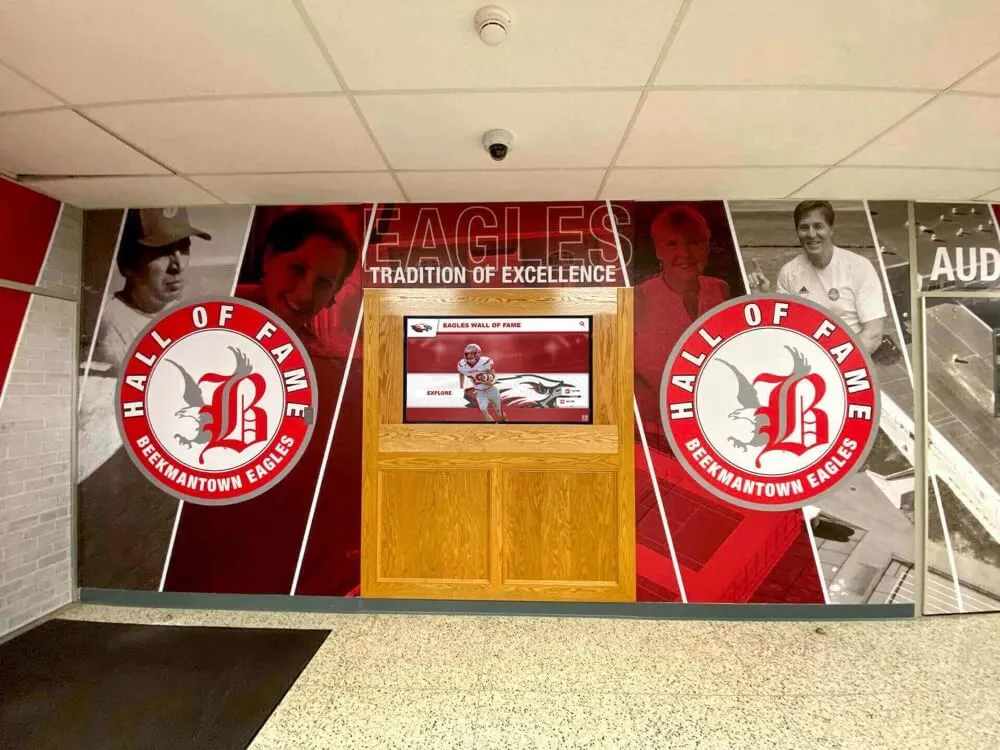
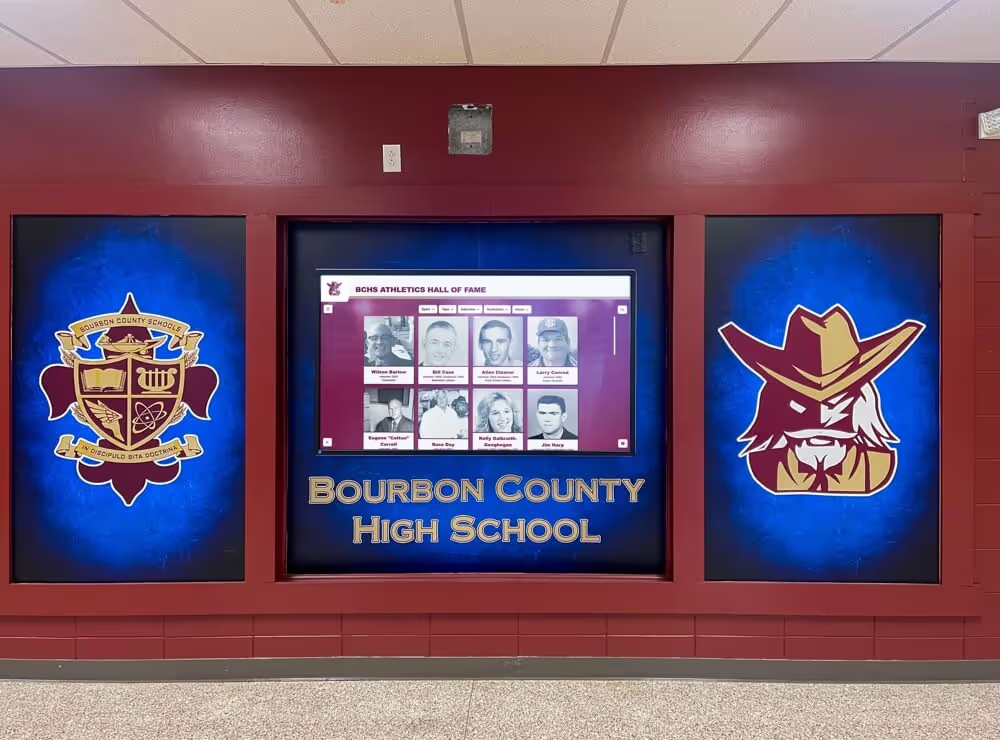
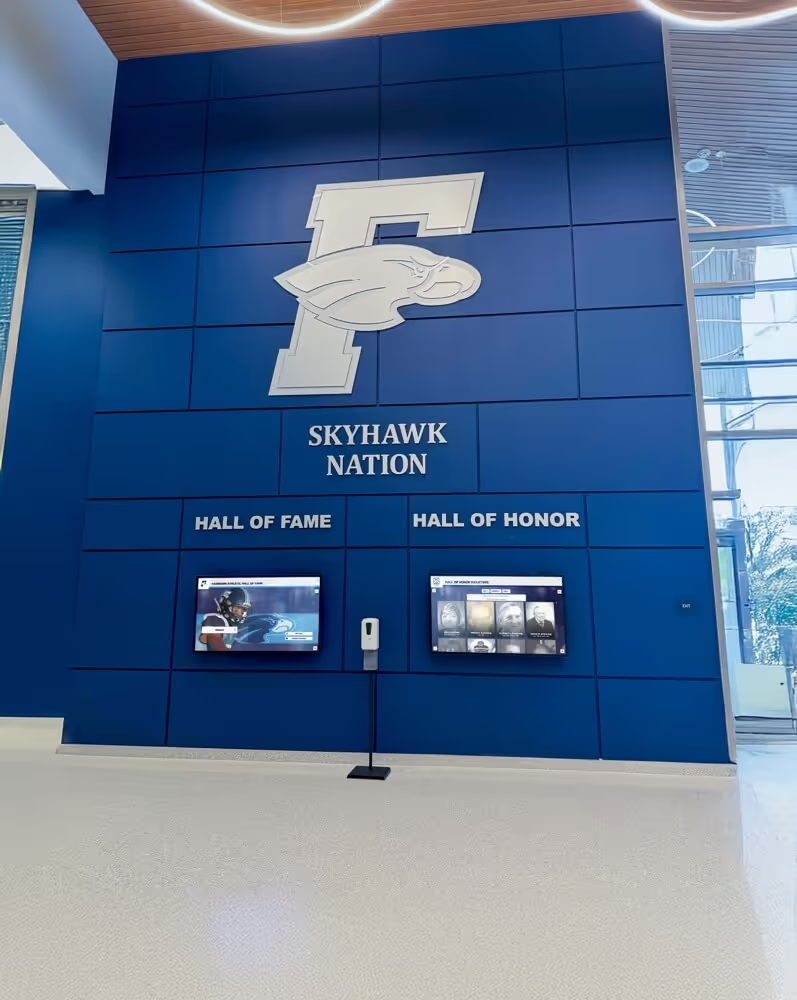
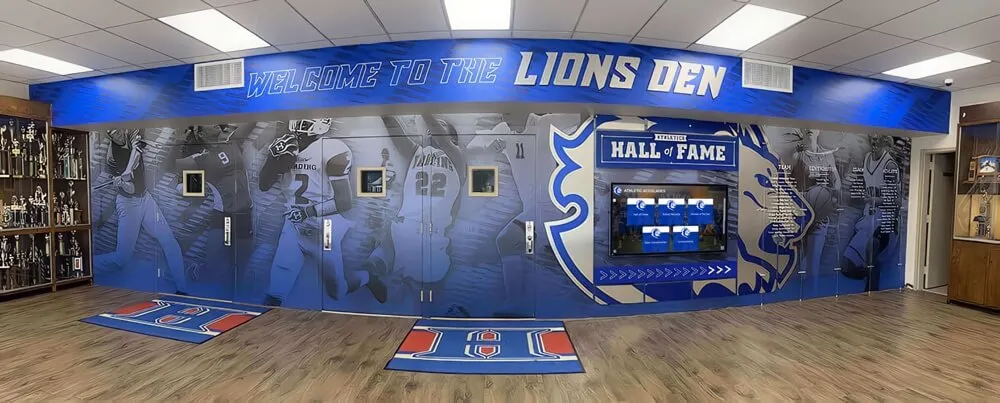
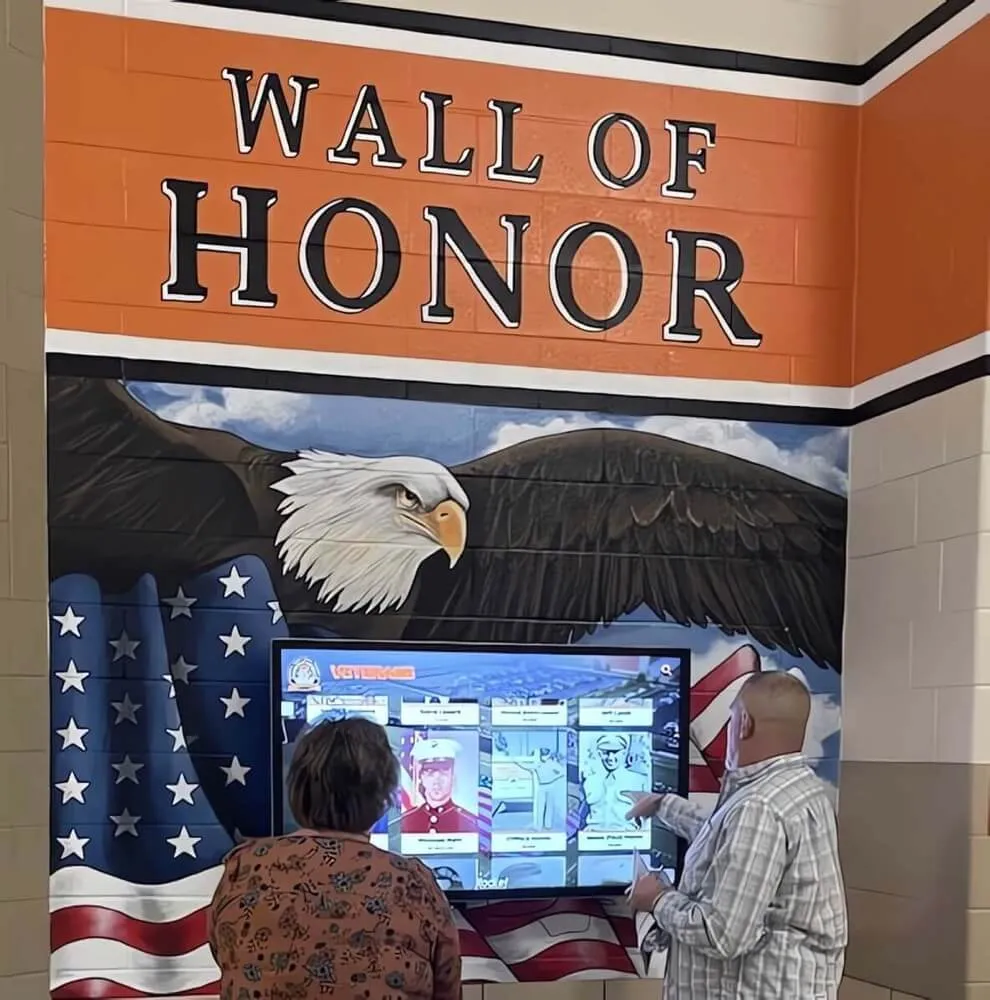
Many high schools with strong AFJROTC programs develop dedicated display areas celebrating the unit’s history and its distinguished cadets. These displays serve multiple functions simultaneously: honoring current and former cadets, educating the school community about the program’s scope, and creating visible evidence of institutional pride in the unit.
Effective AFJROTC display areas typically include:
Unit history panels documenting the program’s founding, significant milestones, commander histories, and major achievements across decades of operation.
Distinguished cadet recognition identifying the program’s most decorated graduates — Distinguished Graduate certificate recipients, Kitty Hawk Air Society inductees, cadets who went on to service academy appointments or ROTC scholarships, and those who achieved notable military careers after high school.
Competition achievement records documenting drill team placings, CyberPatriot results, academic bowl performances, and other competitive accomplishments that establish the unit’s competitive record across years.
Current unit leadership displays identifying the current Cadet Commander and key leadership positions, creating visible accountability and recognition for those serving in demanding leadership roles.
Ribbon and badge education panels helping the broader school community understand what the insignia on AFJROTC uniforms actually means — transforming mysterious symbols into legible accomplishment narratives.
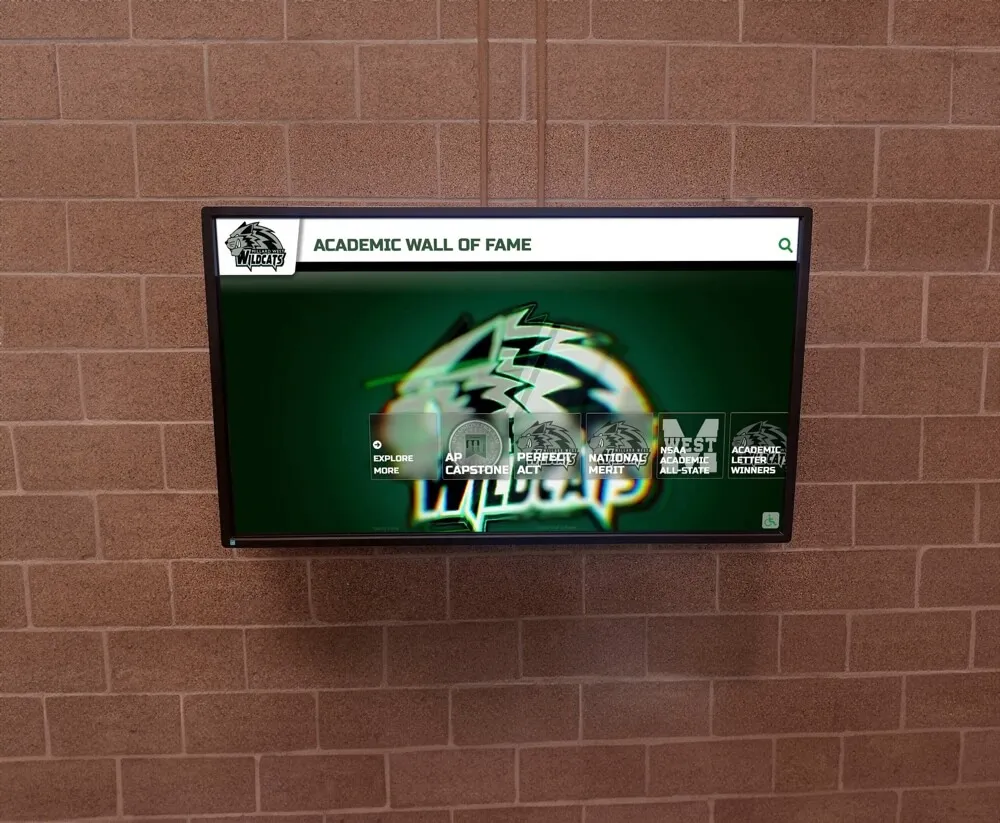
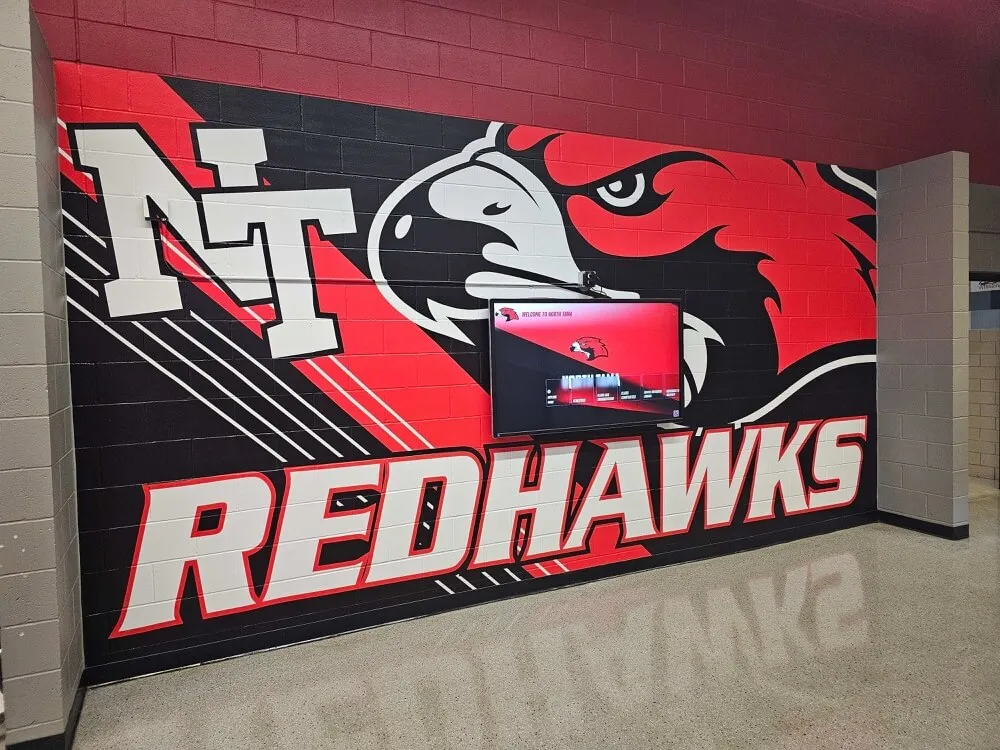
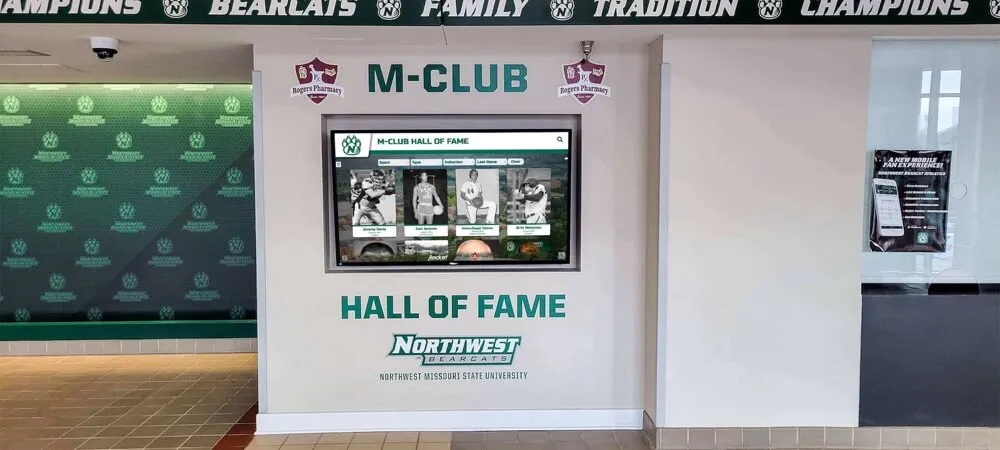
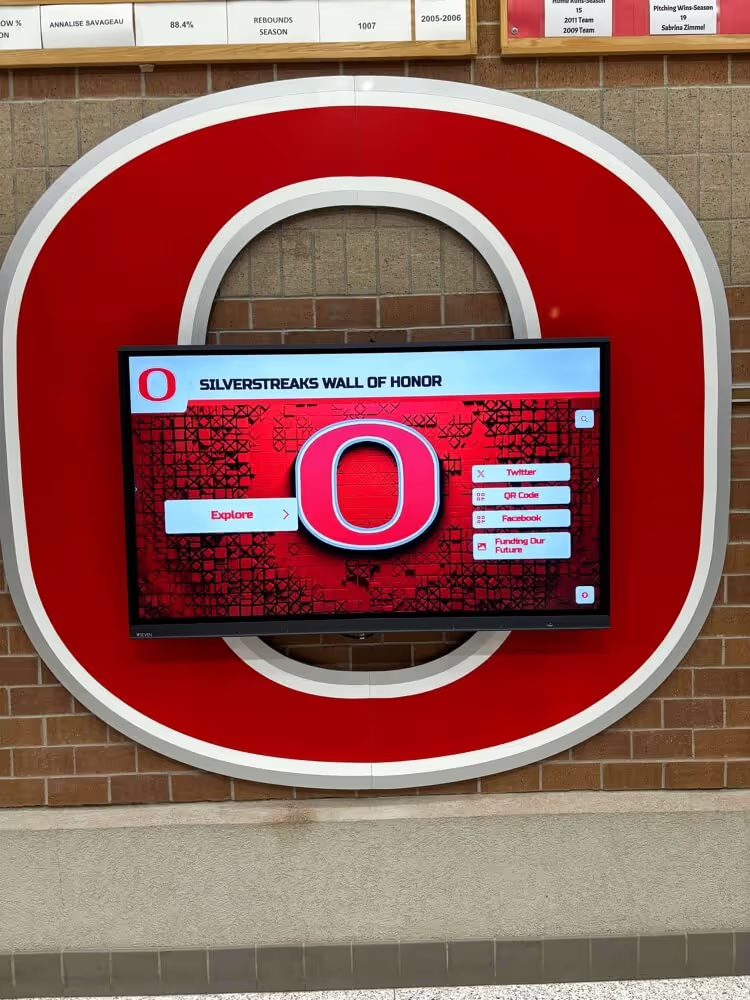
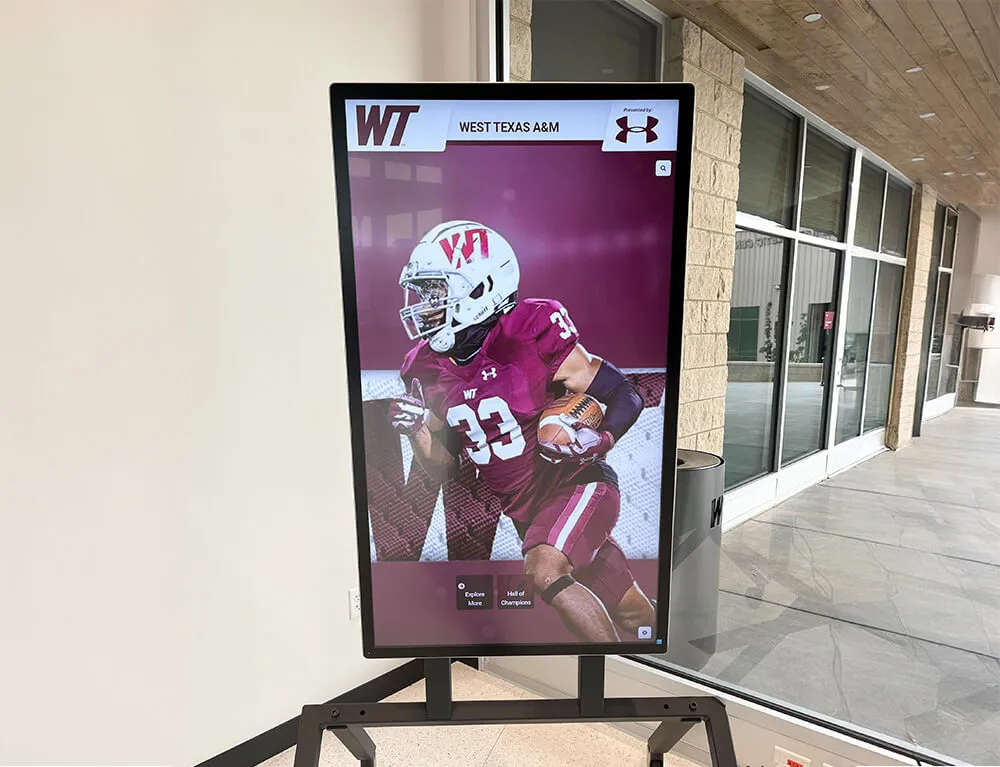
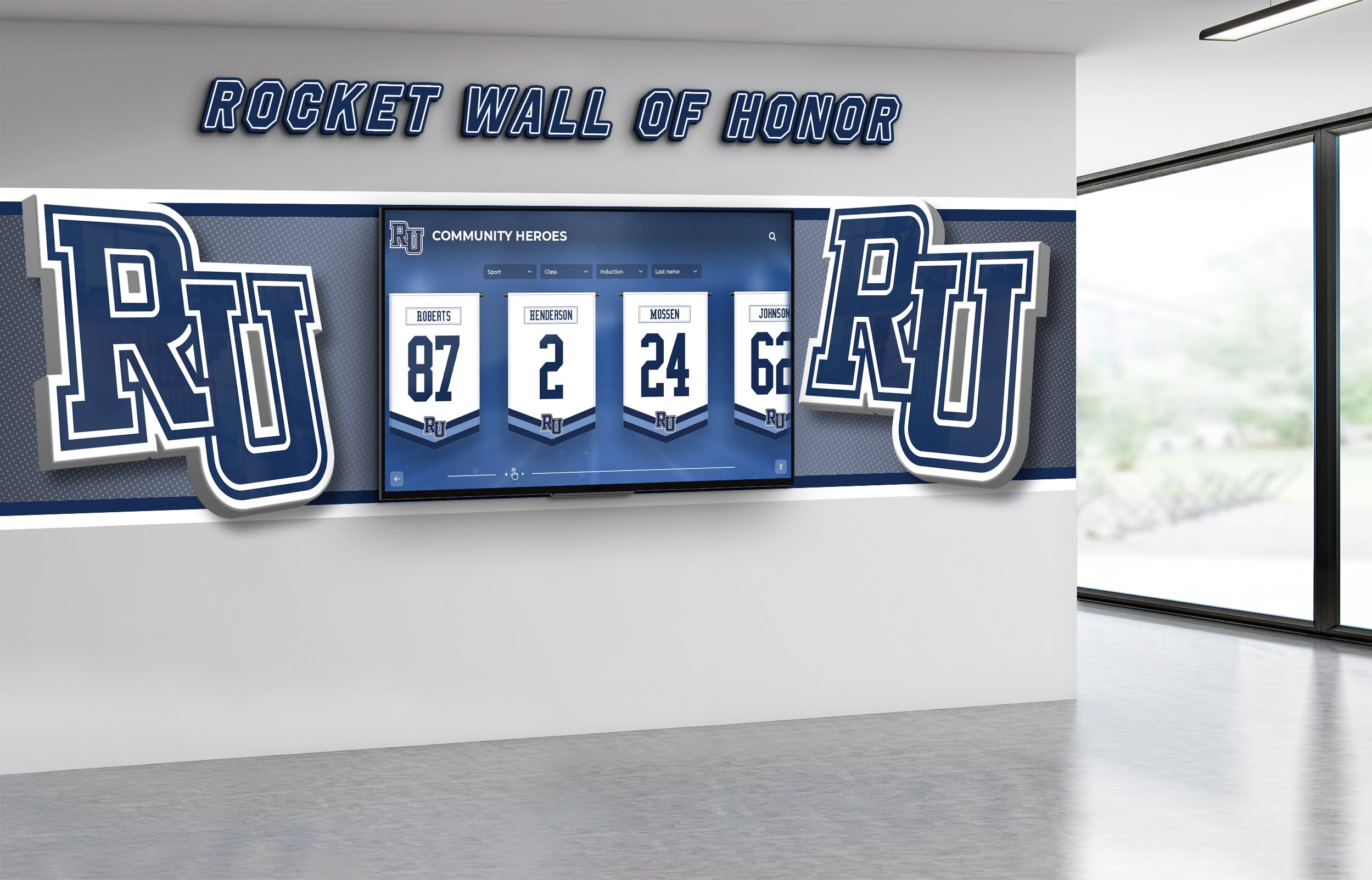
The benefits of a digital wall of fame apply especially well to AFJROTC programs: digital displays can accommodate the full complexity of cadet achievement records, scale without physical space constraints, and update as new Distinguished Graduates are named each year without requiring a physical redesign.
Digital Recognition Systems for AFJROTC Programs
The physical limitations of traditional display cases create real constraints for AFJROTC recognition. A program with forty years of history, hundreds of distinguished cadets, and dozens of competitive achievements simply cannot tell its full story through framed certificates on a wall. Digital systems designed for scholastic recognition solve this problem fundamentally.
Interactive touchscreen platforms can hold comprehensive profiles for every Distinguished Graduate the unit has ever produced — complete with uniform photos, ribbon rack descriptions, service academy appointments, ROTC scholarships, and post-graduation military careers. Visitors can search by year, by rank, by achievement type, or by name, exploring the full depth of program history through intuitive interfaces that require no technical background to navigate.
These systems also accommodate the kinds of visual content that make AFJROTC achievement vivid and meaningful: photos from drill competition finals, video clips from honor society induction ceremonies, images of cadets in full service dress at formal events, and documentation of rocketry launches and CyberPatriot team sessions.
For schools evaluating their options, understanding turnkey digital hall of fame display pricing for schools provides a practical starting point — many schools discover that purpose-built recognition platforms are more accessible than expected, especially when weighed against the multi-decade recognition value they deliver.
Connecting AFJROTC Achievement to Alumni Recognition
AFJROTC’s most powerful recognition opportunity involves connecting current cadet achievements to the post-graduation trajectories of program alumni. When prospective cadets and current freshmen can see profiles of graduates who went from this program to Air Force Academy appointments, ROTC scholarships, commissioned officer careers, and civilian leadership positions, they receive concrete evidence of what sustained engagement with the program can produce.
The best platforms for building a virtual hall of fame in 2026 offer schools flexible options for creating alumni recognition that extends beyond physical walls — particularly important for AFJROTC programs whose graduates are often stationed worldwide and cannot easily return for in-person events.
Building this alumni recognition layer requires intentional outreach: contacting distinguished graduates, collecting career information, gathering photos, and creating profiles that tell complete stories from high school cadet to accomplished adult. The investment in this outreach pays compounding returns over years as the database of recognized alumni grows more comprehensive and the stories it tells become more diverse and inspiring.

Building a Distinguished Cadet Hall of Fame
The concept of a dedicated AFJROTC Distinguished Cadet Hall of Fame — separate from or integrated with the school’s broader athletic and academic hall of fame — offers programs a structured framework for permanent recognition that grows more impressive with each passing year.
Effective AFJROTC halls of fame establish clear criteria that align with the program’s national recognition standards rather than local opinion. Distinguished Graduate status, Kitty Hawk Air Society membership, service academy appointments, and competitive achievement at national levels all provide defensible, externally validated thresholds for recognition decisions.
These programs work best when they are formally inducted with ceremony. Reviewing best practices for school award ceremony planning shows that the most effective recognition events share common elements: advance communication to honorees and families, a structured program that balances formality with warmth, and clear explanation of award criteria so audiences understand why each person is being recognized.
An annual AFJROTC recognition event that inducts new hall of fame members in front of the current cadet corps, with families in attendance, transforms abstract recognition into a lived cultural moment. Current cadets who attend an induction ceremony experience something more powerful than a plaque — they witness the program placing permanent institutional value on the kind of excellence they are currently working toward.
The long-term value of a well-maintained AFJROTC hall of fame compounds over decades. A program that has recognized distinguished cadets annually for thirty years holds an archive of hundreds of profiles that together document the program’s impact on the lives of the community’s young people. That archive becomes a community resource — a record of service, achievement, and aspiration that reflects the program’s values more vividly than any mission statement can.
The Broader Case for Visible AFJROTC Recognition
High schools that invest in visible, comprehensive AFJROTC recognition programs benefit in ways that extend beyond the cadets being honored.
Recruiting and enrollment for AFJROTC units benefits when prospective cadets and their families can see concrete evidence of what the program produces. A display wall showing years of distinguished graduates, competition achievements, and alumni career paths makes the program’s value proposition tangible in a way that no verbal pitch can match.
School culture becomes more inclusive when AFJROTC achievement receives genuine institutional acknowledgment alongside athletic and academic distinction. Schools that recognize the full range of how students can excel communicate values that serve every student — not only those whose achievements happen to fit traditional trophies-and-certificates categories.
Community relations improve when the broader community can see and understand what AFJROTC cadets accomplish. Many community members have limited direct exposure to the program and genuinely do not know what the ribbons on cadet uniforms represent. Guidance on military wall of honor and veteran recognition displays shows how schools and organizations across the country have successfully translated military achievement into recognition that civilian audiences find meaningful and compelling.
Alumni engagement strengthens when former cadets feel their achievements were genuinely valued by the institution. Distinguished graduates who received meaningful recognition during their school years maintain stronger connections to both the AFJROTC program and the school, making them more likely to mentor current cadets, contribute to program support, and participate in future recognition events.
Getting Started: Practical Steps for Building AFJROTC Recognition
Schools looking to strengthen their AFJROTC recognition programs can approach the process in phases that build on each other rather than requiring comprehensive implementation from the start.
Audit existing recognition: Identify what AFJROTC achievement currently receives school-wide recognition and what happens only within the program itself. Most schools discover that significant gaps exist — competitions won, Distinguished Graduates named, Kitty Hawk inductees — that never appeared in school-wide communication or physical displays.
Establish criteria for permanent recognition: Using the program’s national standards as the foundation, define which achievements merit permanent institutional recognition in display systems. Distinguished Graduate designation and Kitty Hawk Air Society membership provide clear thresholds. Add local criteria for competitive achievements that reach regional or national levels.
Gather historical records: Work with the SASI to identify and document distinguished cadets from the program’s full history. Old unit records, yearbooks, and SASI institutional memory often contain names and achievements that current display systems have never captured.
Choose a display format that scales: Whatever physical or digital format the school chooses for AFJROTC recognition, select one that can accommodate growth. Understanding who installs digital hall of fame displays in schools helps administrators understand the implementation process — most purpose-built systems are designed for straightforward installation with vendor support throughout.
Integrate with school-wide recognition events: Ensure that annual end-of-year ceremonies, honor assemblies, and other school-wide recognition events explicitly include AFJROTC achievement categories. This integration signals institutional commitment rather than token acknowledgment.
Rocket Alumni Solutions builds recognition platforms specifically designed for scholastic programs — systems that can house AFJROTC Distinguished Cadet halls of fame, display competition records, integrate multimedia content, and scale without space constraints across decades of program history. For AFJROTC programs ready to build recognition infrastructure worthy of what their cadets accomplish, purpose-built platforms deliver capabilities that general digital signage solutions cannot match.
Conclusion
Air Force Junior ROTC is one of American secondary education’s most comprehensive character-development programs. Its curriculum spans aerospace science and leadership education. Its rank and promotion system gives cadets a structured framework for earned advancement. Its ribbons and insignia tell detailed stories of accumulated achievement. Its competitive programs test cadets at regional and national levels across domains from precision drill to cybersecurity. Its Distinguished Graduate designation and Kitty Hawk Air Society membership provide externally validated recognition thresholds that universities, service academies, and employers recognize as meaningful credentials.
What AFJROTC programs often lack is not achievement to recognize — it is recognition infrastructure commensurate with that achievement. Schools that invest in visible, comprehensive, and lasting recognition systems for their AFJROTC units honor their cadets appropriately while building program cultures that inspire future cadets, engage alumni, and communicate institutional values to the broader community.
The cadet in the blue service dress uniform with a ribbon rack that took four years to build deserves more than internal program acknowledgment. That career of achievement belongs in the school’s permanent recognition record — visible, searchable, and growing more meaningful with every year that passes and every new Distinguished Graduate the program produces.
Ready to build recognition infrastructure worthy of your AFJROTC program’s achievements? Explore how Rocket Alumni Solutions helps high schools create permanent, engaging recognition systems for cadet programs, distinguished graduates, and military achievement that lasts for generations.
Frequently Asked Questions
What is the mission of Air Force JROTC?
The official AFJROTC mission is to develop citizens of character dedicated to serving their nation and community. The program is explicitly not a military recruiting program — its purpose is leadership development, academic enrichment through aerospace science, and citizenship education. While some AFJROTC graduates do choose military careers, the program’s success is measured by the character and civic engagement of all its graduates, not by enlistment rates.
How does AFJROTC rank work in high school?
AFJROTC cadets progress through a rank system that mirrors the Air Force’s enlisted and officer structure. Freshmen typically begin at basic enlisted grades and advance through NCO ranks as they demonstrate knowledge, performance, and leadership. Appointment to officer grades requires SASI recommendation and demonstrated leadership capability. The highest cadet rank — Cadet Colonel — is typically held by the unit’s commanding cadet. Rank insignia appears on the uniform in ways that directly parallel active-duty Air Force conventions.
What is the Distinguished Graduate award in AFJROTC?
Distinguished Graduate designation is awarded to approximately the top ten percent of graduating AFJROTC cadets nationally. It recognizes comprehensive excellence across academics, leadership, physical fitness, and citizenship during the cadet’s full time in the program. Distinguished Graduate status is widely recognized as a significant credential by colleges, universities, and service academies. Schools often use Distinguished Graduate designation as a primary threshold for permanent hall of fame recognition.
What is the Kitty Hawk Air Society?
The Kitty Hawk Air Society is AFJROTC’s academic honor organization, named for the location of the Wright Brothers’ 1903 flight. Membership requires superior performance across academics, physical fitness assessments, and leadership demonstration — integrating all three pillars of the AFJROTC curriculum. Inductees wear a distinctive badge and are recognized through formal ceremony. Kitty Hawk Air Society membership is one of the highest honors available to cadets within the program.
How can schools recognize AFJROTC achievements in their broader recognition systems?
Schools can integrate AFJROTC recognition through several approaches: including Distinguished Graduates and Kitty Hawk Society inductees in school-wide annual recognition events; creating dedicated AFJROTC display walls or digital recognition systems in school facilities; building Distinguished Cadet halls of fame that use national program standards as recognition criteria; connecting with alumni to document post-graduation achievements; and ensuring competitive achievements at regional and national levels receive the same institutional acknowledgment as athletic and academic competition results.
What competitive programs do AFJROTC units participate in?
AFJROTC units participate in competitions across multiple domains: precision drill and ceremony (including armed and unarmed regulation and exhibition categories), the AFJROTC Academic Bowl testing aerospace science and Air Force knowledge, the CyberPatriot National Youth Cyber Defense Competition, Model Rocketry competitions, and physical fitness challenges. Units that advance to national levels in any of these competitions demonstrate collective excellence that deserves permanent recognition in school display systems.