



Every spring, thousands of high school students gather at regional, state, and national competitions, not to run races or throw javelins, but to demonstrate mastery across ten academic subjects. They’ve spent months preparing for this moment—studying art history, analyzing literature, solving complex math problems, and mastering scientific concepts. These student-scholars represent their schools with the same pride and determination as any athletic team, yet their achievements often receive less visible recognition despite requiring comparable dedication, teamwork, and excellence.
Academic Decathlon stands as America’s premier scholastic team competition, designed specifically to celebrate intellectual diversity and academic rigor. Unlike single-subject competitions that reward narrow expertise, Academic Decathlon requires comprehensive knowledge across multiple disciplines, encouraging well-rounded scholarship that prepares students for college-level work and lifelong learning. The competition’s unique structure includes participants from all academic levels—honors students, average performers, and those who struggle academically—creating truly inclusive teams where diverse learners contribute equally toward shared goals.
The impact extends far beyond competition day. Academic Decathlon alumni consistently report that participation developed critical thinking skills, time management abilities, public speaking confidence, and collaborative teamwork that shaped their college success and professional careers. Many credit the program with discovering intellectual passions, building friendships with similarly motivated peers, and learning that academic achievement merits celebration comparable to athletic or artistic accomplishments.
This comprehensive guide explores everything schools, students, and families need to know about Academic Decathlon—from understanding the ten competitive events and team structure through preparing effectively, competing successfully, and recognizing achievements in ways that inspire future generations of scholar-athletes to pursue this ultimate scholastic challenge.
Understanding Academic Decathlon: Competition Structure and Philosophy
Before exploring how students compete, understanding Academic Decathlon’s fundamental structure and educational philosophy helps clarify what makes this competition unique among academic programs.
The Ten Events: Comprehensive Knowledge Assessment
Academic Decathlon challenges students across ten distinct events, each designed to test different intellectual capabilities and knowledge domains. Seven objective events use multiple-choice testing formats, while three subjective events require individual performance and judgment.
Objective Events (Multiple-Choice Testing):
Art: Students analyze art history, artistic movements, techniques, and major works from various periods and cultures. Questions require visual analysis, historical knowledge, and understanding of artistic concepts and terminology. The competition typically focuses on a specific theme that changes annually, requiring students to develop deep expertise in particular artistic periods or styles.
Economics: This event tests microeconomic and macroeconomic principles, economic systems, market structures, fiscal and monetary policy, and economic theory application. Students must understand graphs, interpret economic data, and apply theoretical concepts to real-world scenarios, preparing them for college-level economic thinking.
Literature: Students read and analyze novels, poetry, drama, and non-fiction works selected around the annual theme. Questions assess reading comprehension, literary analysis, understanding of literary devices and themes, author biography and historical context, and ability to interpret complex texts at sophisticated levels.
Mathematics: The math event covers algebra, geometry, trigonometry, statistics, probability, and basic calculus. Problems test computational skills, problem-solving strategies, and mathematical reasoning. Unlike some math competitions emphasizing speed, Academic Decathlon balances calculation accuracy with conceptual understanding.
Music: Similar to art, music tests knowledge of music history, theory, composers, musical periods, genres, and analytical listening skills. Students identify musical selections, understand notation and terminology, and demonstrate comprehensive musicology knowledge focused on the annual theme.
Science: The science event covers biology, chemistry, physics, and earth science, requiring broad scientific literacy rather than narrow specialization. Questions test scientific concepts, experimental methodology, data interpretation, and application of scientific principles to real-world problems. The annual theme typically emphasizes specific scientific domains requiring deeper study.
Social Science: This event encompasses history, political science, sociology, anthropology, geography, and psychology. Students must understand historical events, governmental systems, social structures, cultural patterns, and human behavior across various contexts, developing comprehensive social science literacy.
Subjective Events (Performance-Based Assessment):
Essay: Students write analytical essays responding to prompts related to the annual theme, demonstrating writing skills, critical thinking, organization, argumentation, and ability to synthesize information from multiple sources. Essays are scored by trained judges using standardized rubrics assessing thesis development, evidence use, organization, and writing quality.
Interview: This event simulates professional interviews where students respond to questions from judges about theme-related topics and personal experiences. Scoring emphasizes communication skills, poise, thoughtfulness, content knowledge, and ability to articulate ideas clearly under pressure—capabilities essential for college interviews, scholarship applications, and professional success.
Speech: Students deliver prepared speeches on theme-related topics, demonstrating public speaking skills, organization, argumentation, delivery techniques, and ability to engage audiences effectively. Unlike traditional speech competitions allowing extensive preparation time, Academic Decathlon requires relatively rapid preparation, testing both content knowledge and presentation capabilities.
Team Structure: Celebrating Diverse Academic Abilities
Academic Decathlon’s most distinctive feature is its intentionally inclusive team structure requiring participants from all academic achievement levels rather than only top performers.
The Three-Tier System:
Each nine-member team includes three students from each of three GPA categories based on cumulative grade point average:
- Honors Division: Three students with GPAs of 3.75-4.00 (A/A- students)
- Scholastic Division: Three students with GPAs of 3.00-3.74 (B+/B students)
- Varsity Division: Three students with GPAs below 3.00 (C+ and below students)
This structure creates genuinely diverse teams where students with different academic backgrounds contribute equally. Varsity division students aren’t relegated to supporting roles—they compete in all ten events with scores counting equally toward team totals. The highest-scoring team wins regardless of which division produced the points, making every team member essential rather than some students serving merely to meet participation requirements.
Why This Structure Matters:
Traditional academic competitions often feature only top students, inadvertently communicating that intellectual challenge belongs exclusively to honors students. Academic Decathlon’s inclusive structure sends a different message: all students can achieve academic excellence through dedicated effort regardless of previous academic history. Many varsity division students discover unexpected intellectual capabilities, develop confidence through meaningful contribution, and pursue academic paths they previously considered inaccessible.
The structure also teaches honors students valuable lessons about working collaboratively with diverse peers, recognizing that intelligence manifests in multiple forms, and understanding that academic success involves more than natural ability—dedication, preparation, and teamwork matter equally. These lessons about inclusive excellence and collaborative achievement prove as valuable as the content knowledge students develop.
The Annual Theme: Deep Knowledge Focus
Each Academic Decathlon year focuses on a specific theme connecting all competition events, creating coherent learning experiences rather than disconnected subject tests.
Recent Theme Examples:
- “In Sickness and In Health”: Exploring disease, medicine, public health, and wellness across art, literature, science, and social science contexts
- “The Cold War”: Examining this defining 20th-century conflict through political, artistic, literary, scientific, and social perspectives
- “Innovation in America”: Investigating American creativity and invention across multiple disciplines and historical periods
The annual theme creates intellectual coherence while requiring substantial preparation. Rather than studying general art history, students focus on Cold War artistic movements. Rather than reading any literature, they analyze works addressing health and illness. This thematic approach develops deep expertise in particular historical periods or conceptual domains while maintaining the broad multi-disciplinary structure that makes Academic Decathlon distinctive.
Schools receive curriculum guides in late spring for the following year’s competition, allowing summer preparation and fall intensive study before winter and spring competitions. This extended preparation timeline enables the depth of learning Academic Decathlon promotes, distinguishing it from competitions emphasizing quick recall of isolated facts.
Preparing for Academic Decathlon: Study Strategies and Commitment
Success in Academic Decathlon requires substantial preparation across multiple subjects—typically 150-300 hours per student during the school year. Understanding effective preparation strategies helps students and coaches maximize learning while maintaining balance with other commitments.
The Time Investment Reality
Academic Decathlon demands considerable time commitment comparable to varsity athletic team participation. Most competitive teams practice 8-15 hours weekly during preparation season (September through competition season ending in April/May), including after-school sessions, weekend study groups, and individual preparation between team meetings.
Typical Weekly Schedule:
- After-school team practice: 2-3 sessions at 2-3 hours each (6-9 hours weekly)
- Individual study and preparation: 5-10 hours weekly depending on academic background and competition goals
- Optional subject-specific tutoring or small group sessions: 2-4 hours weekly
- Weekend intensive preparation before competitions: 4-8 additional hours
This substantial commitment requires careful time management, particularly for students balancing athletics, performing arts, part-time employment, or other significant activities. Successful Academic Decathlon participants develop sophisticated scheduling and prioritization skills that serve them well throughout college and career.
Schools should communicate these time expectations clearly during recruitment so students and families can make informed decisions about participation feasibility. Many schools find that explicit discussion of time commitment actually attracts motivated students seeking meaningful intellectual challenges rather than deterring participation through excessive demands.
Effective Study Approaches and Resource Materials
Academic Decathlon provides comprehensive study materials including curriculum guides, practice tests, and supplementary resources for each subject area. Effective preparation requires strategic use of these materials rather than simply reading through hundreds of pages hoping knowledge accumulates.
Core Preparation Materials:
The United States Academic Decathlon association produces detailed curriculum guides for each subject, typically 30-60 pages of essential content students must master. These guides provide focused knowledge rather than requiring students to learn entire subjects independently—making the challenge rigorous but achievable through dedicated study.
Additional materials include practice tests simulating competition formats and difficulty levels, online study resources and flashcards covering essential terminology and concepts, theme-specific supplementary readings providing deeper context, and audio guides for music event preparation allowing auditory learning during commutes or exercise.
Subject-Specific Strategies:
Different subjects benefit from distinct preparation approaches:
Objective Events: Create comprehensive flashcard systems covering key facts, concepts, and terminology; take multiple practice tests under timed conditions to build speed and accuracy; study in teams to quiz each other and identify knowledge gaps; review incorrect answers thoroughly to understand mistakes and strengthen weak areas; and develop test-taking strategies for eliminating wrong answers and managing time effectively.
Subjective Events: Practice writing essays under timed conditions matching competition requirements; participate in mock interviews with coaches, parents, or mentors providing constructive feedback; deliver speeches repeatedly to develop confidence, refine delivery, and internalize content; record performances and self-evaluate to identify improvement areas; and study strong example responses to understand scoring rubric expectations and excellence standards.
Theme Integration: Rather than studying subjects in isolation, identify theme connections across disciplines showing how art, literature, science, and social science interrelate around common themes; develop timeline understanding of historical periods relevant to the annual theme; and recognize recurring concepts, vocabulary, and ideas appearing across multiple subjects, reinforcing learning through repetition in varied contexts.
Building Effective Team Culture and Collaboration
While individual study matters, Academic Decathlon succeeds through collaborative team cultures where students support each other’s learning, share expertise, and celebrate collective achievement rather than individual performance alone.
Peer Teaching and Learning:
Students typically develop expertise in specific subjects based on interests and strengths, then teach teammates through presentations, study sessions, and resource sharing. This peer teaching reinforces learning for student teachers while providing diverse perspectives that strengthen team-wide understanding. Honors students often tutor scholastic and varsity peers, while students from all divisions contribute unique insights from their experiences and perspectives.
Team Bonding and Motivation:
Long-term intensive preparation requires social connection and mutual encouragement. Successful teams build camaraderie through team dinners, group study sessions combining academics with socializing, celebration of individual and collective milestones, and team traditions creating shared identity and pride. Students who genuinely enjoy their teammates’ company maintain motivation through challenging preparation periods when individual study alone might lead to burnout or discouragement.
Many Academic Decathlon alumni cite team relationships as among their most valued high school experiences—friendships with intellectually curious peers who shared their passion for learning and celebrated academic achievement rather than treating it as socially undesirable.
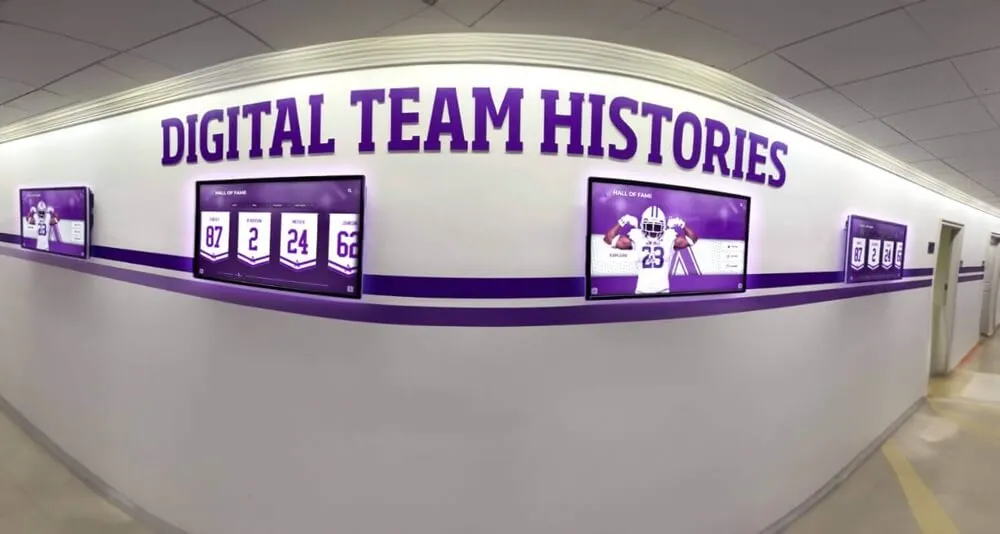
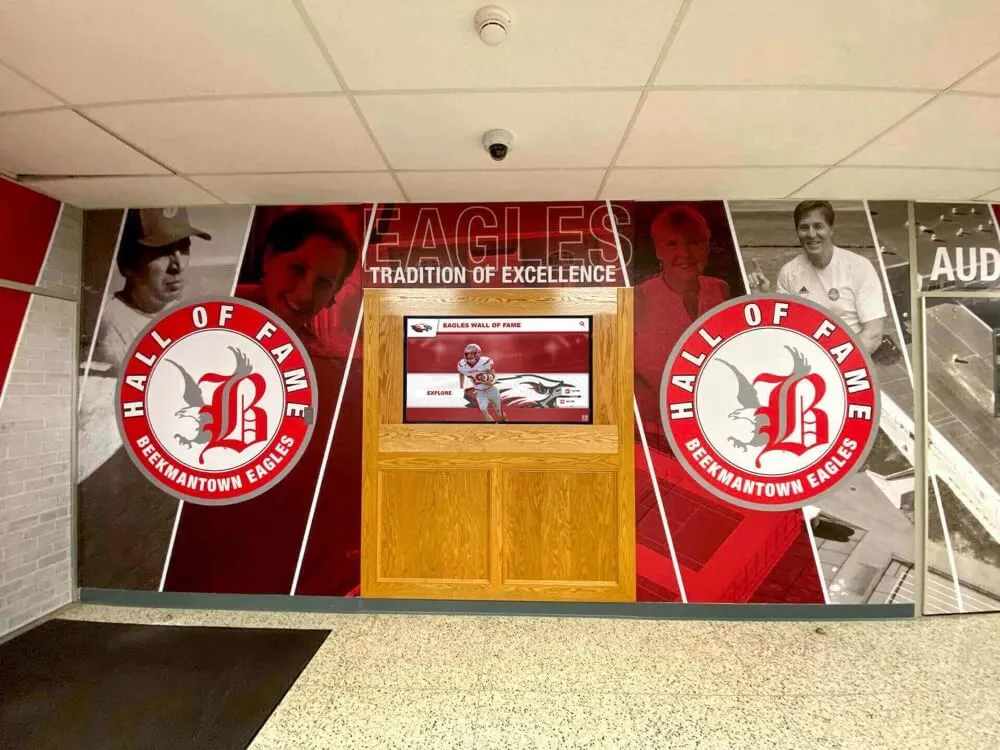
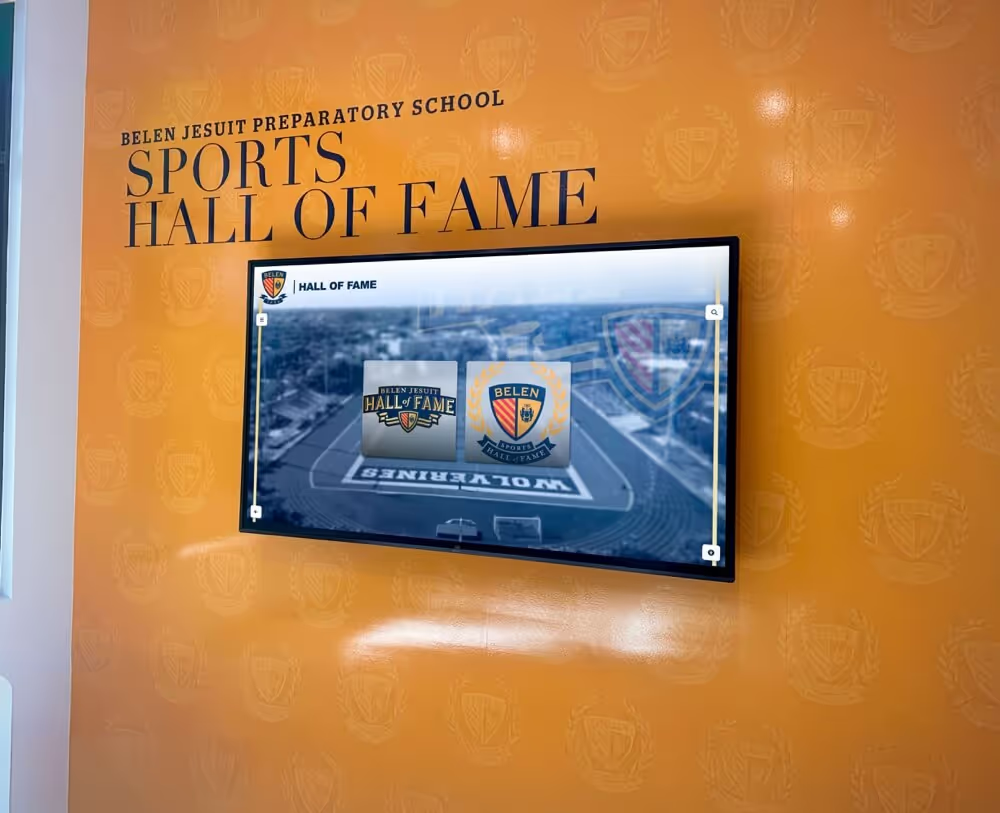
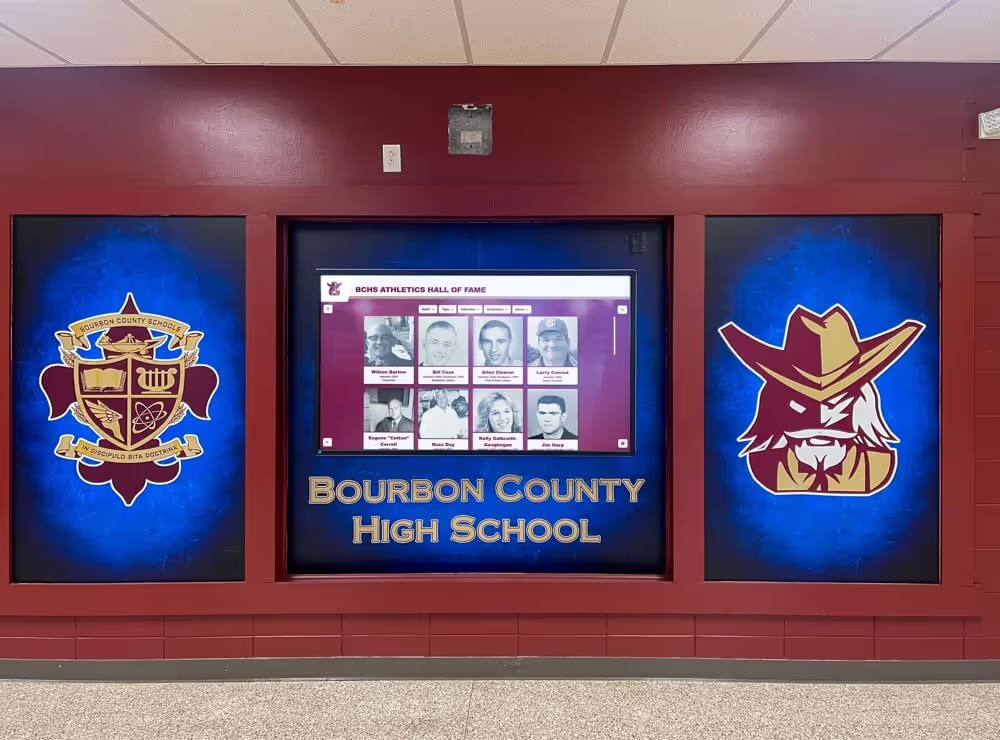
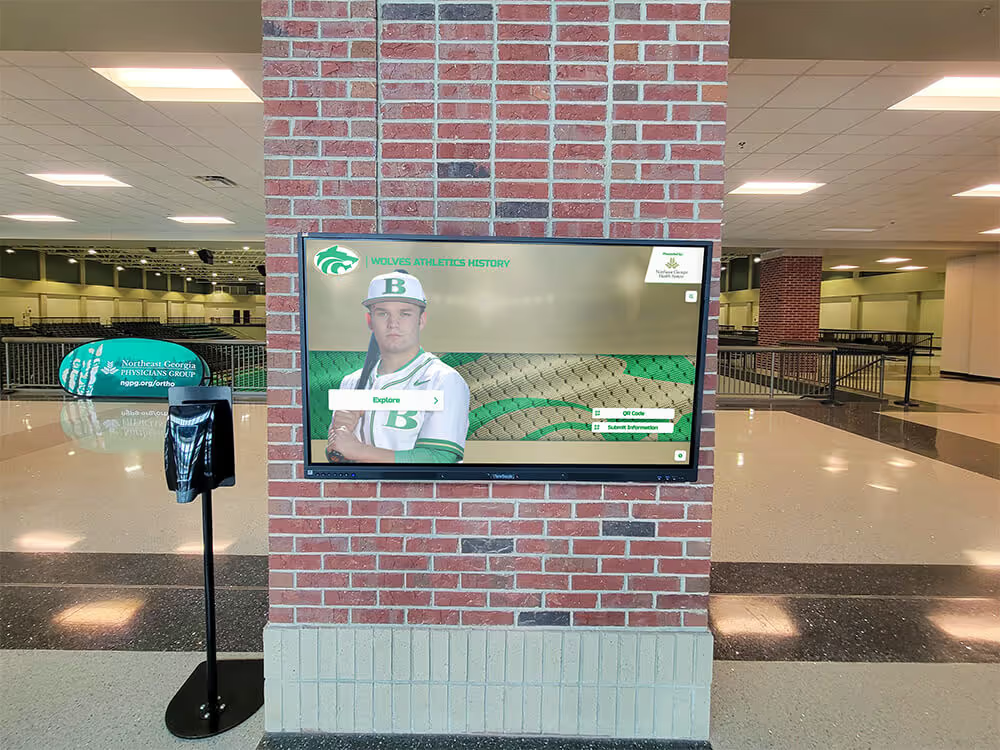
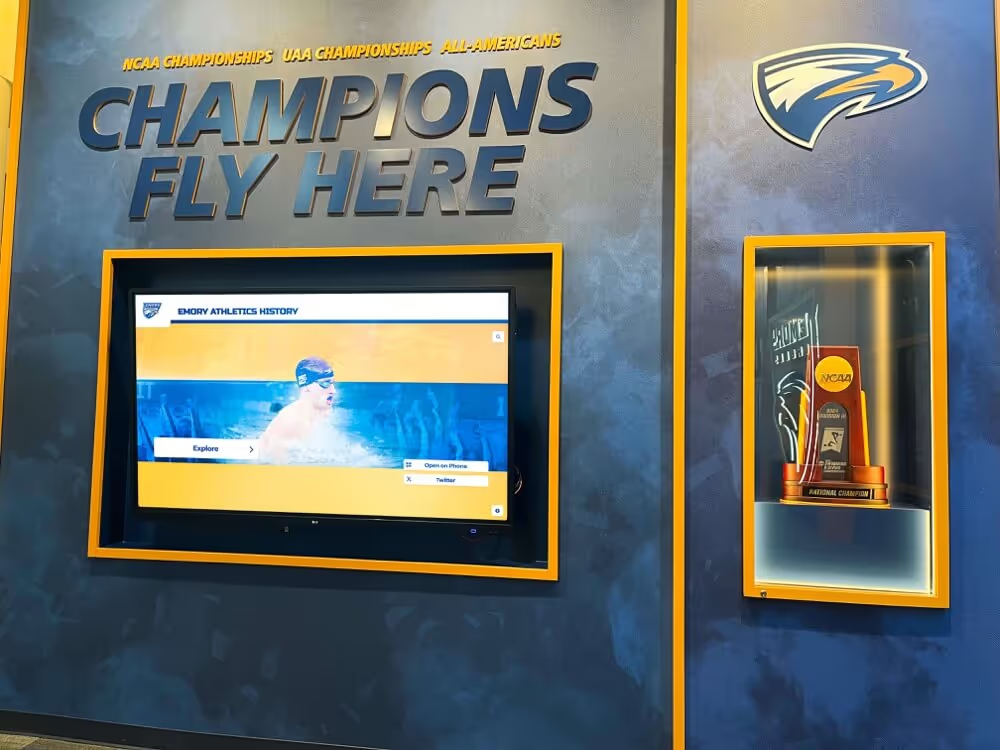
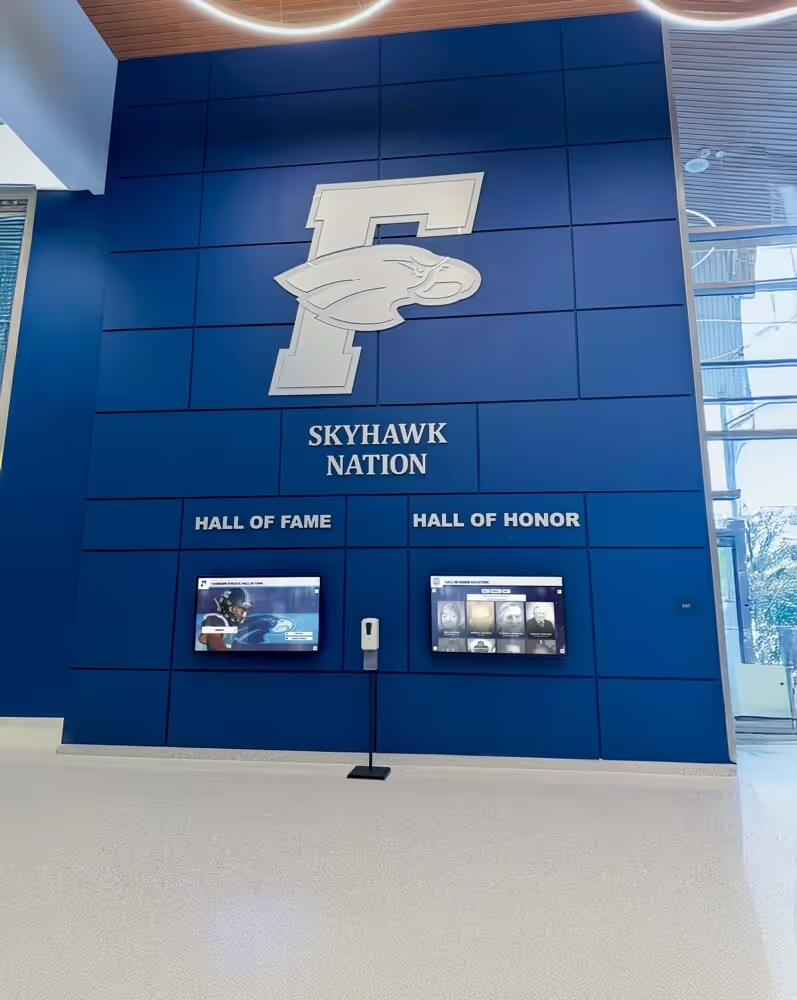
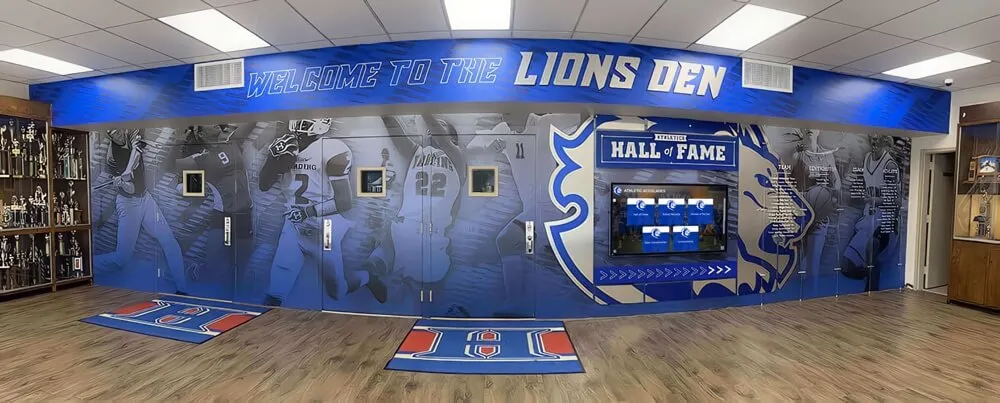
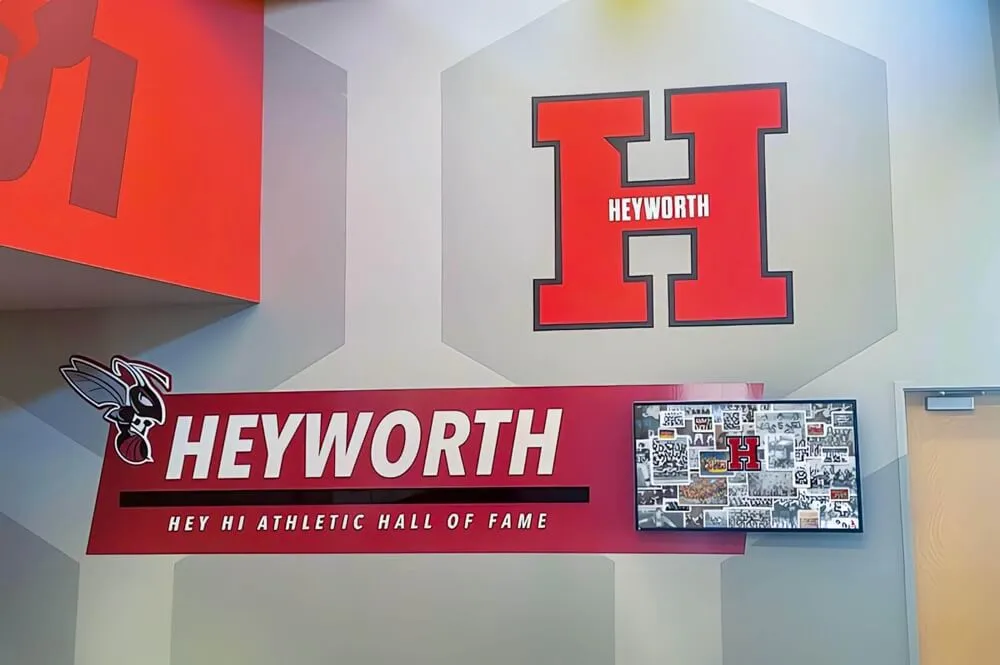
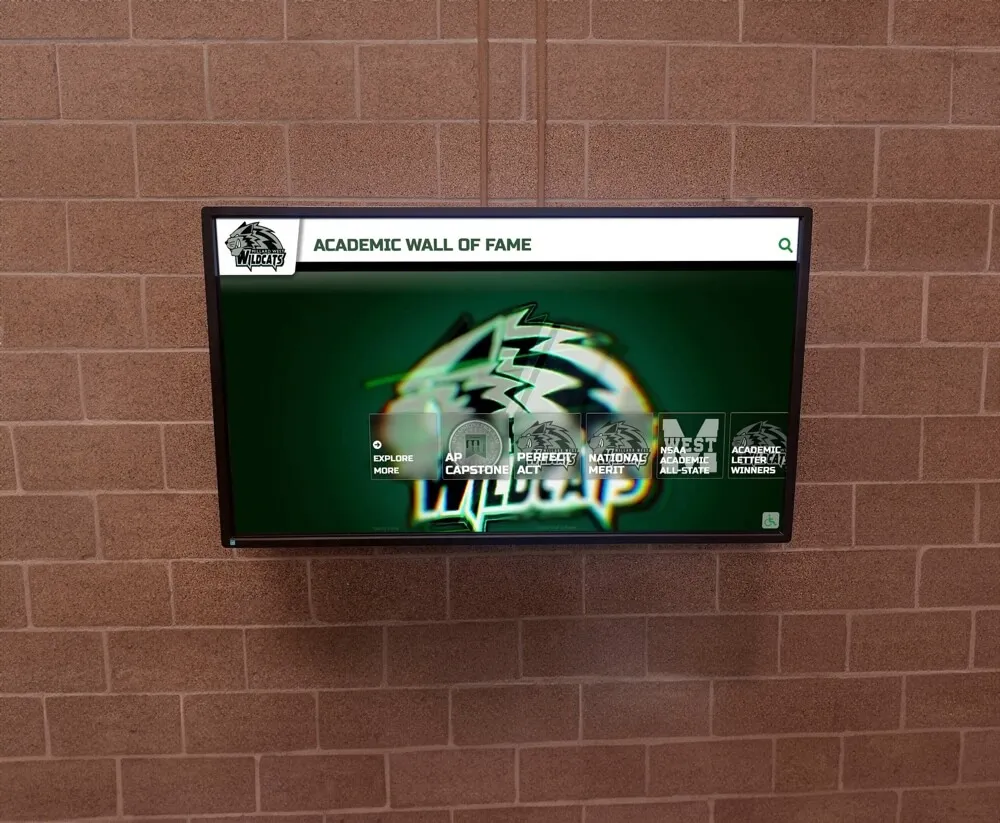
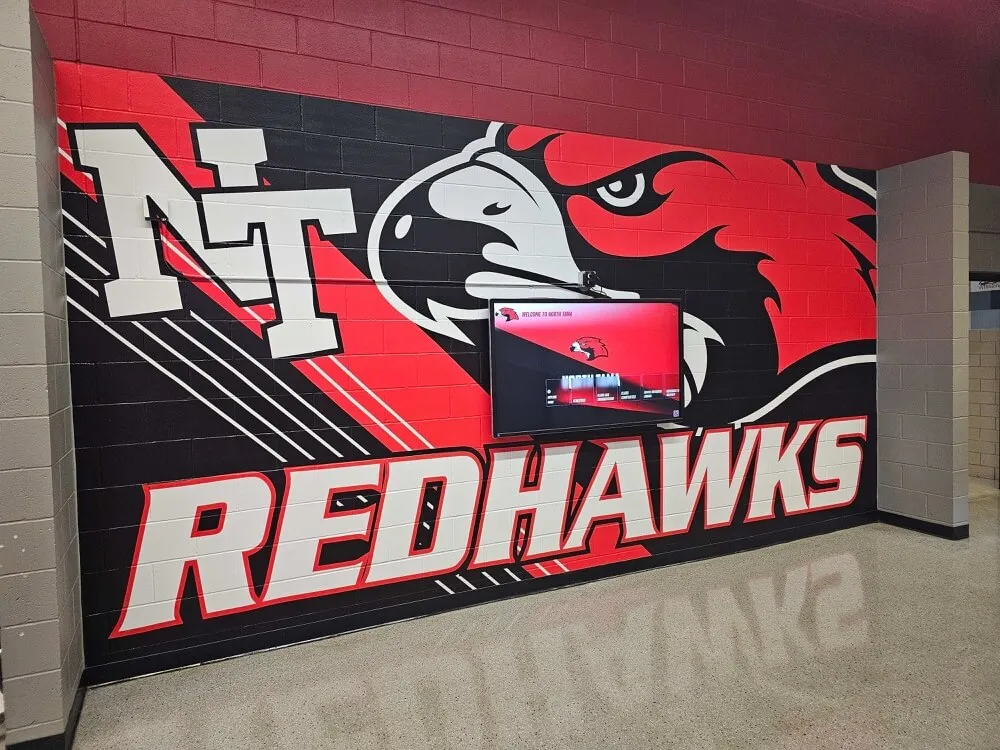
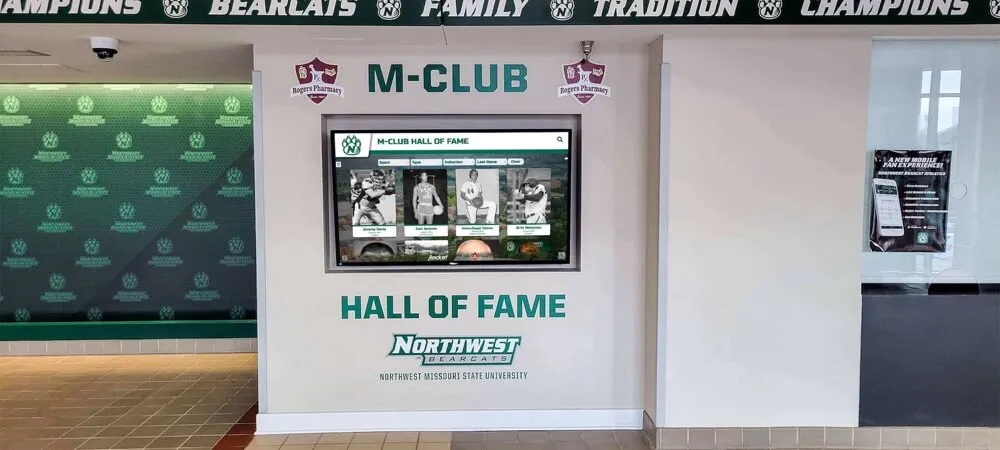
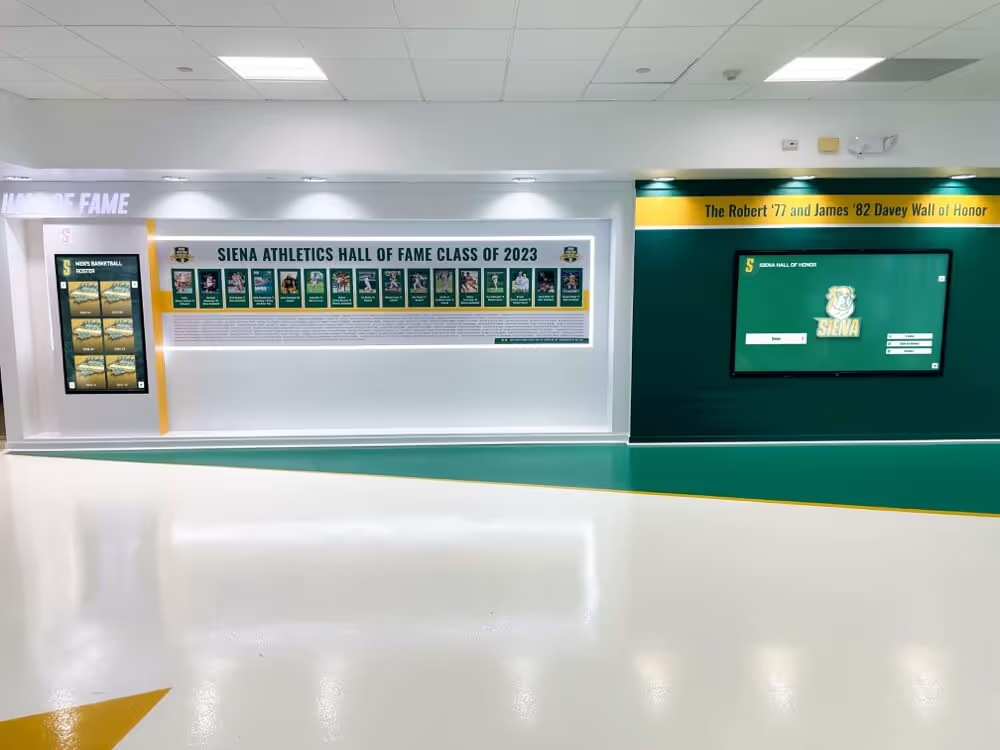
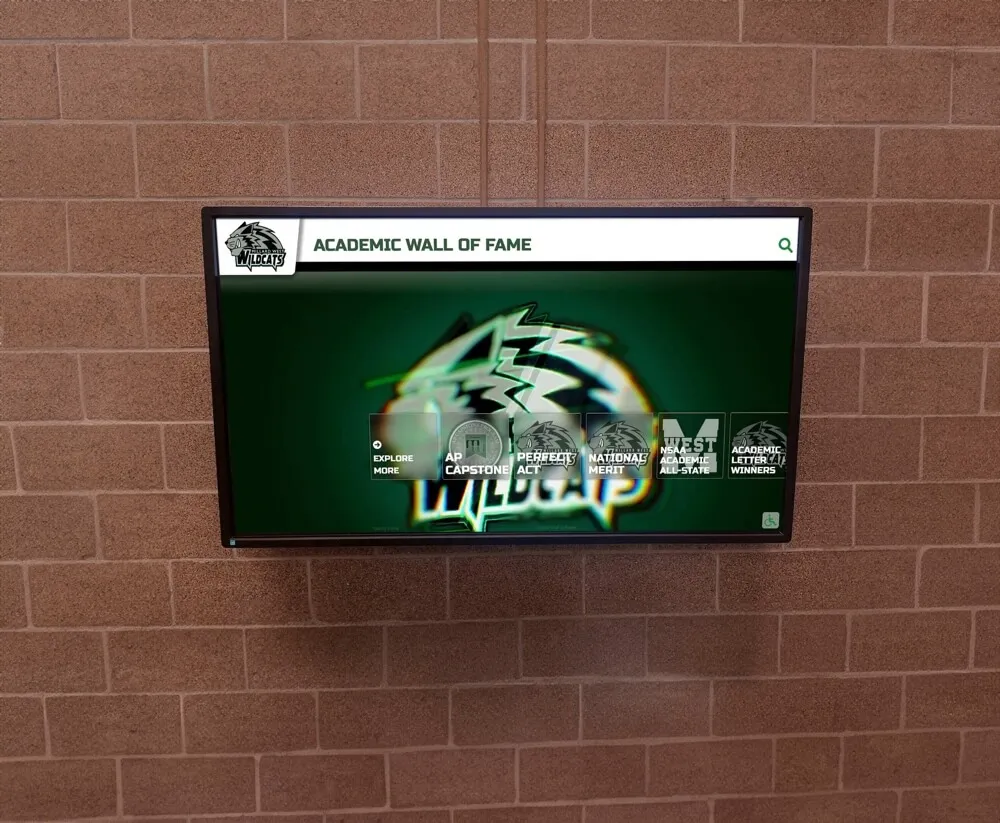
Schools interested in supporting diverse forms of student achievement might consider how digital recognition displays can showcase Academic Decathlon accomplishments alongside athletic and artistic recognition, demonstrating that intellectual competition merits comparable celebration.
Competition Day: Events, Scoring, and the Path to Nationals
After months of preparation, students finally demonstrate their knowledge at regional, state, and potentially national competitions. Understanding competition structure, scoring systems, and advancement pathways helps teams navigate these culminating events effectively.
Competition Formats and Advancement Structure
Academic Decathlon uses a tiered competition structure allowing teams to advance from regional through state to national championships based on performance.
Regional/Local Competitions:
Most states conduct regional or invitational competitions in late fall or winter where multiple schools compete. These preliminary competitions serve multiple purposes: providing teams with competition experience before high-stakes state championships; identifying strong teams likely to compete successfully at state level; and creating opportunities for newer programs to gain experience in lower-pressure environments before competing against established powerhouse schools.
Regional competition formats vary by state but typically include all ten events compressed into one or two days, with objective tests administered simultaneously and subjective events scheduled throughout the day with judges assessing multiple students in rotation.
State Championships:
State competitions typically occur in February or March, bringing together the strongest teams from regional competitions plus any schools granted automatic entry based on previous year performance or state-specific qualification criteria.
State championships create intense, exciting atmospheres where schools compete for the prestige of state titles and the opportunity to advance to national competition. These events typically occur over two days with objective tests on day one and subjective events on day two, allowing concentrated focus on different event types while providing breaks between different intellectual demands.
Top-finishing teams at state championships (typically 1-3 teams depending on state size and competitive strength) earn invitations to the national championship. For many students, competing at state represents the culmination of their Academic Decathlon journey—an achievement worthy of significant recognition regardless of national advancement.
National Championship:
The United States Academic Decathlon National Championship brings together state champions and select additional high-performing teams from large states in late April or early May. Recent national championships have taken place in cities like Dallas, Minneapolis, and Anchorage, creating week-long experiences combining intense competition with educational tourism and social interaction among the nation’s top academic teams.
National competition includes all ten events plus an opening ceremony, awards banquet, and team activities fostering connections among students from across the country who share passion for academic excellence. For students who advance, nationals represents a once-in-a-lifetime experience demonstrating that academic achievement can create memorable experiences comparable to athletic championships and championships.
Scoring Systems and Award Recognition
Academic Decathlon’s scoring system ensures equitable competition across the three divisions while recognizing both team excellence and individual achievement.
Point-Based Scoring:
Each event awards points based on performance, with possible scores ranging from 0-1,000 points per event per student. Objective events use percentage-based scoring where a perfect score (100% correct) earns 1,000 points, while subjective events use rubric-based scoring where judges award points according to standardized criteria for content, organization, delivery, and other relevant dimensions.
A team’s total score equals the sum of all nine team members’ scores across all ten events—meaning perfect team performance would total 90,000 points (9 students × 10 events × 1,000 points maximum). In practice, winning teams typically score 45,000-55,000 points, while competitive teams that don’t finish first often score 38,000-48,000 points, indicating that even top teams typically achieve 50-60% of theoretical maximum scores rather than near-perfect performance.
Individual Recognition:
While Academic Decathlon emphasizes team achievement, individual excellence receives recognition through multiple award categories celebrating specific accomplishments:
Divisional Medals: Top performers in each GPA division receive medals recognizing individual excellence. Typically the top 3-5 individual scorers in honors, scholastic, and varsity divisions receive gold, silver, and bronze medals, ensuring that students from all academic backgrounds can earn individual recognition rather than honors students dominating all awards.
Event Medals: The highest scorers in each individual event (art, economics, literature, math, music, science, social science, essay, interview, speech) receive event-specific medals. Some competitions award division-specific event medals while others recognize overall highest scores regardless of division.
Overall Individual Champion: The single highest-scoring individual across all ten events earns recognition as overall individual champion—typically considered the most prestigious individual honor showing comprehensive excellence across all subjects rather than narrow specialization.
Schools implementing comprehensive recognition programs often showcase these individual achievements through digital academic recognition displays that celebrate medalists, divisional champions, and state qualifiers, ensuring these intellectual accomplishments receive visibility comparable to athletic medals and trophies.
The Competition Experience: What Students Report
Students describe competition day as simultaneously exhilarating and exhausting—ten hours of intense intellectual activity testing preparation, focus, and resilience. Unlike traditional tests taken in quiet classrooms, Academic Decathlon competitions create energetic atmospheres with hundreds of students, coaches, and families creating festival-like environments celebrating intellectual achievement.
Between events, students decompress by socializing with teammates, meeting competitors from other schools, and sharing experiences about particularly challenging questions or surprising performance in specific events. This social dimension transforms what could be isolating individual testing into communal celebration of scholarship where students bond over shared intellectual challenges.
Many students report that competition day provides some of their most memorable high school experiences—not just because of scores or medals, but because of the realization that hundreds of other students also value learning, celebrate academic achievement, and believe intellectual excellence deserves recognition and competitive spirit typically reserved for athletics.
Recognizing Academic Decathlon Achievement: Building Cultures That Celebrate Scholarship
Academic Decathlon participation represents significant achievement through months of dedicated preparation, mastery of diverse subjects, and competitive performance against peer schools. Yet many schools struggle to recognize these accomplishments in ways that feel proportional to the effort involved or comparable to recognition that athletic achievements typically receive.
Why Recognition Matters: Motivation and Institutional Culture
Visible, meaningful recognition for Academic Decathlon serves multiple purposes extending beyond simply acknowledging individual student achievement.
Motivating Continued Excellence:
Students who see their intellectual accomplishments celebrated prominently develop stronger motivation to maintain academic excellence. When schools showcase Academic Decathlon medals, team photos, and competition results as prominently as athletic trophies, students understand that academic achievement receives genuine institutional respect rather than perfunctory acknowledgment.
Recognition proves particularly powerful for varsity division students who may have limited prior academic success. Seeing their names on recognition displays and receiving medals for competitive performance can transform self-perception, demonstrating that they can achieve intellectual excellence through dedicated effort. Many coaches report that varsity students who initially joined reluctantly become some of the most dedicated team members after experiencing the confidence that comes from recognized achievement.
Recruiting Future Participants:
Prominent Academic Decathlon recognition serves recruiting functions by demonstrating to younger students that intellectual competition offers prestigious opportunities worthy of their time investment. When freshmen and sophomores regularly encounter displays showcasing previous years’ teams, medalists, and state qualifiers, Academic Decathlon becomes a visible part of school culture that students naturally consider joining rather than an obscure activity they discover only through chance conversations.
Schools report that visible recognition dramatically improves recruitment quality and quantity. Students specifically mention seeing displays as motivation for joining, while some report that parents encouraged participation after observing prominent recognition demonstrating school commitment to celebrating academic achievement.
Communicating Institutional Values:
Perhaps most importantly, how schools recognize different achievements communicates what institutions genuinely value. When only athletic accomplishments receive visible, permanent recognition while academic competition results are briefly mentioned in announcements then forgotten, students correctly interpret that their school values physical performance more than intellectual achievement.
Balanced recognition creating comparable visibility for academic and athletic excellence communicates that schools value multiple forms of achievement and provide pathways to significance beyond single narrow domains. This inclusive recognition culture benefits all students by validating diverse talents rather than privileging only those whose strengths align with traditionally celebrated activities.
Traditional Recognition Approaches and Their Limitations
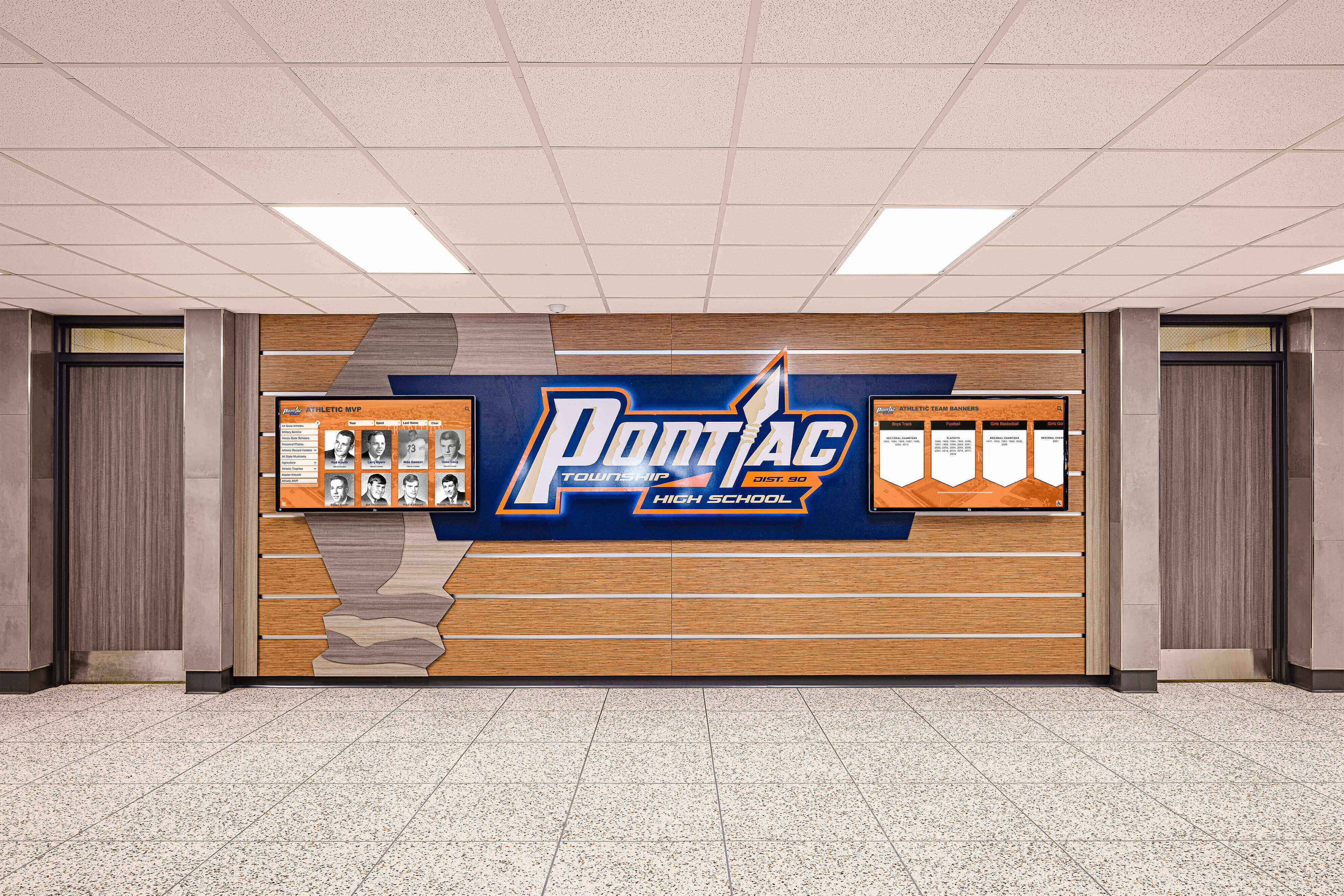
Many schools recognize Academic Decathlon through announcements, certificate presentations, or small trophy displays that provide acknowledgment but lack the visibility and permanence that creates lasting motivational impact.
Morning Announcements and School Newsletters:
Brief mentions in announcements or newsletters provide timely recognition but prove inherently ephemeral. Students hear or read about achievements once, then information disappears without creating lasting presence in school consciousness. This transient recognition sends subtle messages that Academic Decathlon accomplishments merit brief acknowledgment but not sustained celebration.
Certificate Presentations:
Individual certificates recognizing competition participation or specific achievements provide tangible recognition students can keep. However, certificates typically end up in drawers or boxes rather than remaining visible, limiting their ongoing motivational impact on both recipients and younger students who might aspire to similar achievement.
Trophy Case Display:
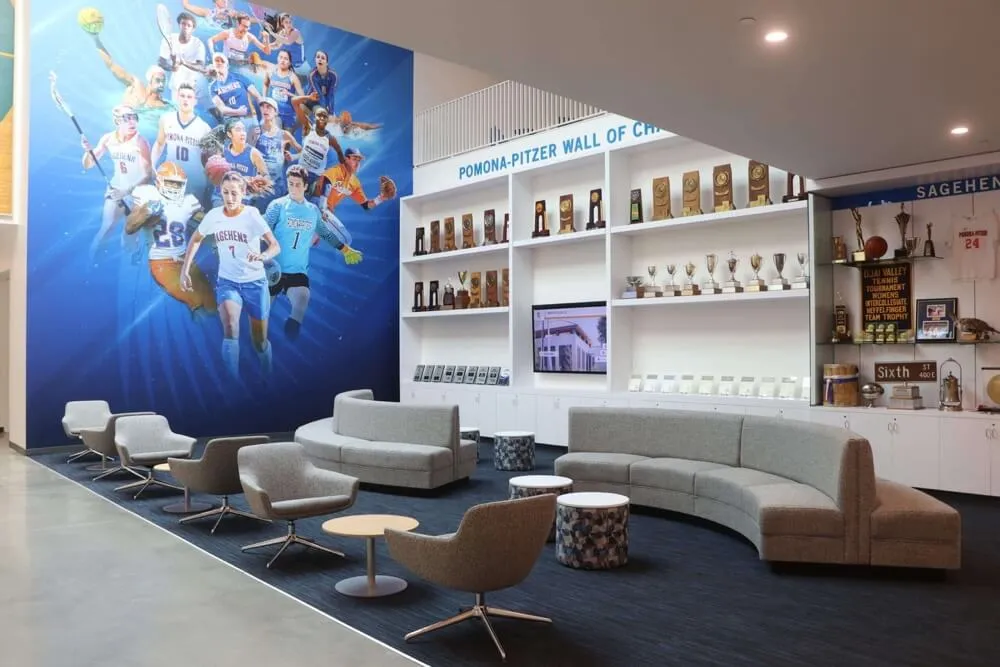
Some schools display Academic Decathlon team trophies, medals, and photos in trophy cases alongside athletic recognition. This creates more permanent visibility than announcements alone. However, traditional trophy cases face significant limitations including limited physical space forcing difficult prioritization decisions about what achievements to display, static presentation providing only basic information without context explaining what Academic Decathlon involves or what specific students accomplished, and maintenance challenges when updating displays requires physical access to locked cases, often resulting in outdated content that suggests schools don’t prioritize keeping recognition current.
Modern Digital Recognition Solutions for Academic Decathlon
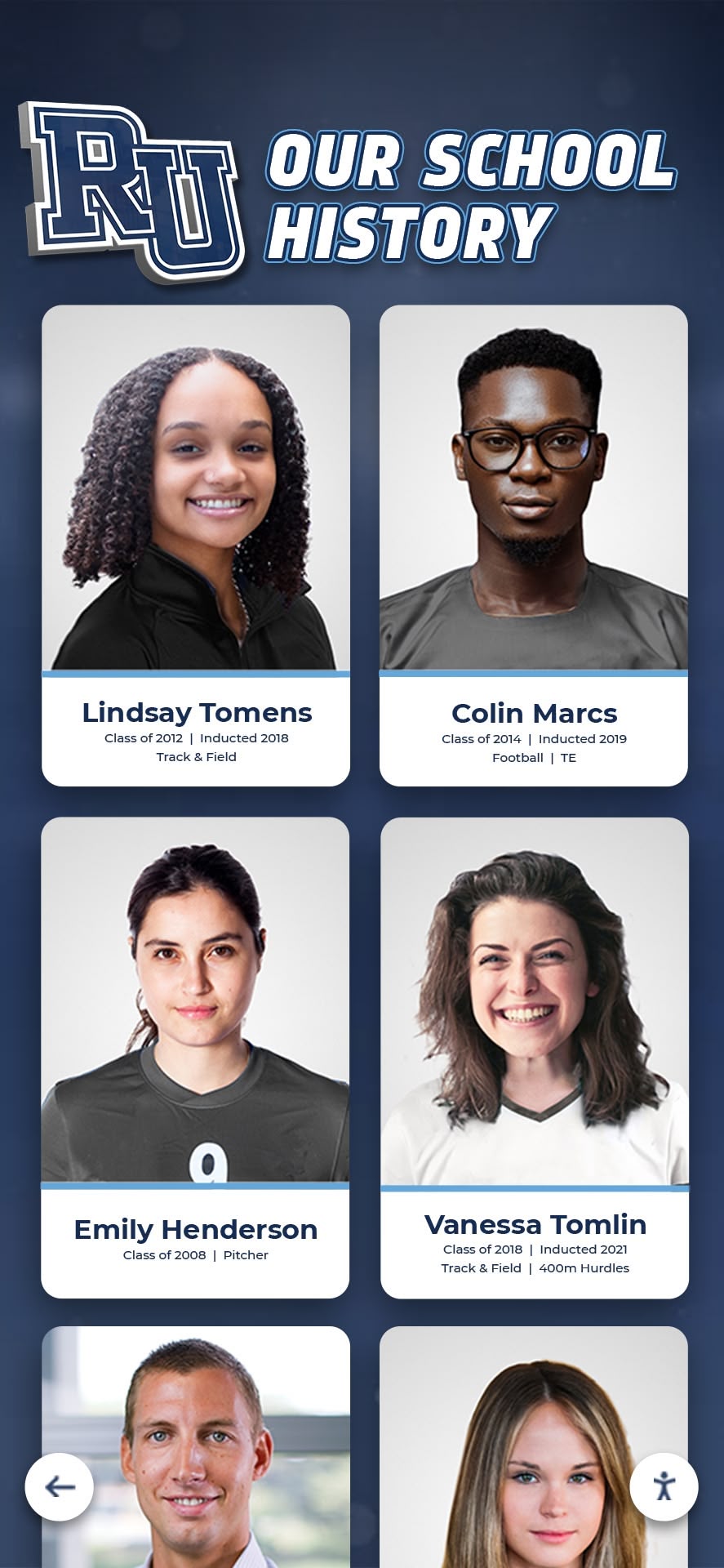
Digital recognition platforms designed for educational contexts overcome traditional limitations while providing capabilities that enhance both recognition quality and administrative sustainability.
Unlimited Recognition Capacity:
Digital displays accommodate unlimited participant profiles, medal records, team photos, and competition results without physical space constraints that force difficult choices about whose achievements to display. Schools can recognize all Academic Decathlon participants across multiple years, creating comprehensive historical records that honor legacy while inspiring current students through visible examples of sustained program excellence.
Whether recognizing nine team members or ninety participants across ten years, digital displays maintain constant physical footprint without requiring ongoing expansion that traditional trophy cases necessitate as recognition populations grow.
Rich Multimedia Content:
Digital Academic Decathlon recognition enables comprehensive storytelling impossible through trophy case displays with simple plaques:
- Professional team photos showing entire squads together, reinforcing the collaborative team nature of Academic Decathlon rather than only individual recognition
- Individual member profiles with photos, medal accomplishments, event specializations, and college destinations connecting preparation to outcomes
- Competition result summaries showing team placement, division-specific performance, and progression through regional, state, and potentially national competition levels
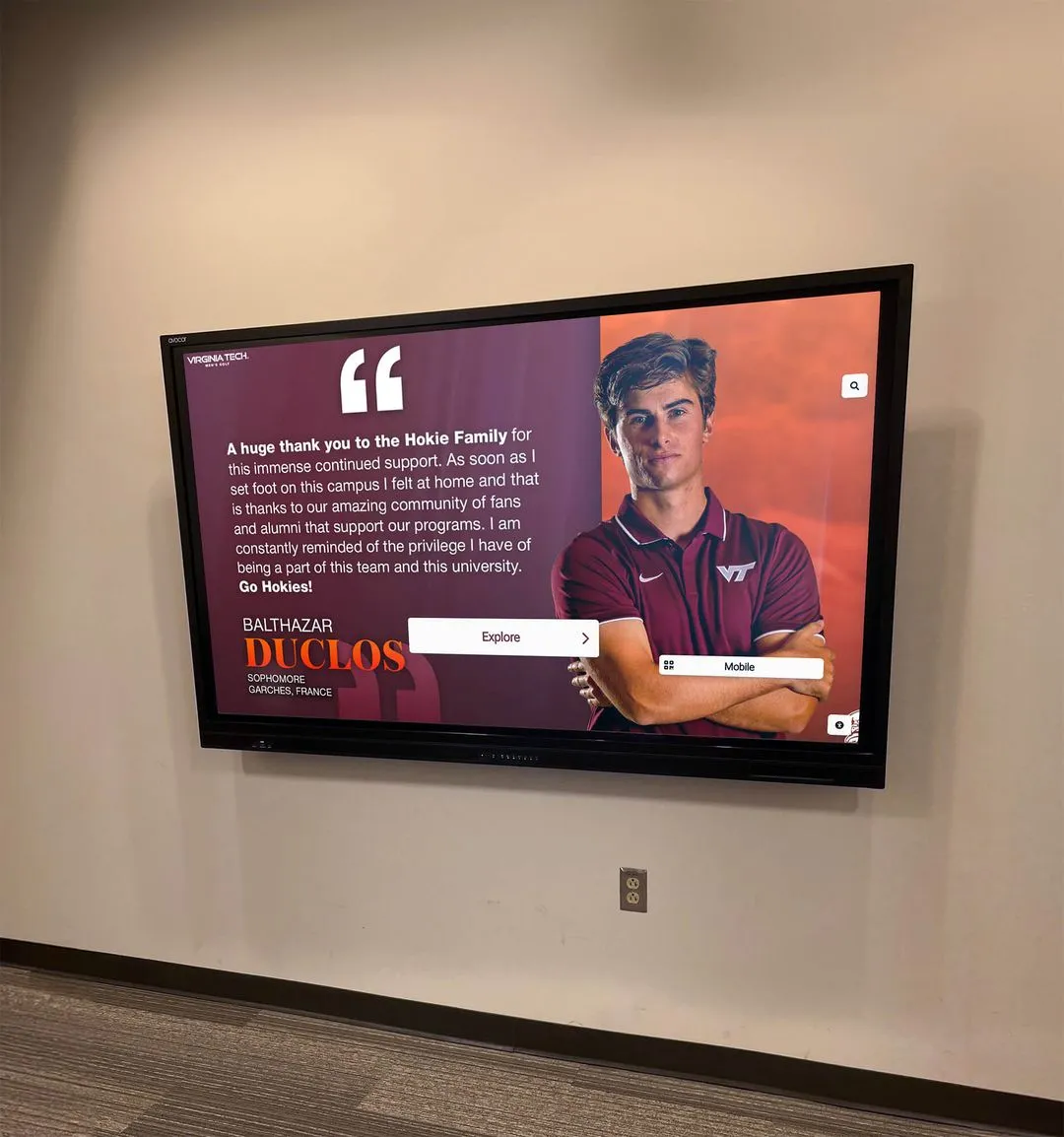
- Student testimonials describing their Academic Decathlon experience, study strategies that proved effective, and how participation influenced academic confidence and college preparation
- Coach commentary providing context about team preparation, remarkable achievements, or growth students demonstrated throughout the season
This multimedia richness transforms simple recognition into engaging narratives that help audiences understand what Academic Decathlon involves and what students accomplished, making recognition more meaningful for participants while educational for younger students considering participation.
Interactive Exploration Features:
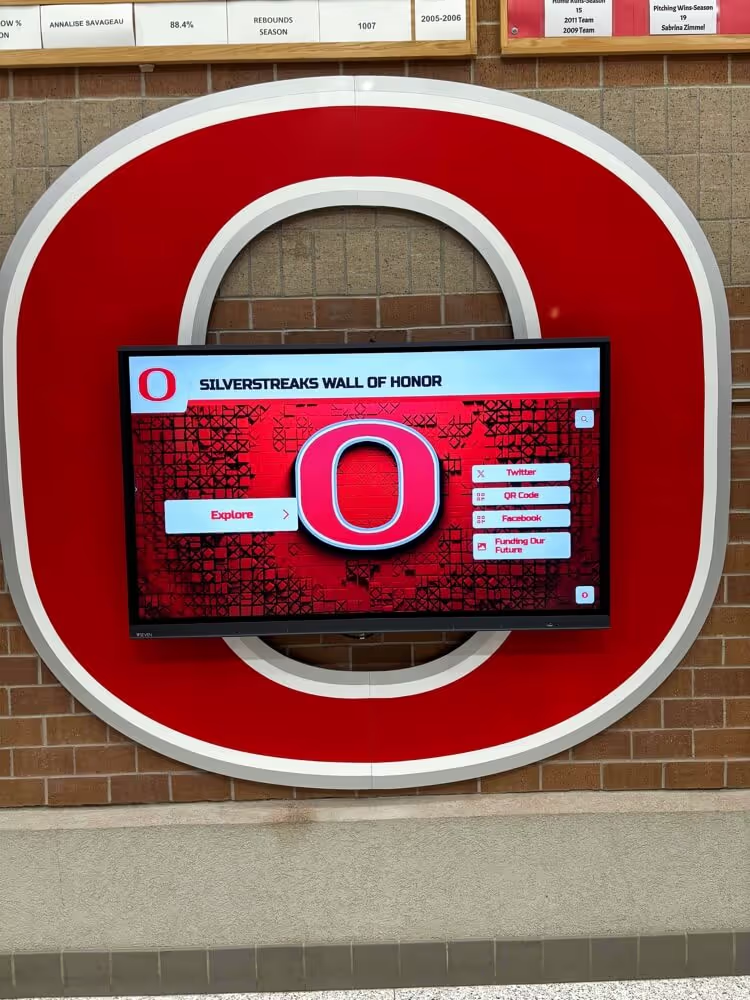
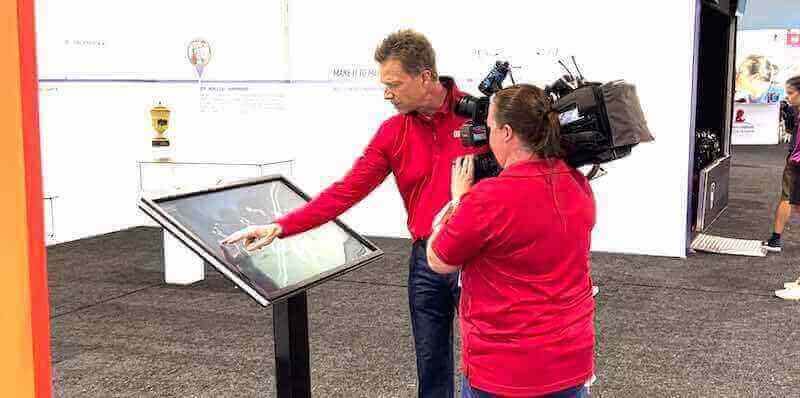
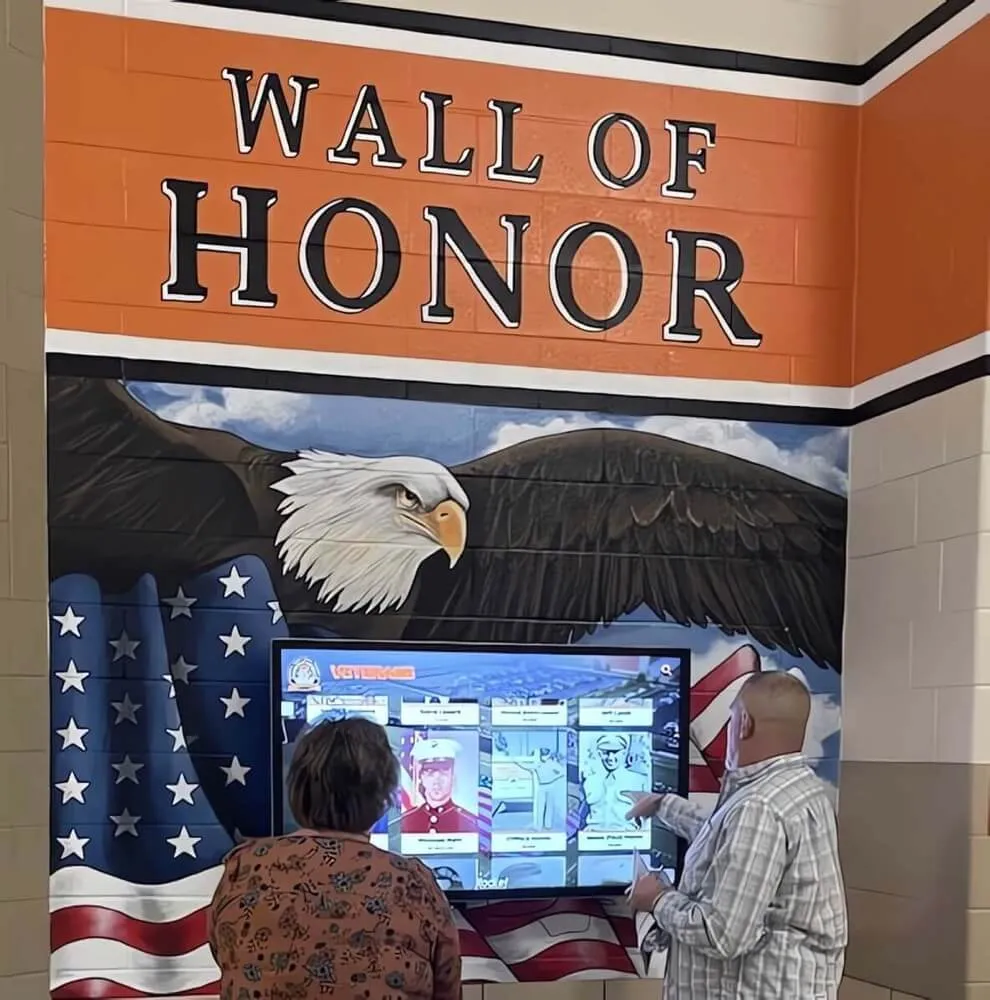
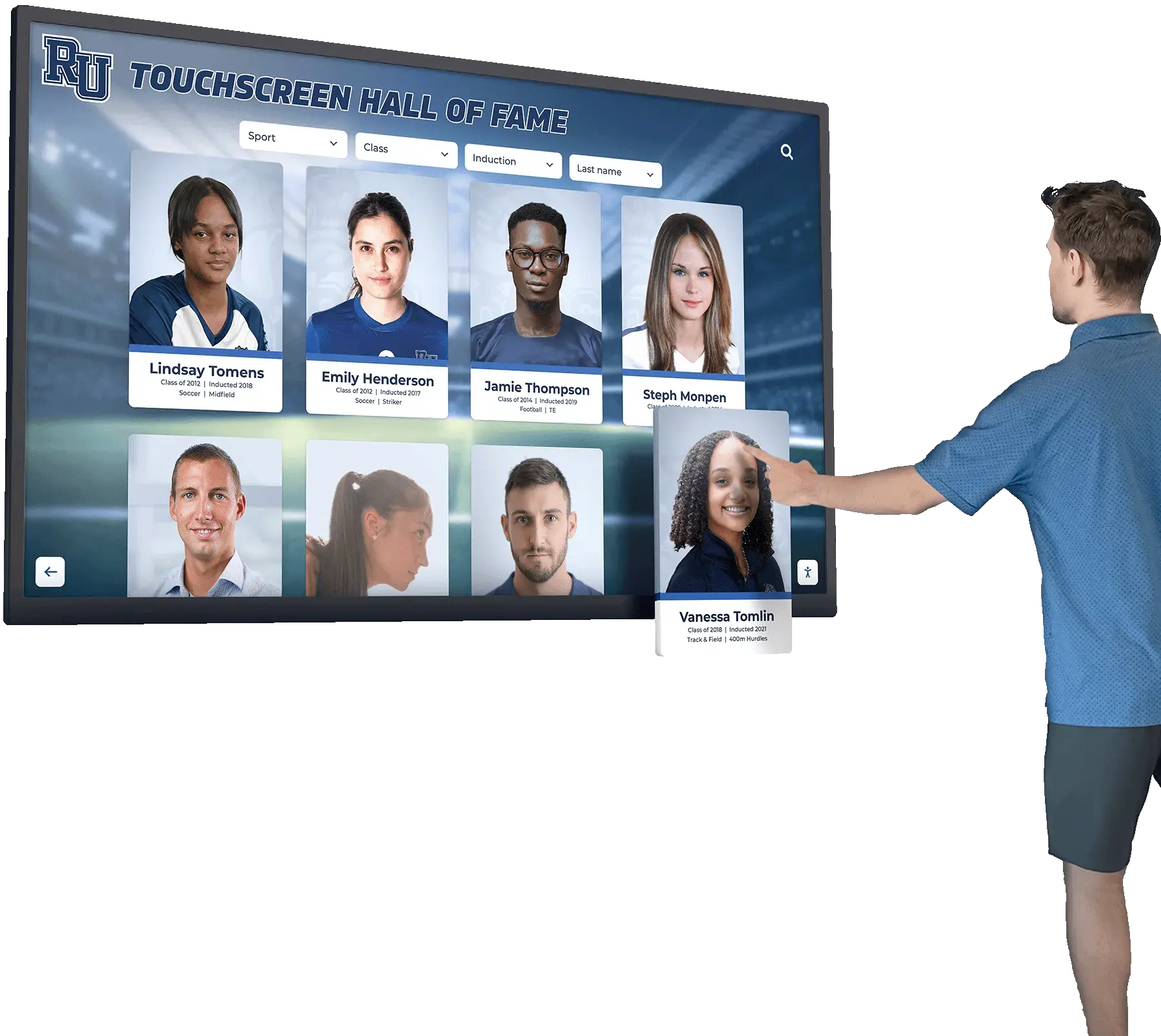
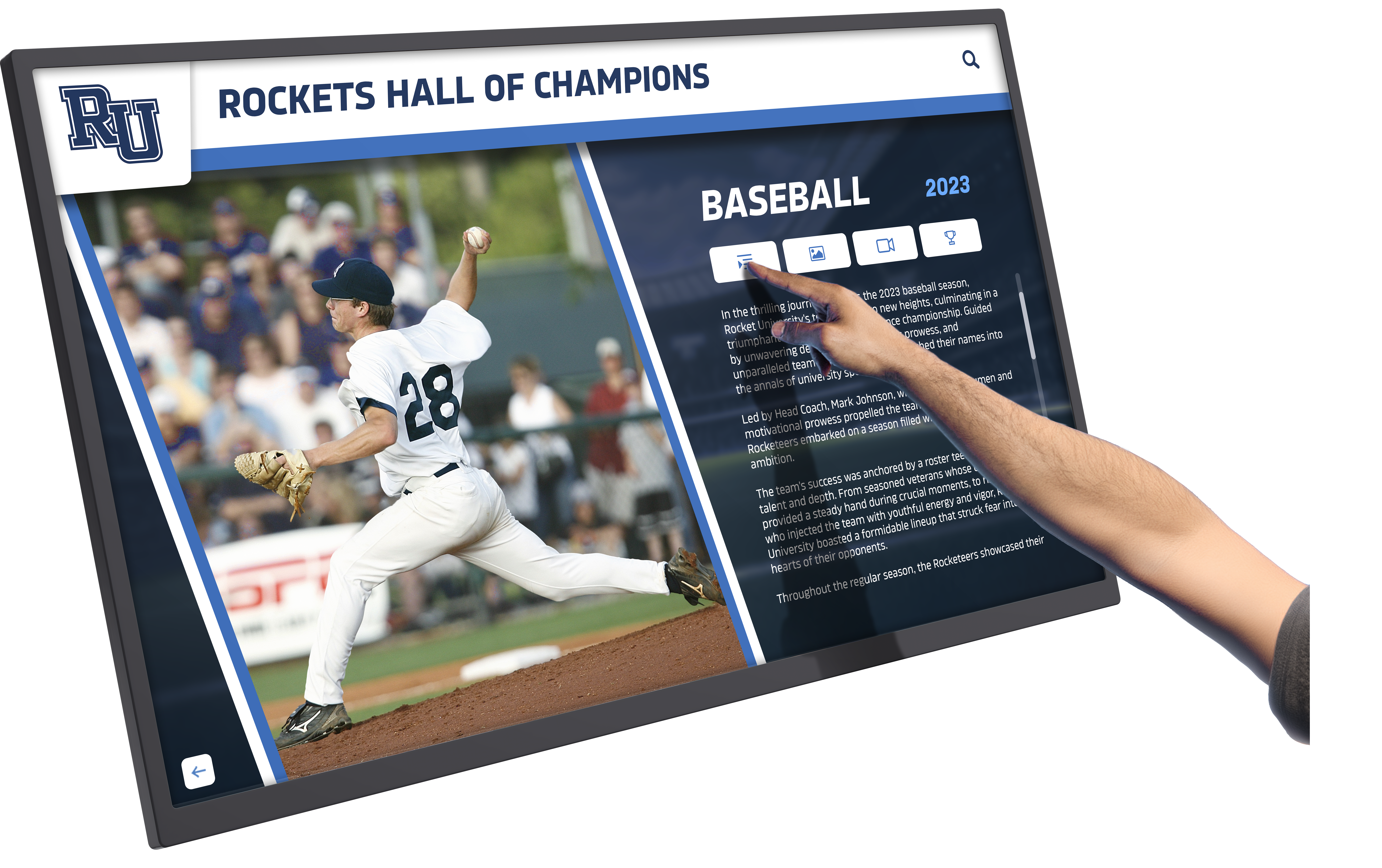
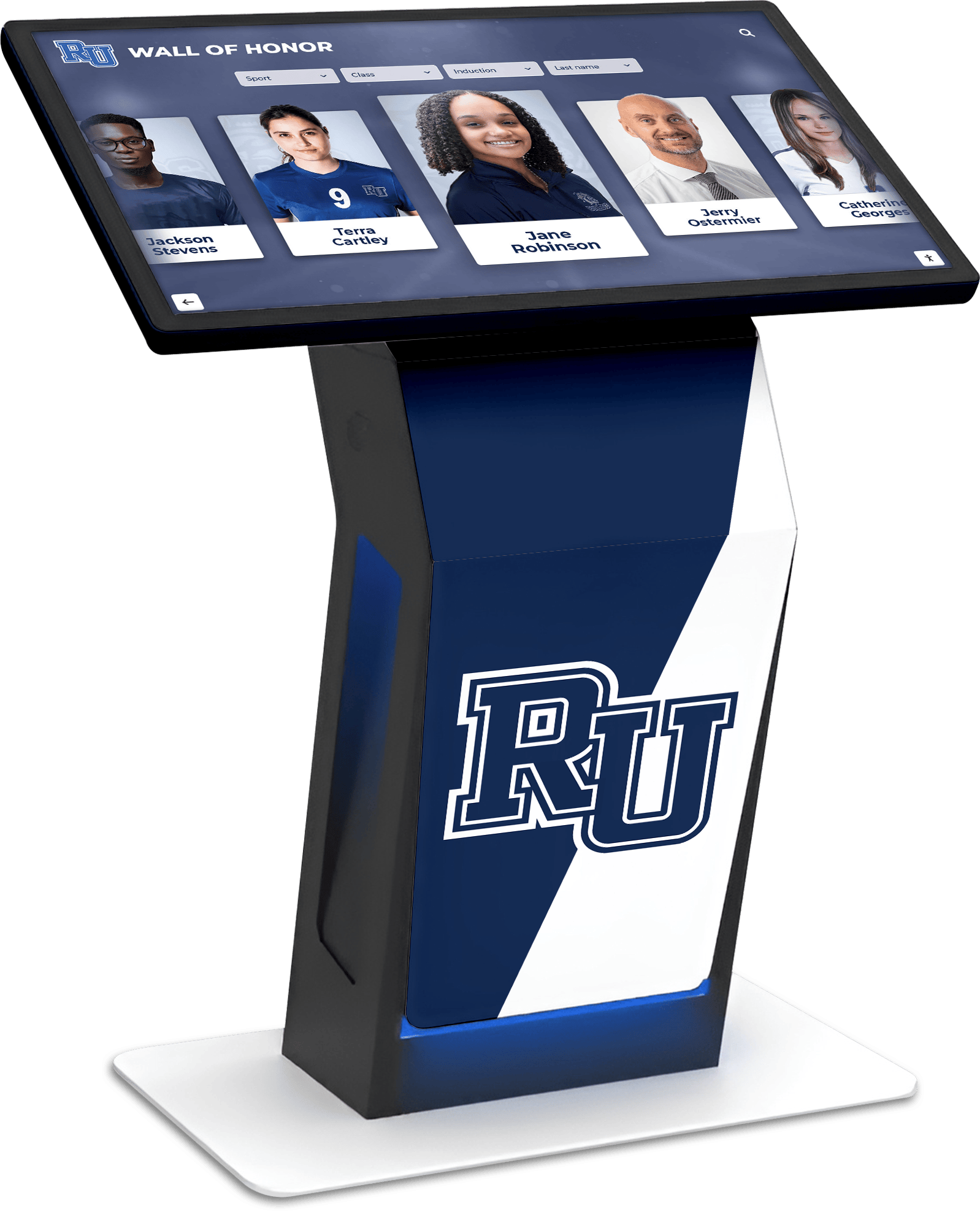
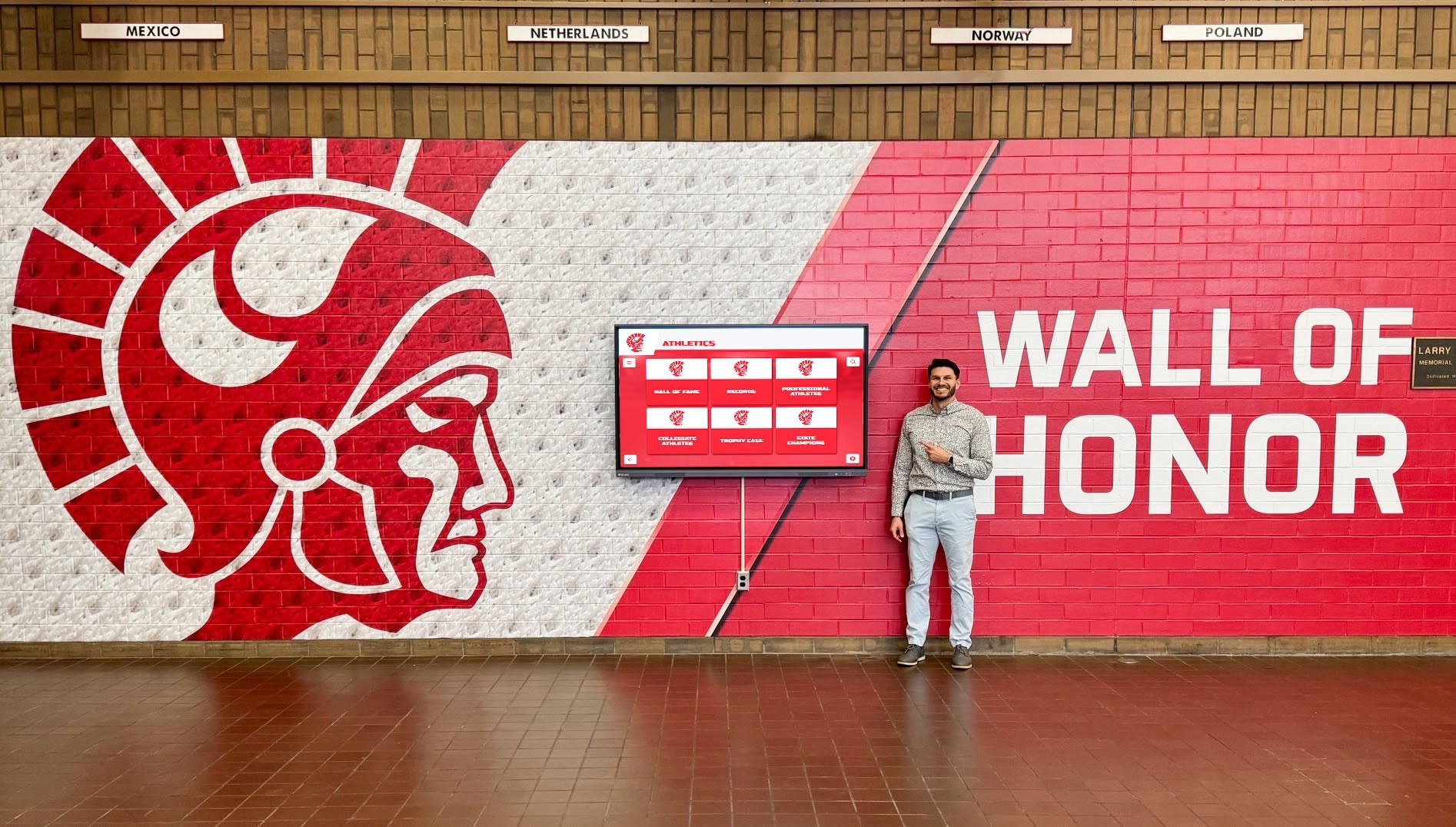
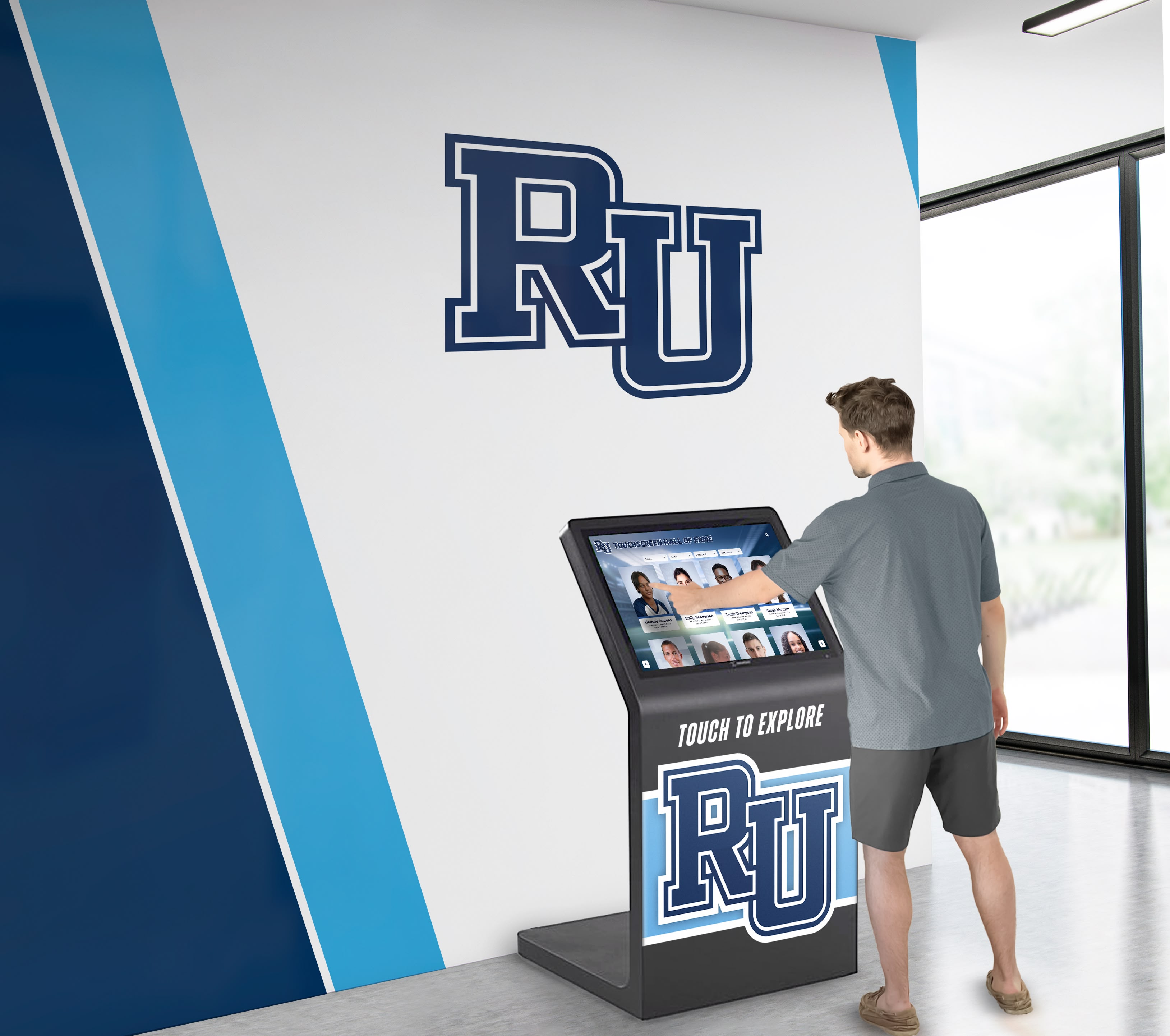
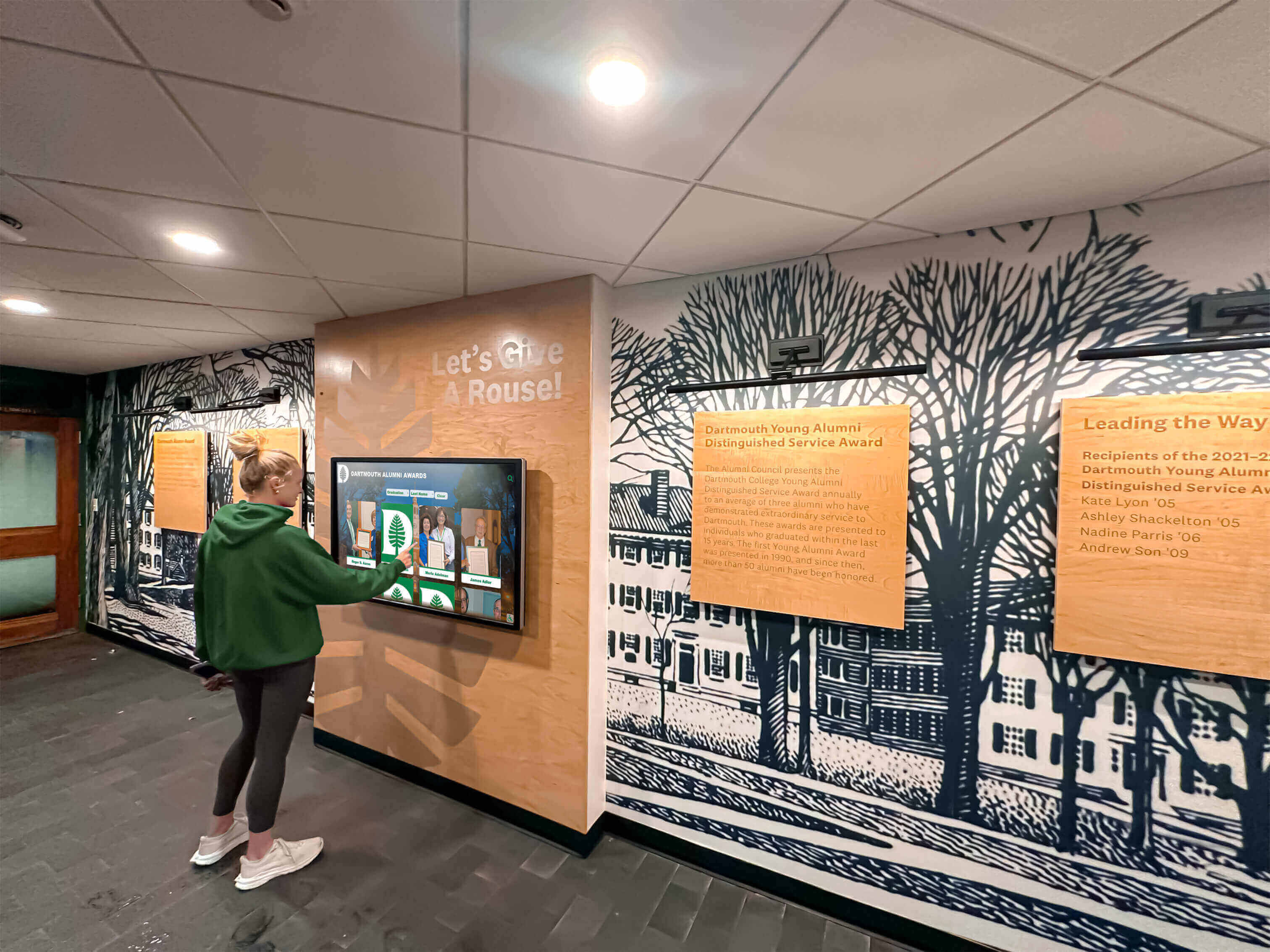
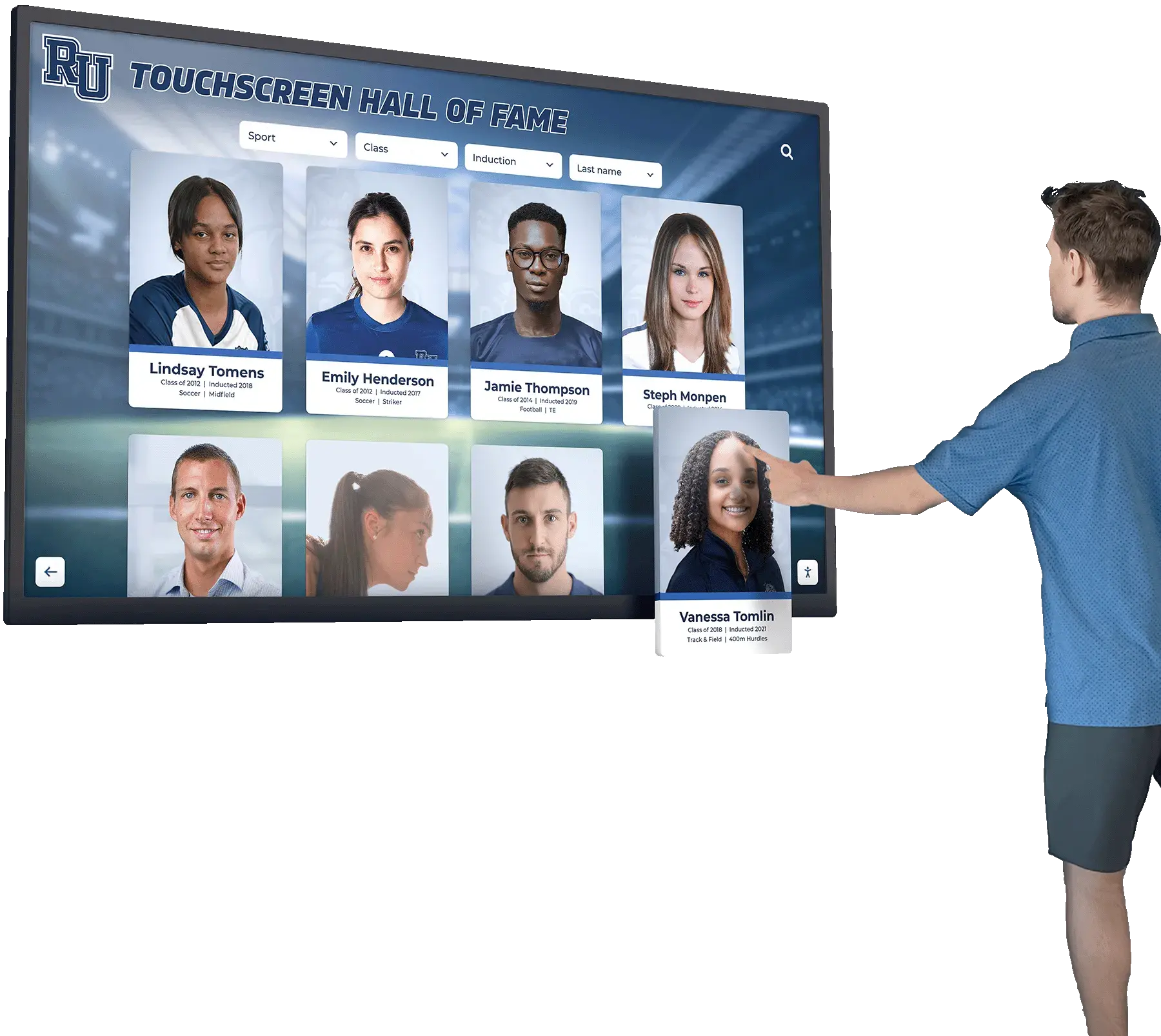
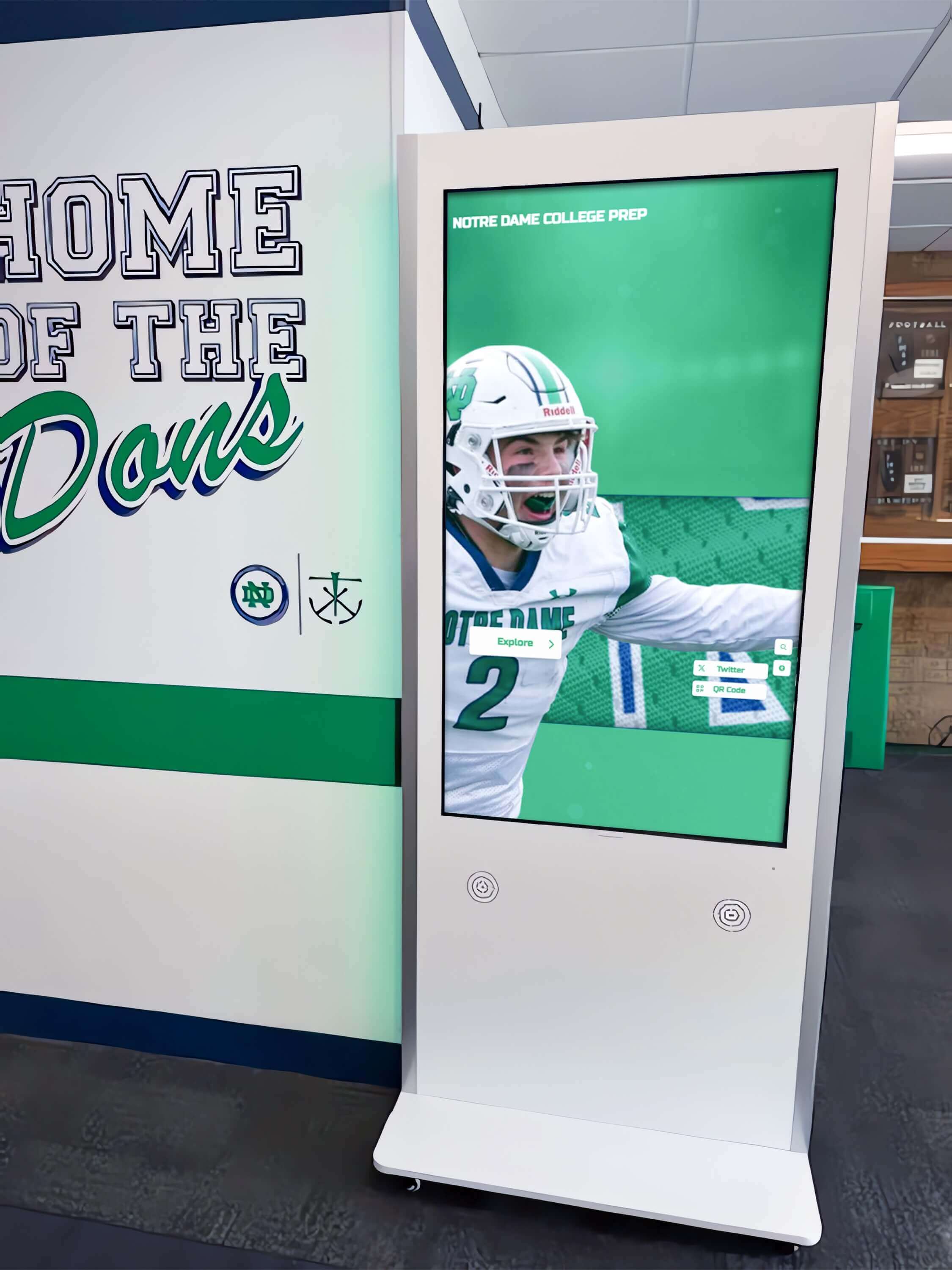
Digital platforms with interactive touchscreen capabilities allow students, families, and visitors to explore Academic Decathlon recognition at their own pace, discovering connections and deepening engagement beyond what static displays enable:
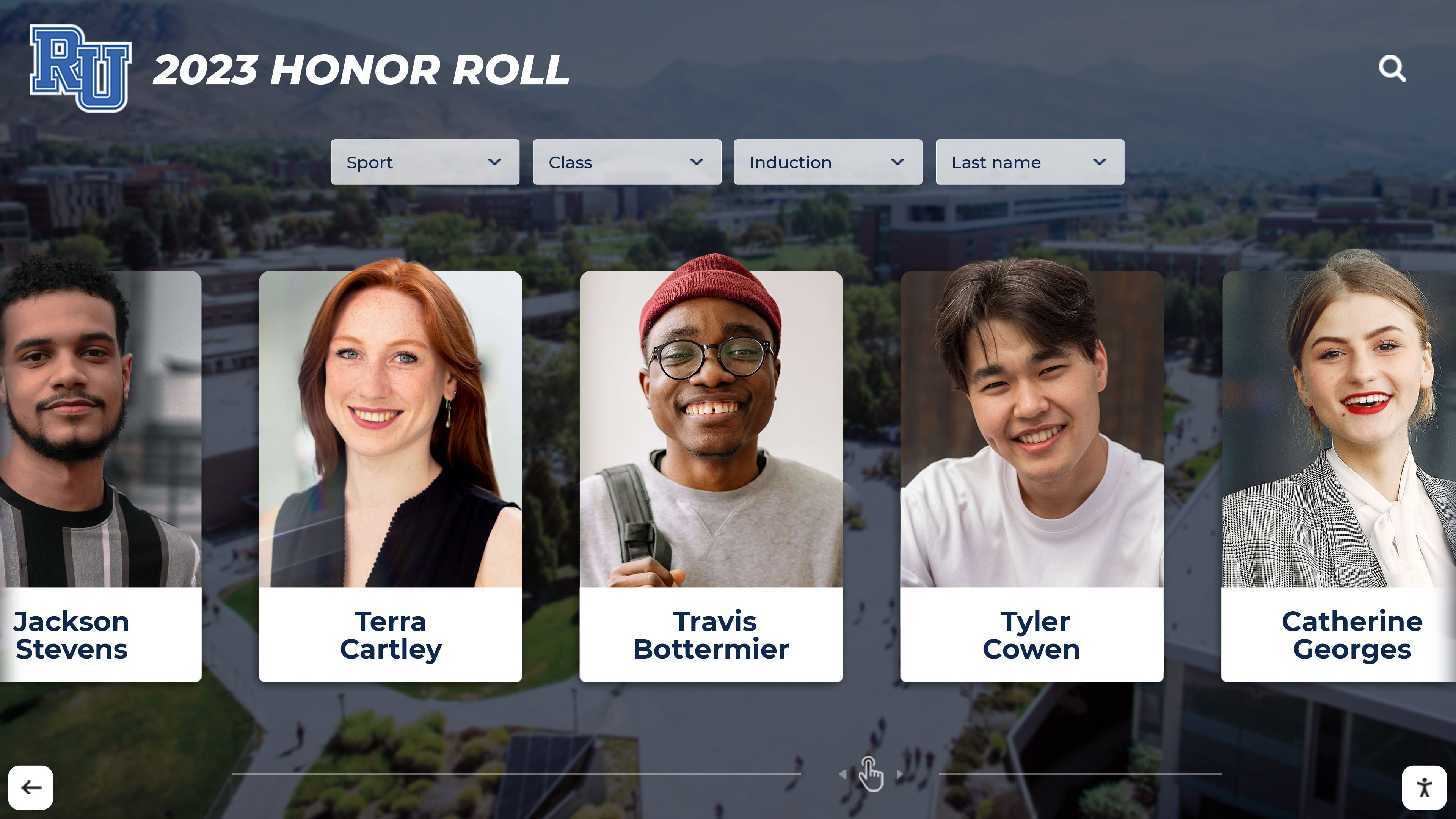
- Search by student name to find specific team members, particularly useful for students looking for older siblings, friends, or themselves
- Browse by year to explore program history and how teams performed across different competition seasons
- Filter by division to highlight honors, scholastic, or varsity division accomplishments separately, celebrating achievement across all academic backgrounds
- View medal records to identify top performers in specific events or highest overall scorers demonstrating exceptional comprehensive knowledge
This interactivity increases engagement dramatically. Students typically spend several minutes exploring well-designed digital recognition compared to brief glances at static trophy cases, creating stronger connections with content and more substantial impacts on motivation and institutional culture.
Solutions like Rocket Alumni Solutions provide comprehensive platforms specifically designed for educational recognition, offering intuitive content management that non-technical staff can use independently while delivering engaging user experiences that capture student attention and inspire future participation through compelling achievement stories.
Integration with Comprehensive Academic Recognition
Academic Decathlon recognition works most effectively when integrated with comprehensive programs celebrating diverse academic achievements rather than existing as isolated displays disconnected from broader recognition culture.
Multiple Academic Competition Recognition:
Rather than creating separate Academic Decathlon displays, many schools implement unified academic competition recognition showcasing:
- Academic Decathlon teams alongside Science Olympiad participants, Math League competitors, Quiz Bowl teams, Mock Trial participants, and Debate team members
- Subject-specific competition achievements like mathematics competitions, writing contests, history fairs, and science research competitions
- Academic honor societies including National Honor Society, subject-specific honor societies, and AP Scholar recognition
- Academic excellence awards such as valedictorian/salutatorian recognition, perfect attendance, and academic improvement
- Scholarship recipients and college acceptance highlighting outcomes of academic dedication
This comprehensive approach creates substantial recognition installations that command attention and demonstrate genuine institutional commitment to celebrating intellectual achievement across multiple domains rather than suggesting that only specific types of academic accomplishment matter.
Balanced Athletic and Academic Recognition:
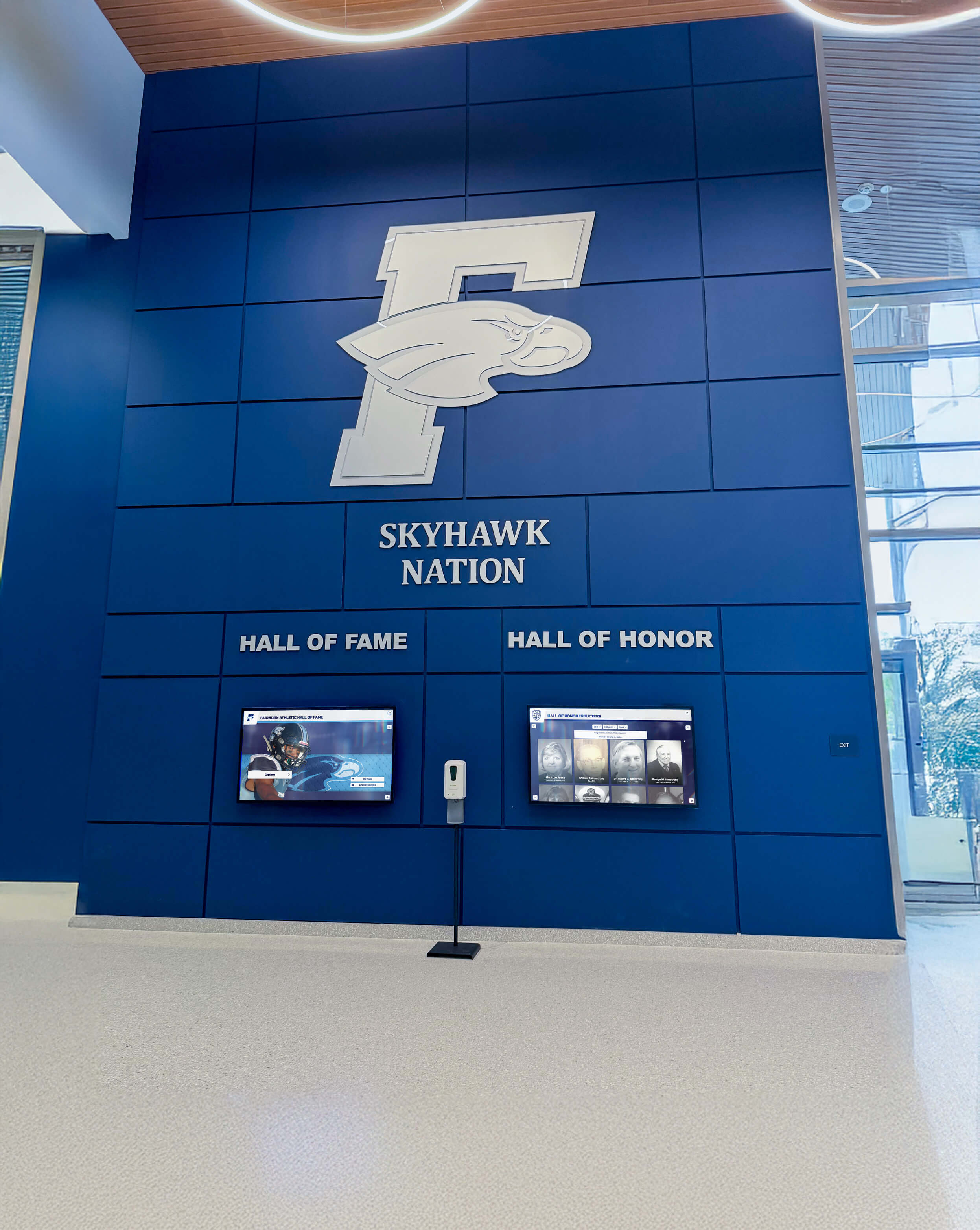
The most effective recognition programs create visible balance between athletic and academic achievement, often positioning displays in ways that physically integrate different accomplishment types:
- Main entrance lobbies featuring both athletic championships and academic competition achievements with equivalent visual prominence
- Hallway displays alternating between athletic records and academic honors, making both types equally visible to everyone navigating school buildings
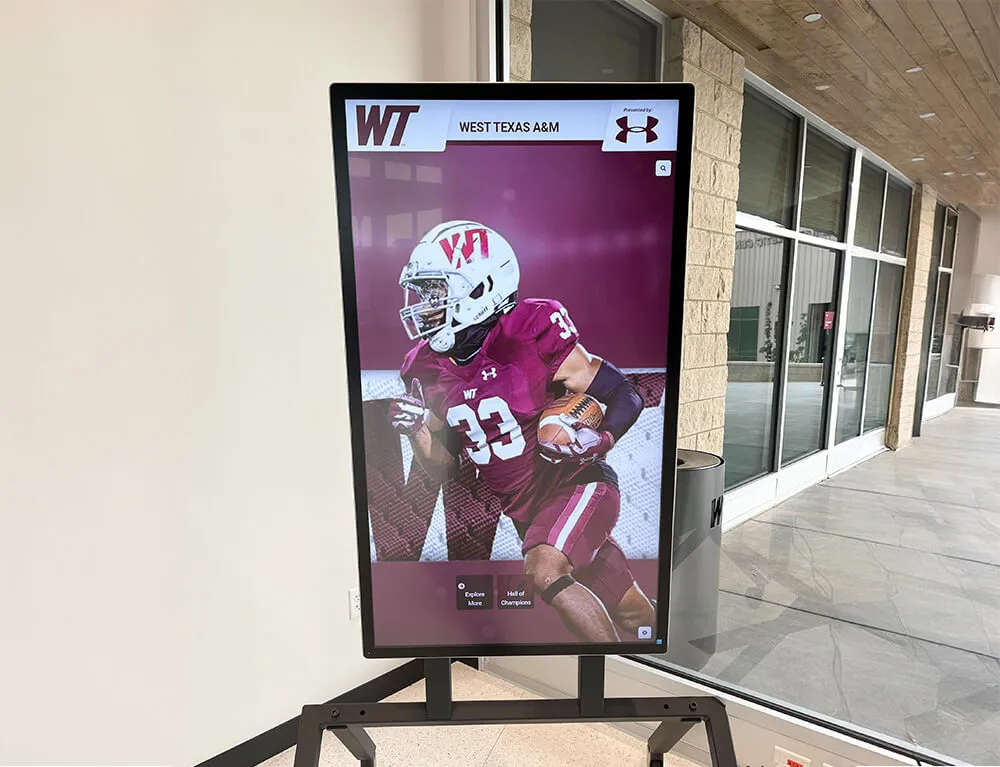
- Integrated digital platforms showcasing athletic hall of fame inductees alongside Academic Decathlon medalists and other academic achievers within single unified systems
- Ceremony traditions where academic recognition events receive comparable resources, promotion, and attendance as athletic awards banquets
This balanced approach benefits all students by communicating that multiple pathways to excellence exist and that schools genuinely value diverse talents rather than privileging only athletic performance through disproportionate recognition resources and visibility.
Building Successful Academic Decathlon Programs: Best Practices
Schools interested in starting new Academic Decathlon programs or strengthening existing teams benefit from understanding factors that contribute to program sustainability and competitive success beyond simple curriculum mastery.
Recruiting Diverse, Committed Teams
Academic Decathlon’s three-division structure requires intentional recruitment across the full range of academic performers rather than only targeting honors students who typically dominate most academic competitions.
Honors Division Recruitment:
Top academic performers often have numerous competing demands including multiple AP courses, other academic competitions, athletics, performing arts, and college preparation activities. Convincing honors students to commit 150-300 hours to Academic Decathlon requires clear communication about program benefits including scholarship opportunities, college application enhancement, intellectual community with similarly motivated peers, and genuine competitive experience testing knowledge against peer schools rather than simply accumulating individual accolades.
Many successful programs recruit honors students through direct outreach from coaches to students with strong academic records, presentations in AP classes explaining program benefits and time commitments, and current team member testimonials discussing how Academic Decathlon enhanced their high school experience despite initial concerns about time demands.
Scholastic Division Recruitment:
Students with solid but not exceptional academic records often underestimate their intellectual capabilities and potential for competitive academic achievement. Effective scholastic division recruitment emphasizes that Academic Decathlon provides opportunities to excel through dedicated effort rather than requiring natural genius or previous academic dominance.
Strategies include targeting students who perform well in specific subjects but maintain B+ averages overall due to challenges in other areas, recruiting students involved in activities demonstrating dedication and time management skills that translate to Academic Decathlon success, and using current scholastic division team members to recruit peers, leveraging social connections and relatable examples of achievable success.
Varsity Division Recruitment:
Varsity division recruitment proves most challenging since students with below-3.0 GPAs often view themselves as “not academic” and assume competitive intellectual activities aren’t designed for students with their academic histories. Yet varsity students who commit frequently become most dedicated team members after discovering they can excel through focused preparation and supportive coaching.
Effective approaches include personal recruitment from teachers and counselors who know students with potential despite modest GPAs, emphasizing specific subject strengths (math skills, artistic knowledge, social interests) that translate to particular Academic Decathlon events regardless of overall GPA, focusing on Academic Decathlon as team activity emphasizing belonging and contribution rather than individual performance pressure, and using current or former varsity division members to recruit, demonstrating through peer examples that students with similar backgrounds can succeed and find meaningful intellectual community.
Some schools find that students who struggle academically but excel in non-academic domains (athletics, performing arts, skilled trades) adapt well to Academic Decathlon’s intensive preparation and competitive structure which parallels their experiences in other pursuits requiring sustained practice and performance under pressure.
Securing Resources and Administrative Support
Successful Academic Decathlon programs require ongoing resources including curriculum materials, registration fees, travel expenses, coaching stipends, and competition costs. Understanding these financial realities and securing sustainable funding prevents program instability when one-time grants expire or budget allocations shift.
Program Cost Components:
Schools should anticipate these typical annual expenses when budgeting for Academic Decathlon:
- Curriculum guides and study materials: $300-600 depending on school size and resource needs
- Competition registration fees: $200-400 for regional and state competitions
- Travel costs for competitions: $300-1,500 depending on distance to competition sites and whether school provides transportation
- Coach stipends or course release time: $1,000-3,000 recognizing substantial time commitment coaching requires
- Recognition and team-building: $200-500 for awards, team events, and celebration recognizing achievement
- National competition expenses if team qualifies: $3,000-5,000 for travel, accommodation, and registration
Total annual costs typically range from $2,500-5,000 for competitive programs, with additional expenses if teams advance to nationals.
Funding Strategies:
Academic departments or instructional budgets often provide appropriate funding since Academic Decathlon directly supports curriculum objectives and academic culture development across multiple subject areas, aligning naturally with core educational mission and priorities.
Parent organizations or PTAs sometimes fund academic programs celebrating student achievement and enhancing school culture. Academic Decathlon benefits broad student populations rather than narrow interest groups, making it appropriate for parent organization support compared to specialized activities serving limited participation.
Educational grants and foundations occasionally support initiatives promoting academic excellence, college preparation, or STEM education. Proposals emphasizing Academic Decathlon’s comprehensive curriculum and inclusive structure strengthening educational outcomes may attract grant funding from sources supporting academic achievement enhancement.
Fundraising activities allow teams to generate resources through concessions sales, tutoring programs, or sponsorships from community businesses supporting educational excellence. This approach also builds team cohesion while reducing school budget burden.
Some schools implement modest participation fees ($50-150 per student) to offset material costs while offering waivers or scholarships ensuring economic factors don’t prevent qualified students from participating, maintaining inclusive access regardless of family financial circumstances.
Developing Coaching Capacity and Program Leadership
Academic Decathlon coaching demands substantial time commitment—typically 200-400 hours annually including planning, team meetings, individual support, competition attendance, and administrative coordination. Finding and retaining qualified coaches proves essential for program sustainability across years.
Coach Recruitment:
Successful programs often use team coaching approaches distributing responsibility across multiple adults rather than depending on single individuals who may experience burnout or leave schools, causing program collapse:
- Head coach providing overall coordination, strategic planning, and administrative management
- Subject specialists offering expertise in specific event areas (English teacher for literature, science teacher for science event, etc.)
- Assistant coaches supporting with logistics, student supervision, and supplementary instruction
- Alumni mentors providing near-peer support and sharing recent competition experience with current strategies
This distributed model makes coaching more manageable while providing students access to deeper expertise across multiple subjects than any single coach could possess.
Recognition and Support for Coaches:
Schools must appropriately recognize coaching commitment through stipends, course release time, or professional development support comparable to compensation for athletic coaching requiring similar hours. When schools expect substantial coaching commitment while providing minimal recognition or compensation, programs suffer from instability as overworked coaches eventually reduce involvement or leave entirely.
Appropriate support includes coaching stipends reflecting actual time investment ($2,000-4,000 annually for head coaches, $500-1,500 for assistant coaches), course release time reducing teaching load for lead coaches by one section to enable coaching responsibilities, professional development funding for coaches to attend Academic Decathlon workshops or conferences, and administrative assistance with logistics, registration, travel coordination, and communication reducing non-instructional burdens on coaches.
The Long-Term Impact: Academic Decathlon Alumni Perspectives
Understanding how Academic Decathlon participation influences students’ lives beyond high school helps justify program investment while providing compelling narratives for recruitment and recognition purposes.
College Preparation and Academic Confidence
Academic Decathlon alumni consistently report that participation prepared them for college-level academics more effectively than standard coursework alone through several mechanisms.
Interdisciplinary Thinking:
The requirement to master ten subjects simultaneously rather than studying isolated subjects one at a time develops intellectual flexibility and ability to recognize connections across disciplinary boundaries. Alumni report that this interdisciplinary perspective helped them excel in college general education requirements, honors programs, and majors requiring synthesis across multiple fields.
Time Management and Work Ethic:
Successfully balancing Academic Decathlon preparation with regular coursework, other activities, and personal commitments requires sophisticated time management and sustained work ethic. Students learn to prioritize effectively, maintain focus during long study sessions, and persist through challenging material—capabilities essential for college success where faculty supervision and parental oversight diminish while academic expectations increase.
Many alumni specifically credit Academic Decathlon with teaching them how to study effectively rather than relying on natural ability alone. Students who previously succeeded through minimal effort learned that genuine intellectual challenge requires systematic preparation, strategic practice, and willingness to seek help—lessons that prevented academic struggles during college transition.
Public Speaking and Communication:
The interview and speech events require comfortable communication under pressure with unfamiliar judges evaluating performance. This experience transfers directly to college situations including seminar discussions, presentation assignments, job interviews, scholarship interviews, and networking with professors and potential employers.
Alumni frequently mention that Academic Decathlon eliminated fear of public speaking, transformed them into comfortable communicators willing to speak up in class, and gave them competitive advantages during college admissions interviews and later job searches where confident communication distinguished them from equally credentialed peers lacking similar experience.
Career Skills and Professional Success
Beyond immediate college preparation, Academic Decathlon develops capabilities that influence career trajectories and professional achievement decades after high school.
Collaboration and Teamwork:
Academic Decathlon’s inherently collaborative structure where nine diverse students work together toward shared goals teaches teamwork capabilities that prove essential in professional contexts. Alumni working in fields ranging from engineering to education to business consistently mention that understanding how to contribute effectively to diverse teams, supporting colleagues with different strengths and backgrounds, and maintaining motivation toward long-term collective goals represents among their most valuable professional skills—capabilities directly developed through Academic Decathlon participation.
Handling Pressure and Competition:
Competition day experience performing under pressure with judges evaluating responses and outcomes affecting team success creates resilience and confidence in high-stakes situations. Alumni report that this experience translates to professional presentations, client meetings, job interviews, and other career situations where performance matters and observers evaluate competence based on limited interaction.
Lifelong Learning Orientation:
Academic Decathlon instills appreciation for intellectual challenge and understanding that new knowledge can be mastered through dedicated effort regardless of initial familiarity. Alumni across diverse careers mention maintaining curiosity, willingness to tackle unfamiliar domains, and confidence that they can develop new expertise when professional demands require learning—orientations established during Academic Decathlon participation when they successfully mastered ten subjects through systematic preparation.
Building Intellectual Community and Lasting Friendships
Beyond skill development and achievement, many Academic Decathlon alumni cite social and community benefits as most valuable program aspects.
Finding Intellectual Peers:
Students passionate about learning sometimes feel isolated in school cultures that don’t consistently celebrate academic achievement. Academic Decathlon creates communities of intellectually curious peers who share values around learning, appreciate each other’s knowledge and preparation, and make academic excellence socially desirable rather than something to hide or minimize.
Alumni frequently mention finding “their people” through Academic Decathlon—friends who valued similar things, enjoyed deep conversations about ideas encountered during preparation, and provided social contexts where being intelligent and motivated felt normal rather than exceptional or socially risky. These friendships often persist through college and beyond, creating lifelong networks of accomplished peers.
Changing Self-Perception:
For students whose previous academic identities centered on struggle or mediocrity, successful Academic Decathlon participation can fundamentally transform self-perception. Varsity division students who earn medals or contribute meaningfully to team success discover they are intellectually capable, enjoy learning when properly supported and motivated, and deserve recognition for academic achievement just as much as naturally high-performing students.
Coaches report that these transformations prove among the most rewarding program outcomes—watching students who initially doubted their capabilities develop confidence, academic motivation, and willingness to pursue more rigorous courses or college options they previously considered inaccessible represents the program’s most significant impact regardless of competition results.
Creating Recognition That Inspires Future Generations
The ultimate goal of Academic Decathlon recognition extends beyond honoring past achievement—effective recognition inspires future students to pursue similar excellence while building school cultures that consistently celebrate intellectual accomplishment alongside athletic and artistic achievement.
Making Recognition Visible and Inspirational
Recognition creates maximum impact when designed specifically to inspire younger students rather than merely documenting past achievement for archival purposes.
Strategic Placement:
Position Academic Decathlon recognition where students naturally congregate and regularly pass rather than isolated locations requiring deliberate seeking. Main entrance lobbies where all students enter daily, guidance counseling areas where students discuss academic planning and college preparation, cafeterias and commons where students spend unstructured time, and main hallways connecting different building sections all provide high-visibility locations maximizing regular exposure.
Storytelling Rather Than Simple Lists:
Move beyond merely listing team members’ names by including content that helps younger students understand what Academic Decathlon involves and how peers achieved recognition. Effective storytelling elements include photos showing teams at competitions conveying excitement and camaraderie, quotes from team members describing their experience and what they gained from participation, specific accomplishments like medal counts and competition placement providing concrete achievement benchmarks, and preparation strategies and time commitment information helping prospective participants understand realistic expectations.
Highlighting Diverse Achievement:
Recognize accomplishments across all three divisions rather than only celebrating honors students or overall highest performers. When varsity and scholastic division students see their achievements prominently displayed, they understand that Academic Decathlon celebrates their contributions equivalently rather than treating them as supporting cast for honors student stars. Division-specific medal recognition, profiles featuring successful students from all academic backgrounds, and explicit discussion of the three-division structure and its inclusive philosophy all reinforce that Academic Decathlon provides meaningful achievement opportunities for all students regardless of previous academic history.
Connecting Recognition to Ongoing Program Culture
The most effective recognition integrates with broader program culture rather than existing as isolated displays disconnected from ongoing team activities and traditions.
Annual Recognition Events:
Consider hosting Academic Decathlon recognition ceremonies or banquets comparable to athletic awards nights, creating formal celebration that honors achievement while providing opportunities for families, administrators, and school communities to participate in intellectual excellence celebration. These events might include presentation of medals and individual honors, team recognition and competition result sharing, guest speakers discussing intellectual achievement value, video montages showing team preparation and competition experiences, and reception opportunities allowing families to celebrate together.
Recognition ceremonies communicate that schools value Academic Decathlon achievement seriously enough to dedicate time, resources, and attention to formal celebration rather than treating recognition as administrative checkbox exercise.
Integration with School-Wide Recognition:
Include Academic Decathlon achievements in school-wide recognition programs alongside athletic accomplishments, performing arts recognition, and other honors. Morning announcements highlighting Academic Decathlon results with equivalent enthusiasm as athletic scores, school newsletters profiling team members alongside athlete and performer features, social media celebration of academic competition success matching athletic championship posts, and inclusion in school yearbooks with comparable space allocation all demonstrate balanced institutional values.
Leveraging Alumni Success Stories:
Track Academic Decathlon alumni and their subsequent achievements, then incorporate these success stories into recognition displays demonstrating long-term value of participation. When current students see that previous team members attend prestigious universities, pursue impressive careers, or achieve notable accomplishments, Academic Decathlon participation becomes tangibly valuable beyond immediate recognition or college application enhancement.
Alumni profiles might include college attended and academic major, notable achievements during undergraduate years, career paths and current professional positions, reflections on how Academic Decathlon influenced their trajectories, and advice for current students considering participation or preparing for competition.
Modern recognition platforms make it easy to maintain and update alumni information over time, creating living recognition that grows more valuable as graduate outcomes accumulate and demonstrate sustained program impact across years and decades.
Conclusion: Celebrating the Decathlon for the Mind
Academic Decathlon represents one of American education’s most comprehensive and inclusive intellectual competitions, challenging students to demonstrate mastery across ten academic disciplines while working collaboratively with teammates from diverse academic backgrounds. The program’s structure intentionally celebrates multiple forms of intelligence and achievement while requiring the same dedication, teamwork, and competitive spirit that athletic programs have always recognized and rewarded.
Yet Academic Decathlon achievement remains significantly under-recognized in many schools, receiving brief announcements rather than the visible, permanent celebration that athletic championships consistently receive. This recognition gap communicates—whether intentionally or not—that intellectual achievement matters less than physical performance, undermining efforts to build comprehensive excellence cultures valuing diverse talents.
Effective Academic Decathlon recognition shares several essential characteristics including visibility through prominent placement where students naturally encounter displays regularly rather than requiring deliberate seeking, comprehensive storytelling that helps audiences understand what students achieved and the preparation required rather than simple name lists, inclusion of all team members and divisional achievers rather than only top overall performers, integration with broader academic and athletic recognition creating balanced celebration of diverse excellence, ongoing maintenance keeping recognition current rather than becoming dated displays suggesting declining program relevance, and inspiration helping younger students understand pathways to similar achievement through transparent information about preparation, time commitment, and realistic expectations.
When schools implement comprehensive Academic Decathlon recognition—whether through traditional physical displays, modern digital platforms, or hybrid approaches combining both—they create cultures where intellectual achievement receives celebration proportional to the effort involved while inspiring future generations to pursue similar excellence through visible examples and compelling narratives of peer success.
Ready to transform how your school celebrates Academic Decathlon achievers and other exceptional scholarly accomplishments? Solutions like Rocket Alumni Solutions provide comprehensive platforms designed specifically for educational recognition, offering intuitive content management, engaging interactive displays, unlimited recognition capacity, and proven approaches that help schools build recognition cultures celebrating intellectual excellence with the same visibility and prestige traditionally reserved for athletic champions.
Your Academic Decathlon competitors dedicate hundreds of hours mastering diverse subjects, supporting teammates from all academic backgrounds, and representing your school with pride at regional and state competitions—comprehensive recognition ensures those achievements receive the celebration, visibility, and inspiration value that strengthens academic culture for current students and future generations.