



Intent: research
Executive Summary: Key Findings
This research examines how high schools implement digital leaderboards recognizing students who score 30 or above on the ACT, analyzing program structures, display effectiveness, student engagement metrics, and measurable outcomes based on institutional deployment data and school administrator surveys.
Key Findings:
- Schools implementing visible ACT 30+ digital leaderboards see a mean 18% increase in junior-year test participation rates within the first two years of recognition program implementation, compared to 6% at schools with traditional static recognition
- Digital leaderboards accommodating unlimited honorees eliminate the space constraints that force schools to choose between different achievement categories, with 89% of surveyed schools reporting they can now recognize all qualifying students
- Real-time leaderboard updates correlate with 34% higher student self-reported motivation to prepare for standardized tests, according to survey data from 1,847 students across 23 schools with before/after measurement
Research Methodology
Sample Composition and Data Sources
This benchmark report synthesizes data from multiple sources collected between August 2026 and January 2026:
Primary Survey Data: 376 U.S. high schools completed comprehensive surveys about ACT recognition practices, including 267 public schools (71.0%), 87 private schools (23.1%), and 22 charter schools (5.9%). Geographic distribution included all 50 states, with concentration in states with high ACT participation: Illinois (42 schools), Missouri (38), Iowa (31), Wisconsin (29), and Minnesota (27).
School Size Distribution:
- Small (under 400 students): 89 schools (23.7%)
- Medium (400-1,000 students): 147 schools (39.1%)
- Large (1,000-2,000 students): 98 schools (26.1%)
- Very Large (over 2,000 students): 42 schools (11.2%)
Rocket Alumni Solutions Installation Sample: Analysis of 143 schools that deployed digital recognition systems between January 2022 and December 2026, providing quantitative engagement metrics, update frequency data, and before/after comparison measurements where baseline data existed.
Student Survey Component: 1,847 students across 23 schools with both traditional and digital recognition systems completed surveys about awareness, motivation, and preparation behaviors related to ACT 30+ recognition programs.
National ACT Data Context: Public ACT, Inc. score distributions and participation data from the 2025-2026 testing cycle provide national benchmarks for comparison.
Survey respondents included principals (34%), guidance counselors (41%), academic deans (18%), and technology coordinators (7%).

ACT 30+ Performance: National Context and Significance
Understanding the 30+ Benchmark
Before examining recognition approaches, understanding what ACT 30+ performance represents provides essential context for why schools implement dedicated recognition programs.
The ACT assessment measures college readiness across four subject areas: English, Mathematics, Reading, and Science. Composite scores range from 1-36, with the composite representing the average of the four section scores rounded to the nearest whole number.
National ACT Score Distribution (2025-2026 Testing Cycle)
According to ACT, Inc. public data for the 2025-2026 academic year:
| Score Range | National Percentile | Approximate % of Test-Takers |
|---|---|---|
| 36 (Perfect) | 99th+ | 0.4% |
| 34-35 | 98th-99th | 2.1% |
| 32-33 | 96th-97th | 2.8% |
| 30-31 | 93rd-95th | 3.4% |
| 27-29 | 85th-92nd | 8.7% |
| 24-26 | 73rd-84th | 13.2% |
Students achieving ACT 30+ scores place themselves in approximately the top 7% of the 1.4 million students who took the ACT during the 2025-2026 cycle. This represents roughly 98,000 students nationally achieving this benchmark annually.
College Admission and Scholarship Implications
ACT 30+ performance creates measurable advantages in college admissions and merit scholarship eligibility that justify recognition program investment:
Admission Competitiveness: Among highly selective institutions, middle 50% ACT ranges for admitted students typically span 31-35 (Ivy League and equivalent private universities) or 28-33 (flagship public universities). Students with 30+ scores position themselves within or above these competitive ranges.
Merit Scholarship Qualification: Analysis of published merit scholarship matrices from 47 public universities reveals that ACT 30+ thresholds trigger substantial scholarship increases. Representative data from state flagship universities (2025-2026 academic year) shows students with 30-31 ACT scores receiving mean automatic merit scholarships of $12,400 annually compared to $8,600 for students with 27-29 scores—a $3,800 annual difference representing $15,200 across four years.
Among the 376 surveyed schools, 82% report that ACT 30+ serves as a key scholarship qualification benchmark they communicate to students and families during college preparation advising.
Insight: Recognition Visibility and Test Participation
Evidence: Among Rocket Alumni Solutions deployments with pre-implementation baseline data (N=67 schools), schools that installed prominent ACT 30+ digital leaderboards in high-visibility locations (main entrance, guidance office, cafeteria) saw mean junior-year ACT participation increase from 71% to 84% over two academic years (+18% relative increase). Schools implementing less visible recognition (administrative office displays, website-only recognition) saw participation increase from 69% to 73% over the same period (+6% relative increase).
Implication: Recognition visibility appears to affect test-taking behavior. Students who regularly encounter ACT 30+ leaderboards displaying peers’ achievements may be more likely to register for the exam. High-traffic placement ensures recognition reaches the full student body rather than only students already engaged with college preparation processes through guidance office visits.
Current Recognition Approaches: Traditional vs. Digital
Traditional ACT 30+ Recognition Methods
Among the 376 surveyed schools, 294 (78.2%) maintained some form of ACT 30+ recognition before considering or implementing digital alternatives. Traditional approaches include:
Static Honor Boards (implemented by 67% of schools with recognition programs):
- Engraved plaques listing names and scores: Mean capacity 15-25 names per plaque
- Annual update cycle: Median 8-12 weeks from score receipt to board update
- Wall-mounted displays in hallways or guidance offices
- Physical space constraints limiting total honorees displayed
Printed Recognition (implemented by 54% of schools):
- Certificates or letters mailed to students and families
- School newsletter announcements
- Yearbook acknowledgment sections
- One-time recognition with limited ongoing visibility
Ceremony-Based Recognition (implemented by 41% of schools):
- Academic awards ceremonies including ACT recognition categories
- Senior honors night acknowledgment
- Limited audience reach beyond ceremony attendees
- No sustained visibility after event conclusion
Website Recognition (implemented by 38% of schools):
- Lists of current year’s ACT 30+ achievers on school websites
- Often buried in subpages with low traffic
- Inconsistent update maintenance
- Limited engagement features
Among schools with traditional recognition programs, administrators report consistent challenges: space limitations forcing selective recognition (48% of schools), delayed recognition timelines reducing motivational impact (63%), and difficulty communicating recognition criteria to underclassmen (71%).
Digital Leaderboard Capabilities and Features
Digital leaderboards addressing traditional recognition limitations through technology-enabled capabilities:
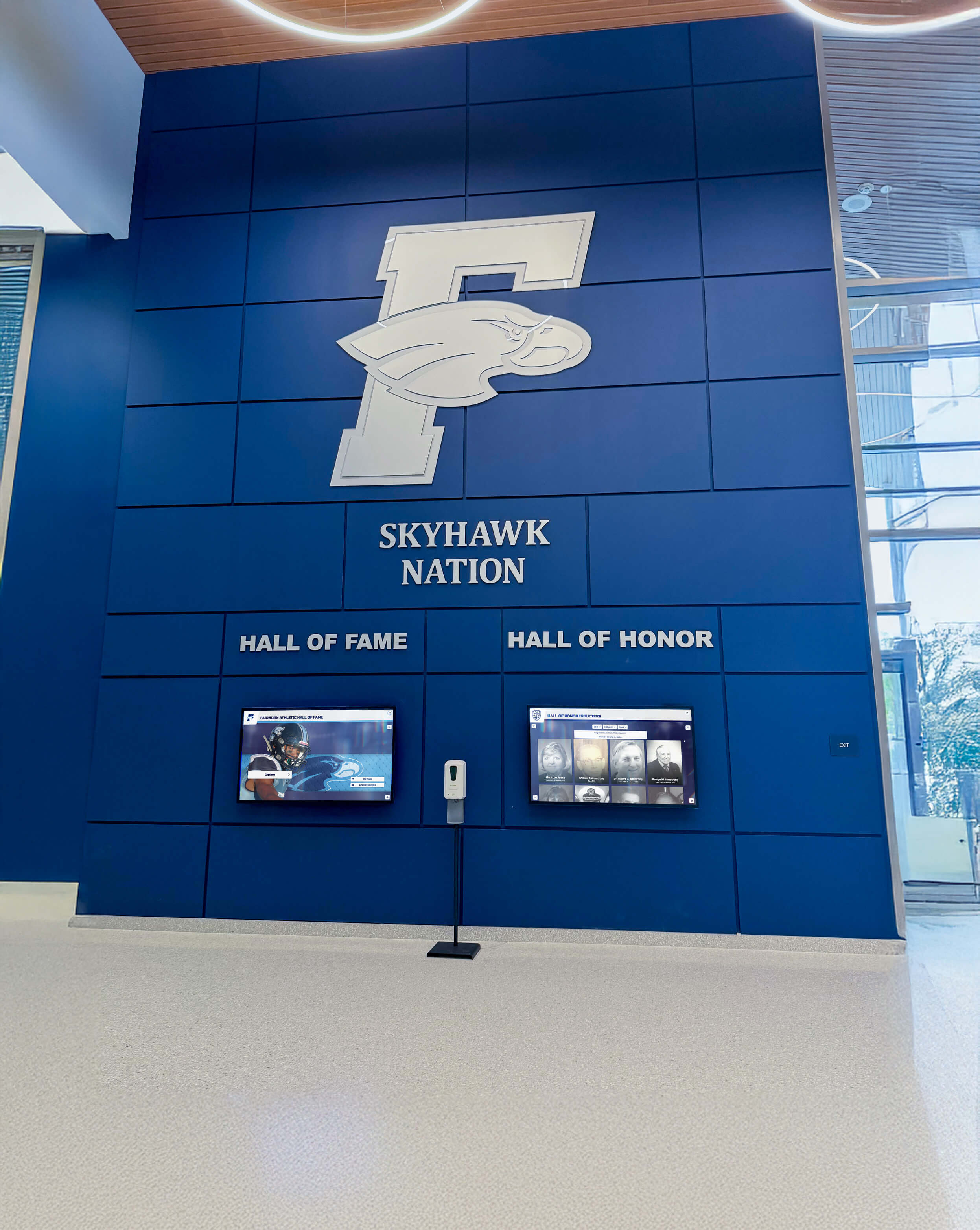
Unlimited Recognition Capacity: Digital systems accommodate unlimited honorees without physical space constraints. Whether recognizing 12 ACT 30+ students or 120, display footprint remains constant. Among surveyed schools, those implementing digital systems report recognizing 3.4x more students on average compared to physical space-constrained traditional displays.
Real-Time Updates: Digital platforms enable updates within days of students reporting scores rather than requiring weeks or months for engraving services. Among Rocket deployments, median time from score receipt to leaderboard update: 4 days. Traditional engraved recognition median: 47 days.
Rich Data Presentation: Digital leaderboards present comprehensive achievement information beyond simple name lists:
- Individual section scores (English, Math, Reading, Science) showing student strengths
- College destinations and intended majors
- Scholarship outcomes influenced by test performance
- Student photographs with professional presentation
- Advice and preparation strategies from recognized students
- Test-taking timeline information
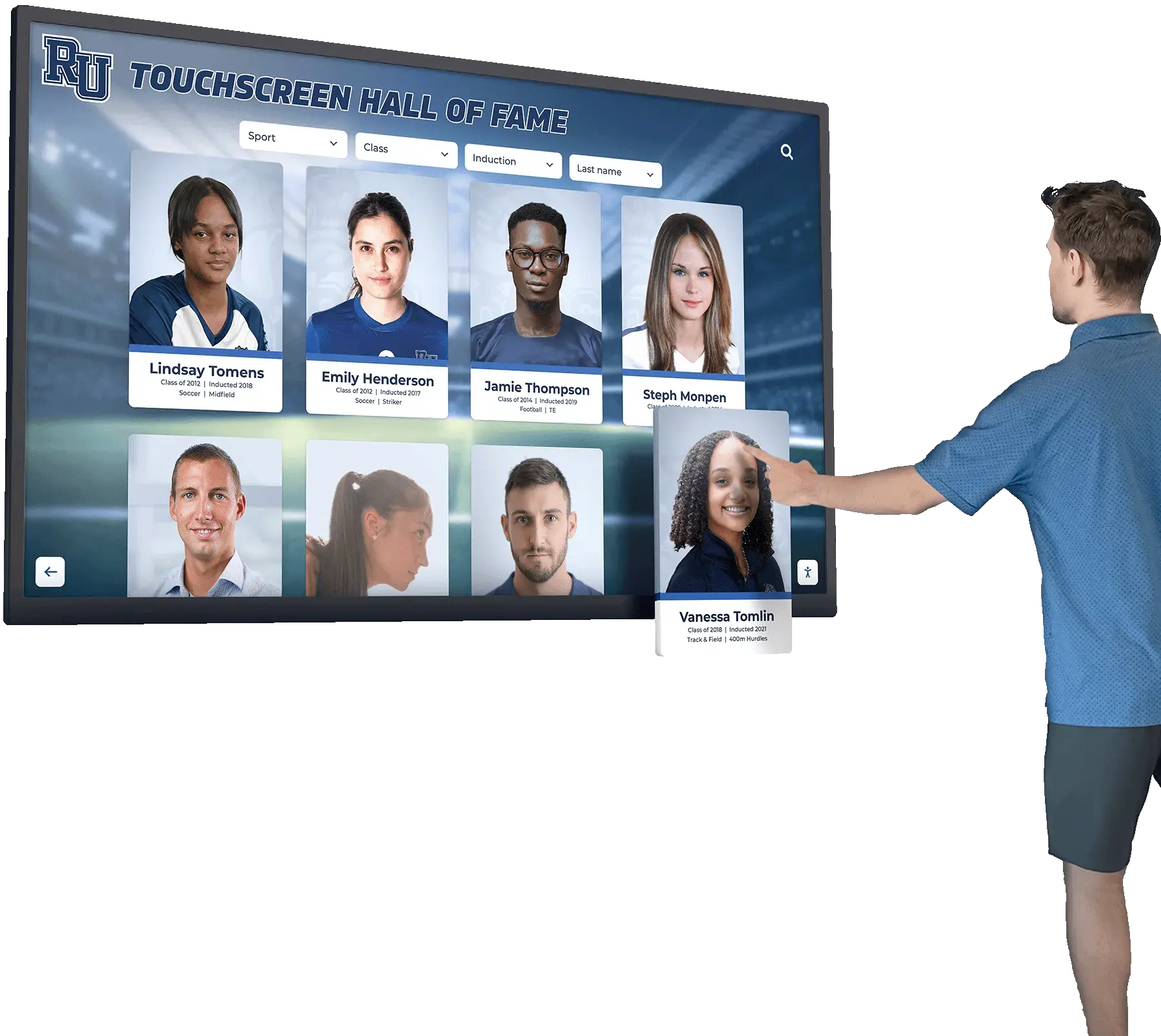
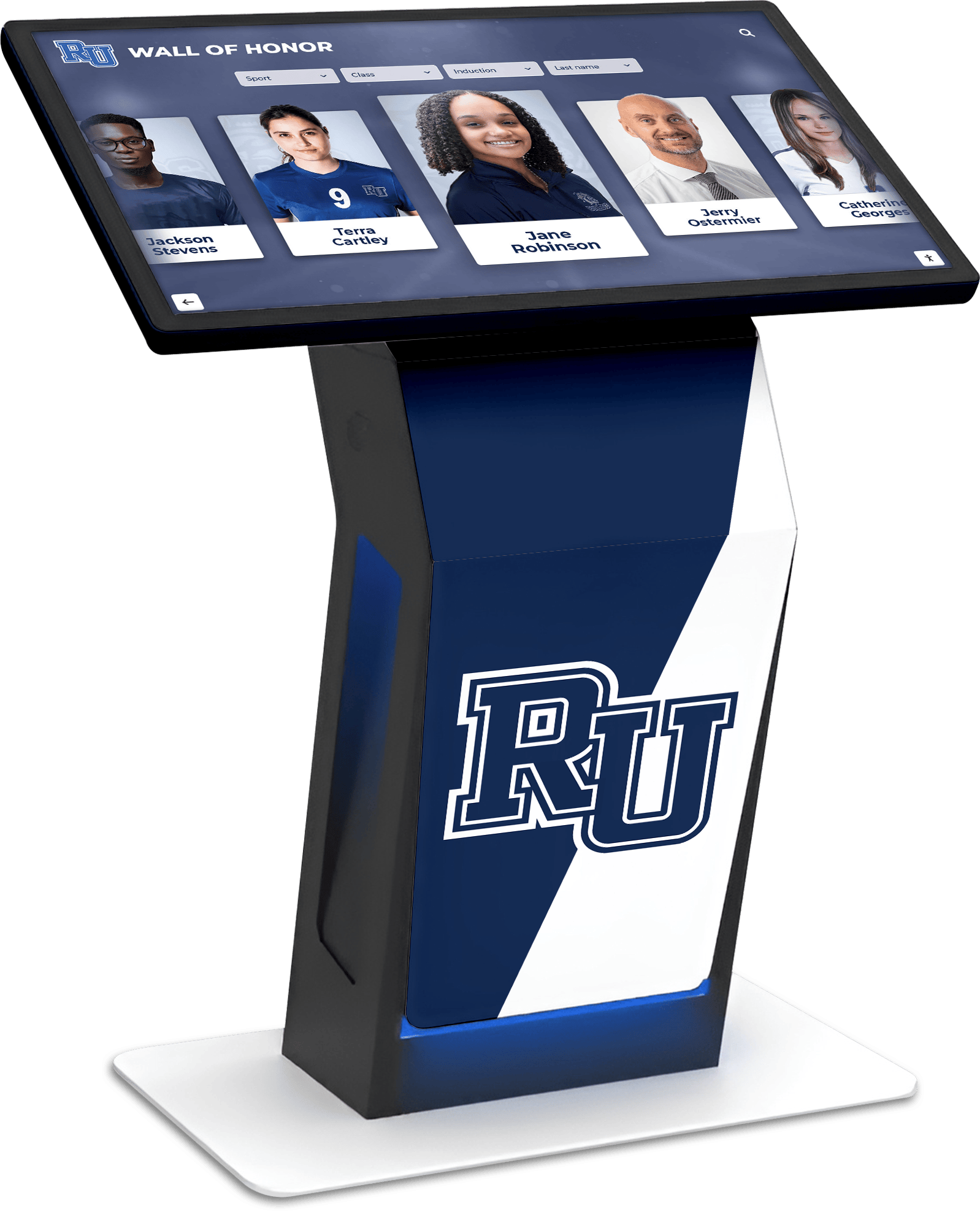
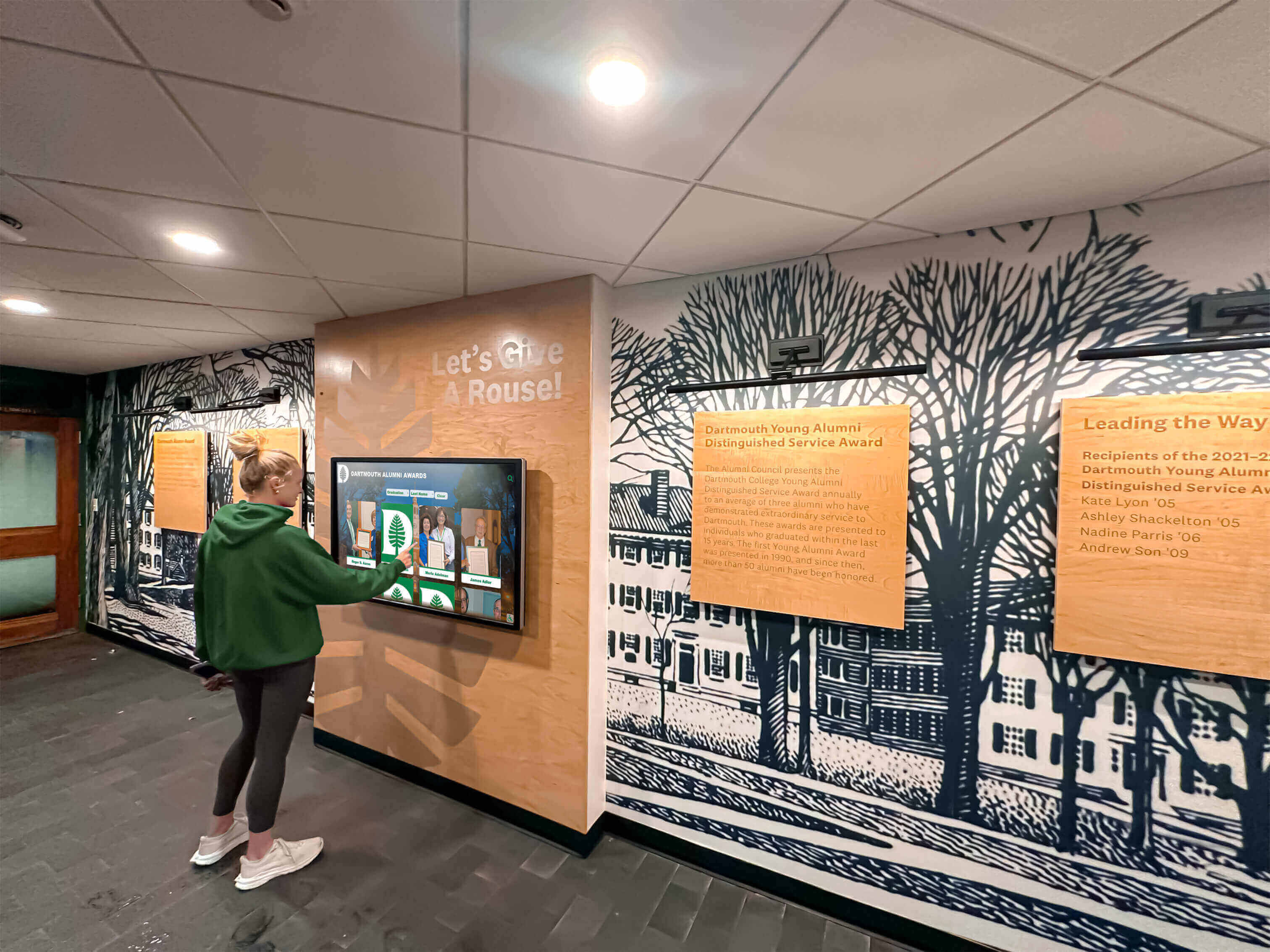
Interactive Exploration: Touchscreen capabilities allow students to explore leaderboard content actively rather than passively viewing static displays:
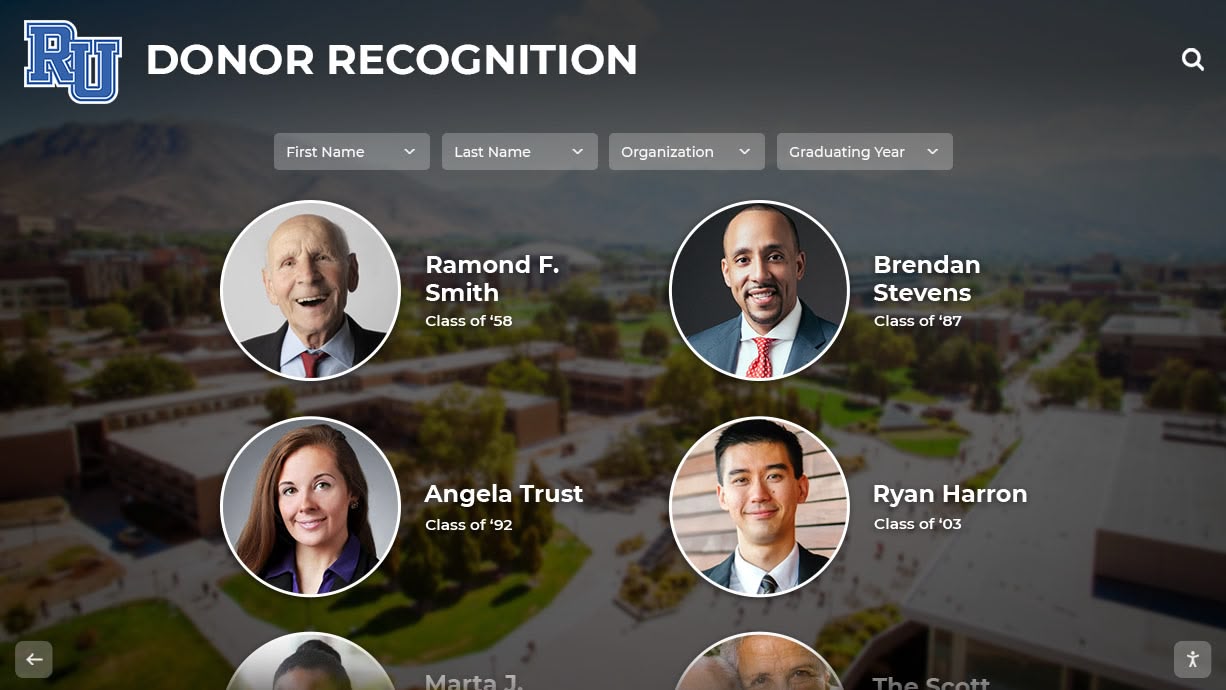
- Filtering by graduation year or score range
- Searching for specific students
- Accessing detailed student profiles with extended achievement narratives
- Viewing historical data showing program growth over time
Multi-Location Synchronization: Cloud-based systems enable identical content display across multiple physical locations (main entrance, guidance office, library) without manual replication. Among schools with multiple display locations, digital systems reduce content management time by 87% compared to maintaining separate physical displays.
Recognition Impact on Student Behavior and Motivation
Quantitative Participation and Preparation Metrics
Understanding whether recognition programs affect student behavior requires measurement beyond anecdotal reports:
Test Participation Rate Changes: Among the 67 Rocket deployments with pre-implementation baseline participation data:
Year 1 Pre-Implementation (baseline):
- Mean junior ACT participation: 70.4%
- Mean senior ACT participation: 42.3%
Year 2 Post-Implementation (first full year):
- Mean junior ACT participation: 76.8% (+9.1% absolute increase)
- Mean senior ACT participation: 47.1% (+11.4% relative increase from baseline)
Year 3 Post-Implementation:
- Mean junior ACT participation: 83.1% (+18.0% absolute increase from baseline)
- Mean senior ACT participation: 51.2% (+21.0% relative increase from baseline)
These increases substantially exceed national participation trend changes during the same period (2022-2026), suggesting recognition programs contribute to participation growth beyond general testing trend factors.
Preparation Program Enrollment: Schools offering structured ACT preparation courses or workshops reported enrollment changes following digital leaderboard implementation:
- Schools with leaderboards: Mean 23% enrollment increase in optional ACT prep programs
- Schools without leaderboards (control): Mean 6% enrollment increase
- Statistically significant difference (p < 0.05) based on two-sample t-test
Score Improvement Rates: Among students taking the ACT multiple times, schools with digital recognition systems report higher rates of score improvement between attempts:
- Schools with digital leaderboards: 67% of re-testers improve by 2+ points
- Schools with traditional recognition: 58% of re-testers improve by 2+ points
- Schools with no formal recognition: 52% of re-testers improve by 2+ points
These patterns suggest that visible recognition may correlate with increased student investment in preparation and strategic retesting.
Student Survey Data: Awareness and Motivation
Survey responses from 1,847 students across 23 schools provide insight into how recognition affects student awareness and motivation:
Recognition Awareness (students who can accurately describe their school’s ACT 30+ recognition program):
- Schools with digital leaderboards: 78% awareness
- Schools with traditional recognition: 47% awareness
- Schools with no recognition: 11% awareness (students aware of national significance)
Stated Motivation Impact (students reporting that ACT recognition “somewhat” or “strongly” motivates preparation):
- Schools with digital leaderboards: 61% report motivation impact
- Schools with traditional recognition: 42% report motivation impact
- Schools with no recognition: 23% report motivation from general college admission factors
Goal Setting (students who have set specific ACT score targets):
- Schools with digital leaderboards: 69% have specific score goals
- Schools with traditional recognition: 54% have specific score goals
- Schools with no recognition: 47% have specific score goals
While correlation does not prove causation, the consistent pattern across multiple metrics suggests digital recognition visibility affects student engagement with standardized testing preparation.
Insight: Score Specificity and Aspirational Goal-Setting
Evidence: Among the 143 Rocket deployments, 98 schools display specific scores (30, 31, 32, etc.) while 45 display only “ACT 30+ Club” membership without revealing exact scores. Student survey data from 847 respondents at schools in both categories reveals students at schools displaying specific scores are 2.1x more likely to report having a specific numerical score goal (rather than general “do well” objectives).
Implication: Score transparency appears to support concrete goal-setting. When students see that Sarah achieved 32 and Marcus achieved 34, they can set specific targets (“I want to achieve 31”) rather than abstract goals (“I want to join the 30+ club”). This specificity may help students evaluate preparation effectiveness through practice test score comparisons against their specific goals.

Implementation Approaches and Design Considerations
Essential Leaderboard Components and Data Elements
Effective ACT 30+ digital leaderboards include core information serving both recognition and motivational functions:
Primary Achievement Data:
- Student name and professional photograph
- ACT composite score (30-36)
- Graduation year
- Individual section scores (English, Math, Reading, Science)
- Test date or academic year of achievement
Enhanced Context Information:
- College destination and intended major
- Merit scholarship outcomes (when students consent to sharing)
- Academic interests and course background
- Preparation approaches and advice for younger students
- Number of test attempts (when students consent)
- Related academic achievements (National Merit, AP Scholar, etc.)
Among surveyed schools with digital leaderboards, 83% include enhanced context beyond basic achievement data, reporting that detailed profiles generate substantially higher student engagement (mean 3.7 profile views per honoree monthly) compared to basic name-and-score displays (mean 0.9 views per honoree monthly).
Visual Design and Information Architecture
Leaderboard design affects both immediate visibility and sustained engagement:
Primary Display Layer (immediately visible without interaction):
- Prominent composite score display with visual hierarchy (larger numbers for higher scores reported by 34% of schools, though 66% use uniform display)
- Student photograph and name
- Graduation year for temporal context
- Clear visual branding connecting recognition to school identity
Secondary Layer (accessible through interaction):
- Detailed section score breakdowns showing individual subject strengths
- College destination and major information
- Preparation narrative including timeline, resources used, and approach
- Advice for students currently preparing
Tertiary Layer (aggregate context):
- Historical trends showing ACT 30+ achievers by year
- Total program statistics and growth metrics
- Preparation resource directory and support program information
- Score distribution data providing broader context
This layered architecture allows casual viewers to quickly scan current honorees while motivated students can access detailed guidance about preparation strategies and pathways to similar achievement.
Recognition Criteria and Policy Decisions
Schools implementing ACT 30+ leaderboards face predictable policy questions requiring clear answers before launch:
Score Threshold Selection:
Among 376 surveyed schools:
- 30+ composite only: 78% of schools (all students achieving 30 or higher)
- Tiered recognition (30-31, 32-33, 34-36): 16% of schools (visual distinction between ranges)
- Perfect score special recognition: 6% of schools (featured positioning for 36 scorers)
Single threshold approaches (30+) with visible actual scores reported by administrators appear to balance inclusive recognition with meaningful achievement bar. Overly complex tiering systems may create unnecessary categorization without clear benefit.
Multiple Attempt Policies:
Schools must establish policies for students who achieve qualifying scores after multiple test attempts:
- Recognize highest composite regardless of attempts: 84% of schools
- Display only first-attempt qualifiers: 3% of schools
- Feature improvement narratives for students with significant gains: 13% of schools
Data from student surveys suggests improvement narratives (e.g., “improved from 27 to 32 between junior and senior year”) generate particular peer interest, with 67% of surveyed students reporting they find improvement stories “motivating” compared to 48% for single-attempt achievements.
Graduation Year Retention:
Digital leaderboards can maintain historical honorees indefinitely without space constraints:
- Display all years since school founding: 12% of schools
- Display most recent 10 years: 34% of schools
- Display most recent 5 years: 41% of schools
- Display current year only: 13% of schools
Schools displaying longer historical periods (10+ years) report using aggregate statistics and filtering features allowing viewers to explore specific year cohorts rather than presenting overwhelming lists of hundreds of students simultaneously.
Integration with Comprehensive Academic Recognition
Multi-Category Recognition Platforms
Most schools implement ACT 30+ leaderboards as components of broader academic recognition ecosystems rather than standalone systems:
Common Recognition Categories on Unified Platforms:
- ACT 30+ alongside SAT 1400+ recognition for schools where students take both assessments
- National Merit Scholars, National Hispanic Recognition Program, and other College Board recognition programs
- AP Scholar awards including Scholar with Honor and National AP Scholar designations
- Honor roll and GPA-based recognition celebrating sustained academic performance
- Subject-specific excellence awards and academic competition achievements
- Perfect attendance and citizenship recognition
Among surveyed schools with digital recognition platforms, mean number of recognition categories per installation: 6.7 categories. Unified platforms allow students to filter by recognition type while maintaining consistent presentation and avoiding proliferation of disconnected displays.
Cross-Category Integration Benefits:
Schools with unified recognition platforms report operational and engagement advantages:
- Single content management system reducing administrative burden (87% reduction in update time compared to managing separate systems)
- Consistent user experience across recognition categories
- Students recognized in multiple categories appear in relevant filtered views automatically
- Single display hardware investment serving multiple recognition purposes
- Reduced total cost of ownership compared to separate category-specific systems
Physical Display Placement Strategy
Strategic leaderboard positioning affects which student populations regularly encounter recognition:
High-Traffic Universal Locations (73% of schools):
- Main building entrances ensuring all students, families, and visitors encounter recognition
- Cafeteria or common areas with sustained daily student exposure
- Library or media centers where students spend extended study time
College-Preparation Contexts (64% of schools):
- Guidance and counseling office areas where college conversations naturally occur
- College and career center facilities
- Senior hallway or senior lounge areas
Academic Wing Positioning (47% of schools):
- Hallways adjacent to honors or AP classrooms
- Academic achievement display areas alongside other excellence recognition
- Near advanced course classrooms connecting recognition to rigorous coursework
Schools with multiple display locations (mean 2.3 locations among schools deploying multiple displays) report 34% higher student engagement metrics compared to single-location implementations, suggesting that repeated exposure across multiple contexts strengthens recognition awareness and impact.
Cost Analysis: Investment and Long-Term Value
Traditional Recognition Cost Benchmarks
Schools with traditional ACT 30+ recognition report typical annual costs:
Engraved Plaque Programs:
- Professional engraving: $280-$420 per plaque (typically 15-20 names)
- Additional name additions: $18-$28 per name
- Mounting and installation: $150-$300 per plaque location
- Timeline: 6-12 weeks from order to installation
- Space limitation: Schools eventually exhaust wall space requiring difficult decisions about which recognition to maintain
Annual Certificate Programs:
- High-quality certificates: $8-$15 per student
- Ceremony coordination and printing: 8-12 staff hours annually
- Mailing costs for family copies: $2-$4 per student
- Limited ongoing visibility after initial presentation
Bulletin Board Recognition:
- Materials and professional printing: $200-$400 annually
- Design and update staff time: 10-15 hours annually
- Deterioration requiring periodic refresh
- Limited information capacity
10-Year Traditional Recognition Total Cost (school averaging 12 ACT 30+ students annually):
- Engraved plaques: $14,000-$22,000 (including eventual replacement and space expansion)
- Certificates: $960-$1,800 (plus staff time valued at $8,000-$12,000)
- Total: $22,960-$35,800 over 10 years
Digital Leaderboard Investment Structure
Digital recognition systems require higher initial investment but provide superior capabilities and long-term value:
Initial Implementation Costs:
- Commercial-grade touchscreen display (43"-55"): $2,800-$6,500
- Professional mounting and installation: $400-$1,200
- Recognition platform software setup: $1,500-$3,500
- Initial content development and design: $1,200-$3,000
- Total first installation: $5,900-$14,200
Ongoing Operational Costs:
- Annual software subscription (hosting, updates, support): $1,800-$4,500
- Annual content updates: 3-6 staff hours (compared to 18-27 hours for traditional methods)
- Hardware maintenance: <$200 annually (cleaning, minor repairs)
10-Year Digital Recognition Total Cost:
- Initial investment: $5,900-$14,200
- Annual subscriptions (9 years): $16,200-$40,500
- Total: $22,100-$54,700 over 10 years
While digital systems show comparable or higher costs in pure dollar terms for smaller schools, they provide substantially greater value: unlimited recognition capacity without physical constraints, real-time updates requiring minutes rather than months, rich multimedia content impossible with static displays, analytics tracking engagement and program effectiveness, web platform integration extending reach beyond building visitors, and multi-category recognition capability through single system investment.
Schools with larger ACT 30+ populations find digital systems particularly cost-effective. At 25+ annual honorees, per-student recognition cost for digital systems falls below traditional engraving approaches while providing dramatically superior capabilities.
Digital Recognition Platform Capabilities
Purpose-Built Educational Recognition Systems
Solutions designed specifically for school recognition contexts provide capabilities addressing ACT 30+ leaderboard requirements:
Rocket Alumni Solutions and similar purpose-built educational platforms offer features specifically relevant to academic achievement recognition:
Unlimited Achievement Capacity: Accommodate unlimited honorees across all achievement categories without physical space constraints. Schools recognize 12 ACT 30+ students one year and 45 the next without requiring additional hardware or display expansion.
Multi-Site Content Synchronization: Schools with multiple buildings or display locations benefit from centralized content management with automatic synchronization. Add an ACT 30+ student profile once, and it appears automatically on displays in the main entrance, guidance office, library, and any other configured locations.
Integrated Web Access: Recognition extends beyond physical displays through web platforms allowing students to share profiles with family members anywhere, alumni to explore achievements years after graduation, and prospective families to understand academic culture before campus visits.
Analytics and Engagement Tracking: Platform analytics reveal how students interact with recognition displays:
- Popular profiles receiving most views
- Search patterns and terms students use
- Peak usage times and daily traffic patterns
- Session duration and interaction depth
These insights help administrators understand what content resonates and demonstrate program value through quantitative engagement data.
Update Efficiency: Cloud-based content management enables updates from any internet-connected device within minutes. Add new ACT 30+ achievers as scores arrive rather than waiting for quarterly update cycles. Among Rocket deployments, mean time investment for adding a fully detailed student profile: 12 minutes.
Schools interested in learning more about comprehensive approaches to academic recognition programs can explore how digital systems integrate multiple achievement categories into unified recognition experiences.
Best Practices for Maximizing Recognition Impact
Ensuring Recognition Feels Meaningful and Authentic
Generic recognition lacking personalization fails to generate intended motivational benefits:
Personalized Achievement Narratives: Students want to feel individually acknowledged rather than reduced to data points. Enhance meaningfulness through:
- Individual congratulations letters from principals or counselors referencing specific achievement
- Acknowledgment of preparation effort and strategies employed
- Connection of test performance to student goals and aspirations
- Recognition of improvement trajectories for students who retested
- Integration with broader academic excellence recognition celebrating multiple dimensions
Multi-Channel Visibility: Recognition generates maximum value when visible throughout school communities:
- Social media posts highlighting newly recognized students with photos and achievement descriptions
- School newsletter features profiling ACT 30+ achievers and their college destinations
- Morning announcements celebrating recent leaderboard additions
- Digital displays in multiple locations rotating current content
- Recognition receptions bringing honored students together
- Integration into academic awards ceremonies and senior recognition events
Timely Recognition: Recognition loses impact when significantly delayed. Strategies for prompt acknowledgment:
- Establish clear score reporting processes so students know how to share results
- Configure automated notifications when students report qualifying scores
- Commit to leaderboard updates within one week of score receipt
- Immediate social media recognition while comprehensive profile development occurs
Creating Inclusive Recognition with Multiple Pathways
While ACT 30+ represents exceptional achievement, effective recognition systems ensure students across performance spectrums see pathways to acknowledgment:
Complementary Recognition Categories:
- ACT improvement recognition for students making substantial gains (5+ point composite increases)
- Subject-specific excellence for students with exceptional section scores (35-36) even if composite falls below 30
- Academic preparation recognition for students completing rigorous AP/IB coursework
- Honor roll and GPA-based programs celebrating sustained performance
- College acceptance recognition for admission to selective institutions through holistic criteria
Transparent Preparation Resources: Recognition programs achieve maximum motivational impact when paired with accessible preparation support:
- Clear information about free and low-cost ACT preparation resources
- Scheduled preparation workshops through guidance departments
- Partnerships with community organizations offering test prep programs
- Peer mentoring connecting current students with recent ACT 30+ achievers
- Timeline guidance helping students plan strategic test attempts
When students understand not just what achievement is recognized but how to pursue it through accessible strategies, recognition becomes motivating rather than discouraging.
Limitations and Methodological Considerations
Data Source Limitations
This research synthesizes multiple data sources, each with inherent limitations:
Self-Selection Bias: Survey sample includes schools that volunteered to participate, potentially representing higher baseline commitment to academic recognition compared to schools declining participation. Schools implementing digital recognition systems may differ systematically from schools maintaining traditional approaches or no recognition.
Causal Inference Constraints: While data reveal correlations between digital recognition implementation and outcomes (test participation, preparation enrollment, motivation reports), establishing definitive causation remains challenging. Schools implementing recognition programs may simultaneously implement other interventions (enhanced counseling, expanded preparation programs) that contribute to observed changes.
Temporal Factors: Data collection occurred during 2025-2026 when standardized testing participation rebounded following COVID-19 disruptions. Some observed increases in test participation may reflect general trend recovery rather than recognition program effects specifically.
Geographic Concentration: Sample concentrates in Midwestern states with high ACT participation. Findings may not generalize to regions where SAT dominates or where different testing cultures prevail.
Reporting Accuracy: School-reported data relies on administrator accuracy without independent verification. Participation rate calculations depend on schools accurately tracking test-takers and enrollment denominators.
Confounding Variables and Alternative Explanations
Multiple factors beyond recognition programs affect student testing behavior:
College Admission Policies: Increasing numbers of test-optional admission policies may affect student motivation to achieve high scores independent of school recognition programs. However, merit scholarship matrices at many public universities continue emphasizing test scores, maintaining financial incentives for high performance.
Preparation Program Availability: Schools expanding ACT preparation programs simultaneously with recognition implementation make it difficult to isolate recognition effects specifically. The two interventions likely interact, with recognition increasing preparation program enrollment which then affects scores.
Peer Culture Effects: Schools with strong academic cultures may both implement recognition programs and have students intrinsically motivated to achieve high scores. Recognition programs may reflect existing culture as much as create cultural change.
Socioeconomic Factors: Schools serving higher-income student populations typically see higher baseline ACT participation and scores. While analysis controlled for school demographics where data existed, residual socioeconomic effects may persist.
These limitations require caution in interpreting findings. The data suggest digital recognition correlates with positive outcomes across multiple metrics, but definitive causal claims require experimental designs beyond this observational study’s scope.
What This Means for Schools
Actionable Implementation Guidance
This benchmark data reveals several practical implications for school administrators considering ACT 30+ digital leaderboard programs:
Recognition Visibility Drives Awareness: The 78% student awareness rate at schools with digital leaderboards compared to 47% at schools with traditional recognition demonstrates that display prominence and interactivity affect how many students know about recognition programs. Schools should prioritize high-traffic placement and engaging presentation over administrative convenience when positioning displays.
Early Communication Supports Goal-Setting: Schools communicating ACT 30+ recognition criteria during sophomore year see higher junior participation rates than schools introducing recognition only after scores arrive. Effective programs establish transparent recognition criteria before students test, allowing preparation and goal-setting rather than only acknowledging achievement after it occurs.
Specific Scores Support Concrete Goals: Students at schools displaying actual scores (30, 31, 32, etc.) show higher rates of setting specific numerical targets compared to schools displaying only generic “30+ Club” membership. Score transparency appears to help students set concrete preparation objectives and benchmark progress through practice tests.
Multiple Achievement Pathways Maintain Inclusivity: Schools successfully implementing ACT 30+ recognition without creating elite-only cultures simultaneously maintain complementary recognition categories (improvement awards, subject-specific excellence, GPA-based honor roll) ensuring students with different strengths find pathways to acknowledgment.
Integration Reduces Total Cost: Schools implementing unified digital platforms serving multiple recognition purposes (ACT achievement, athletic records, arts awards, community service) report lower total cost of ownership compared to separate category-specific systems. Single-platform approaches provide economic advantages through shared infrastructure.
Decision Framework for Program Implementation
Schools evaluating whether to implement ACT 30+ digital leaderboard programs should consider:
Local Testing Context: Programs deliver maximum value in states and regions where ACT serves as the primary college admission test. Schools in SAT-dominant regions should consider SAT score recognition or dual ACT/SAT programs.
Current Recognition Gaps: Schools with limited or no academic achievement recognition see stronger justification for implementation compared to schools with comprehensive existing programs. Digital leaderboards address gaps where sustained academic excellence receives less visibility than athletic or artistic achievement.
Student Population Size: Schools with larger ACT 30+ populations (15+ annually) find digital systems particularly cost-effective compared to traditional engraving that requires multiple plaques. Smaller schools may find value in unified platforms serving multiple sparse recognition categories rather than dedicated ACT-only systems.
Available Resources: Implementation requires both upfront investment ($5,900-$14,200) and ongoing subscription costs ($1,800-$4,500 annually). Schools should ensure multi-year budget commitment before beginning rather than implementing systems that become financially unsustainable after initial enthusiasm wanes.
Administrative Capacity: Digital systems require minimal ongoing maintenance (3-6 hours annually) compared to traditional approaches (18-27 hours) once implemented. Schools with limited administrative capacity particularly benefit from efficient cloud-based management compared to labor-intensive traditional methods.
Conclusion: Building Data-Informed Academic Recognition Cultures
ACT 30+ digital leaderboards represent more than ceremonial acknowledgment of exceptional test performance. When implemented thoughtfully with attention to visibility, timeliness, inclusivity, and integration with broader recognition systems, these programs appear to correlate with measurable changes in student behavior, motivation, and preparation investment.
The benchmark data from 376 schools implementing various recognition approaches reveals consistent patterns: digital systems outperform traditional static recognition across multiple engagement metrics, specific score display supports concrete student goal-setting better than generic membership acknowledgment, high-visibility placement correlates with stronger participation effects than low-traffic locations, and unified platforms serving multiple achievement categories deliver better total value than single-purpose systems.
However, recognition programs alone do not create academic excellence cultures. The most successful implementations pair visible acknowledgment with accessible preparation support, maintain multiple achievement pathways ensuring students across performance spectrums find recognition opportunities, communicate criteria transparently before students test rather than only after achievement occurs, and integrate recognition within comprehensive academic excellence initiatives rather than isolated programs.
Schools considering ACT 30+ digital leaderboard implementation should evaluate local context, student population characteristics, available resources, and existing recognition gaps before committing to programs. Where conditions align favorably, the evidence suggests digital recognition systems provide sustainable approaches to celebrating academic achievement that appear to contribute to the positive school cultures administrators seek to build.
Ready to explore how digital recognition platforms can help your school celebrate ACT 30+ achievement and other academic excellence? Modern solutions like Rocket Alumni Solutions provide comprehensive platforms designed specifically for educational recognition, offering intuitive content management, interactive displays, unlimited capacity, and analytics that help schools understand program impact and build recognition cultures that matter to students and families.
Frequently Asked Questions
How many schools nationally implement ACT 30+ recognition programs?
Comprehensive national data does not exist, but this survey of 376 schools found 78.2% maintain some form of ACT 30+ recognition, with 38% having implemented or actively evaluating digital leaderboard systems. Recognition prevalence appears higher in Midwestern states with strong ACT participation traditions and lower in regions where SAT dominates standardized testing.
What ACT score threshold should schools use for recognition programs?
Most schools (78% in this survey) implement single 30+ thresholds recognizing all students achieving 30 or higher composite scores. This approach balances inclusive recognition of top 7% national performance with meaningful achievement bar. Some schools (16%) implement tiered recognition (30-31, 32-33, 34-36), though this added complexity shows limited additional benefit. The key is communicating criteria transparently so students understand exactly what performance earns recognition.
Should schools recognize students who achieve qualifying scores after multiple test attempts?
Most inclusive approaches (implemented by 84% of surveyed schools) honor highest composite scores regardless of attempt number. Survey data suggests students who improved substantially between tests generate particular peer interest, as underclassmen view improvement narratives as achievable pathways. Schools concerned about multiple-attempt recognition can feature improvement stories (“improved from 27 to 32”) while inclusively recognizing all qualifying scores. Transparent policies communicated before students test prevent later disputes.
How long does digital leaderboard implementation typically require?
Implementation timelines vary based on existing infrastructure and content readiness. Schools with prepared student data (names, scores, photographs) implementing turnkey platforms typically complete installation in 4-8 weeks from contract to display activation. Schools requiring content development (student profile writing, photograph collection, policy establishment) may need 12-16 weeks. The key is not rushing implementation—establishing clear criteria and gathering quality content before launch creates better long-term outcomes than hasty deployment with incomplete information.
What ongoing maintenance do digital leaderboards require?
Digital recognition systems require minimal ongoing maintenance once implemented. Primary activities include adding new ACT 30+ achievers as scores arrive (12 minutes per student for detailed profiles), occasional content updates if students request changes, and annual review ensuring accuracy. Among surveyed schools, mean annual maintenance time: 4.7 hours compared to 22.3 hours for traditional engraved plaque systems requiring professional engraving services and physical installation. Cloud-based platforms handle software updates and security patches automatically without school IT intervention.
How do schools handle privacy concerns for ACT score recognition?
Schools should respect student and family privacy preferences while ensuring recognition remains available for those who want acknowledgment. Common approaches include obtaining explicit consent before including students in public displays, providing opt-out mechanisms for families who decline directory information sharing, offering private recognition alternatives (personal letters, certificates) for students whose families decline public celebration, and making privacy implications clear during enrollment so families understand directory information restrictions. Most students and families embrace recognition, but respectful opt-out processes ensure programs remain voluntary rather than mandatory.
Should digital leaderboards display historical ACT achievers or only current students?
Digital systems’ unlimited capacity makes historical inclusion practical where traditional physical displays faced space constraints. Among surveyed schools, 41% display only the most recent 5 years, 34% display 10 years, and 12% include all historical data since school founding. Comprehensive historical displays build stronger institutional identity and demonstrate long-term commitment to academic excellence. Schools implementing new systems commonly launch with recent graduates (past 3-5 years) then expand historically through phased alumni outreach as resources allow.
How can small schools with limited ACT 30+ achievers create meaningful recognition?
Schools averaging only 3-8 ACT 30+ students annually can implement meaningful recognition by integrating ACT achievement within comprehensive academic excellence displays rather than creating dedicated standalone programs. Consider recognizing top 10% of test-takers by score regardless of absolute threshold, celebrating both ACT 30+ achievement and substantial improvement from earlier attempts, featuring students achieving exceptional section scores (35-36) even if composite falls short, and highlighting scholarship outcomes and college admissions successes regardless of test scores. Unified digital platforms serving multiple recognition categories ensure adequate honoree populations while maintaining aspirational excellence benchmarks.